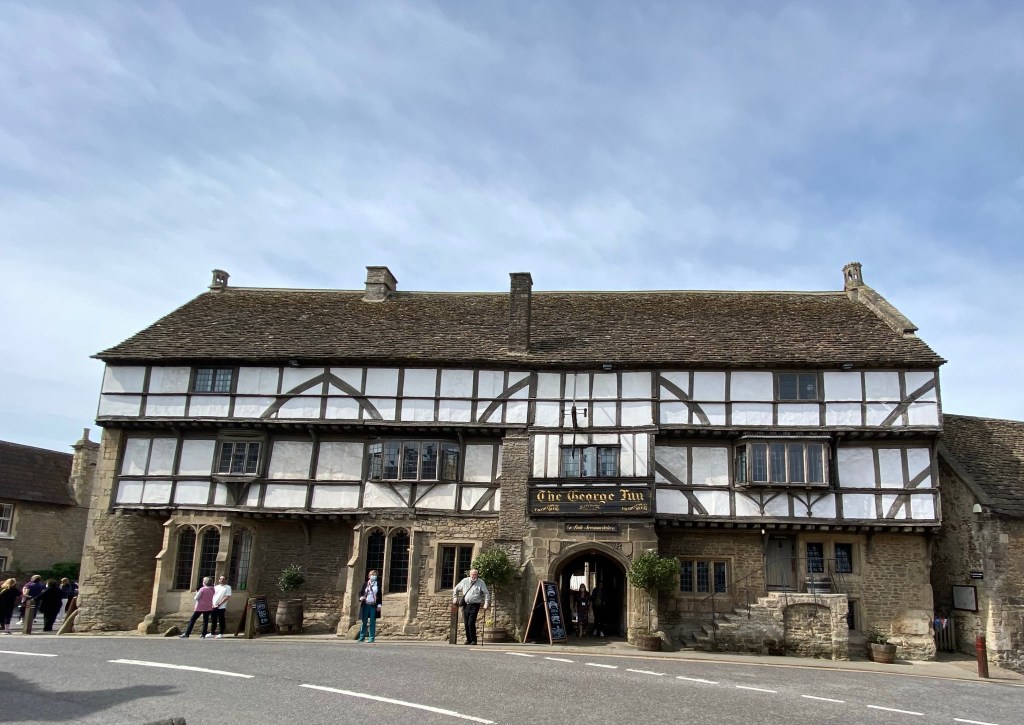
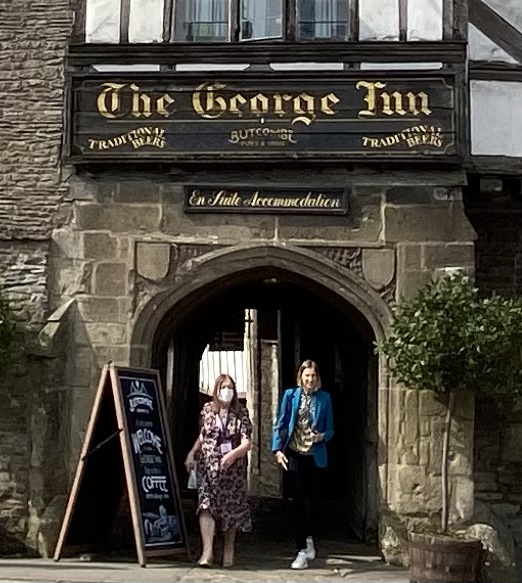
I can’t believe we have been on the tour for a week. It goes so quickly. Today we headed out to the George Inn, Norton St Philip for tea and cakes (cookies). The Inn is a late 15th century coaching inn where you could stop on your way in or out of London. it was a nice brief stop to see a commercial building of that time period.
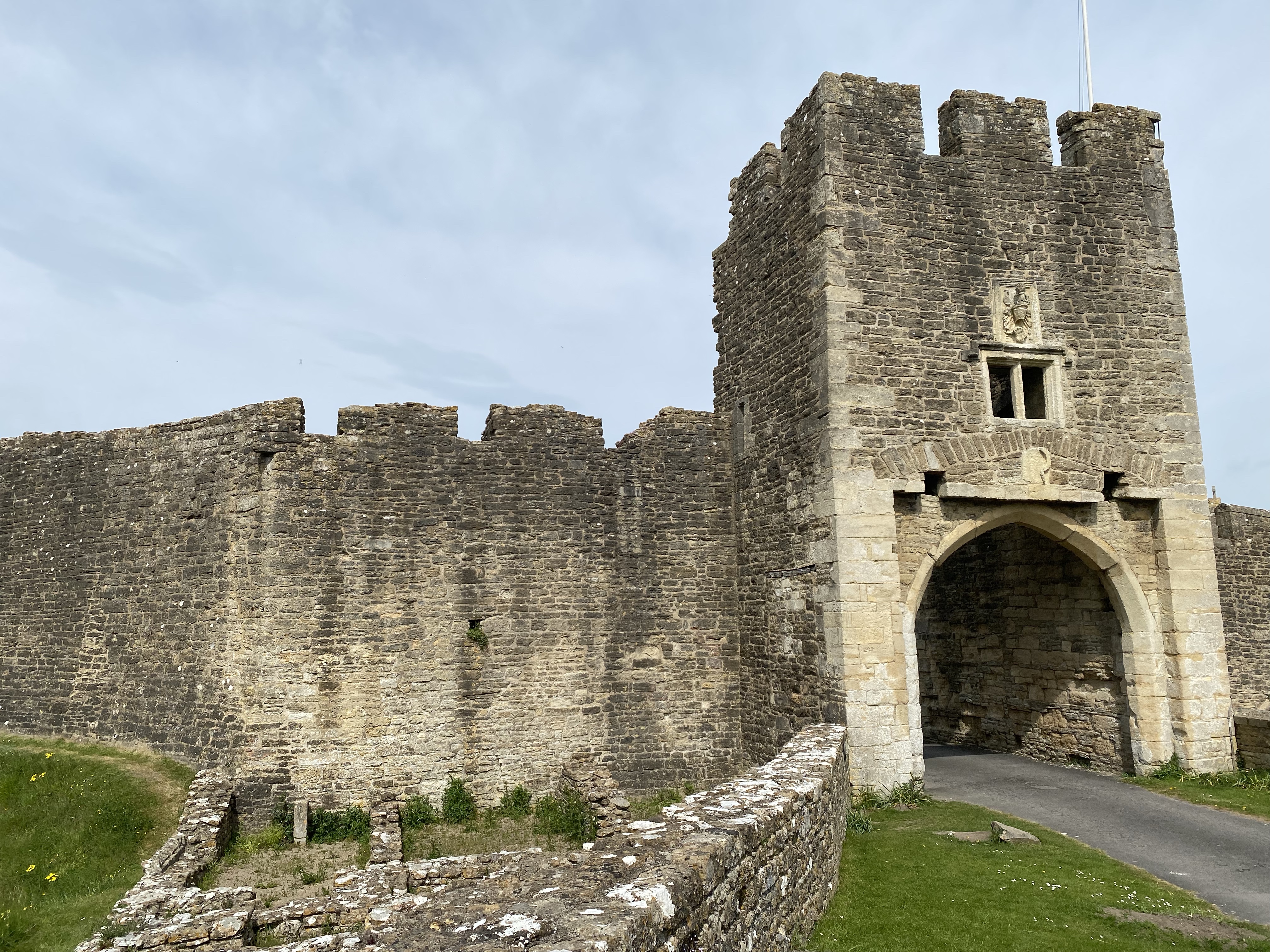
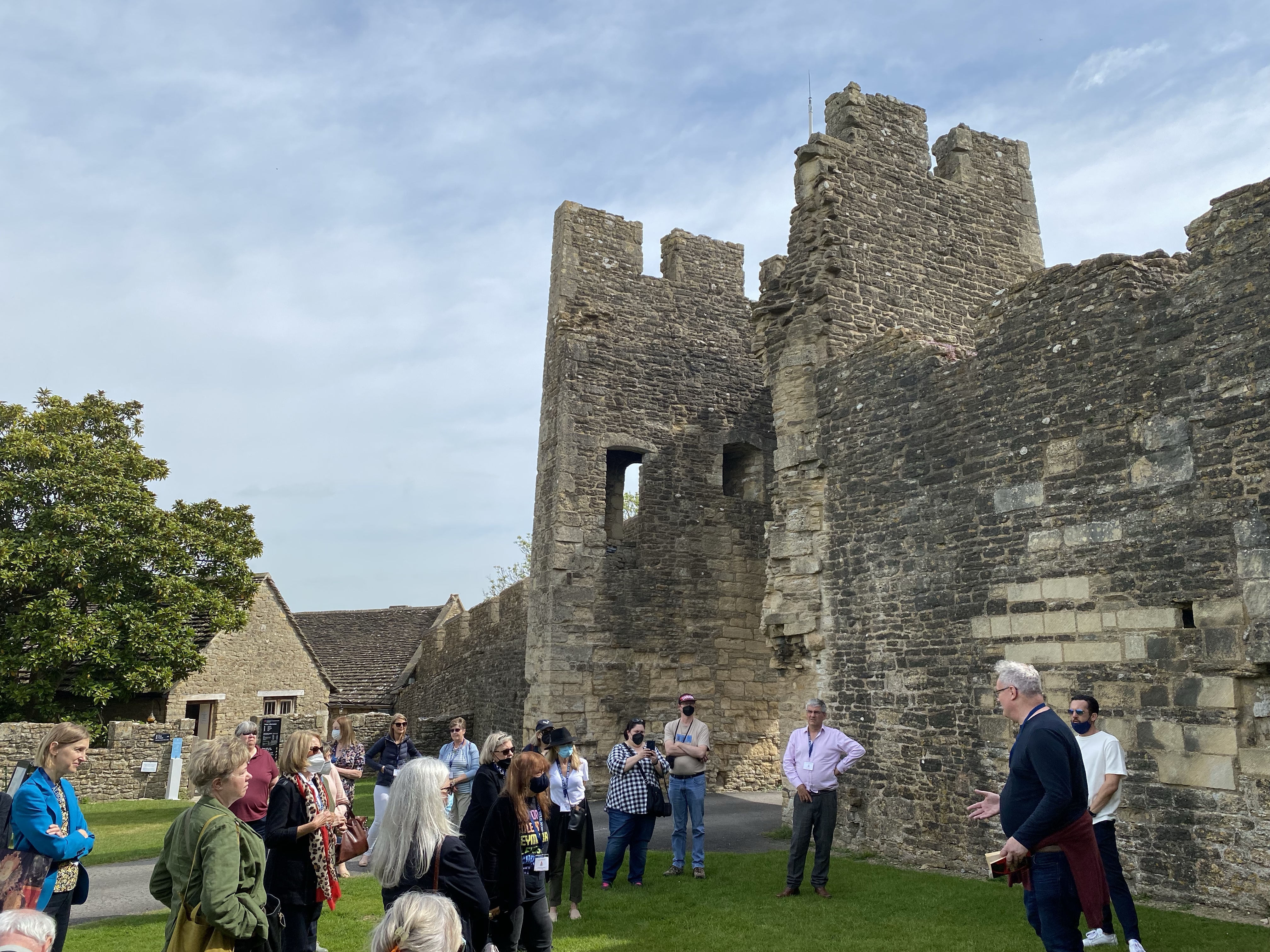
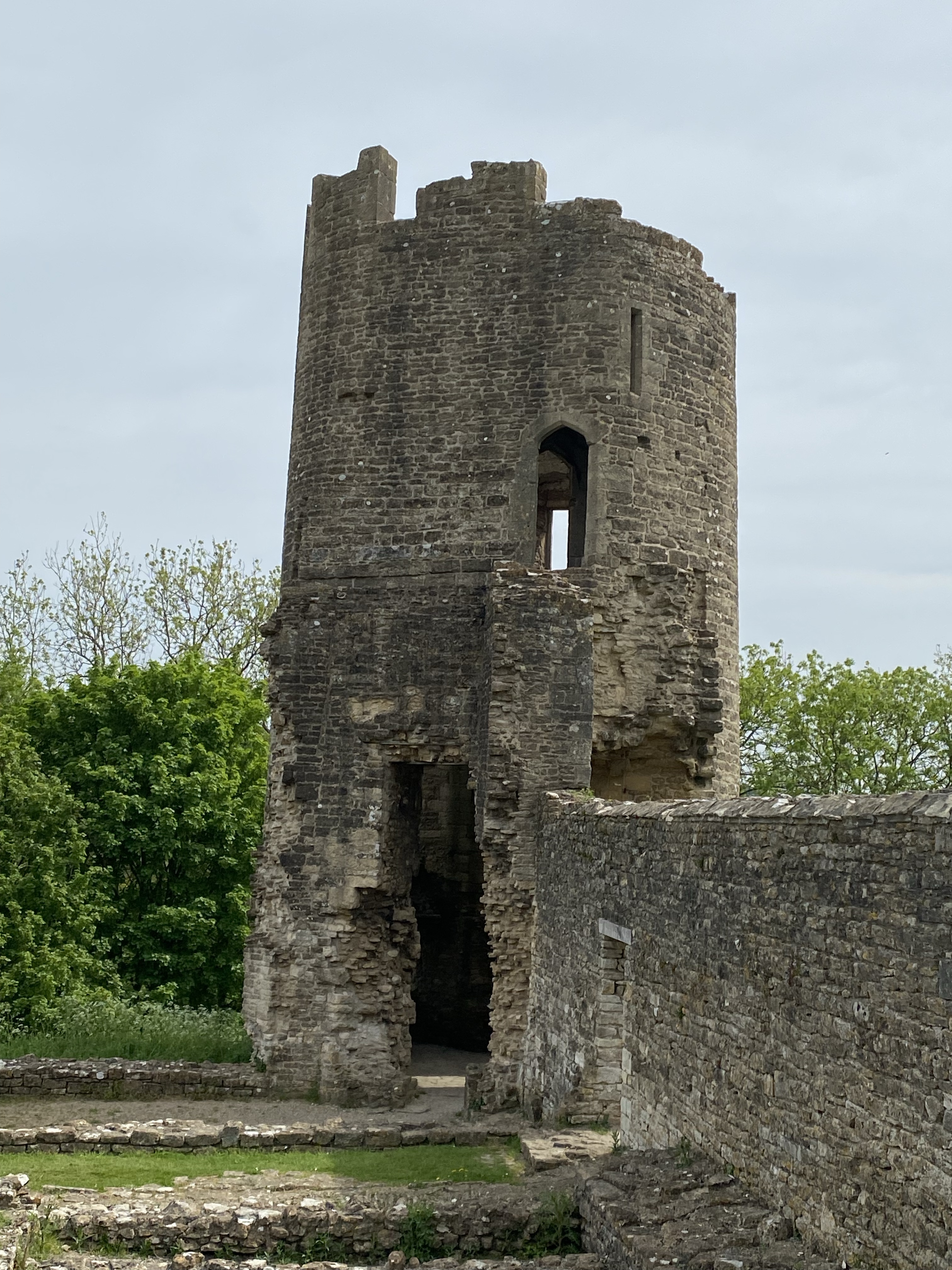
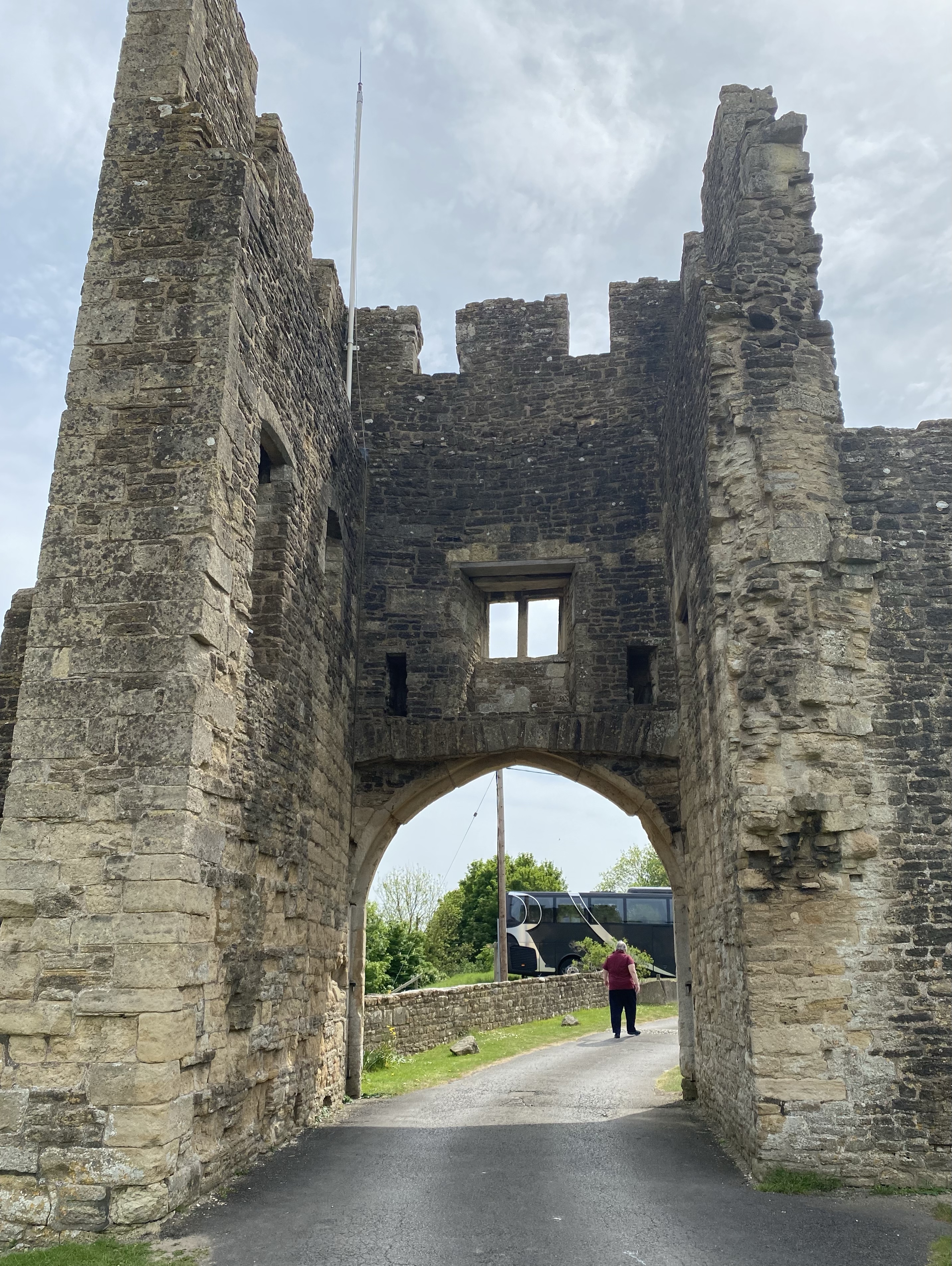
From there we headed out to Farleigh Hungerford Castle. The Hungerfords have shown up or had a connection with many of the sites we have already visited. They fought at Aigincourt so the talk to a pre-Tudor turn for the afternoon. That also fought with Henry VII against Richard III but again more battle connections.
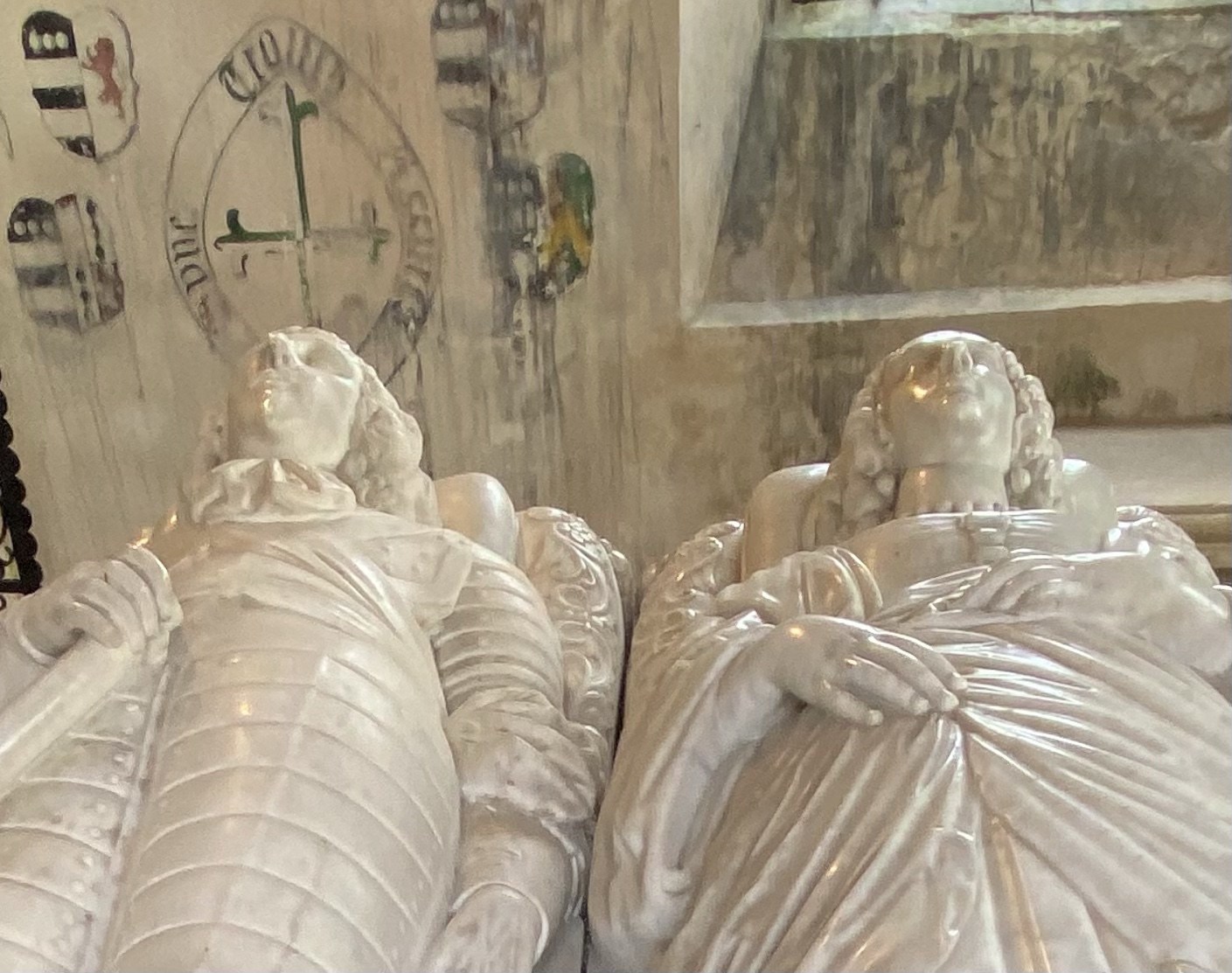
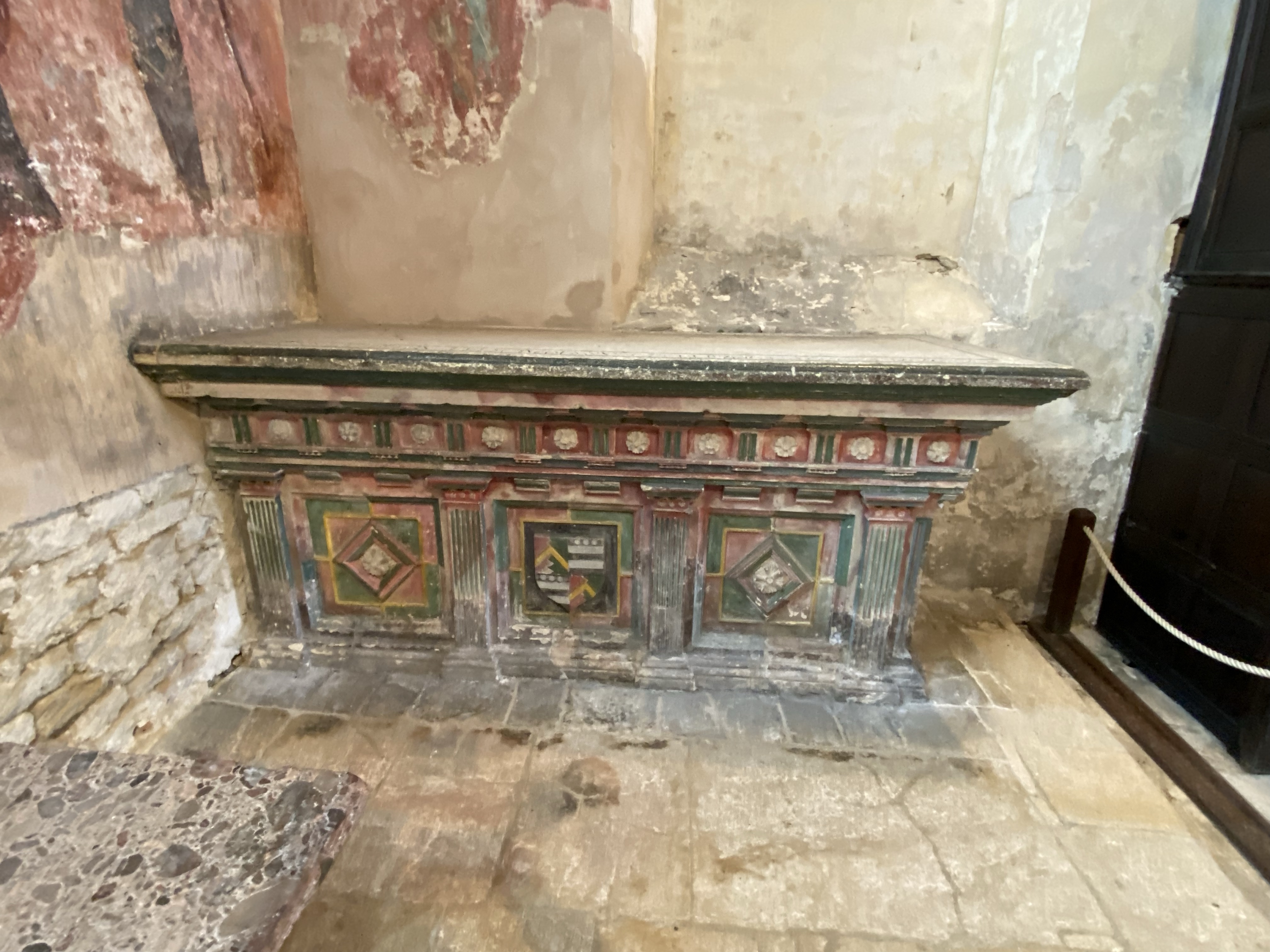
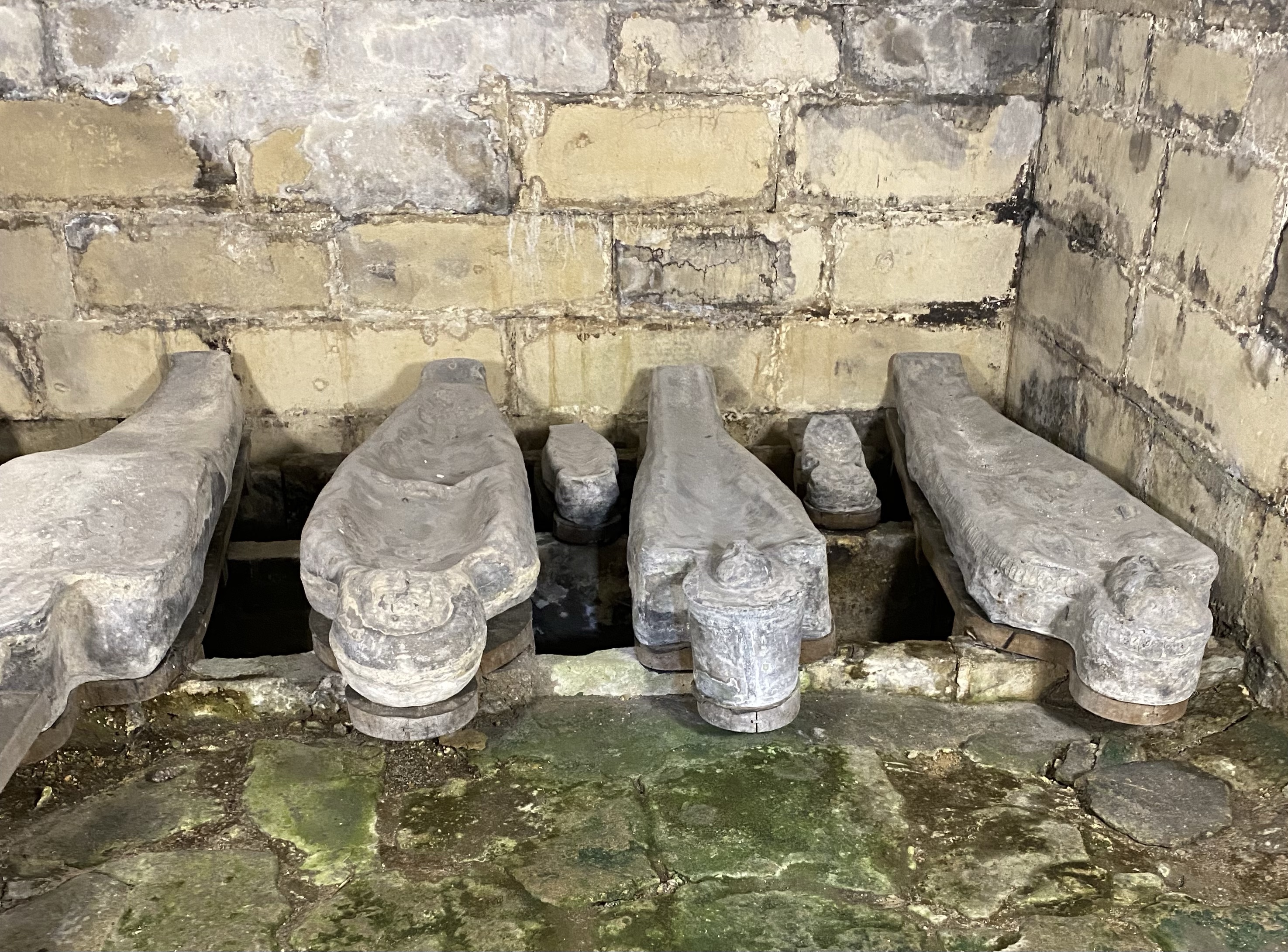
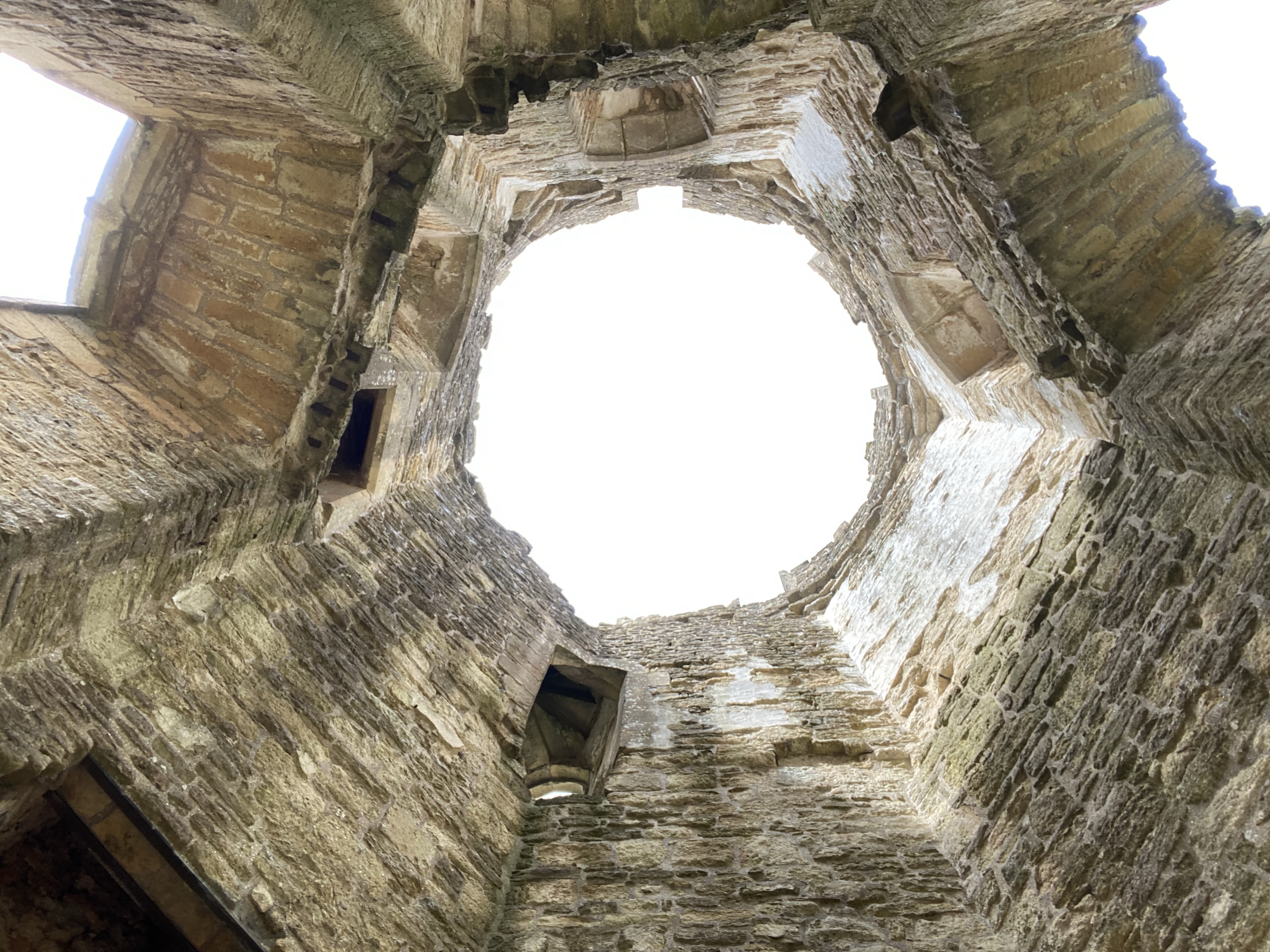
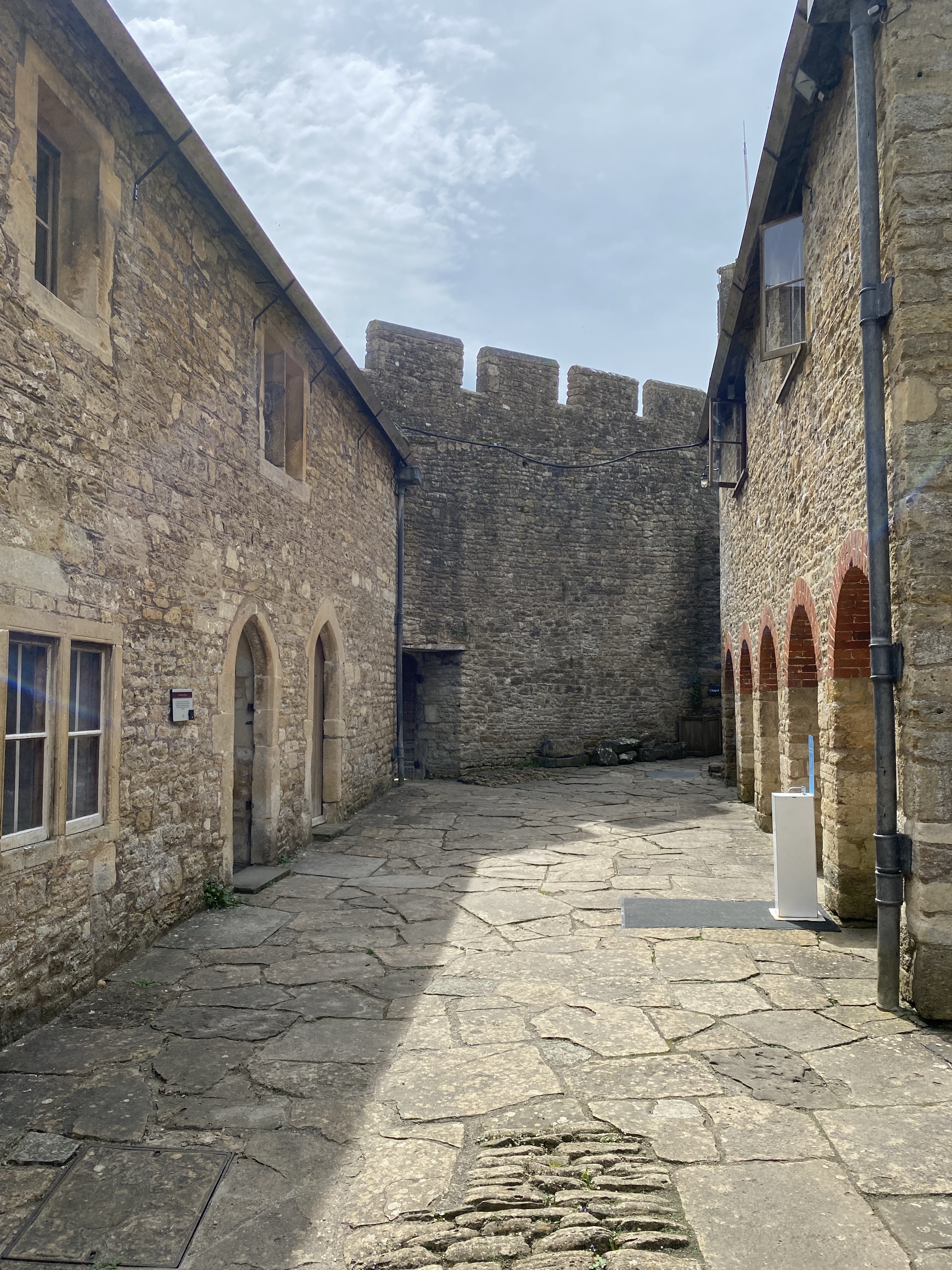
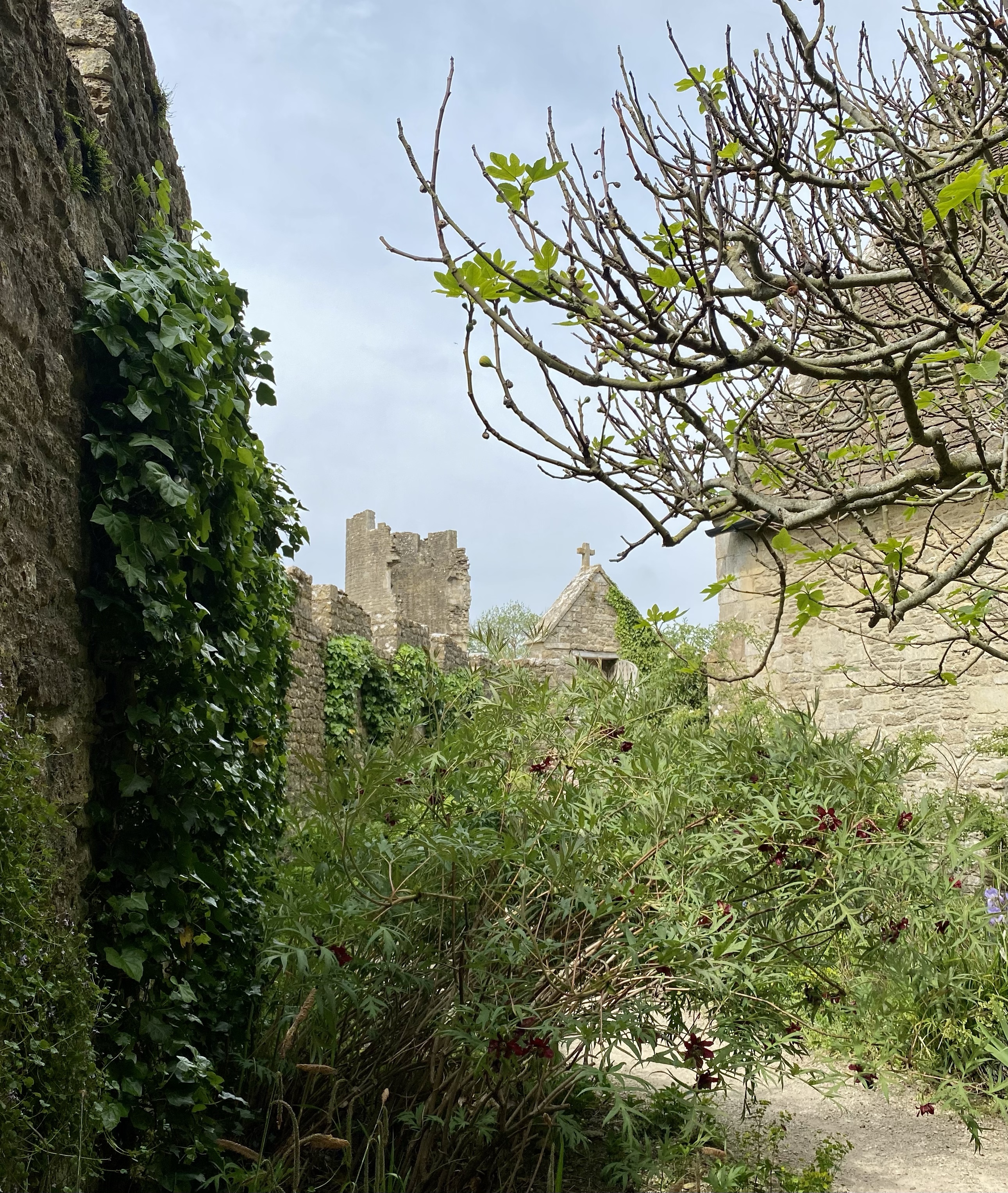
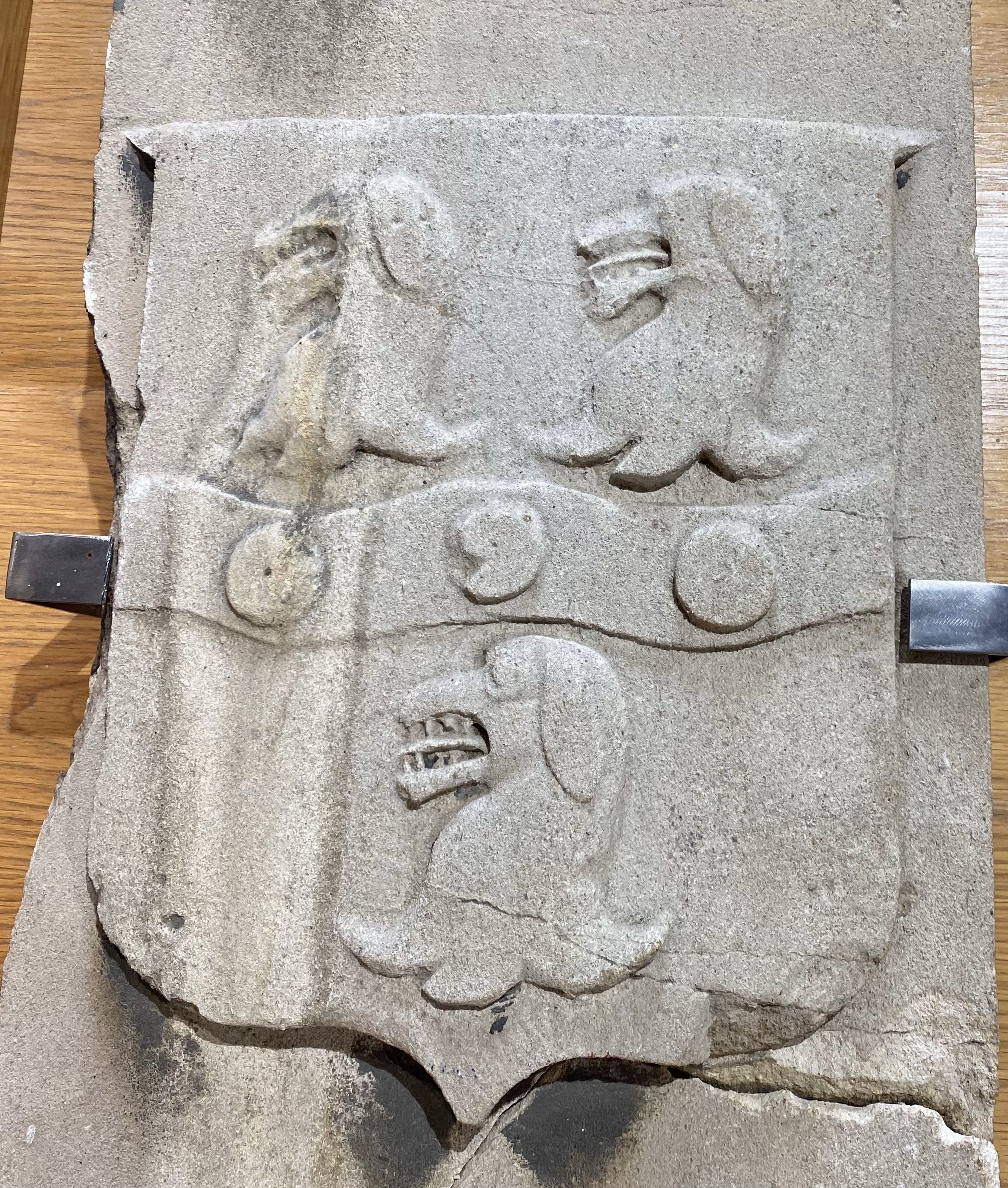
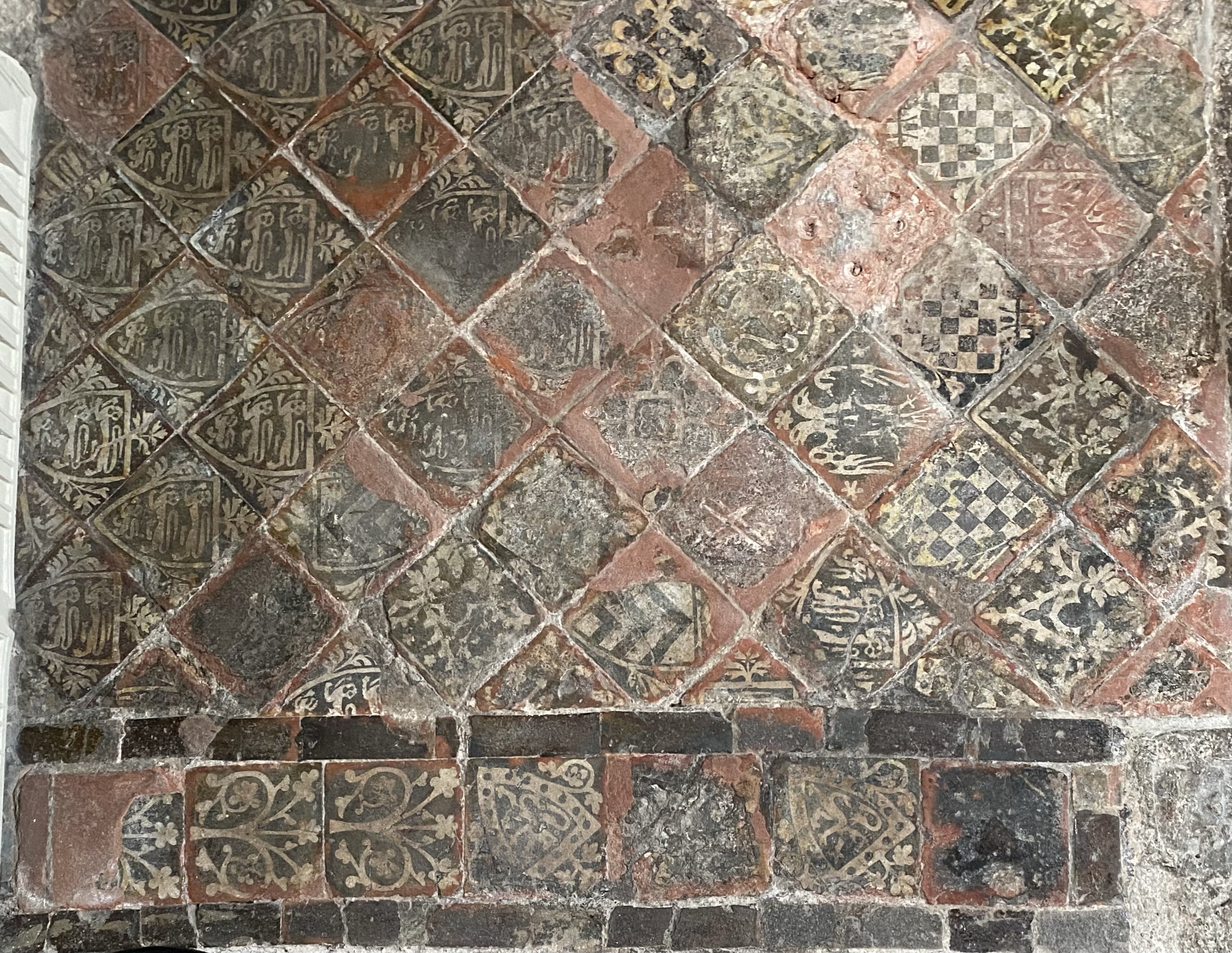
The castle was actually ruins so more a field of stones than castle but they did a nice job with audio equipment to describe the site. There was also a medieval chapel that had some nice surviving paintings and tombs for several Hungerfords. The crypt included some medieval coffins which was quite creepy. They didn’t look big enough for bodies and had a flat look kind of like they were formed around the bodies.
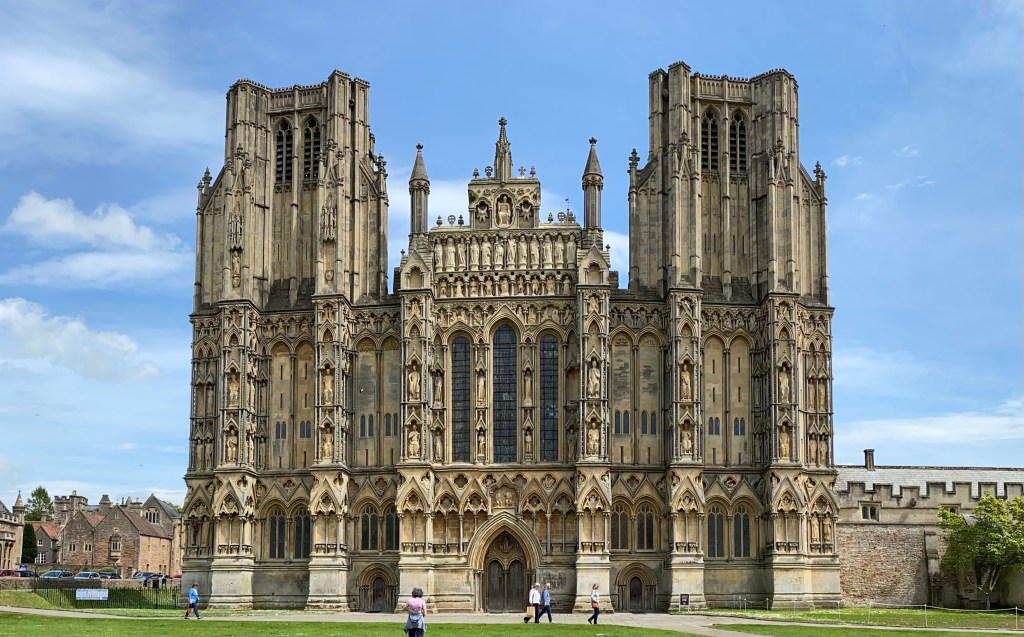
For the afternoon we headed into Wells for lunch the Cathedral and the Bishop’s House. Wells is a great little city. We had a little time to shop and I found a great bee pendant and another Victorian medal. Both of which I am very happy with. There hasn’t been as much shopping as I would like but we have been able to find a couple of great places and I am bringing home some great pieces.
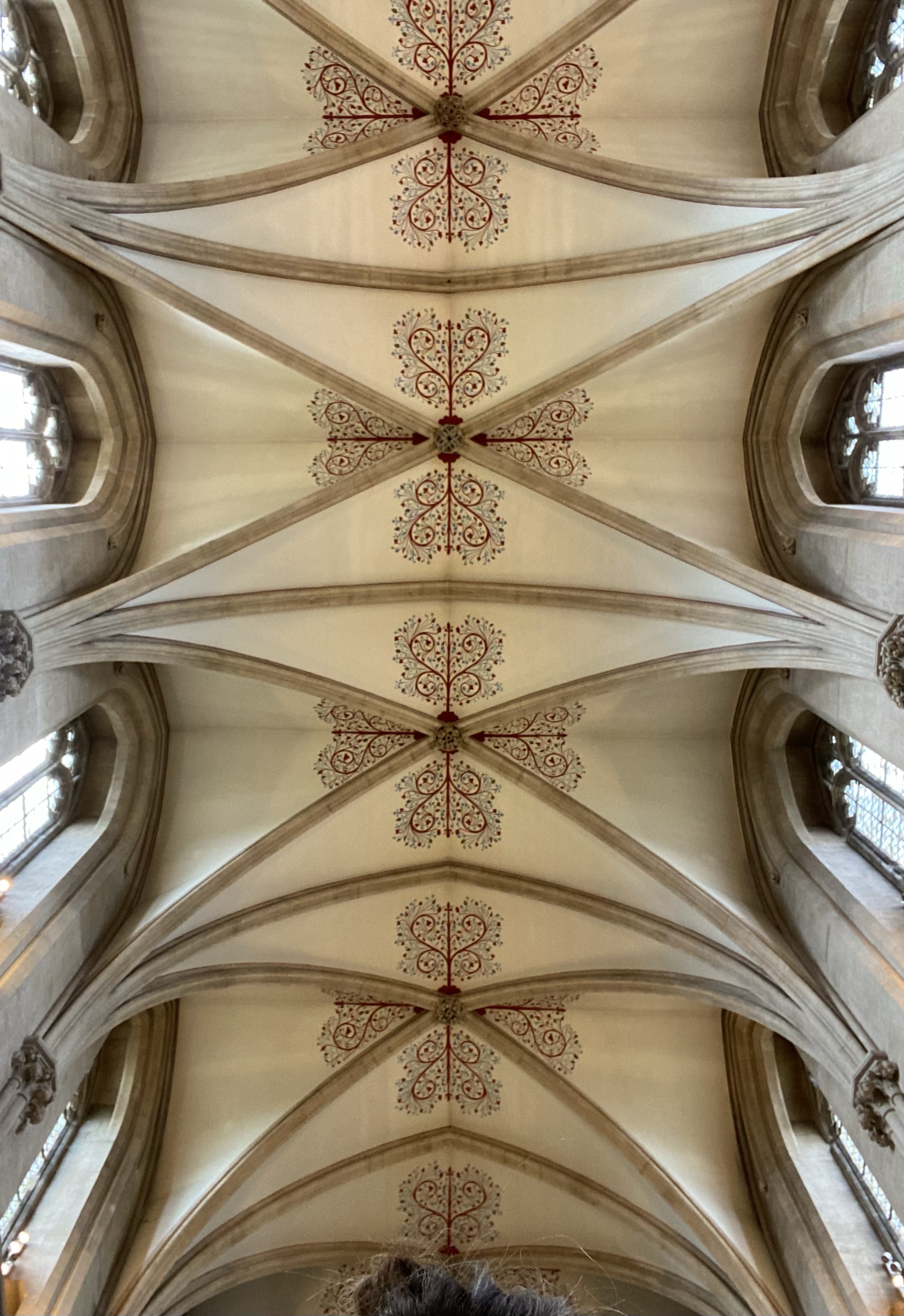
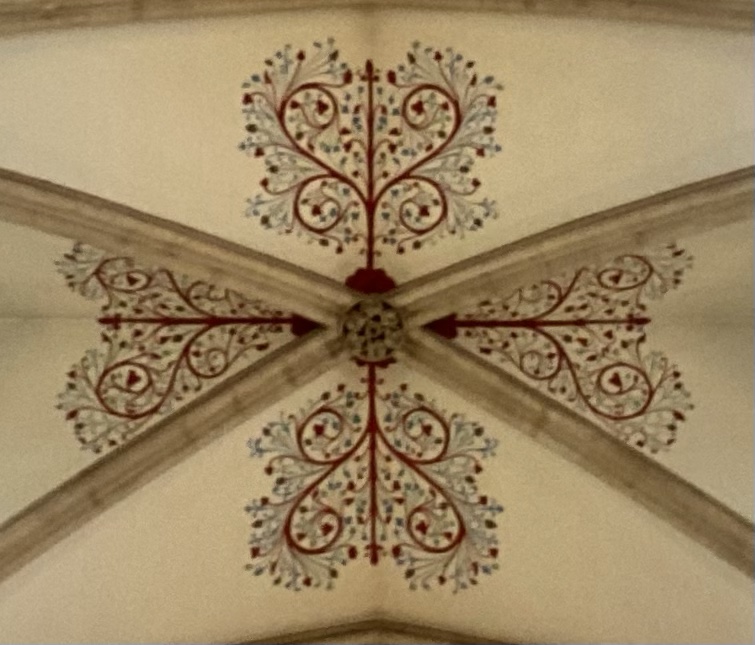
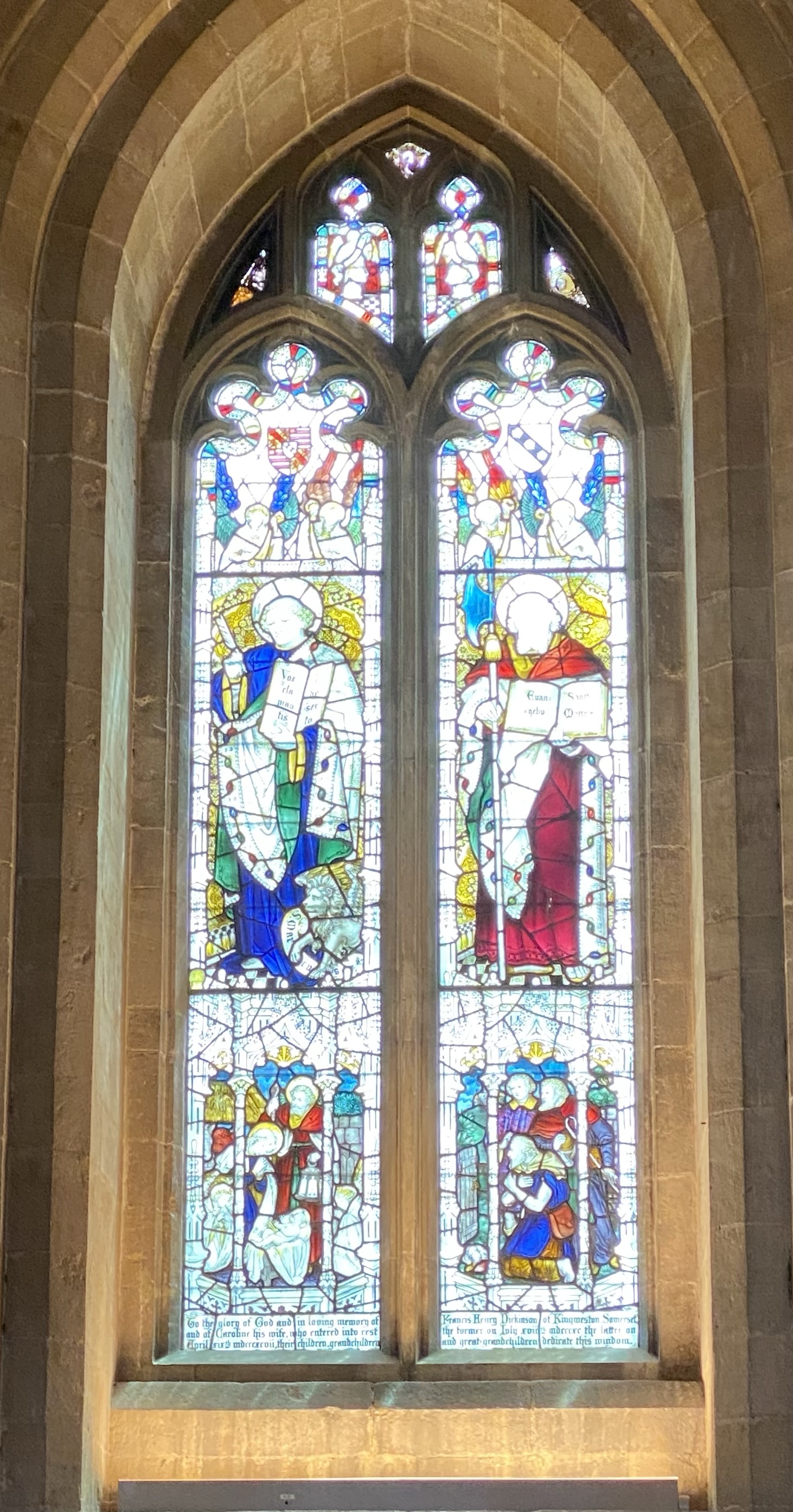
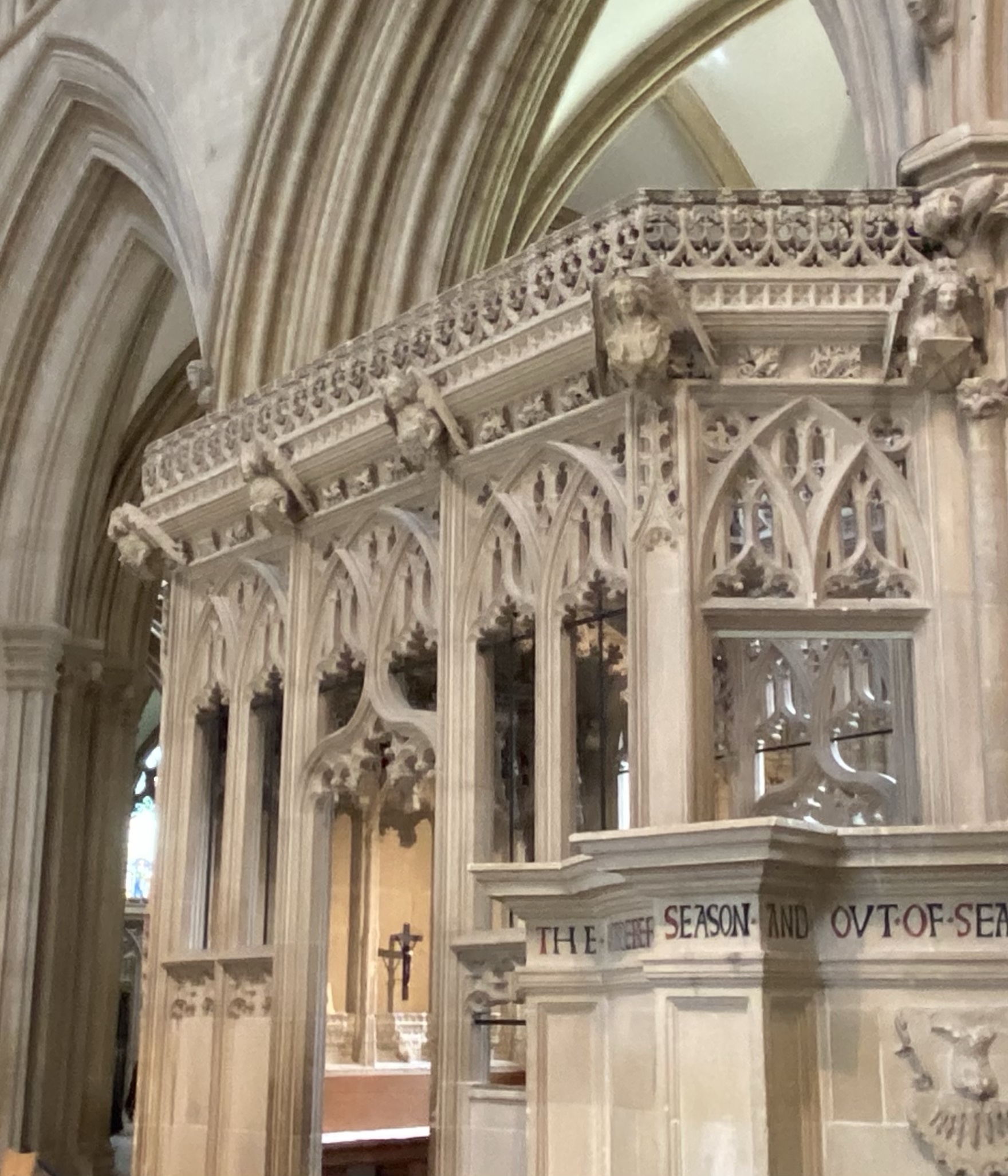
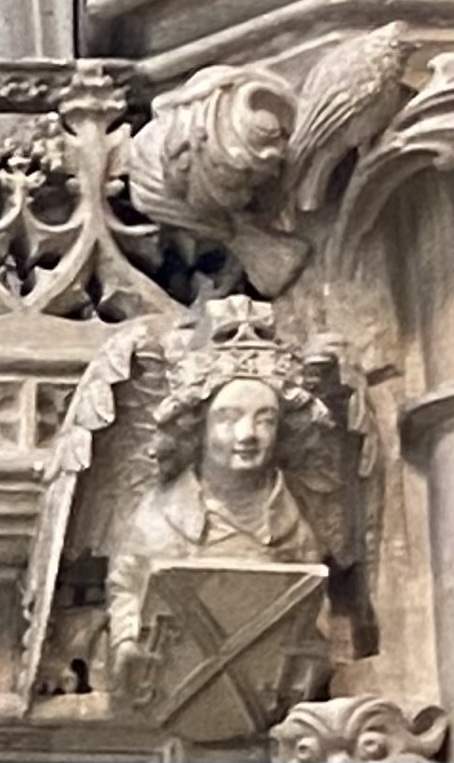
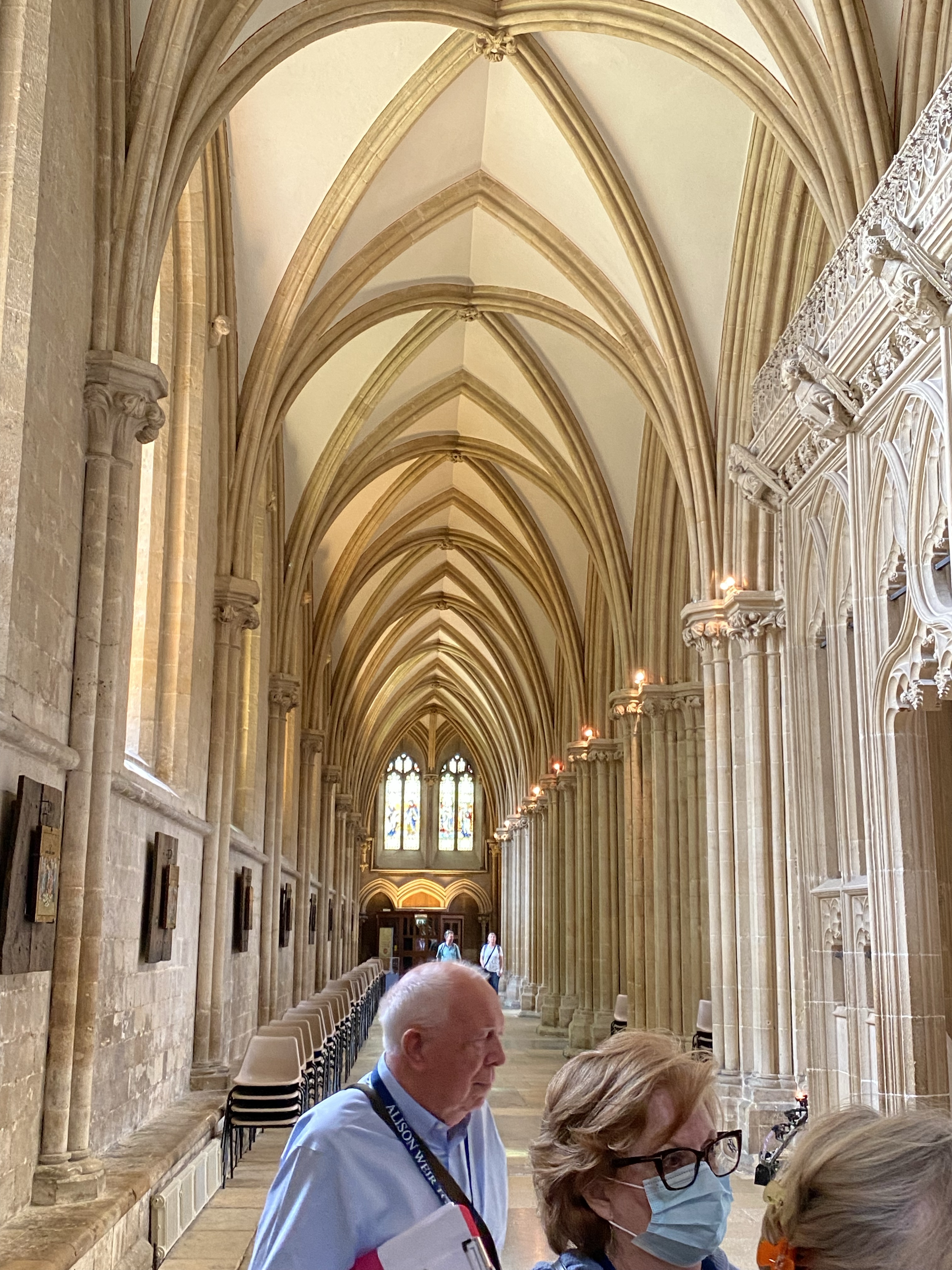
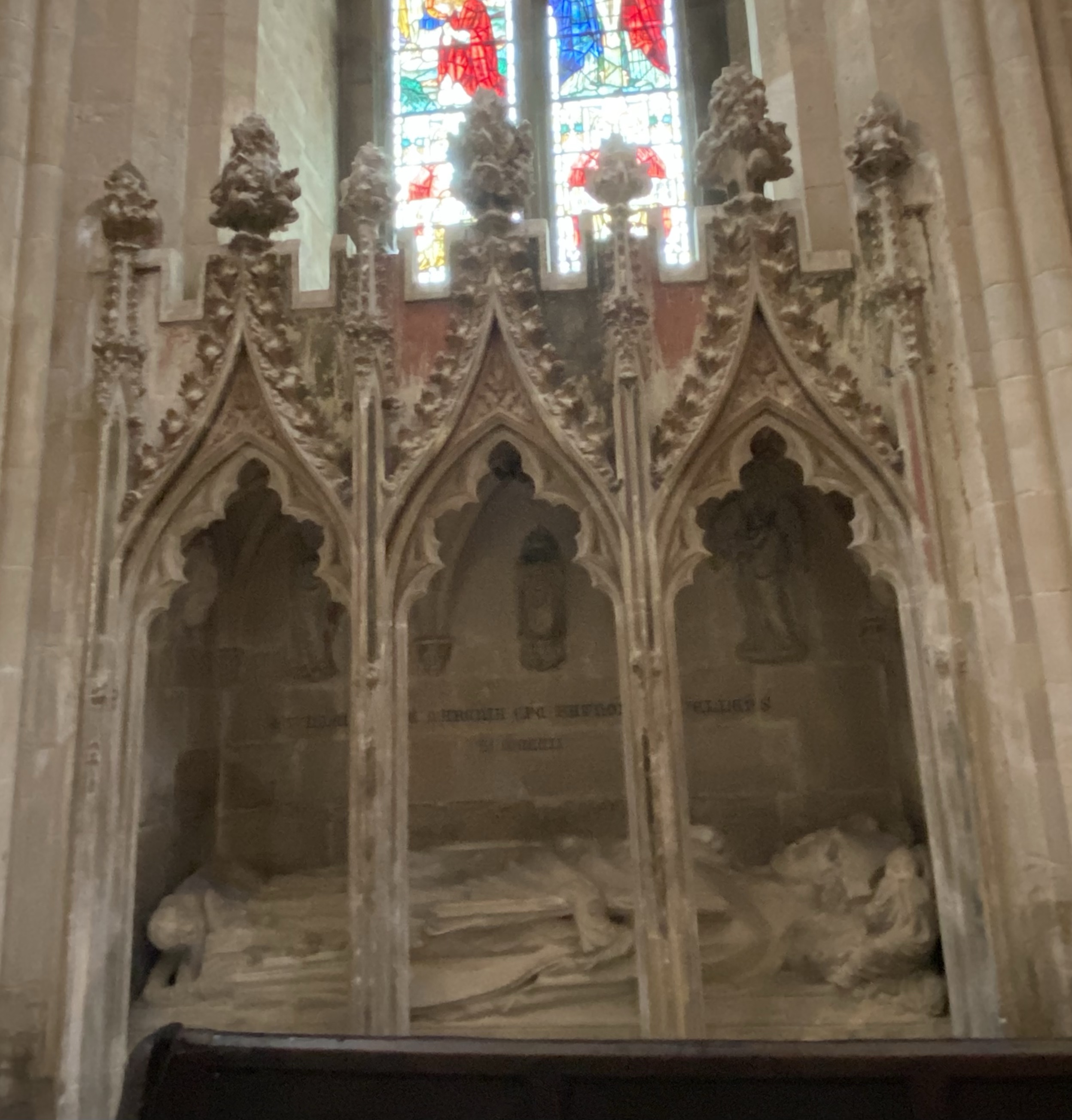
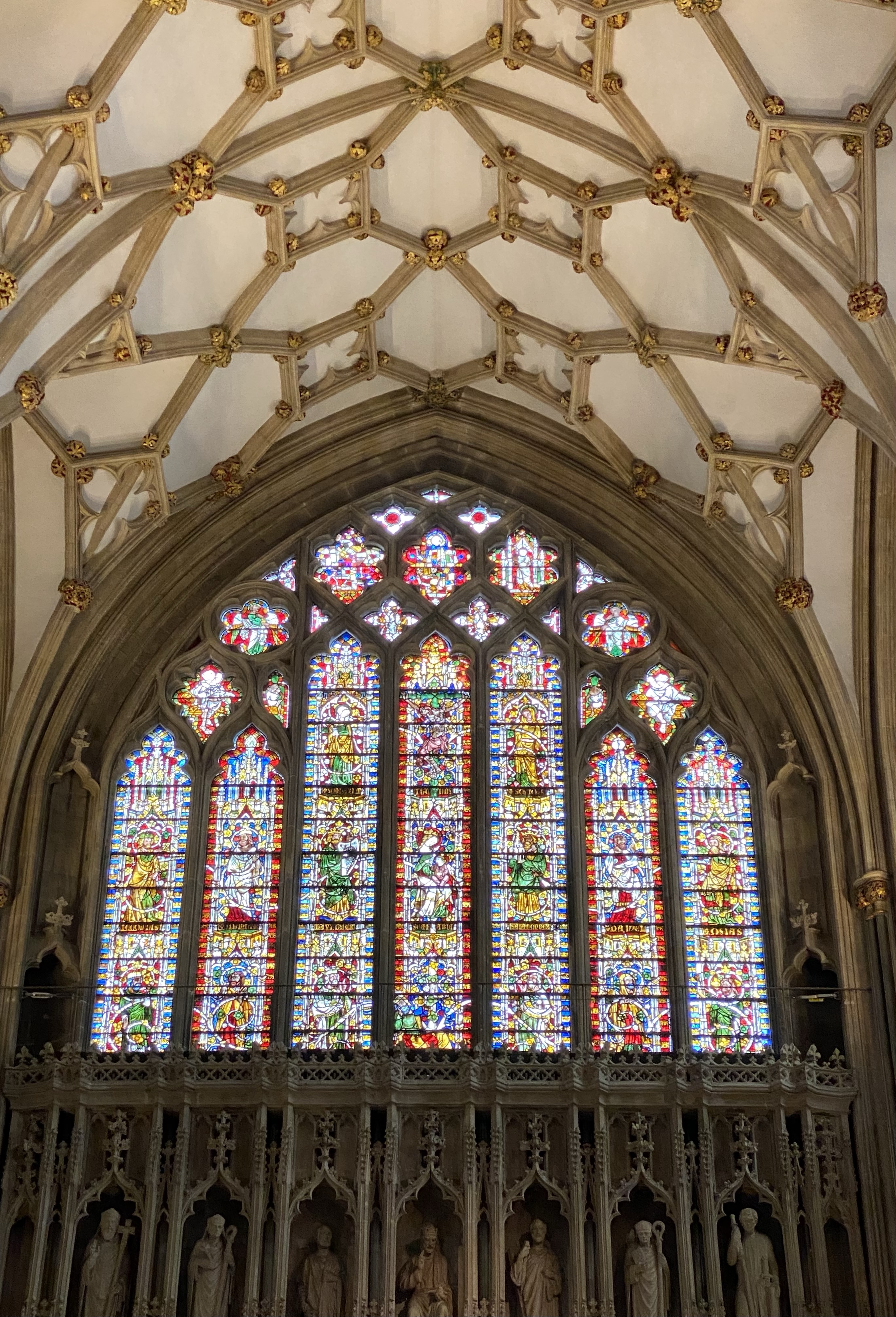
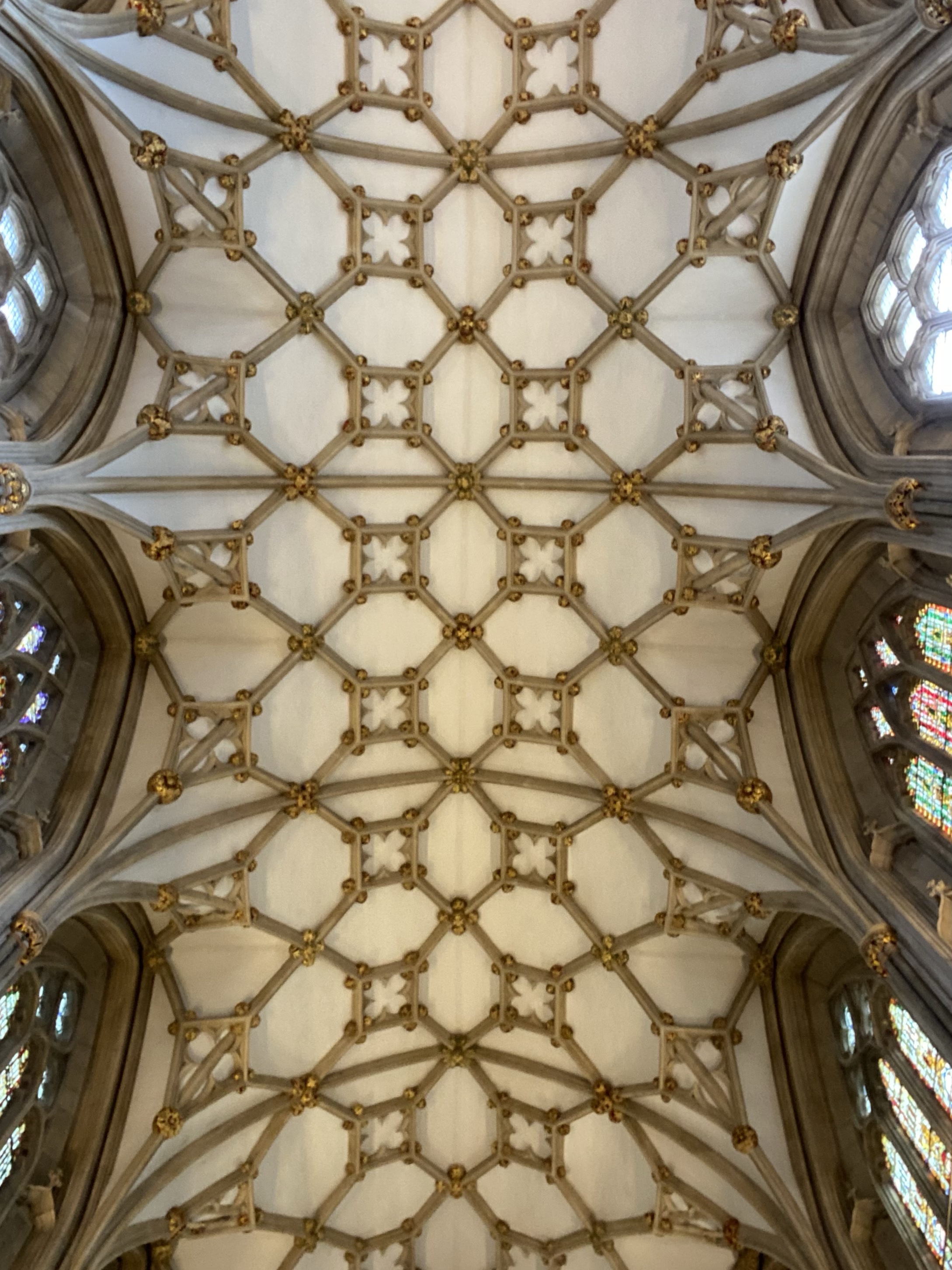
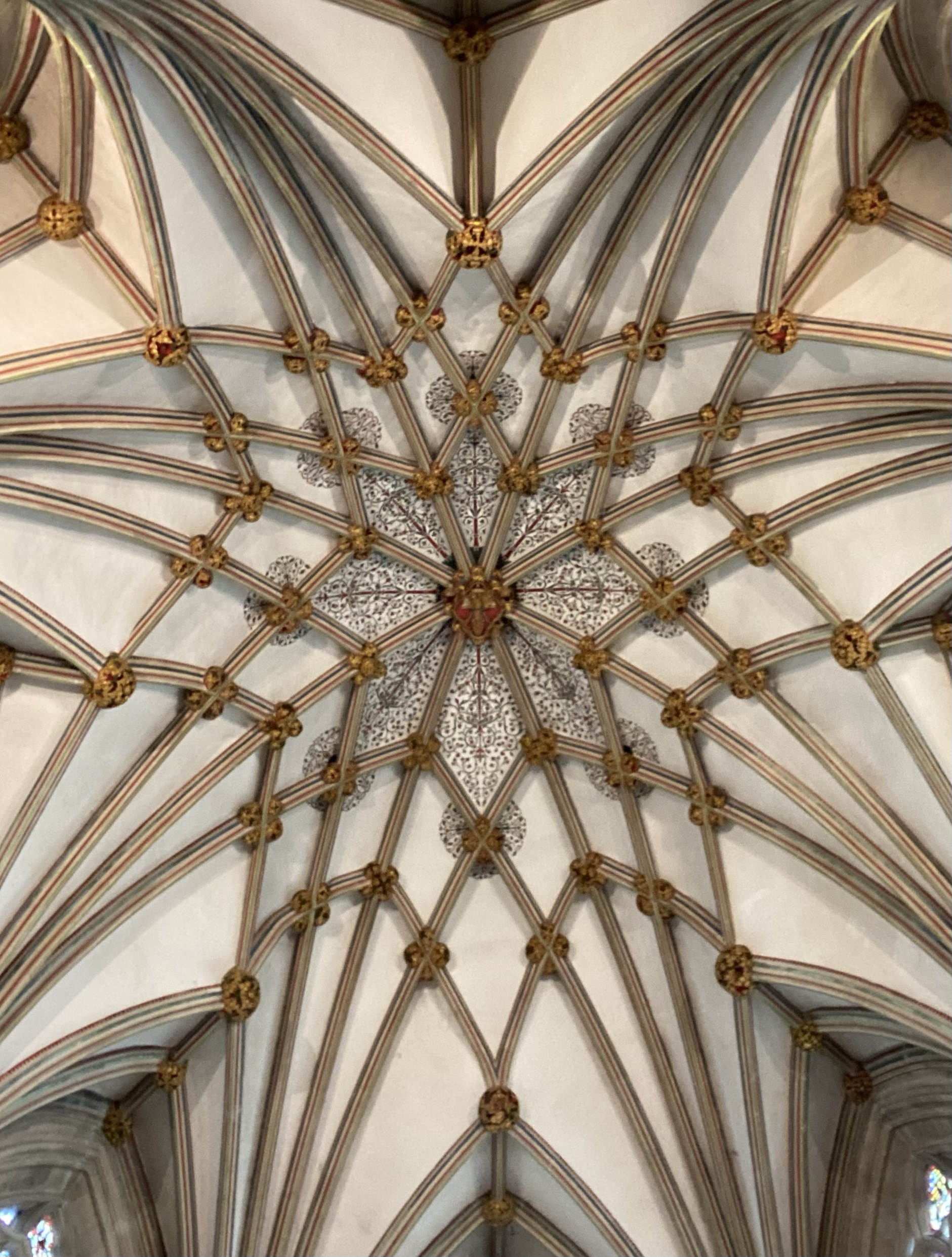
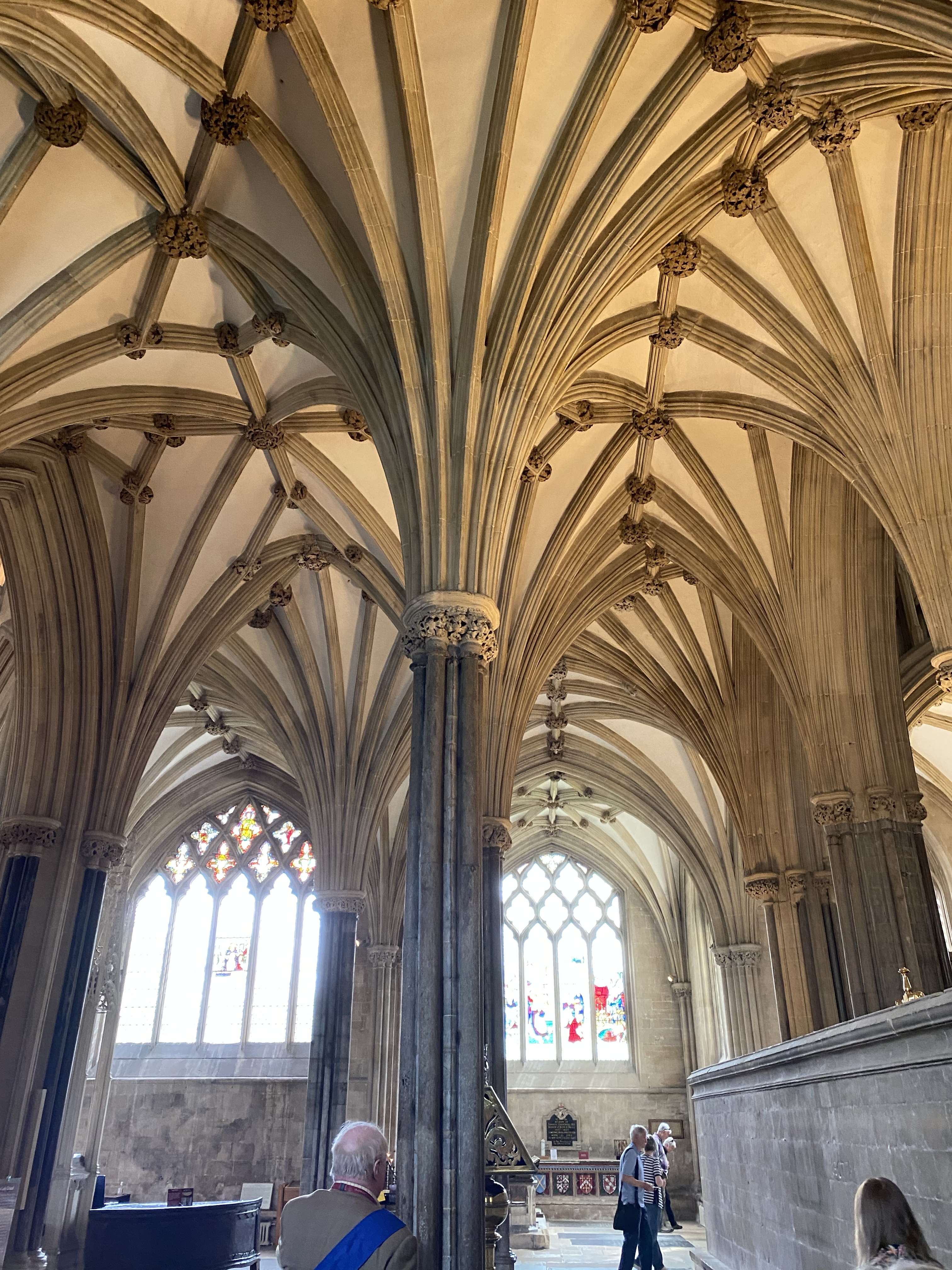
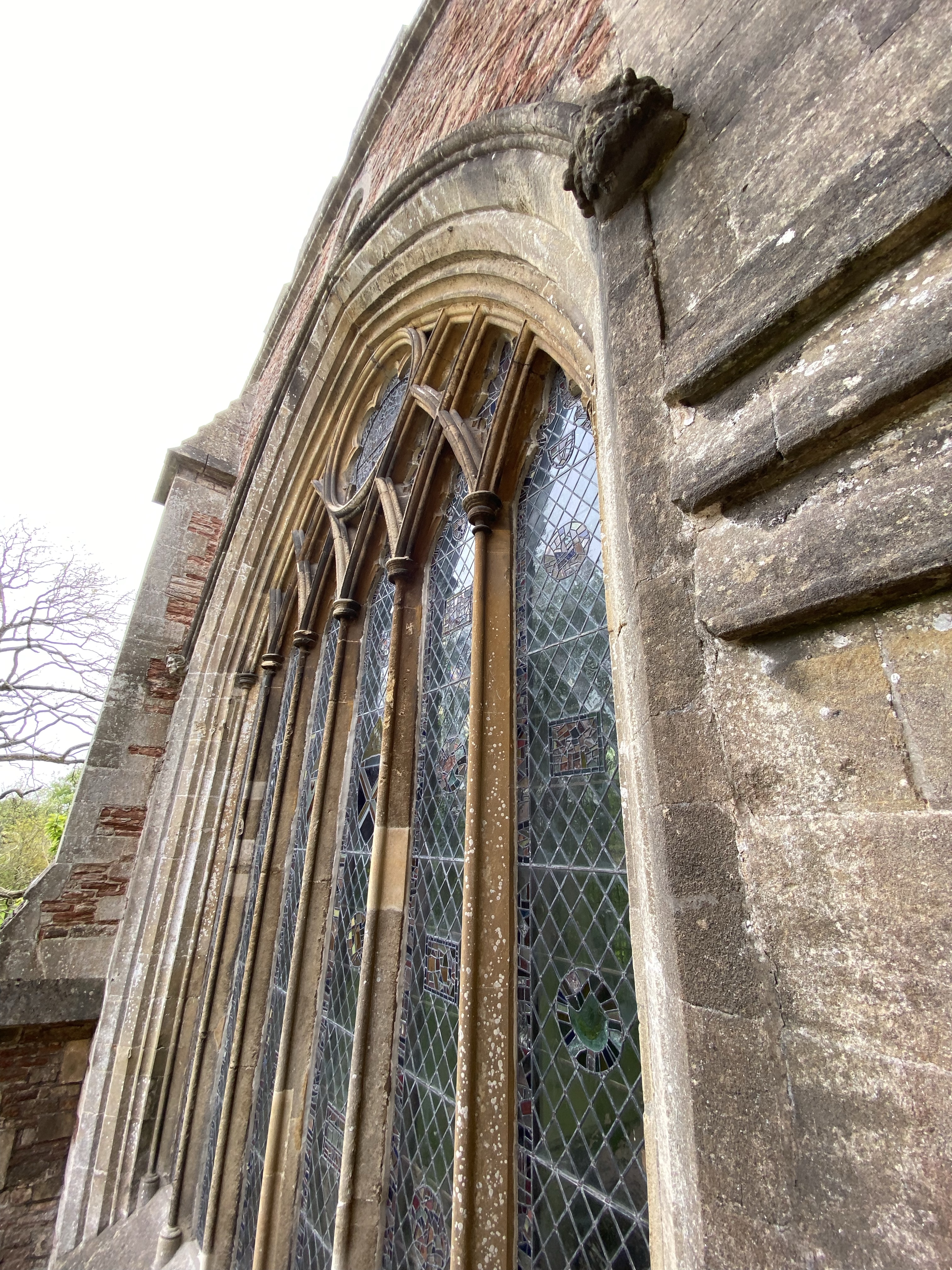
The Wells Cathedral is wonderful. It is very grand and full of great stained glass, statutes/carvings, and embroidery. Our tour guide was more into the carvings so that is what we saw. Alison was disappointed that he didn’t point out more Tudor references but she did some of that for us.
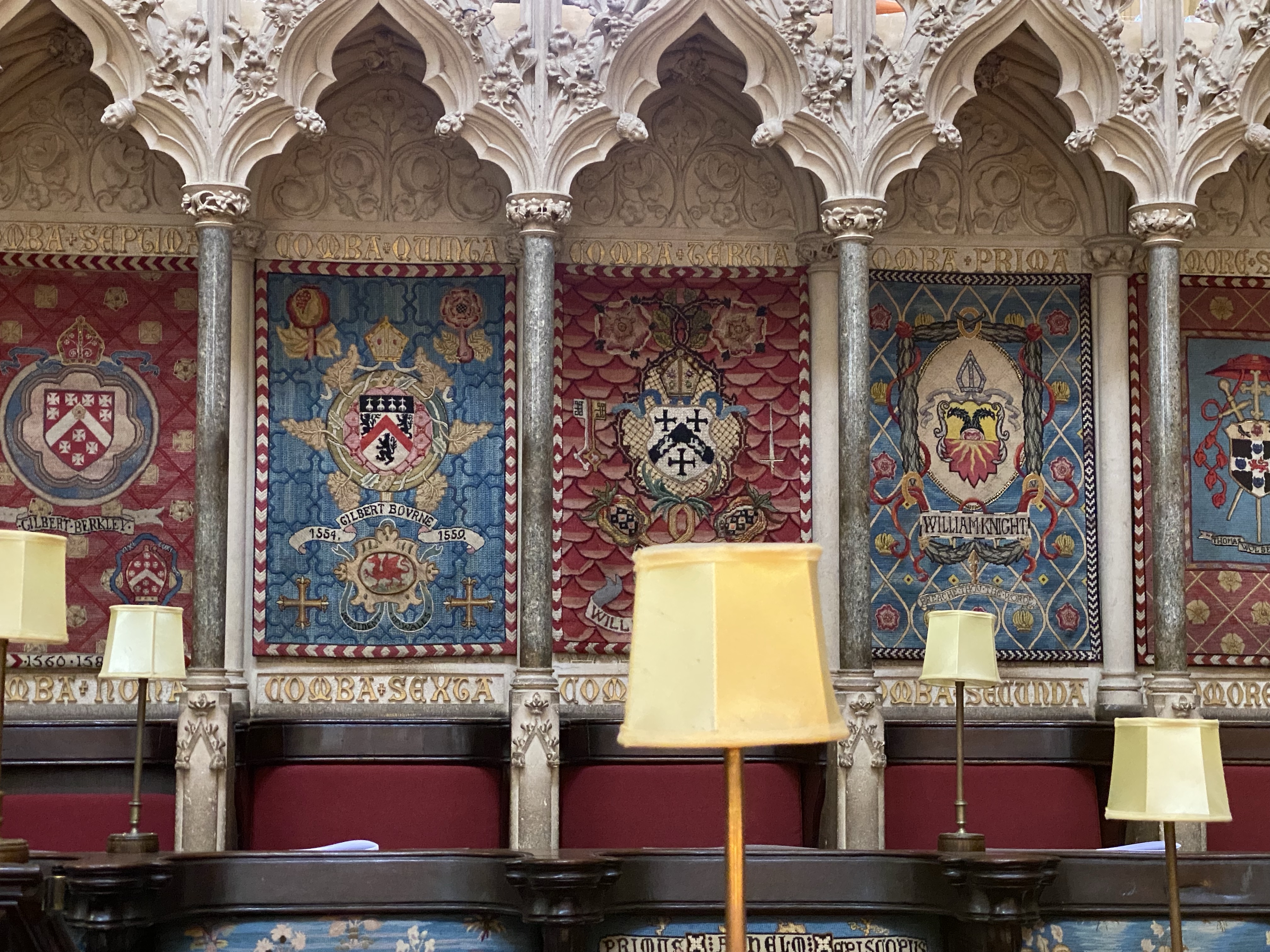
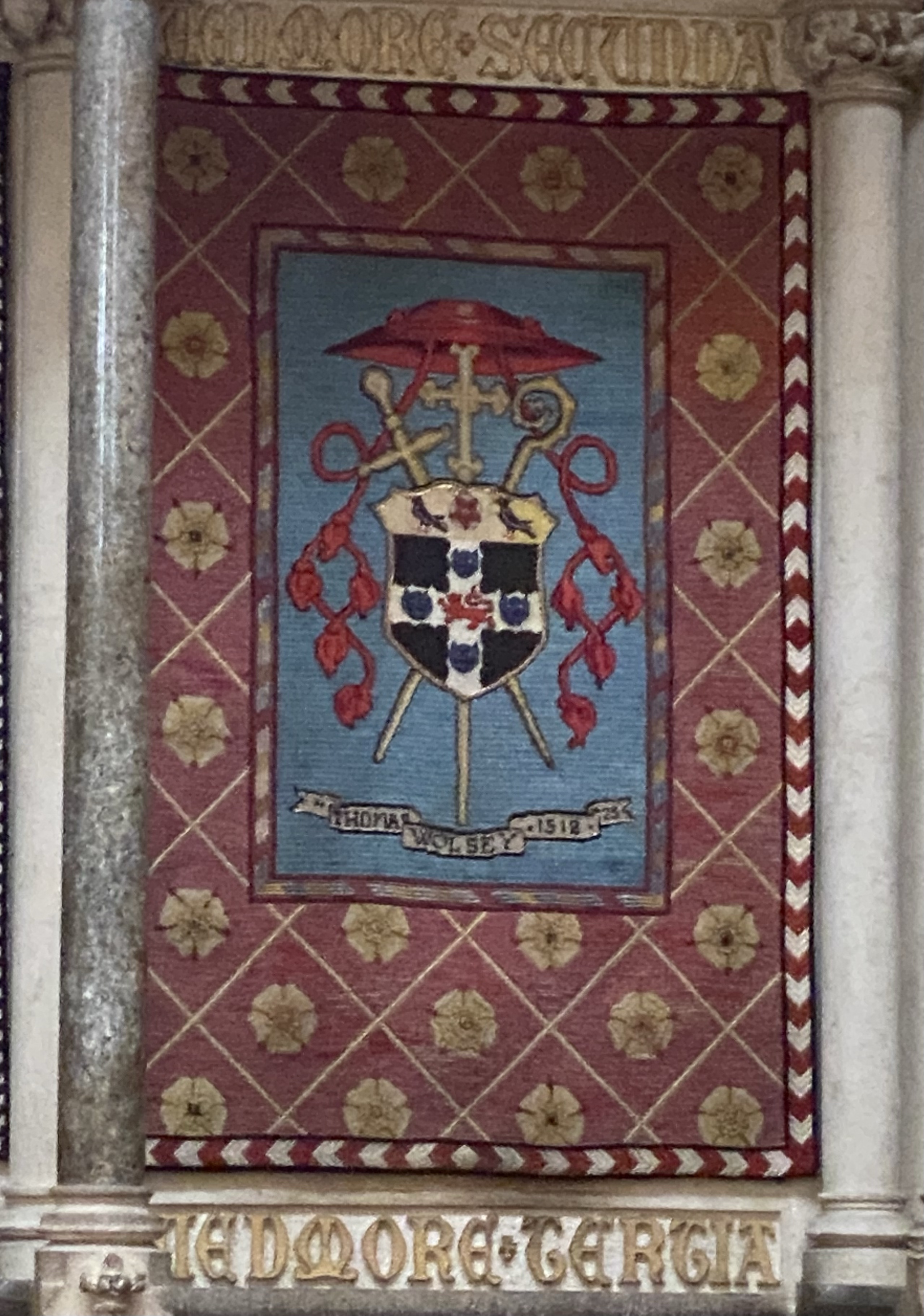
The embroidered cushions in the quire were quite special and from the early 20th century so not old like most things we are seeing but lovely. One of the stained glass windows was 15th century which had recently been restored so it was all bright and shiny.
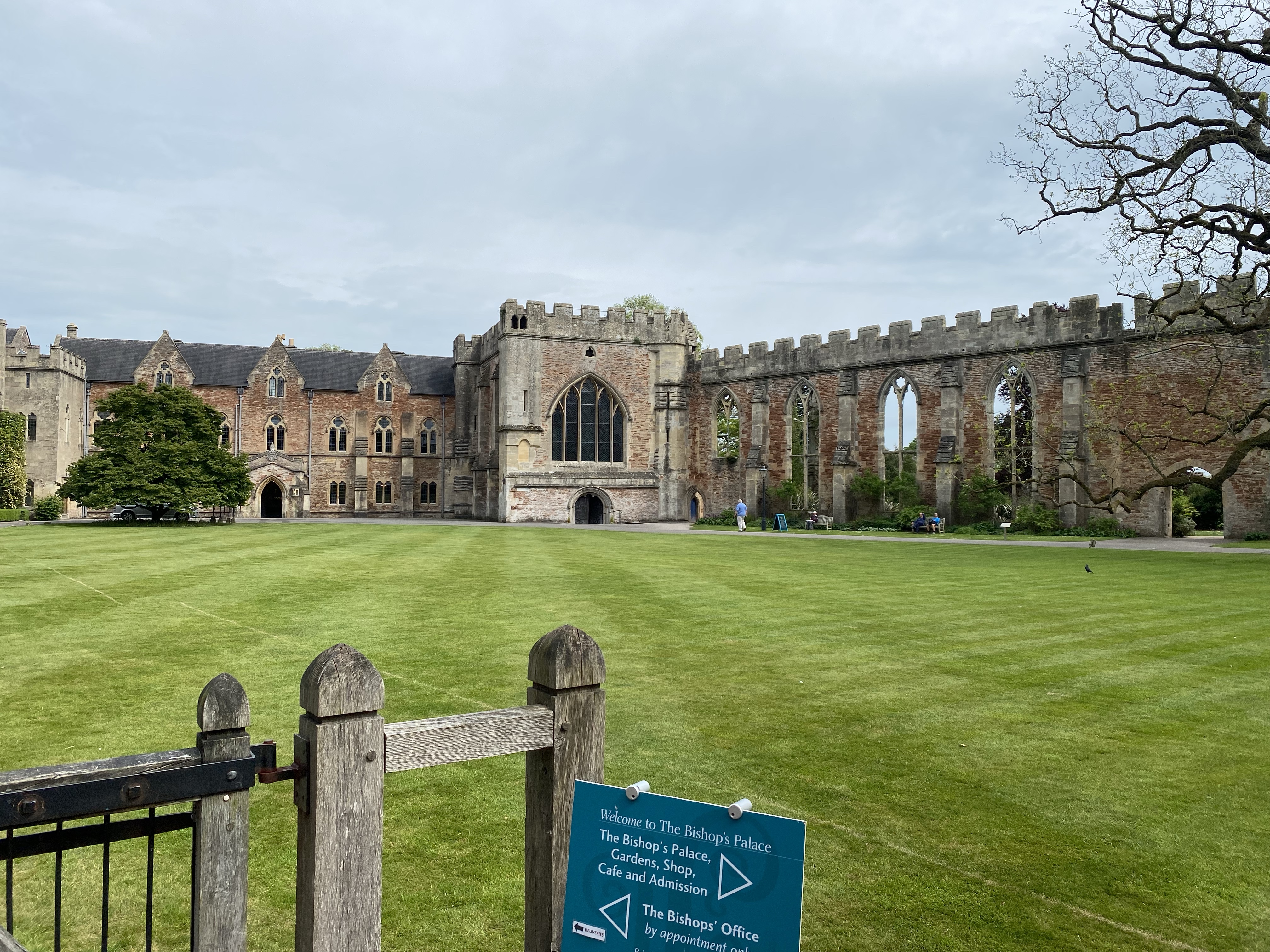
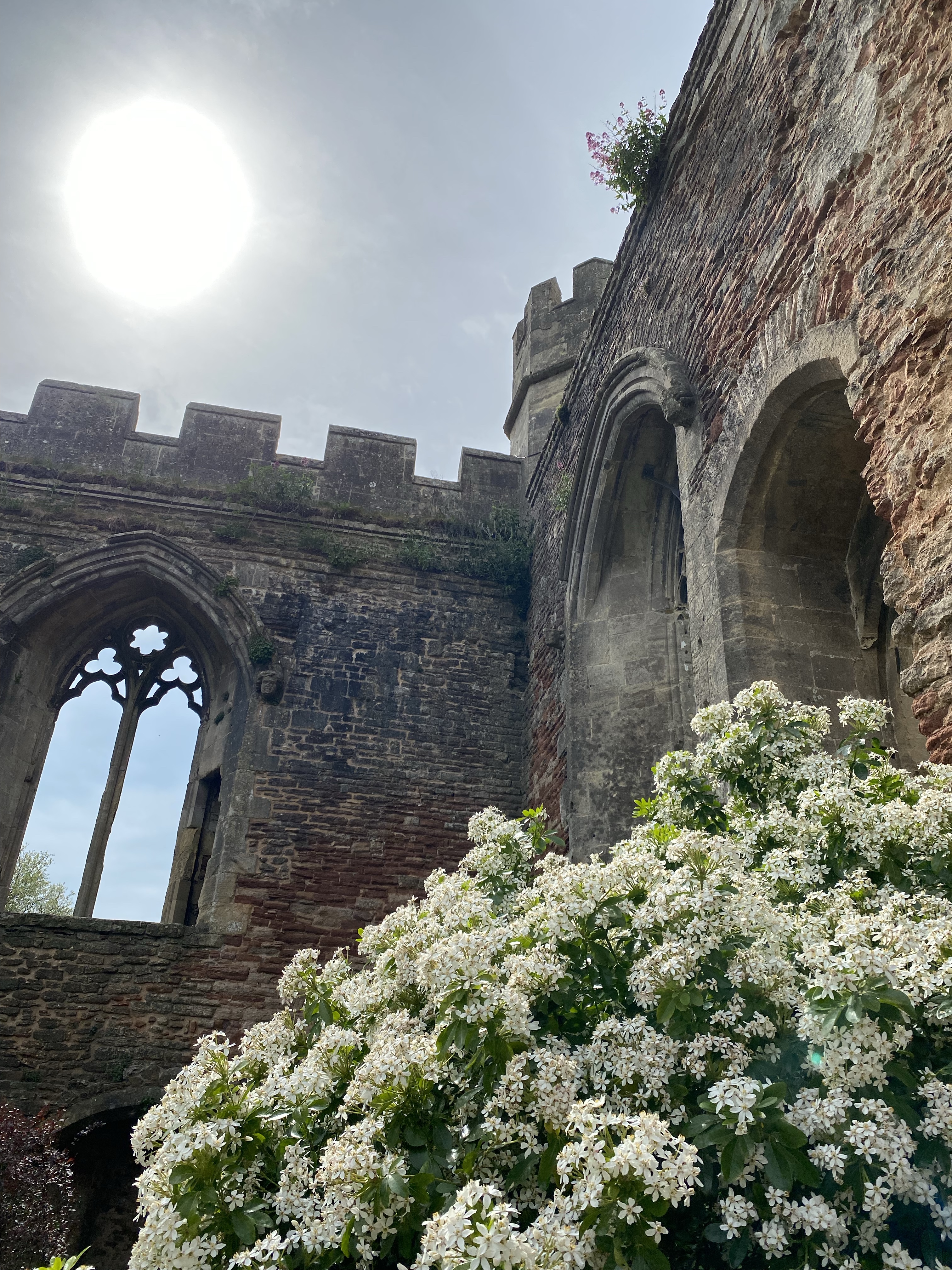
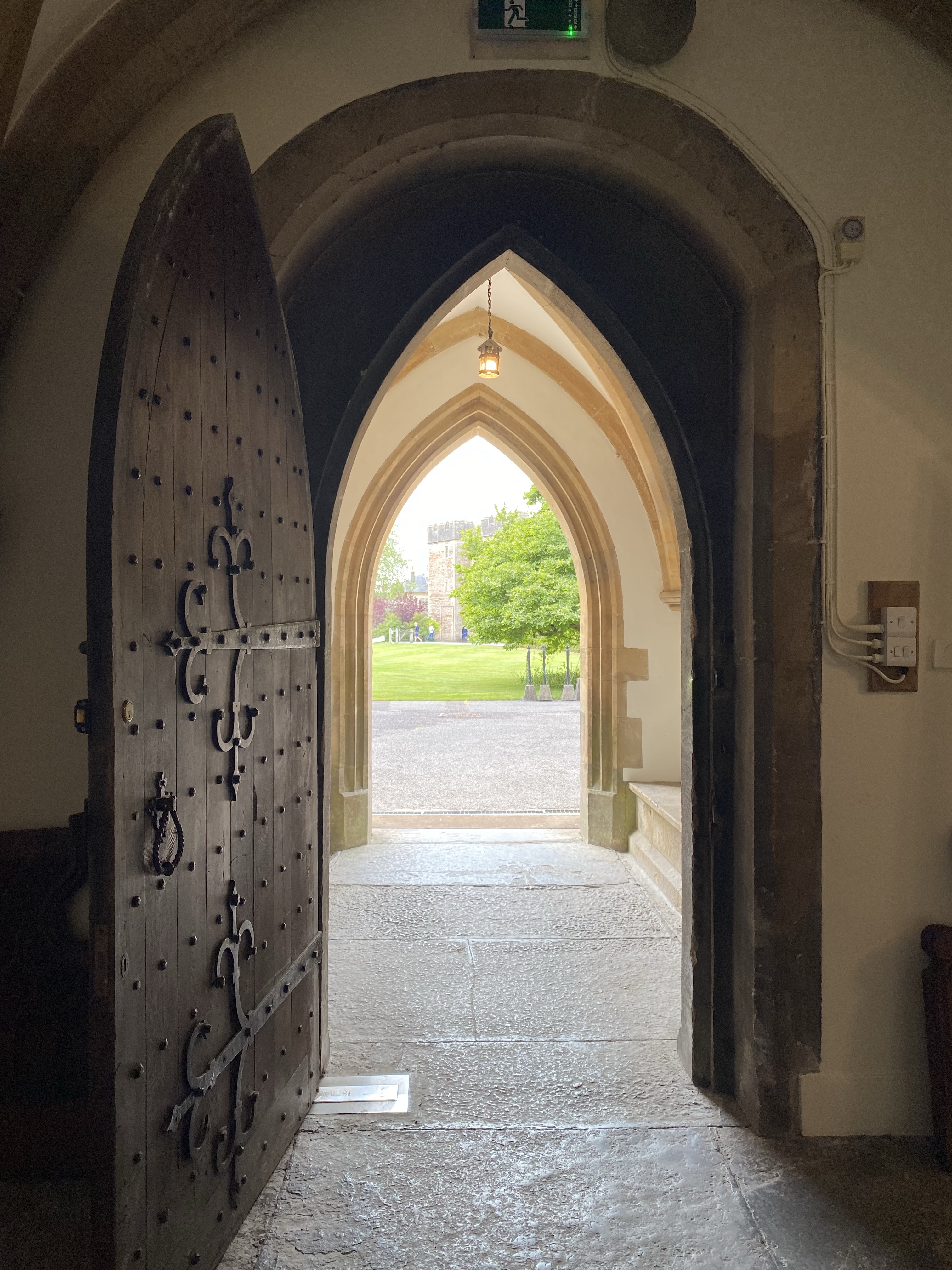
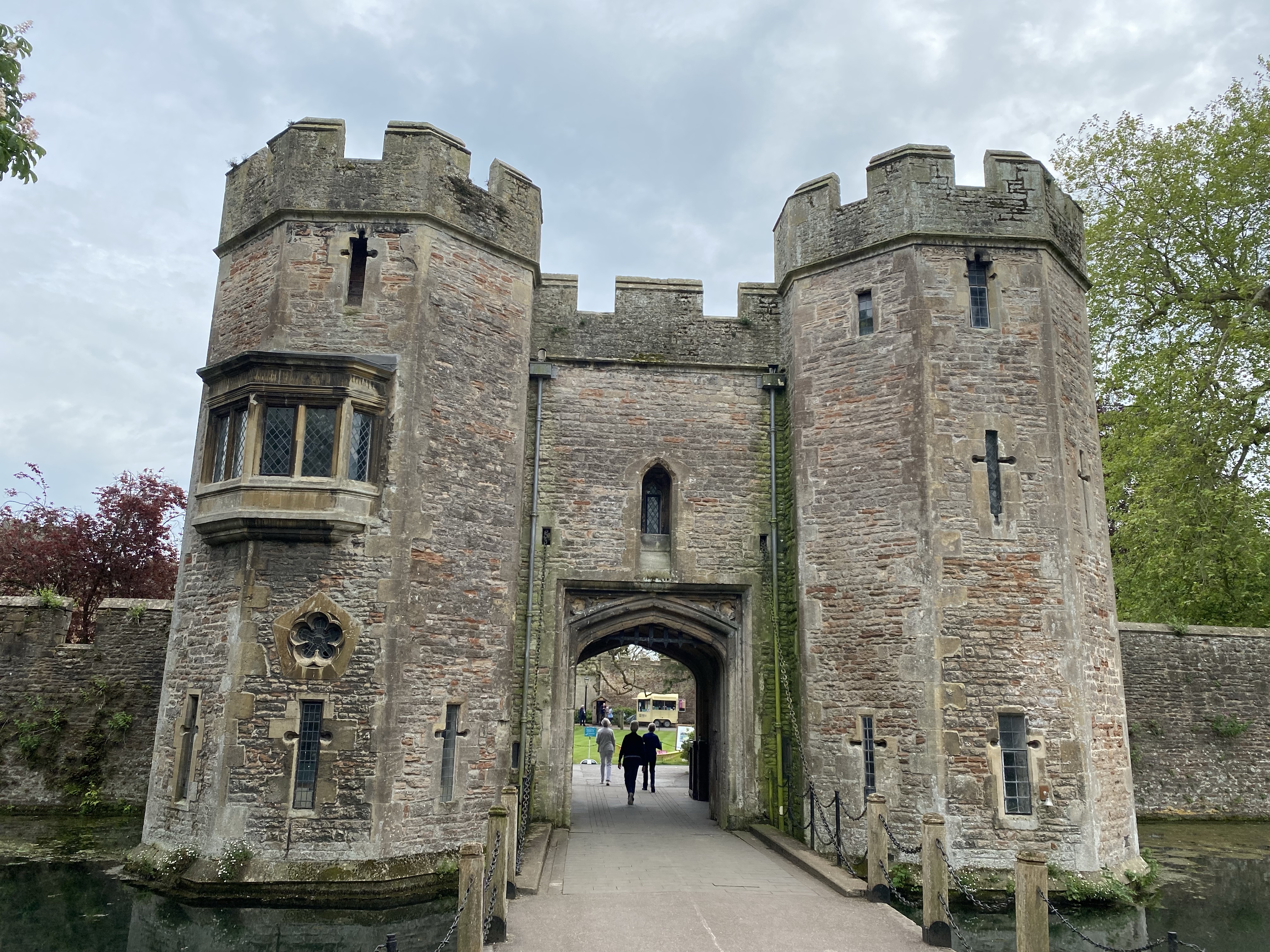
The Bishop’s Palace was more stark, not a lot of adornment (except for green dragons on the staircase.) The palace had a was within the walled part of the city and surrounded by a moat. A portion of it was in ruins but a good portion was still standing and in use today. It had a nice display of how the church and town had changed through the years which was nice to see. It helped put everything in a nice timeline.
On a more modern aspect of the trip the most was home to a family of swans. The swans were trained to ring a bell to get food. Of course the string to the bell was only put out a couple of times a day. I was lucky enough to be there at just the right time to catch it on video. One of our historians had told of us this story but no one really believed him. He was very excited that I had evidence to prove him right.
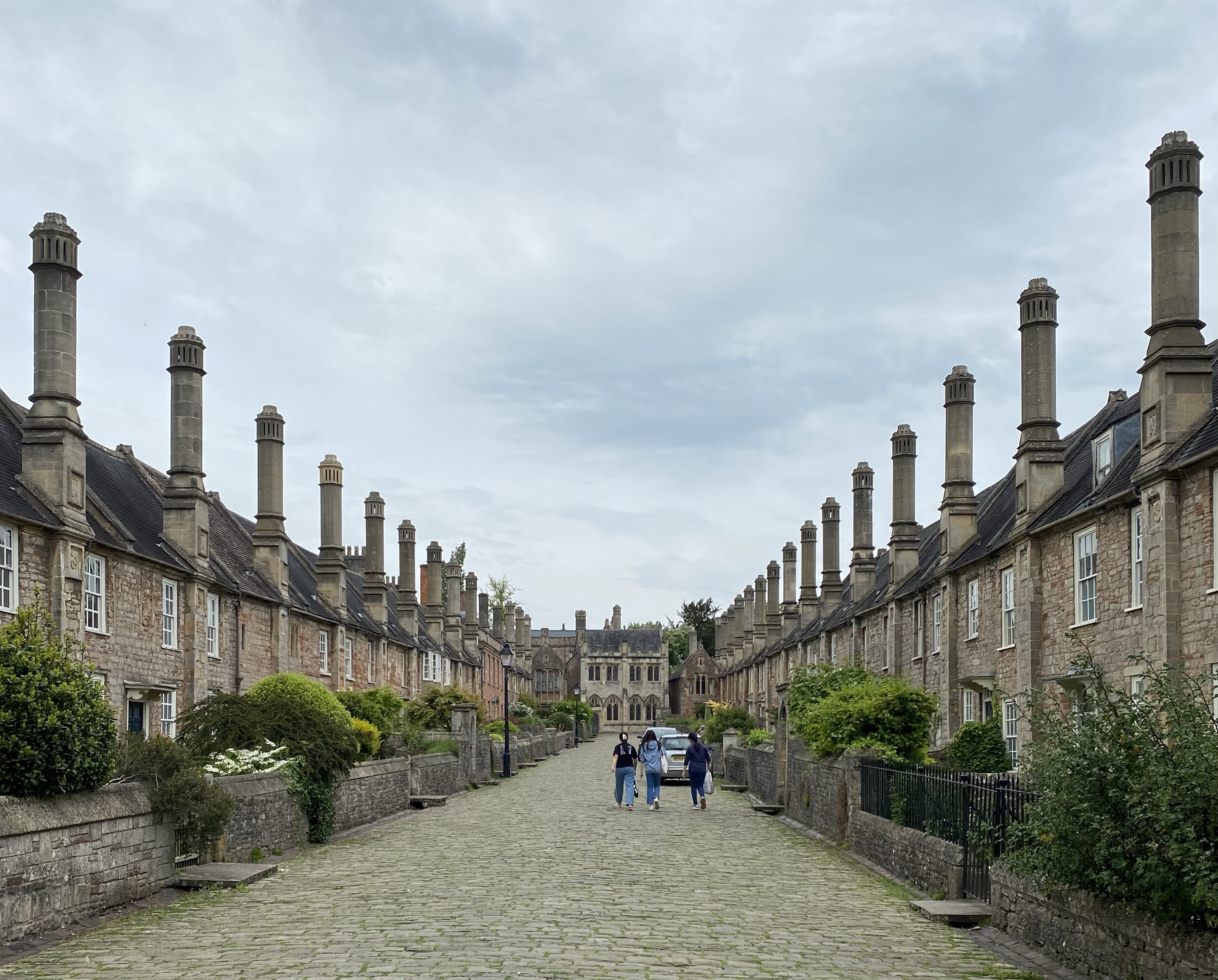
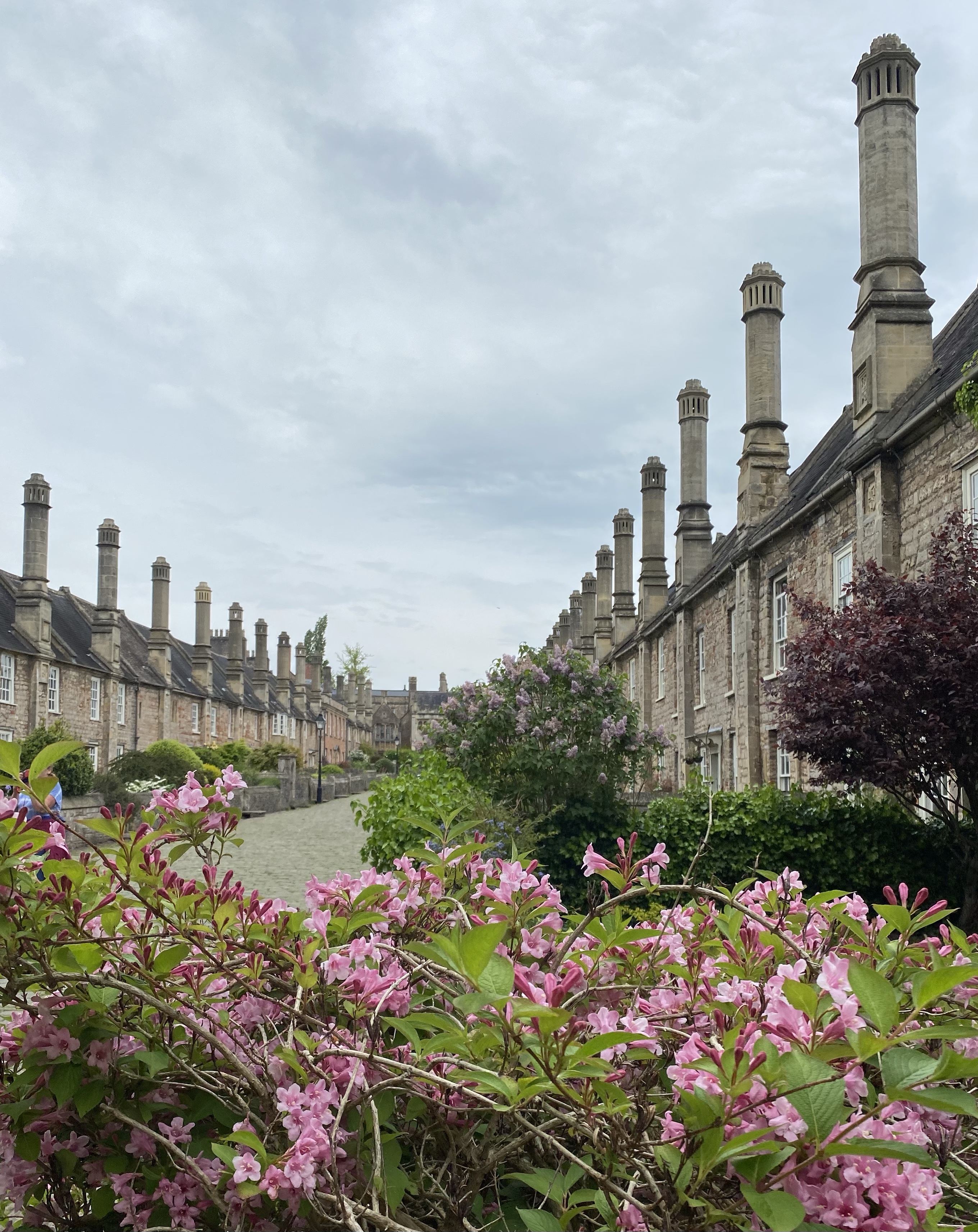
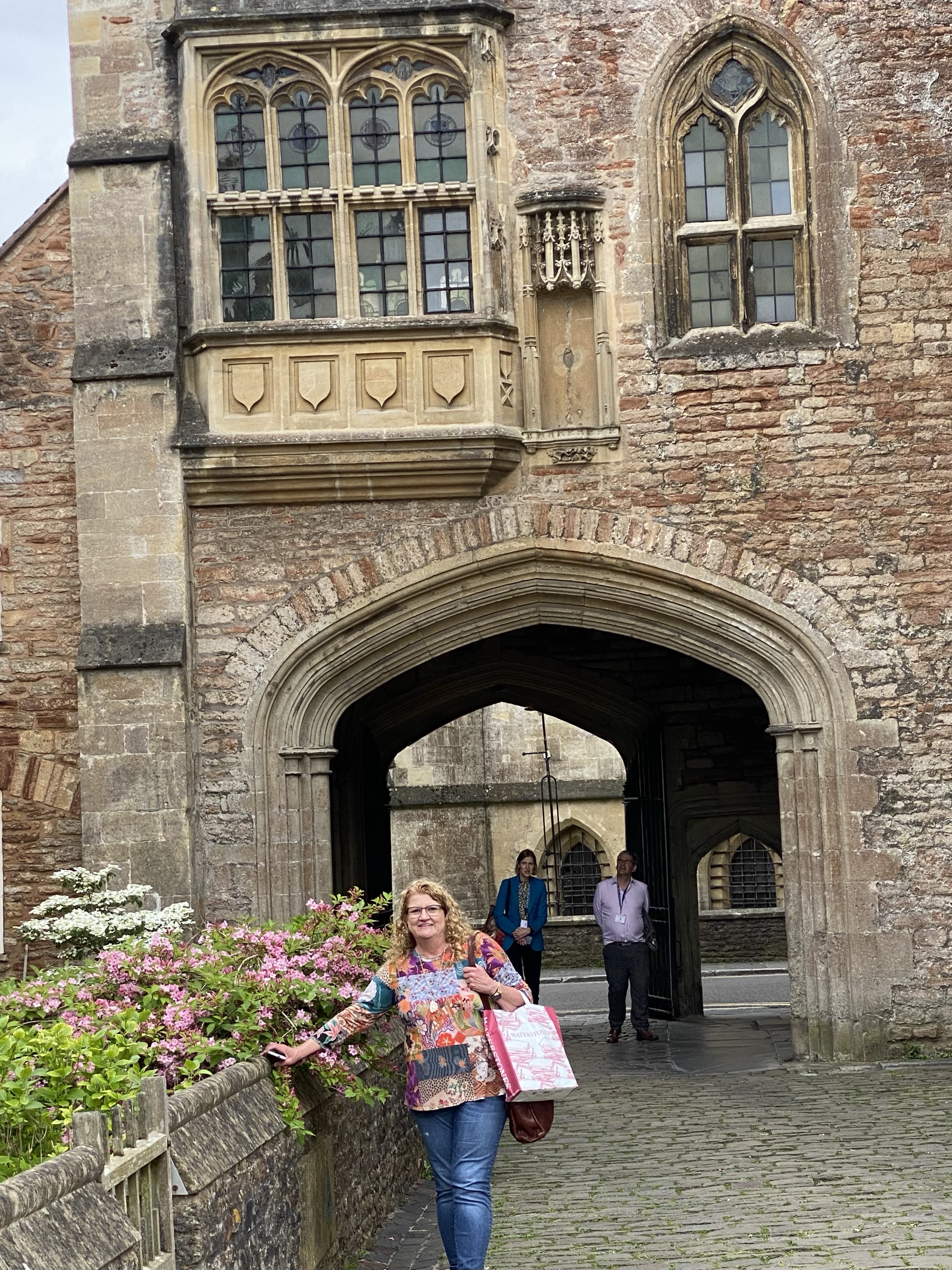
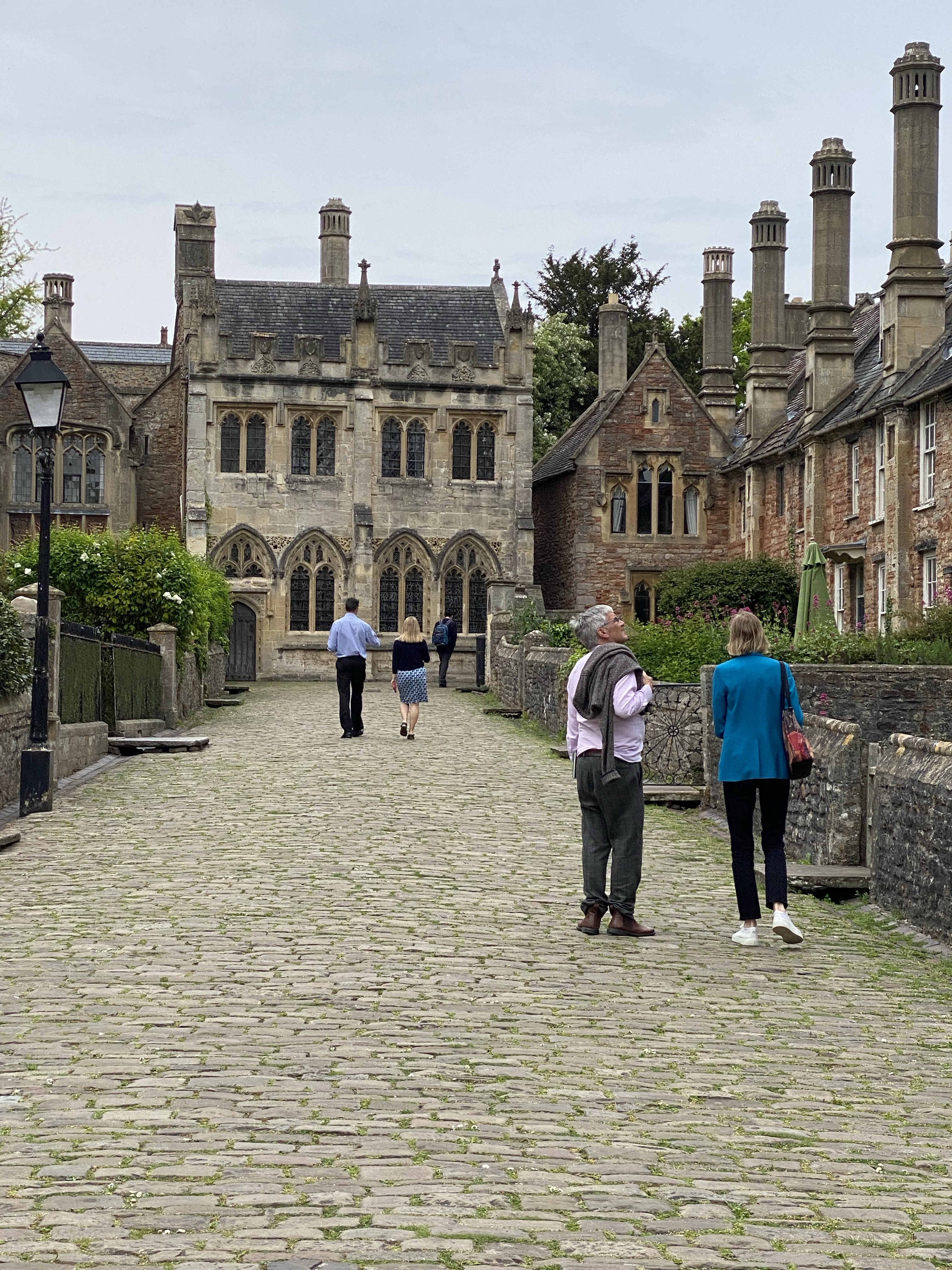
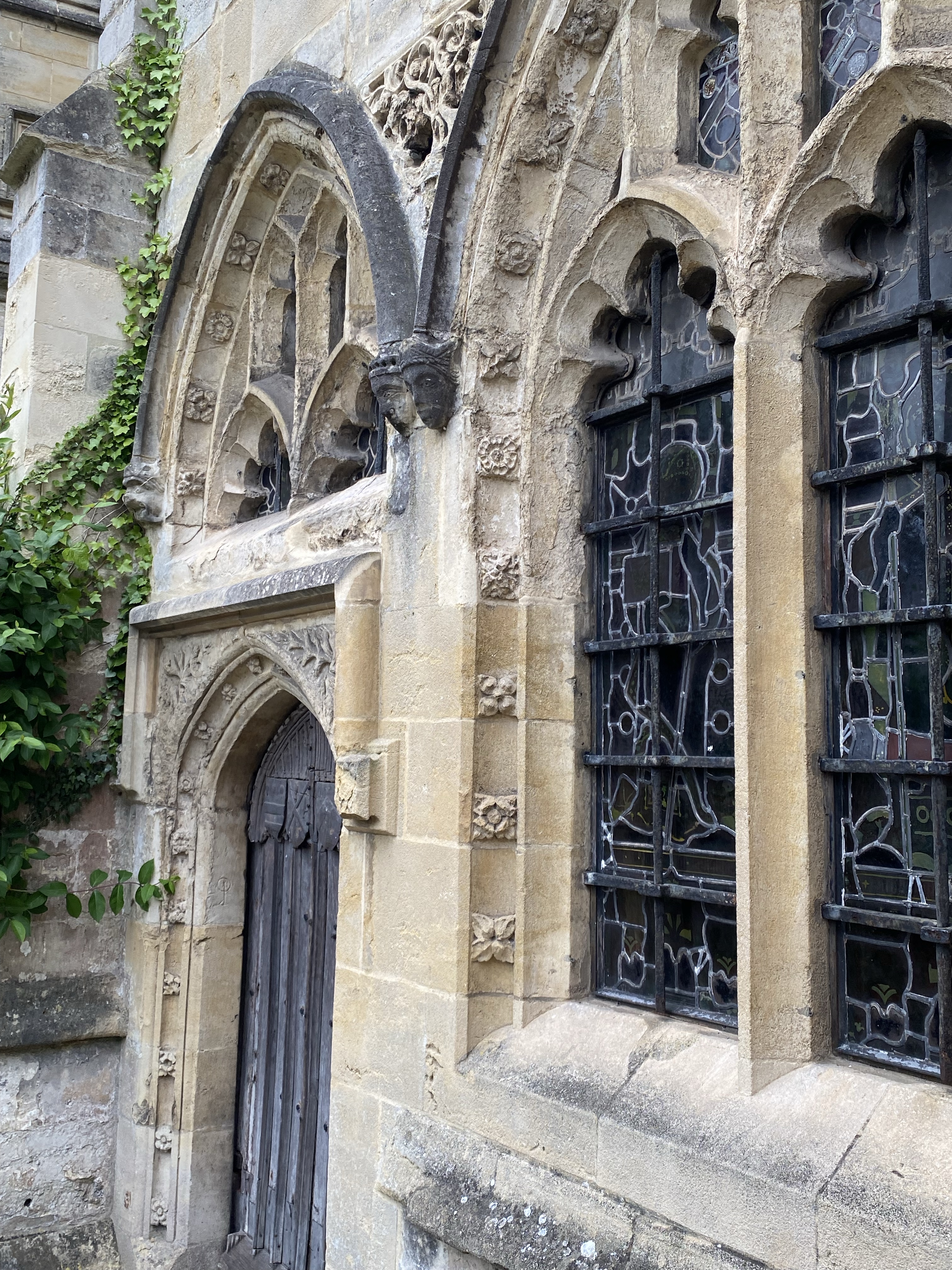
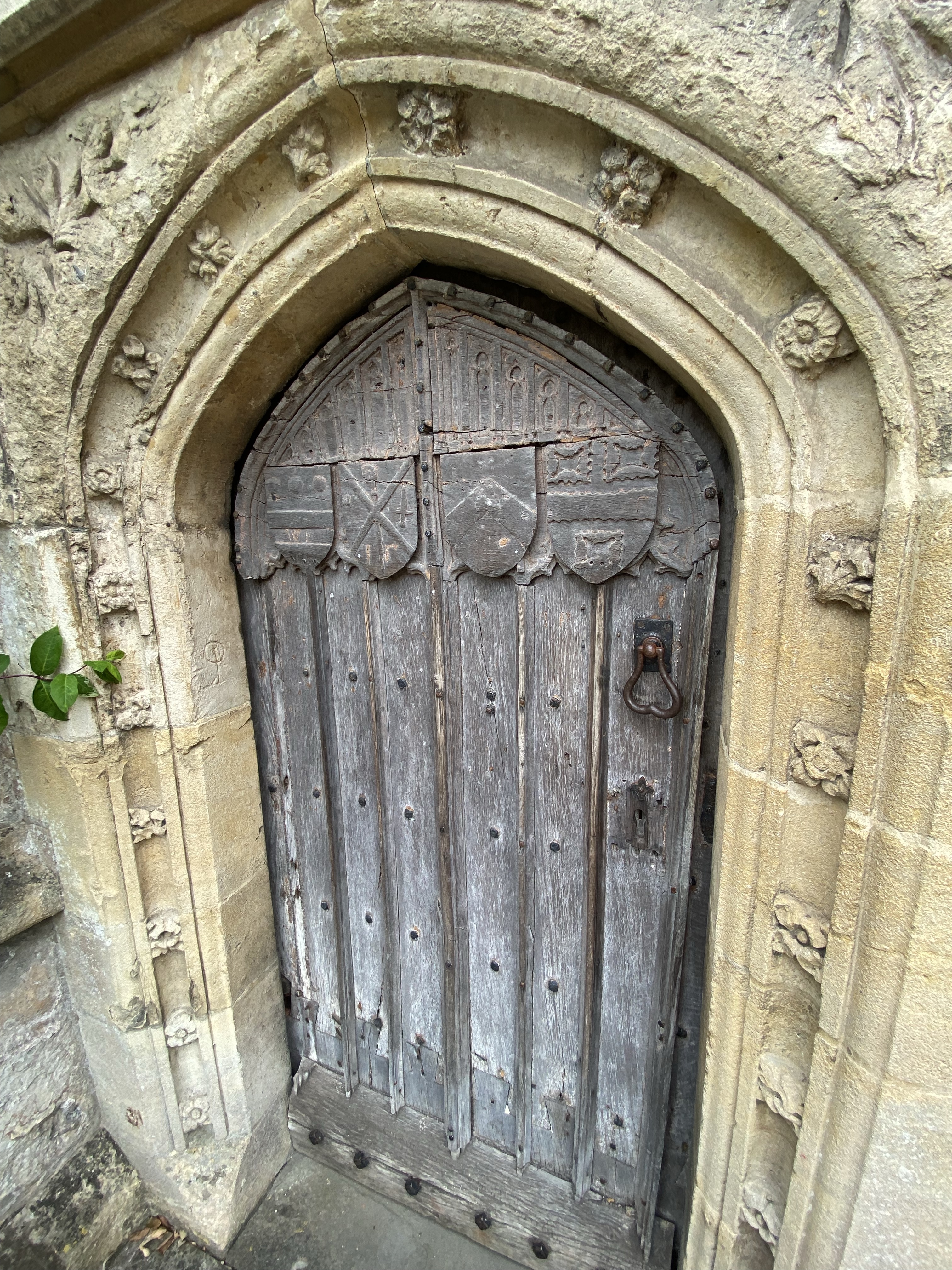
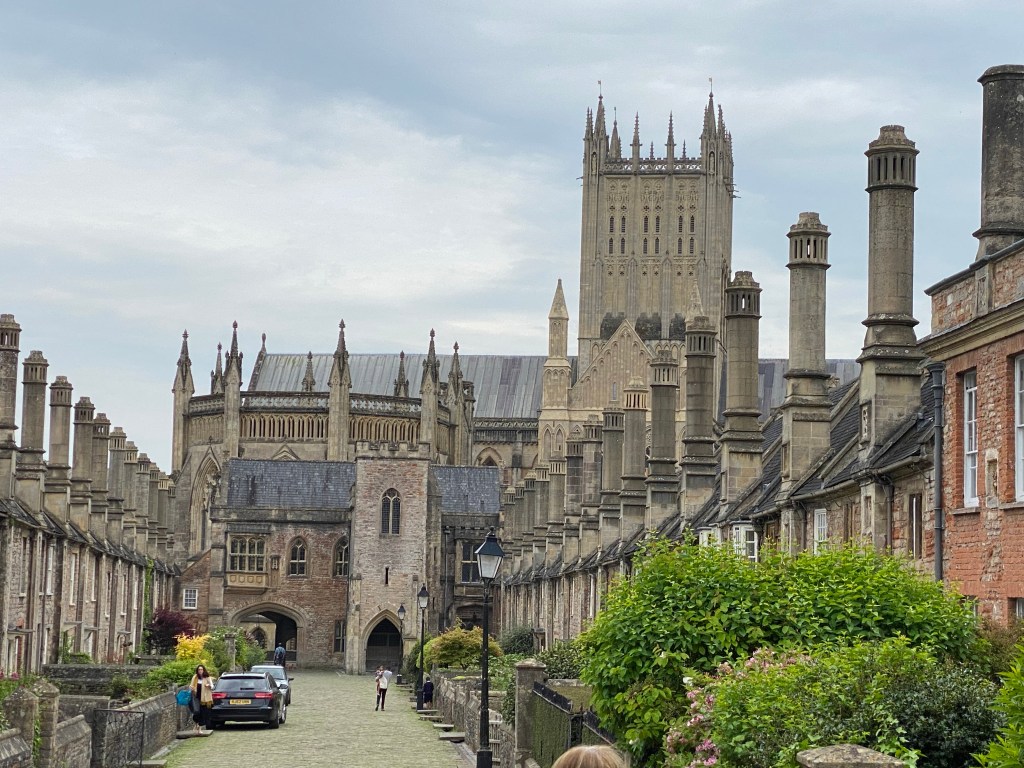
We made a quick run through the Vicar’s Close which is the oldest residential street in England. It was connected to the church and was the home to the church clergy. The homes are still in use. We happened to catch Julian and Tracy walking through and got a little more history and insight on the life of the residents in medieval England.
After returning to Bath we had a couple of lectures one our Tudor art which was very good and then one by Tracy Borman on the private life of the Tudors. The lectures are a big part of the tour. Most bus rides include a talk on at least one topic and then we have one at every dinner and few scattered throughout the week. Someone reference the trip as Tudor boot camp and that is on point.
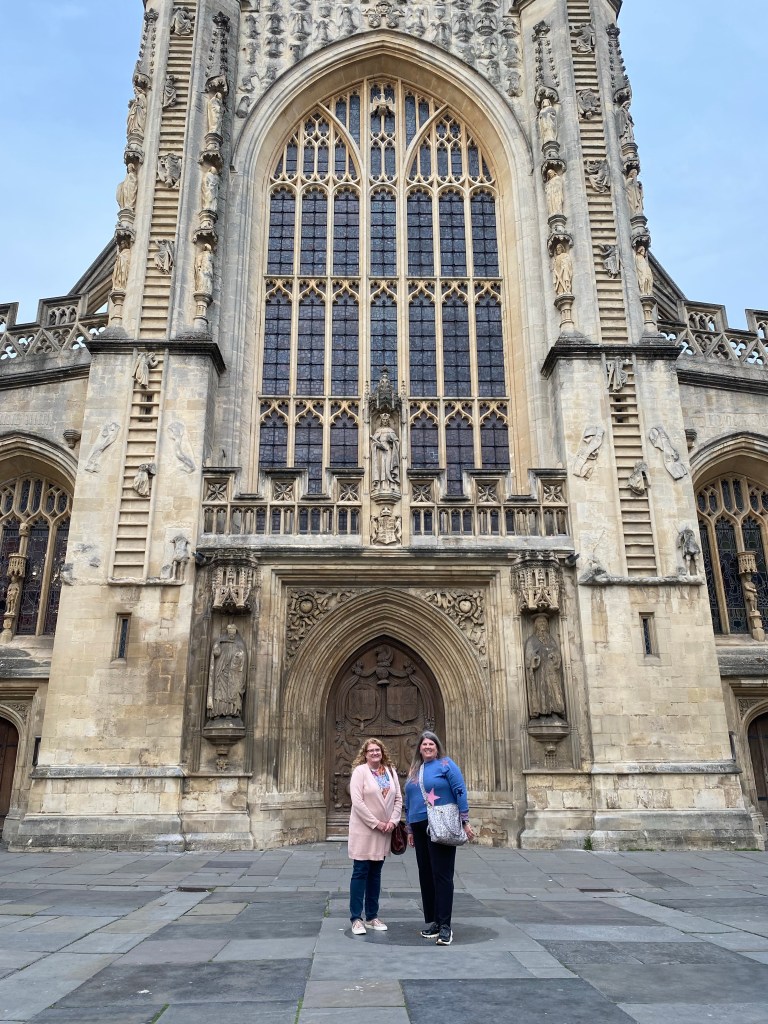
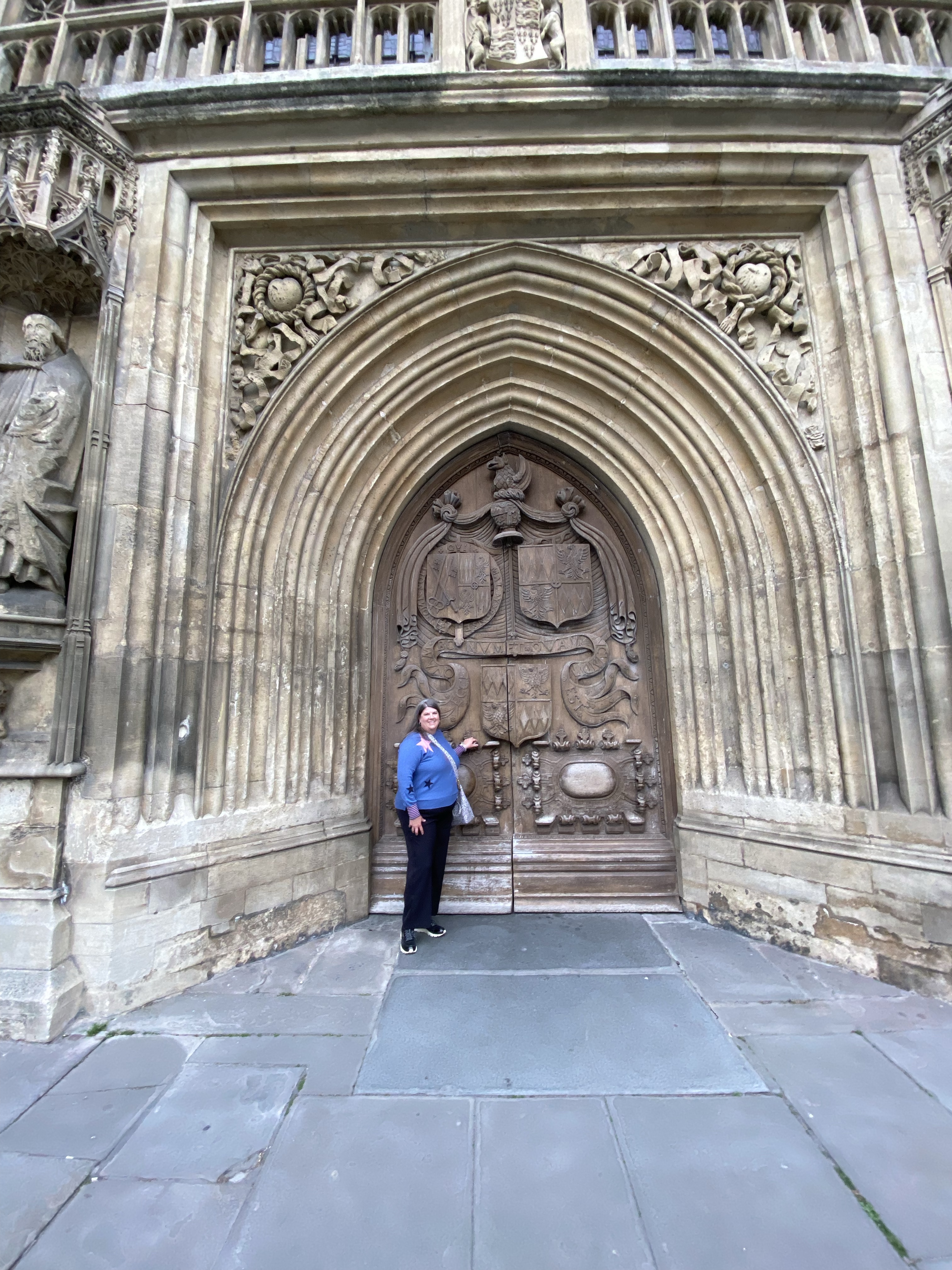
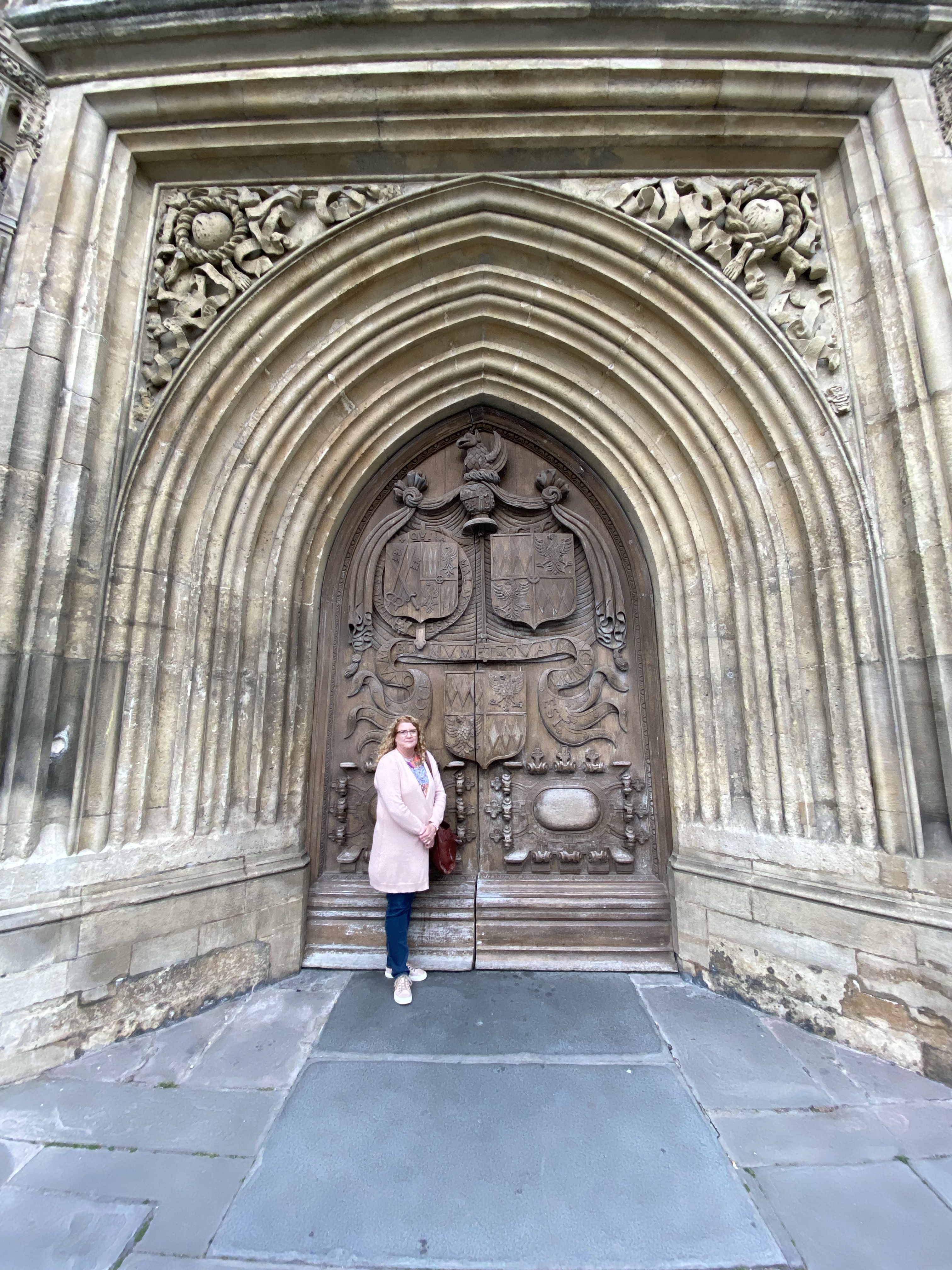
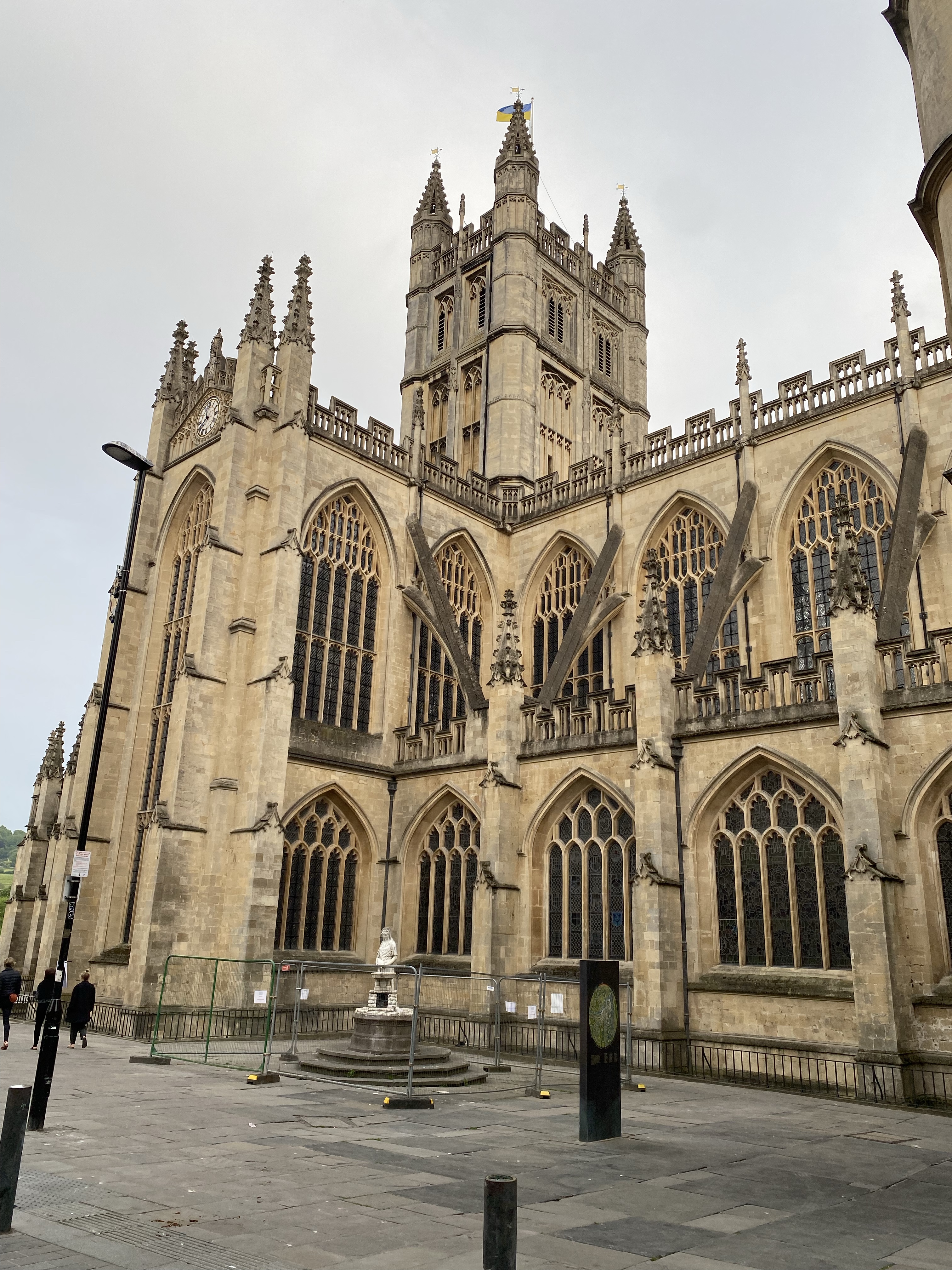
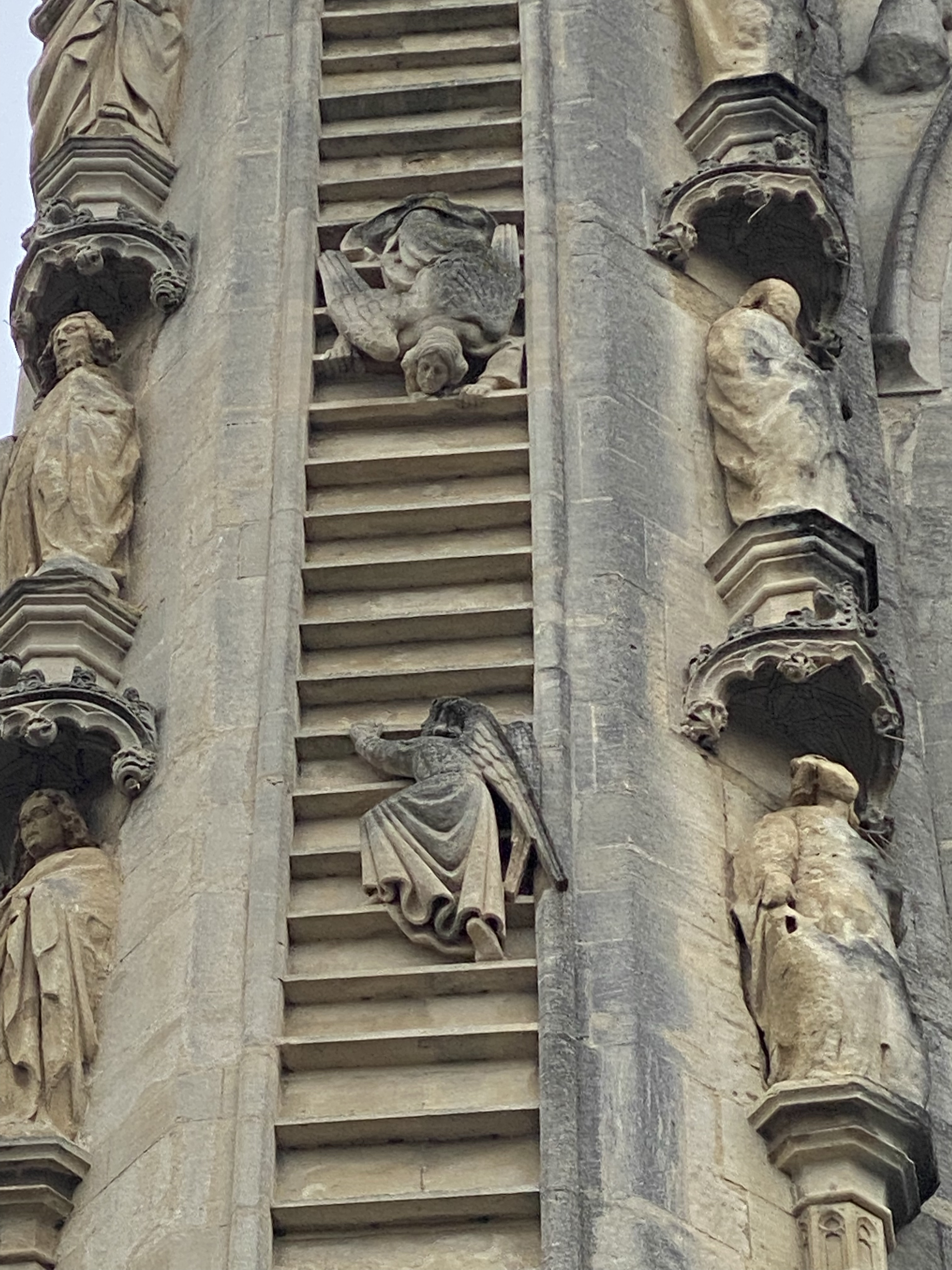
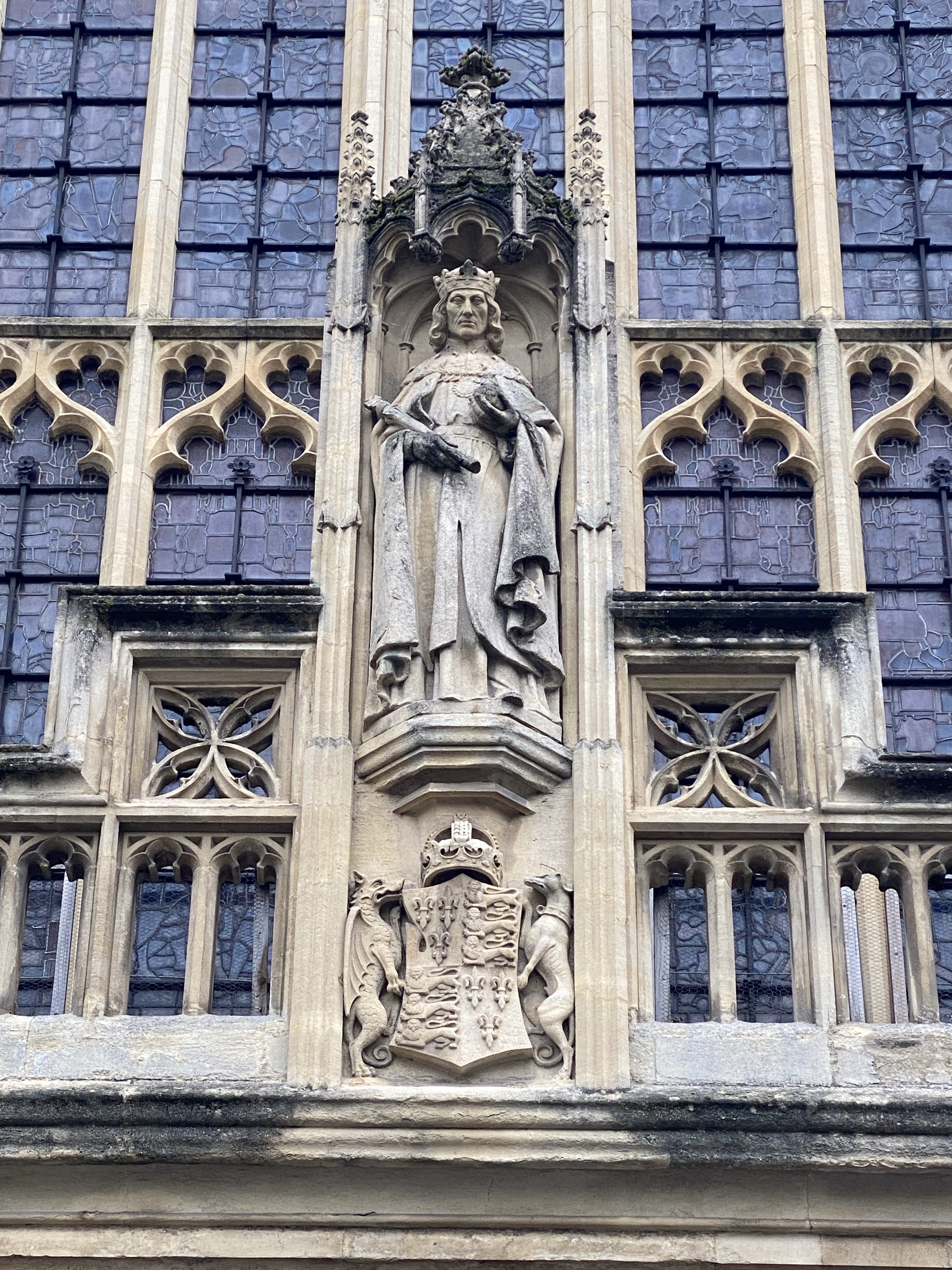
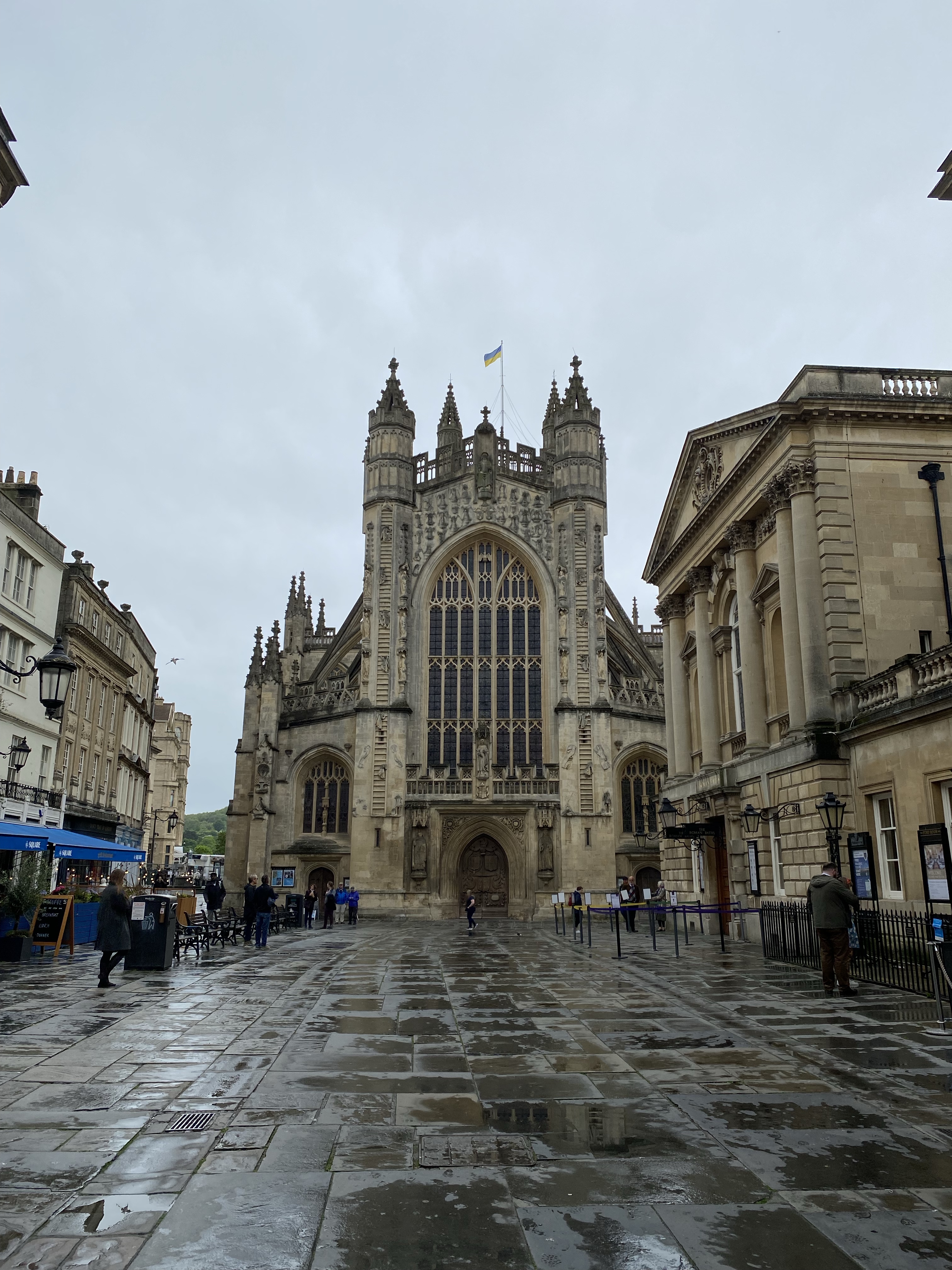
This evening was the only off time we had in Bath so we walked down to see the cathedral for a few photos and dinner. We found a great pizza place (Oven) and had what was claimed as award winning. It was quite delicious so I believe their claim.
The walk back up to the Crescent was a little slower than the trip down. But soon we were back at the hotel and closing out the day.




 Plan...Travel...Repeat