A Three Castle Day

Saw three very different castles today. One restored and used as a family home in the last century, one complete medieval ruins and the third being used as a hotel.

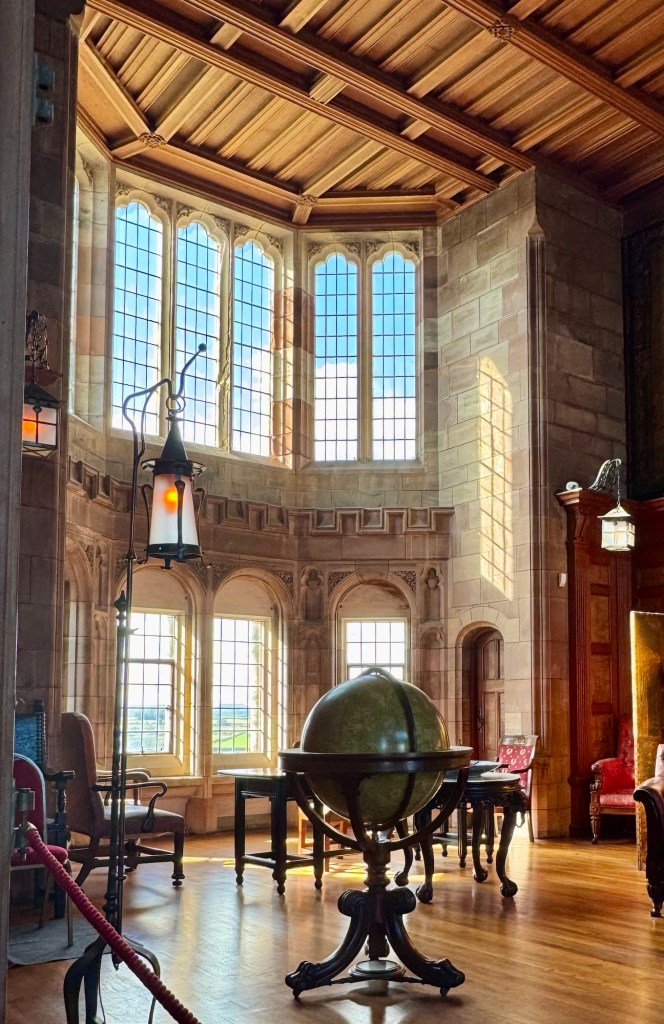
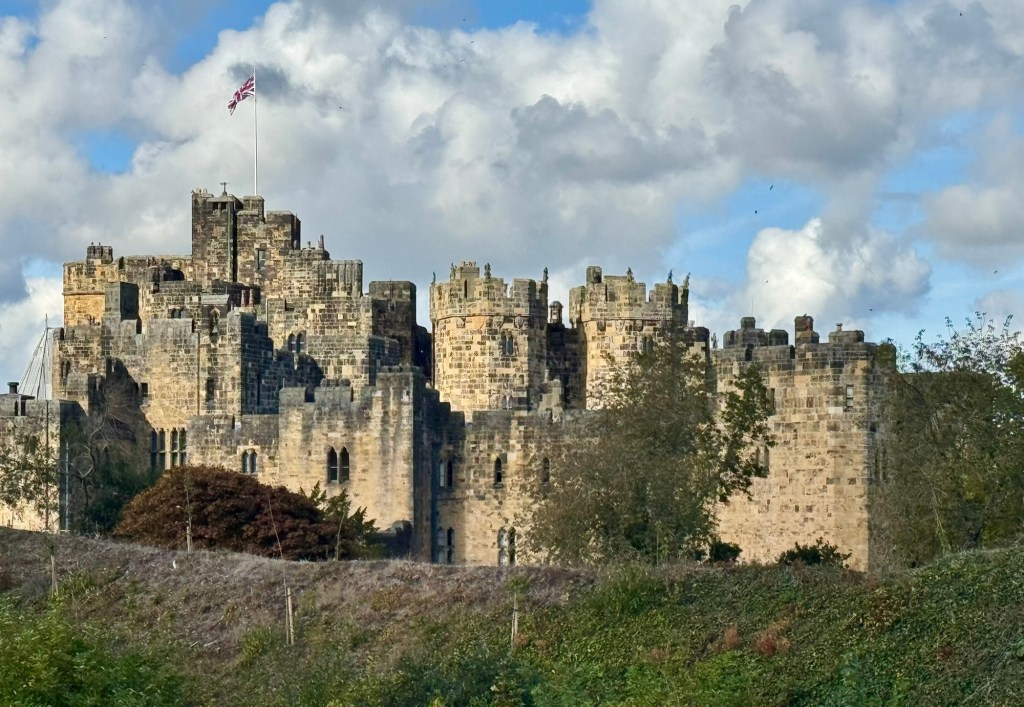
First stop Bamburgh Castle. It is right on the coast and back up close to the Holy Island which we could see in the distance. It is not quite as large as Alnwick but with the outer fortifications it seems quite large.

Bamburgh Castle

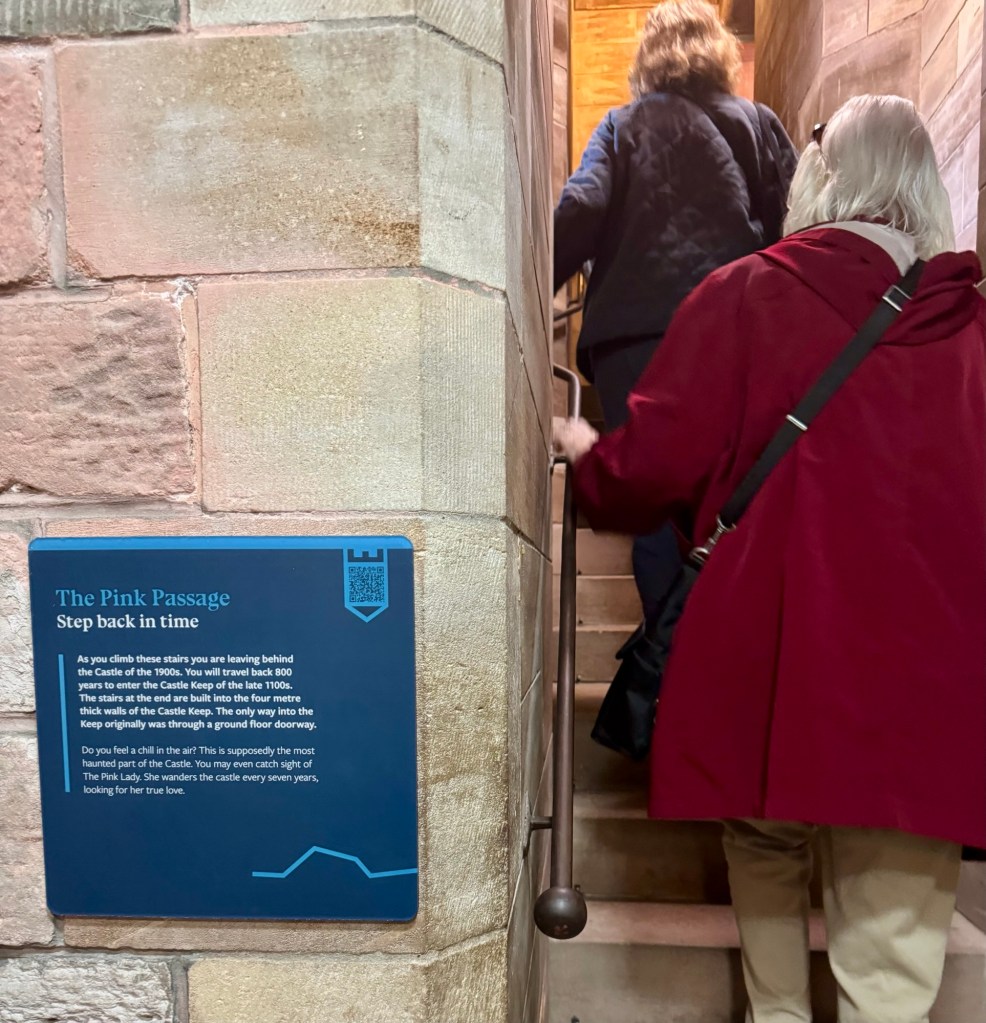
The location has been a home for some sort of fortification since the 4th century and used by King Oswald and King Oswui both early kings on Northumbria, which we heard a lot about in the trip. They were part of the Cuthbert time period during early period of Christianity and Viking raids. Oswui was a big believer in relics and collected many during his kingship including various body parts of his brother Oswald and supposedly relics from the Apostle John and a gold cross made from the chains of Peter and Paul both of the latter gifts from Pope Vitalian around 665. The Venerable Bede wrote quite a lot about Oswui which why there is so much documentation on him and his brother.

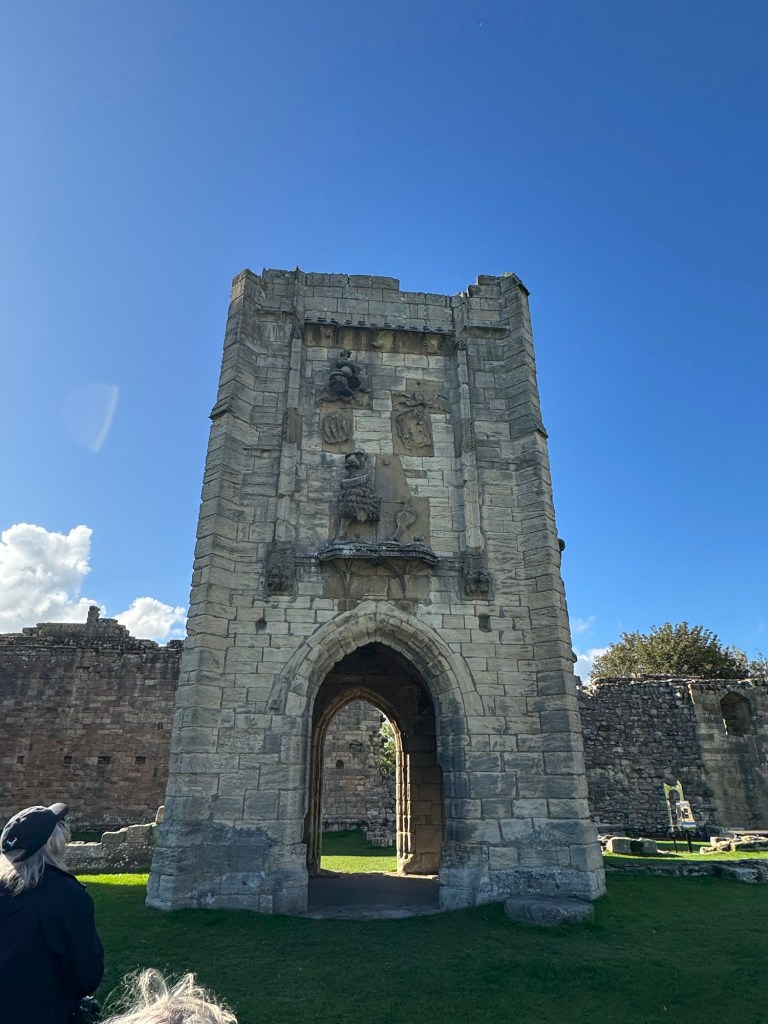
Back to the castle, a small part of what is still there dares to 1095 and was built to defend the border from the Scottish during William the Conqueror’s time. The keep or the large square building is all that really survives from that time.
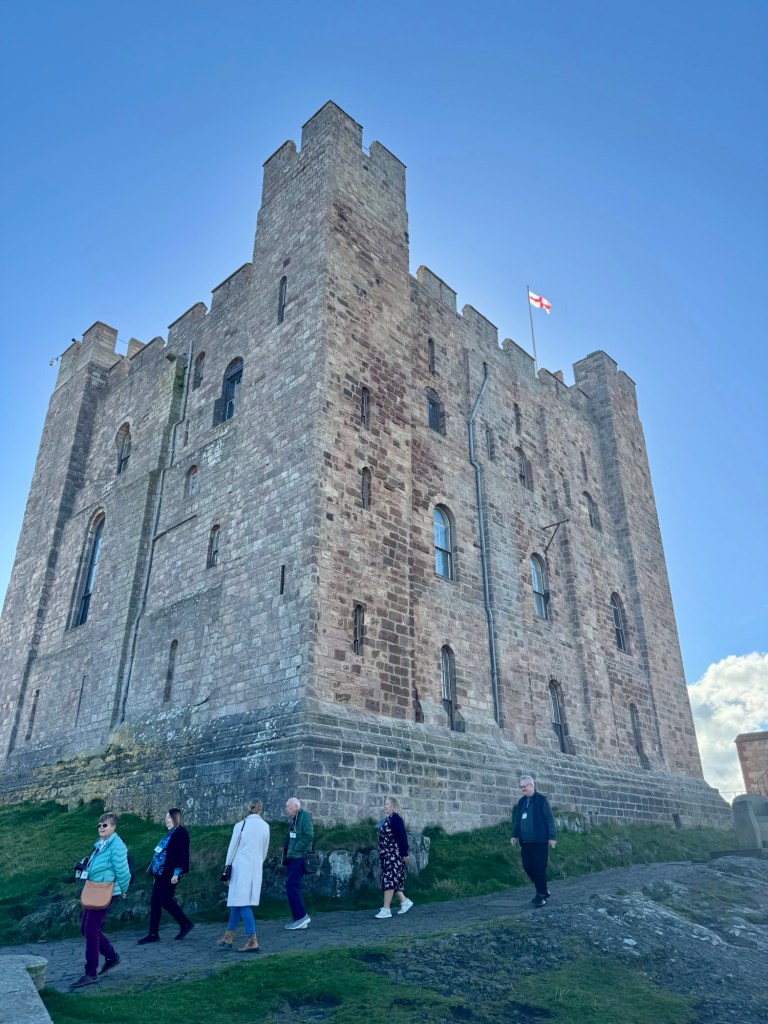
The 1095 portion of Castle Bamburgh with most of the tour team in front

The castle was an important defense up through the 1500 and at one time held the king of Scotland as a prisoner. It was also subject to a 9 month siege by Richard Neville during the war of the roses. Richard known as the kingmaker and the Neville family were quite important during this time period and along with the Percy family pretty much controlled the north.

After the Elizabeth the castle was less important and was held by the Forester family until the 1700 and fell into ruins. The castle was sold to the Bishop of Durham whose wife was the sister to the last Forester who owned it. Unlike her brother she pushed for the repair of the castle and the bishop created a board of trustees to use the castle for local services like a hospital and school. Repairs began and the original keep was restored. It was sold to William Armstrong the owner of Cragside which now made that visit make sense. Armstrong rebuilt the great hall and other buildings that were built during the 1400.

The Armstrong rebuilt sections

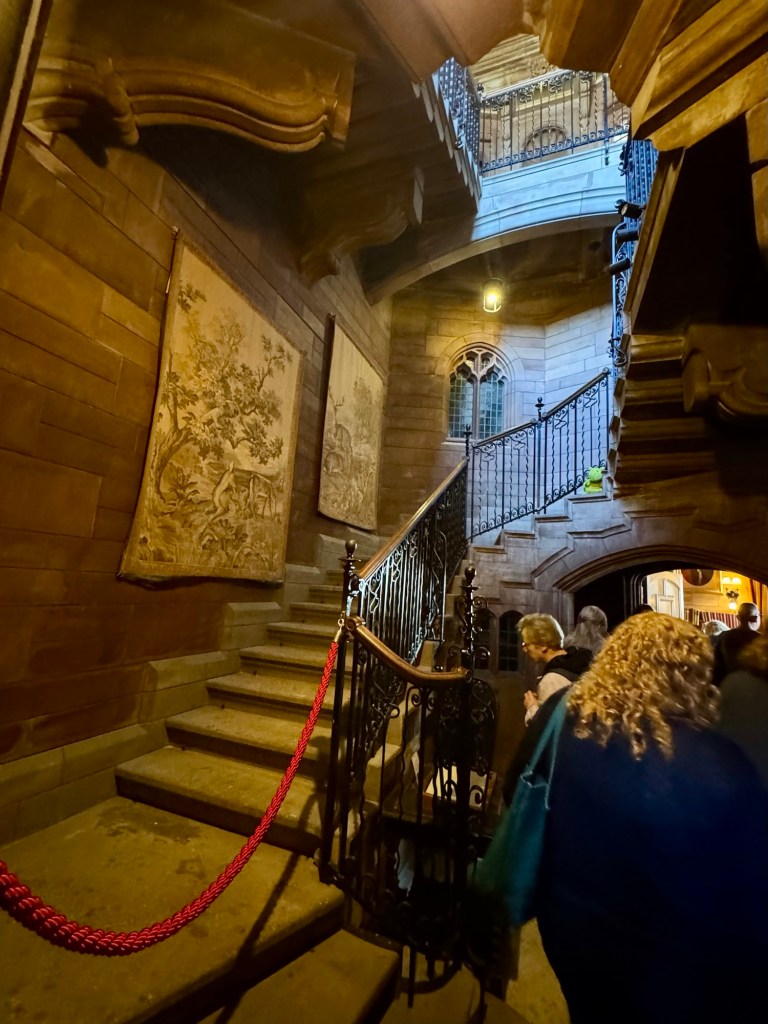
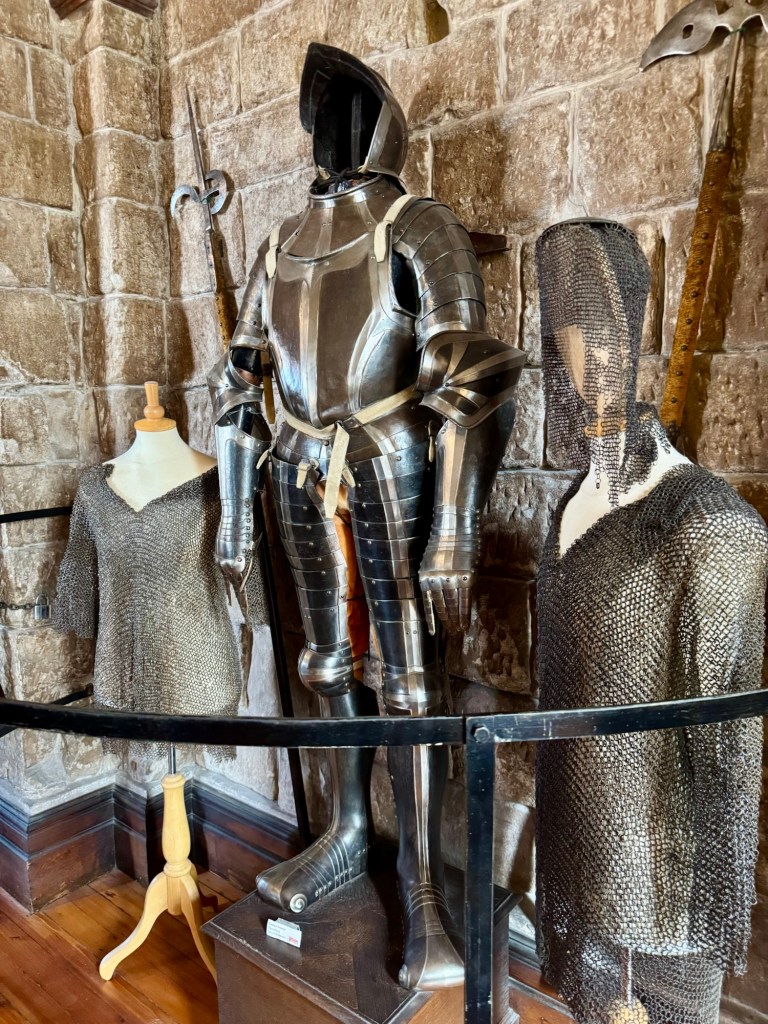
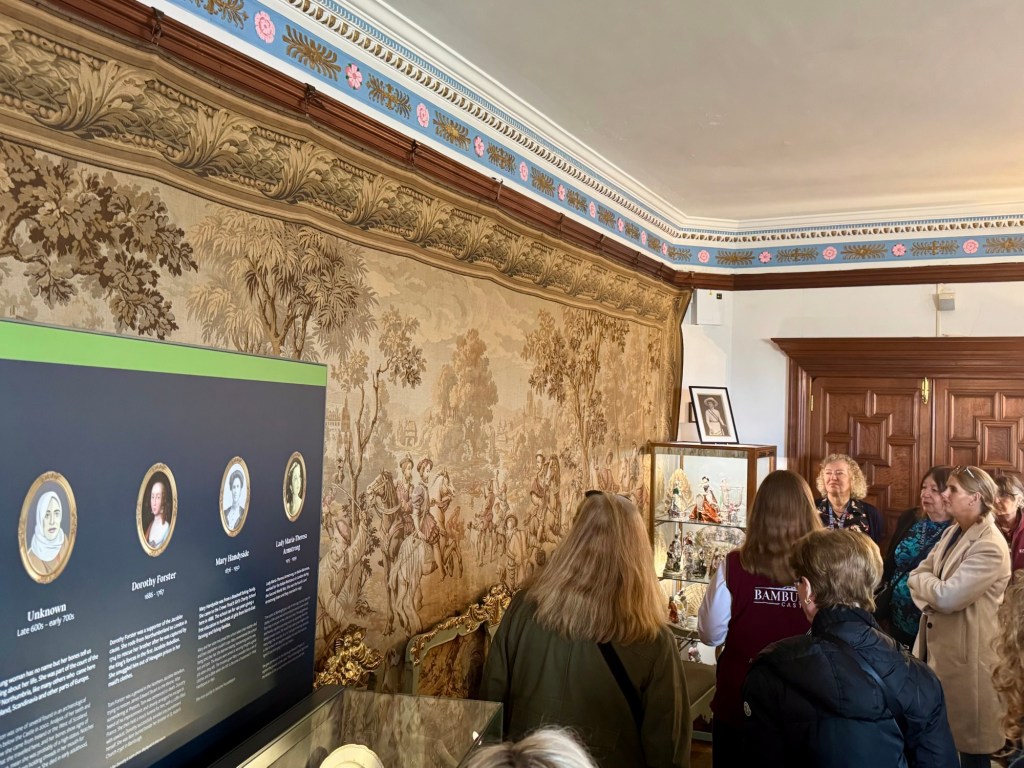
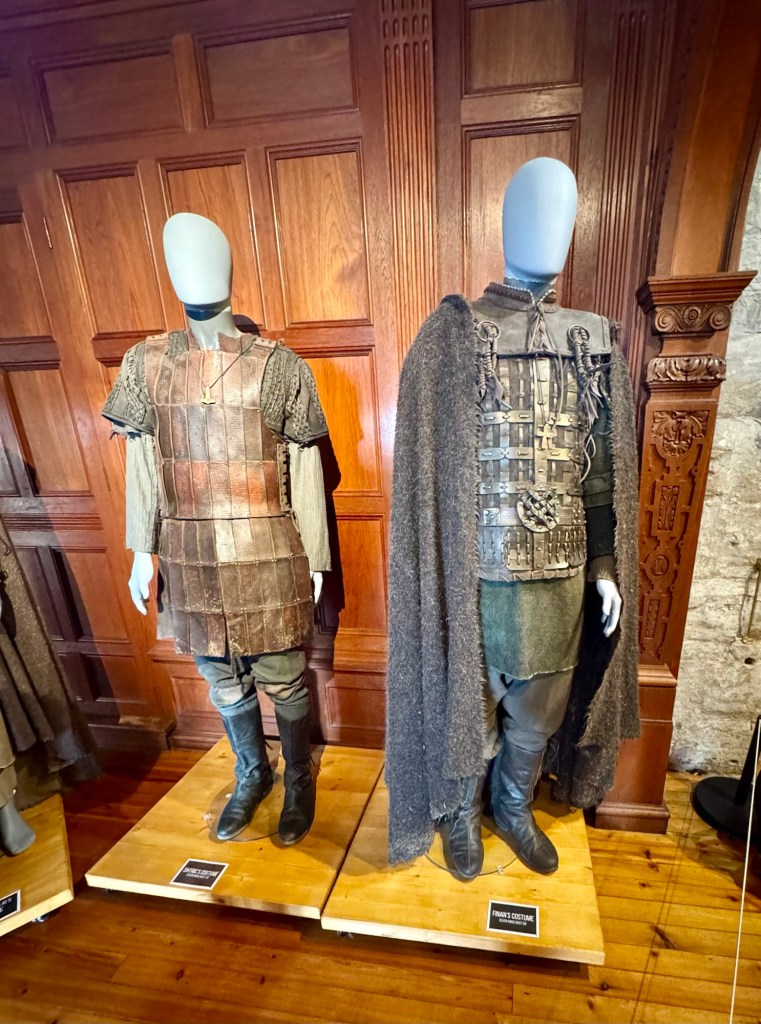
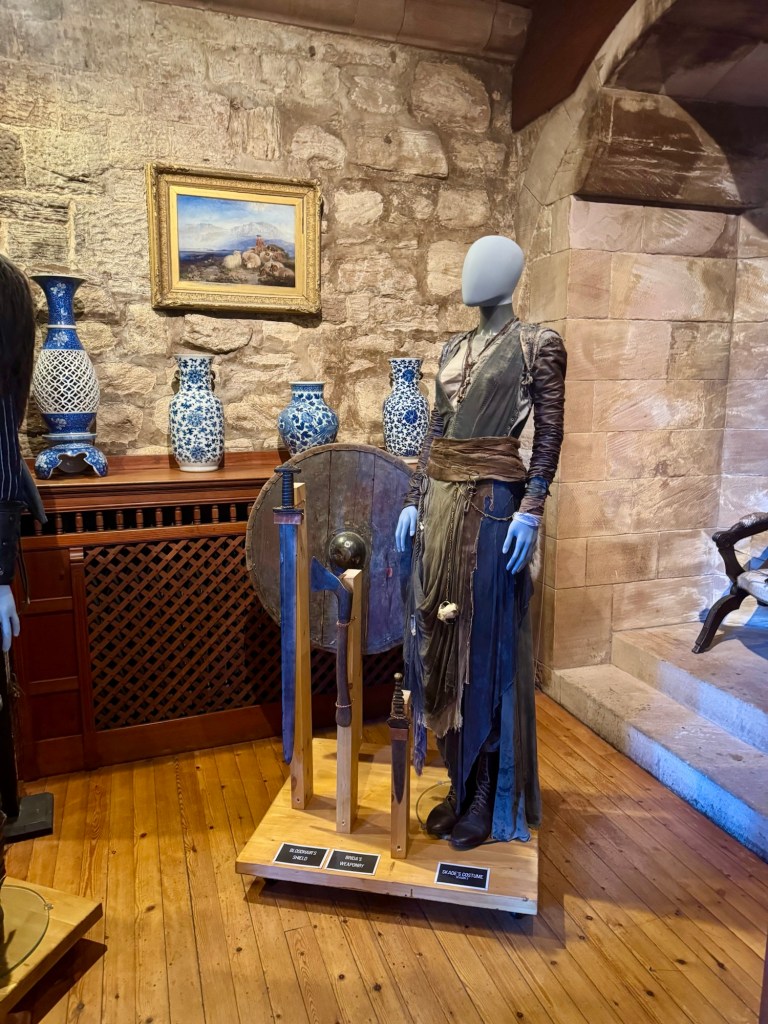
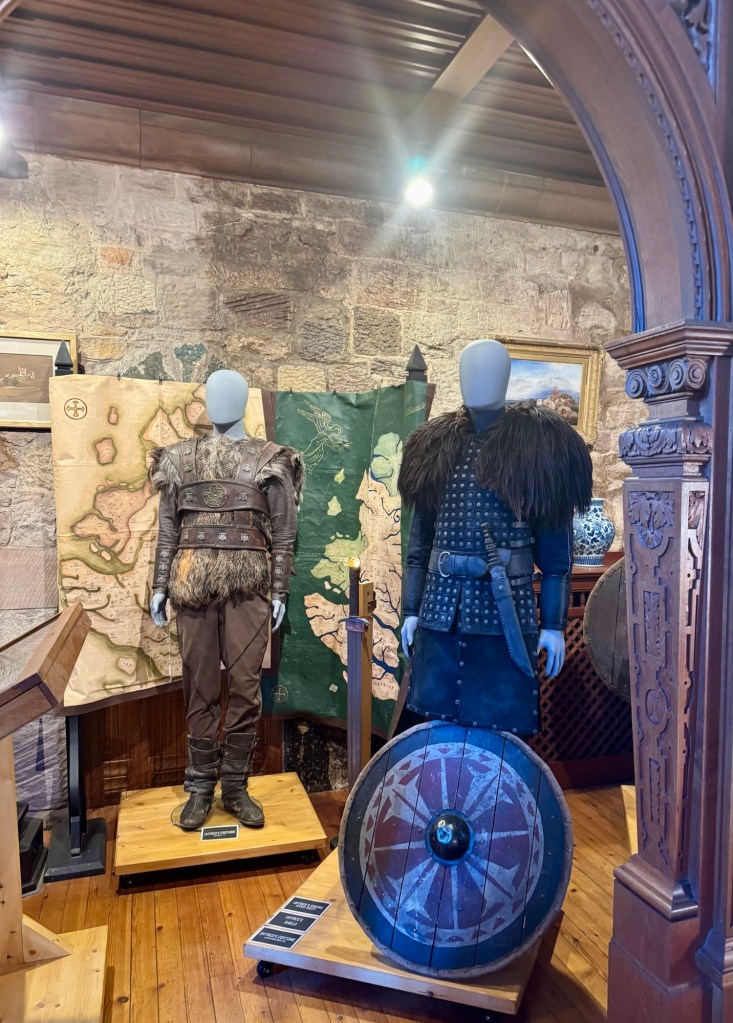
We had a tour through the castle and you started in the newer portions and worked our way to the old keep. The castle is also the site for the TV show the Last Kingdom and there were exhibits of the costumes in the great hall.

The keep held the treasure of the castle as far as the historians believed, a part of a sword from the seventh century. The sword was found in 1960 lost for 40 years and discovered again in 2001 in a suitcase in a garage. The sword was made by 6 strands of iron welded together into the blade. It is unusual for a sword of that time period and thought to be owned by a king. Mike is sure it was King Oswald’s sword.
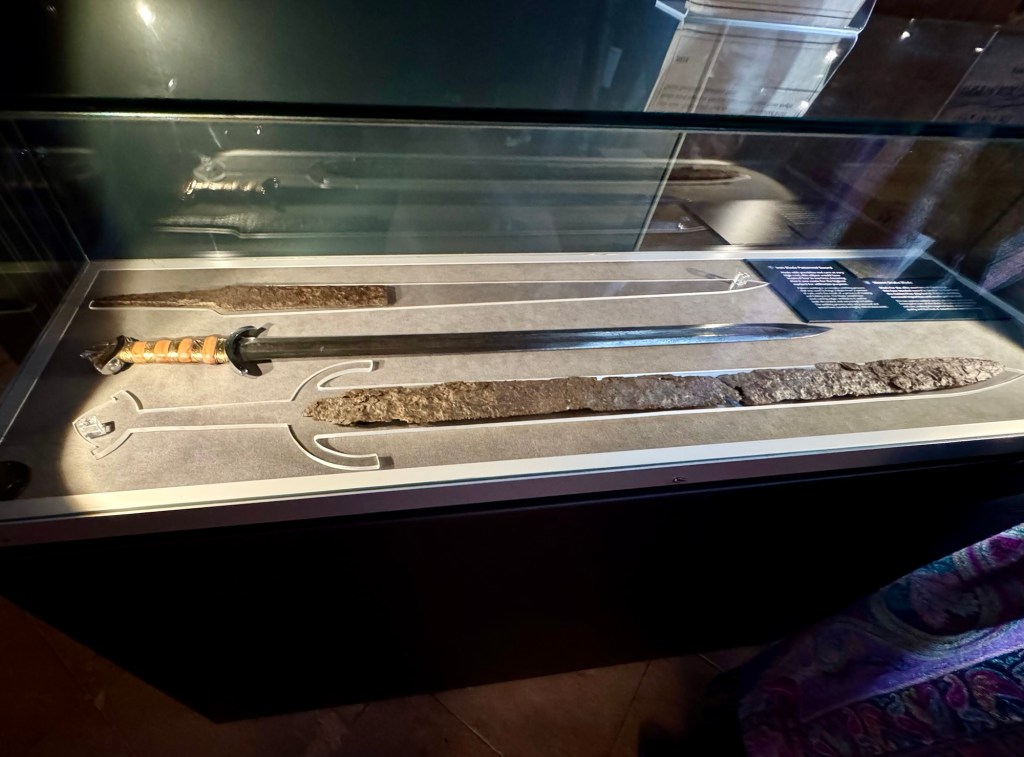
The top piece is the bramburgh sword the middle is a reproduction of what they think it would have looked like. The coldest one is what a standard sword from the time was like.

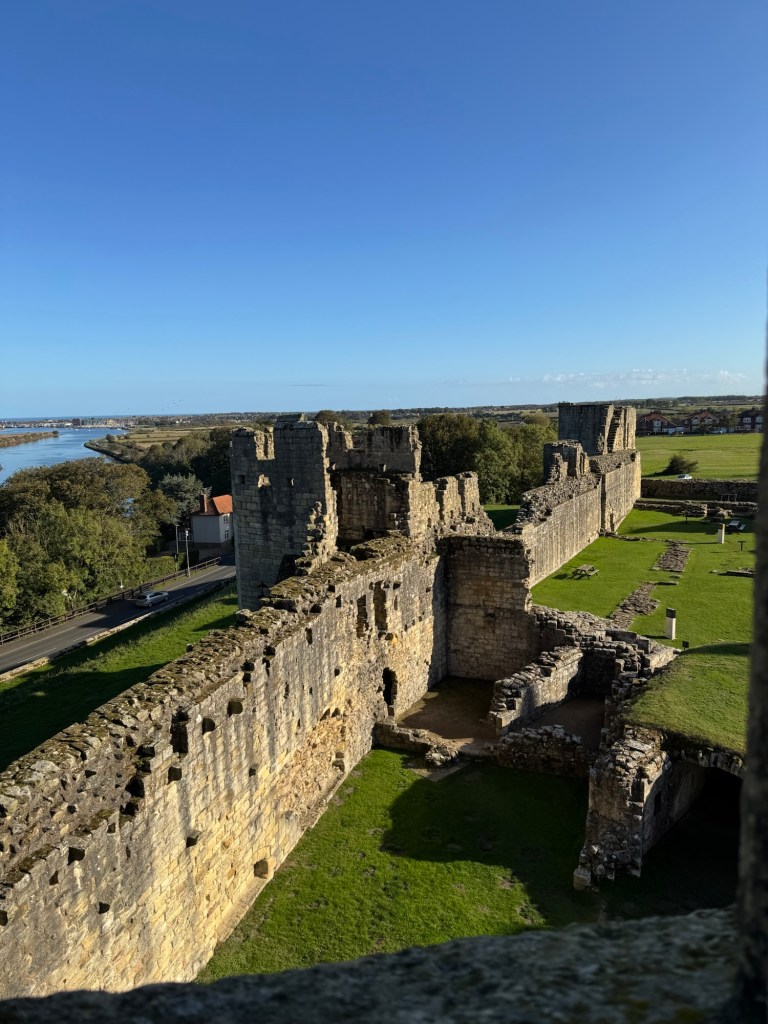
Castle 2 – Warkworth- built in the 12 century by King Henry II and given to Roger fitz Richard. Roger’s son Robert inherited the castle and made improvements with his backing by King John, who stayed in the castle in 1213. King Edward I stayed in 1292. So quite a lot of use for those state bedrooms that they all seem to have but never use. Edward II put resources into increasing the defenses which was a good thing. The Scot’s laid siege twice but never got in.

Warkworth Castle

The Percy family got hold of the castle 1345 while they were still mere barons. They added to it as their importance grew. Eventually the Barons became Dukes and they held the castle or what is left of it until 1922 when they gave it to the Office of Works which was the precursor to the English Heritage, which oversees ruins. (The National Trust of Historic Houses does places with furnishing English Heritage does ruins.)

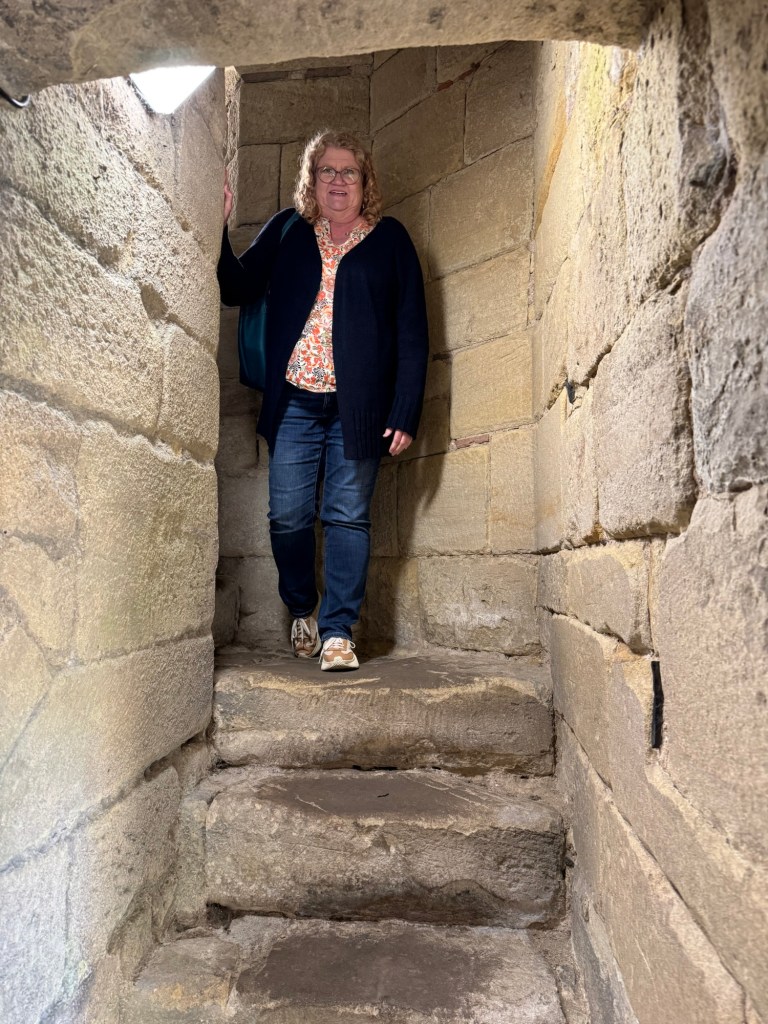
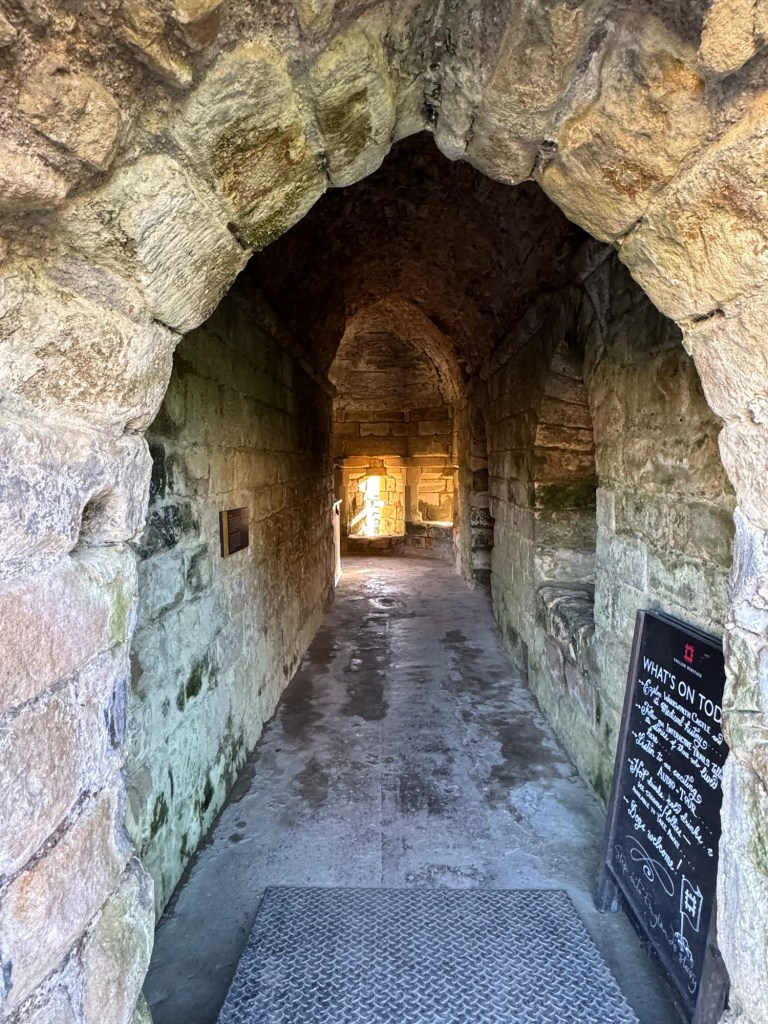
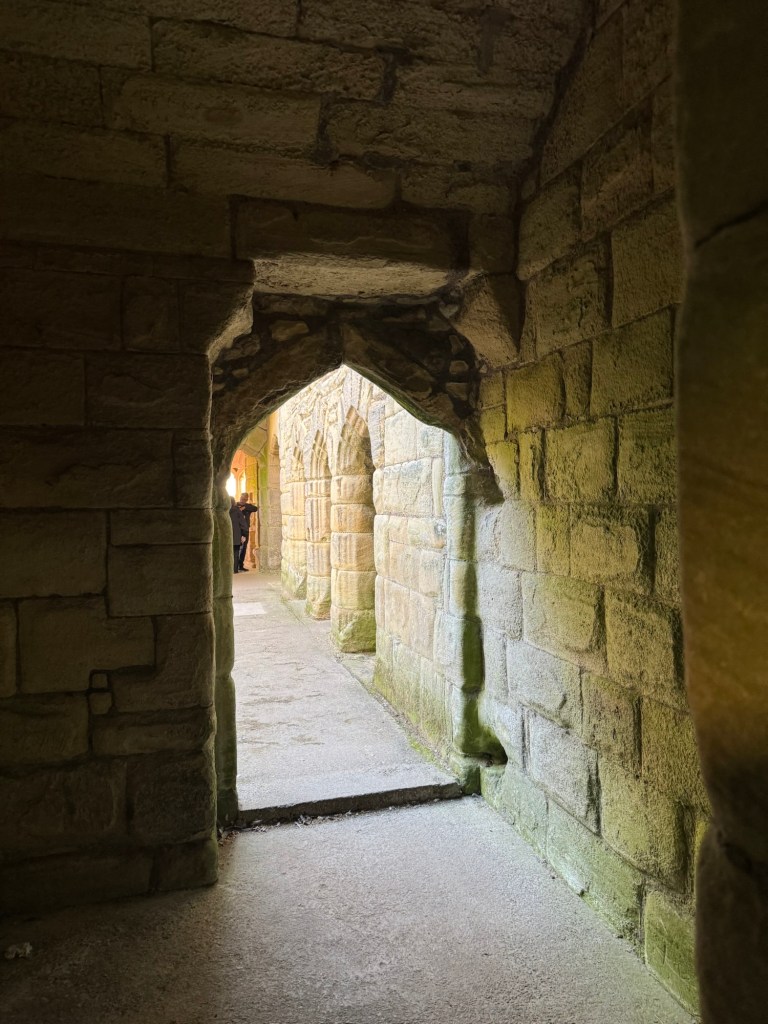
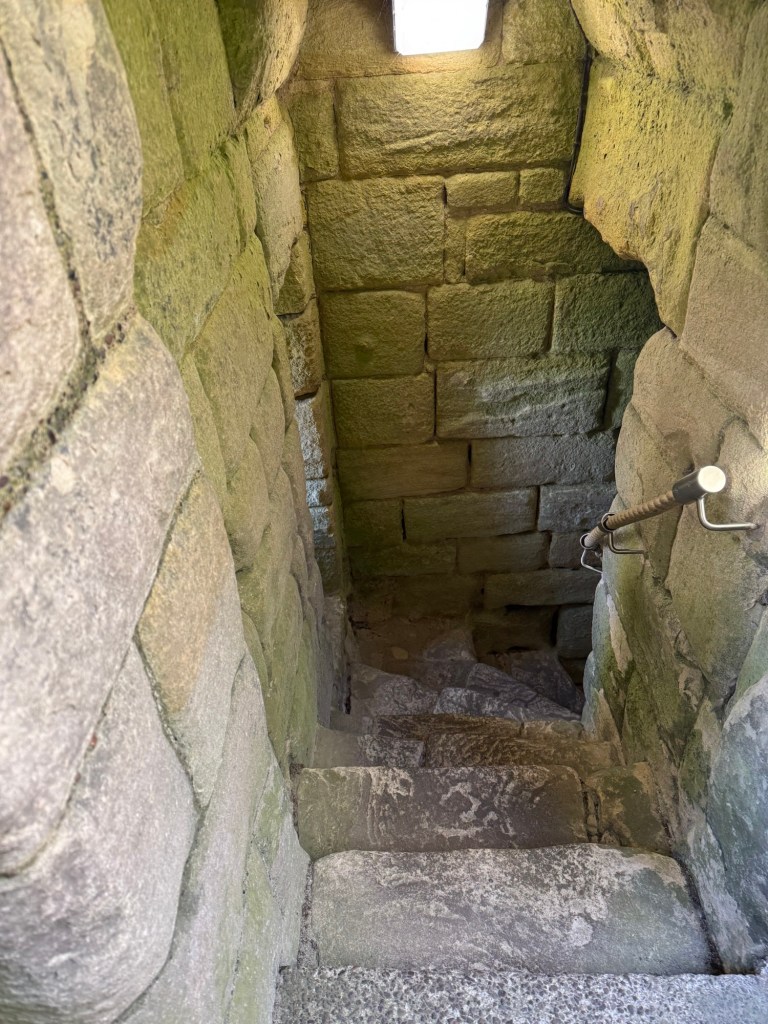
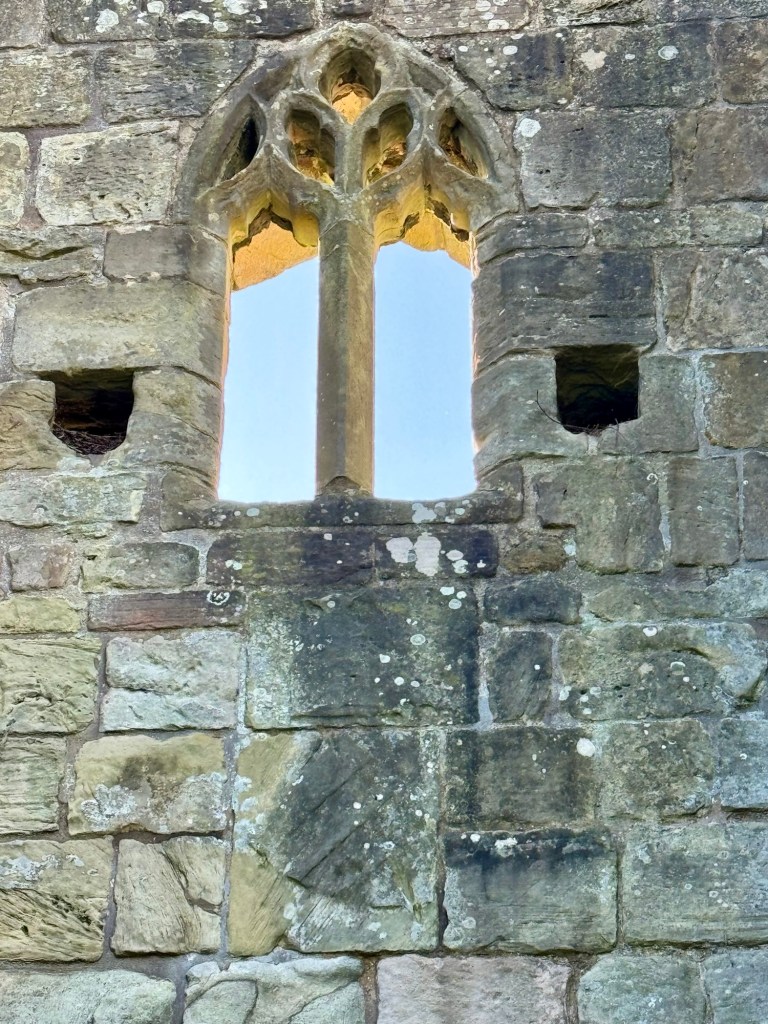
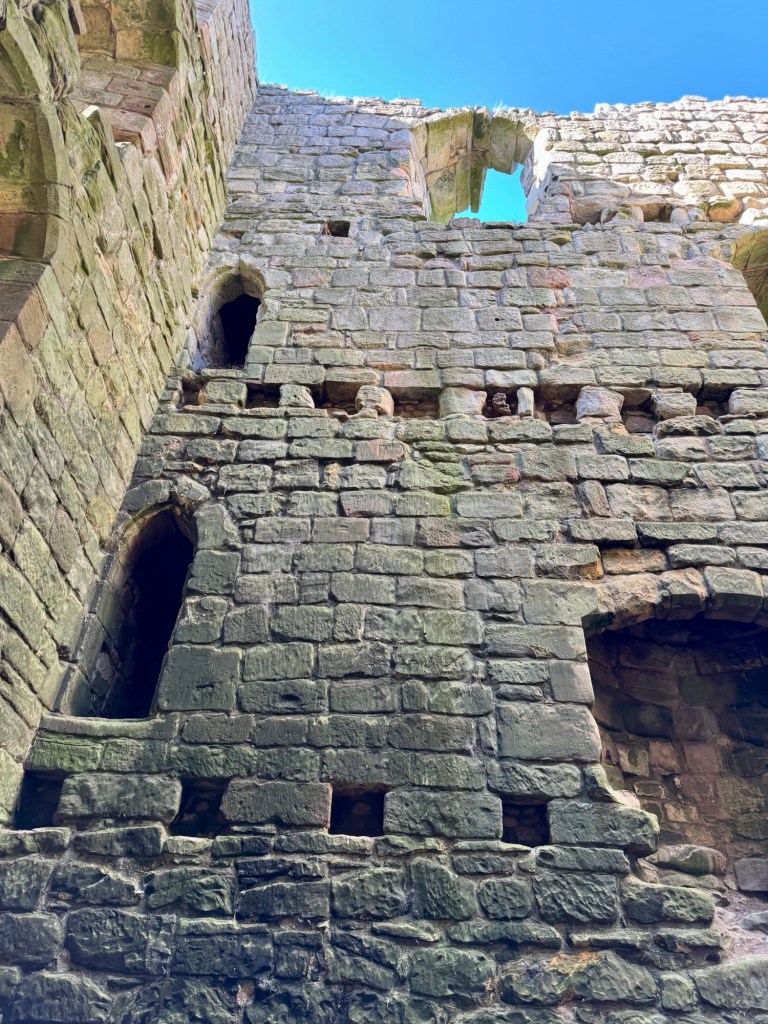
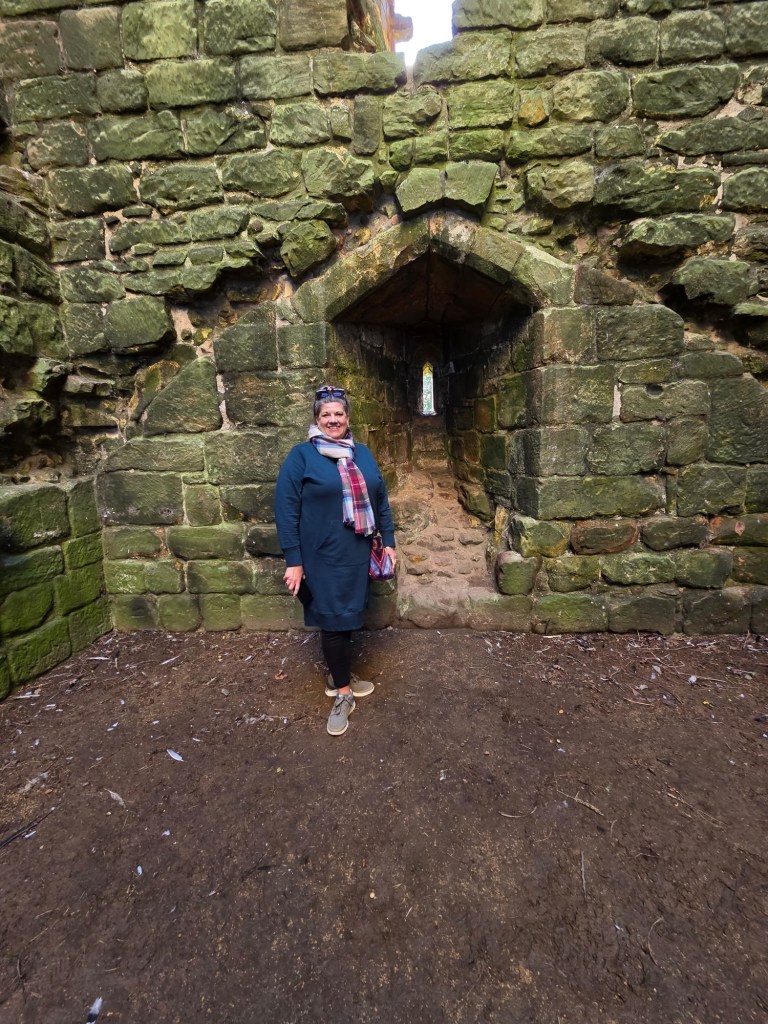
Needless to say the castle is in ruins and has been for centuries. However, this allowed us to see it as it was and how life went on then. The main keep was still pretty much intact. Seems a later duke restored it to use for guys weekends sometime in the 1800. So the floors, ceilings and everything in there were still good. The roof was off all of the other buildings but parts of it still stood. The keep was pretty fascinating with all these little tight staircases that led up to the second floor great hall and solars (where the Duke and his family hung out) there were stairs from the kitchen up to the buttery and the ale house up to the back of the great hall where the high table would have been located. That way they could get their wine and ale quickly. Stairs around to little hidden rooms where the bailiff and stewards worked and kept records. Pretty much every where you looked there was some little nook or cranny.

The Keep

Julian walked us through with his dramatic story telling setting the scene for a day at the castle during the height of the Percy dominance. Had I walked through it in my own and read the posted descriptions of the room it would have been good but I am so glad that we Julian there to describe everything.

I generally like to see castles that are still being used today by the family and not just open for display. I like to see how they have been adapted over the years to accommodate the way we now live. However, there was something to be said about seeing something pretty much unchanged (except for deterioration due to the no roof in some places) as to how it was during the medieval era.

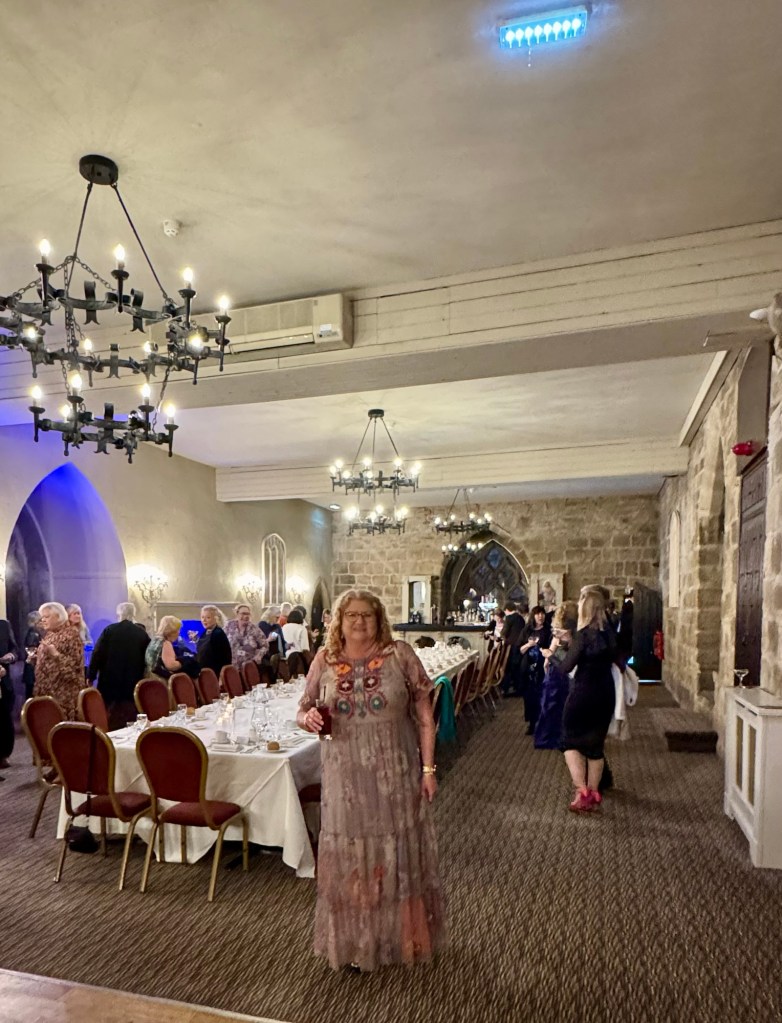
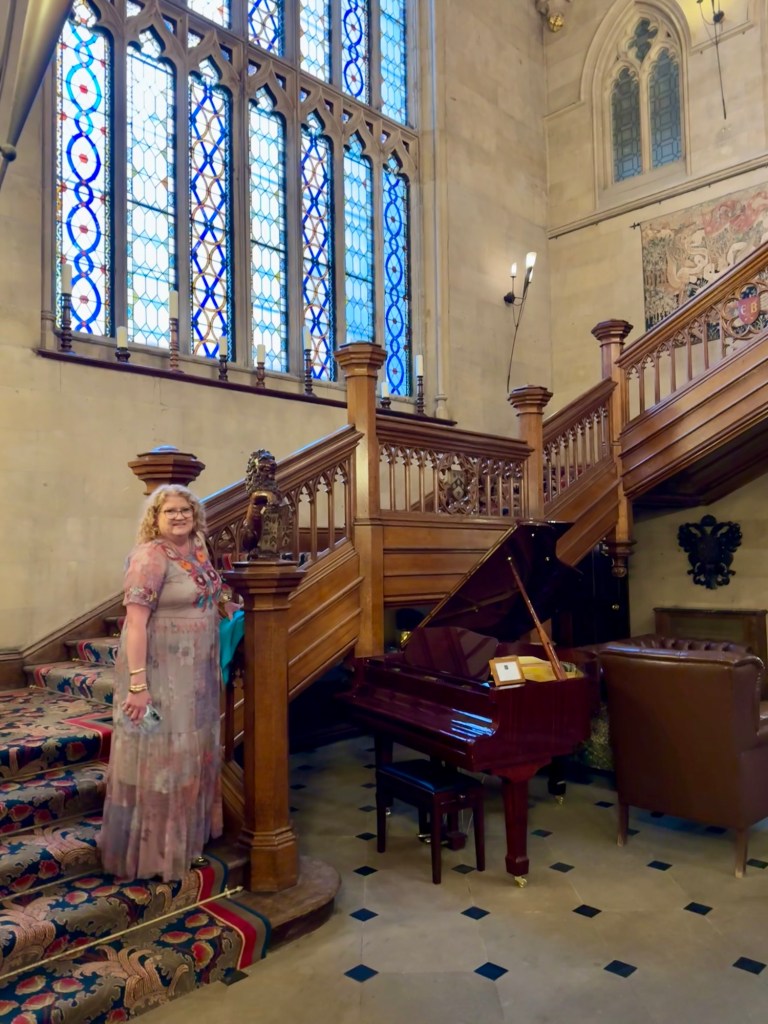
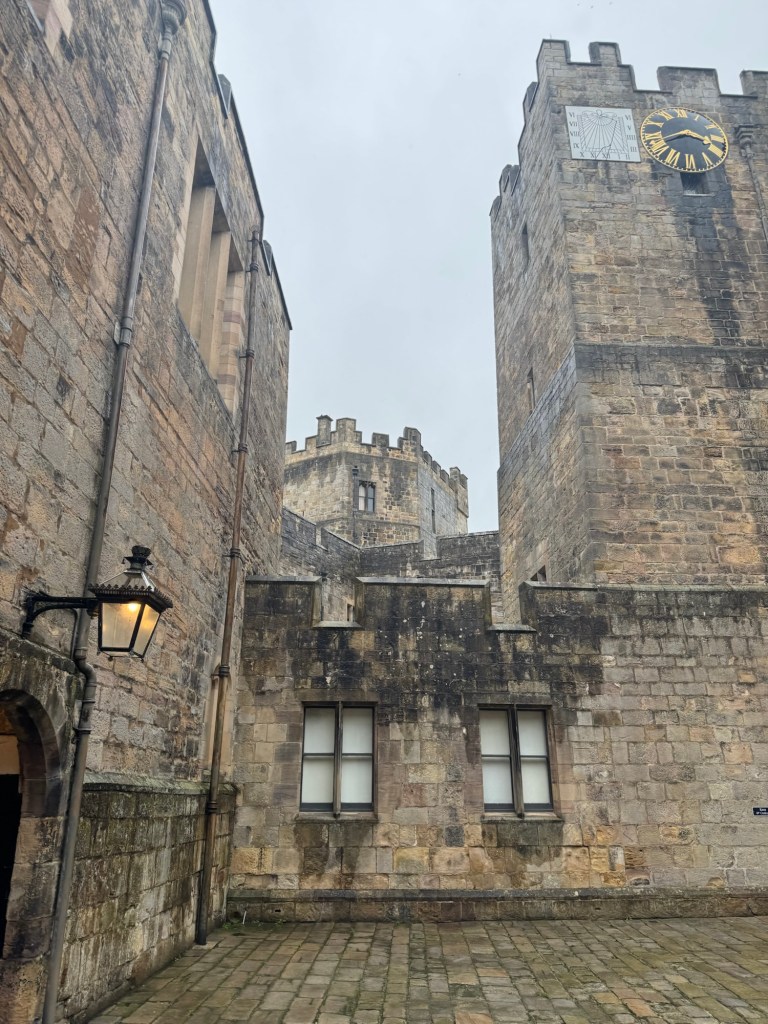
After touring the ruins we headed back to Maften Hall to dress for dinner and head to our final castle of the day – Langly Castle. Langley has been converted to a hotel so not much left of its original interior.
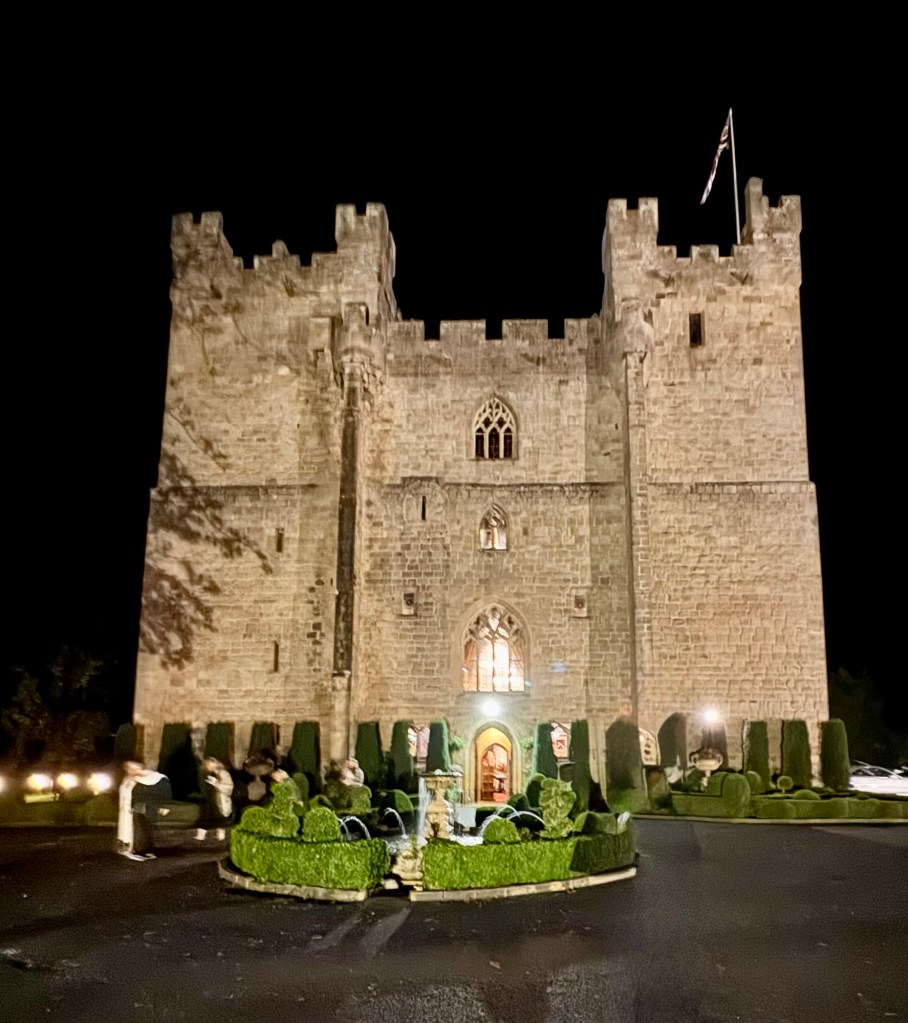
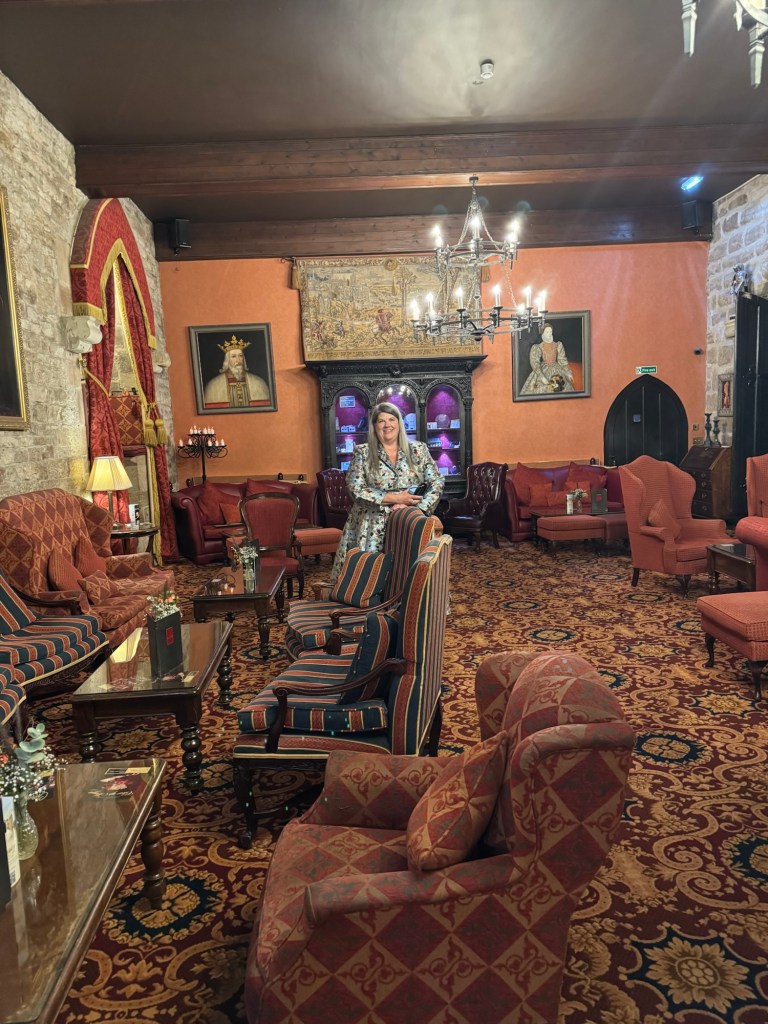
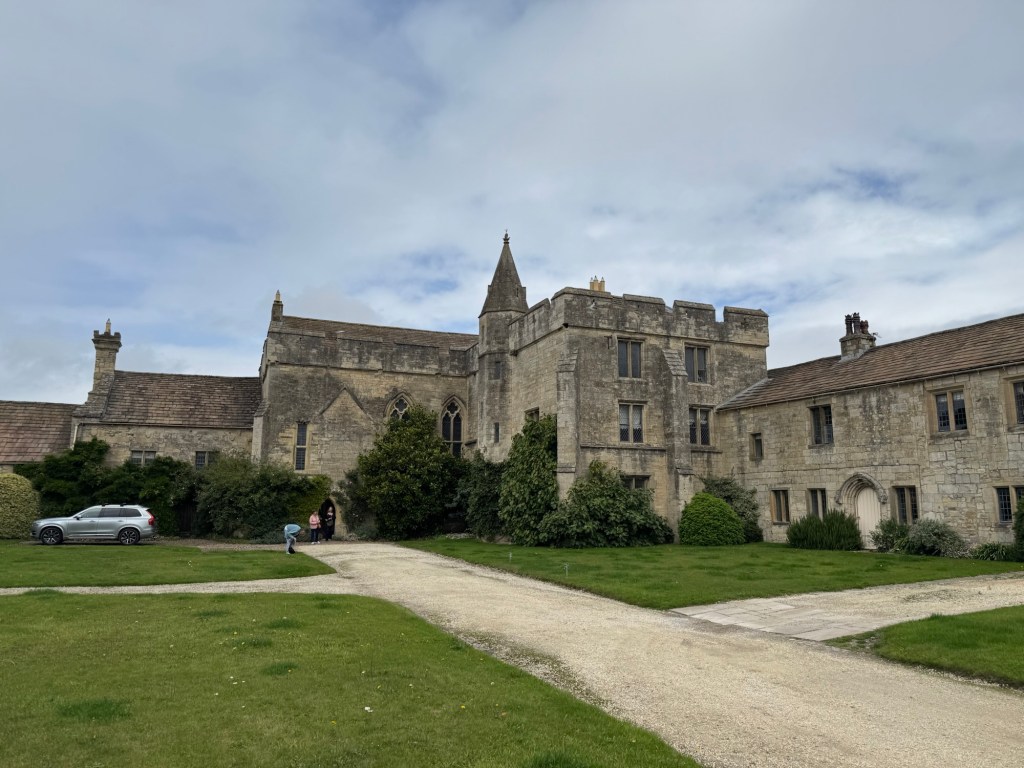
Langley Castle Hotel

It was a great end to a great day. My 3 castle day was fantastic and everything I could have hoped for. Can’t wait to have another one.
Beautiful Day in Beautiful Gardens

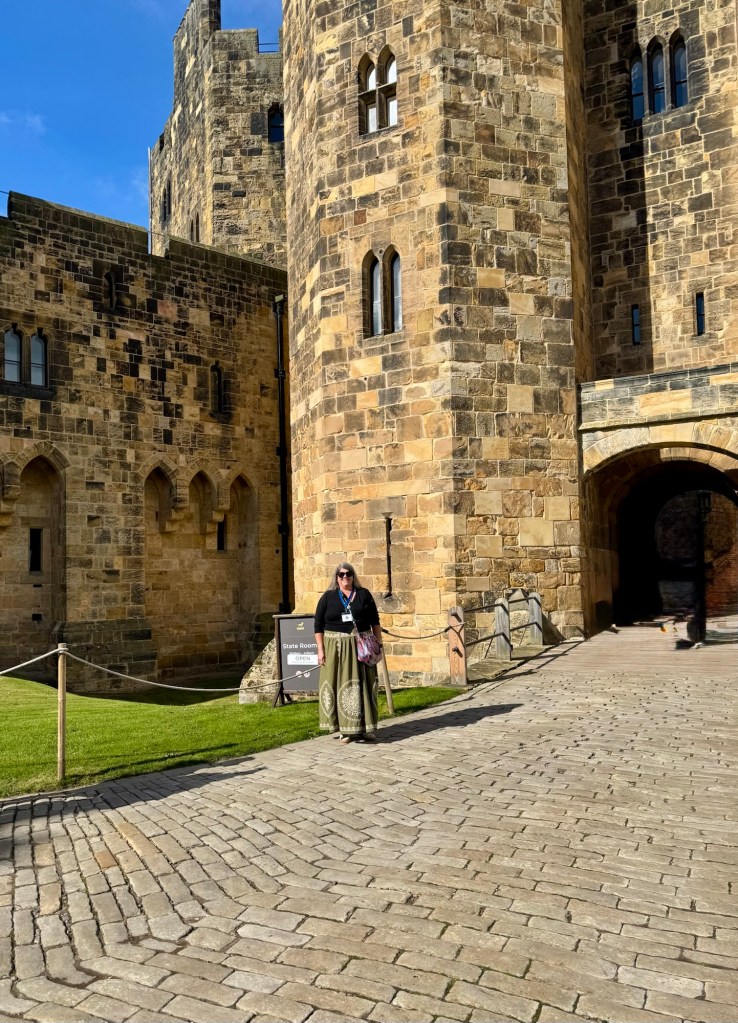
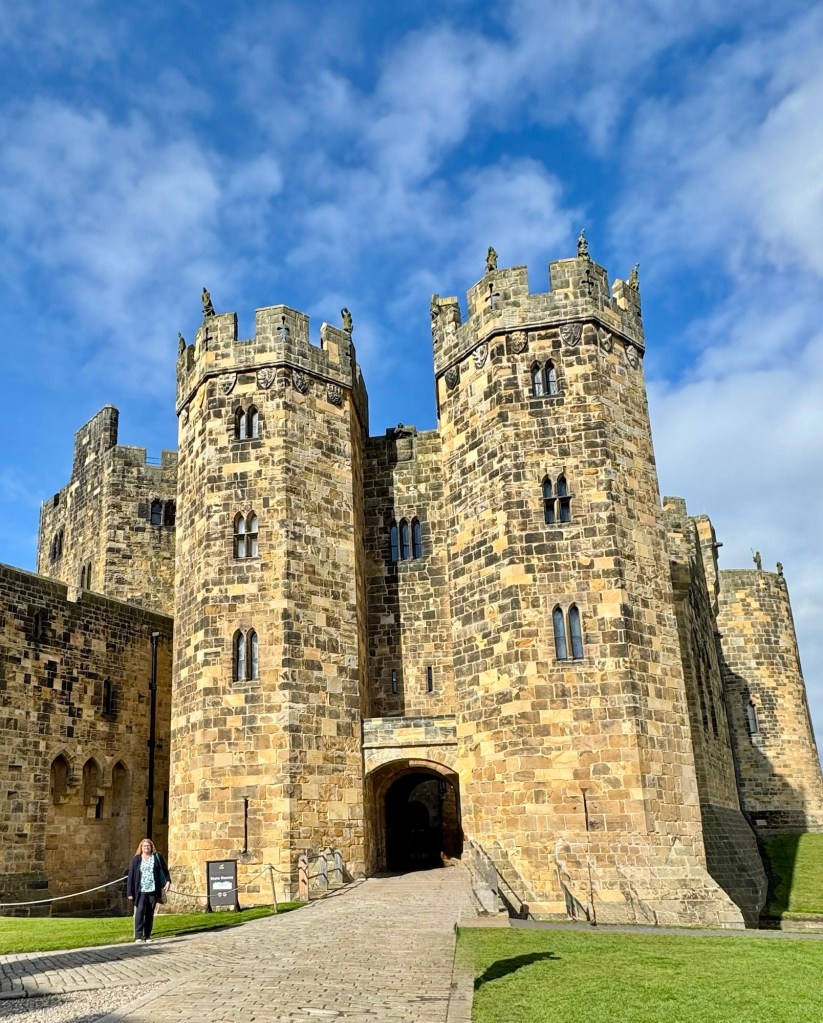
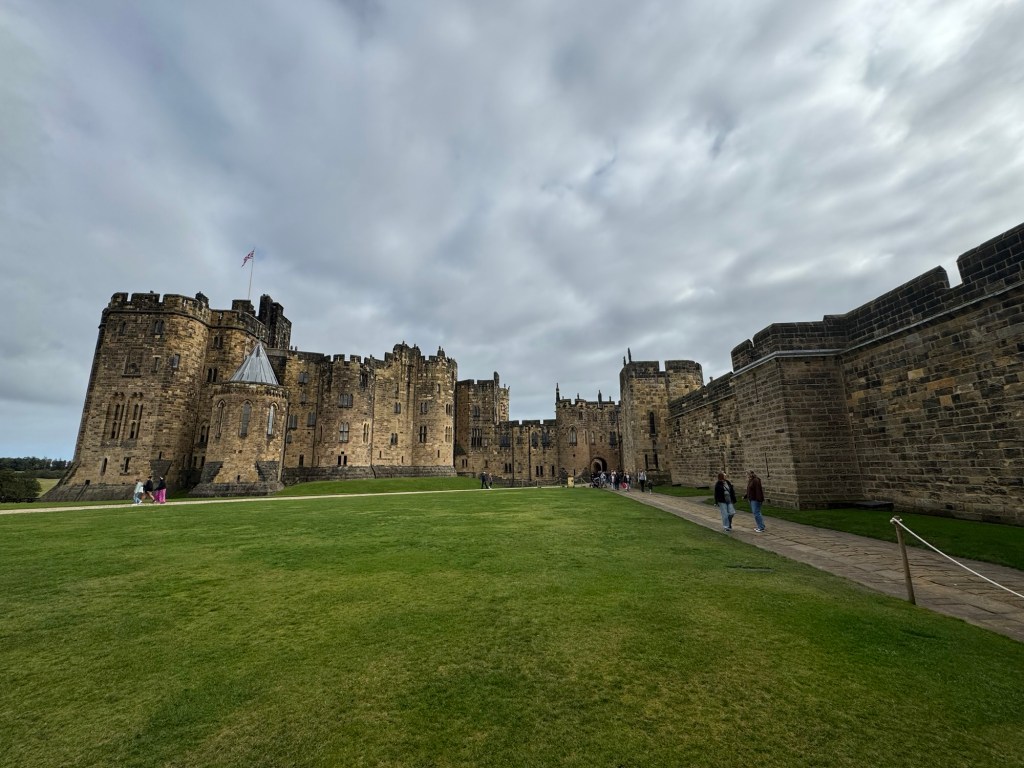
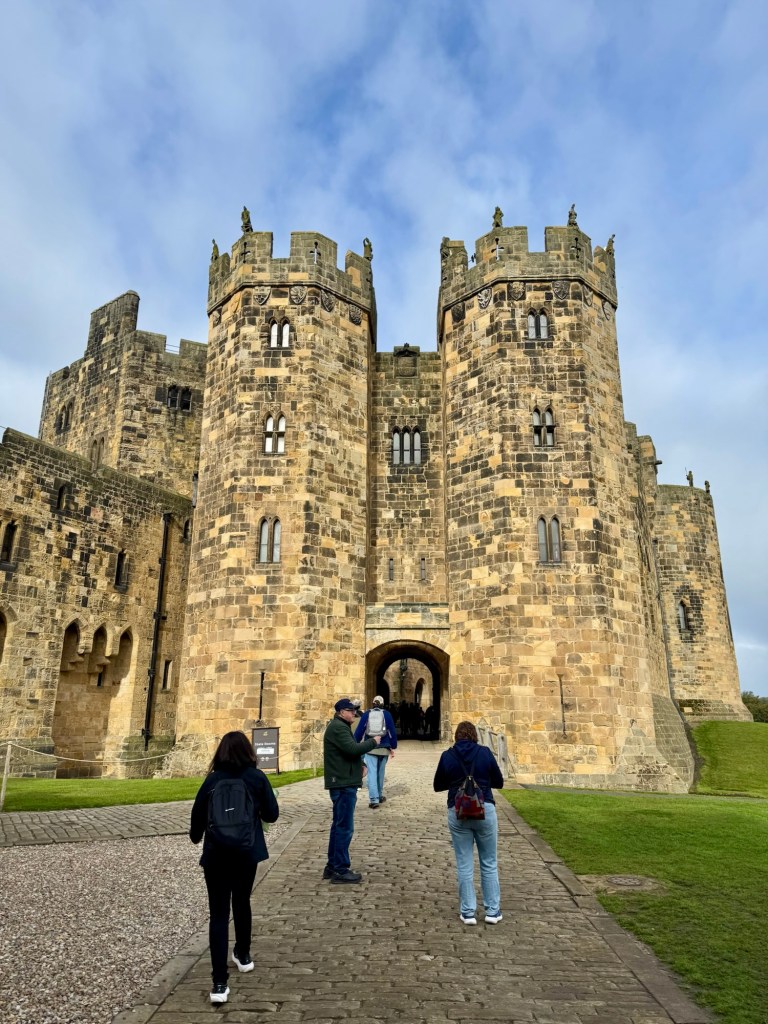
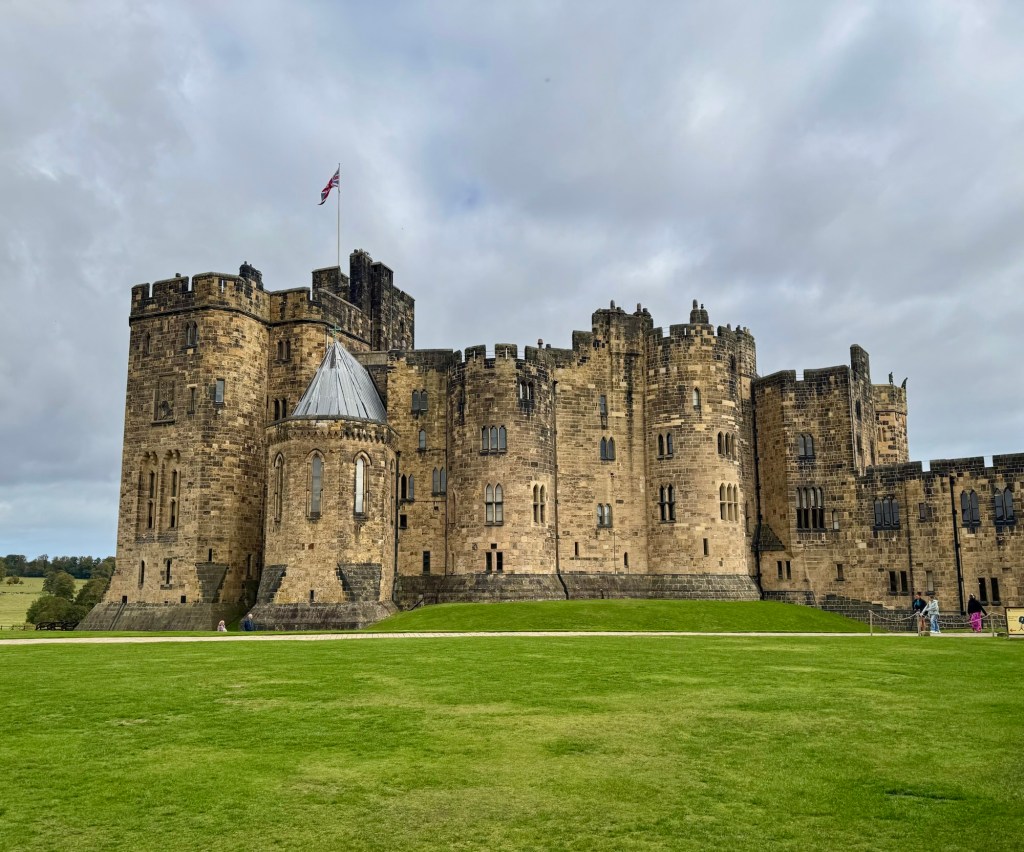
We started our day in Alnwick Castle which is the seat of the Duke of Northumberland. They live in the castle from October through the spring and it is quite a home. It is by far the biggest enclosed castle that we have visited on this trip and is likely comparable in size to Windsor.

Alnwick Castle

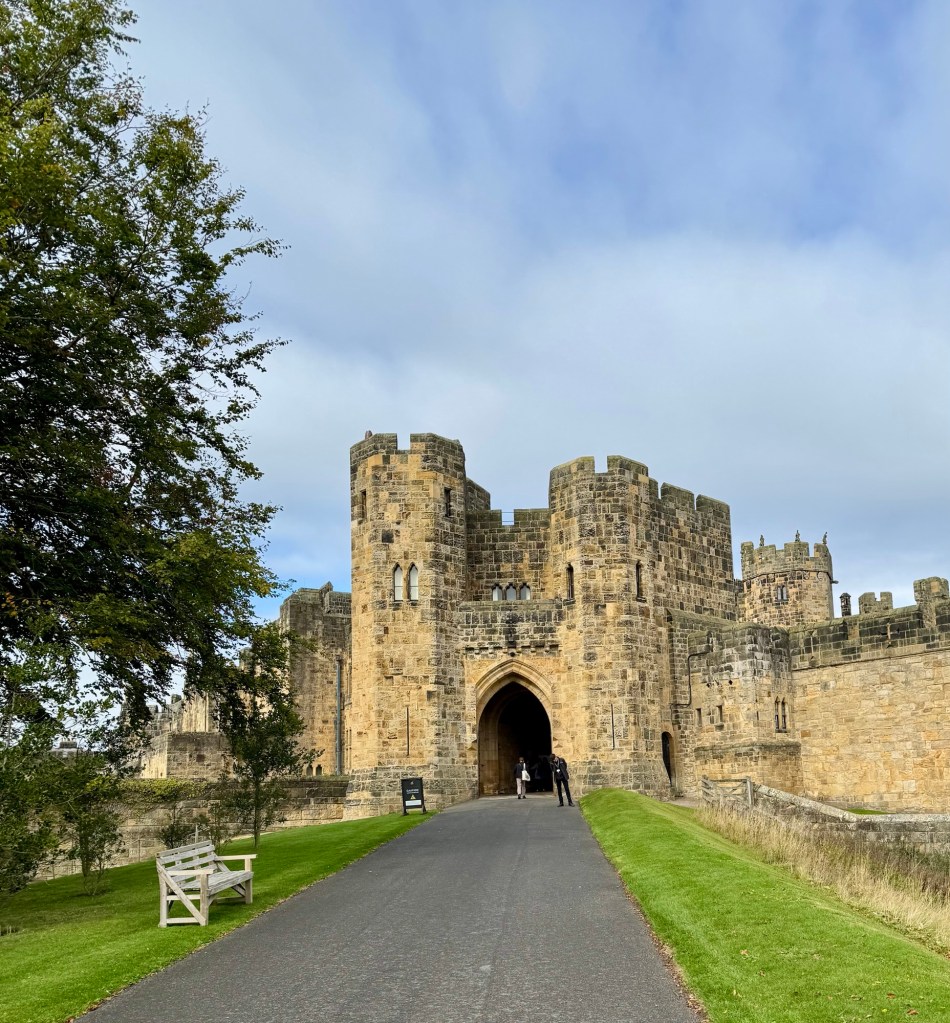
The castle was started in 1096 and expanded through the years. It was purchased by Henry Percy in 1309 and he made significant upgrades to improve its defenses. It is in an important location on the old north road and a big part of the border defenses. The barbican was added in 1475 which provided a more fortified way into the castle ground.

Once gunpowder became more accessible the castle is not quite as impregnable as once thought and they started falling into to disrepair. Alnwick was not taken by force but due to the changing times the family just moved around to other houses. The castles were not as comfortable as more modern manor houses so the aristocracy started leaving their castles behind.

In 1776 (an easy date to remember) George III elevates the Percy family from Earls to a Dukedom. It is at this time they restore the castle and make it a palatial home in the Italian palisade style popular at the time.

Alnwick Castle

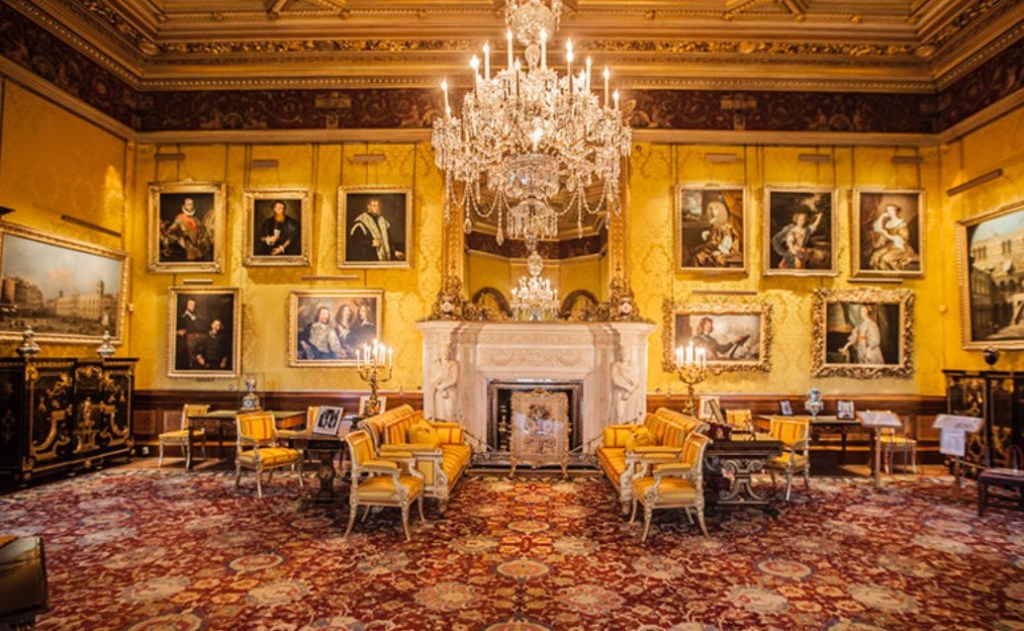
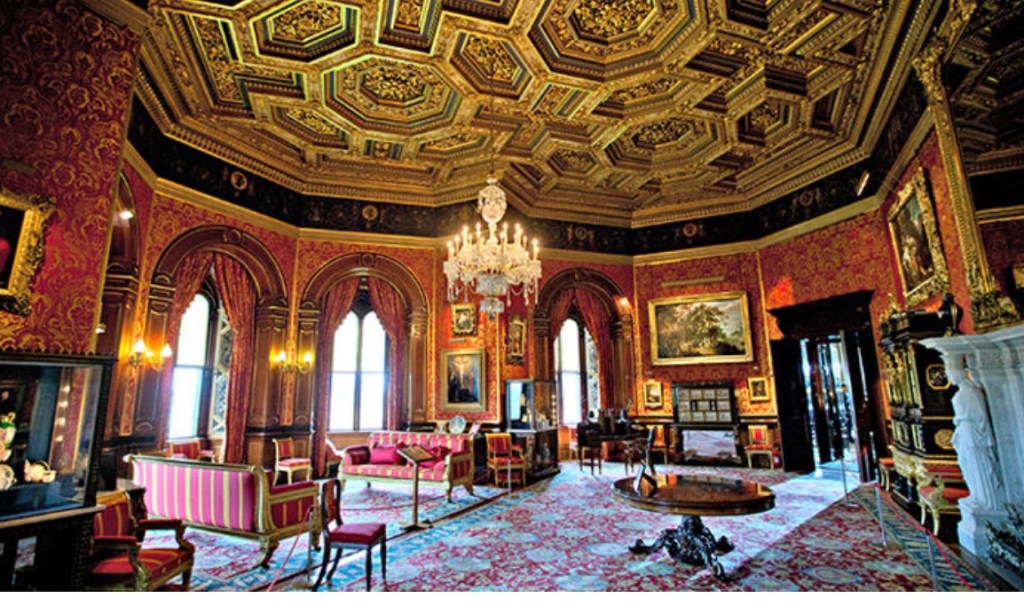
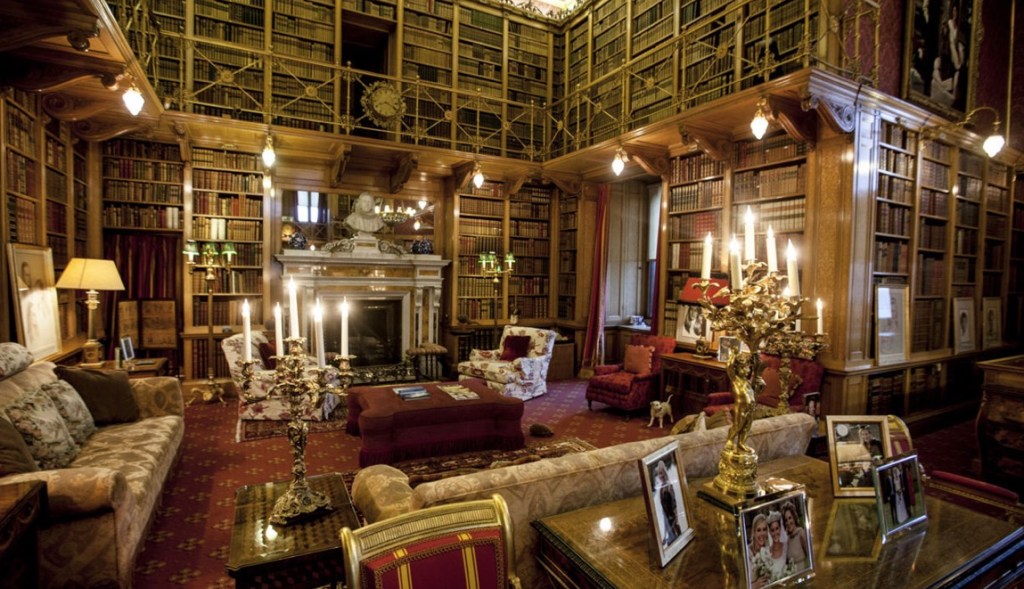
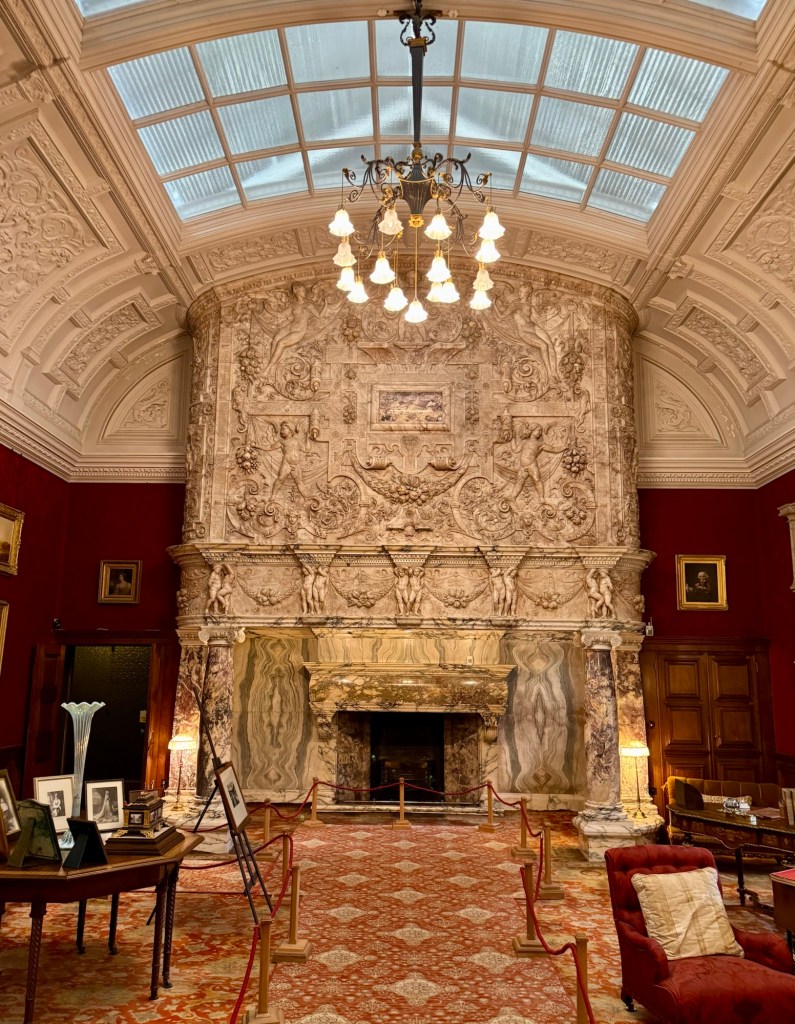
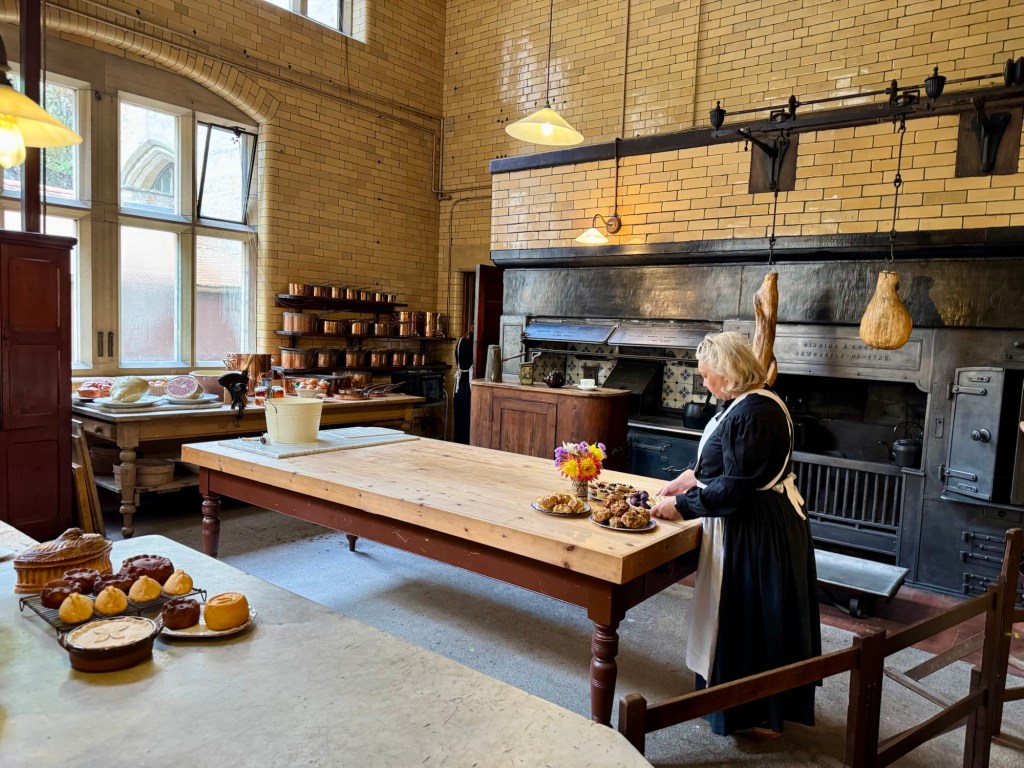
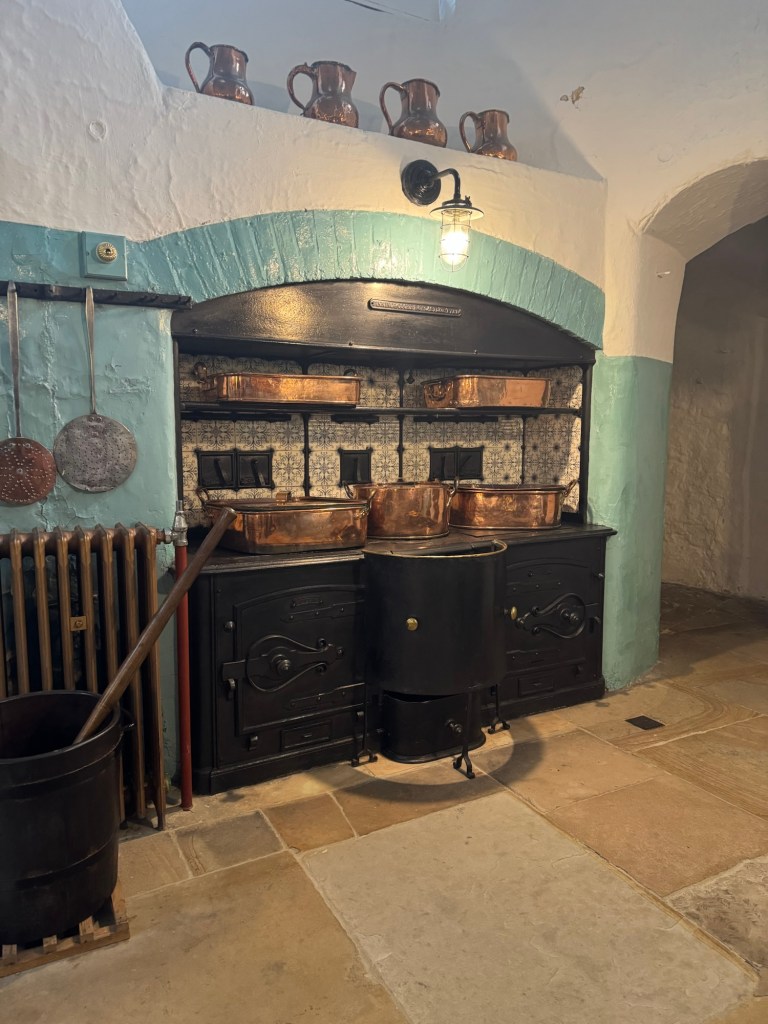
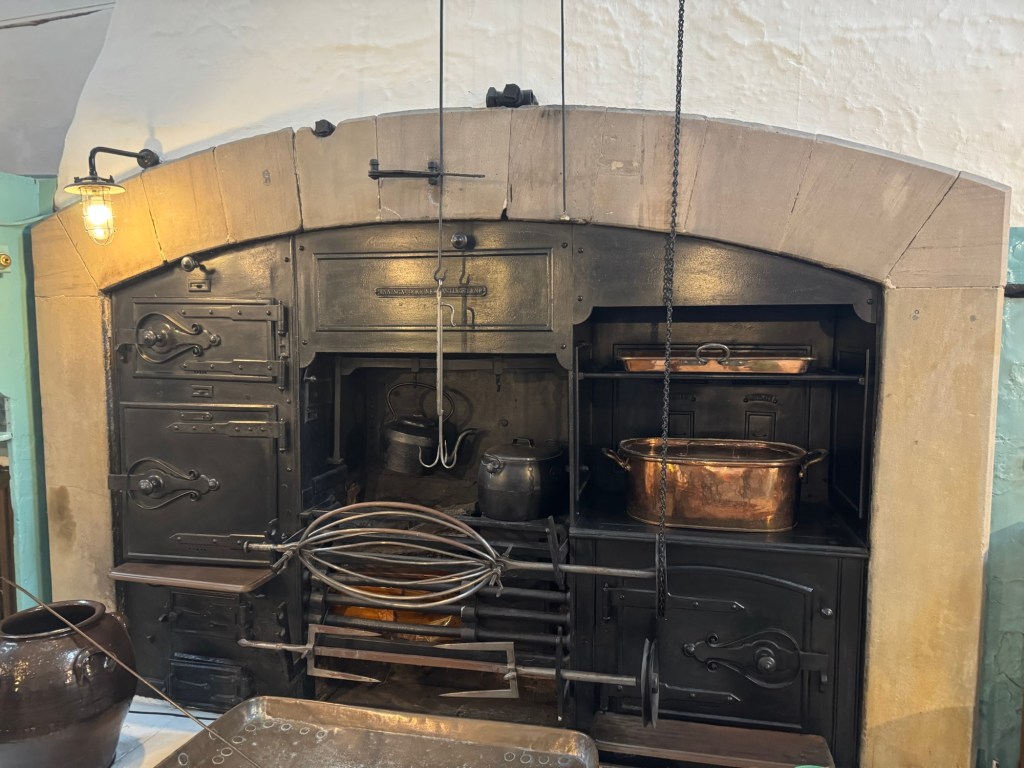
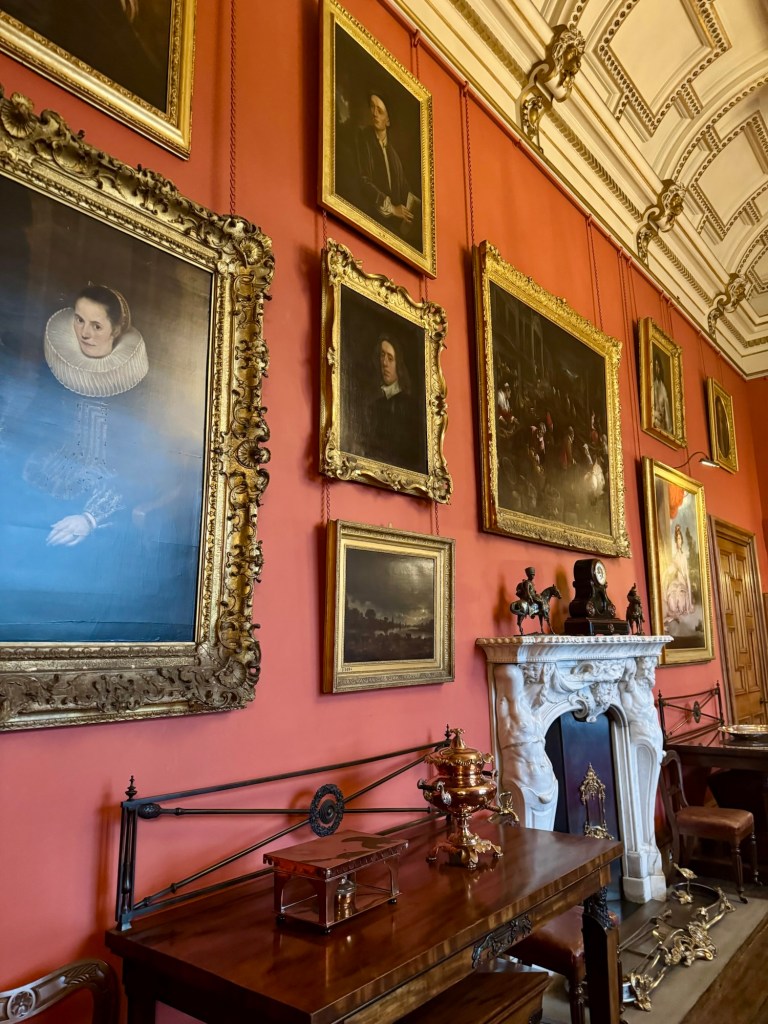
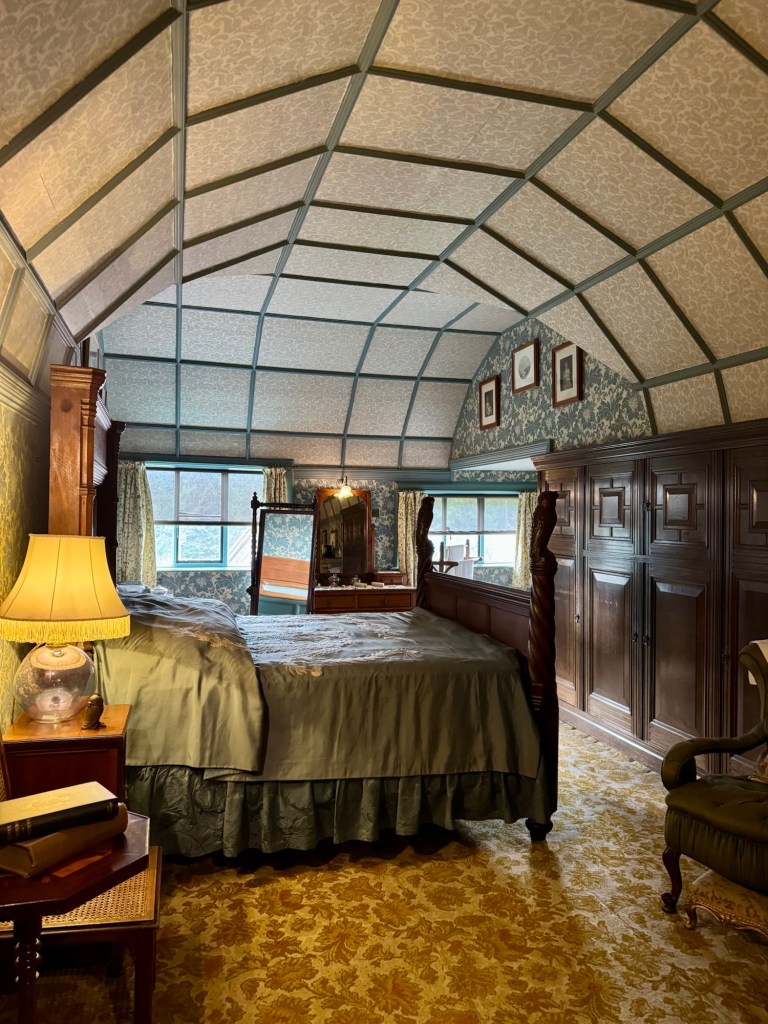
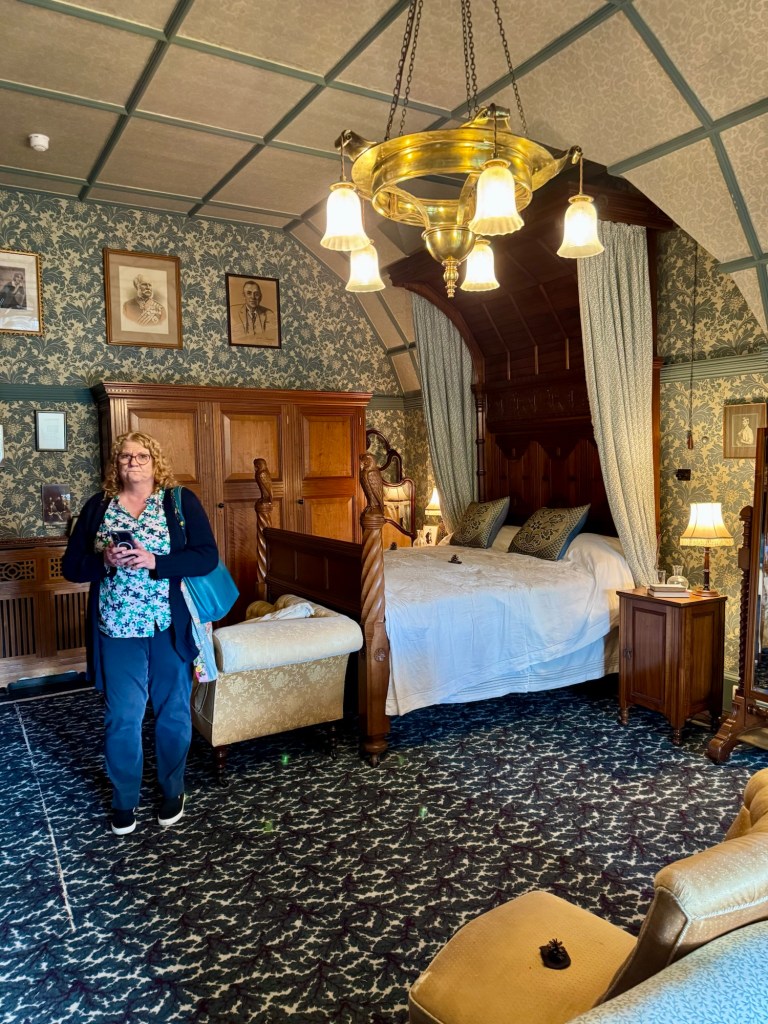
Inside the castle we were able to walk through the Victorian kitchen and several downstairs areas such as the larder and scullery. interesting but nothing compared to the state apartments. Sadly they did not allow photos in the upstairs rooms. They were completely over the top. I borrowed the pictures from the website so you could see what I mean.

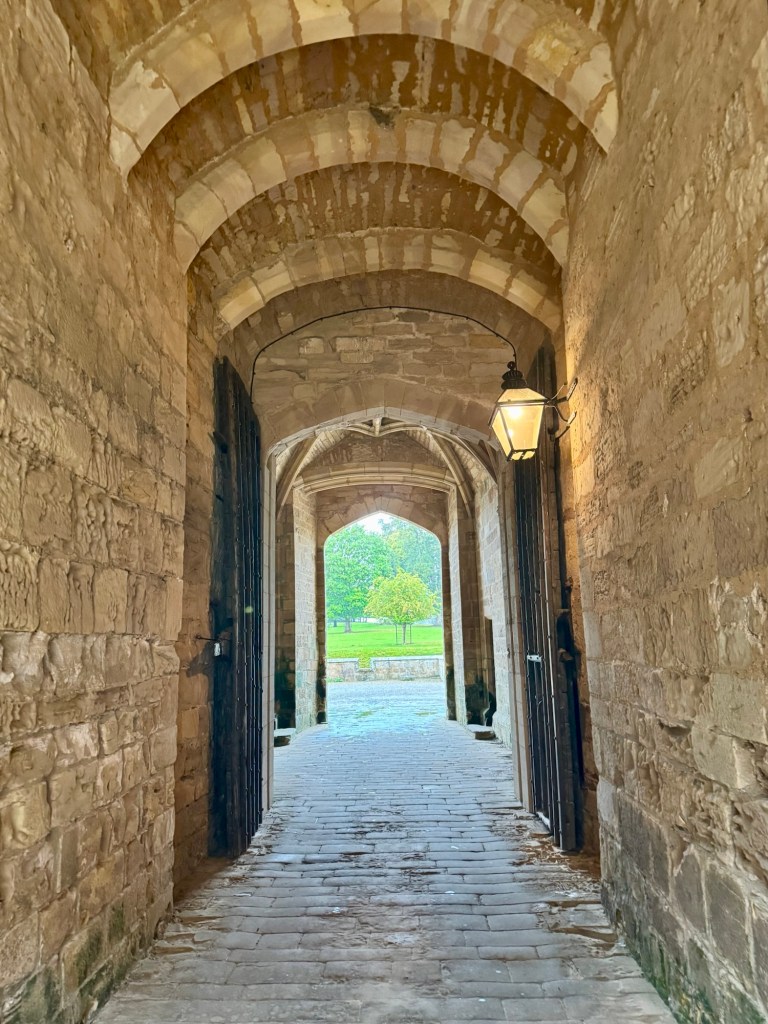
Barbican Gate Alnwick Castle

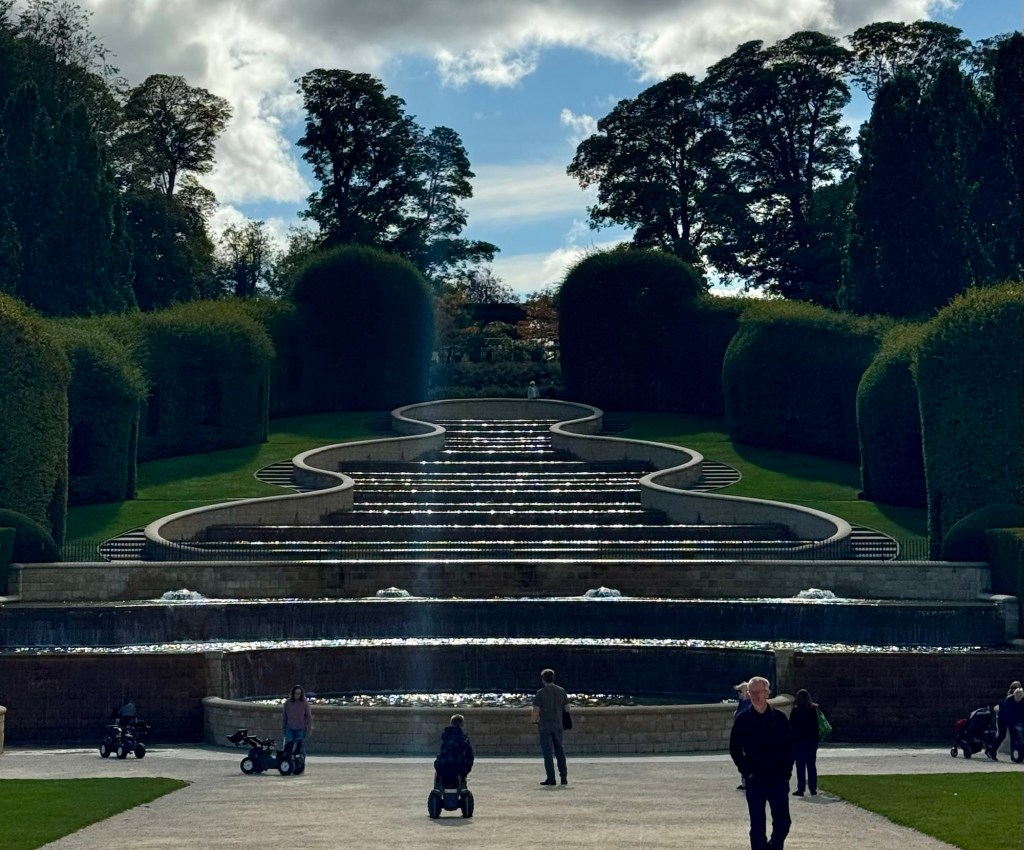
The gardens were also added when the dukedom was created. The gardens were created by Capability Brown the leading garden designer of the day. He also designed the gardens at Highclere (downtown Abby), Blenheim and Chatsworth.

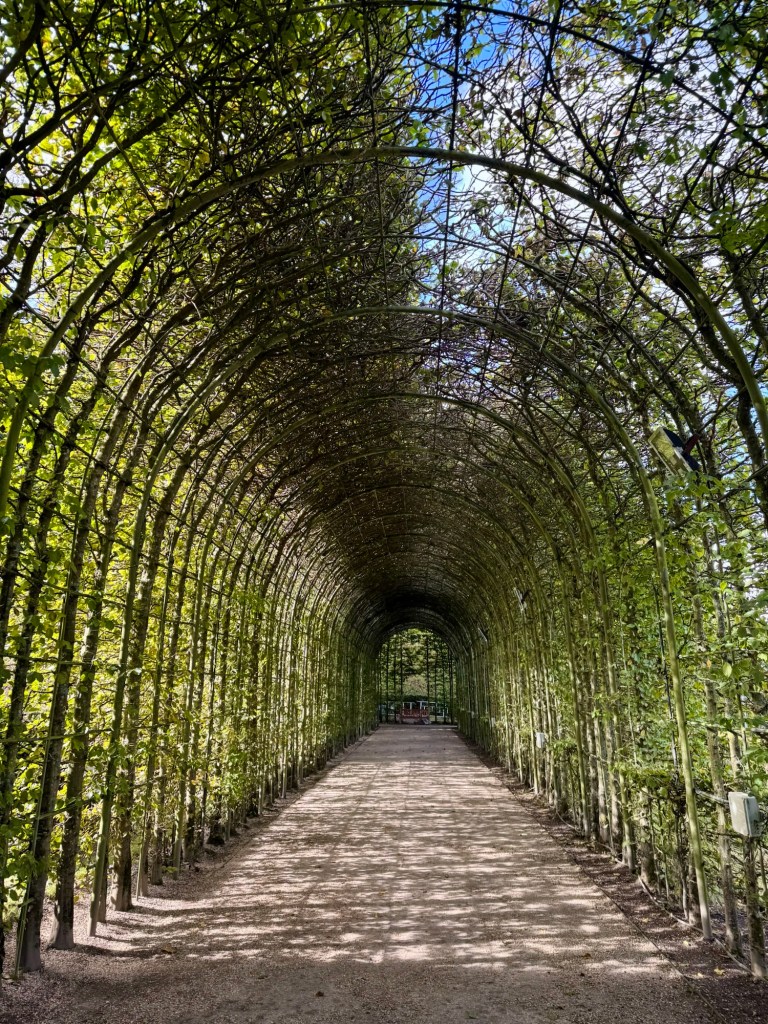
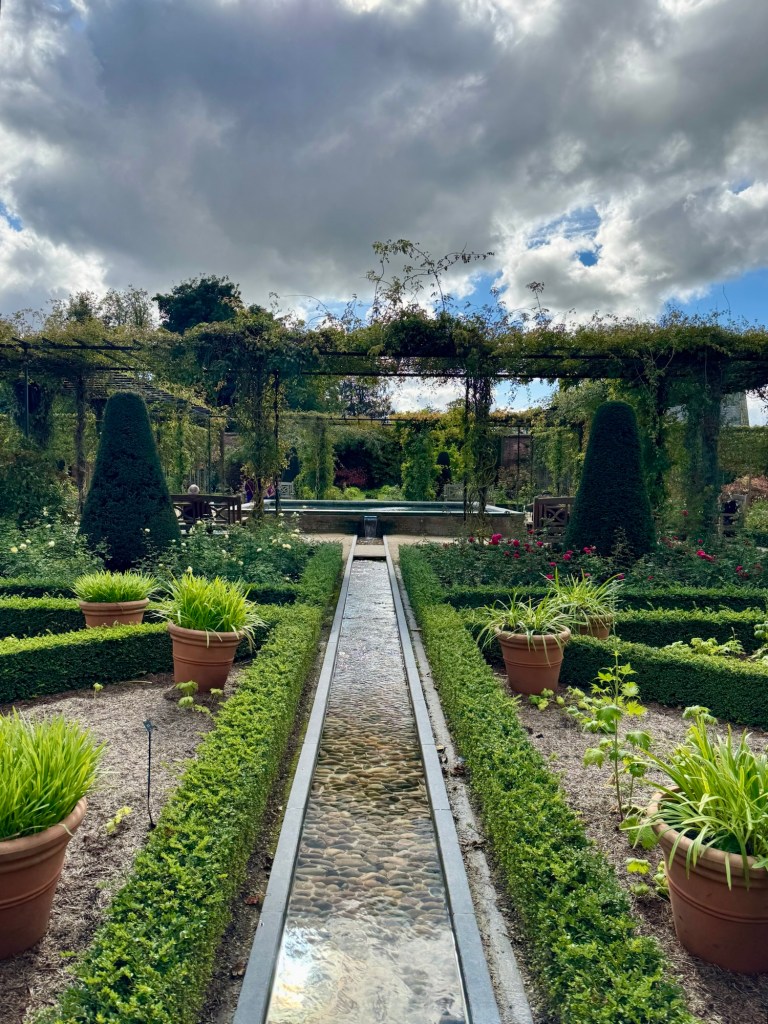
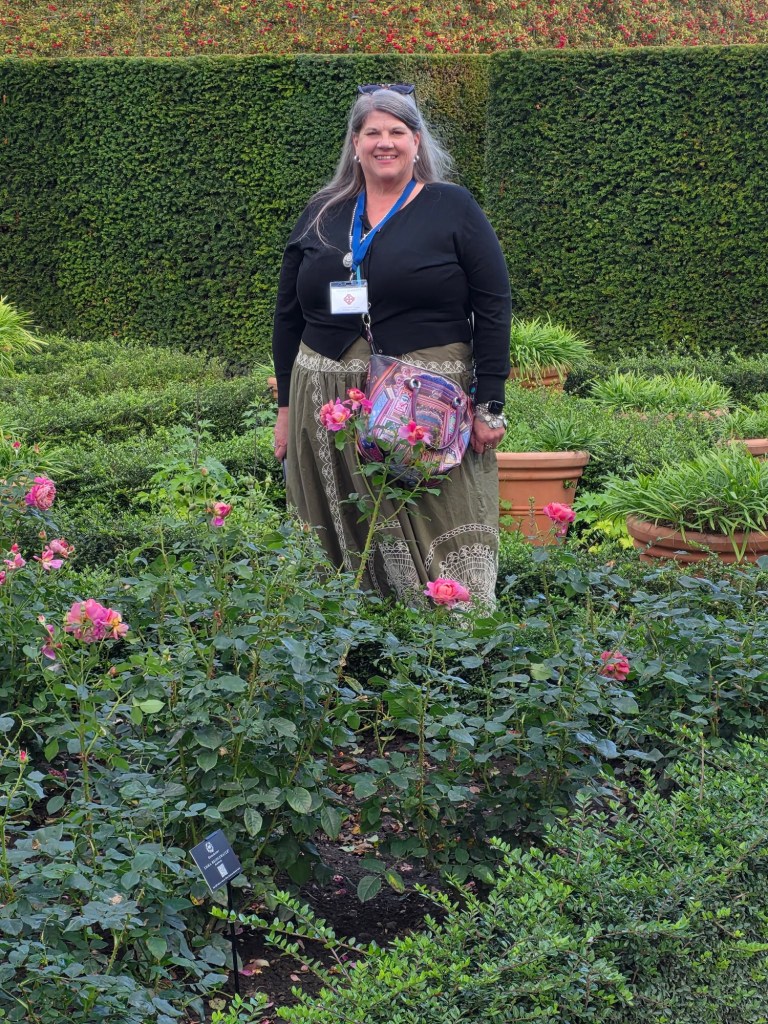
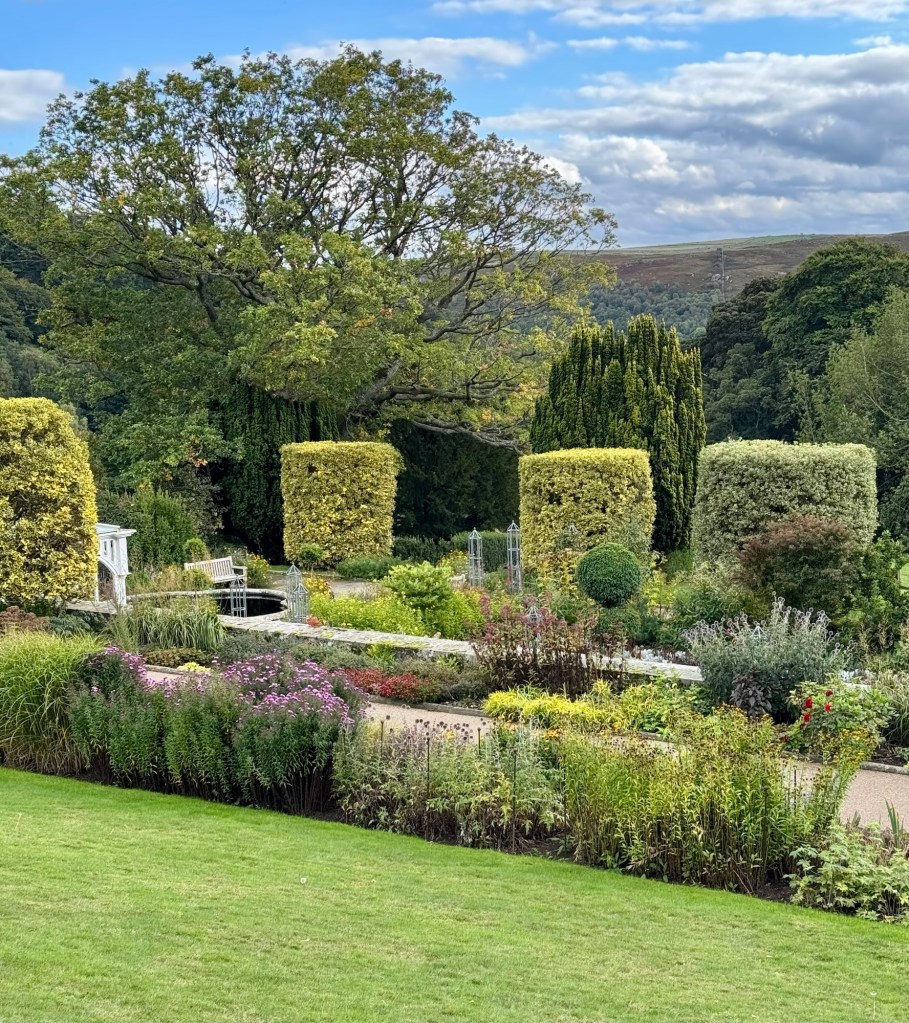
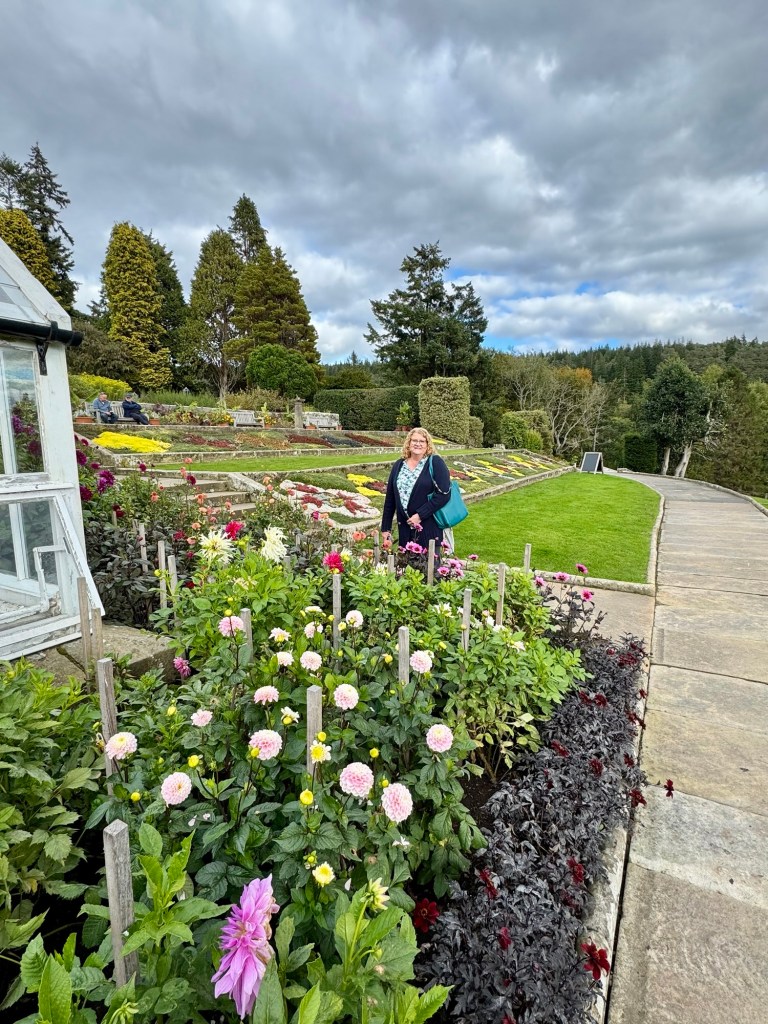
The gardens included water features, formal hedge gardens, a tree lined bower (which was my favorite part) and a walled flower garden. All were beautiful. There were little hidden paths and out of the way benches just begging to be used. I would have loved to had time to sit in the garden and read a book.

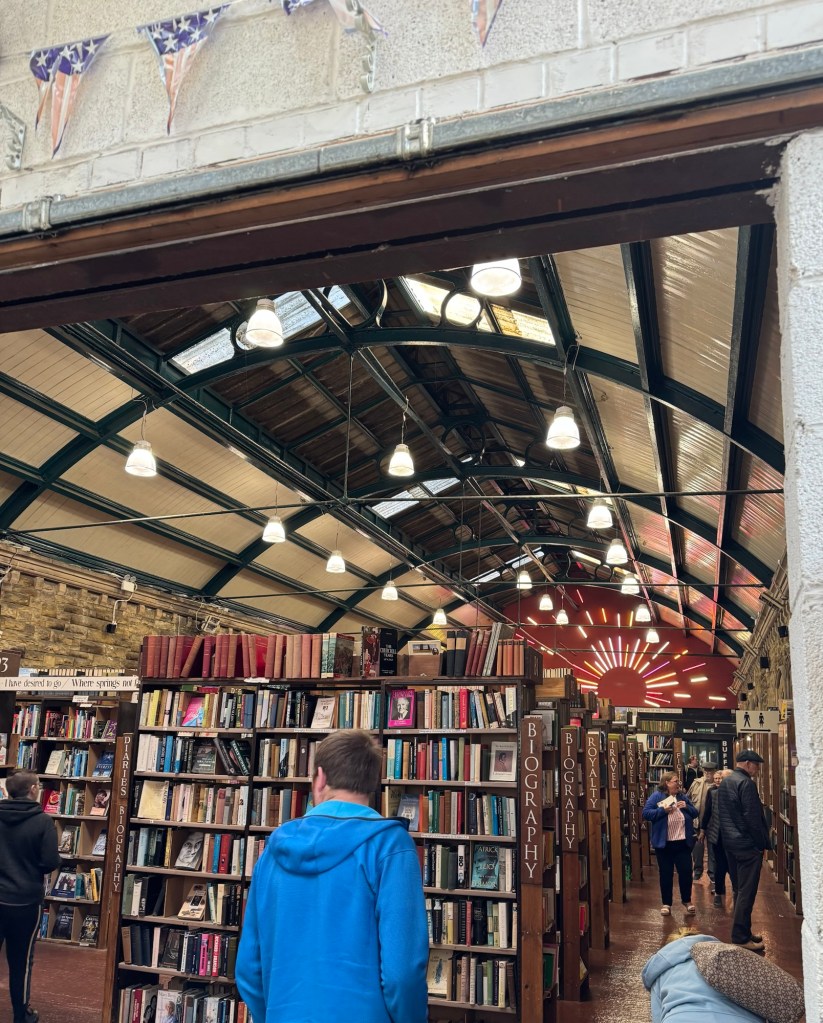
We also had a bit of time in town. We headed up to a great second hand bookstore which is housed in the old rail station. Sadly I already have too many books to just buy anything. I had hoped to find some wonderful first edition that I couldn’t live without or worthy of the space in my luggage but no such luck. I did enjoy looking nonetheless.

We didn’t do well managing our time and grabbed sandwiches at Greggs again. Super easy to grab and go but I do wish they were just a bit better.

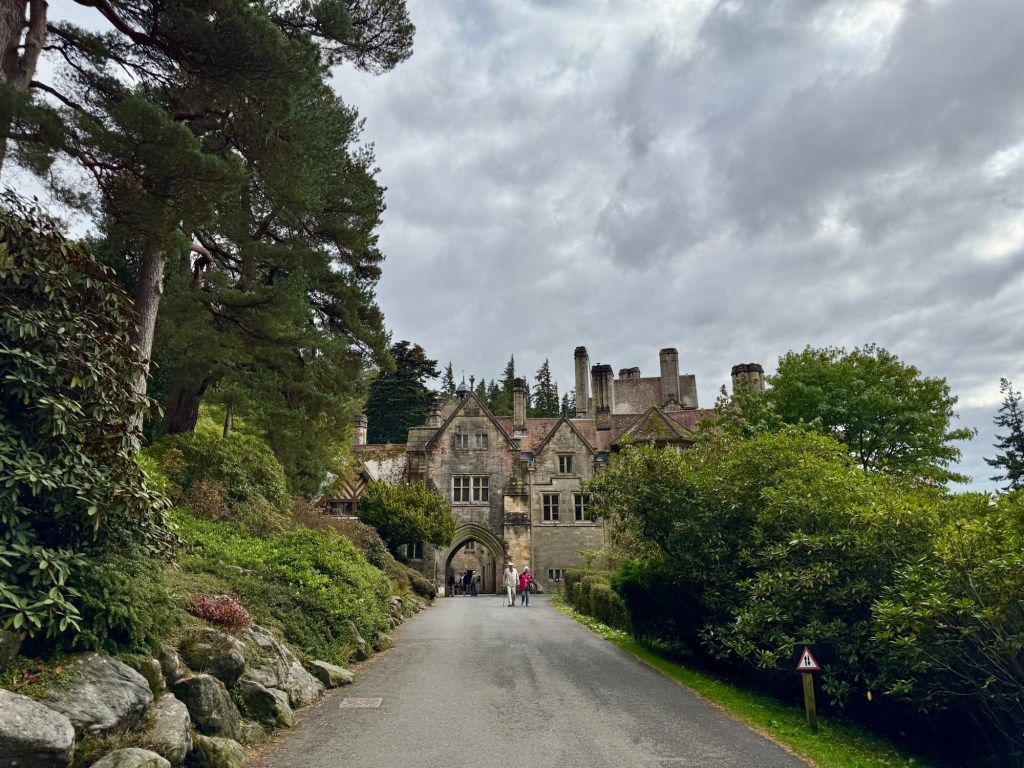
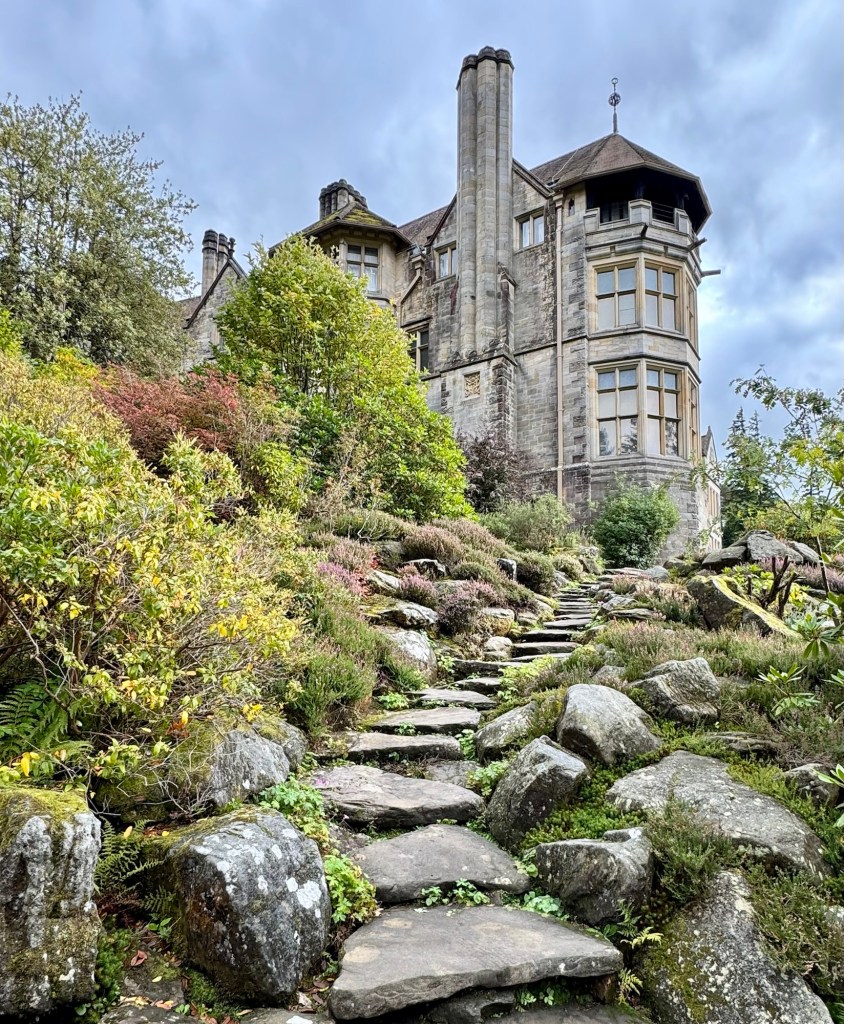
From Alnwick we headed to Cragside, which was the most unusual stop on the trip. Cragside is a late 19th century house built by Lord William Armstrong and it is billed as England’s original smart home. Julien referred to Armstrong as an international arms dealer but he was an engineer who worked with hydraulic lifts (including the one used by the Tower Bridge in London) and ship building and cannon making. Several of his ships were still in use by the Japanese during WWII.

The house is built into a cliff hence the name and weirdly set up. So again an odd stop for an Alison Weir tour. It did make more sense after touring Bamburg Castle the next day which was bought, restored, repaired and updated by the Armstrong family.

Cragside
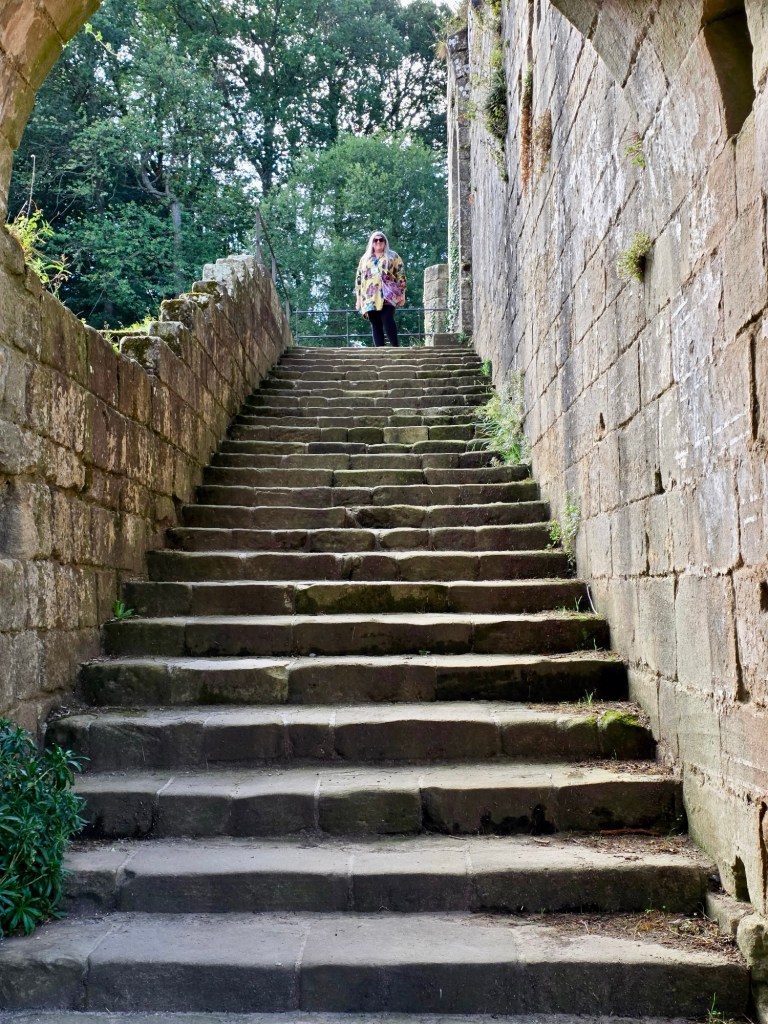
The trail down to the stream

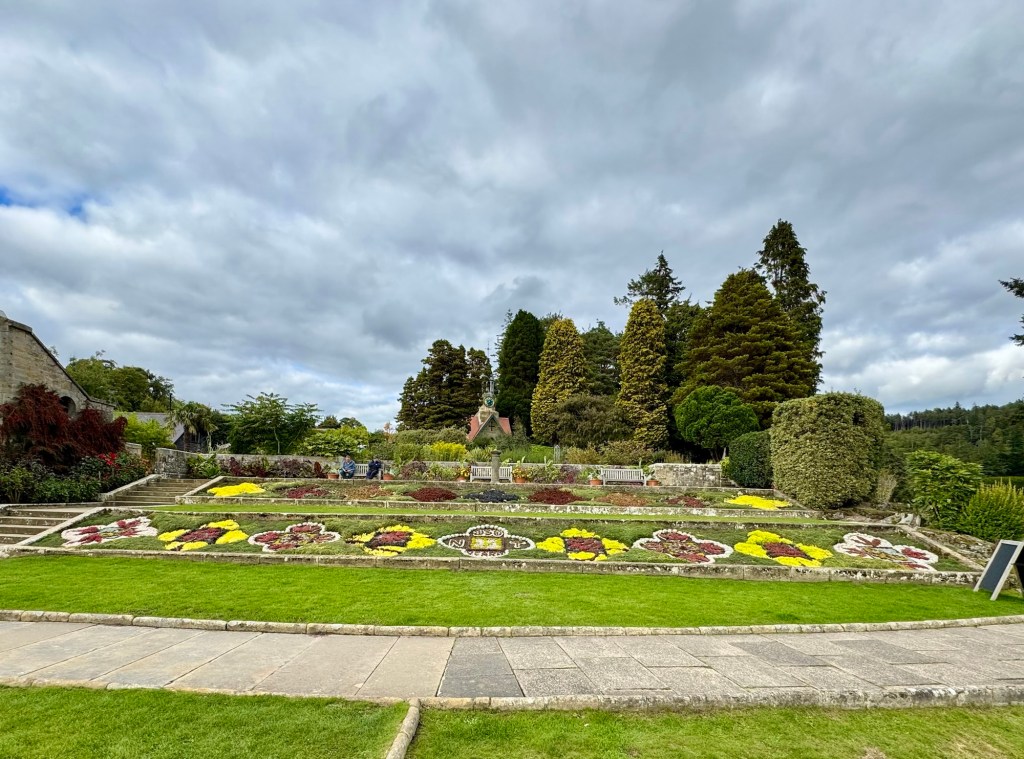
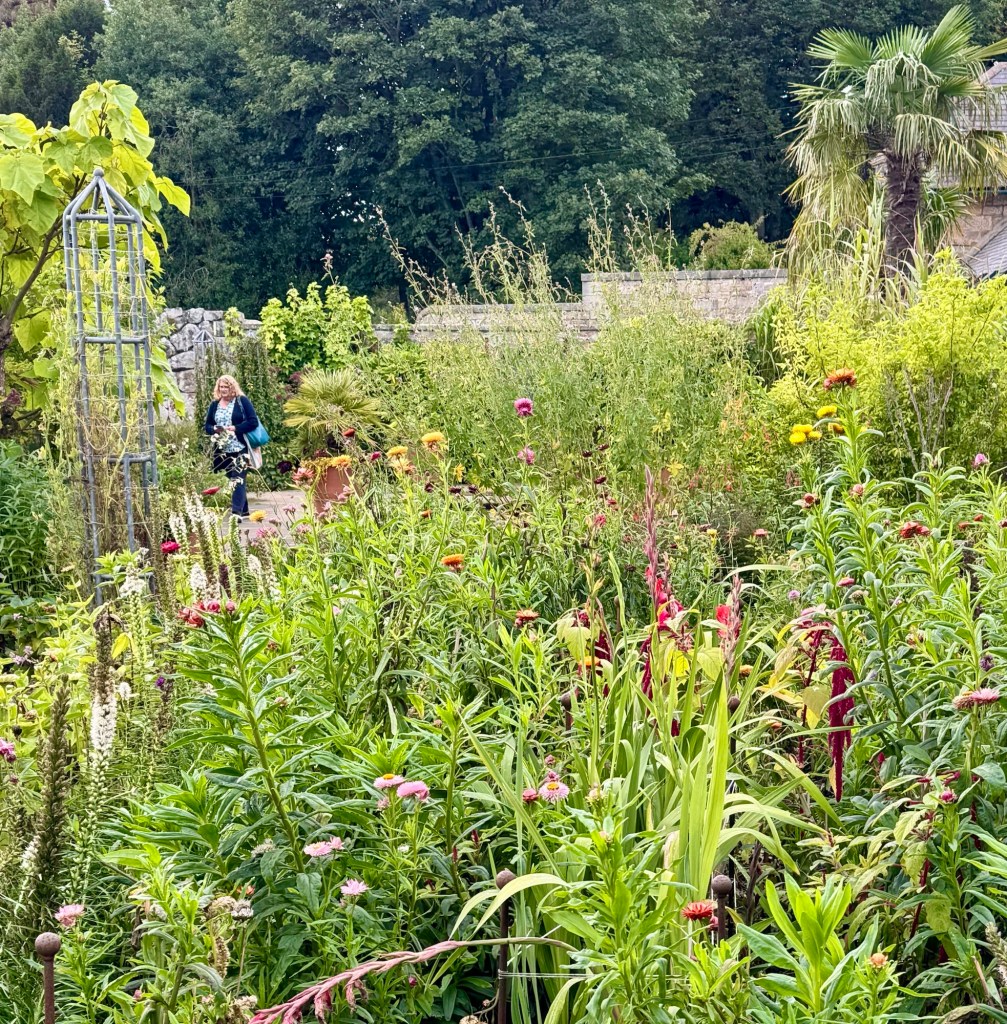
The grounds were more impressive than the house. A stream ran through it and the grounds were lined with rock steps up and down from the stream. They were not easy trails but they were nice and secluded. I have never worked so hard to visit formal gardens at any other estate. You went down to the stream from the house and then back up and up and up the other side to the gardens. I was very glad they were worth it or I would have been completely disappointed with our Cragside stop. The gardens were lovely with both well laid out floral designs and then areas with just hodgepodge flowers. Well worth the effort. We voided the up and down by walking along the road.

Formal designed garden
Wild portion of the garden

After Cragside we headed back to the hotel for a buffet dinner, historian debate and our end of trip quiz. The historians debated who was the best monarch of England. Julian put in a good argument for William the Conquerer, however Tracy had talked about the harrowing of the north in which William killed thousands in revenge for how they fought against him becoming king. Mike did a good job for his king but sadly I can’t remember who he was but he championed the common man. Nicola had Edward IV and even threw out how hot the actor playing him in the White Queen trying to drum up support for her efforts. Alison took it very serious and read several pages of notes on all the good things about Henry VIII. Sarah had Elizabeth and in a group of women that was a sure thing. Mike had bribed some from him table to vote for him. I voted for Nicola out of solidarity for our shared love and of Margaret Beaufort even though she had nothing to do with Edward IV. However, Sarah of course won by a landslide championing Queen Elizabeth.

The group of five at my table did well on the quiz (embarrassingly we forgot about the Neville family) and came in 2nd. Just missing out on the prizes by two questions. I am pretty sure I listen to all the talks but I think I might nap more than I think. Win or lose the quiz is good fun.

Holy Island

Today we had to start out early to make the tide so we could drive across to Holy island. This is where St. Cuthbert and St. Aidan brought Christianity to England. As Julian says Cuthbert gets more of the credit but he was basically a hermit who dealt with the administration of the abbey where Aidan did the outreach. But Cuthbert has been the hero for centuries and likely no changing it now.

It was a long drive but we had several talks both about life Lindisfarne Priory and Flodden field which is a later stop this afternoon.

Our first stop once on the island was the Priory. Of course it is in ruins like every other priory/ monastery or convent in England (unless converted to the local church like in Hexham). The church was right next door so I guess they didn’t need another one. This priory was set up for pilgrimages so it had a large outer vault great hall that was used before entering the refectory. There are also some design styles that are repeated from Durham. The zigzag pattern up the columns which I thought was strange for a church.

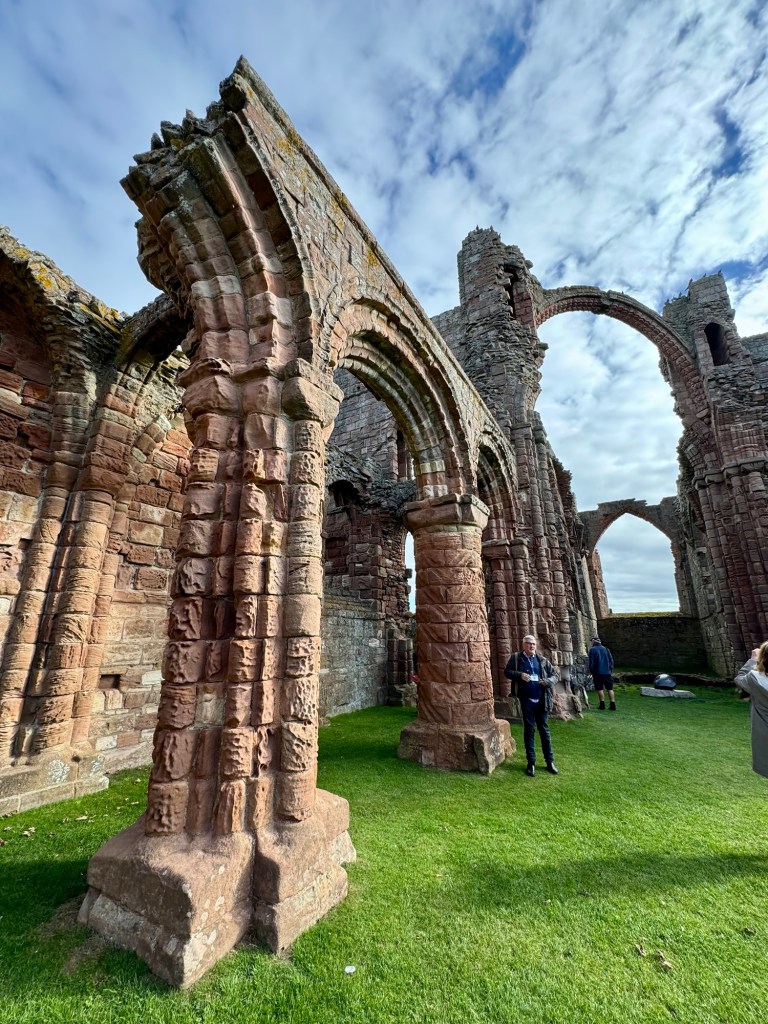
There is one incredible arch that still survives in the ruins that is called the rainbow arch. Not sure how it is still up but it made me a little nervous to be under it.

St Cuthbert
St Aidan

There was also a museum that had some of the illuminations from the gospels done by the monks at Lindisfarne but sadly no pictures. I bought a book so I might add some later.

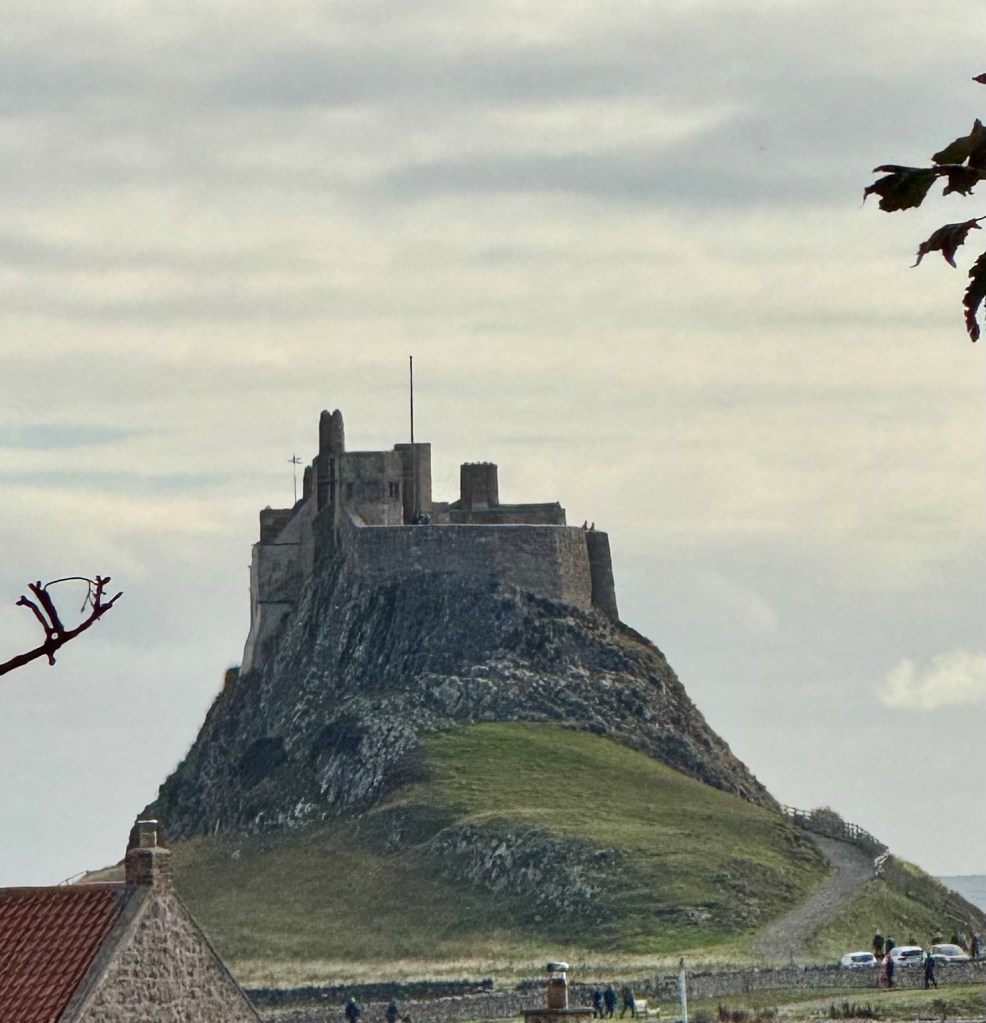
There is also castle on the island that sets up on a large promontory. It looks quite impressive from the town but the closer you get to it,not so much. Quite impressive of how they got all the stone up there but it is just a big block. The English added defenses to it during WWII so there is really no hope for it now. We walked up to the bottom of the hill before deciding it wasn’t worth it to go any further. I do wish we had gone over to the walled garden but we missed that.

Lindisfarne Castle
The ugly side

The trek up to the castle took us over the beach and through the fishing port where enterprising fishermen have turned their old boats into homes.

I did get to try some mead while we were on the island. It wasn’t bad but I prefer the gin. Sadly they were not tasting that. Rum seems to be a big alcohol in this area. The hotel served us rum punch when we arrived and the mead place also had rums out to try. I don’t associate England with rum but I guess they like it.

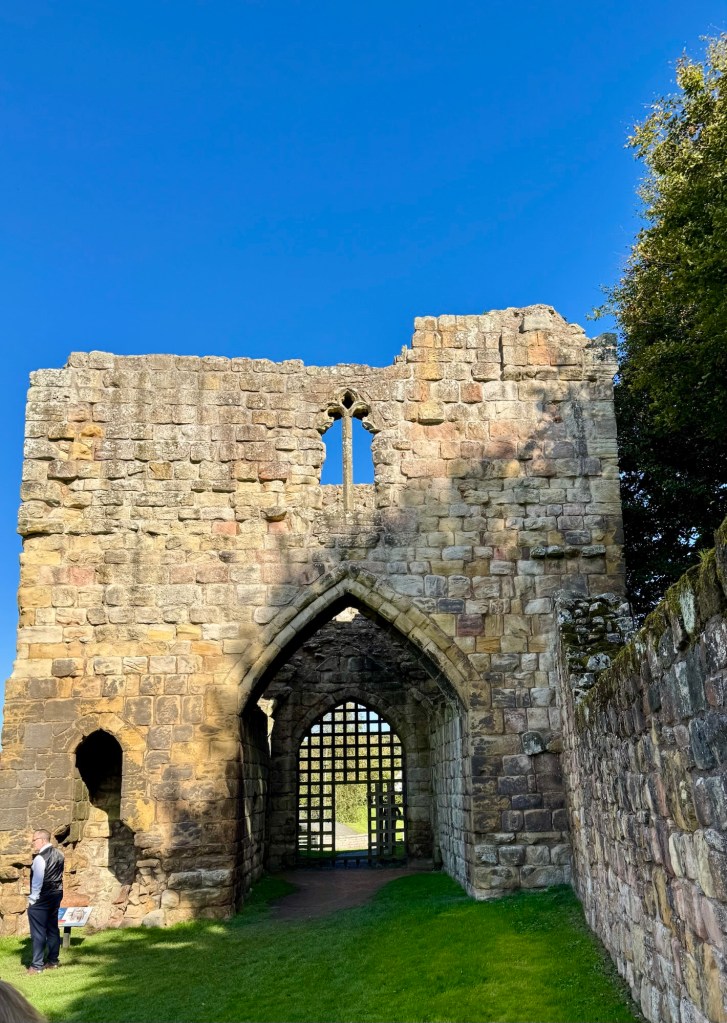
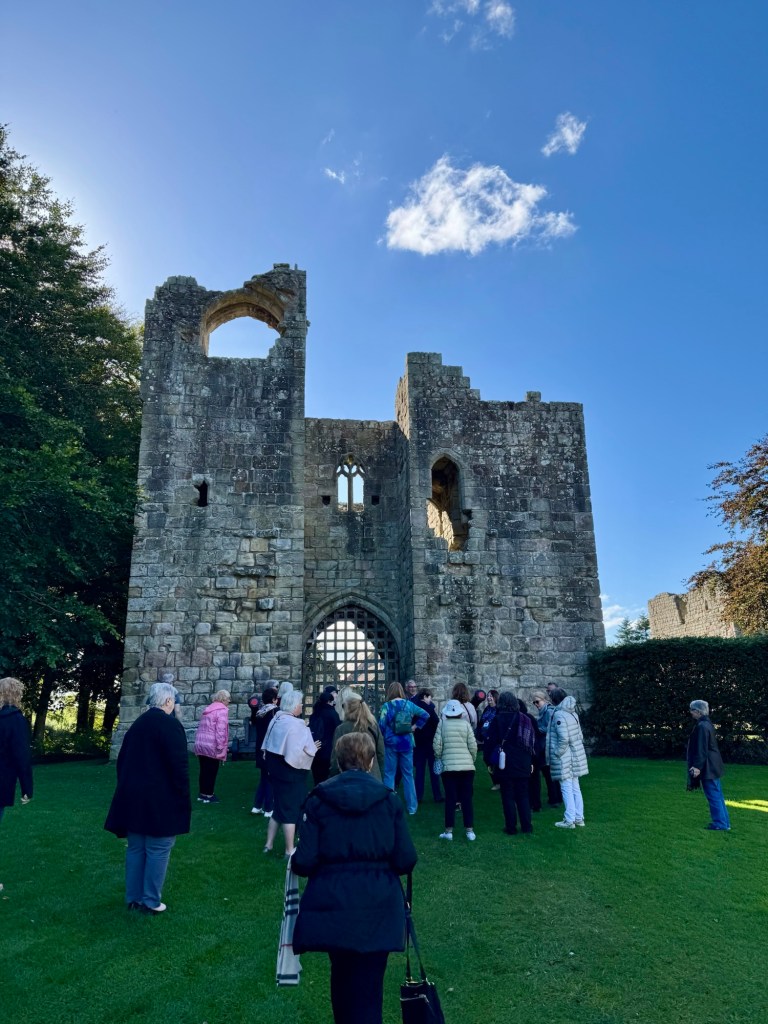
After we said goodbye to Lindisfarne and the holy island we headed out to The Black Bull pub for lunch. It is now me of the few thatched pups left in England. We just had simple sandwiches and a drink before walking down to Etal Castle. It to is in ruins and was a pretty simple castle to begin with. Julian gave us a bit of a tour and talked about life out in the border marches where the reivers and raiders made for a dangerous life. This castle is also close to Flodden field so it held some of the capture Scottish artillery before they could move it down to London.

The Black Bull Pub
Etal Castle
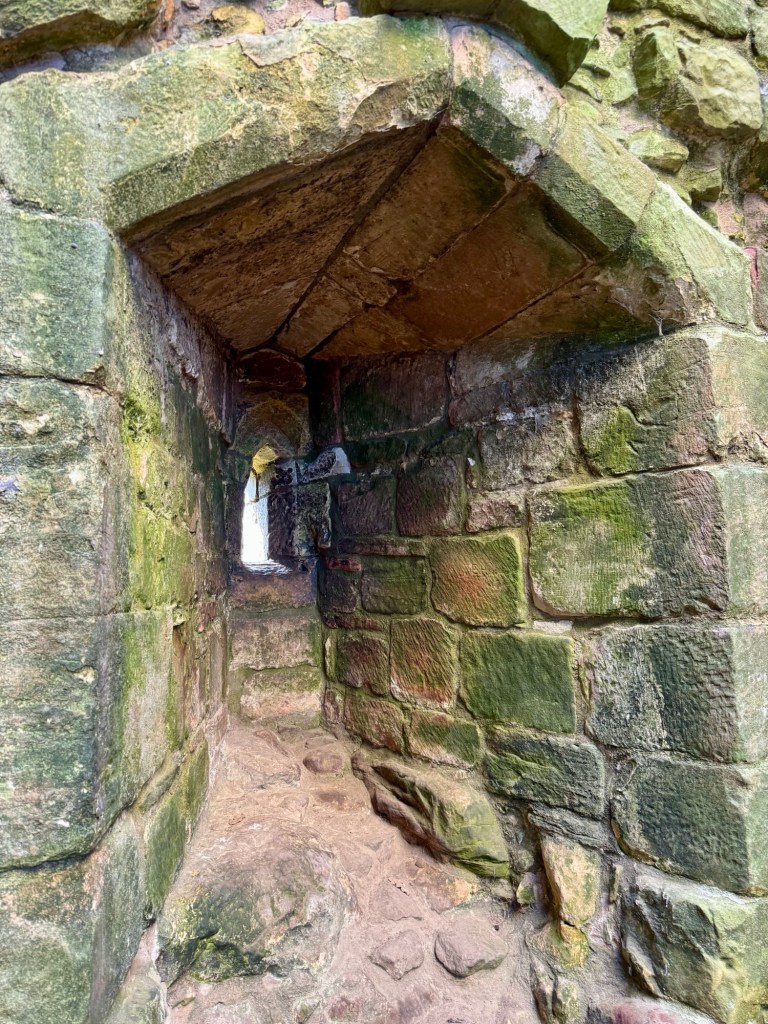
The thickness of the walls
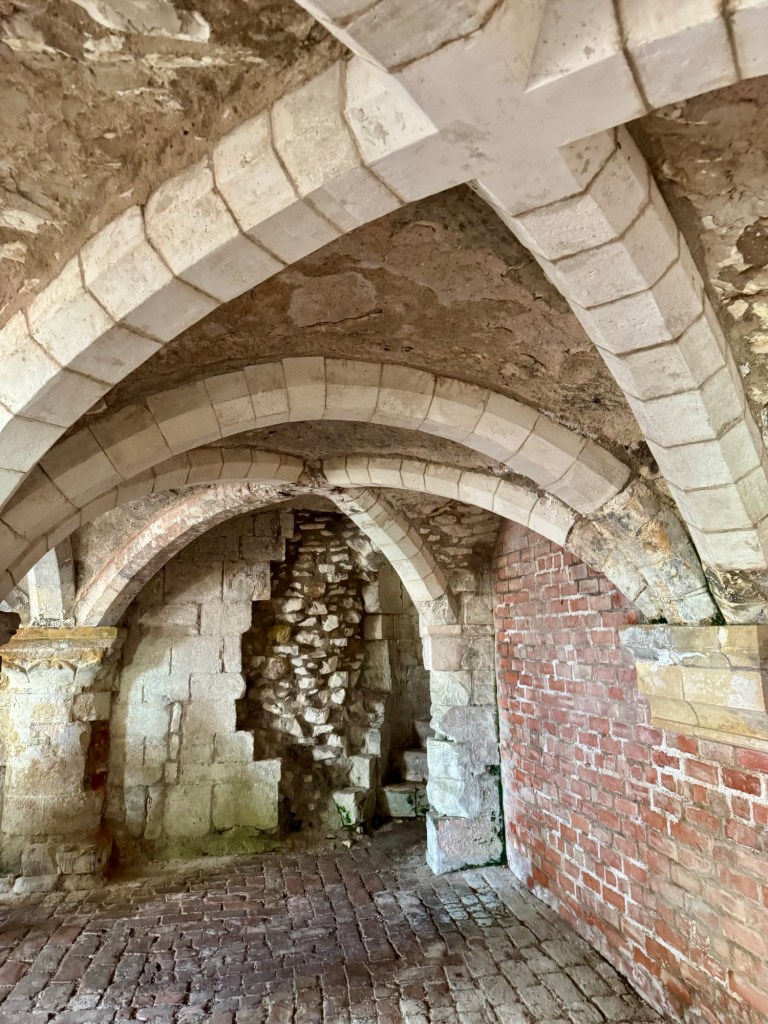
Enjoy the basement storage area of Etal Castle

The next stop was Lady Waterford Hall which is an old school where lady Waterford painting murals around the classroom. This might seem like an odd stop for this day but it was very close to a church that sets up on a hill overlooking the fields where the battle of Flodden was fought. Anyway Lady Waterford was a widow who had no children and loved to paint. She did all the murals herself and used towns people as her models. It was quite beautiful in a simple kind of way.

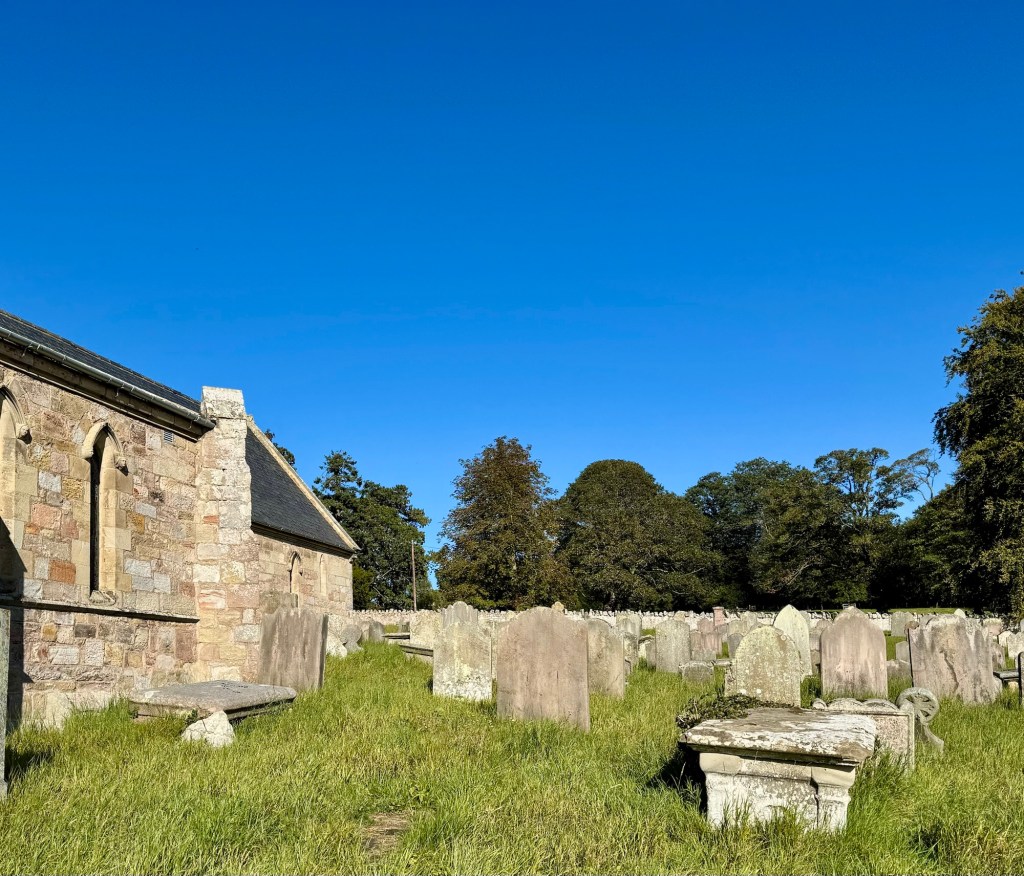
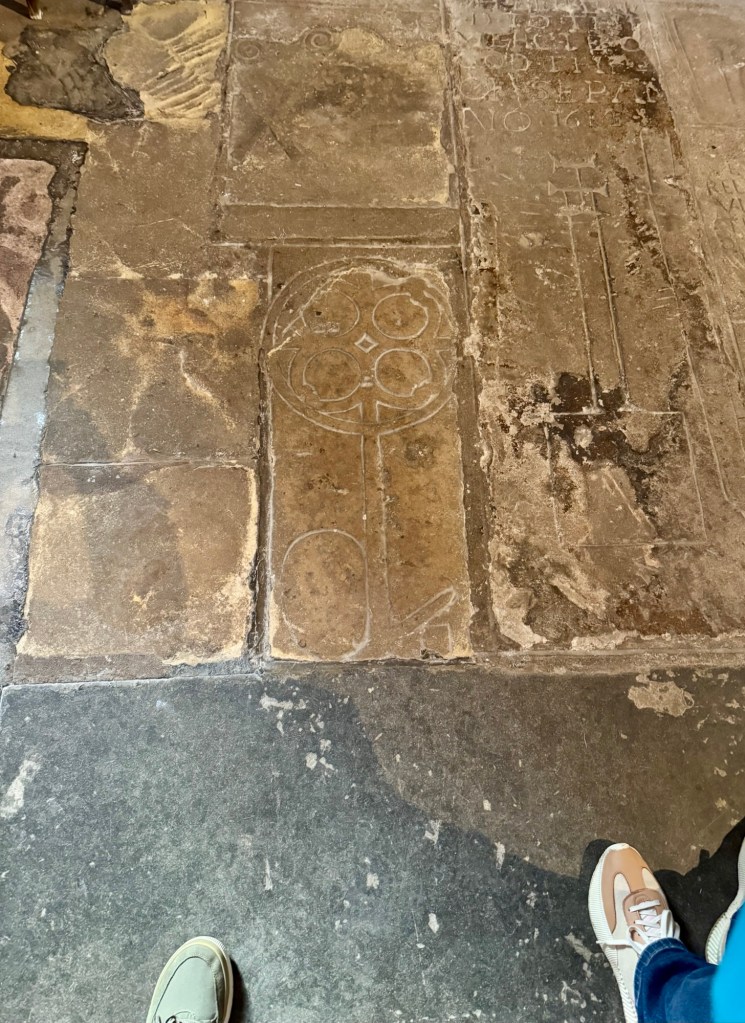
From here we walked up to the parish church overlooking the field. I think this church had more gravestones than I have seen at a church before. They were everywhere. There were also some stone grave markers inside the church that date to the 14/15 century.

Lady Waterford’s grave
The earliest detection of bagpipes
The view out over Flodden field

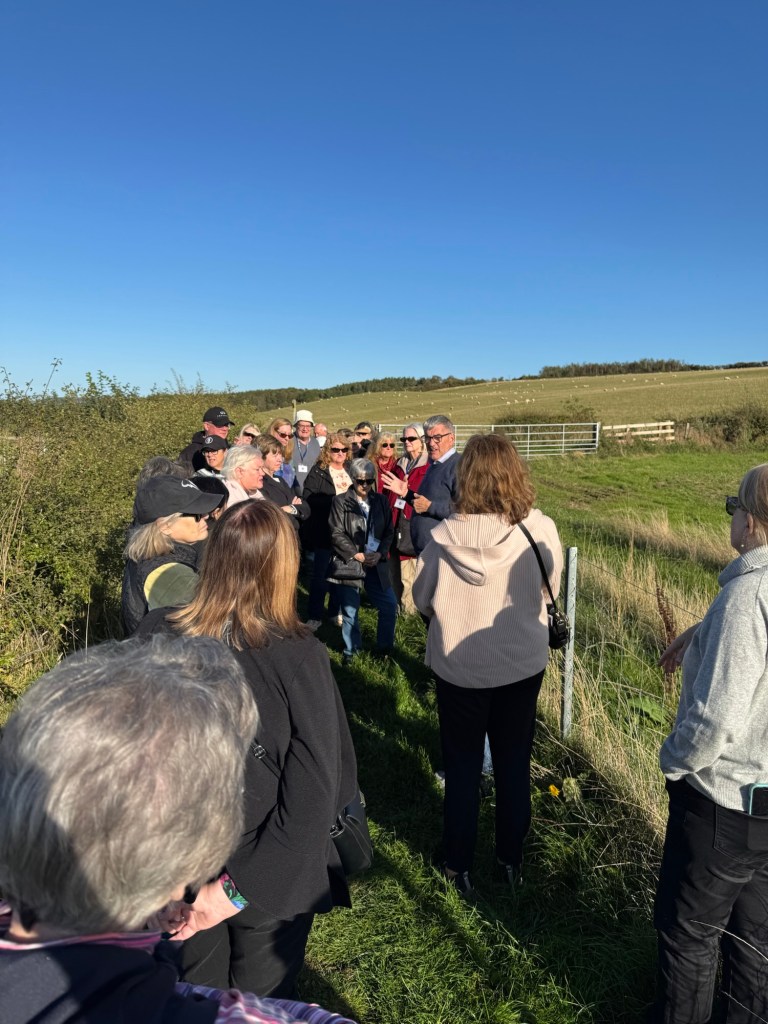
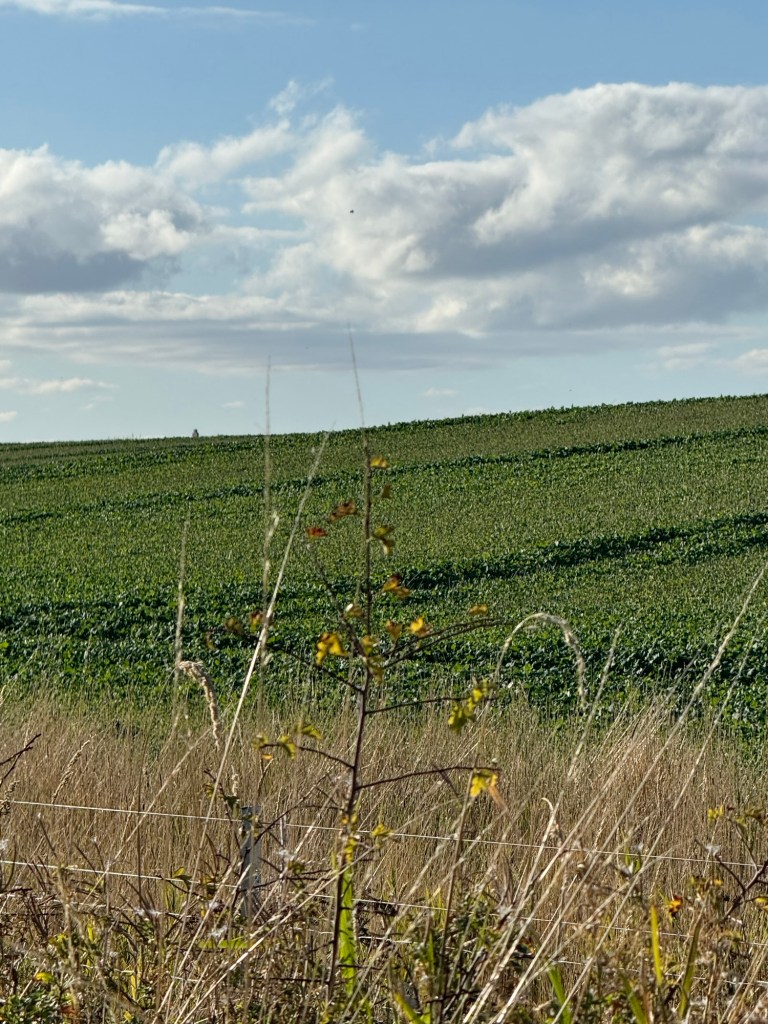
Back on the bus to head over to the battle site. Unlike Culloden or even Bannonbrock, there is nothing at Flodden field. The English have set up nothing. Supposedly a local (a friend of Julian’s) bought an old red telephone booth and set up some flyers and explanation sheets in it. He also put up the two guide signs that we saw. But basically Flodden is just an empty field for cows, sheep or crops with a memorial statute up on the high ground. Julian walked us through the battle desribibg how King James IV felt the need to lead from the front instead of dictating safely from the back. In doing this is also meant all the nobles had to fight in the front lines. No one seemed to be trained in using the new pike weapons so they proved to be ineffectual. Although the Scots out numbered the English at least 2 to 1 they did not carry the day. Not only did King James not survive the battle but a lot of the noblemen also perished in the battle. Julian set up the scene and acted out the use of the weapons. It was lively discussion out on a path between two fields. I think we scared the sheep.

We weren’t too far off from being there on the actual date of the battle. the battle took place on September 9, 1513. King James was the last monarch of Great Britain to die in battle.

The English side
The Scot side
The ditch at the bottoms of the fields where most of the fighting took place and the area where King James III was killed
The sign placed by a local not the government or national trust

After the visit to the battle site we headed back to the hotel for a night in our own. Val and I had dinner in the casual club house restaurant. I had the fish and chips which was good but I need to remember that I can eat something other than fish and chips in England. Something makes me think when I’m in England I have to eat the fish and chips or the steak and ale pies when what I really want is a hamburger.

Also I am quite proud of myself for catching back up on my posting. Hopefully I can stay on top of it the rest of the trip.

On the move to the Border

Today we checked out of the Grand to move on closer to the England/Scotland border and our next hotel Maften Hall. Check out went smoothly and we loaded up the bus for our longest ride of the trip. Or was the longest planned of the trip but last nights return from Howard Castle was surprisingly long.

We had a few talks including Alison discussing her new book about Mary Bolyn and her children and Tracy discussing William the Conquerer’s taking control of the north. Thankfully we also had time for a long nap.

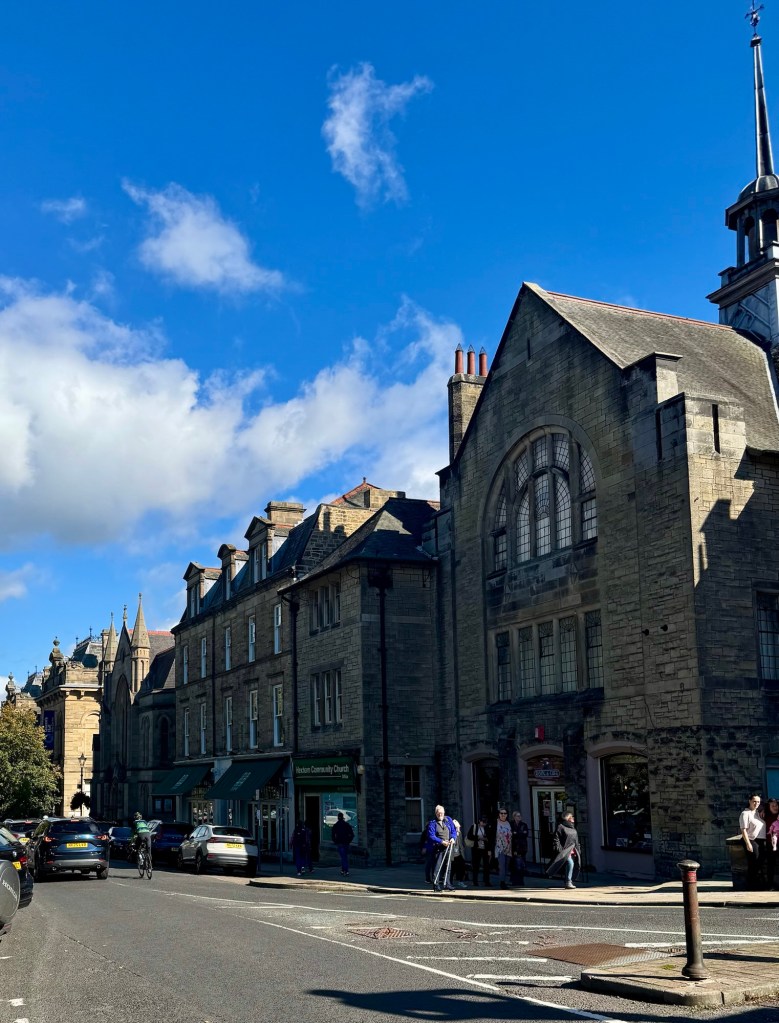
Our first stop was Hexham and the Hexham Abbey. Hexham is a nice little town with the Abbey right in the middle. The Abbey survived both Henry’s dissolution and Cromwell’s reformation. The thoughts are that it was just too far from London for anyone to make the effort to destroy the art and also the village bought the abbey and turned it into their village church and practiced Henry’s new religion.

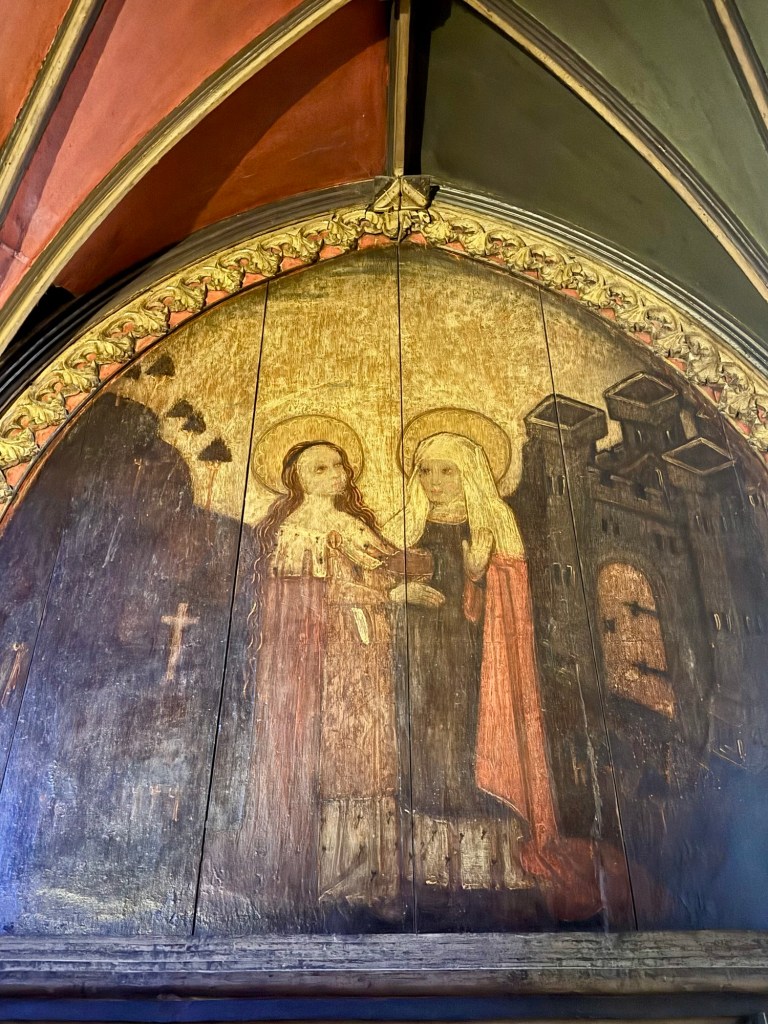
The abbey had painted quire and knave screens. These also preached morality by showing gaming and laziness leading to hell and the devil and godly living getting you to heaven. The devils in these paintings have more a nightmare before Christmas look than real devils or monsters. Kind of sock puppet like. I did not know they had dice in the medieval time but they look just like dice today.

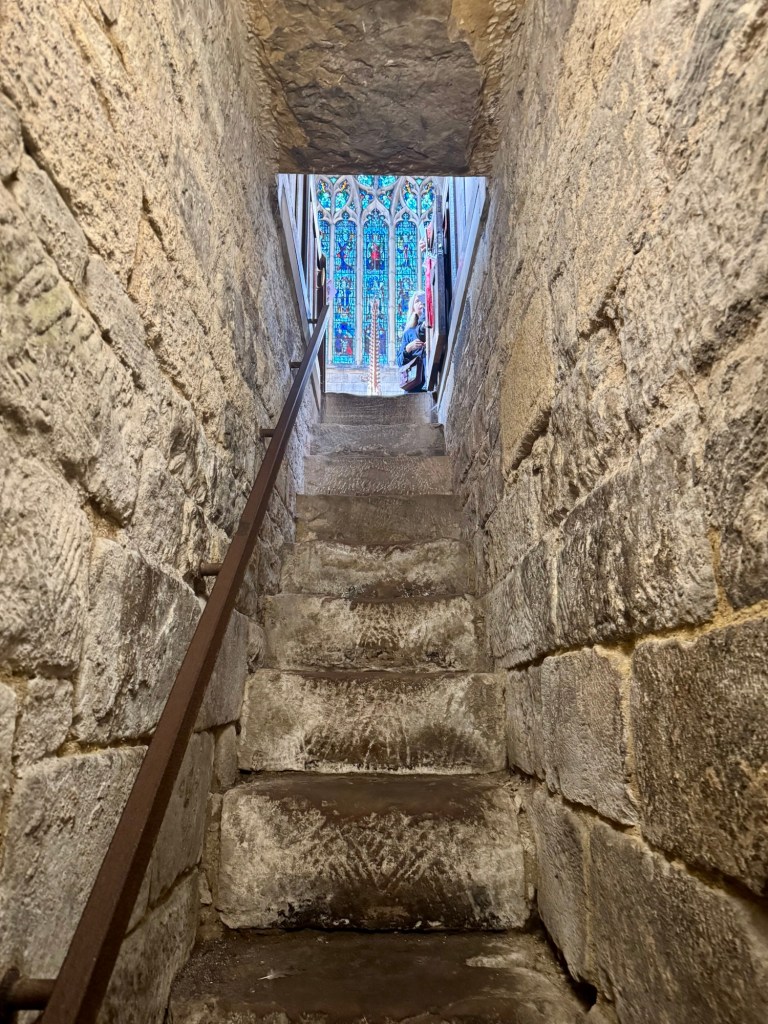
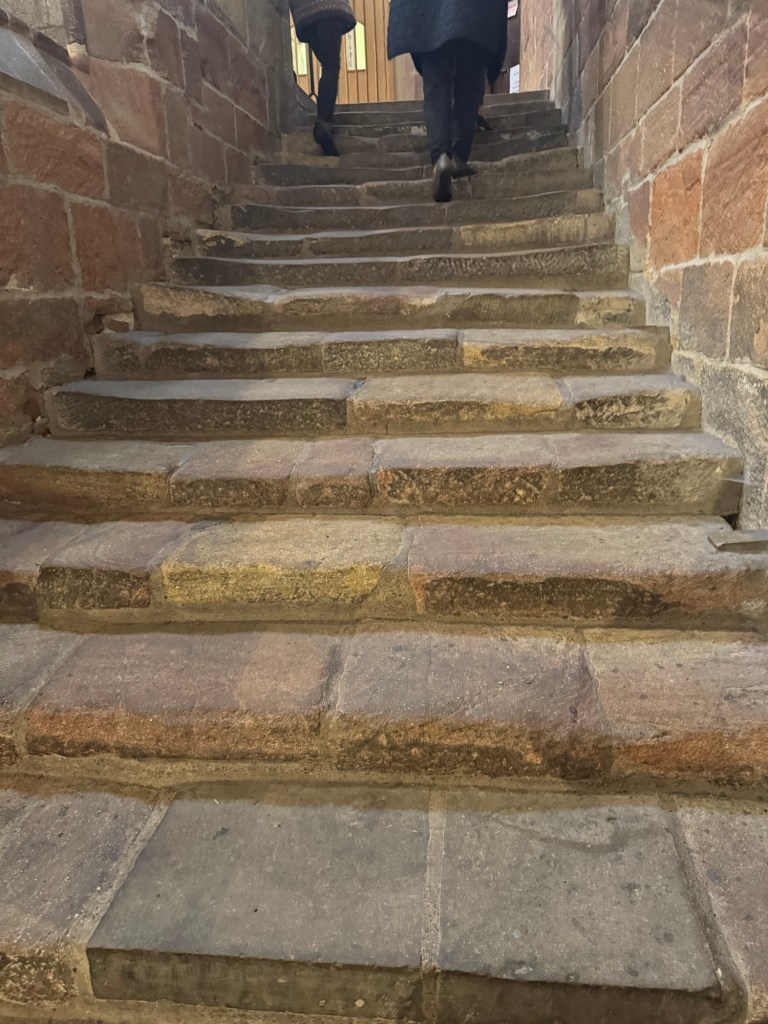
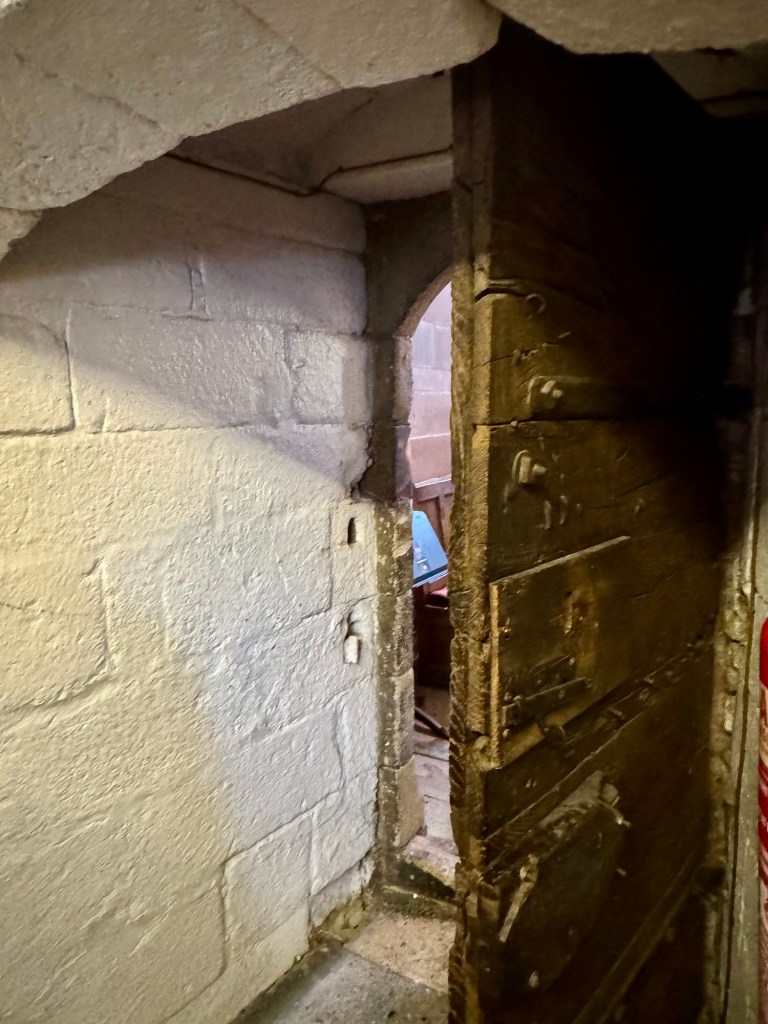
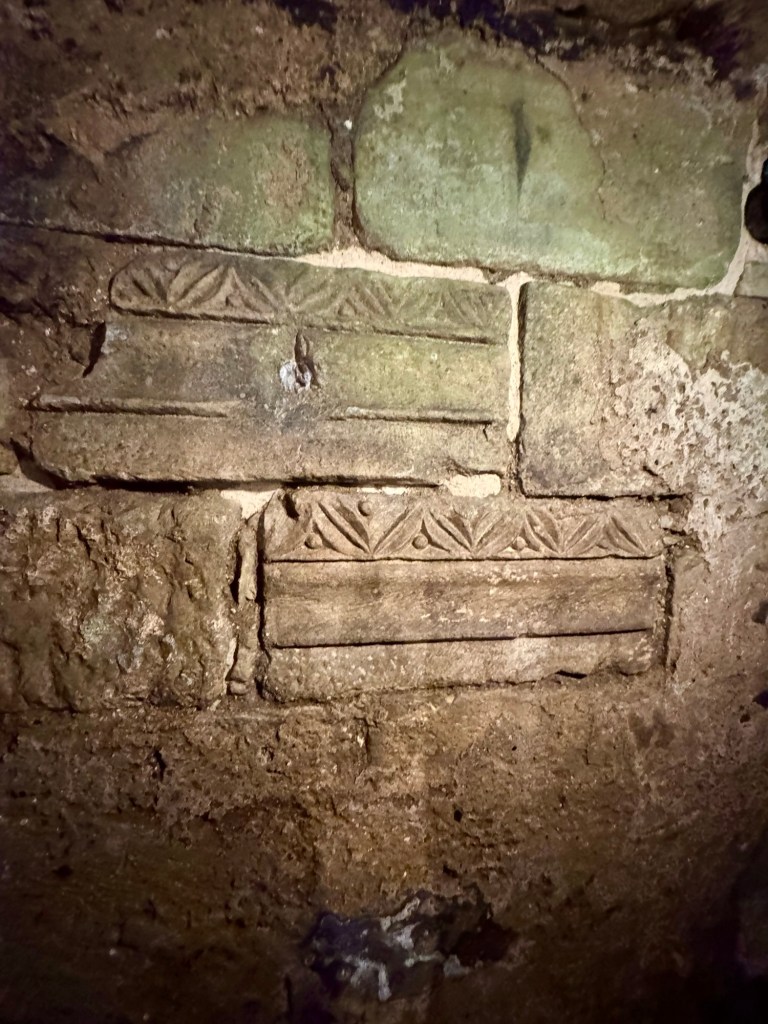
The church also had a crypt that we could go down into. Nothing down there but it was somewhat creepy. Also it looked like they just used odd and end stones there were carved stones in the middle of the walls that didn’t match anything around it. They also still had the night stairs that the monks would come down for night prayers. Generally when the abbeys were removed the stairs vanished during some update or another. However they survived here. We also got to sneak into the old storeroom where they held the gold and silver sacraments. What that showed was how thick the walls of the church are.

Hexham Abbey
The painted screen
Val in the knave

We walked around the town a bit but not too exciting. We grabbed a ham sandwich in butcher shop and ate it in the park beside the church. Other than the beginning of the trip and then Saturday we have had beautiful weather. Chilly enough for a scarf or sweater but sunny. Weather we seldom have at home.

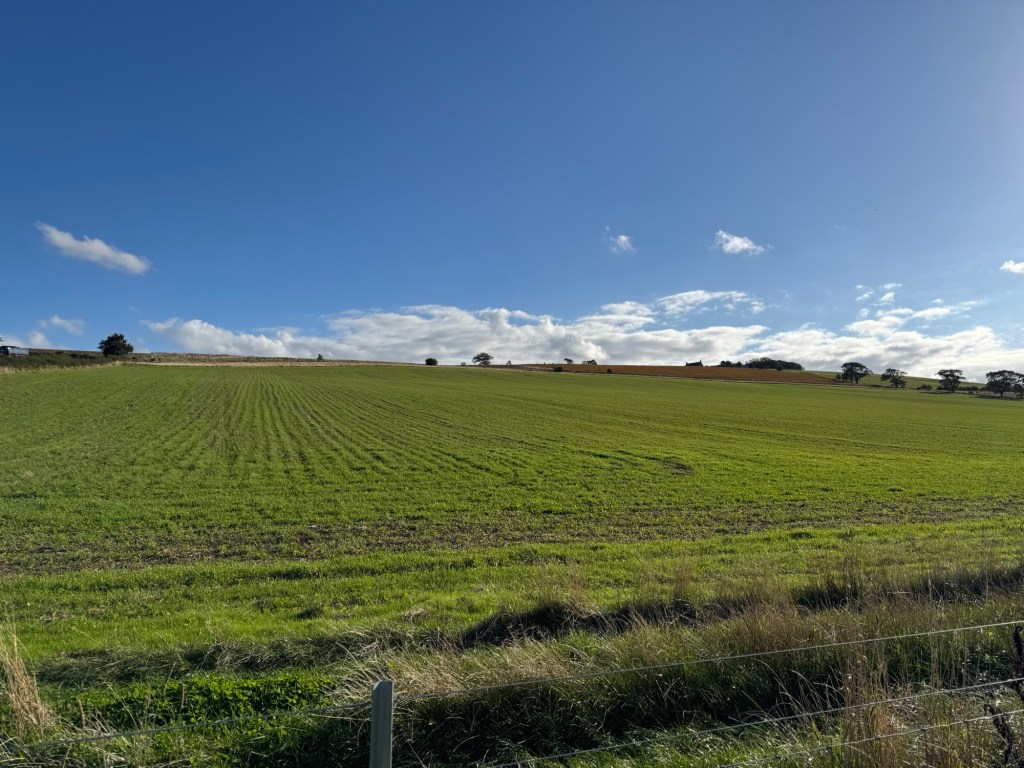
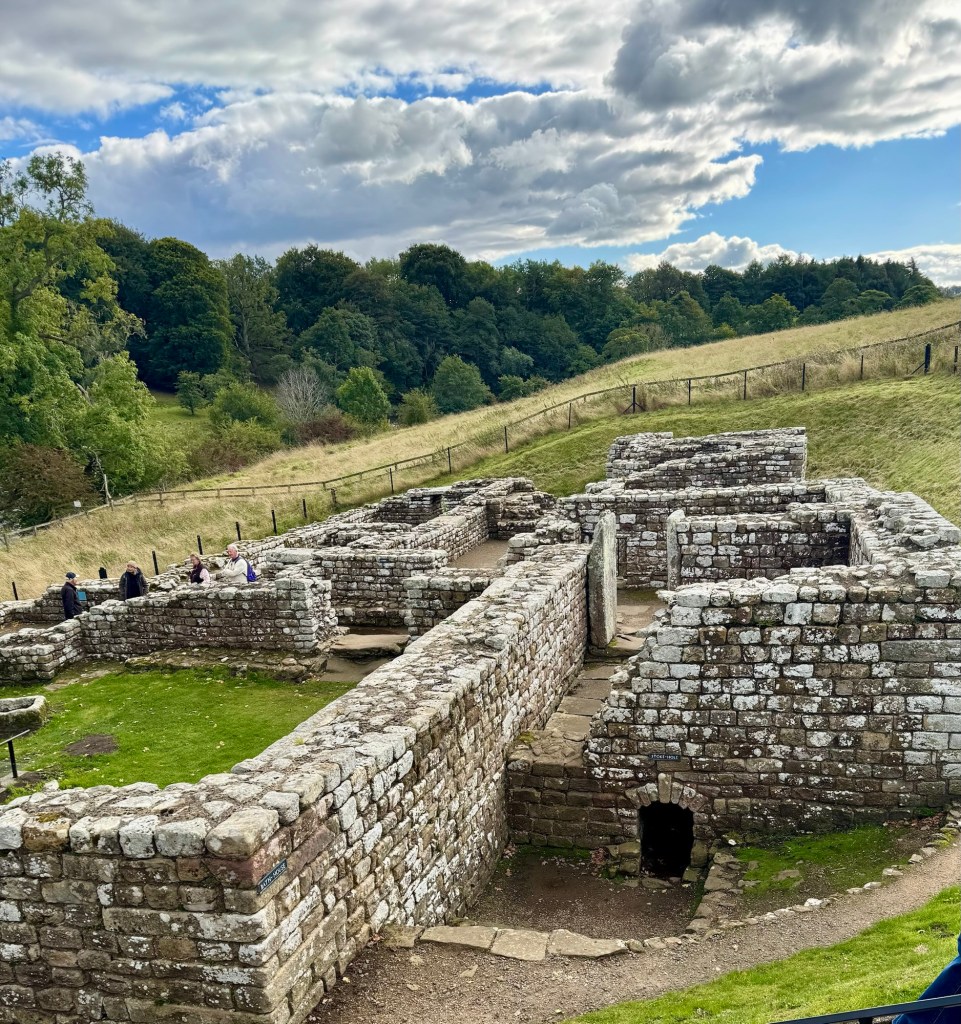
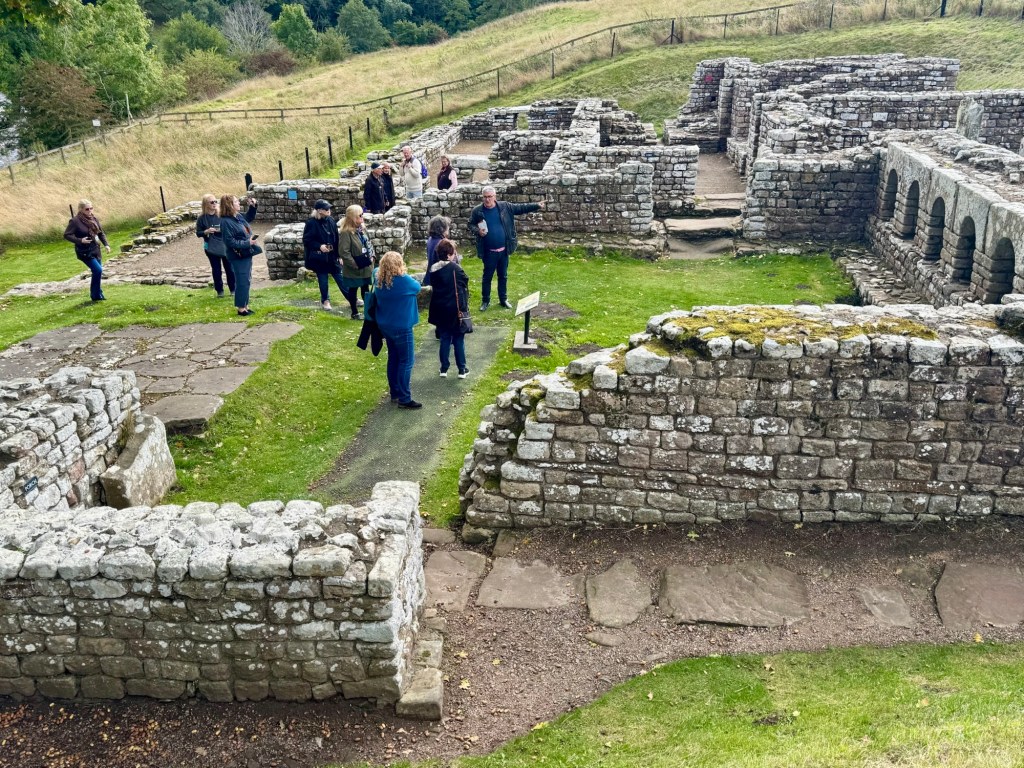
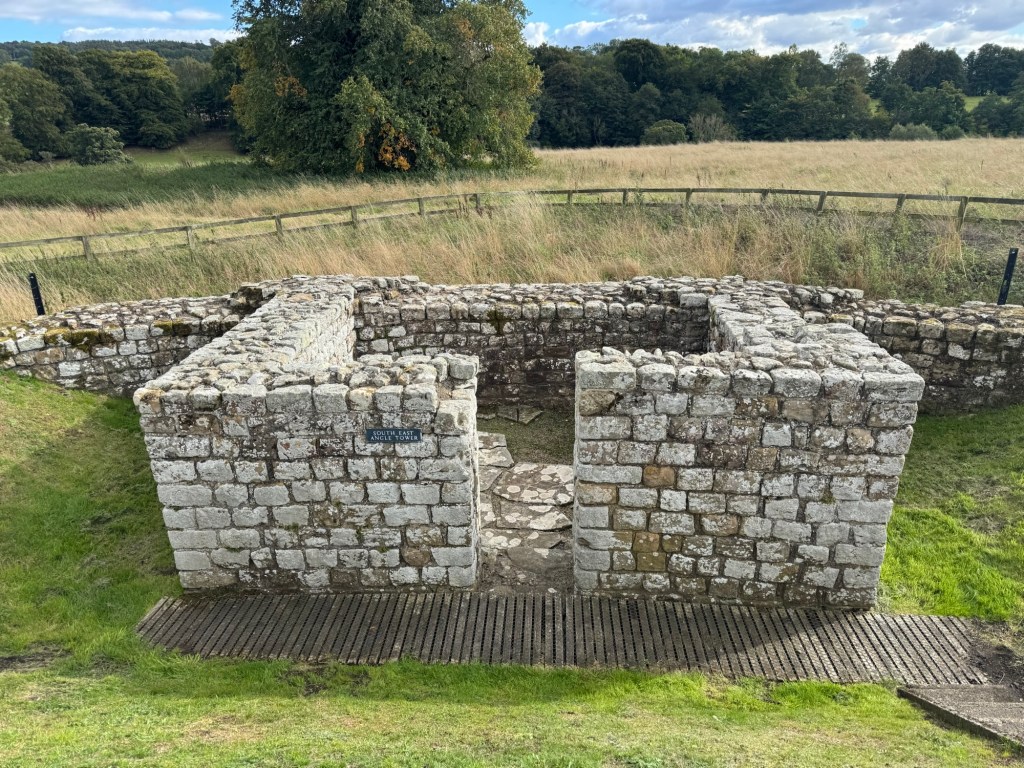
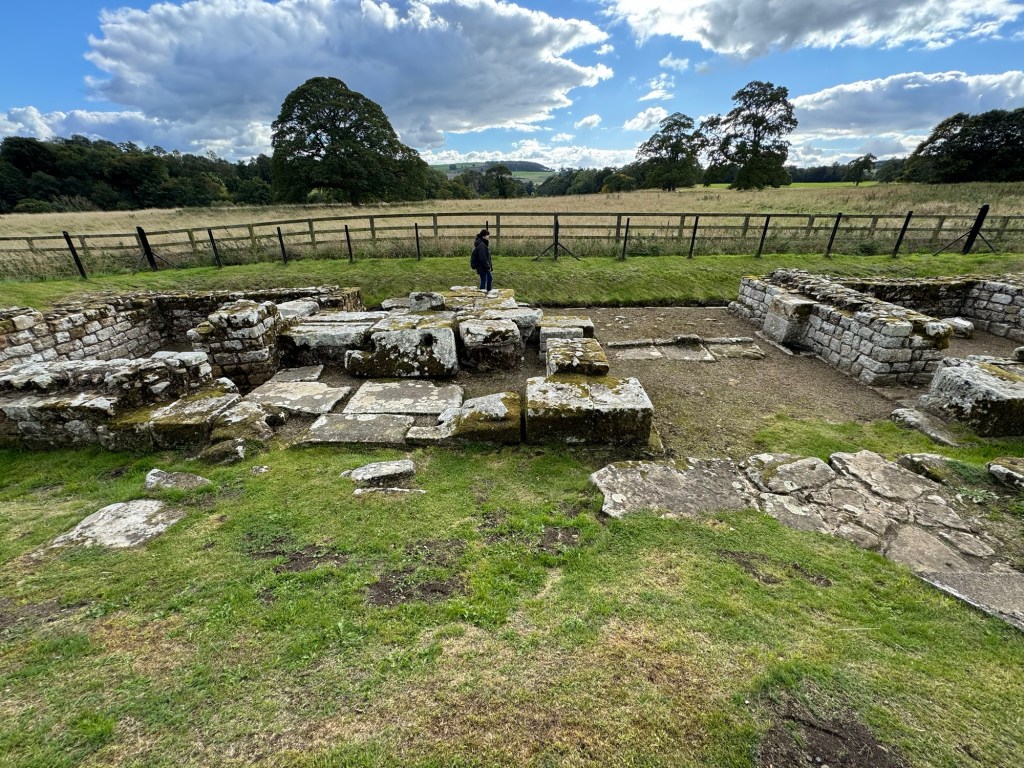
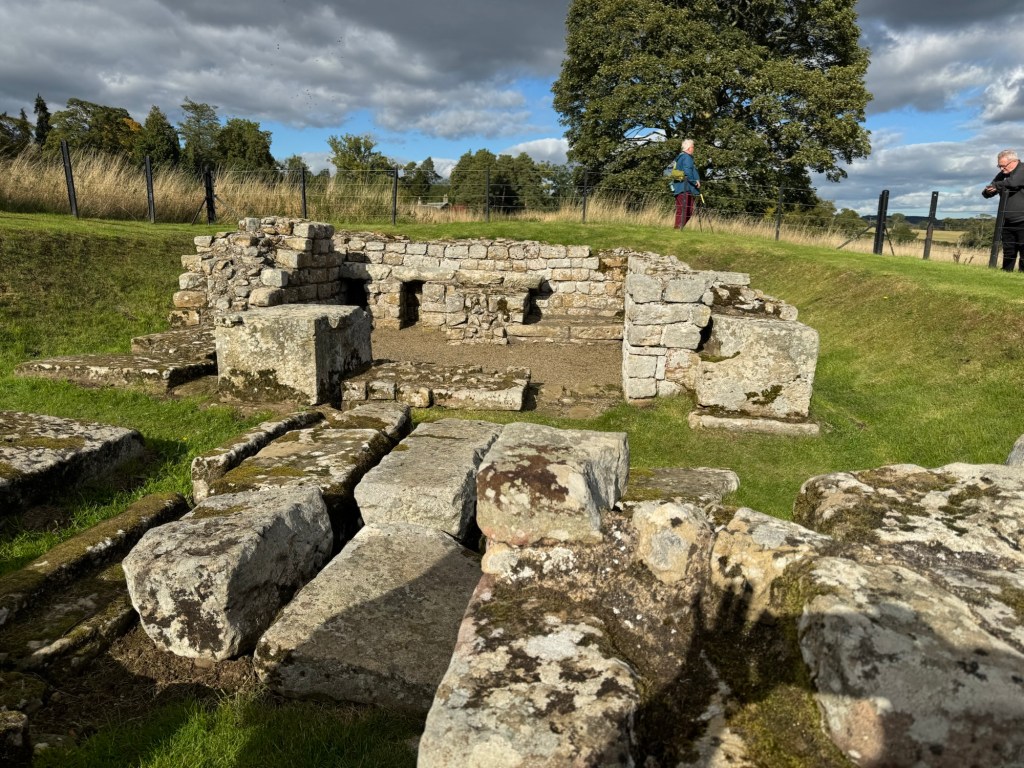
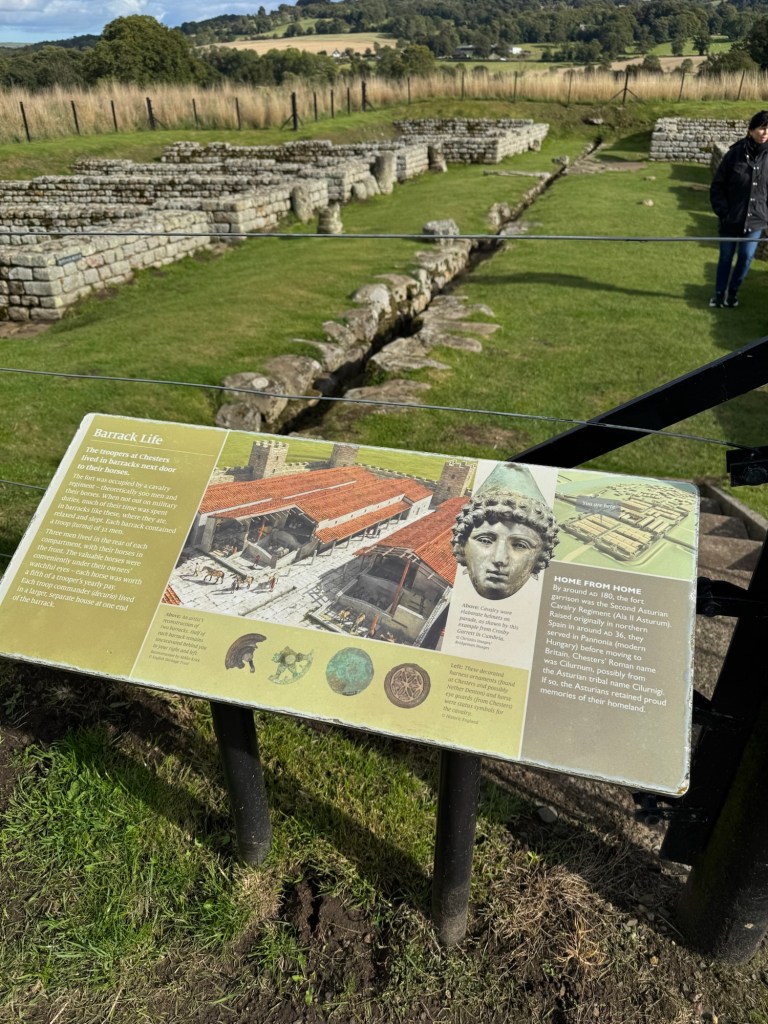
We left Hexham for Hadrians Wall and the Chester’s Roman Fort. The wall sadly not that impressive as Julian said it is no Great Wall of china but I was quite surprised with all the building ruins in the area. The Roman’s built forts along the walls to patrol the border. Where we were was a Calvary unit. You could make out the layout of the barracks, the officer quarters the gates and the baths. You could see where the water flowed through and where the gates were placed. We did have the opportunity to sit on the wall. Which was surprisingly pretty cool.

The bath house
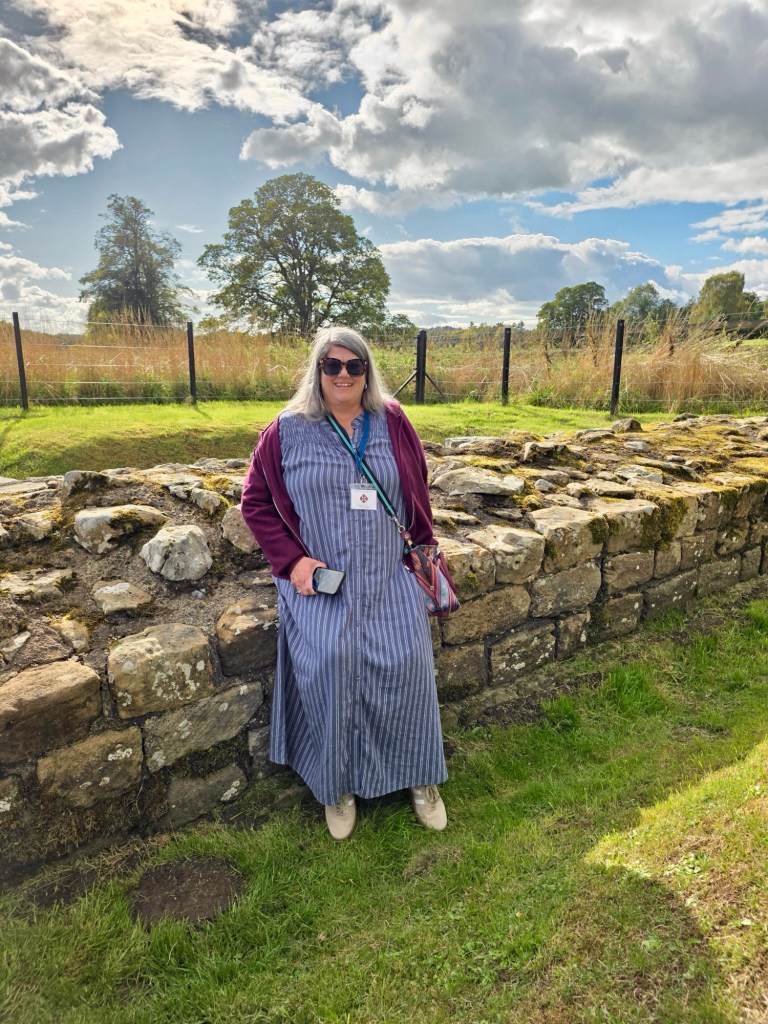
Sitting in Hadrian’s Wall
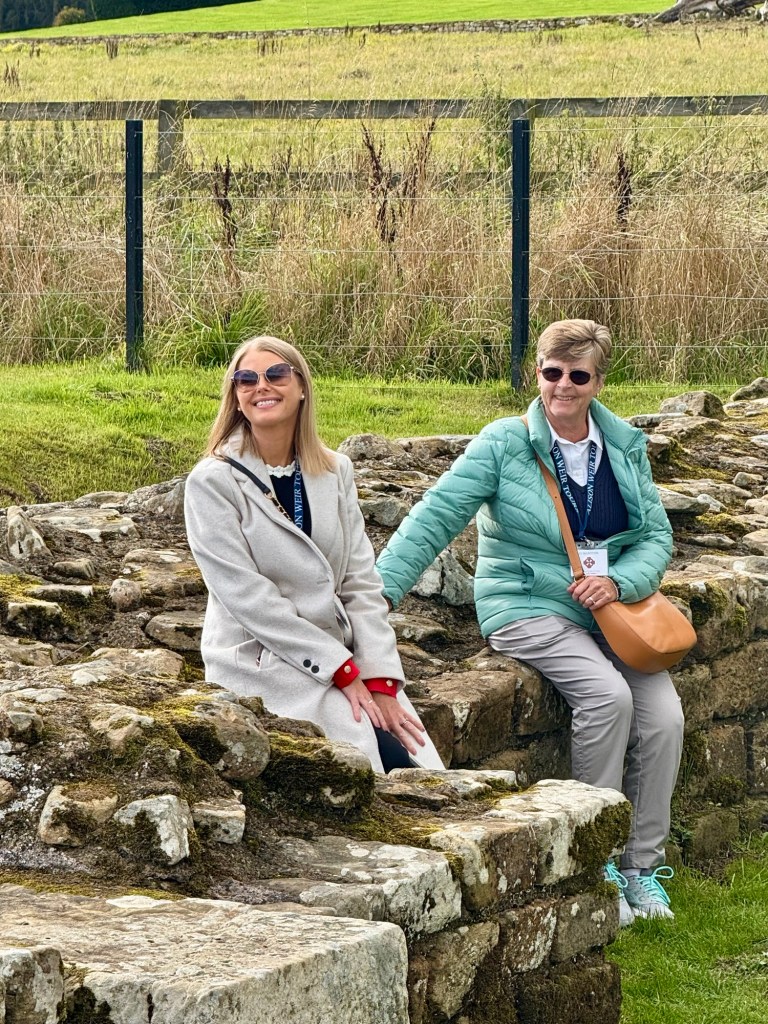
Nicola and Jo know how to sit on a wall

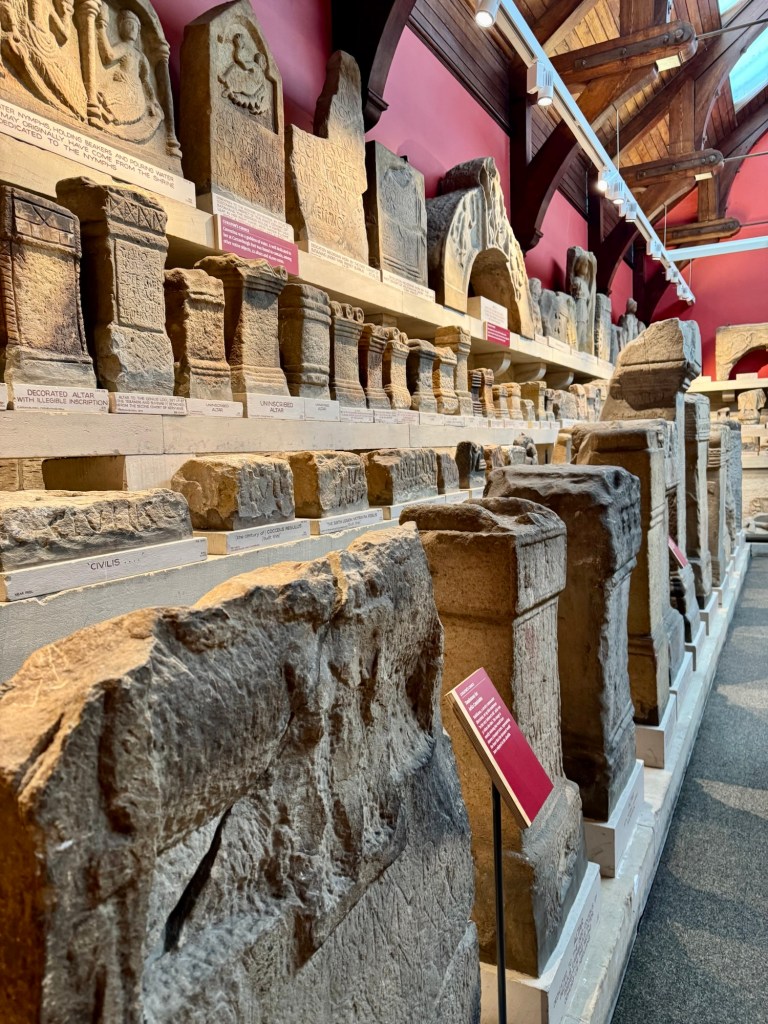
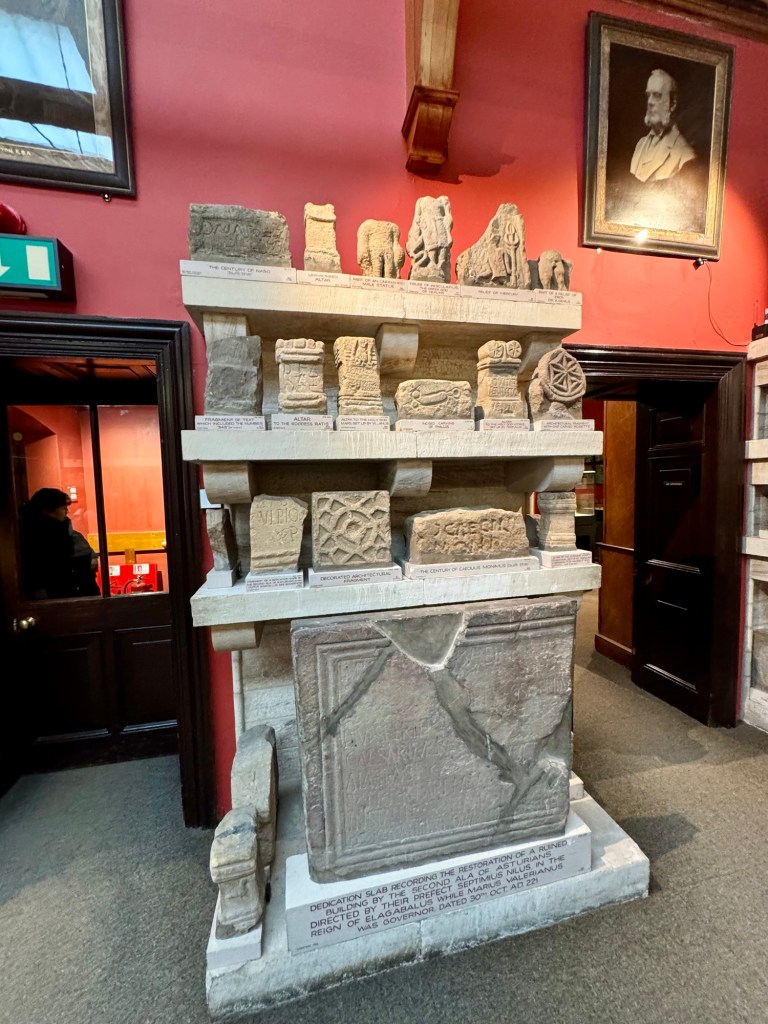
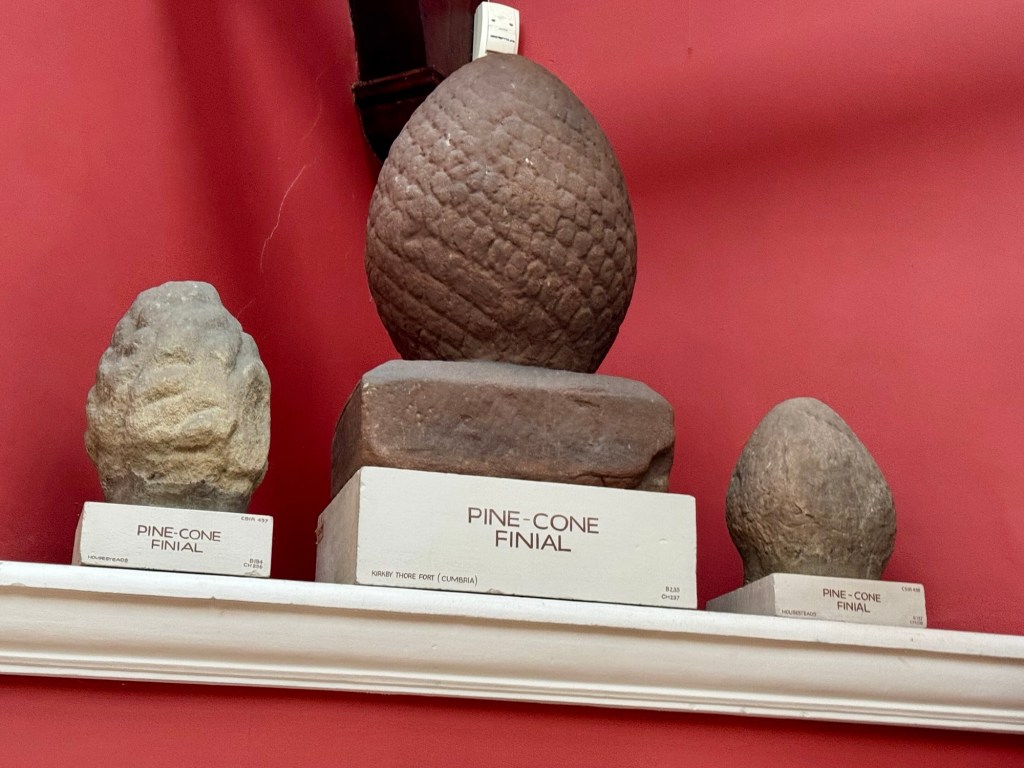
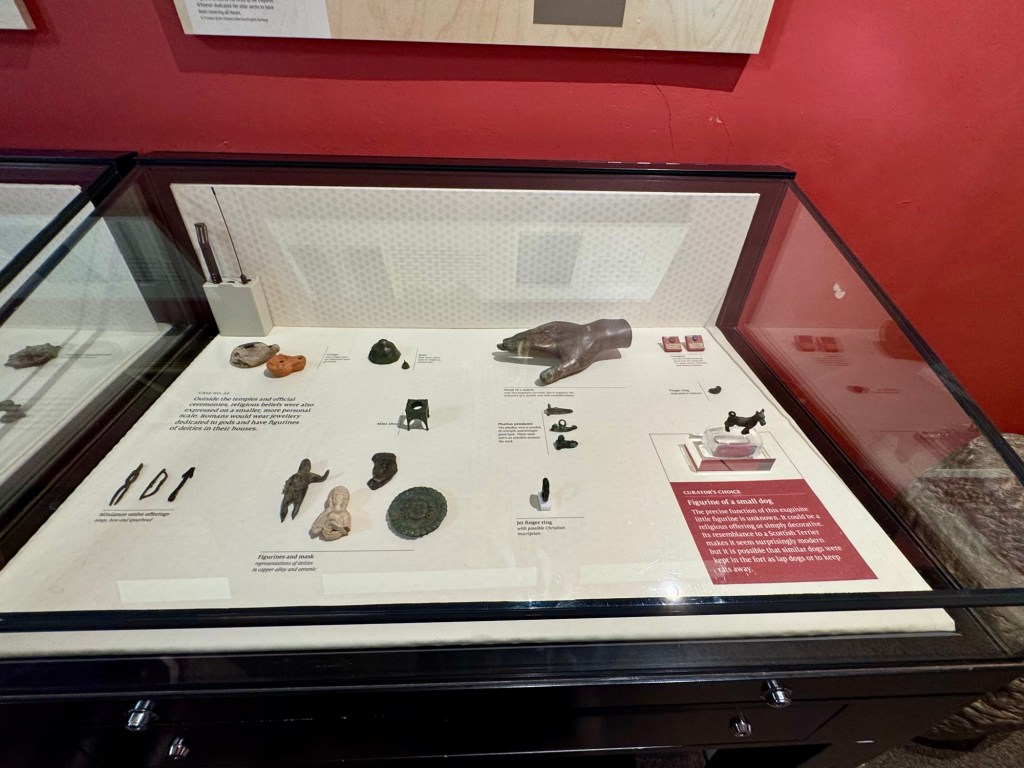
There was also a small museum attached to the fort where basically they had pillars, markers and other statuary along with small things they had found at the site. It was all just kind of crammed in a room. It reminded me of the old natural history museum attached to Harvard but not as extensive.

Roman Museum

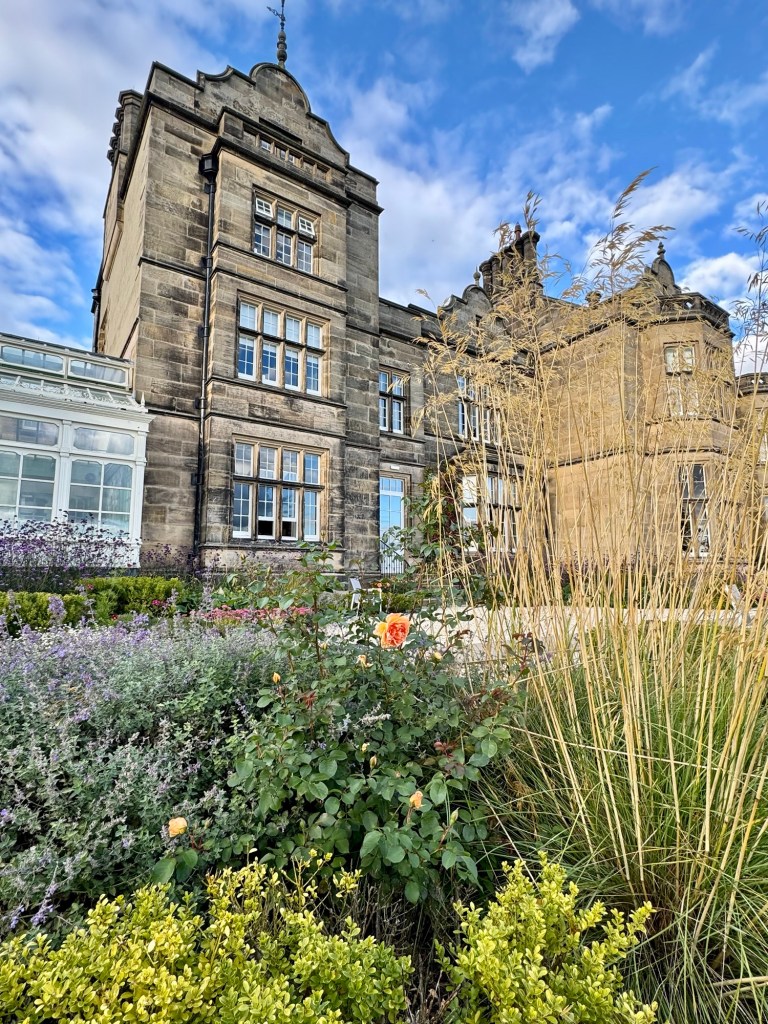
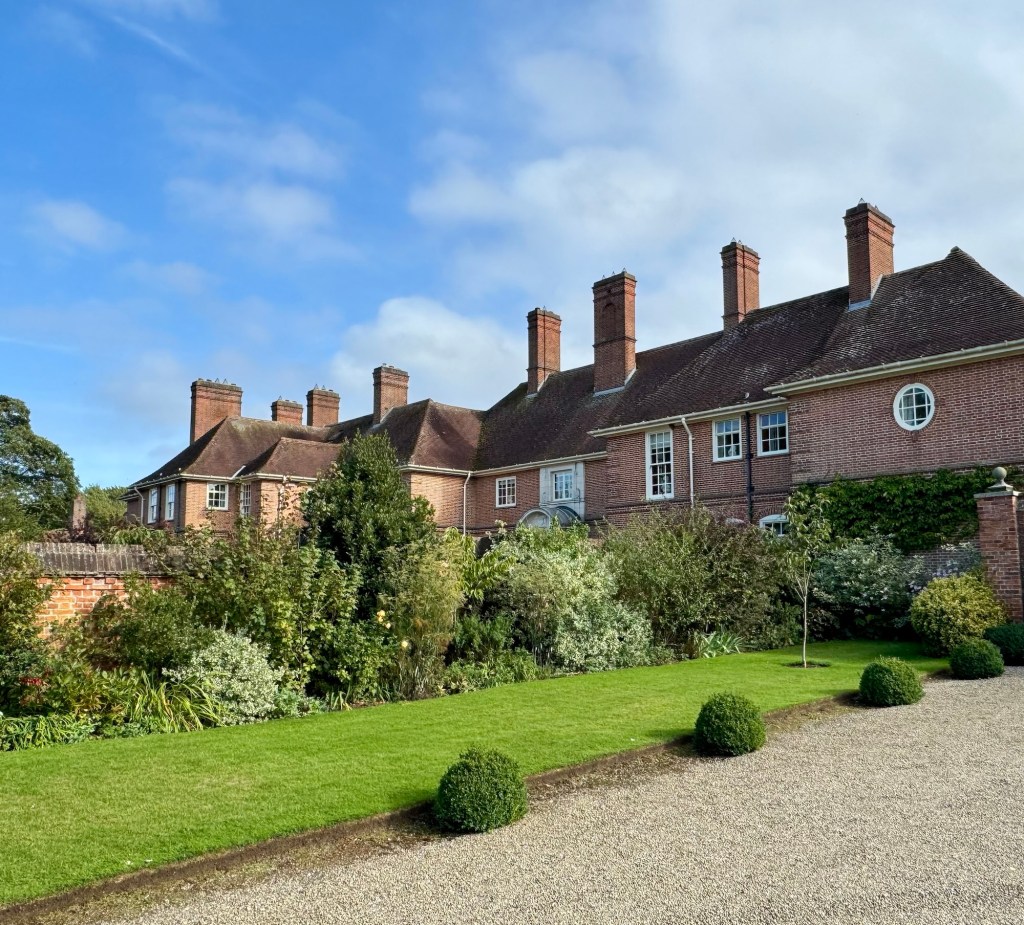
After the Wall we headed to our hotel the Maften Hall. It is a beautiful country manor hotel out in the middle of nowhere. There is a nice golf course, bars and restaurants so it is a nice place for a retreat. Our room is lovely with a view of the gardens and I nice large bathroom. It will be nice to be here for a few days.

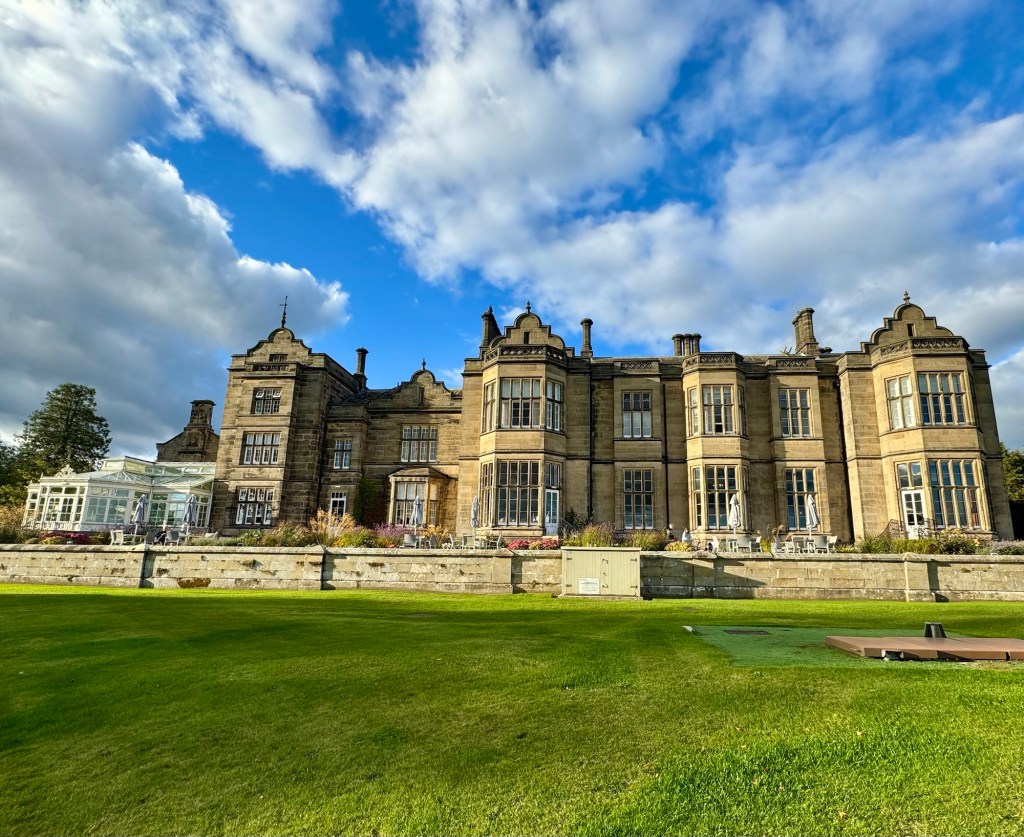
Back view of Maften Hall
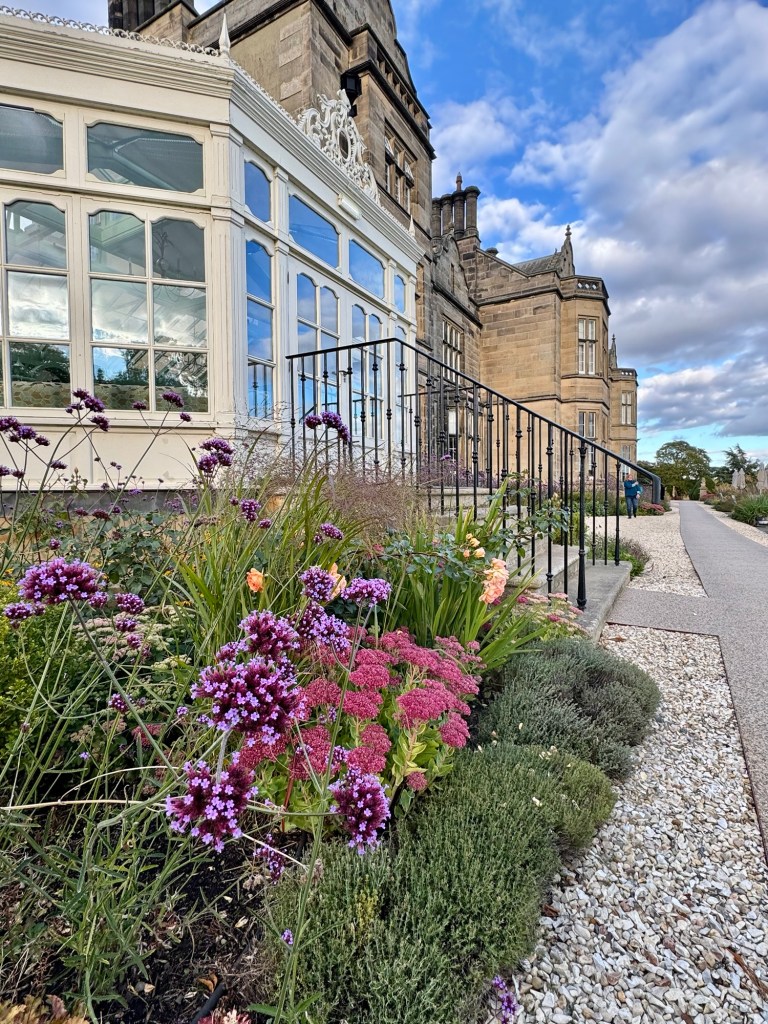
Side view

We had a nice dinner at the hotel and Tracy spoke over coffee about Thomas Cromwell. We sat with Sarah and discussed her current book and what she is working on and various other topics. It was a good night.

Windy Day on the Moors

Today started with a lovely drive through the moors. It is hard to describe but it was beautiful. It changed from tall grass to low heather on rolling hills. I wish I had been better with pictures out the bus window. Think completely unkept nothing bright green more yellow, brown and more of a dark khaki. It doesn’t look dead like our grass but alive and moving.

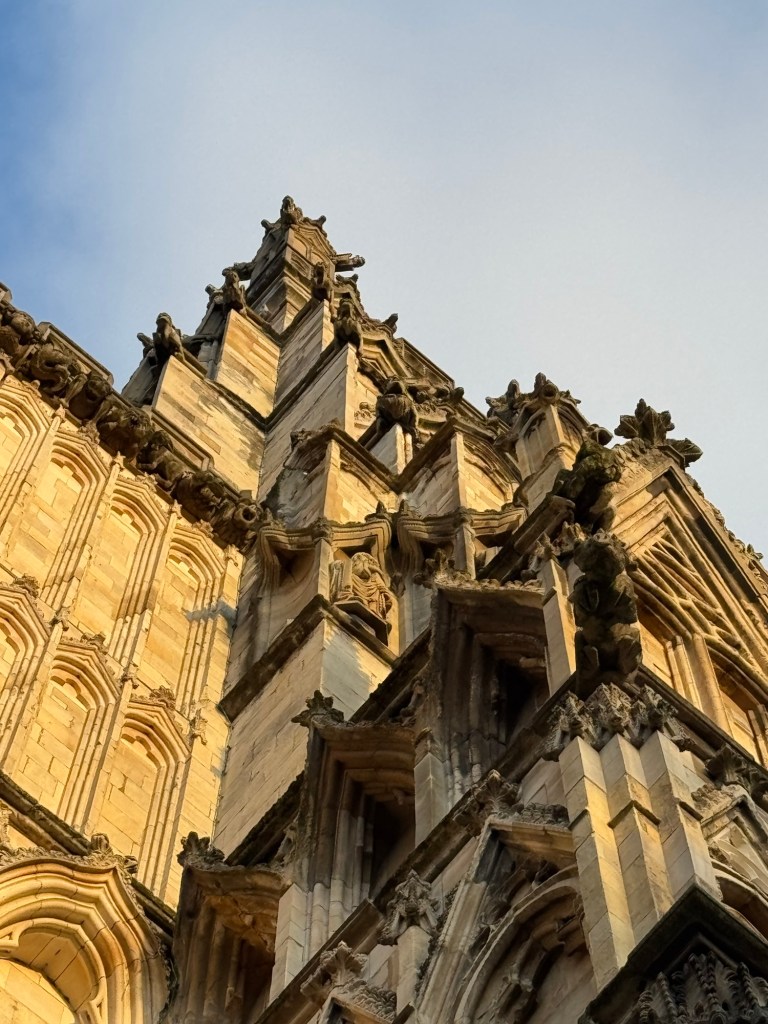
We heard about royal weddings at York Minster, Whitby Abbey and Dracula (Bram Stokers set the novel at the Abbey). The drive was lovely and informative.

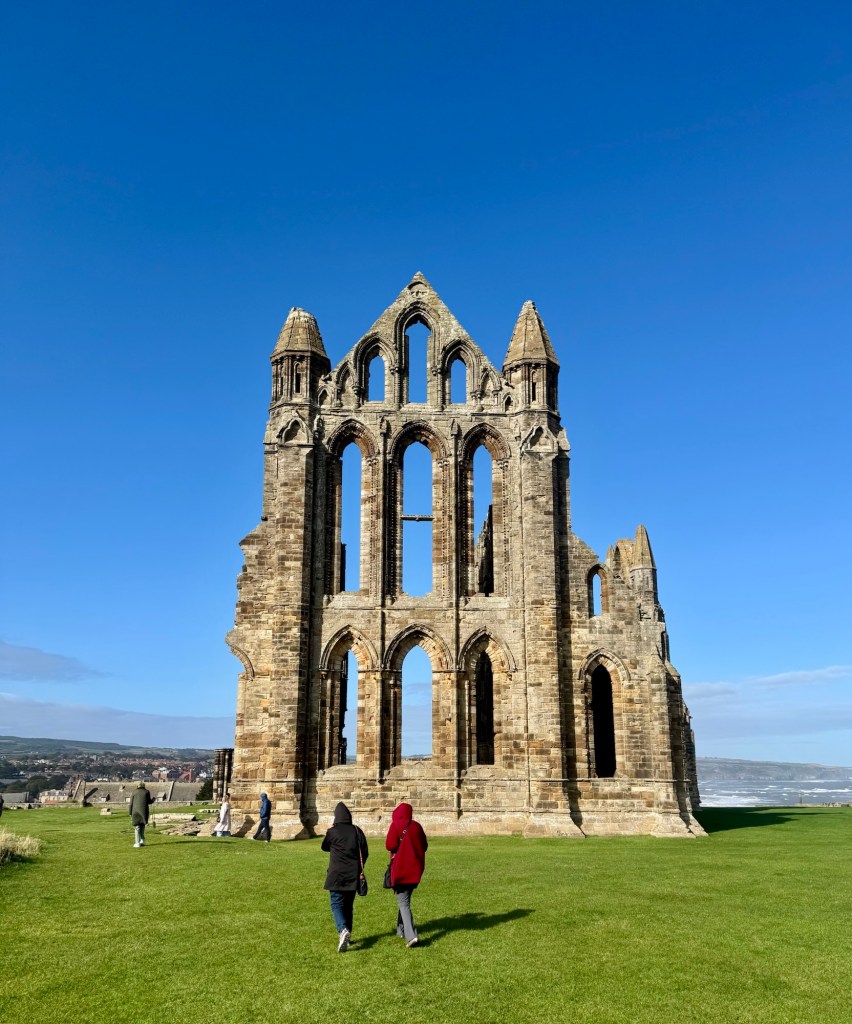
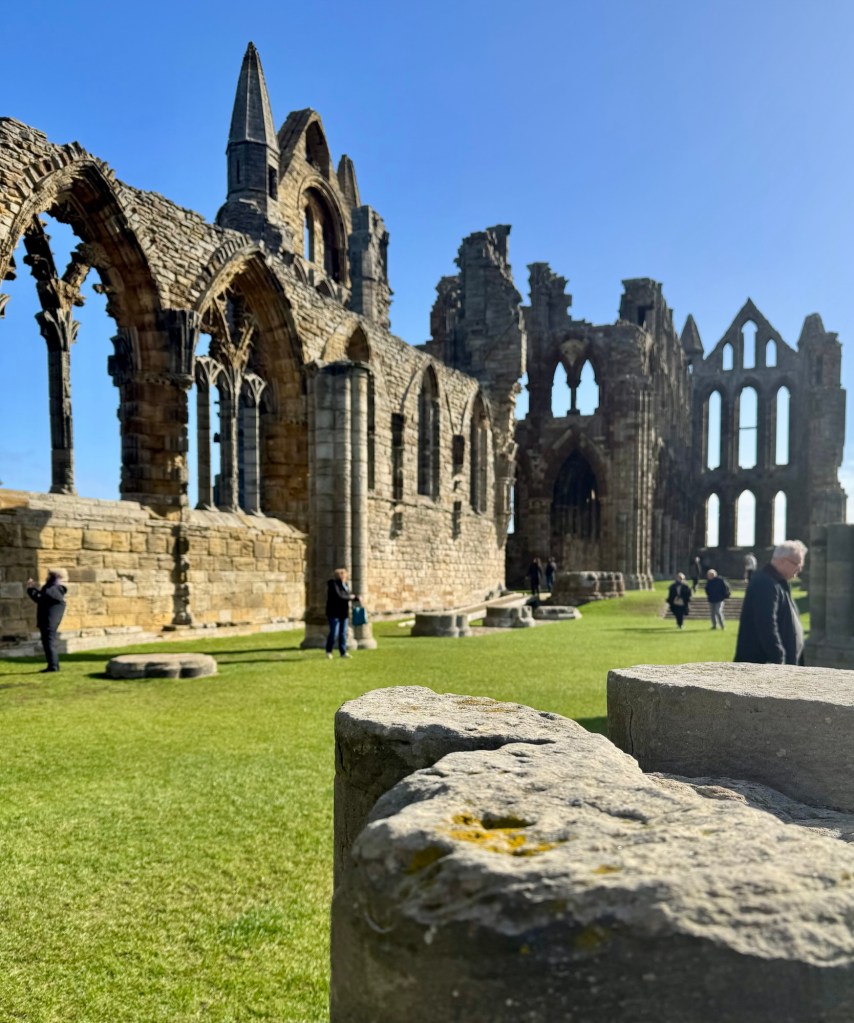
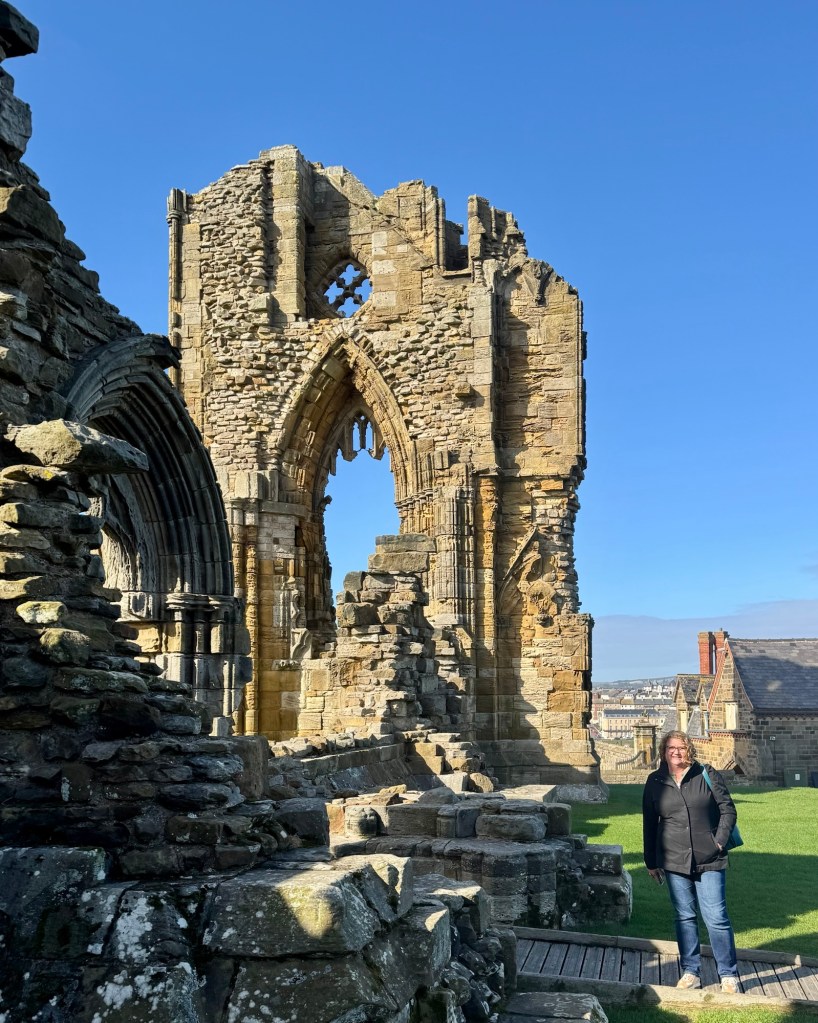
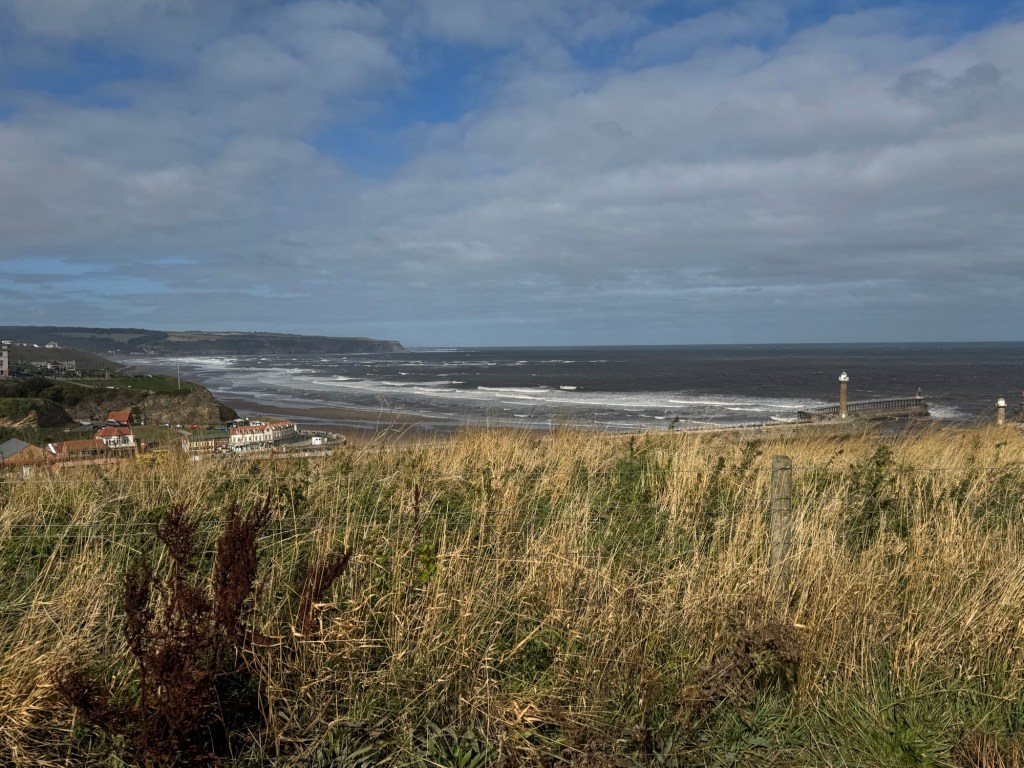
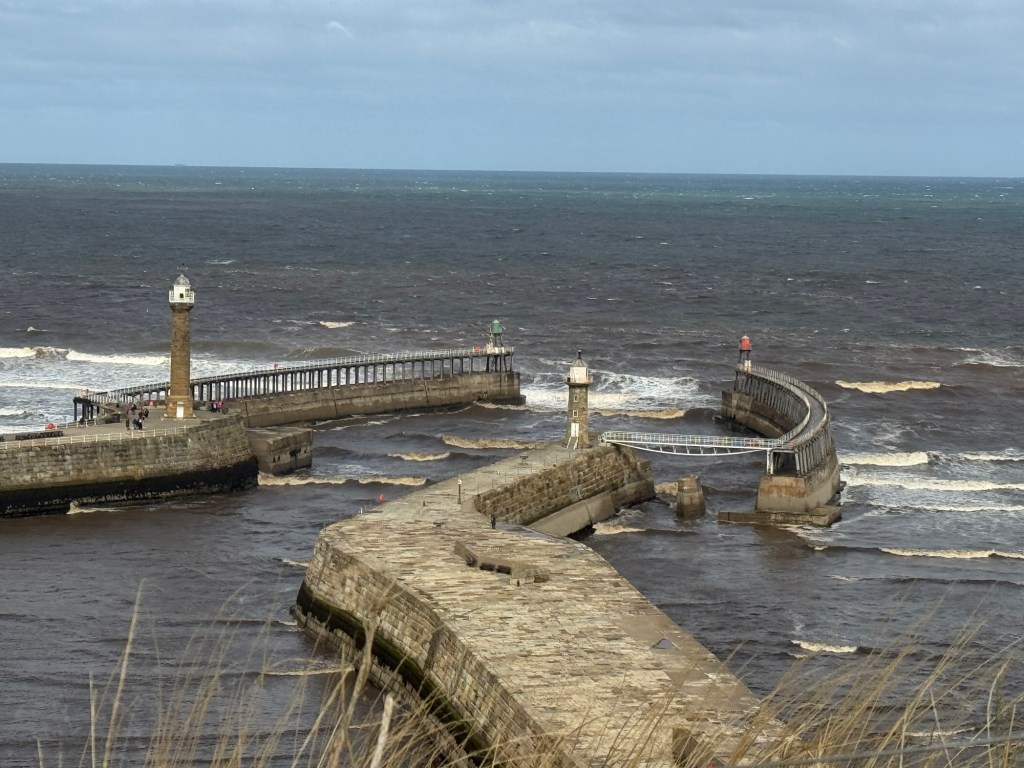
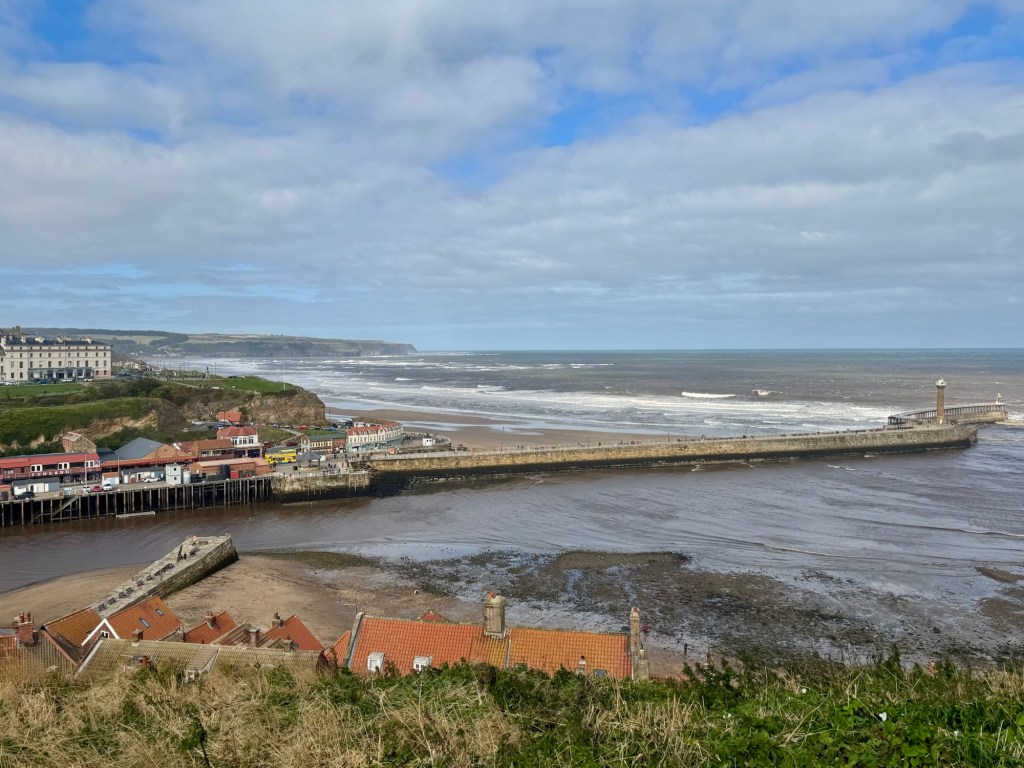
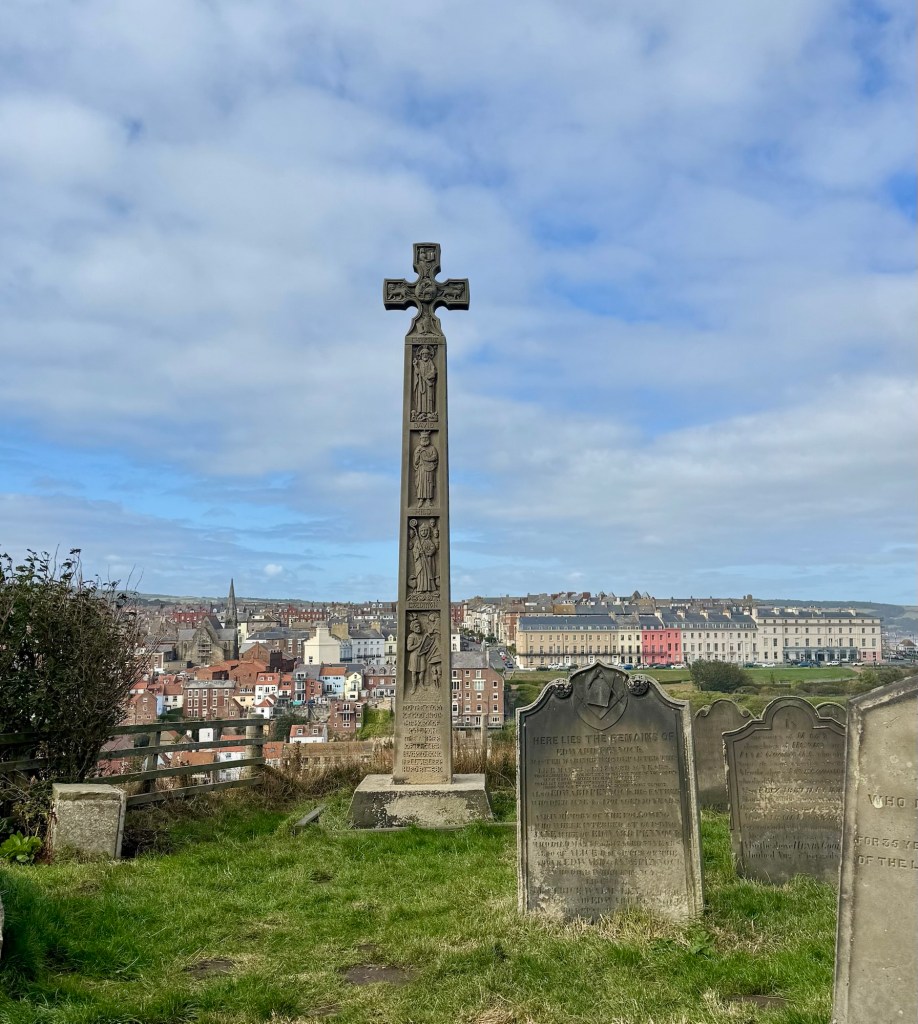
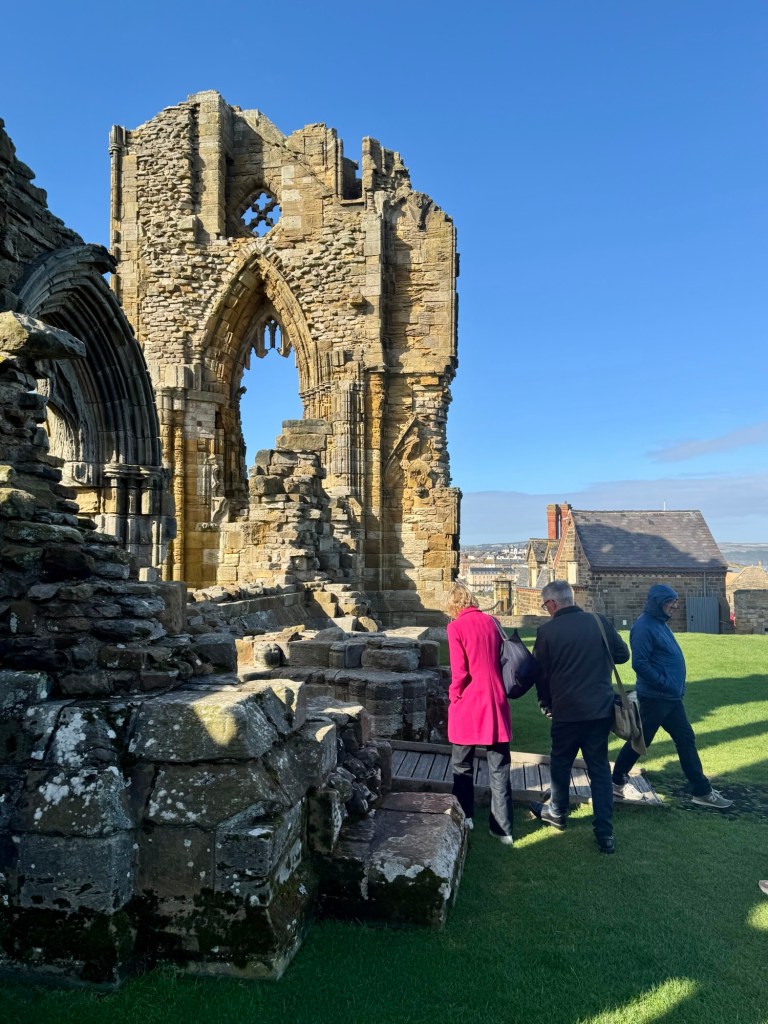
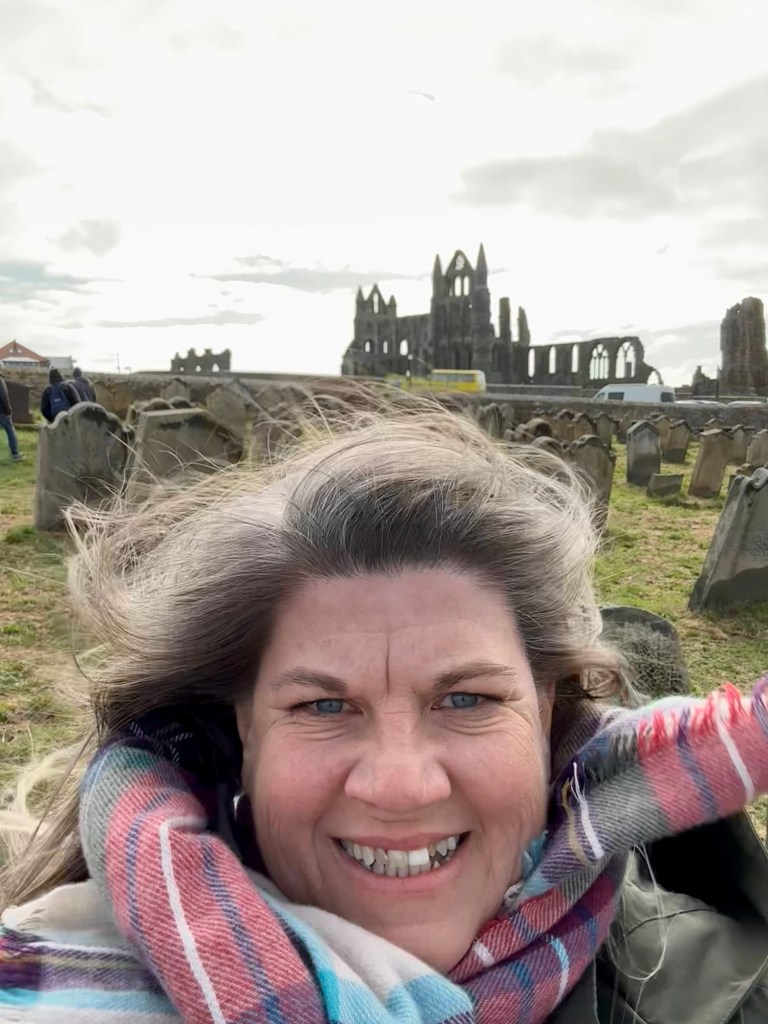
It was a beautiful day. No rain but being on the coast the wind was crazy and it was cold. Whitby Abbey sets up high above town right on the edge of the sea. It was a beautiful setting. I can only imagine how impressive it was when it was standing tall. Now it is a romantic ruin. Not sure when or why we have romanticized ruins but just walking through them always seems lovely. These were no exception.

The sun shining, the wind whipping and rolling waves highlighted our time at Whitby. The Whitby Abbey was built in the 7th century and became a Benedictine monastery and remained that way until the dissolution by Henry III.

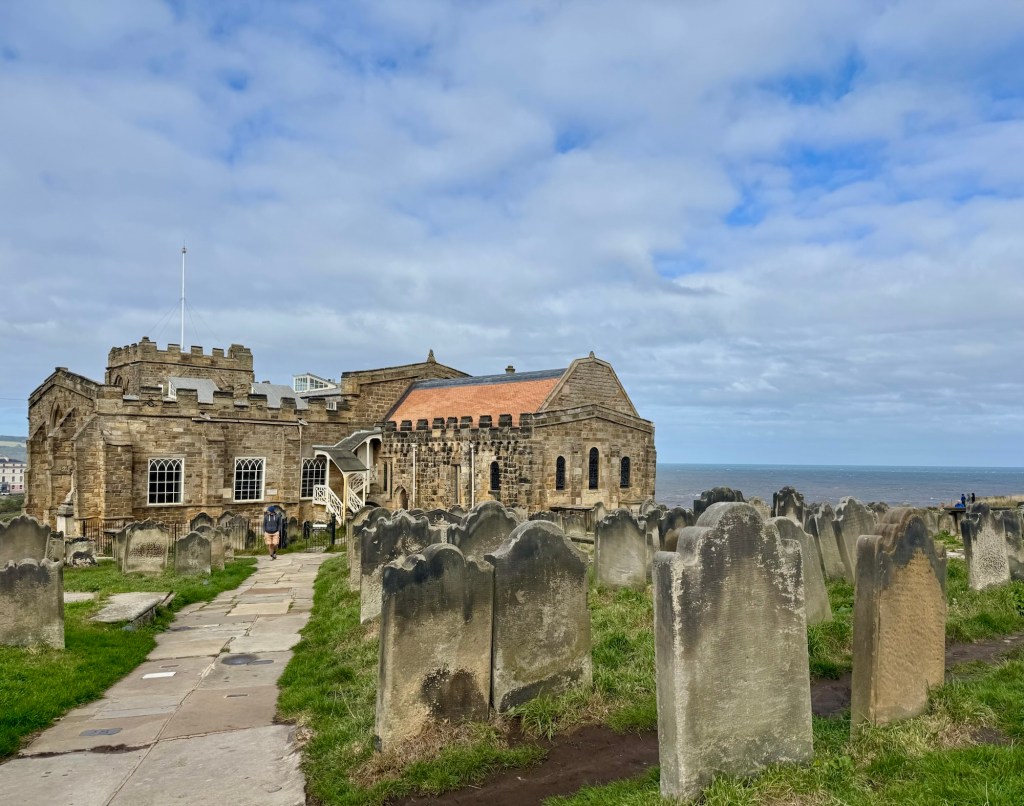
The Abbey from the small church next door
Bram Stokers stairs

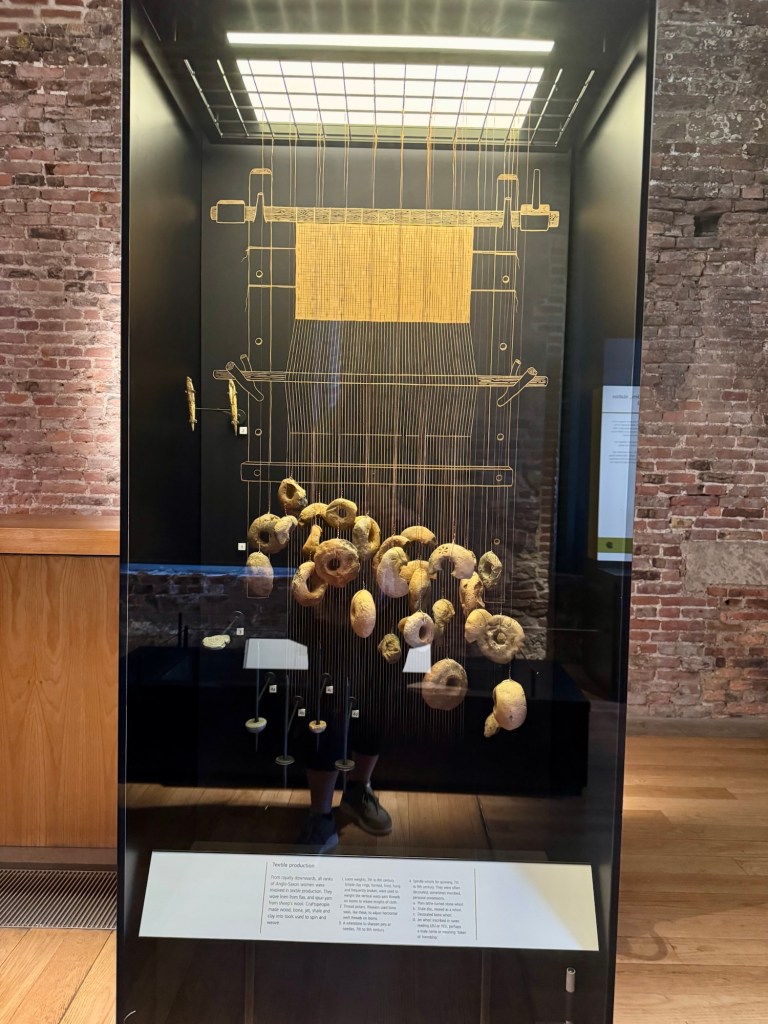
There was also a small museum associated with the abbey.

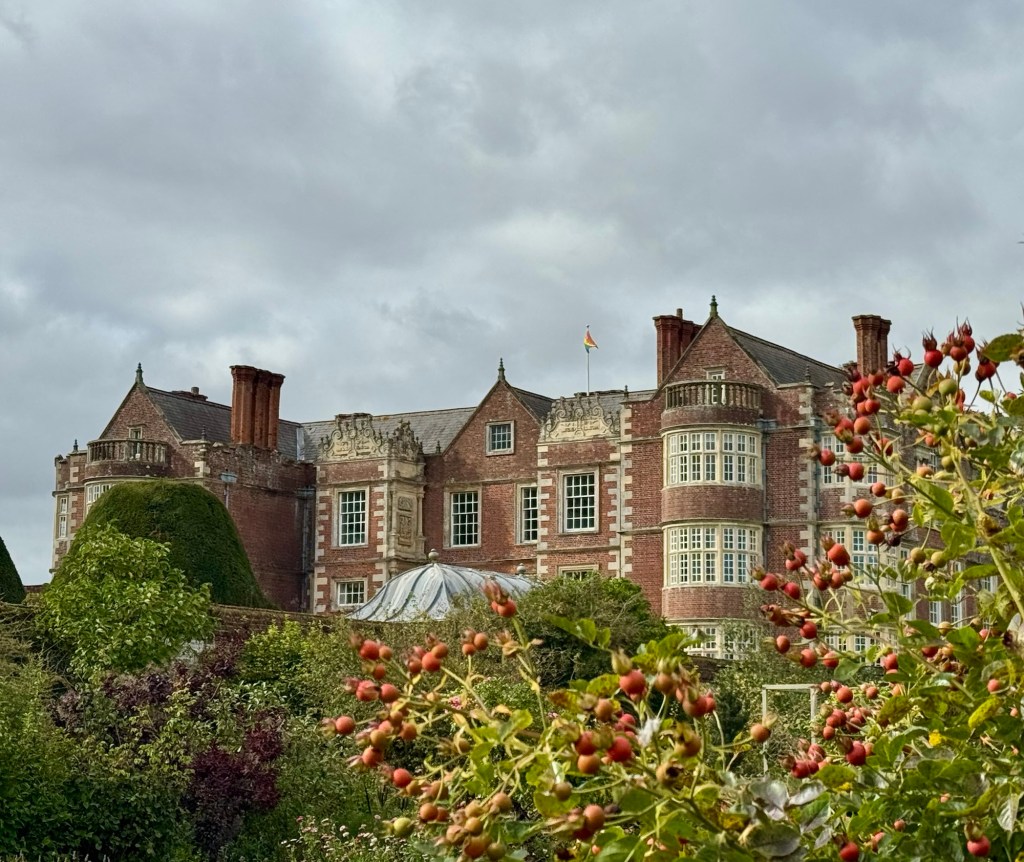
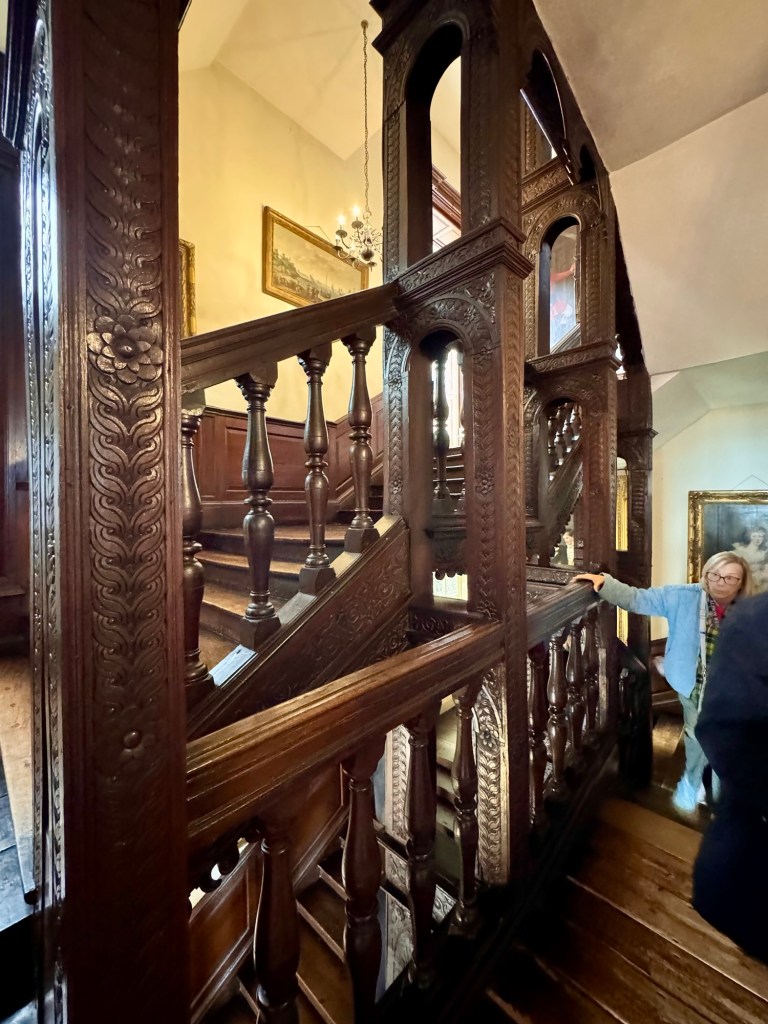
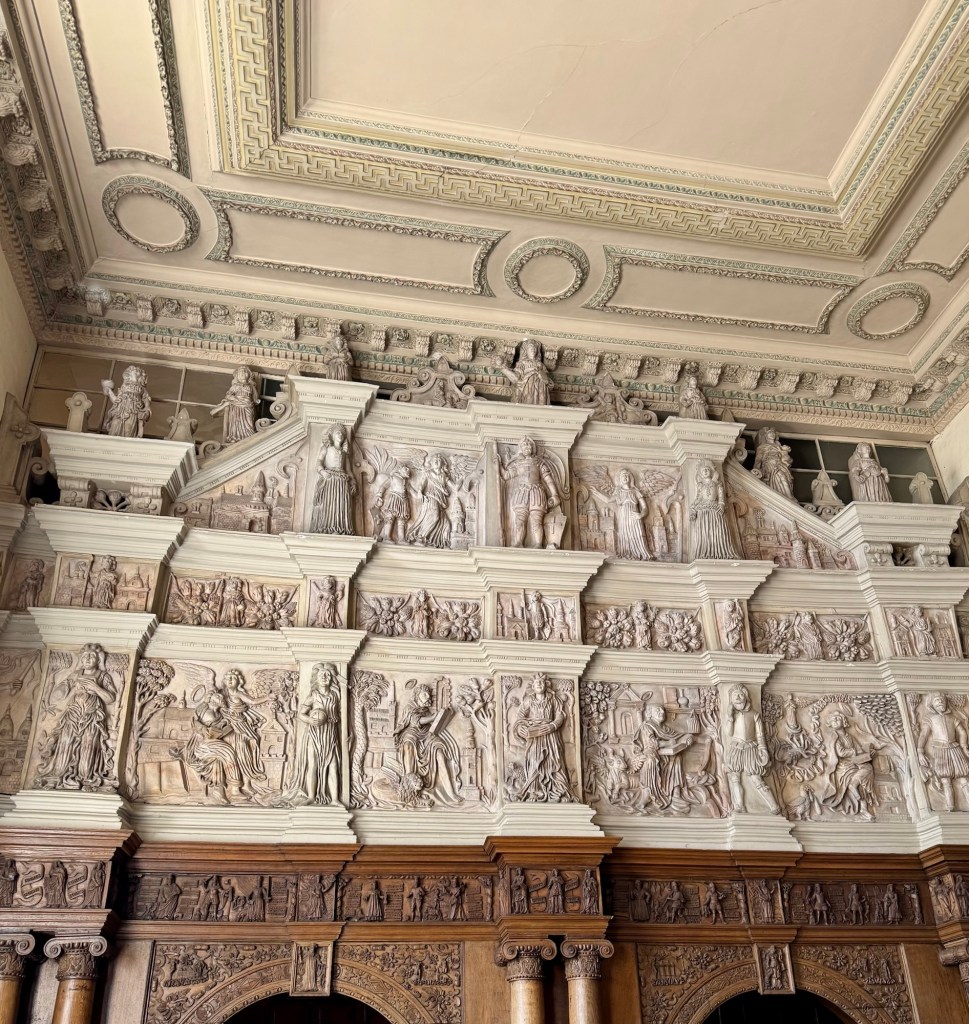
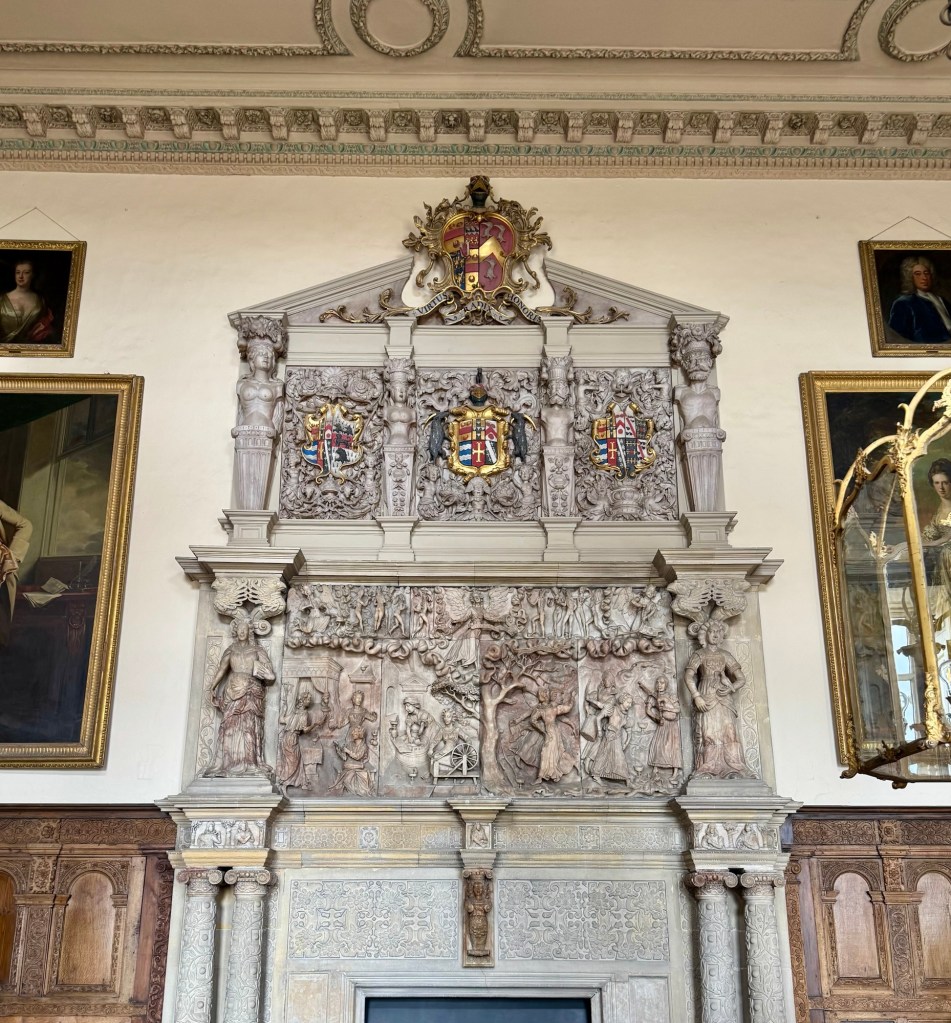
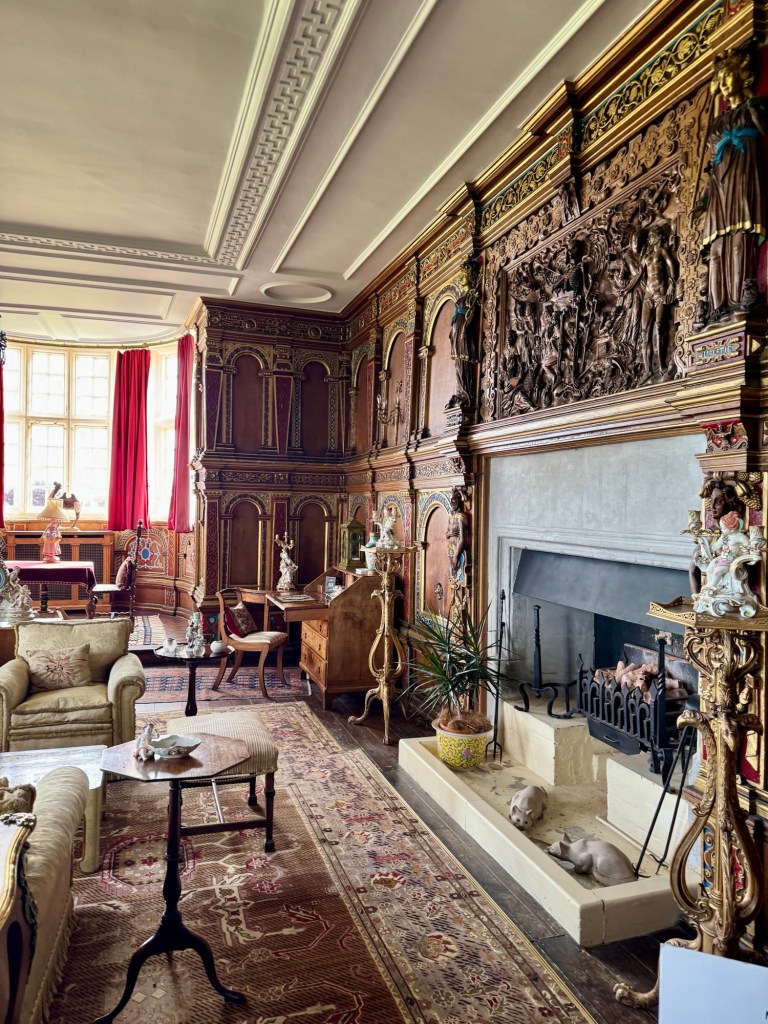
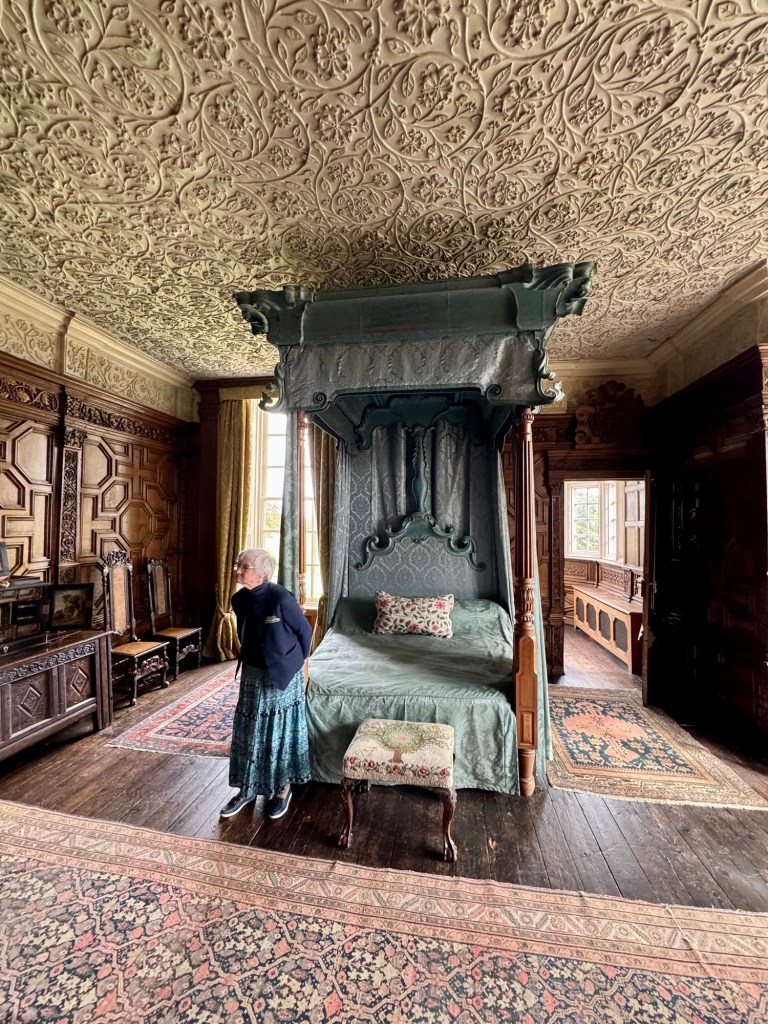
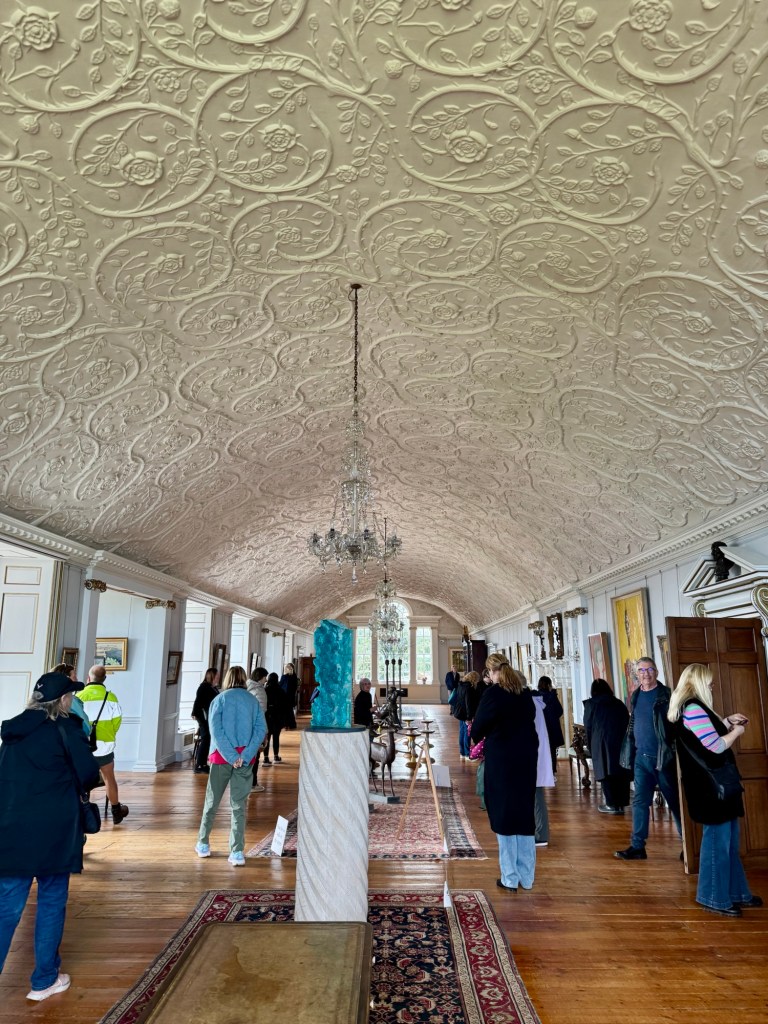
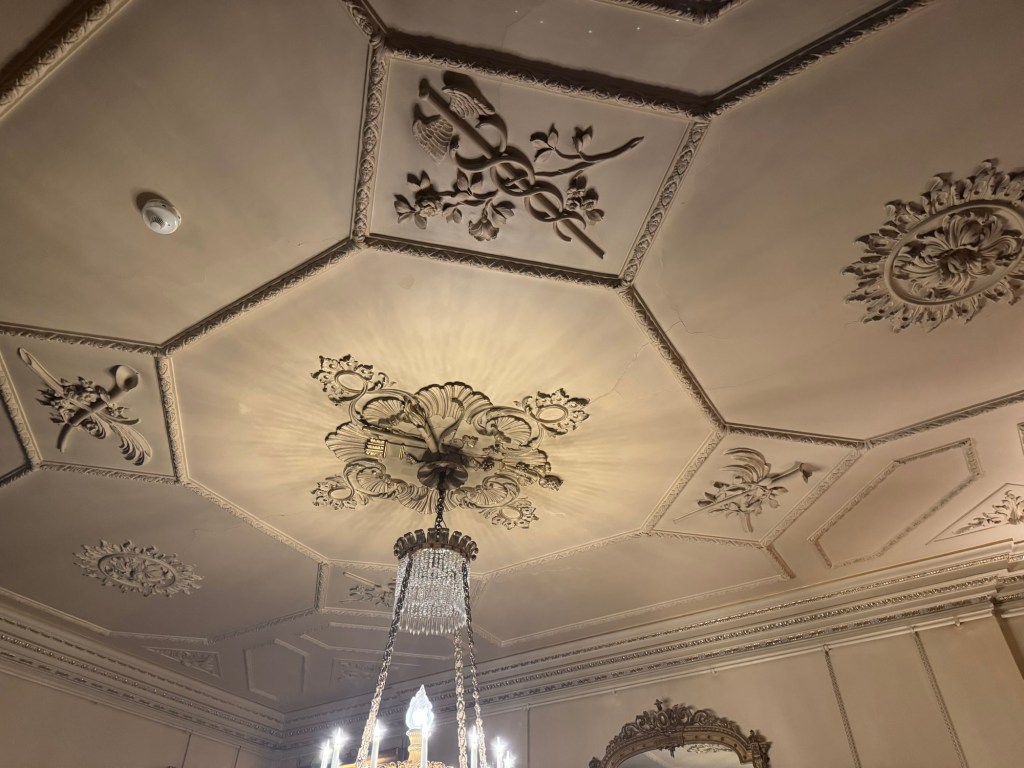
After our windy time on the cliff we headed inland through Scarborough which is a lovely seaside town with some nice resorts. I will keep this in mind for future adventures. Our destination for the afternoon is Burton Agnes Hall, an Elizabethan manor house. It was built by Sir Henry Griffith between 1601-1610. It was full of carved screens, paneling and fireplaces. We had an excellent guide who pointed out all the highlights. Most of the carvings depicted moral consequences. They depicted the good and hard working going up to heaven and those who were frivolous left in hell to dance with the devil. There were also carvings of the four graces in the Queens room and the four continents. The ceilings were extravagantly carved geometric in the kings room and floral in the queens.

Burton Agnes Hall

There is some sort of a ghost story associated with the hall. In the 16th century there were three Griffith daughters. Walking home from friend’s house one afternoon the youngest was attacked and robbed. The family found her and got her home but she did not live long. She was the homebody of the sisters and planned to live in and keep the house her entire life. Before she died she made her sisters promise to keep her body in the house and threatened them with a haunting if she did not. They agreed but then buried her in the mausoleum at the church. Legend has it that horrible things started happening soon after and the family convinced the church to allow them to dig her up and they brought her head into the house. I guess back in those times they were used to seeing severed heads in various settings and had no problem with it being displayed on the mantel. At some time later after the current family was all gone a servant girl had had enough and place the head on the garbage pile . Soon bad things started happening. They could hear wailing and slamming doors and the young servant admitted to what she did and they were able to retrieve the head and bring it back inside and all the mischief stopped. It was until some updates in the 18th century that the head was removed form sight and placed behind some paneling in the entrance hall where it remains to this day.

The 3 daughters – the one on the right is the ghost

The current house was built beside a Norman dwelling that dates back to 1173. We had lunch in the undercroft of that building.

Undercroft of 1173 house

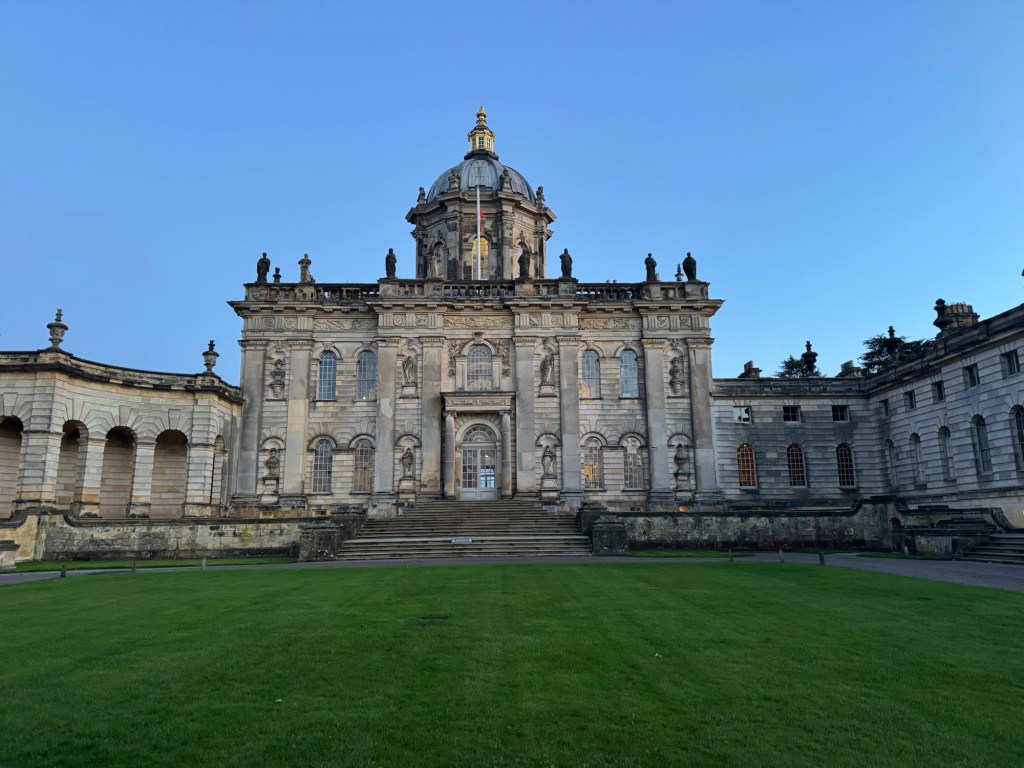
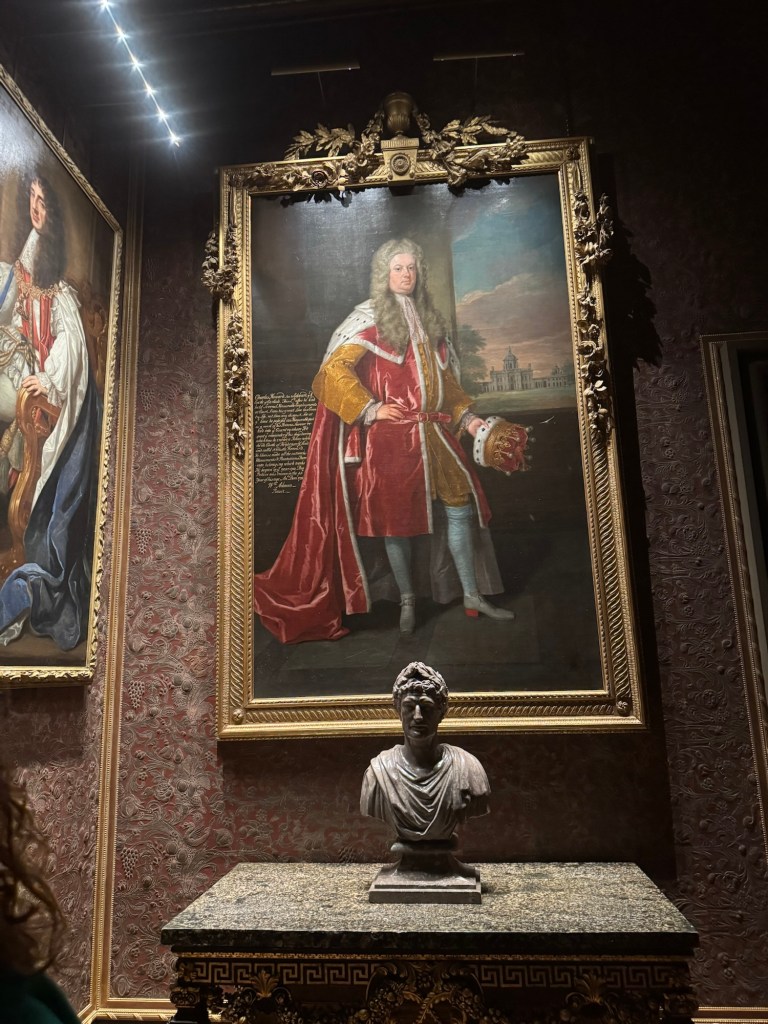
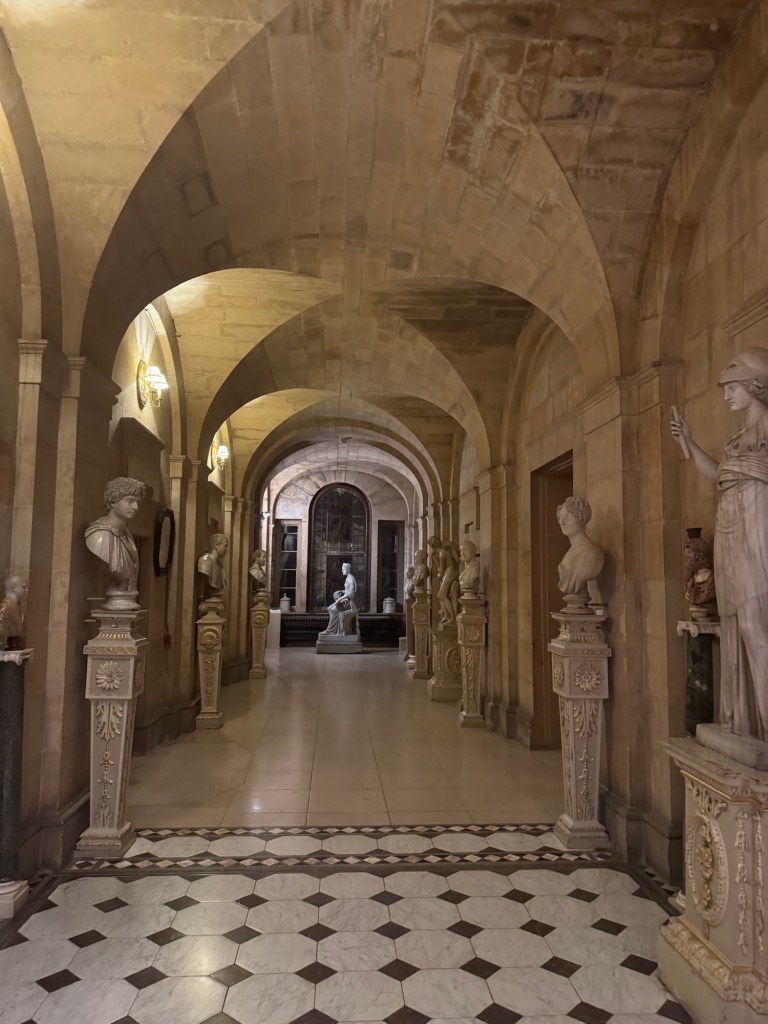
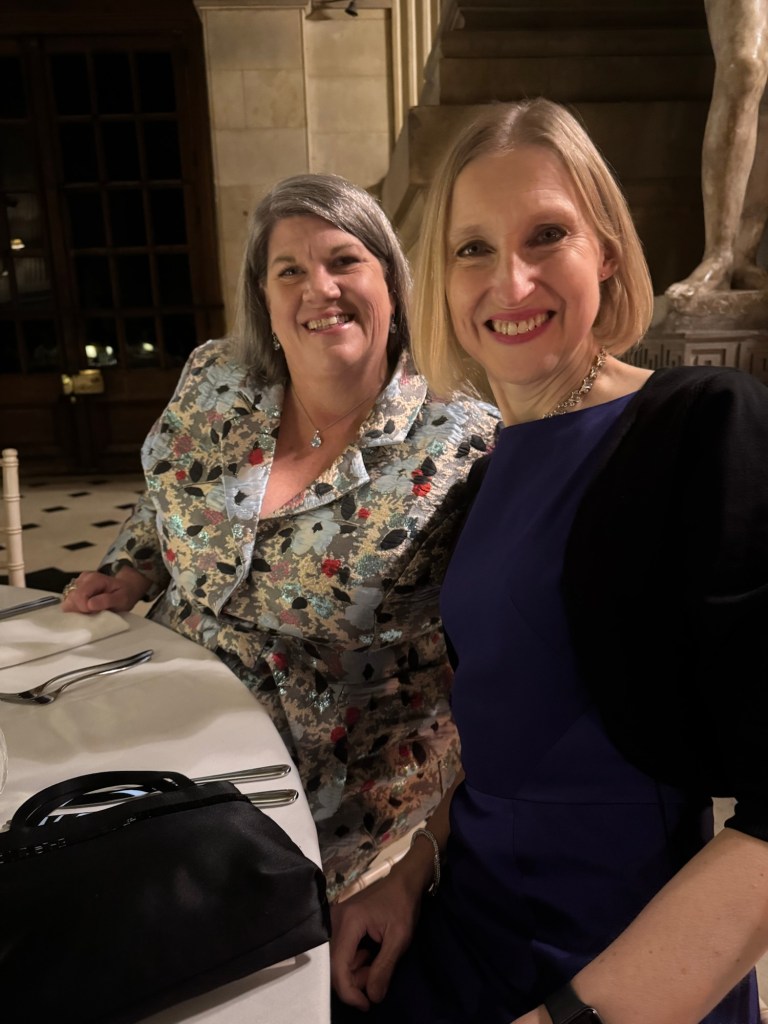
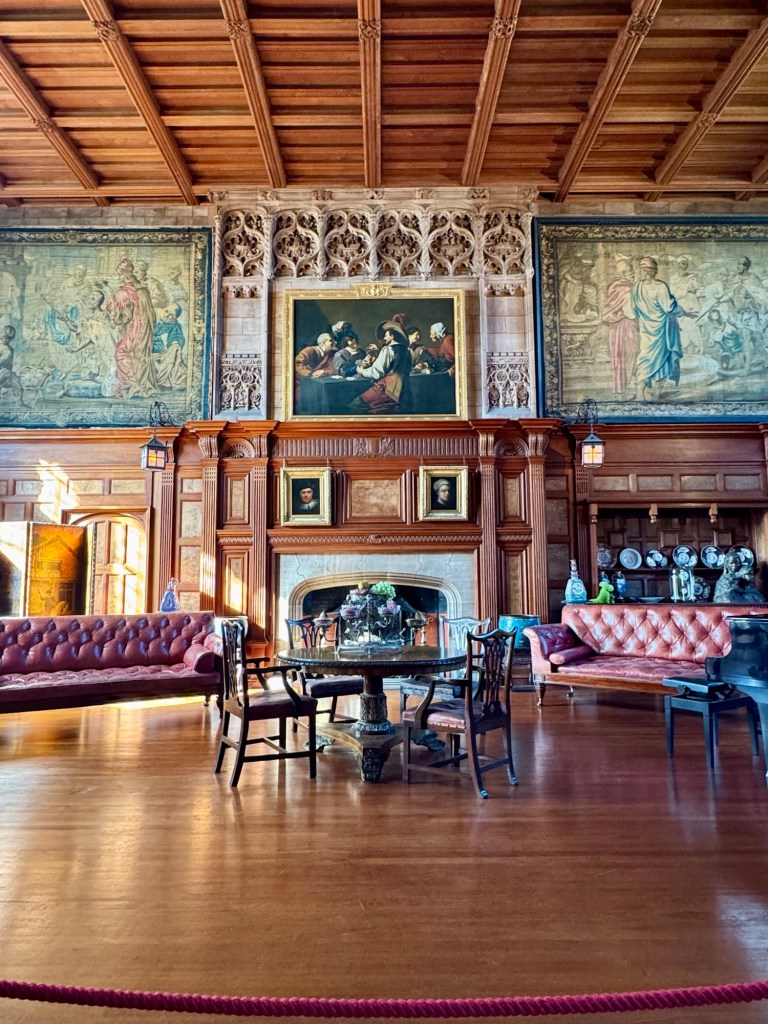
Tonight was our gala dinner at Castle Howard. The castle is lovely and has been used for many tv and movie productions including Brideshed Revisted, Bridgeton, and Death Comes to Pemberly. The castle was designed and started between 1699 and 1702, however, it was not completed until in 1811. It never included all the design elements from the original 1702 plans although it is still quite impressive. A fire in 1940 and destroyed the dome. It was not restored until 1962.

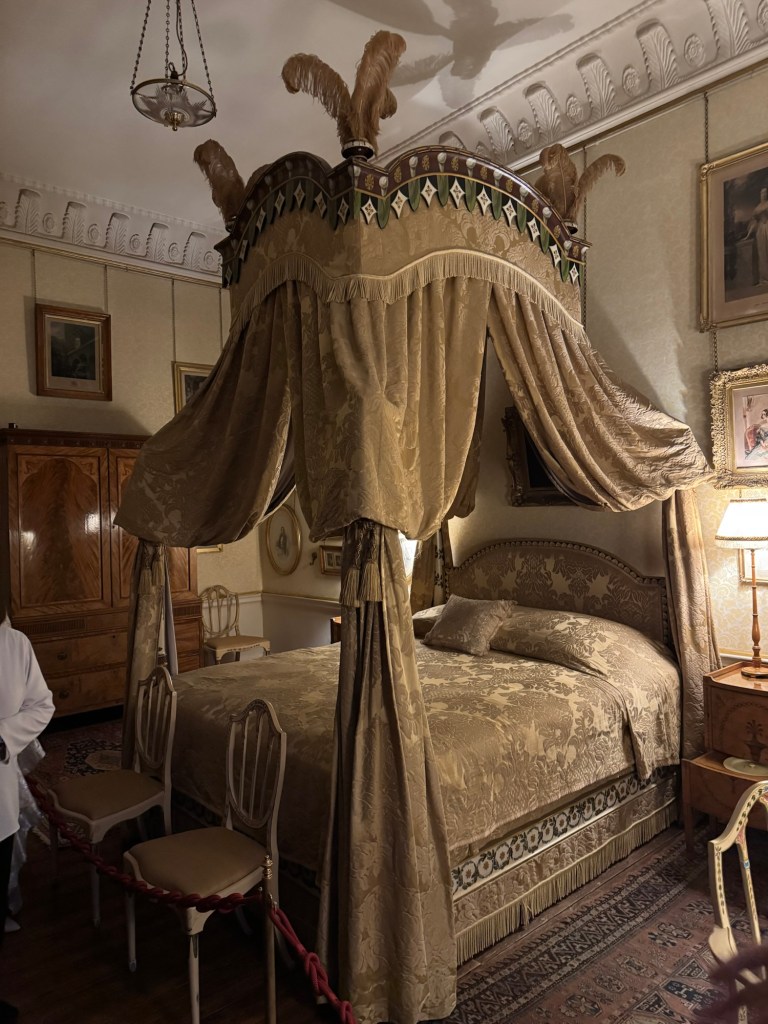
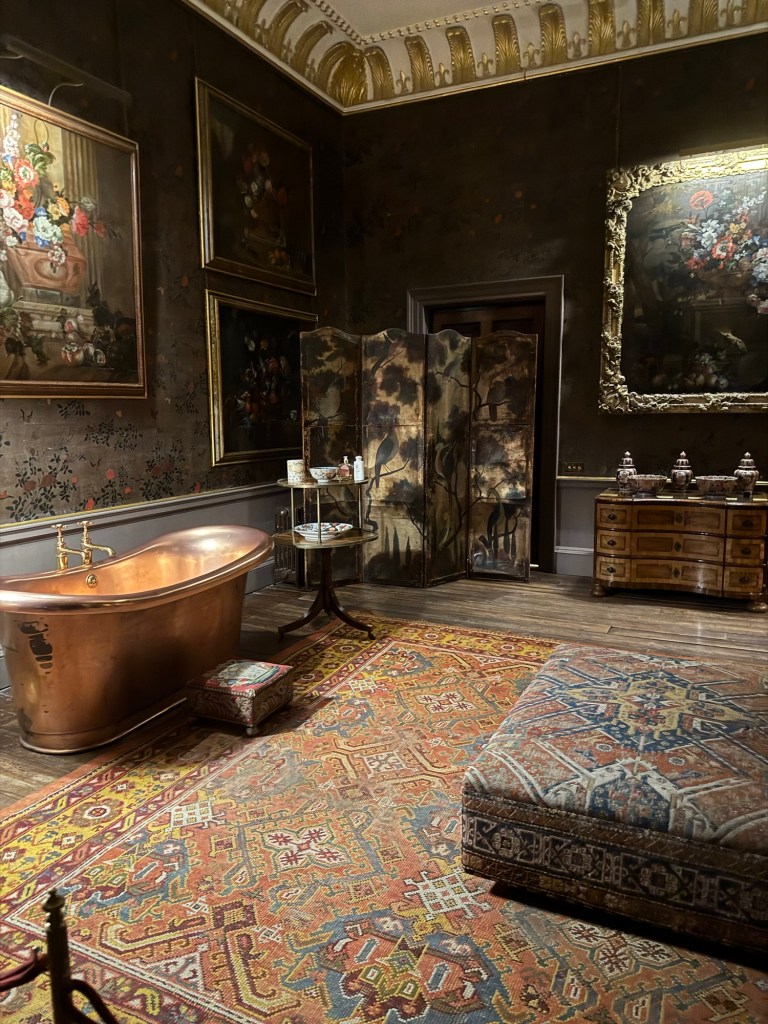
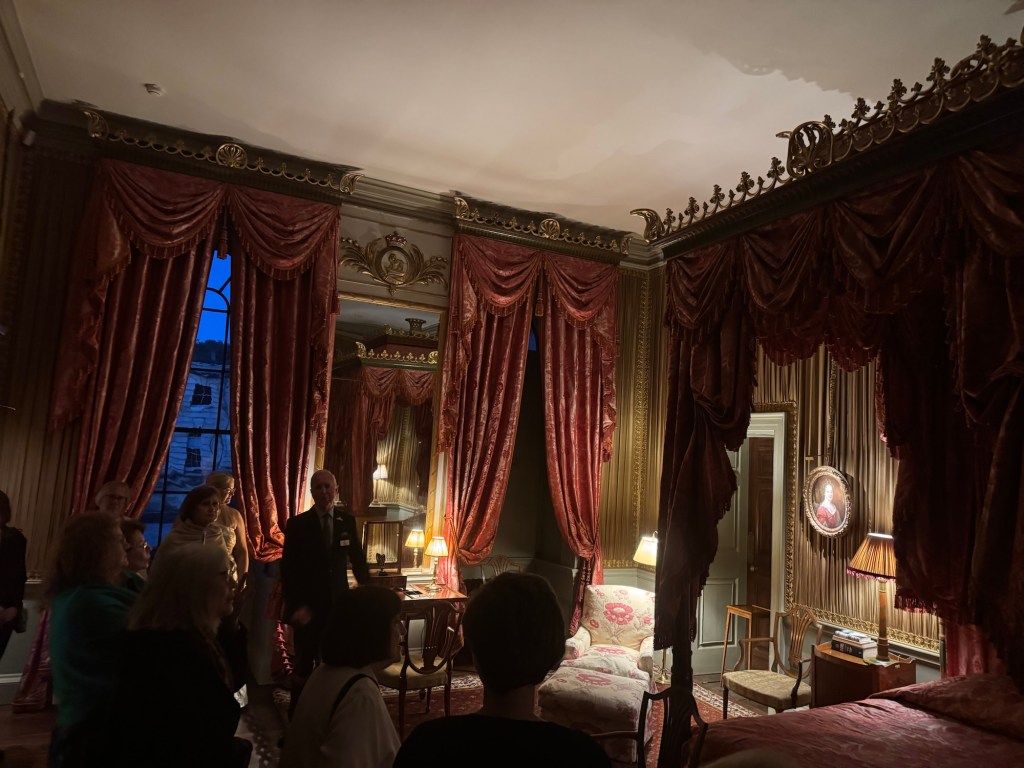
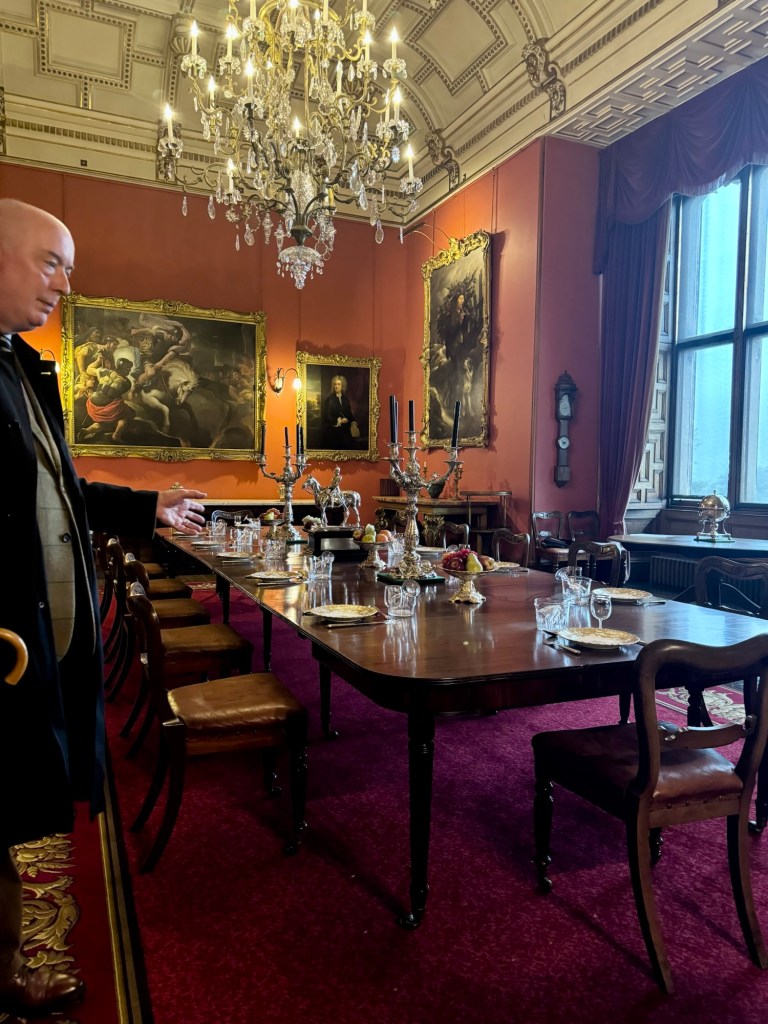
We arrived in the evening and snapped a few photos before the sun went down and we headed inside. The arrangement of the area we toured was quite different. The bedroom lavishly set up are occasionally used by the family or their guests so they have added the weirdest bathrooms “en suite” next door that we also walked through. I am sad my photo of one of the en suites didn’t turn out it had a cabinet commode. Which was really weird until I went to the bathroom during the meal and basically it was a wooden seat on a cabinet. Not what you expect when you are all dressed up.

Castle Howard
The Lady’s chamber
Crazy en suite
The gentlemen’s room
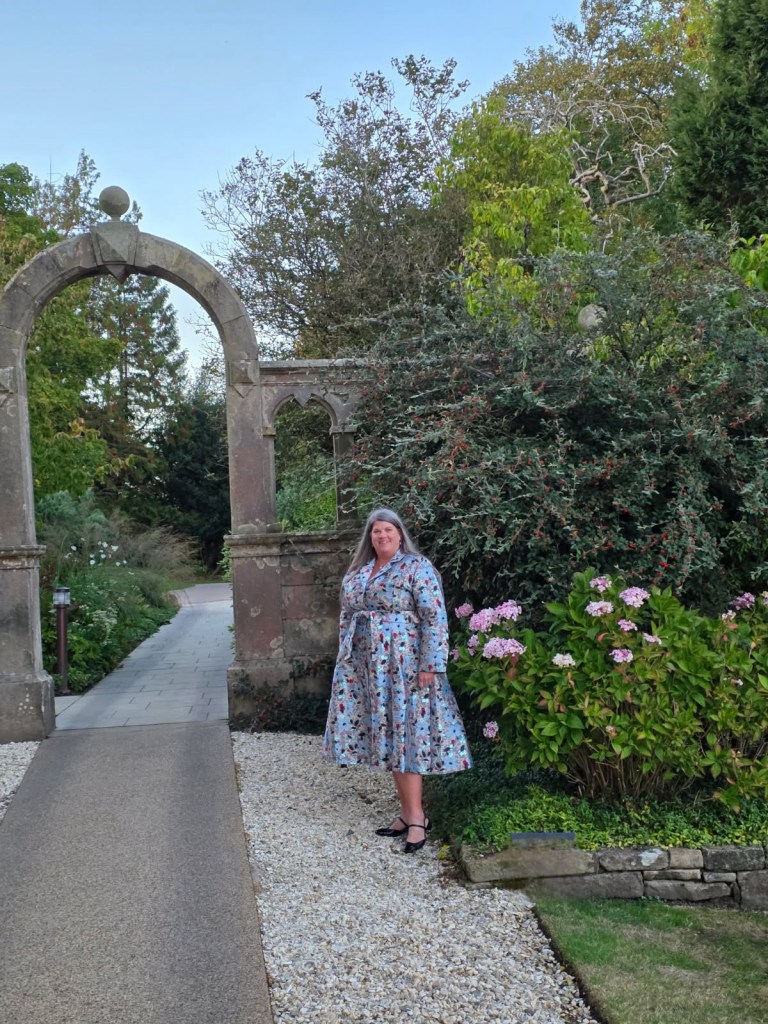
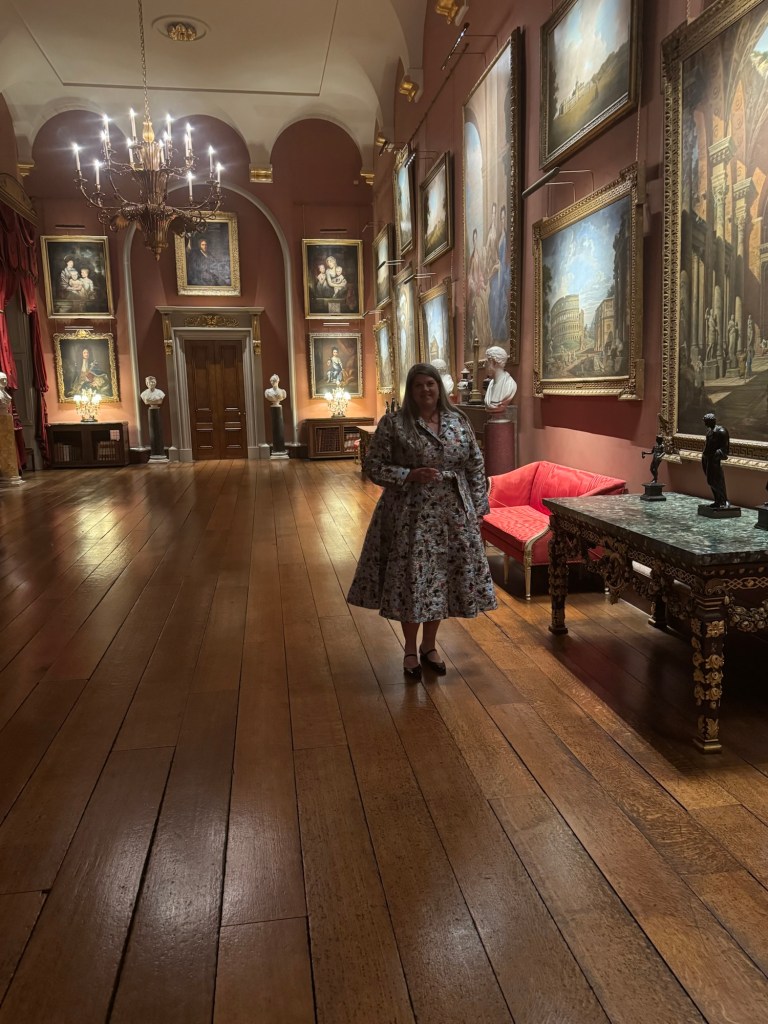
Me in the long gallery in my fancy dress
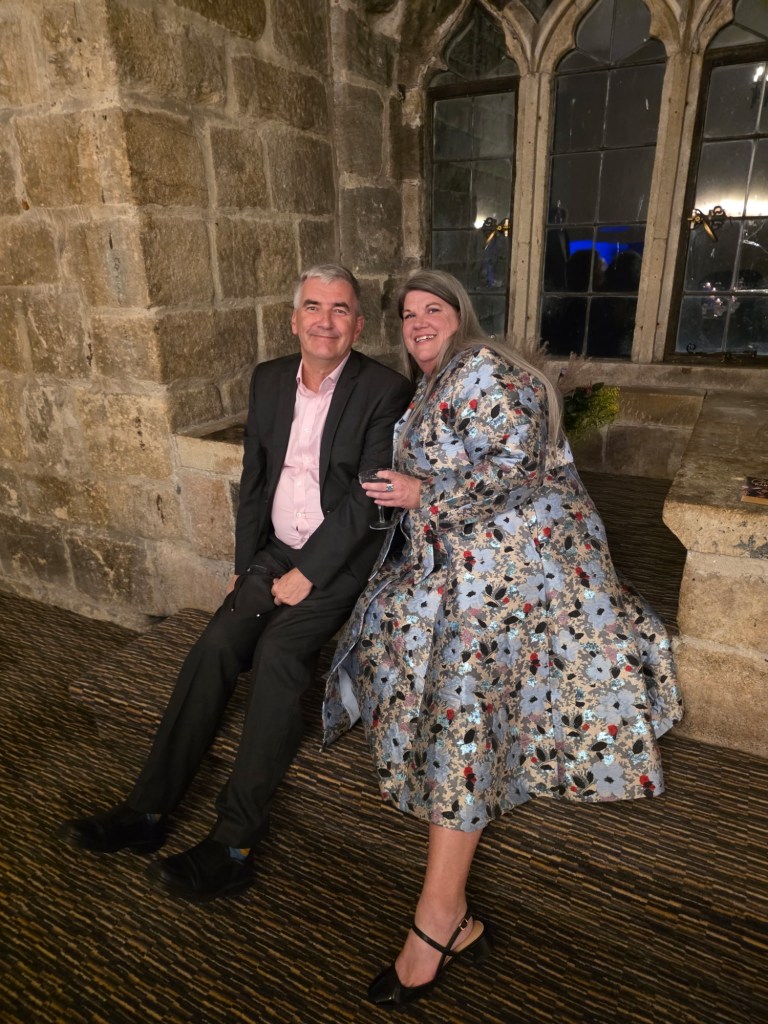
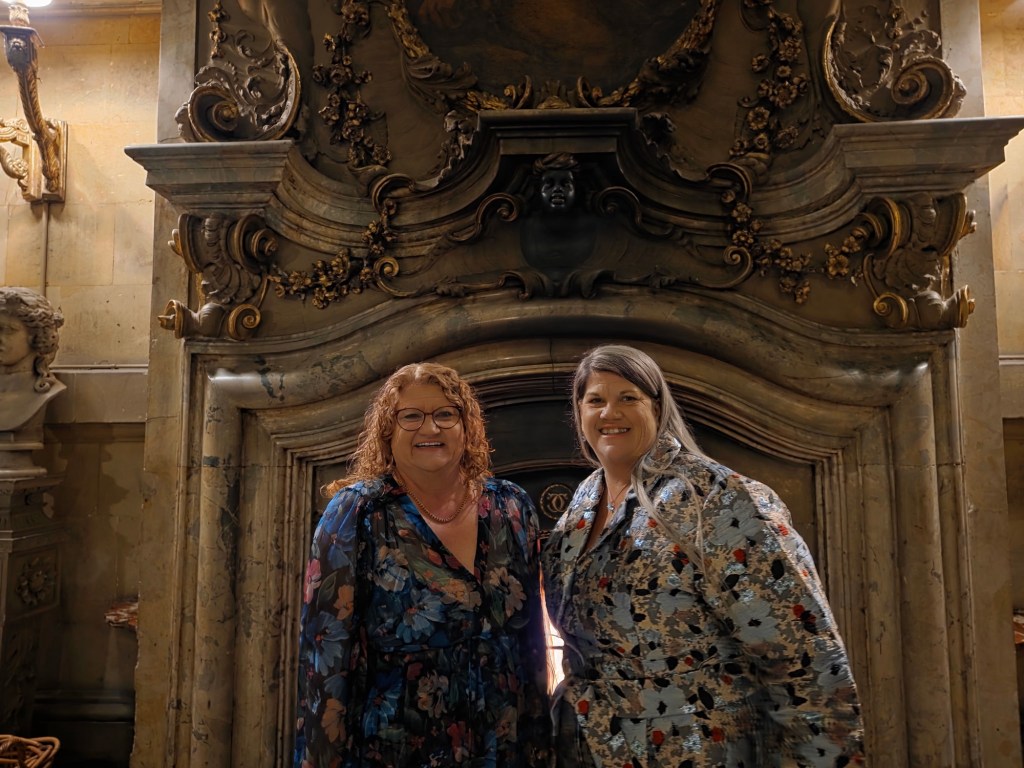
Val and me
Me and Tracy Boreman
The refurbished dome
Me and Nicola – “Beaufort Babes”

The drive home was exciting with closed roads and backing a bus down narrow country lanes to turn around and try another route. We eventually made it back to York. We had to pack up to head out in the morning to our next hotel, the Maften Inn a little closer to the edge of England.

A Wet Day in Northumbria with the Nevilles

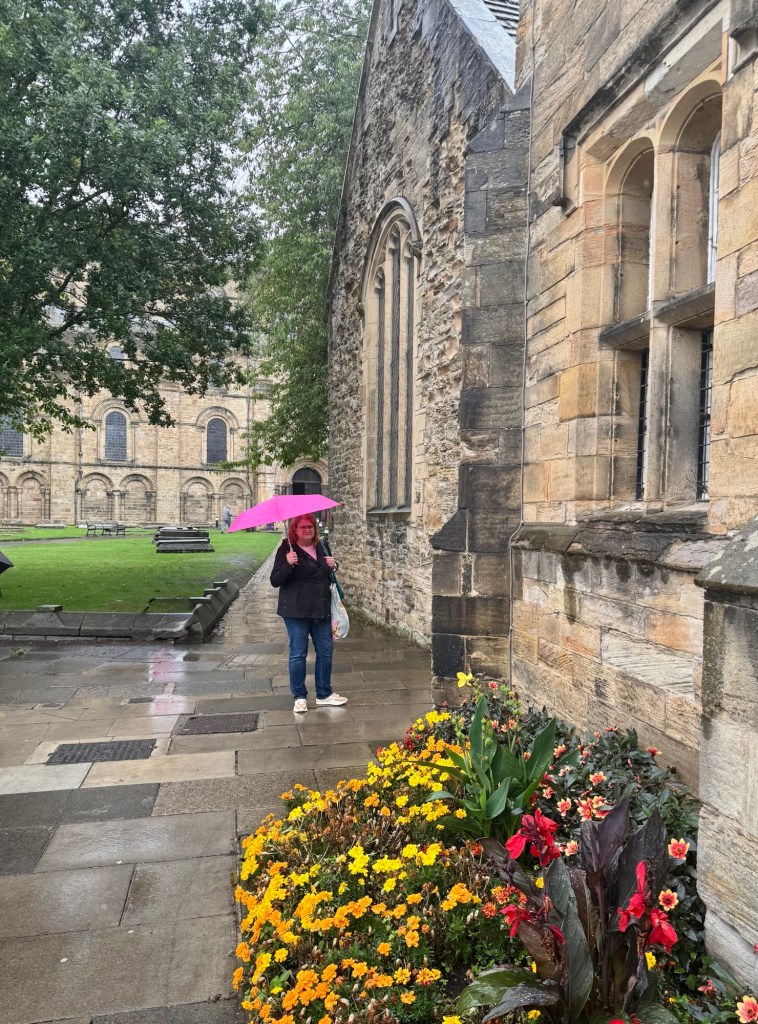
It was raining when we woke up and raining when we came in and at all times in between. I can’t remember the last time it has rained all day no matter how much I moved around. We went at least 60/75 miles back and forth and never drove out of the rain. Hood and umbrella in hand so all was okay.

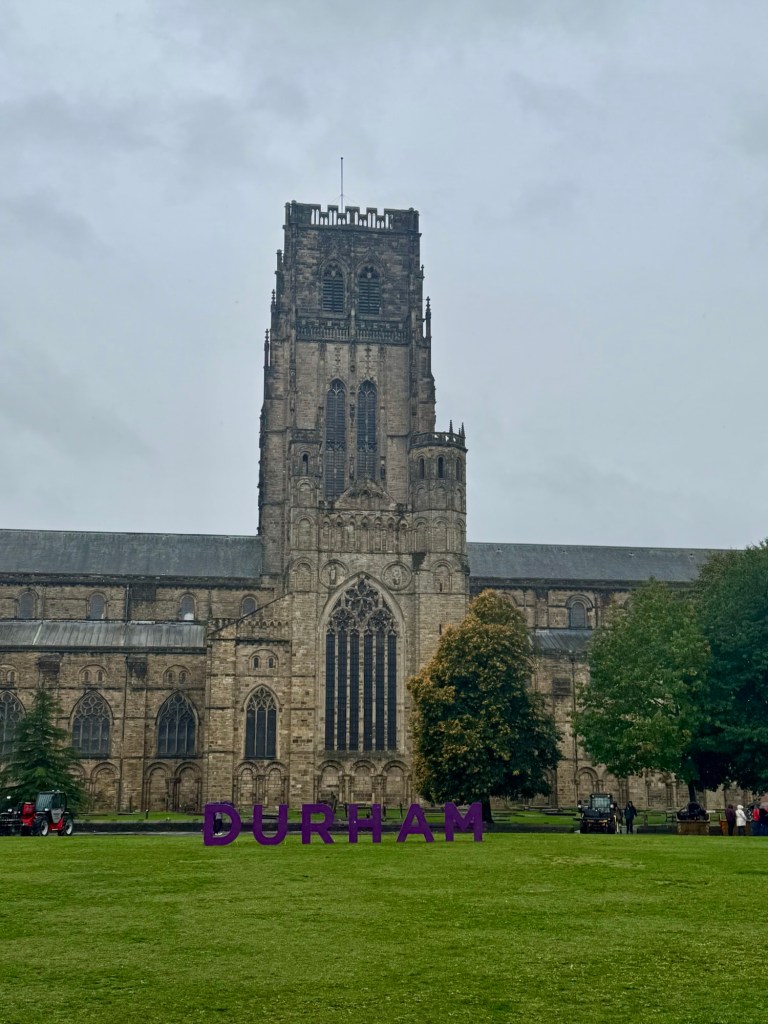
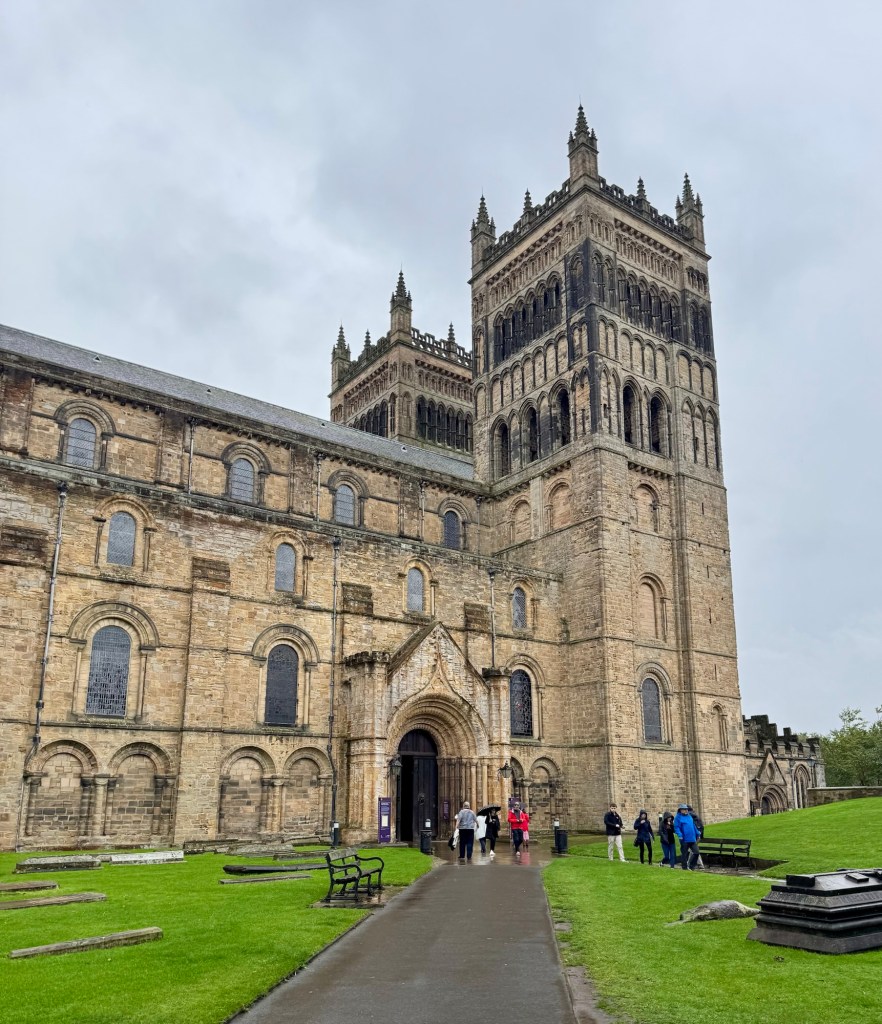
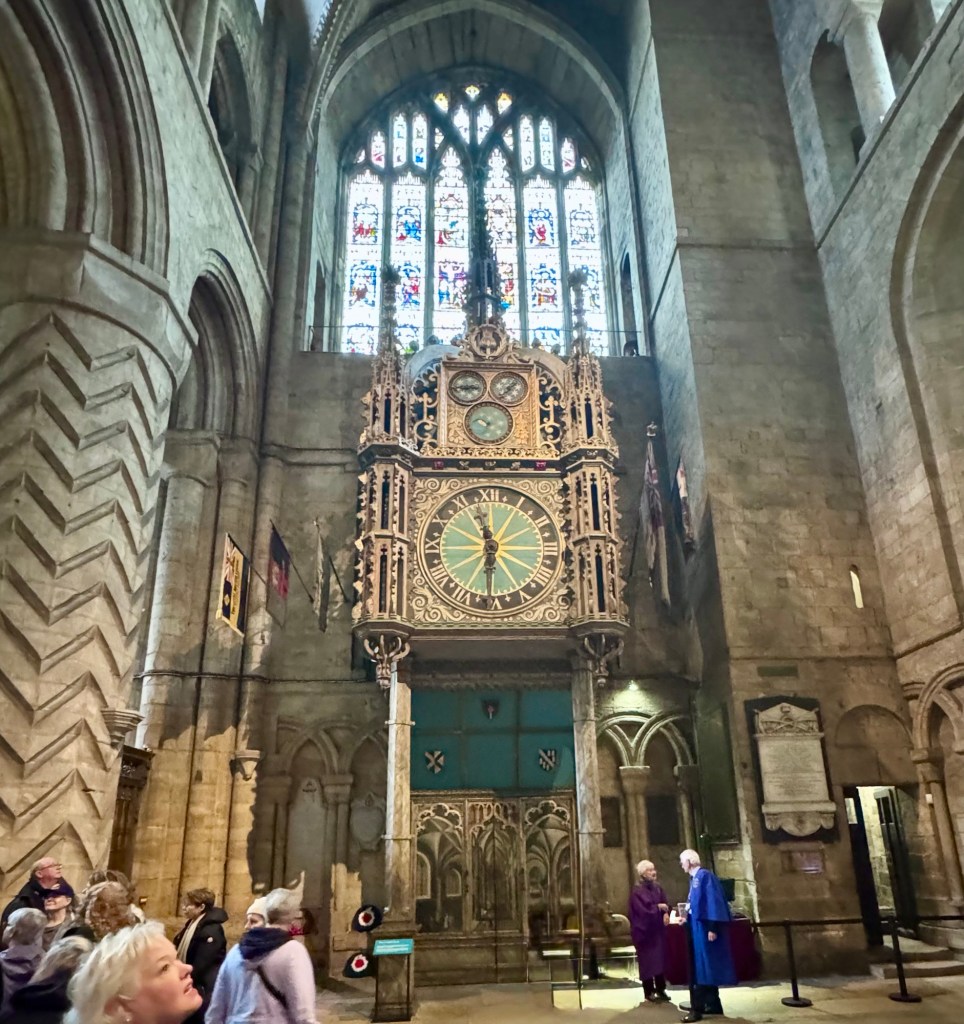
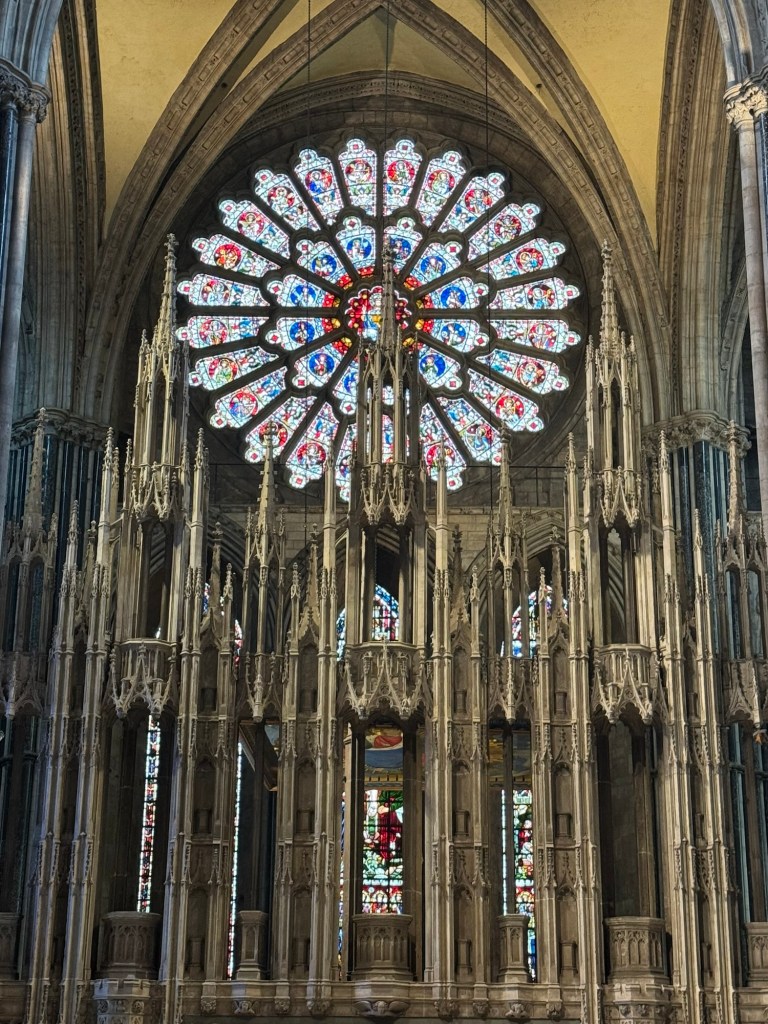
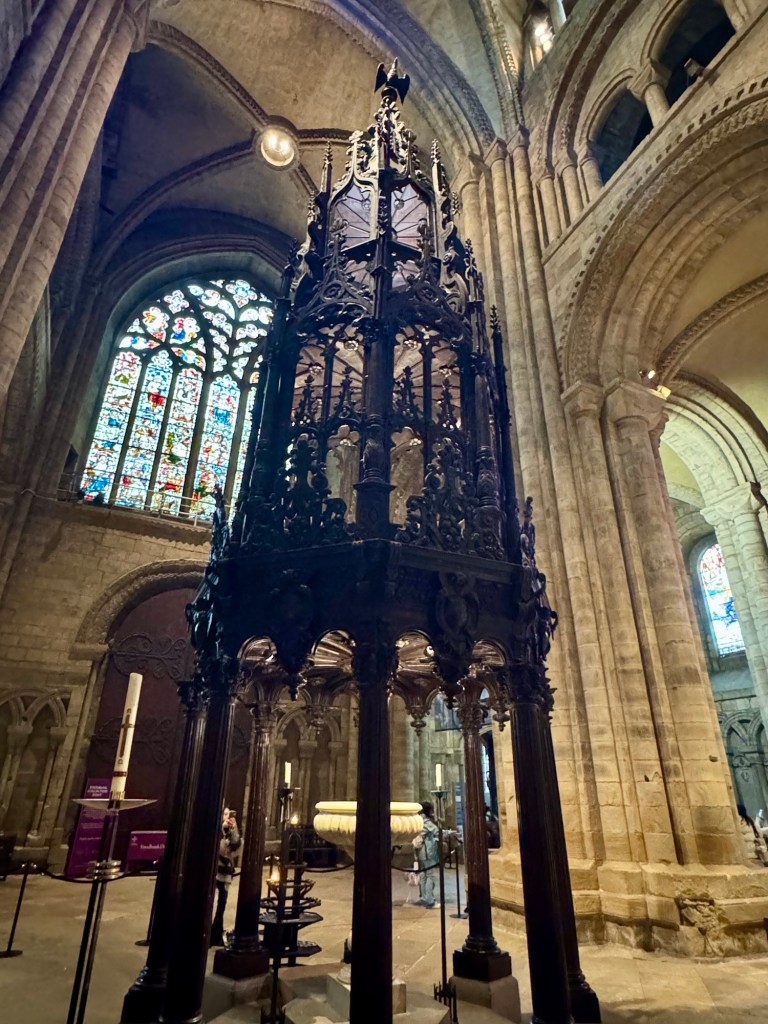
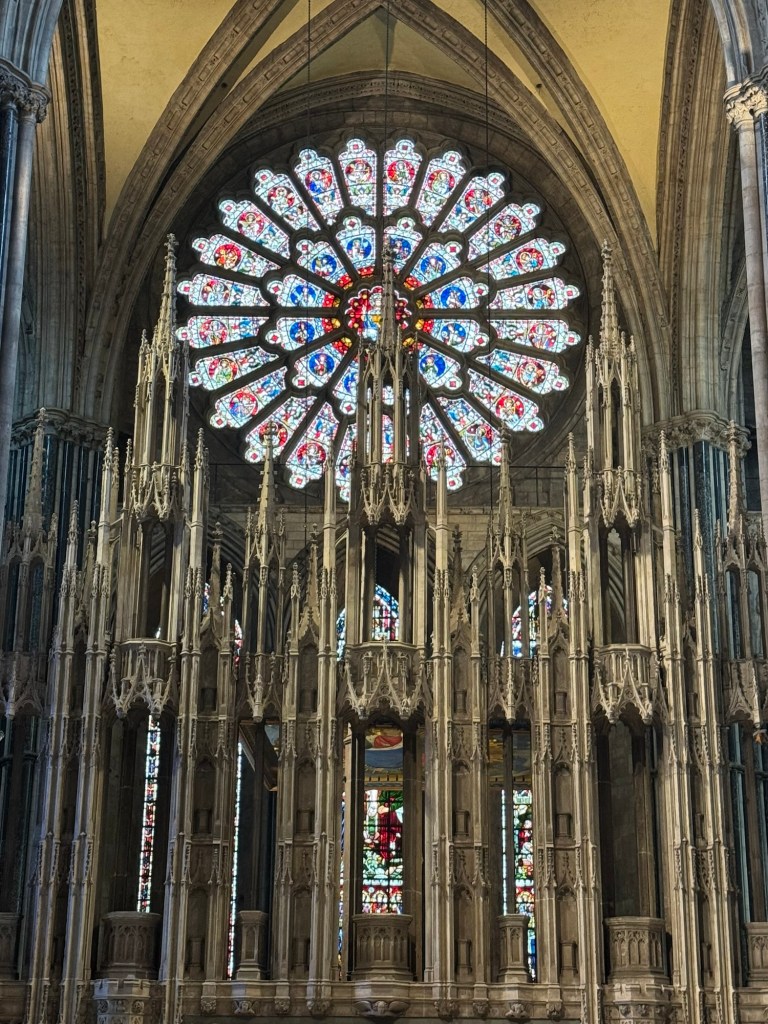
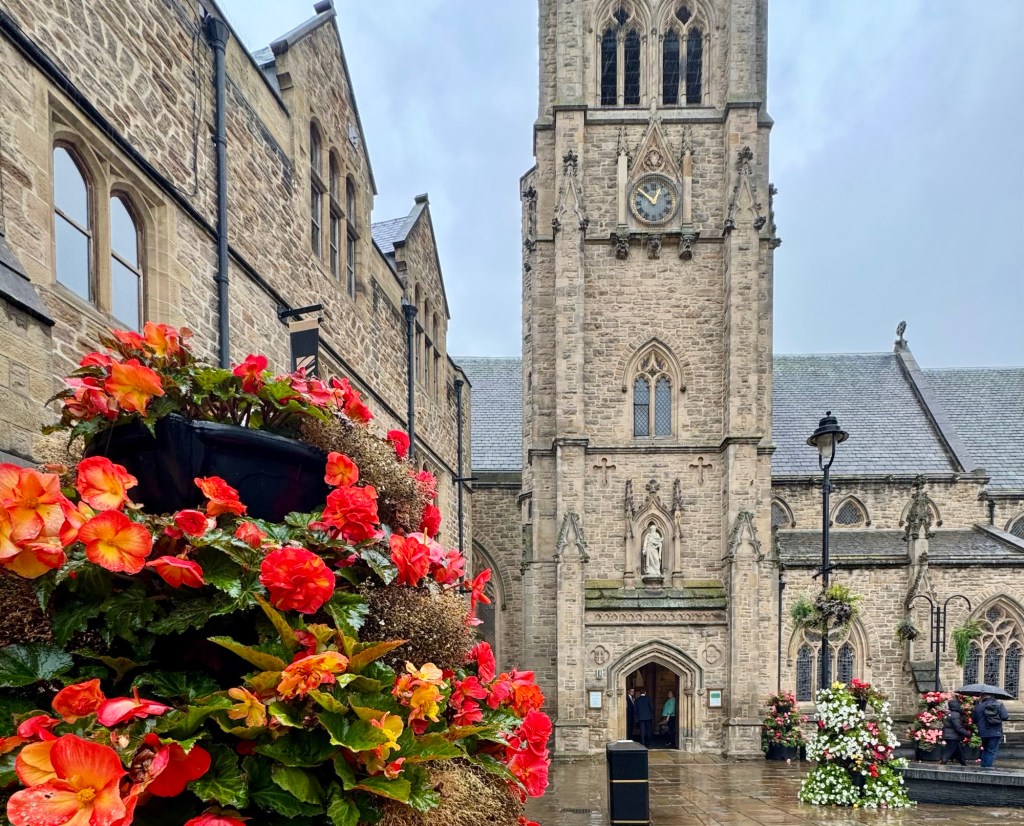
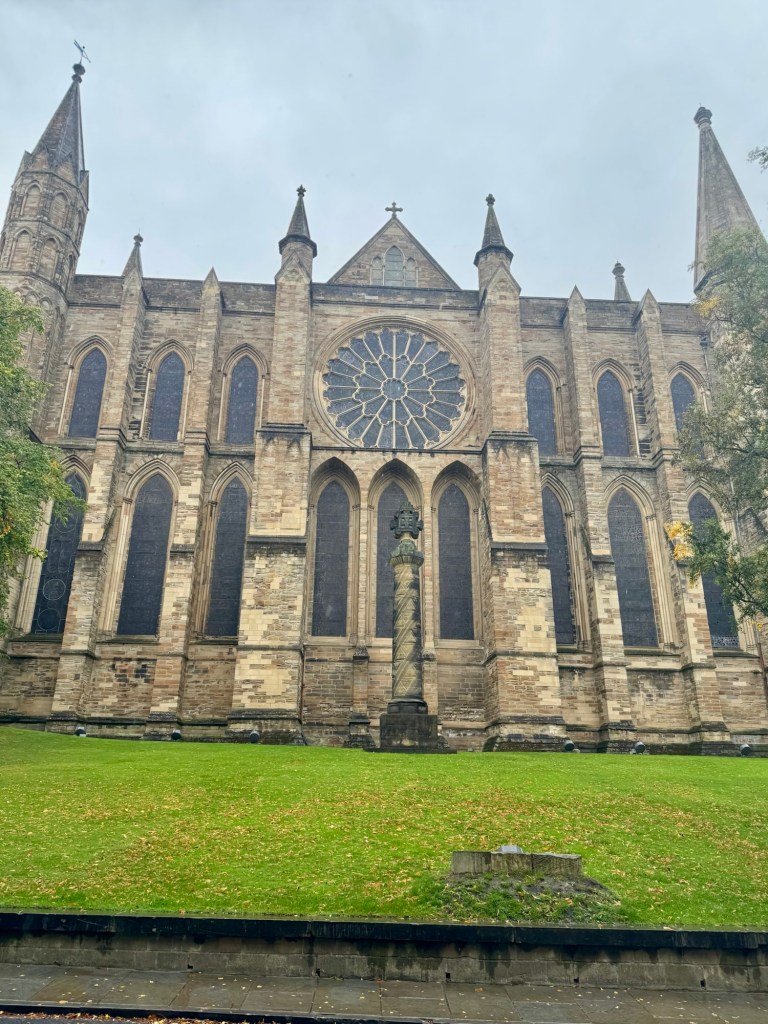
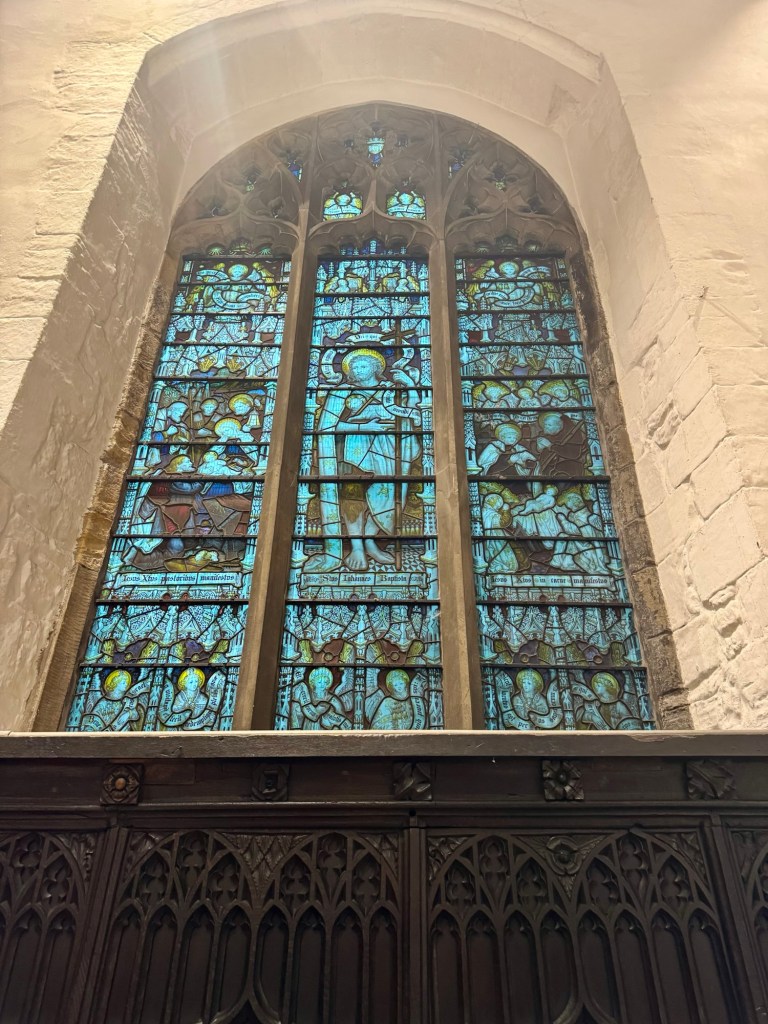
First stop was Durham to see the Durham Cathedral where both St Cuthbert and the Venerable Beed are buried. The church was lovely. Julian toured us around and pointed out the highlights. Including that the bishop’s throne in Durham is several inches higher than the Pope’s in St. Peter’s.

The military chapel
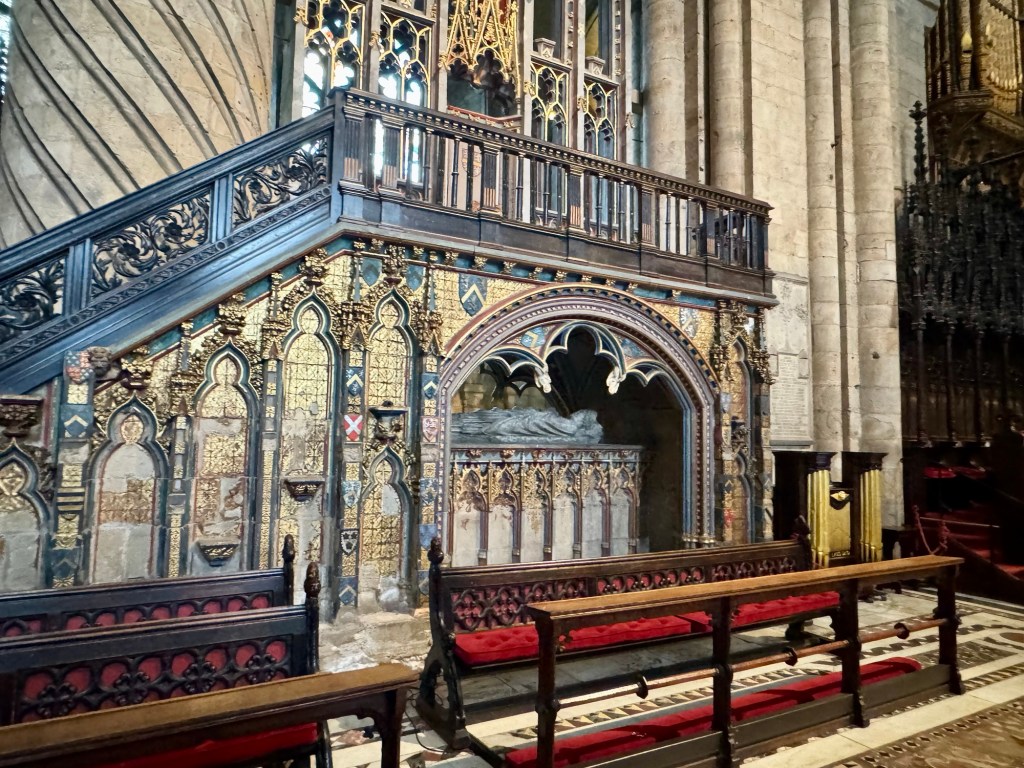
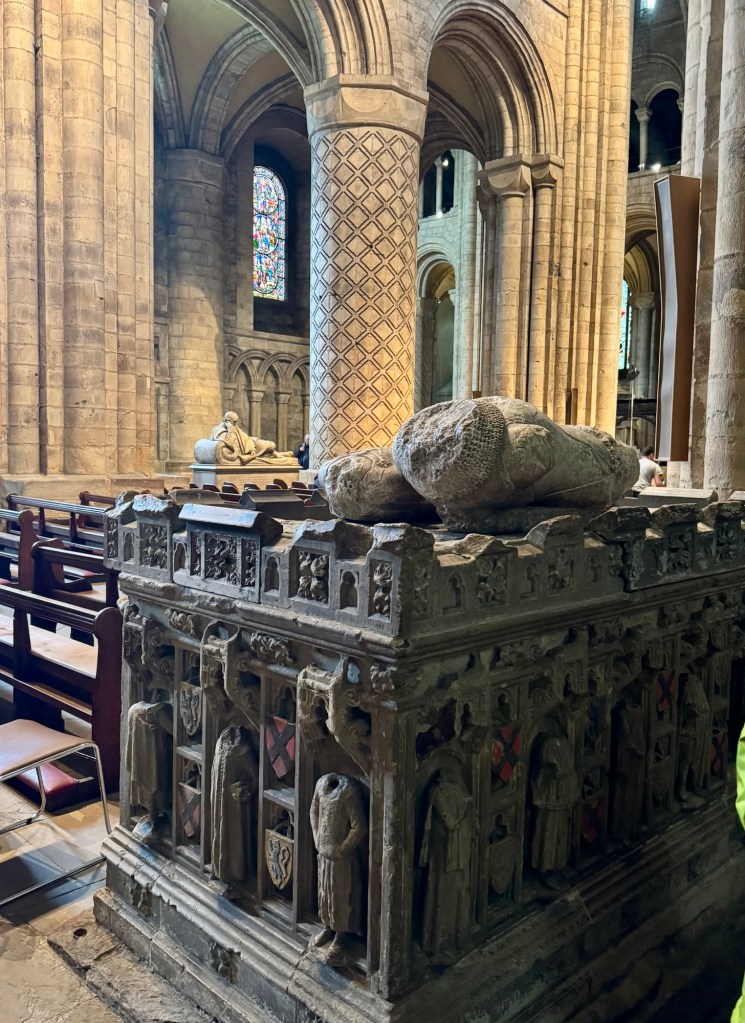
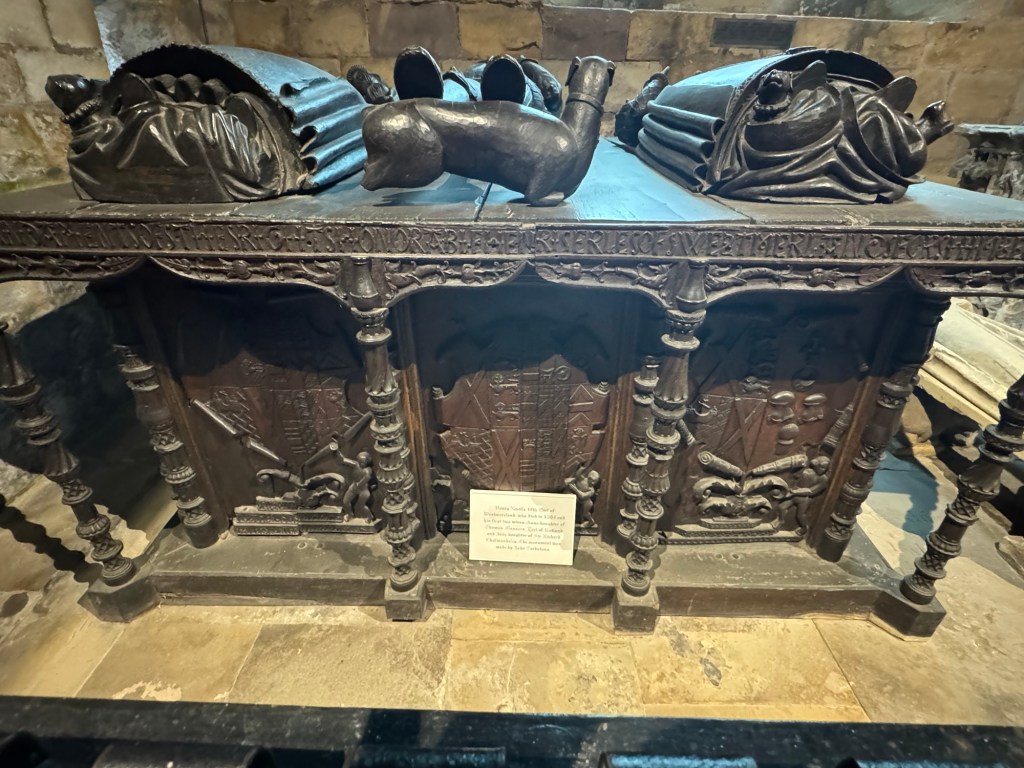
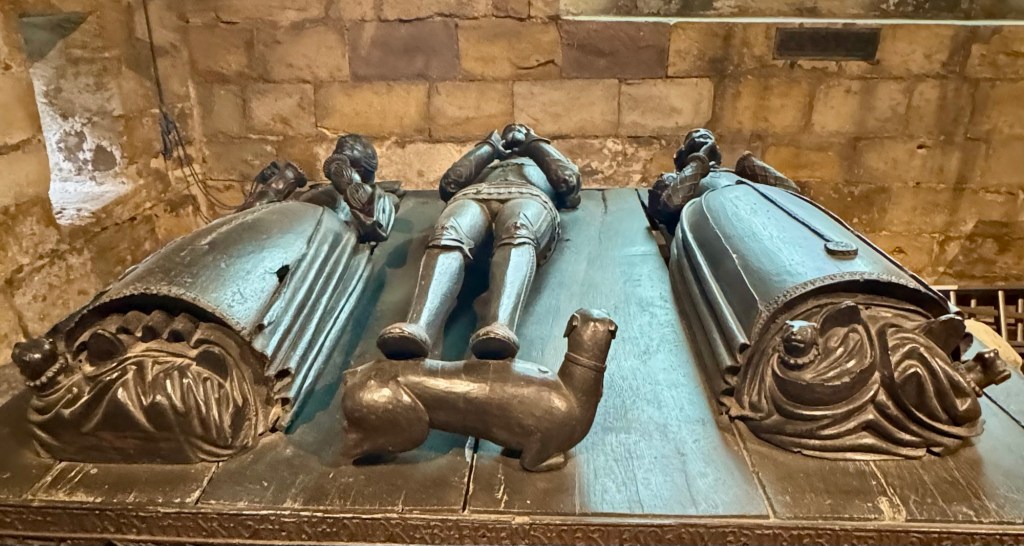
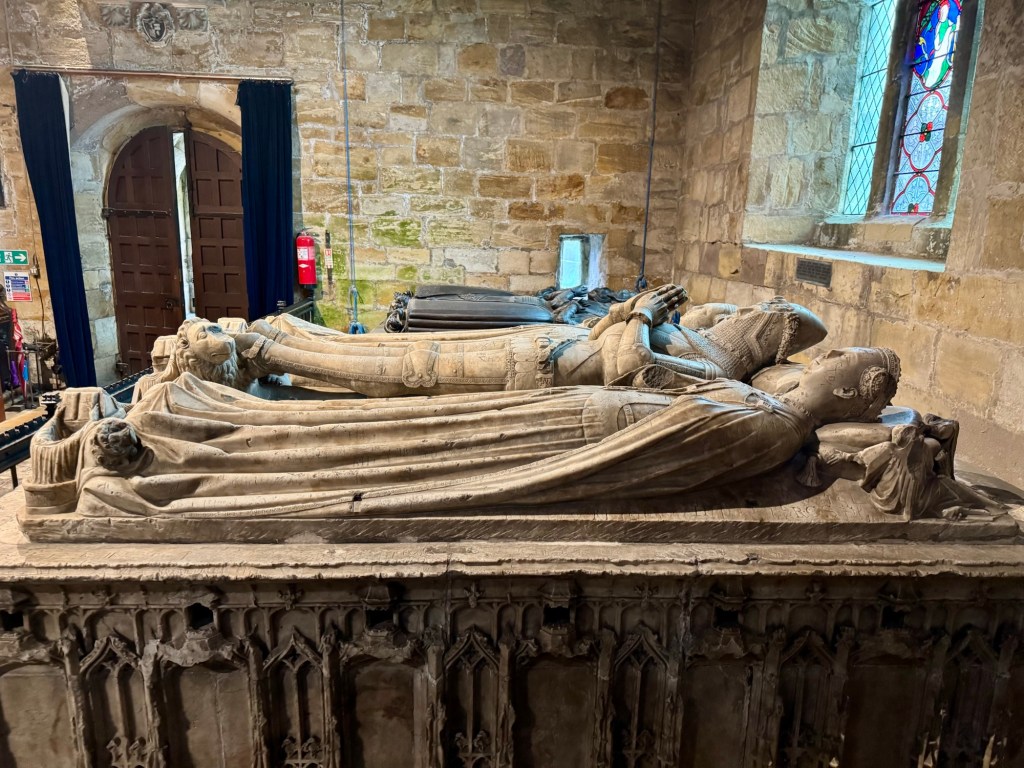
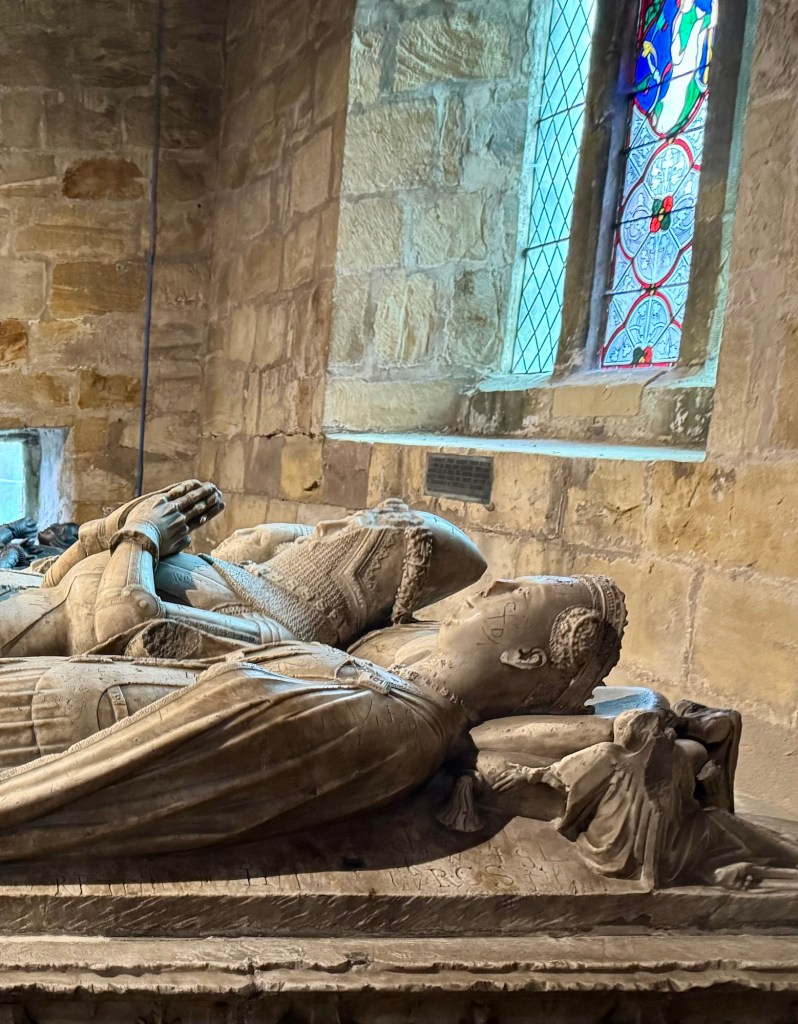
The headless tomb for a Neville

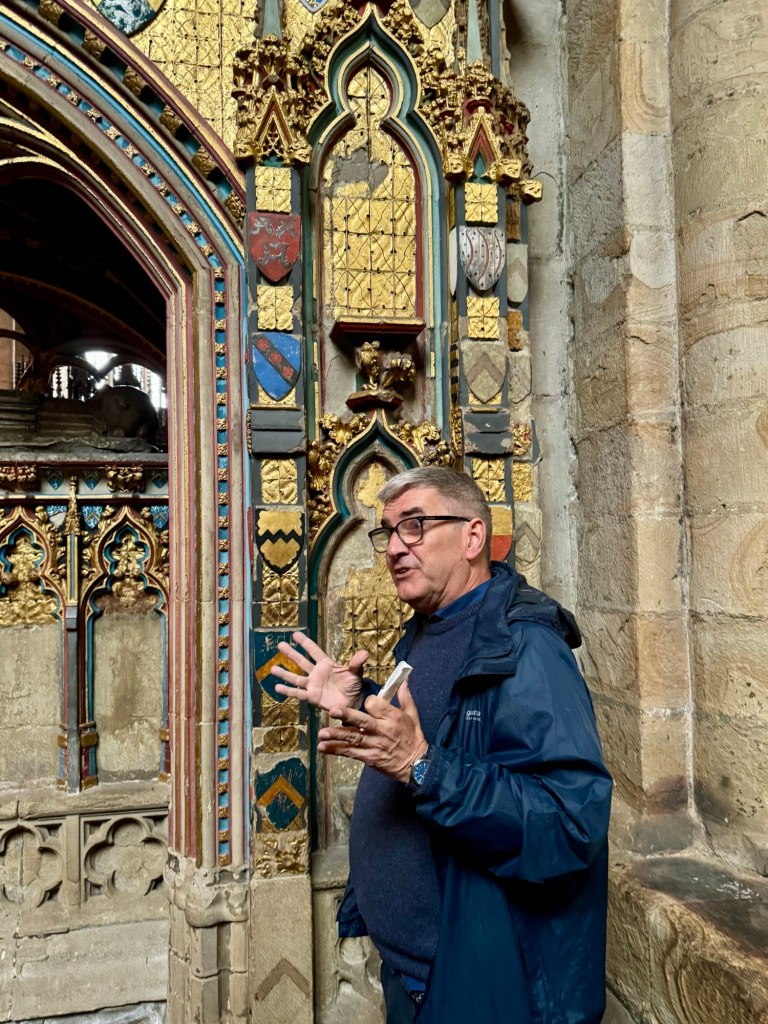
The tomb in the church of the Neville’s and I don’t remember which Neville had all the heads chopped off during the reformation. Makes for a kind of morbid scene today. The church supposedly saved all 100 statutes from the knave screen by taking them down and hiding them but they have never been seen again. Somebody should have drawn a treasure map.

Knave screen with missing statutes

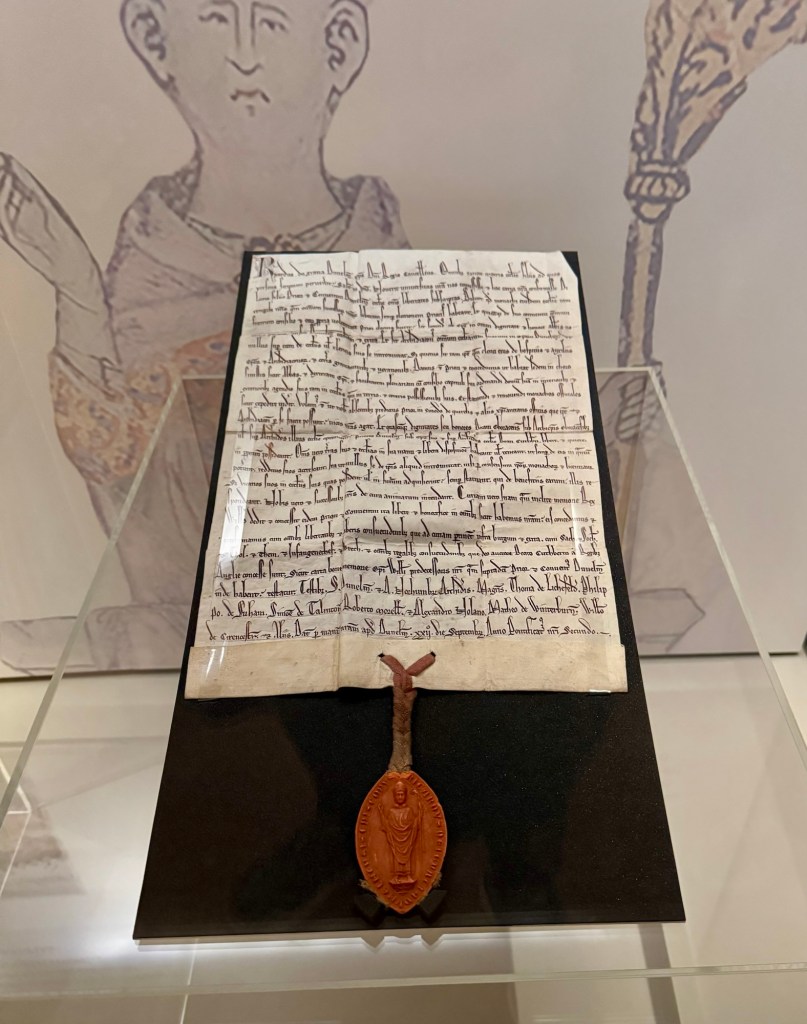
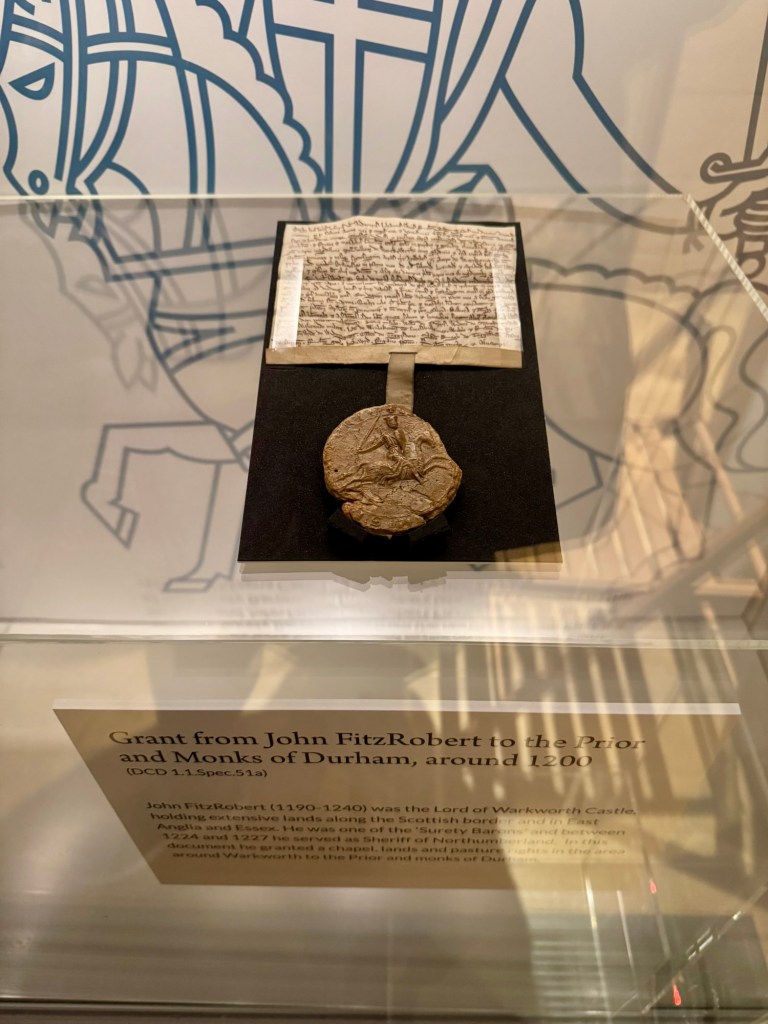
The church museum was displaying their copies of the Magna Charta including the only surviving 1216 version. They said due the how quickly they are fading this was likely to be the last time they are displayed. Glad we snuck in before they are hidden away again.

The 1225 version

The 1225 version of the Magna Carta held by Durham Cathedral was damaged in the 1740s when a historian Christoper Hunter accidentally knocked over an ink well. It was said that he drank so much coffee (24 cups a day) that he had uncontrollable fits and ticks causing the spill. They never let him back in and changed the rules so only pencils are allowed in the rooms with any manuscripts. A little too late to save the document but makes for a good story.

Surety Barons were established to hold King John to his word in following the Magna Carta. Twenty five barons were named with 8 being from the north. If the King did not follow the agreement then the Barons were to rally and remove him and pass the country onto someone else.

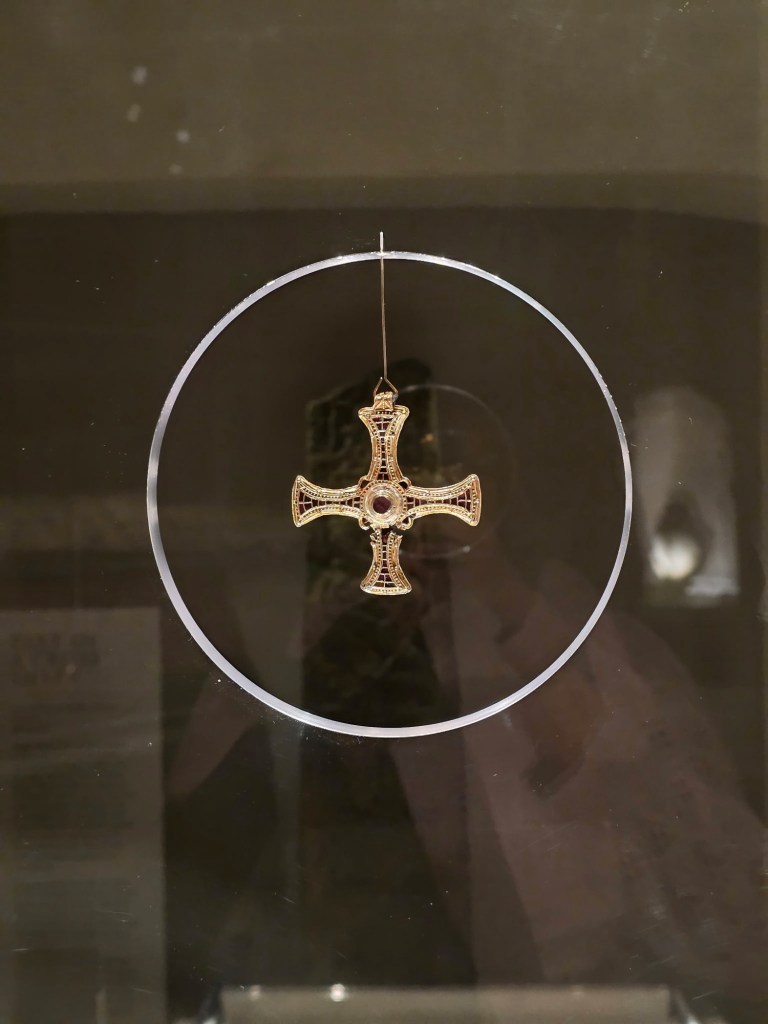
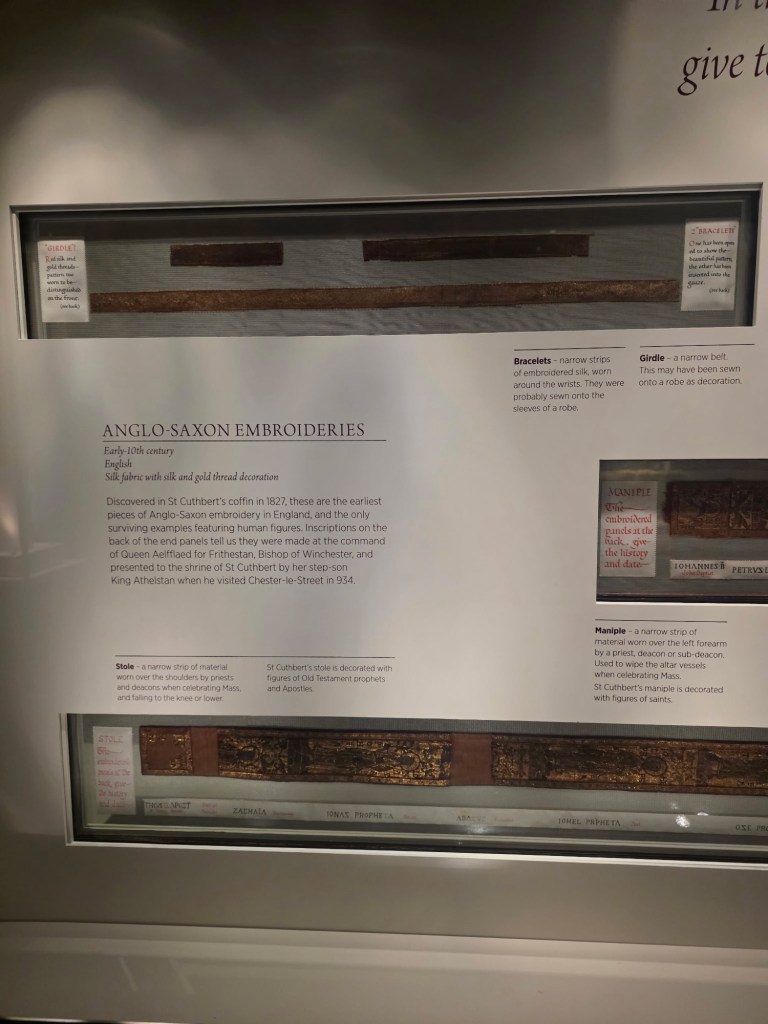
We also saw some holy relics from St Cuthbert. We were not supposed to take pictures but Val did. His coffin dated to 698 was moved once or twice during the medieval era but surprisingly it was not destroyed during the reformation. It has both Viking runes and Roman letters. They opened it in 1827 when he was moved to his current resting place. I guess even Oliver Cromwell didn’t want to mess with the person who basically established christianity in England. More about him later in the trip when we visit Lindisfarne island.

Cuthbert’s coffin
Cuthbert’s Cross found in his robe
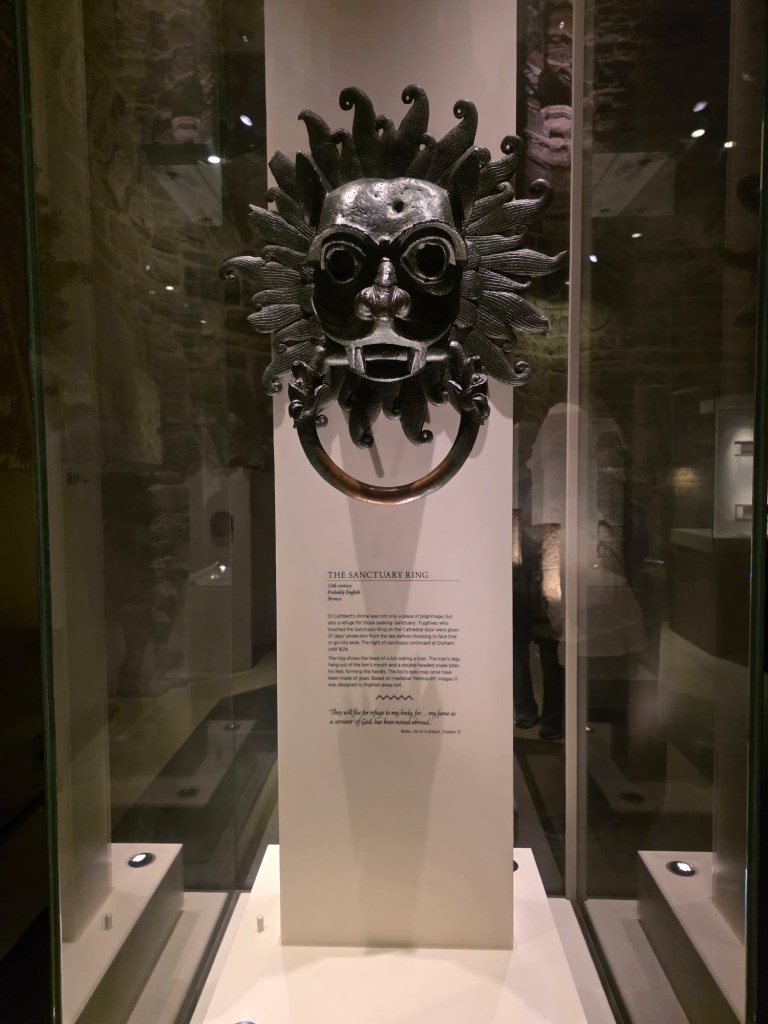
The actual sanctuary knocker

After the church and the museum we wandered around Durham a bit but since it was raining it was hard to go in and out of the shops. They did have a little open market and Val and I both found some things to buy. It was also the drop off day for college students and it appears that Durham is pretty much a college town so it was pretty busy.

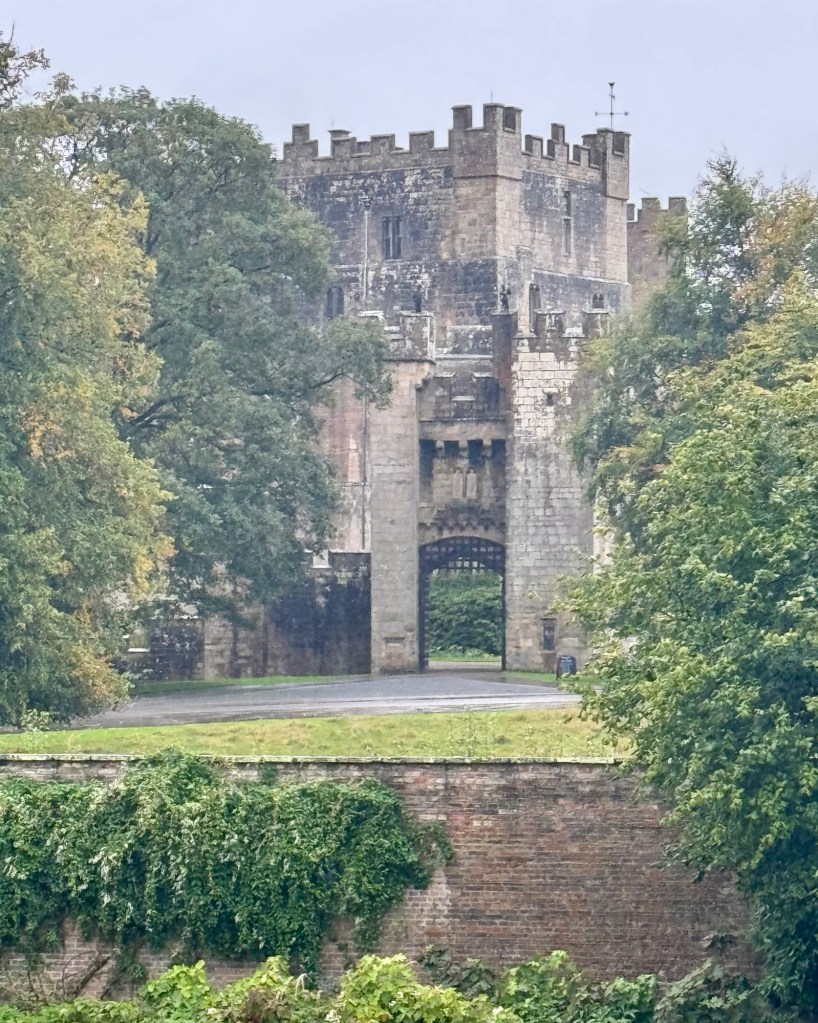
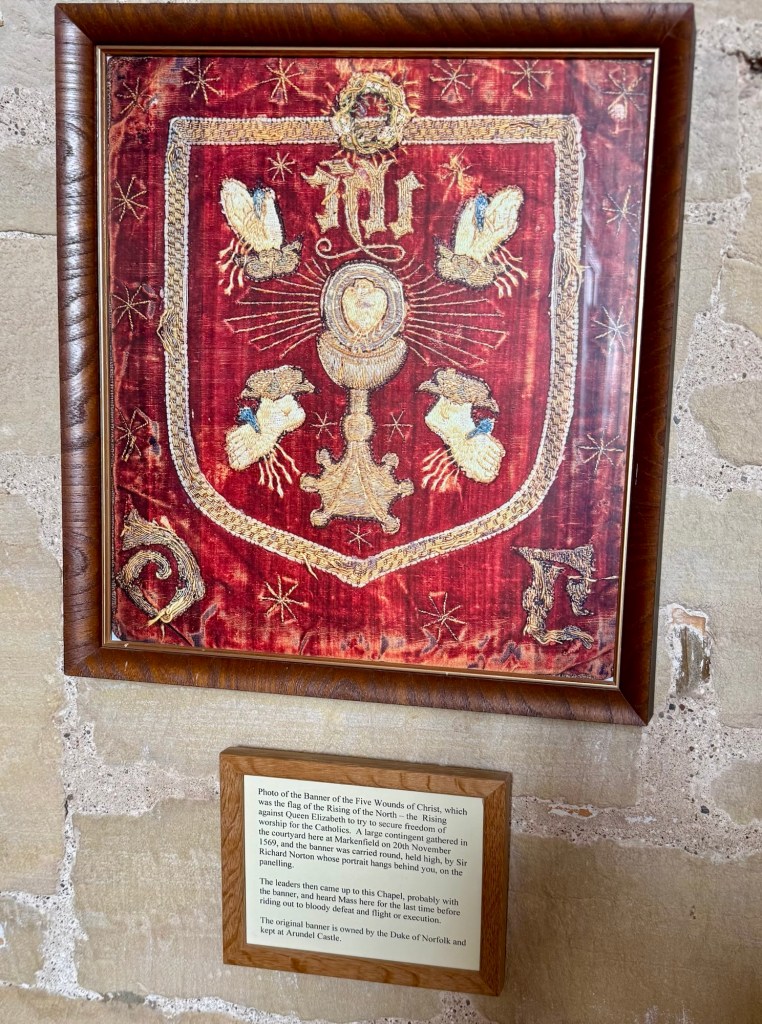
After Durham we headed to Raby castle the home of the Nevilles. The Neville’s lost the castle during Elizabeth’s reign when the started an uprising to establish the Catholic Church. The castle is now in the hands of the Vanes. They occasionally use the castle for events but the current Vane does not make his home there.

Castle Raby

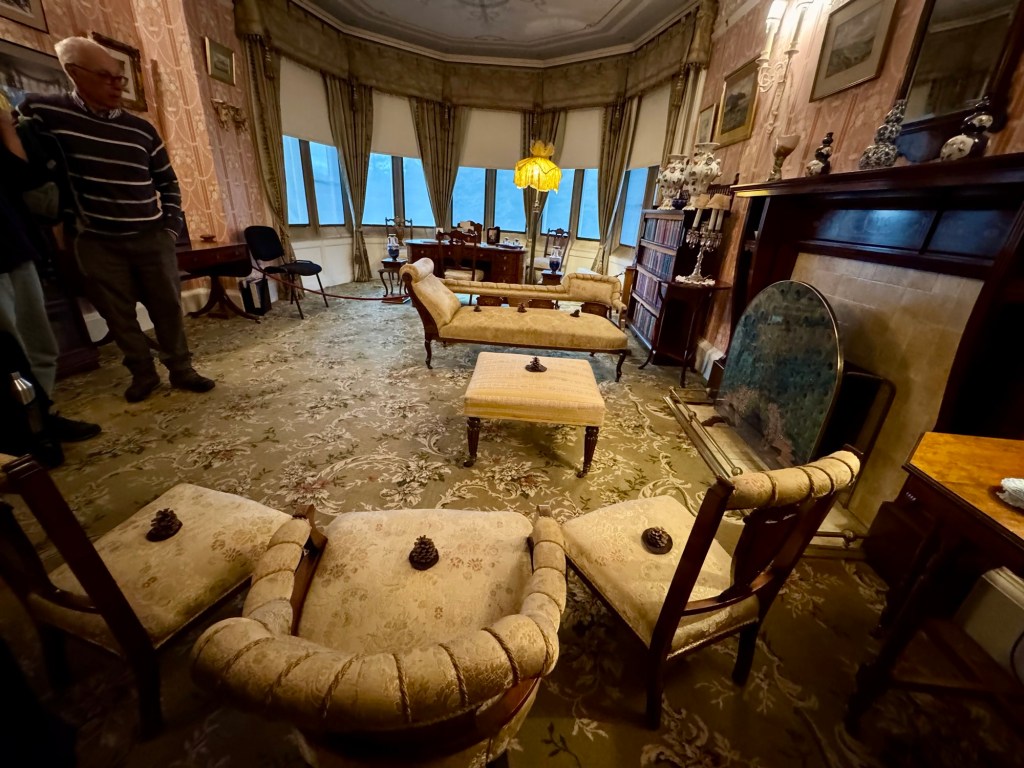
The castle was redone in the 1700/1800 century to make it more comfortable for “modern” living and has been updated little since then. Most of the rooms were displayed a they were probably in the late 18th early 19th centuries.

The library
Parlor ante room
The parlor

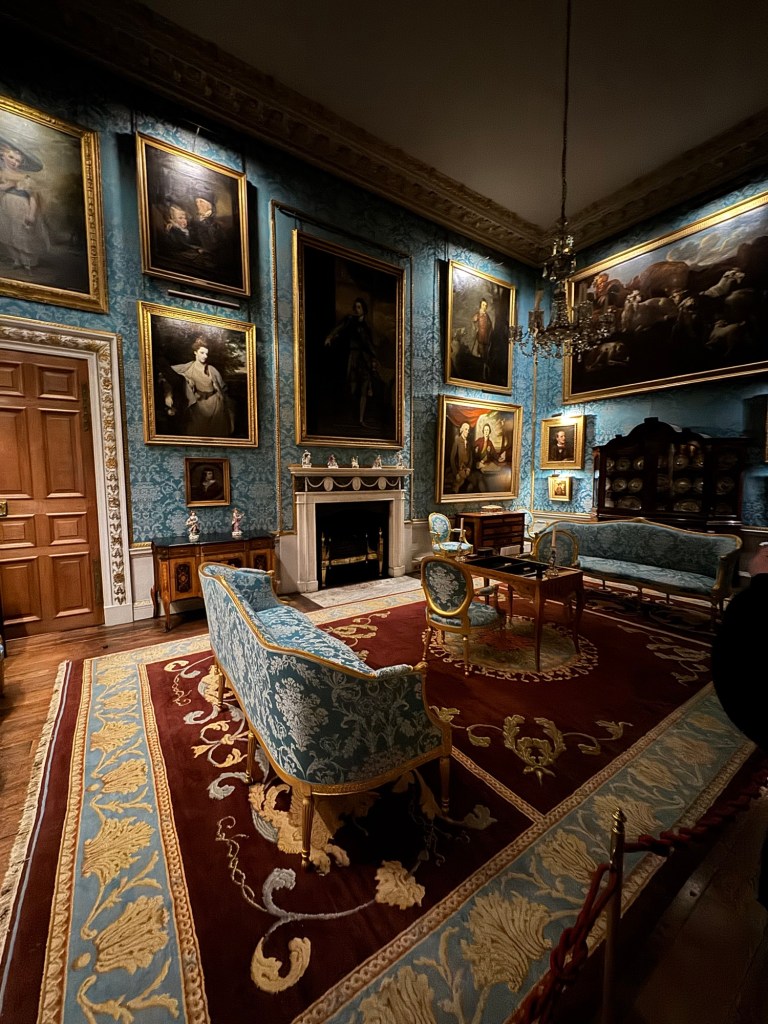
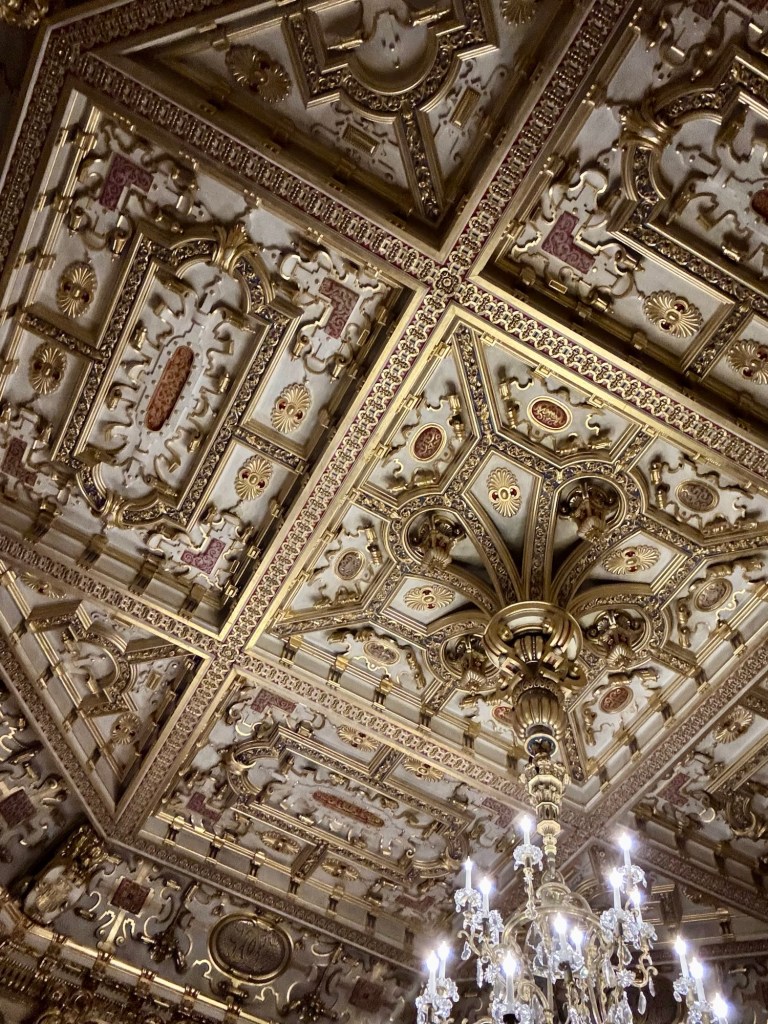
The parlor was done with silk damasks wall hangings and gold leaf on pretty much everything else. Unlike the current White House the opulence in this room was tastefully done.

The kitchen

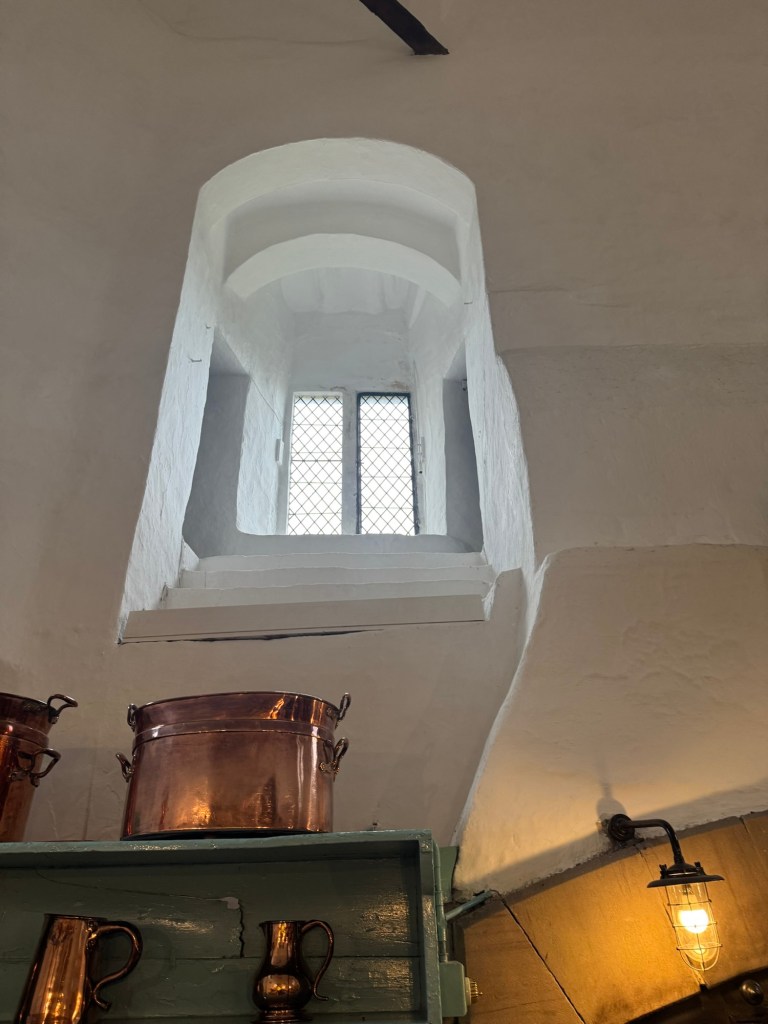
The tour kitchen (not the one used today) was in the same place as the original kitchen but was updated with actual appliances. The kitchen did show how wide the walls of the castle are. In fact they cut out a walkway in the walls so that the kitchen tower could be patrolled.

The castle wall

The dining room was laid out with dessert service with wine glass coolers. W

The chapel was original to the medieval castle. Very small but well set up.

Castle from the garden

After Raby castle we drove down to the village Staindrop for a stop at St Mary’s Church. It was the Neville family church.

St Mary’s
Ralph Neville and his two wives 1425
Henry Neville 1500

The locals also provided a nice tea and homemade scones and cakes. It was very nice.

We continued on our way back to the hotel for dinner on our own. We didn’t choose as well and it was disappointing but oh well last night was so good and tomorrow we eat at Castle Howard so that should be good.

A Touch of Aristocracy and the day I get behind

Just one stop on the tour today then back to York for free afternoon before a dinner tonight at Bedern Hall. So this is quite an unusual day on Alison’s tours. Usually it is go, go, go. But we still started early. So up and at breakfast by 7:15.

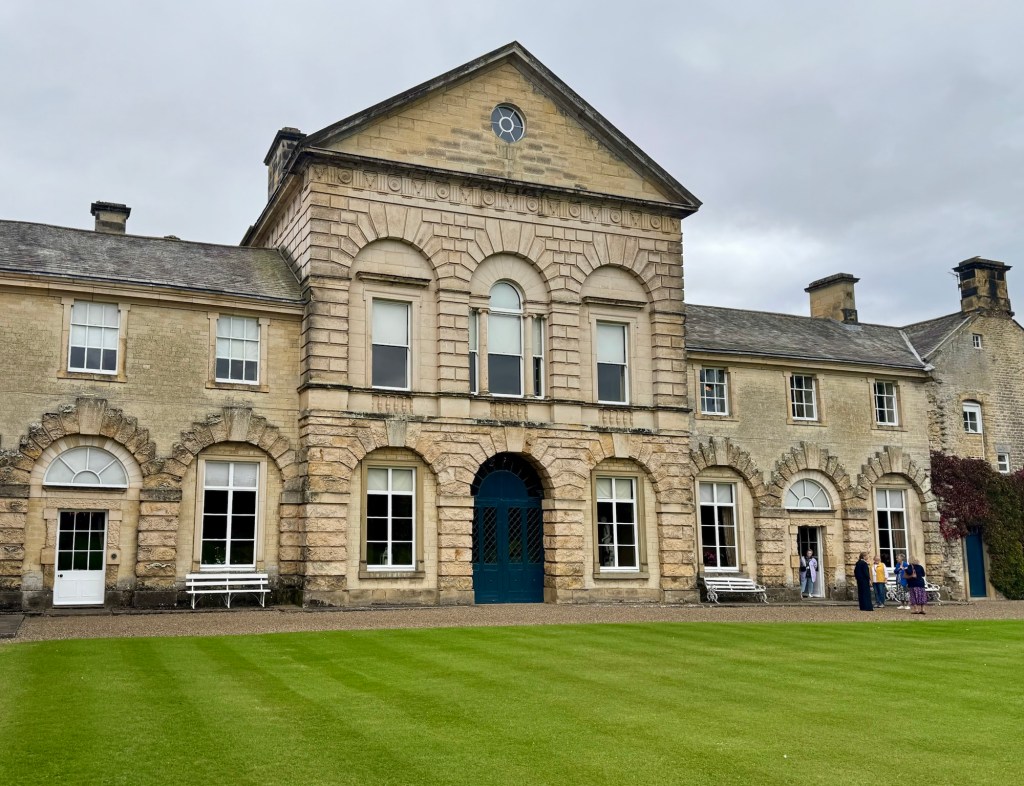
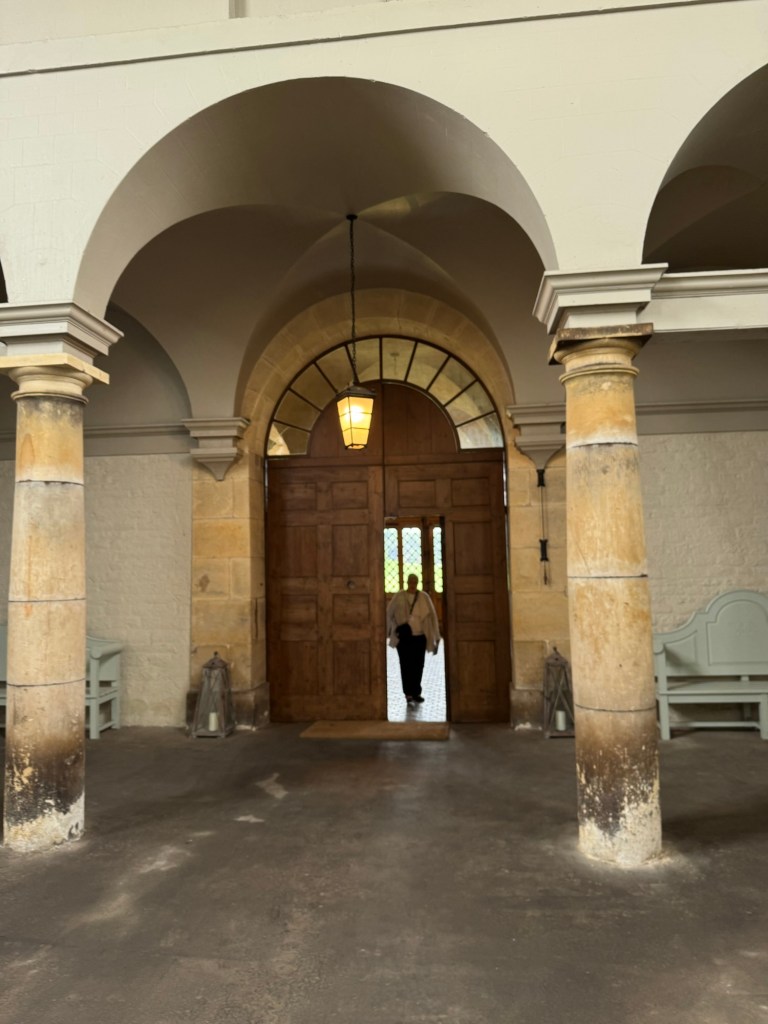
Our only stop was Hovingham Hall the home of the Worsely family. The current house was built in 1750-1774. Again it was designed by the owner after a study of architecture on his grand tour. Having taught riding (including to King George III) he built a riding school at the front of his house. Unlike most of these large manor houses Hovingham Hall is right in the middle of its little village. The owners the 6th Baronet and his Baroness were waiting at the door to welcome us to their home. They were a lovely couple who explained all about their ancestors and the house while we had tea and cooking in their parlor. A relatively bore part of the home that better connects the old manor house to the riding school. They said they had a lot of parties in the room including the family Christmas Eve dinner since the main dining room would already be laid out for Christmas brunch.

Hovingham Hall
The stables
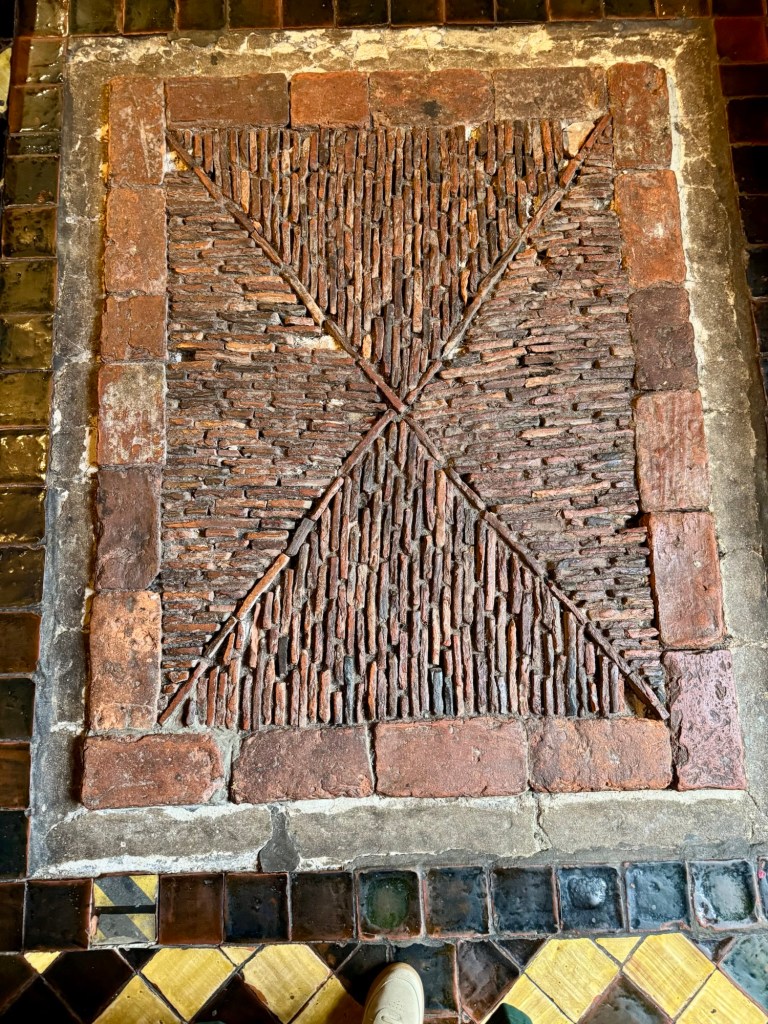
The wood tile floors in the carriage entrance from the riding stables

The house also has a private cricket pitch in the front lawn which they claim is the oldest private one in England. The local team host tournaments there each year. The riding school is closed but they discovered it has excellent acoustics so they now hold concerts there. I know you are thinking barn like staves but these are made to blend in with the manor home and are made of stone. The ground is weird. It is made of tiles made out of wood. So it looks like the cut up a wood post and laid it on the ground. Made it easy for the carriages to pull through and drop off the guests.

The house had a statute collection including some Roman antiquities. They own the statute of Samson slaying the Philistines but they have loaned it out to the V&A. It is crazy the amount of art these homes have especially when they are ones that are still generally used as residence.

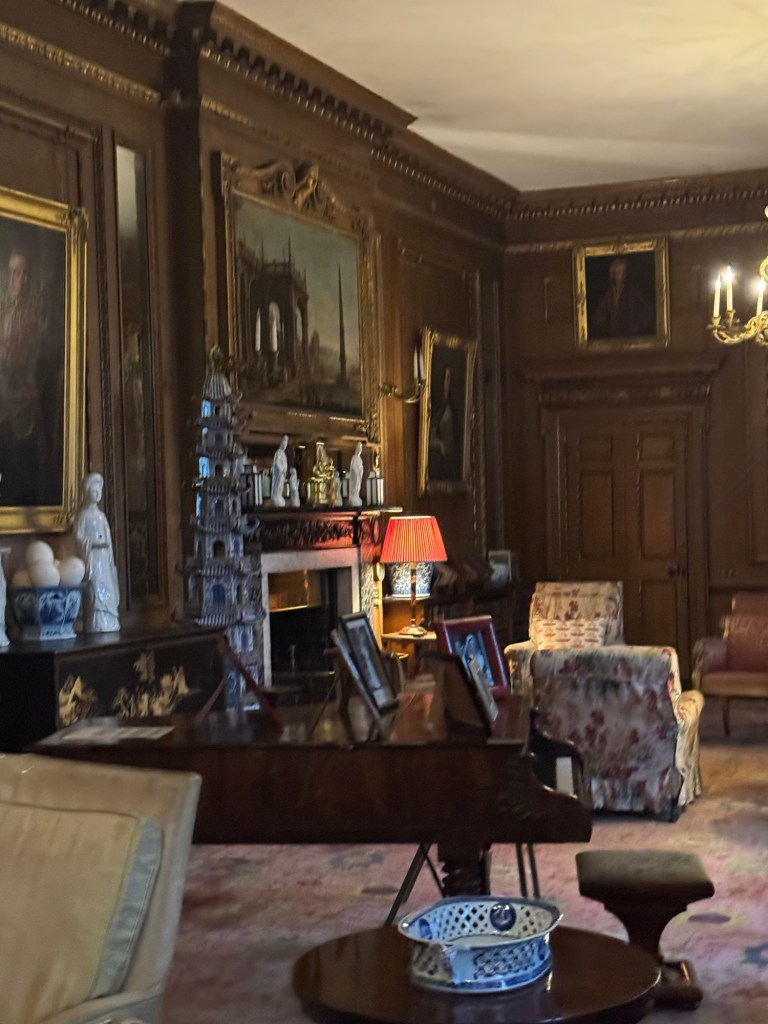
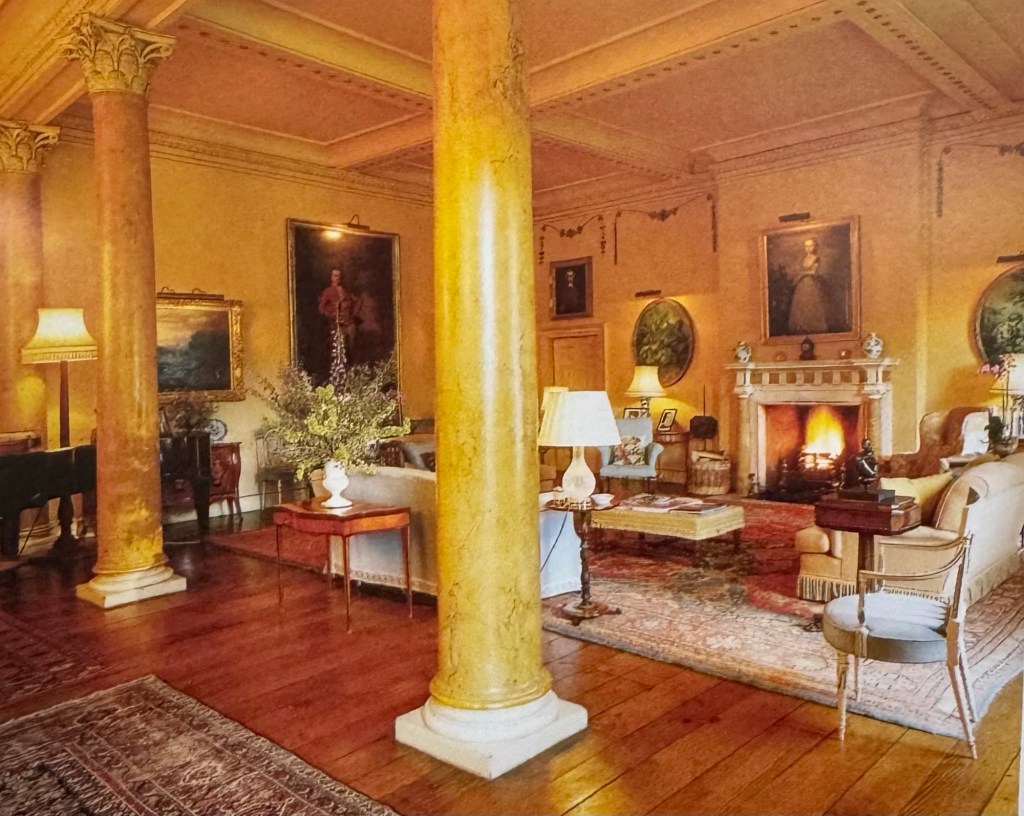
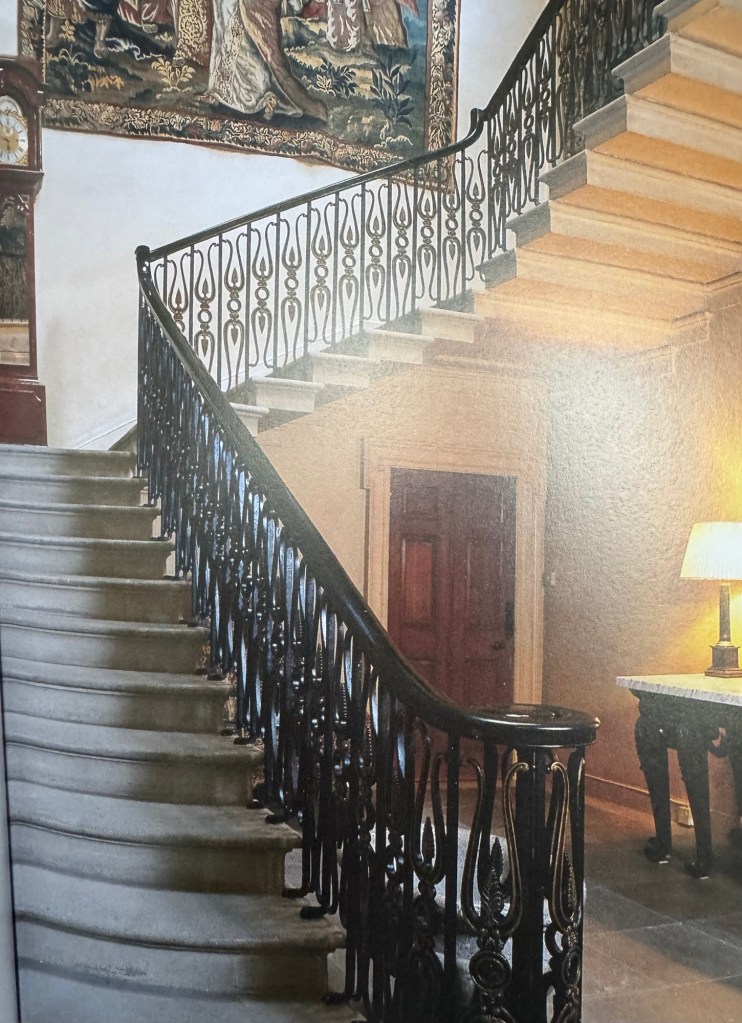
We took a tour of the house which had both family rooms where it was clear people live there and large rooms decorated in an older statue for show. we couldn’t take photos but I took some from the guide book so I could have them with the post.

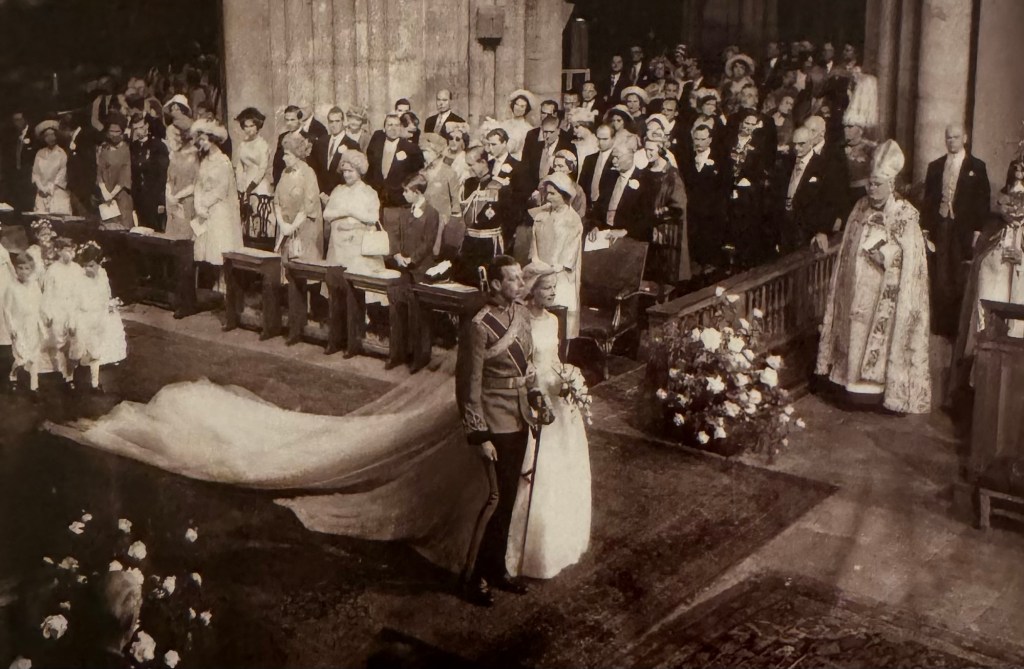
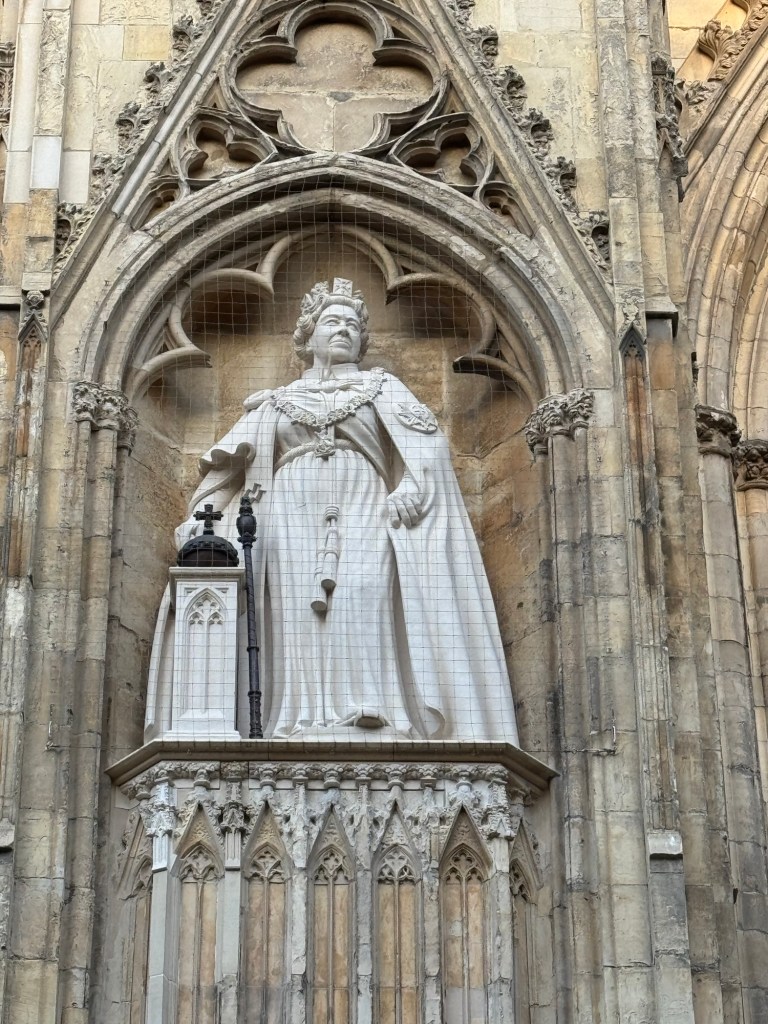
The Duchess of Kent who recently passed was a Worsely. So they had a tribute to her in the ballroom. With lots of photos from her wedding which she held at York Minster with the reception at her home and then other photos of her throughout her life. Her funeral was just a couple of days before we visited so it was nice of them to let us come.

Duchess of Kent
Wedding photo with queen and young Charles in the front row

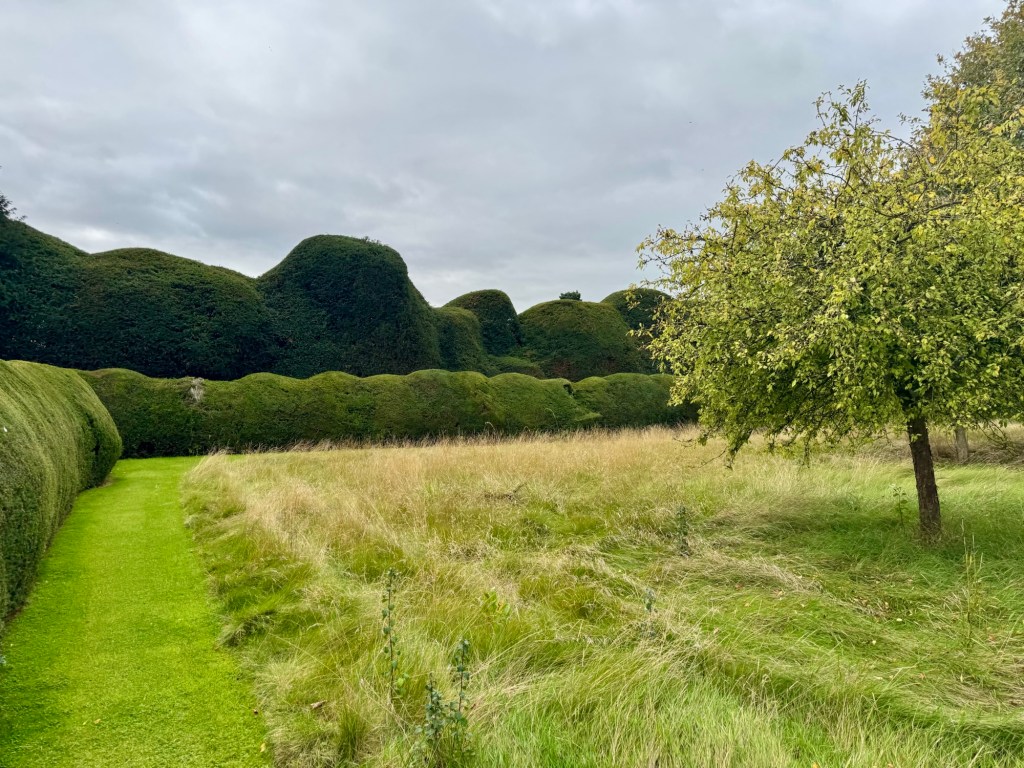
After the tour we did a quick walk through the garden. They had huge yew hedges that separated out portions of the garden. We didn’t have much time so we missed the canals that they had dug to give it a palladium design. Oddly enough when they dug out the canals they discovered Roman ruins. The site was once the home of a Roman villa. When we were walking through the gardens close to the house the Baroness waved to us from her sitting room before coming back out to say goodbye.

We got back to York and wondered around for a while. They were having a food festival in one of the parks so we wandered through and grabbed a quick bite to eat before heading out to tour Barley Hall which we originally saw in our ghost tour. There wasn’t much too it and we went through it relatively quickly. It is funny that we are used to seeing everything in ruins so when we see something that has been fixed up to look like it would have during the medieval period it looks garish and fake. more like Disney land or a cheap renaissance fair. You don’t get the same effect if they recreate a Victorian or Edwardian room but you just can’t do it with medieval. Anyway barley hall was all done up to look like it did originally. It was a the home of the prior of St Oswald in 1360 until 1540. Sometime later it was chopped into separate dwellings and just recently discovered its medieval heritage and set up for a family friendly activity. It did have a cool floor fire pit that was found in the middle of what was the great hall/ dining room.

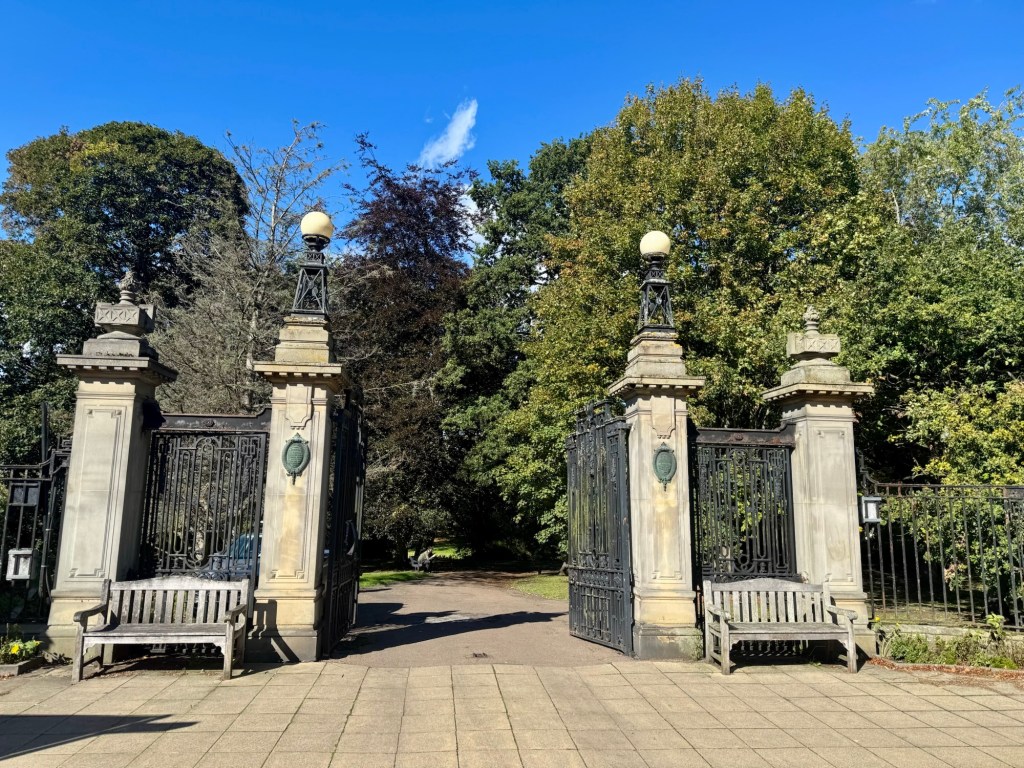
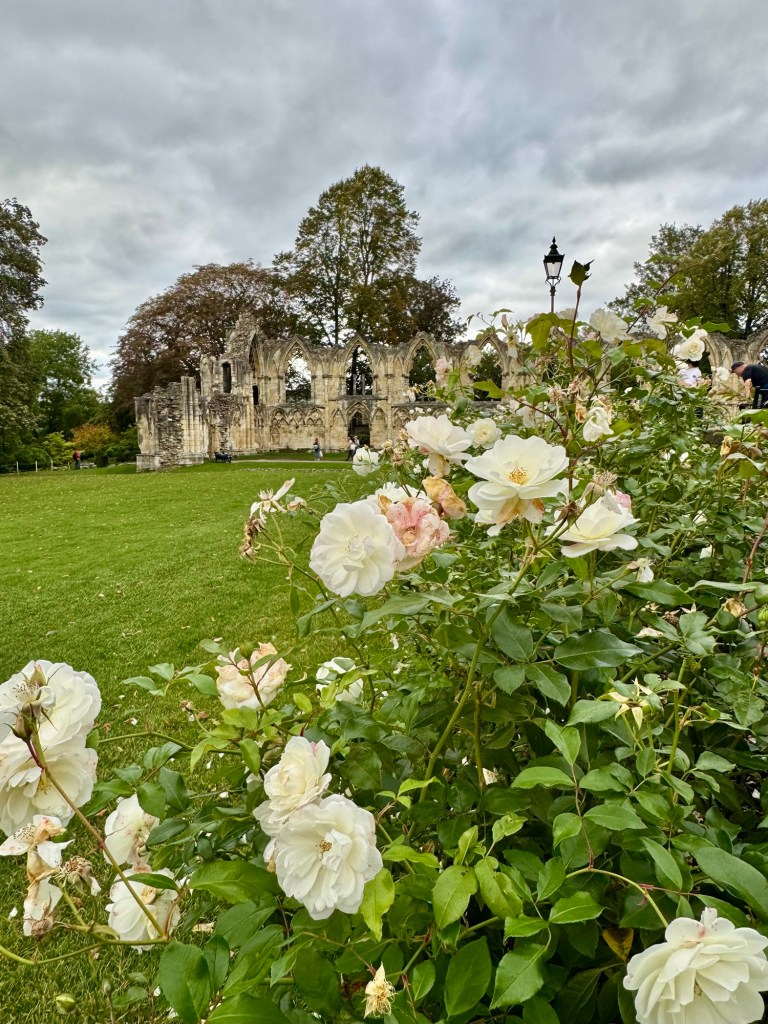
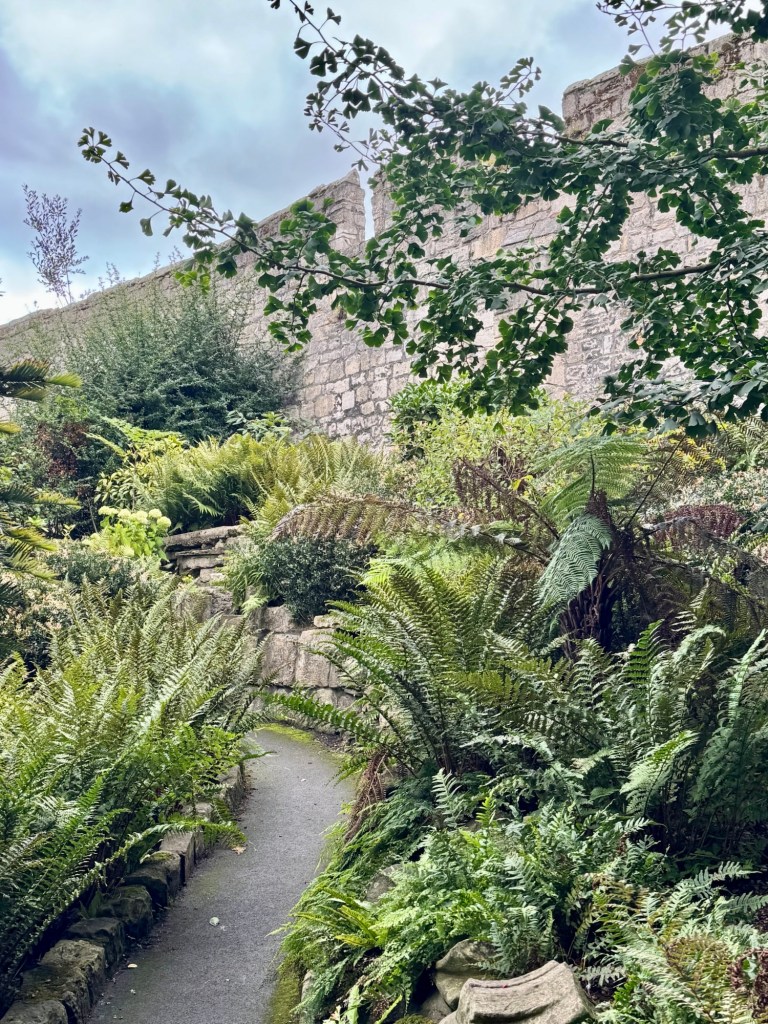
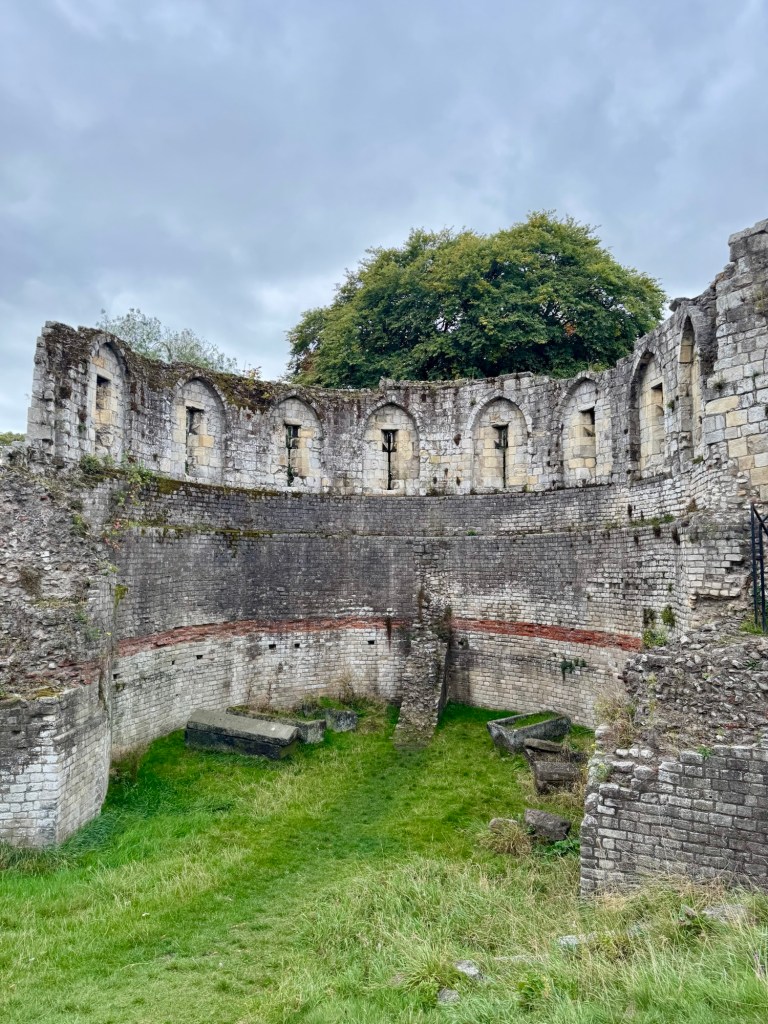
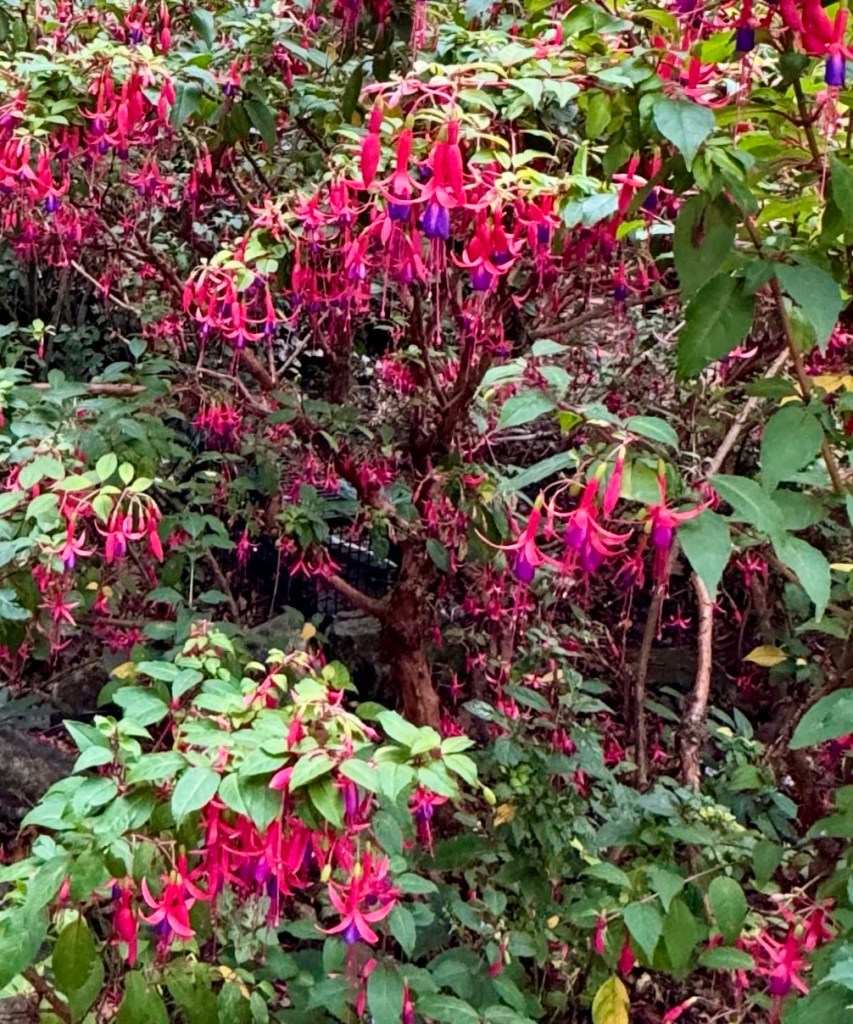
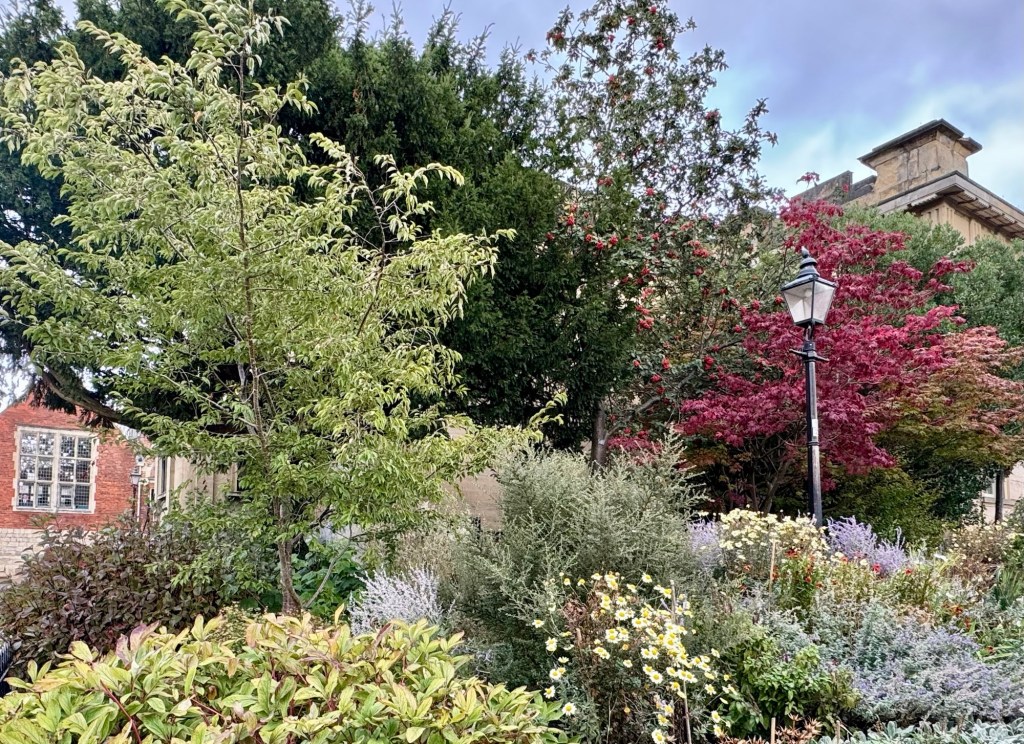
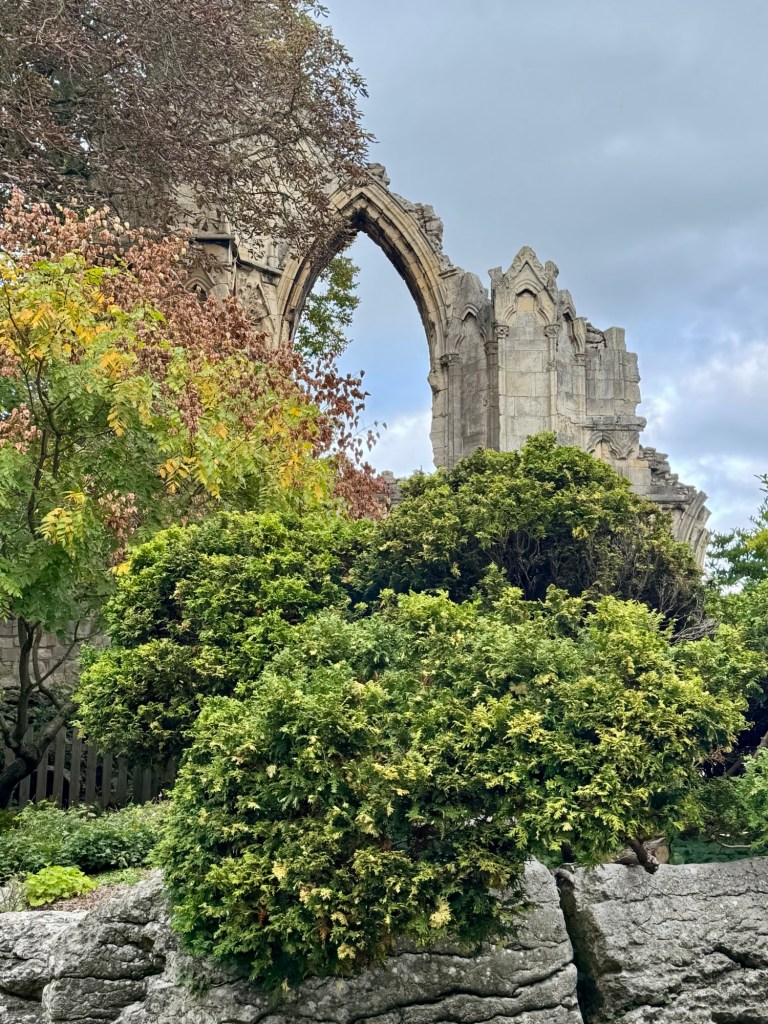
After that we shopped a bit more through York and then wandered through the museum gardens with the ruins for St Mary’s Abbey. It was crazy lush and beautiful. Who knew ferns could grow in England.

After the garden we headed back to the hotel to dress for dinner.

Dinner was at Bedern Hall which was just basically a great hall for the vicars choral of York Minister in 1270 until 1574. It was used for a school until the 1700s and today is a wedding and conference venue. The food was incredible. I had a cheese soufflé to start then lamb and potatoes followed by a chocolate torte. And if that wasn’t enough with tea and coffee they brought out chocolate truffle candies that just melted in your mouth and then cheese and homemade cheese crackers. I thought I was stuffed but the crackers were delicious. I wish I had taken all the left over crackers to enjoy later like while I am typing this up.

I sat by Sarah Gristwood and the dinner conversation was flowing and fun. It was a great night. more adventures tomorrow.

On the bus we go

Today started the bus portion of the tour. We got up to have breakfast early so we could get our choice seats on the bus way in the back. Riding the bus isn’t bad. They generally give talks on the bus about where we are going, what we will see and any historical connection to the location. If that doesn’t take enough time they also talk about their latest research or their favorite topics. We had three stops today so we were moving quickly.

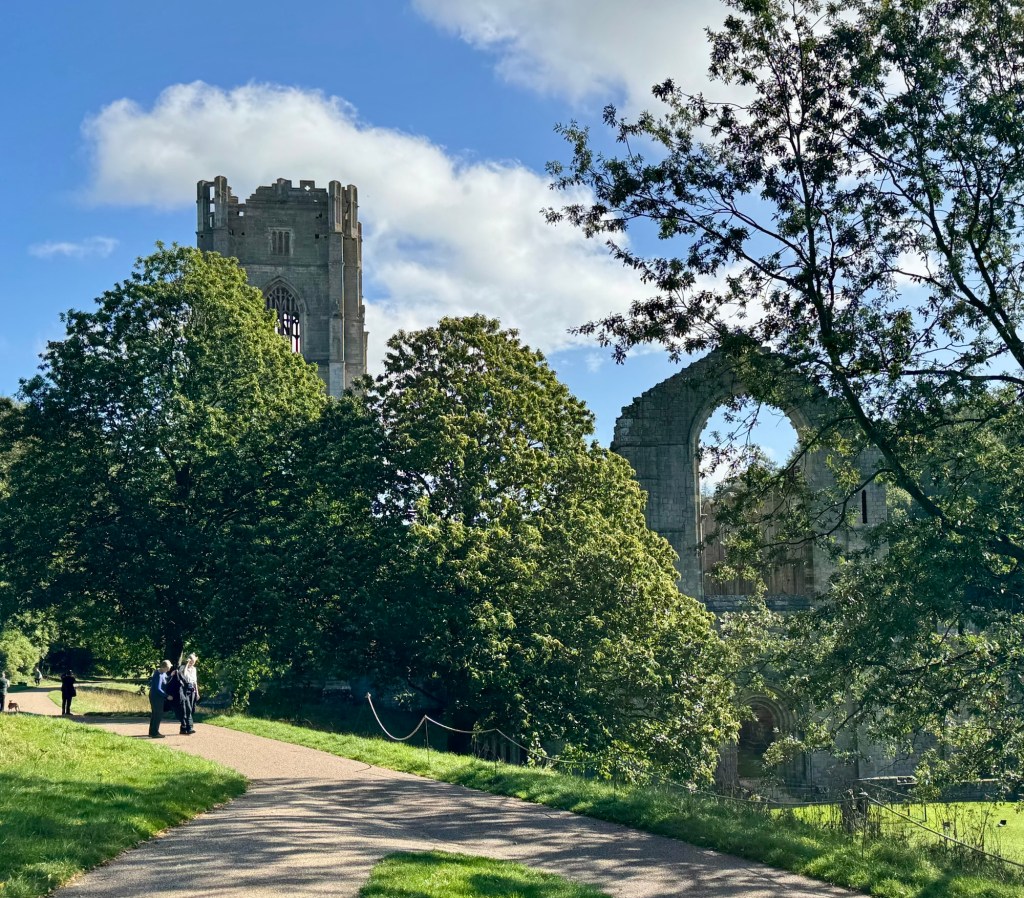
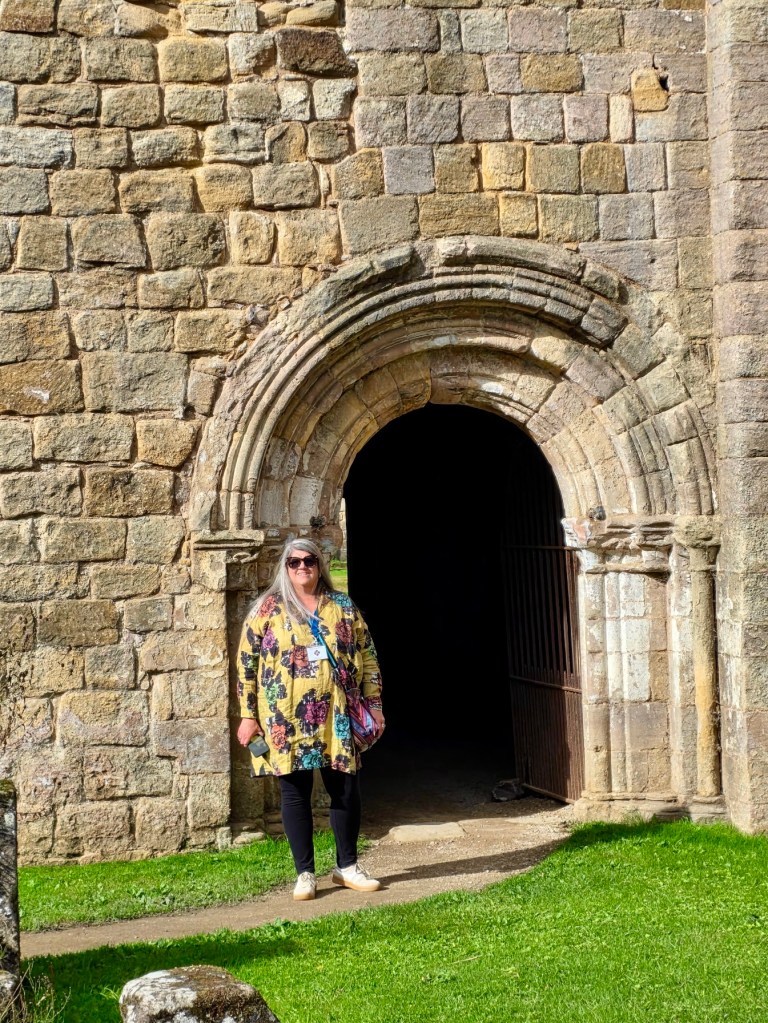
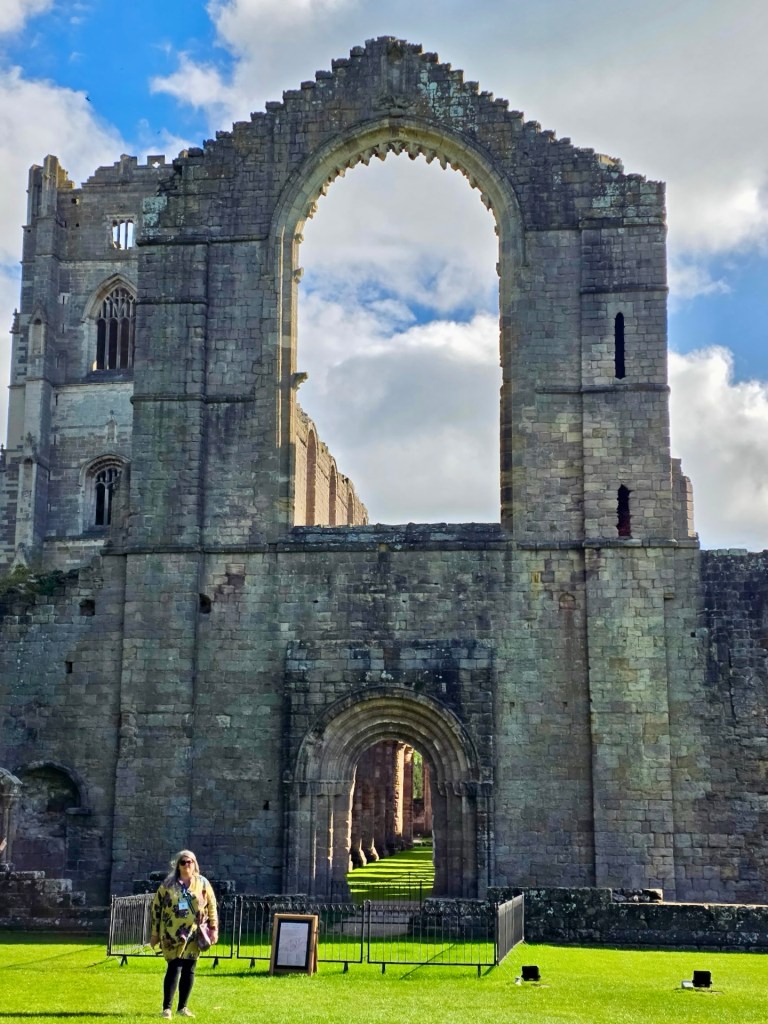
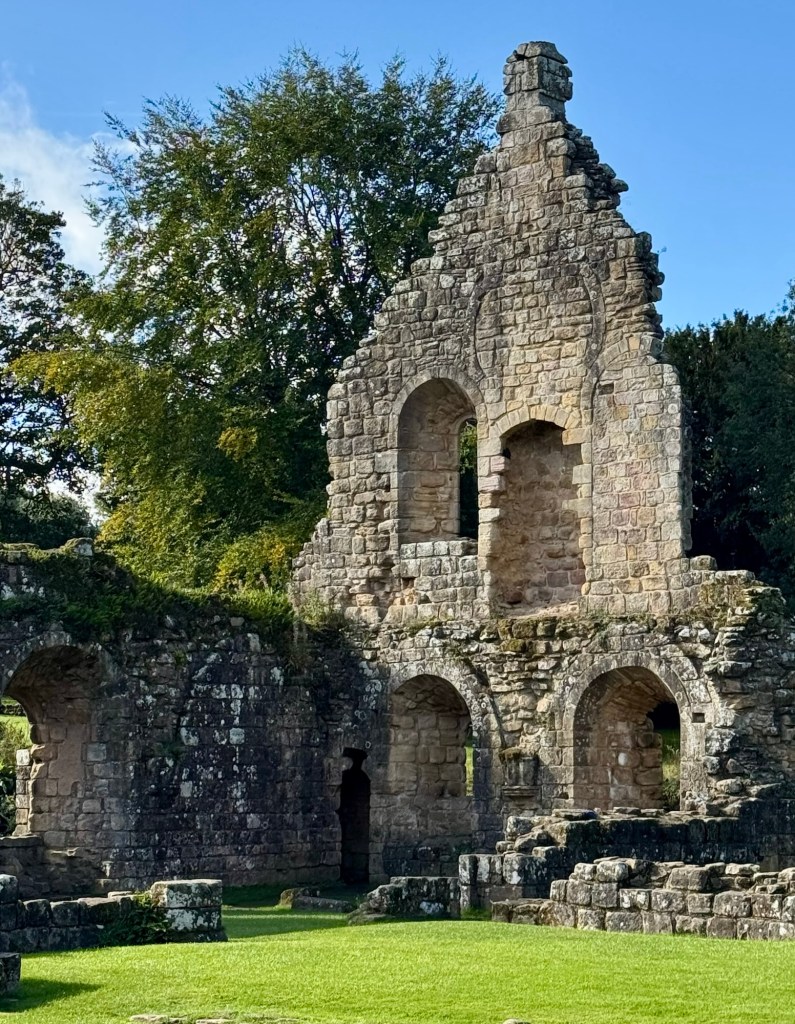
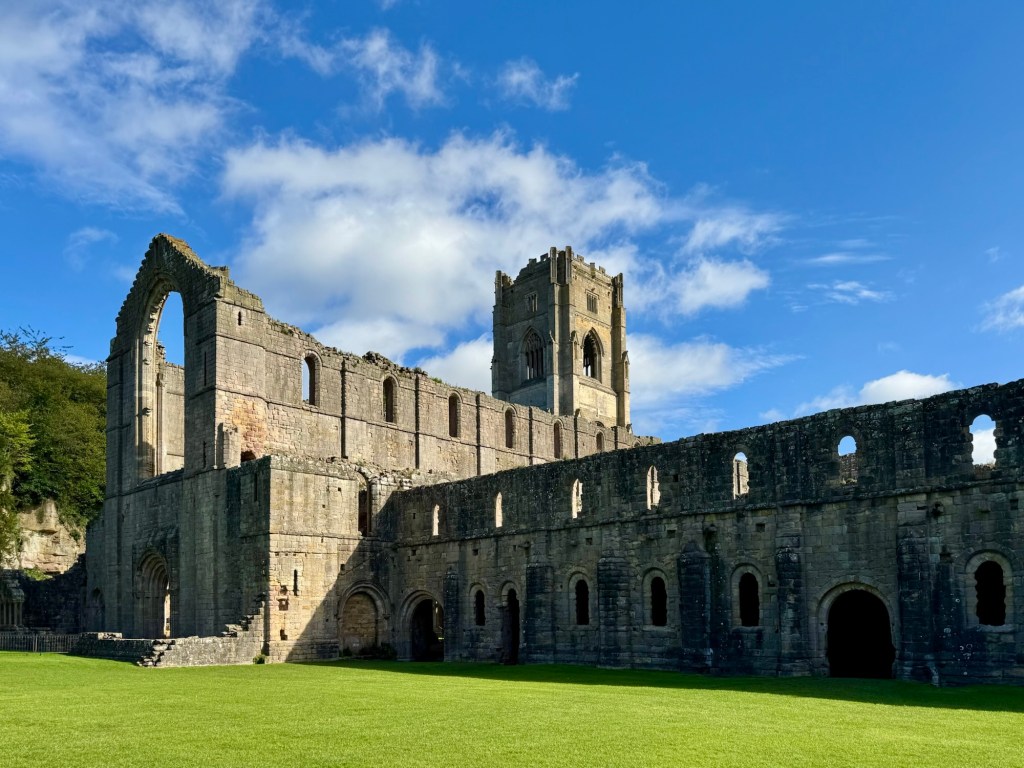
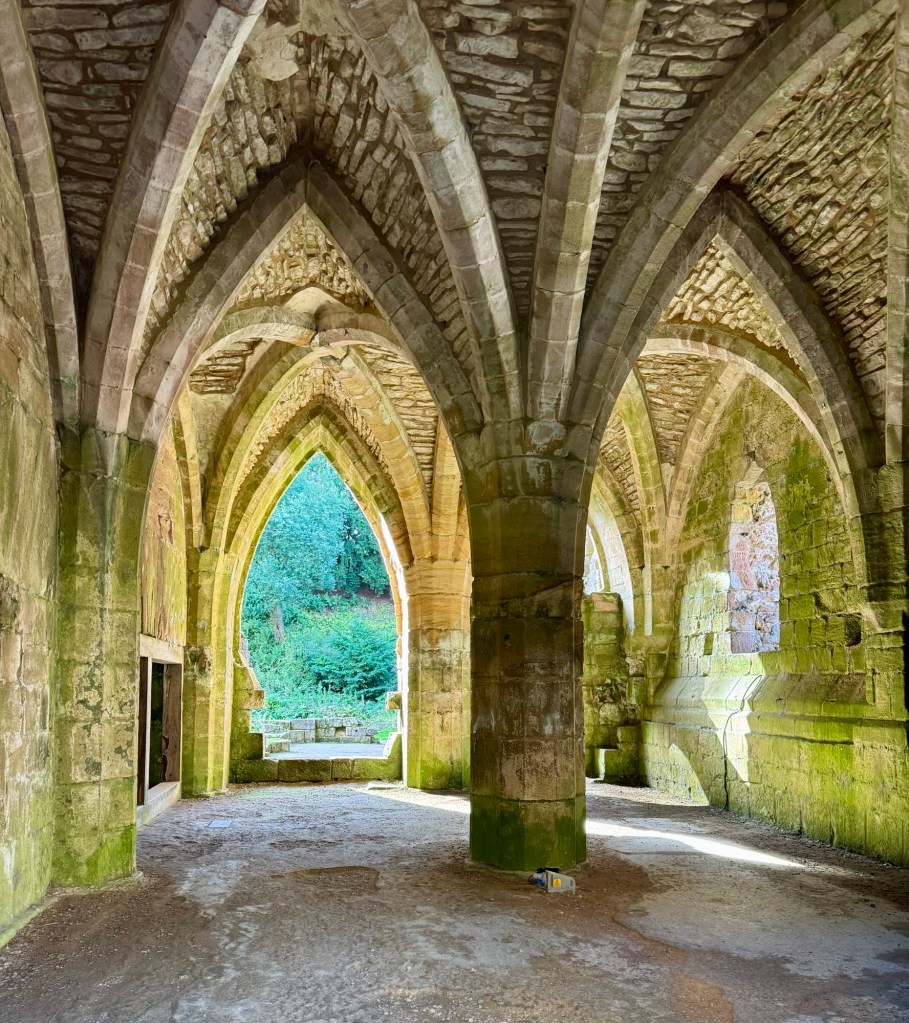
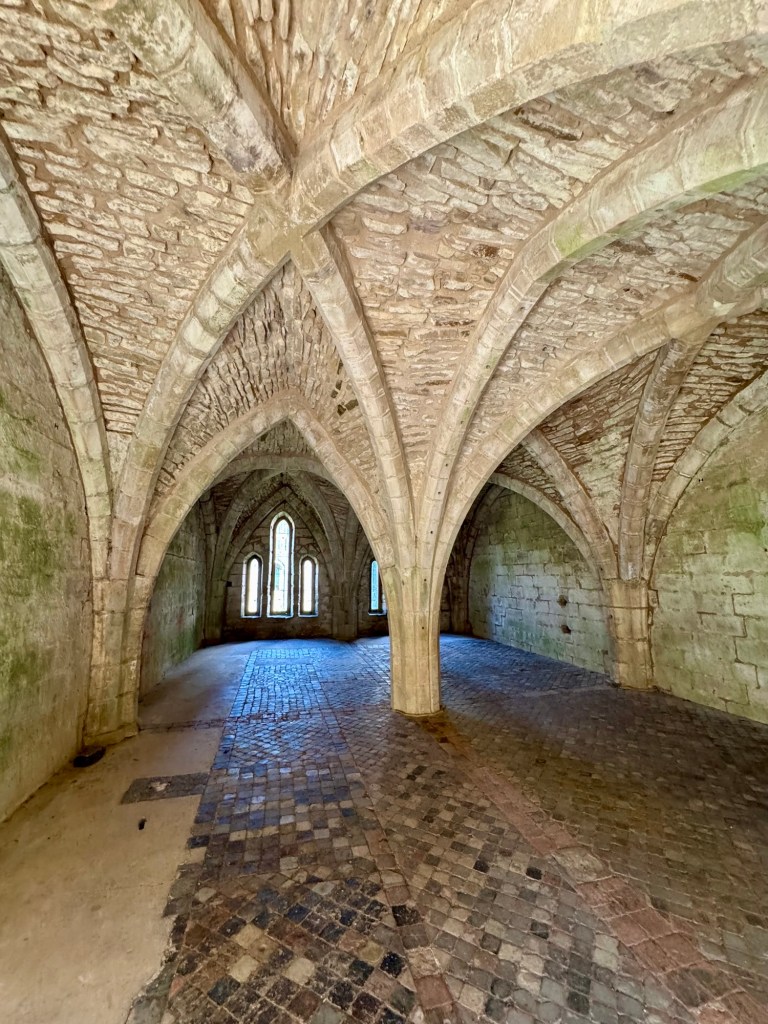
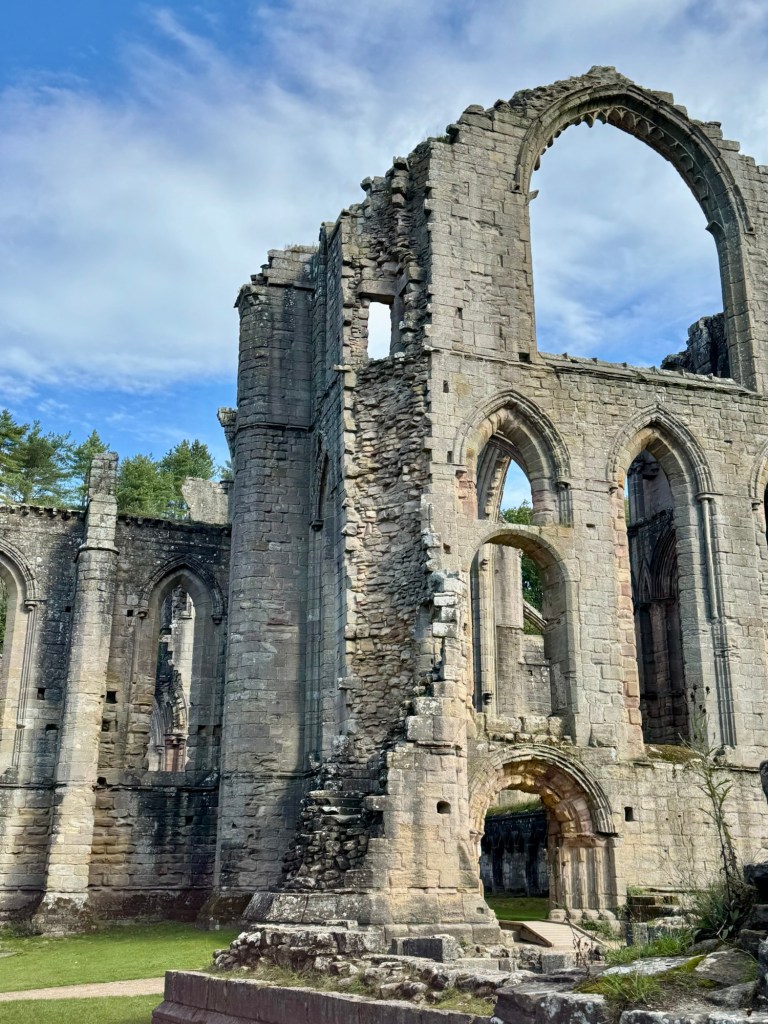
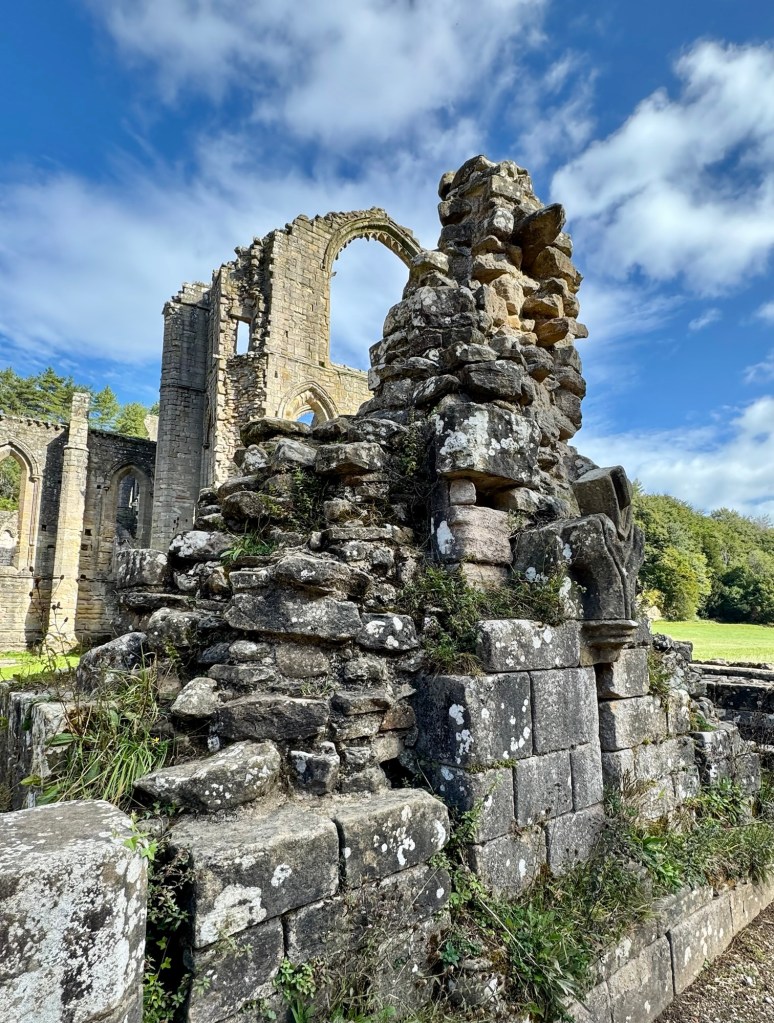
First stop was Fountains Abbey. Another monastic ruin but this one has qualified as a world heritage site and is the largest monastic ruins in England. It started as a set of Benedict monks who left the more partying order in York to establish a more serene order in 1132. Eventually they are admitted to the austere Cistercian order. They took vows of silence but turns out that they used forms of sign language to talk to each other so although not speaking they still did communicate. Of course again the order was dissolved by Henry VIII and fell into disrepair. Almost 500 years later the site makes for some very romantic ruins. The sun came out to make a fabulous morning for photos.

Fountains Abbey

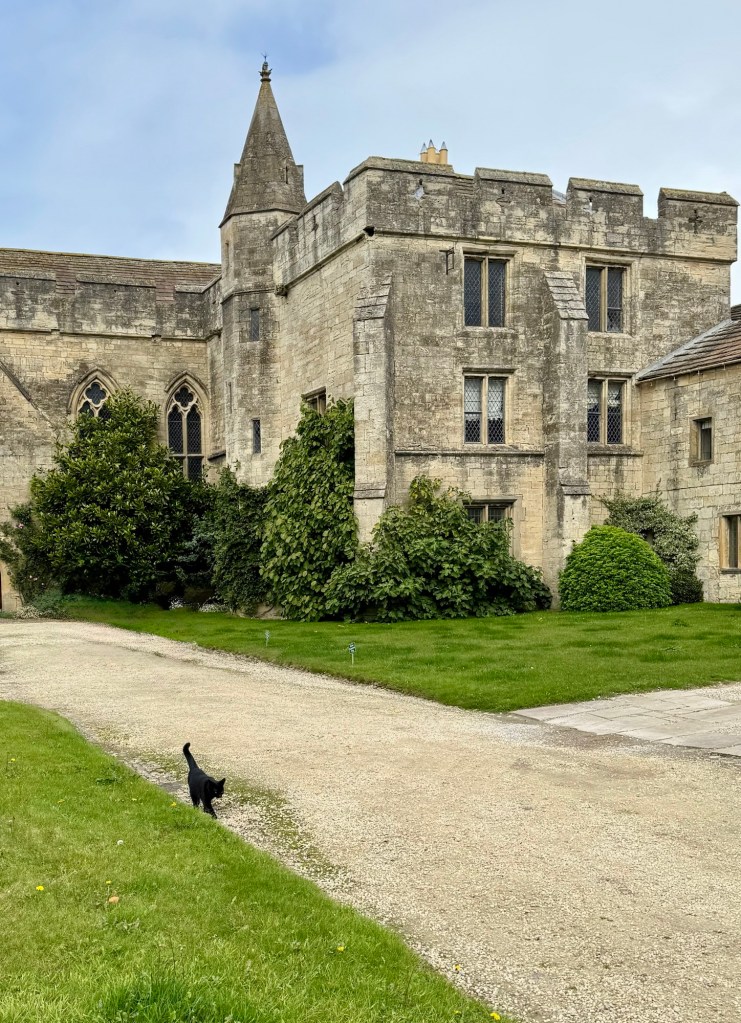
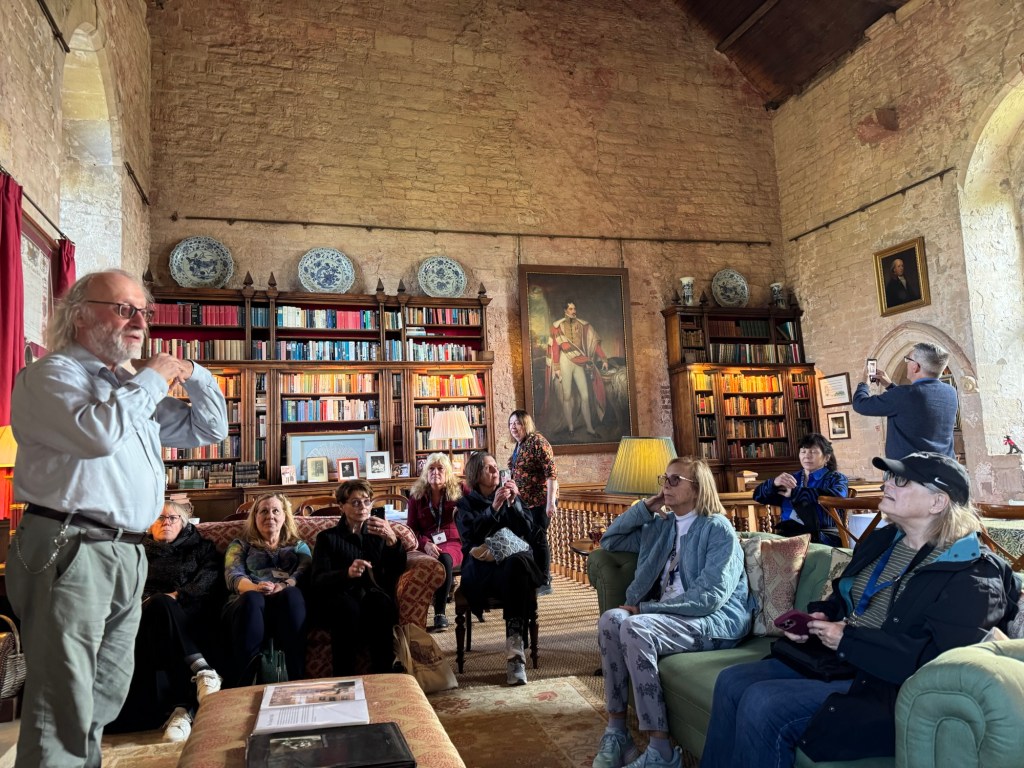
After the Abbey we headed to Markenfield Hall. A manor house first built in 1230 and crenalated 1310. It has not changed much over the years. It was once the home of sir Thomas Markenfield a friend of Richard III and who fought for Richard at Bosworth field. Surprisingly he did not lose his house for that one but forgiven as he was “serving his lord”. However later family members were on the wrong side of the religious rebellion trying to return England to Catholicism during Elizabeth’s time. The barely escaped the Rebellion of the North, lived in exile for years before being captured. They were not as lucky as Sir Thomas.

Markenfield Hall

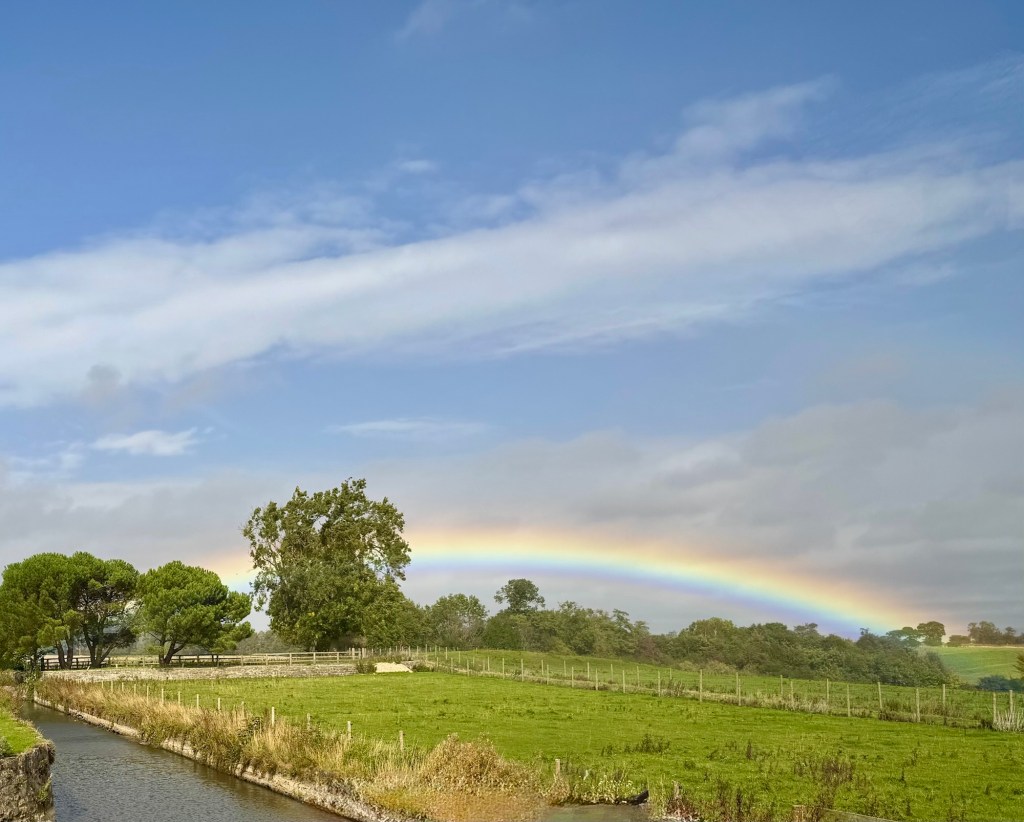
Rainbow on the field beside Markenfield

The house was given to an absentee lord who rented it out as a tenant farm and it stayed that way for years. That is the reason it survived basically unchanged for years. It was bought in 1761 by Fletcher Norton due to some distant family connection and he became the 1st

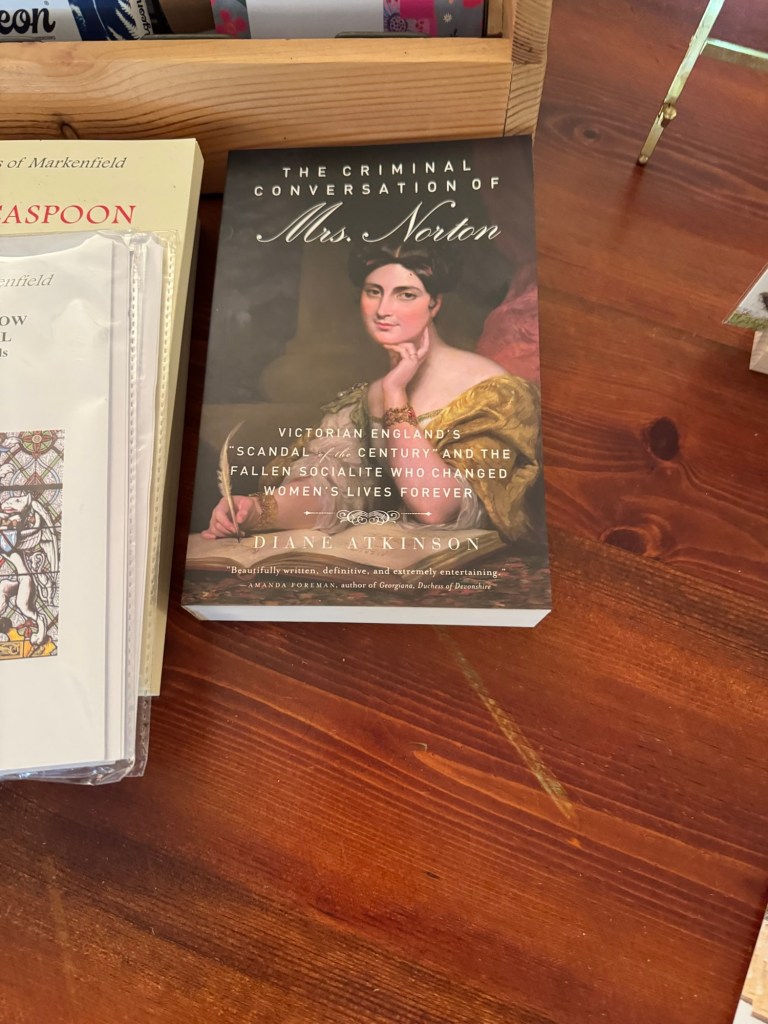
Baron Grantly. The house passed through the Nortons none of which appear to be upstanding gentlemen but the wives seemed to have made their mark. An early Lady Grantly fought for women’s right well before the suffragettes, winning rights for mothers of their infant children. Her husband had refused her access to the children and her home and even though too late for herself she worked to get the laws changed for other mothers.

A new book for my to be read list

The current Lady Grantly lives in the manor house today and is the one that encouraged her husband to restore the house.

We had a lovely afternoon tea provided by the Hall before traveling on the Sion Hall where we were met with Pims cups or lemonade before touring the house and gardens.

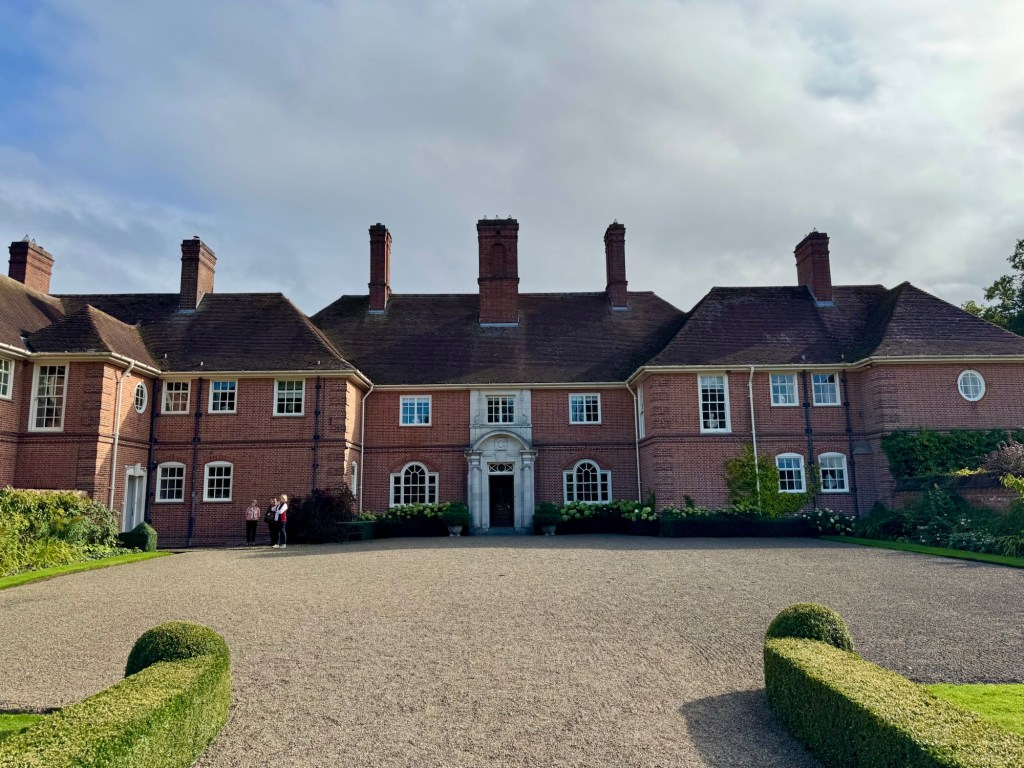
Sion Hill Hall
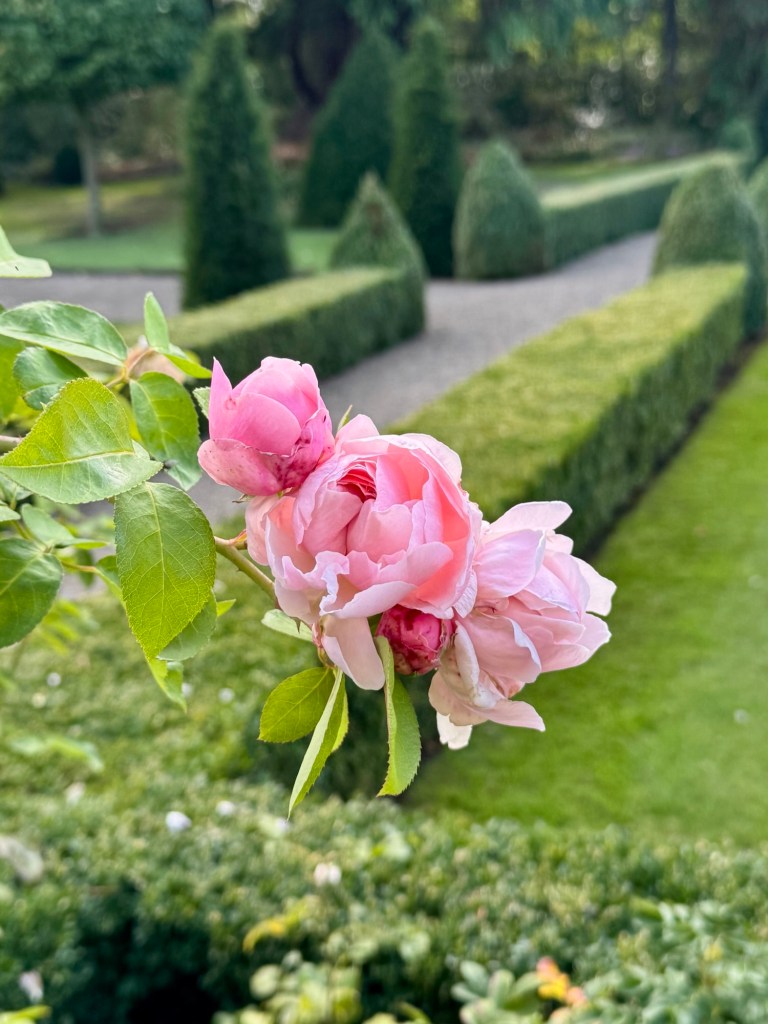
From the gardens in the back

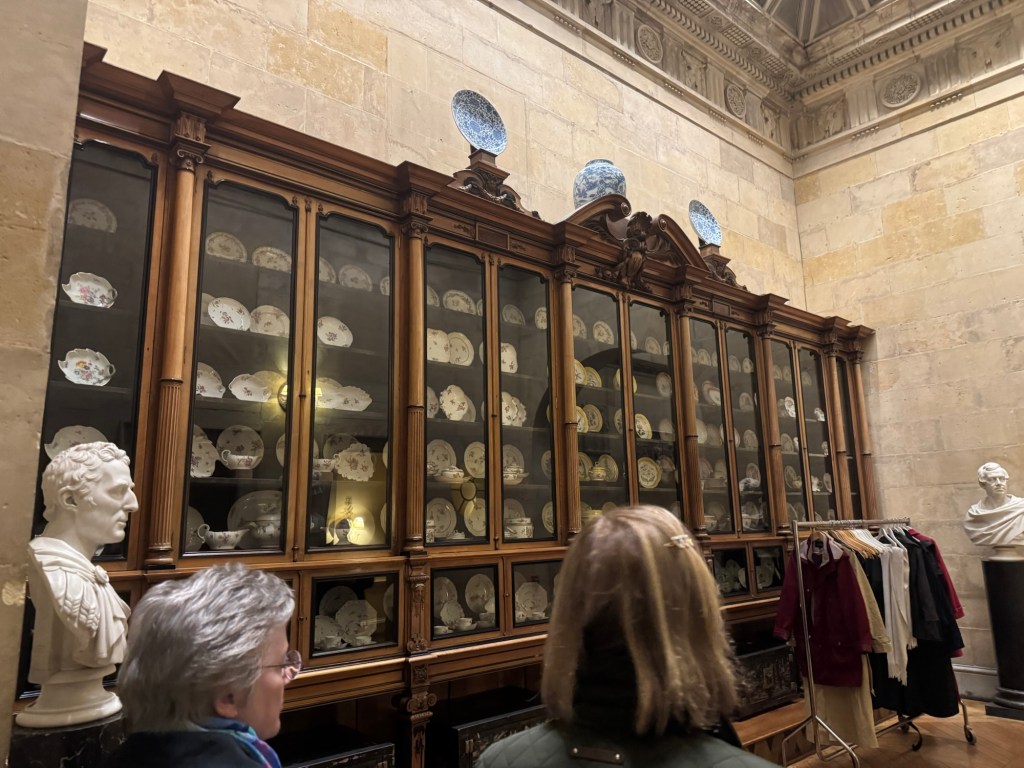
This has been one of my favorite stops of all the places we have visited with Alison. Like Layer Marney way back from the first trip the current tenant of the house gave the tour. This was more a Georgian style and decorated house with formal gardens in the back. It was built in 1912 when it was determined that the current house needed to come down and they needed to start over. The current tenant moved into the hall in 1999 and has been collecting treasures to fill it ever since. He could ramble on about any piece in the house and there were loads of items. We were just walking around priceless pieces of early Sevres and Meissen porcelain. He talked about finding things at auctions and being outbid only to then have to find them again. One piece in the dining room came from a church “down the way” when the abbot decided to sell off all the furnishings. No one bought the piece so the hall owner at that time was able to get it for pennies. He said they have asked for it back and have tried to argue that the abbot did not have authority to sell it but since he used the money for philanthropic activities (bringing Jews into England in the late 1930s) our guide felt sure he had the better position.

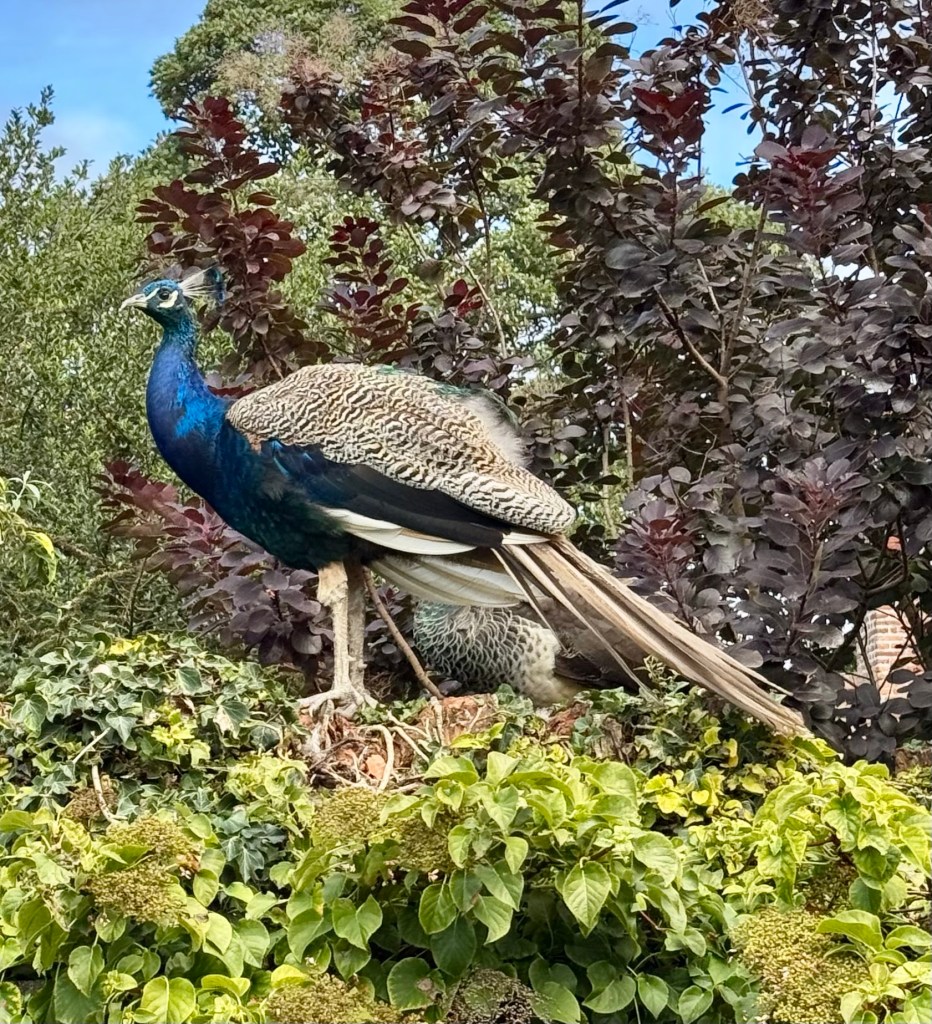
The gardens were formal with pathways and cut shrubs but there were some flowers and peacocks to liven it up.

Mama and baby peacocks

On the return trip to the hotel Elizabeth Norton a guest historian on the tour talked about her research of Jane Seymour. Turns out she wasn’t just the sweet innocent good catholic that she is often portrayed as. Her book will be out next year and I am looking forward to reading it. Alison also talked about some new research on how Jane died which will be included in her new updated version of the six wives of Henry VIII.

Micheal talked about Richard of York and his relationship with his son Richard III. He also talked about his involvement with Philipa Langley in how Richard IIIs remains were treated after their discovery. I do hope to get a chance to talk to him more about that and her. He helped her write a book on the search for the body which I need to read.

We made it back to the hotel and had dinner on our own. Val and I walked to a pub by the Minster. Nothing spectacular but pretty good. I finished off the night with a local gin and am off to bed so that I can get an early start in the morning.

The Official Tour Begins

Today we join up with Alison and her band of merry historians for the start of the Northumbria tour. This means moving out of our current hotel and heading 500 feet down the road to the hotel we are staying at in the tour. I know this doesn’t make much sense but the Milner was quite a bit cheaper for a still lovely hotel and I didn’t want to get the cheap room for my pre stay at the Grand and not get upgraded when the tour started. So two trips pushing our luggage down the street while raining no less was how we started the day. Actually we started the day cramming our stuff back into the suitcase but everything fit well enough for the short distance it had to travel.

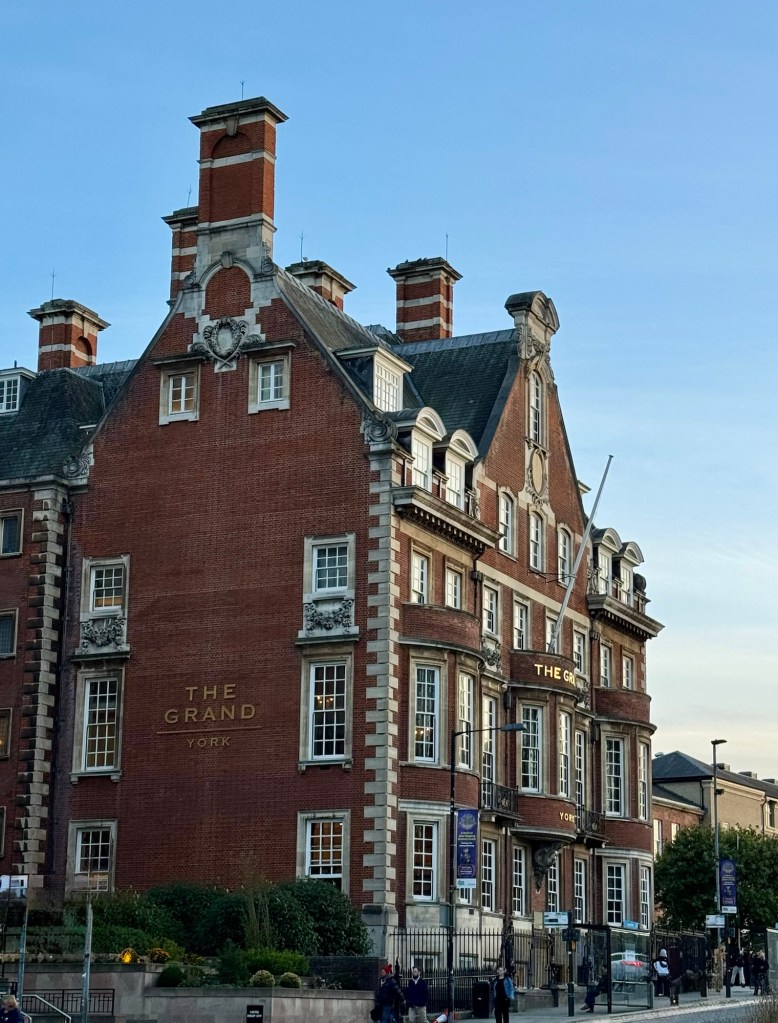
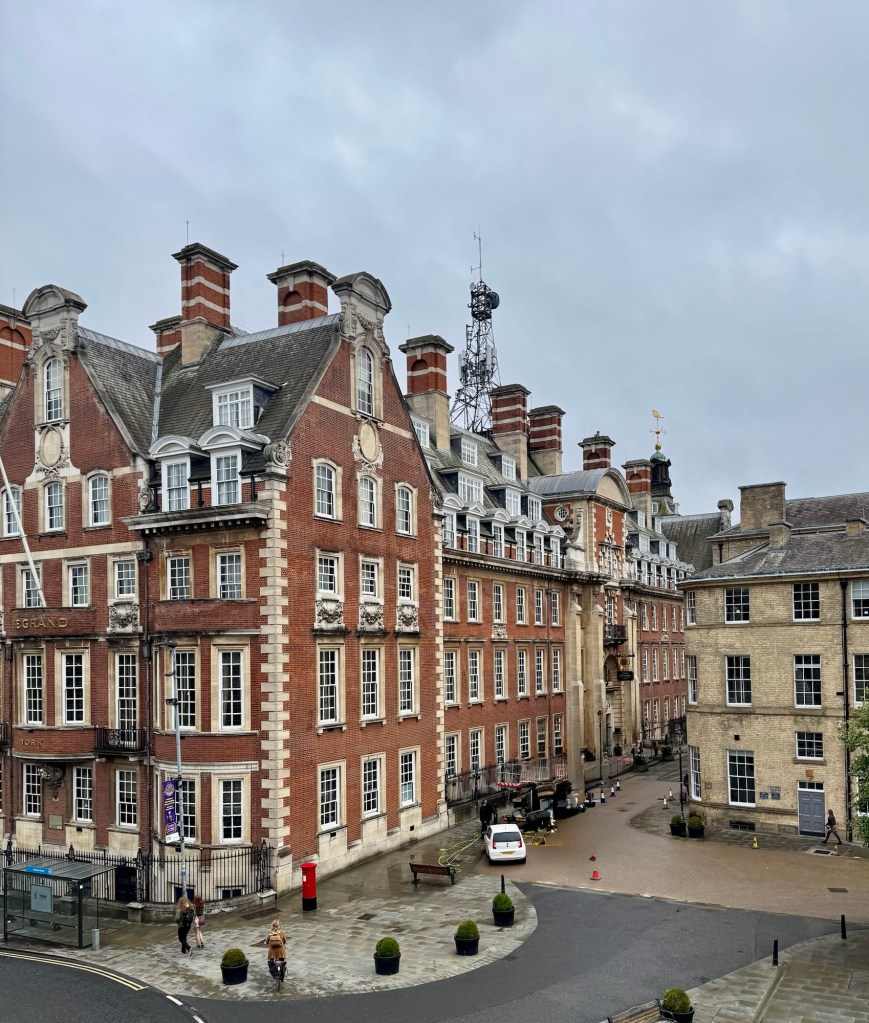
The Grand Hotel York

Once at the Grand we checked in with the tour and were greeted by Alison, Nicola, Julian and Michael the main historians in the tour. Sarah and Tracy are joining later. Elizabeth Norton is also along for a bit of this tour so excited about meeting someone new and a whole new set of books to look.

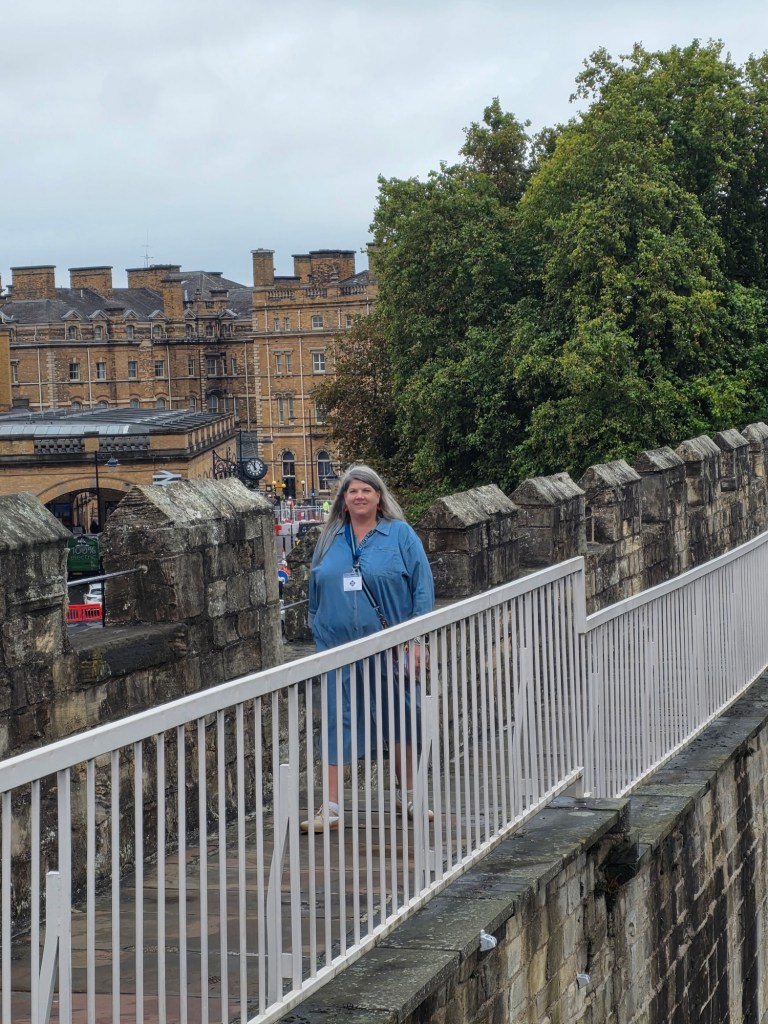
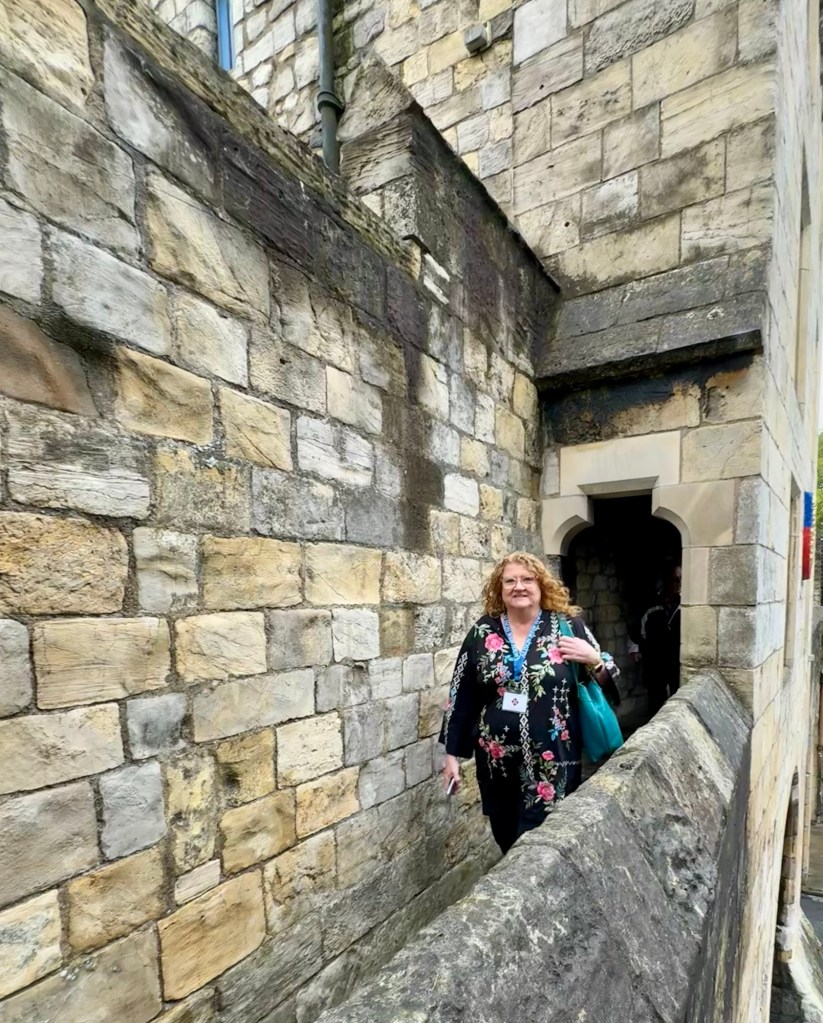
We talk to some other returning guests we have met on other tours then headed out for a walk before lunch. It had at least stopped raining so we walked along the battlement walls for a bit before returning to the hotel for a light lunch.

Part of the wall walk

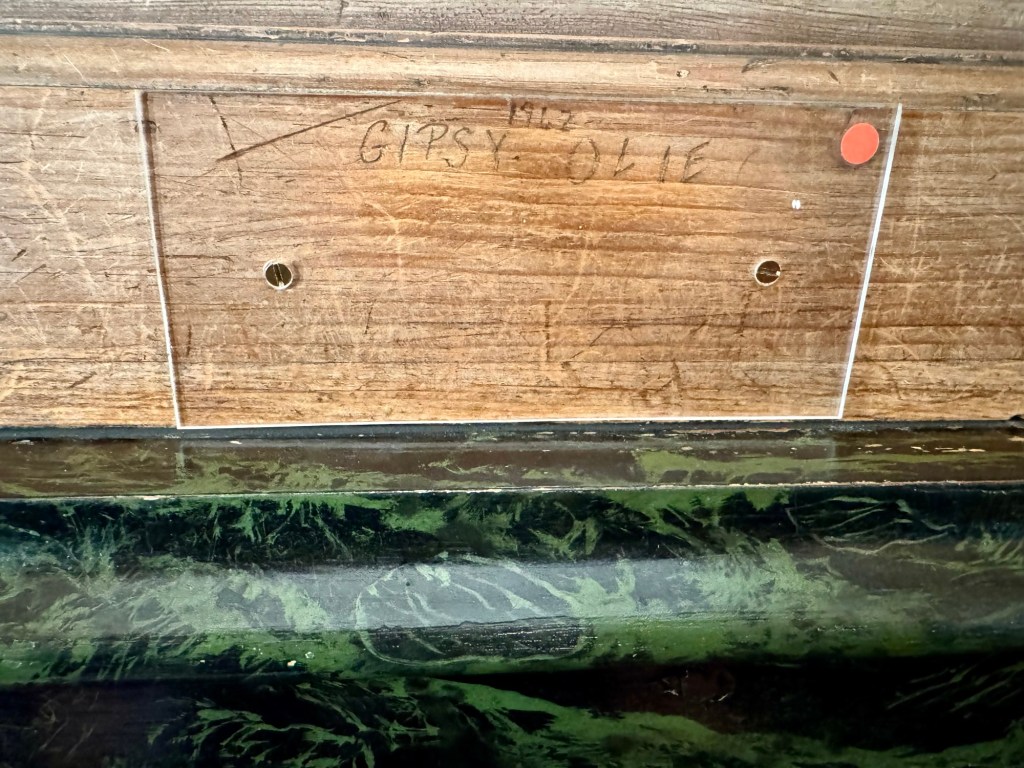
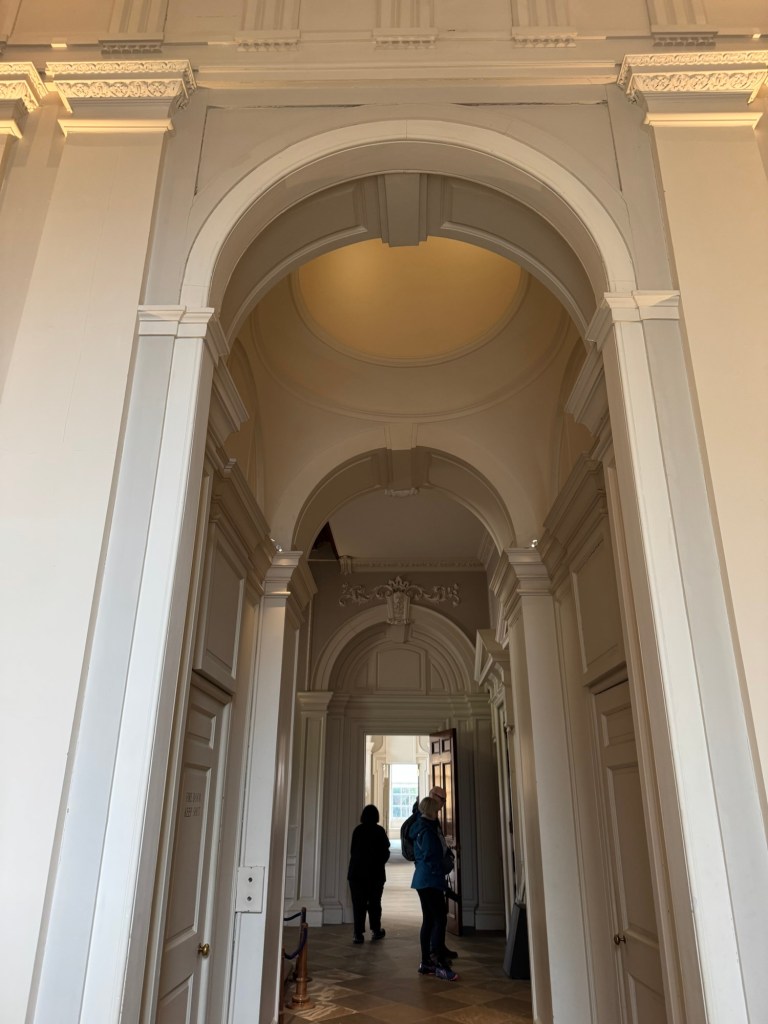
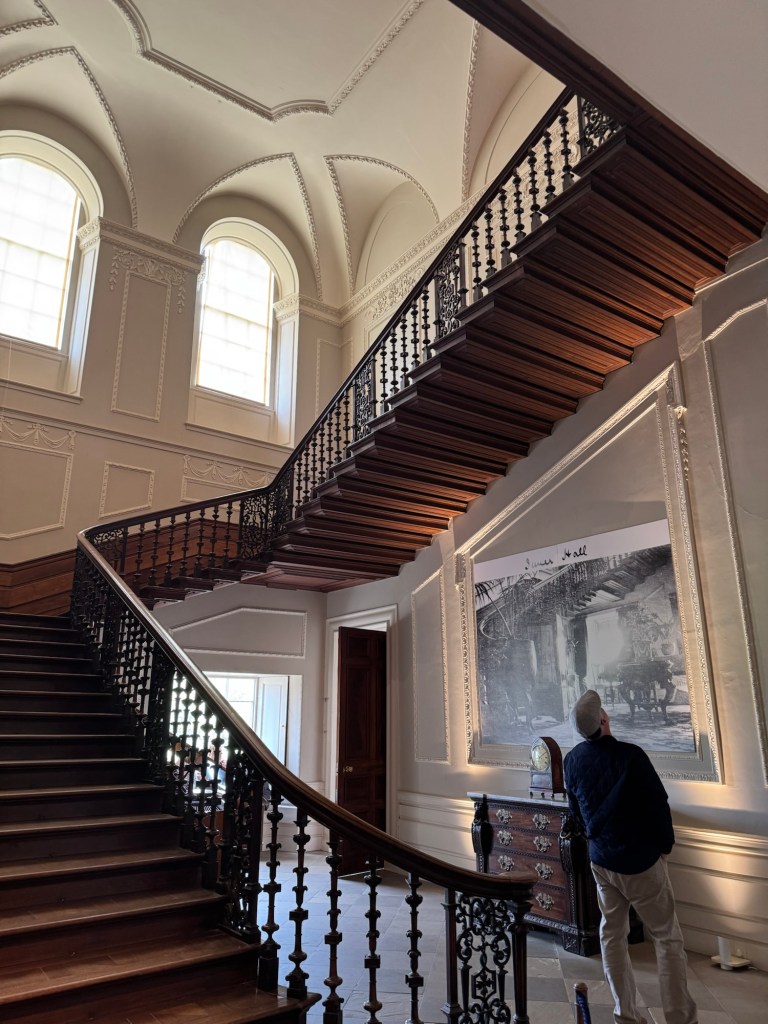
After lunch a small group of us went out to Beningbrough Hall. A stately family home built in 1716. It was used as barracks for part of the RAF and the Canadian Royal Air Force during WWII. There was a cute story of an air force officer and a local WASP who carved their name in one of the mantels, Gypsy and Ollie. As the story goes both lived but did not stay together. Gypsy came for a visit much recently and gave staff a lot of information about what went on in the house during the war years. According to Gypsy one guy road his motorcycle up one staircase down the hall and then down the other staircase to win a pint of beer in the officers bar.

The house was pretty plain. It was built by a son (replacing the much smaller Elizabethan structure) in the Italian style. He had recently returned from his grand tour when he inherited the property and wanted it to reflect his new modern and cultured aesthetic. One item in the house made me think of my first trip to Italy and Switzerland where we met this older couple from the Deep South. She was so proud of the David sculpture they had bought (that was before they saw them on every corner) but anyway she went on and on about it and I can only imagine it having a place of honor in her house still today. So when I saw the small Italian sculpture that was brought from the world tour that inspired the house design I wondered if someday those mass produced David sculptures will show up similarly display.

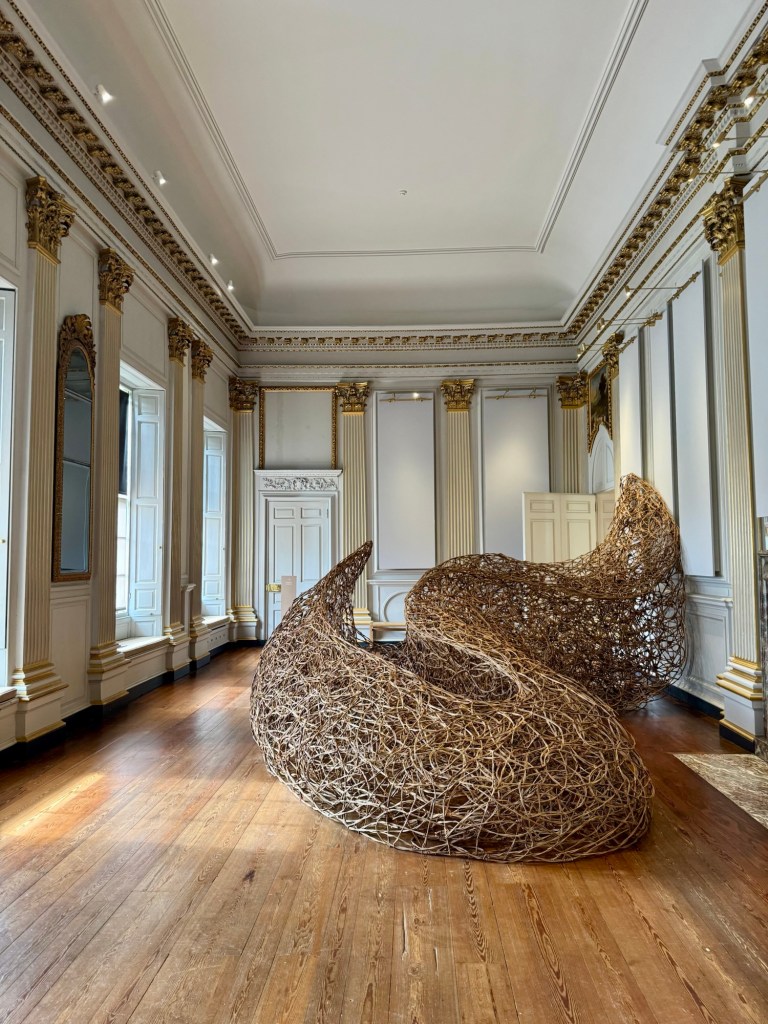
The house was also housing an art installation which was odd but seeing how the gardens were the highlight of the place it wasn’t completely out in left field. It was big twig sculptures. One was huge and took up most of one of the larger rooms. The rest were small table size sculptures but the one was massive. There was a video showing how she made them which i didn’t really watch since up to then they had all been small. I have no idea how she got this one in the room or if she made it in the room how long it took.

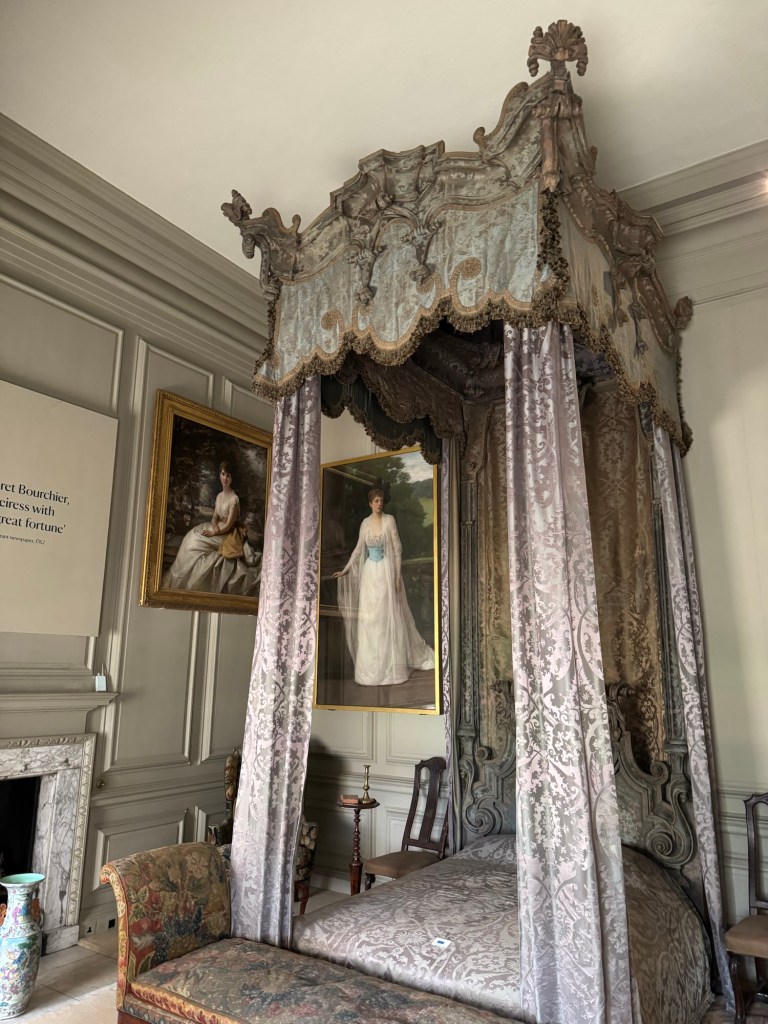
The rest of the house was done in the style of 1750 or so with two large posted beds demonstrating the style at the time.

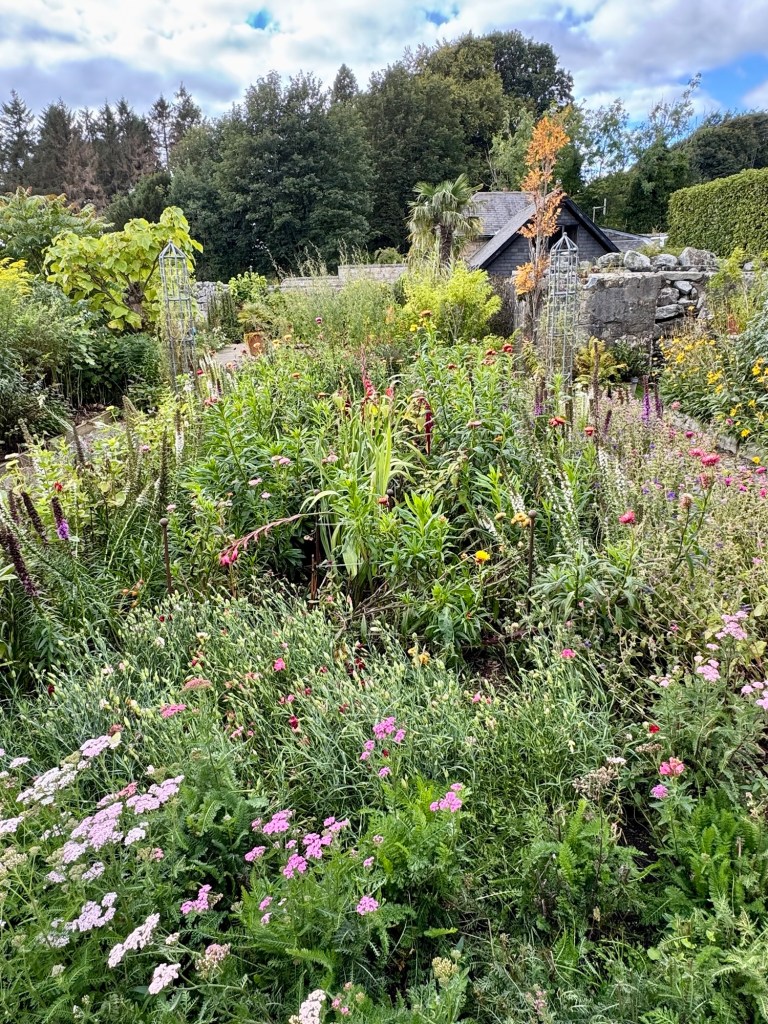
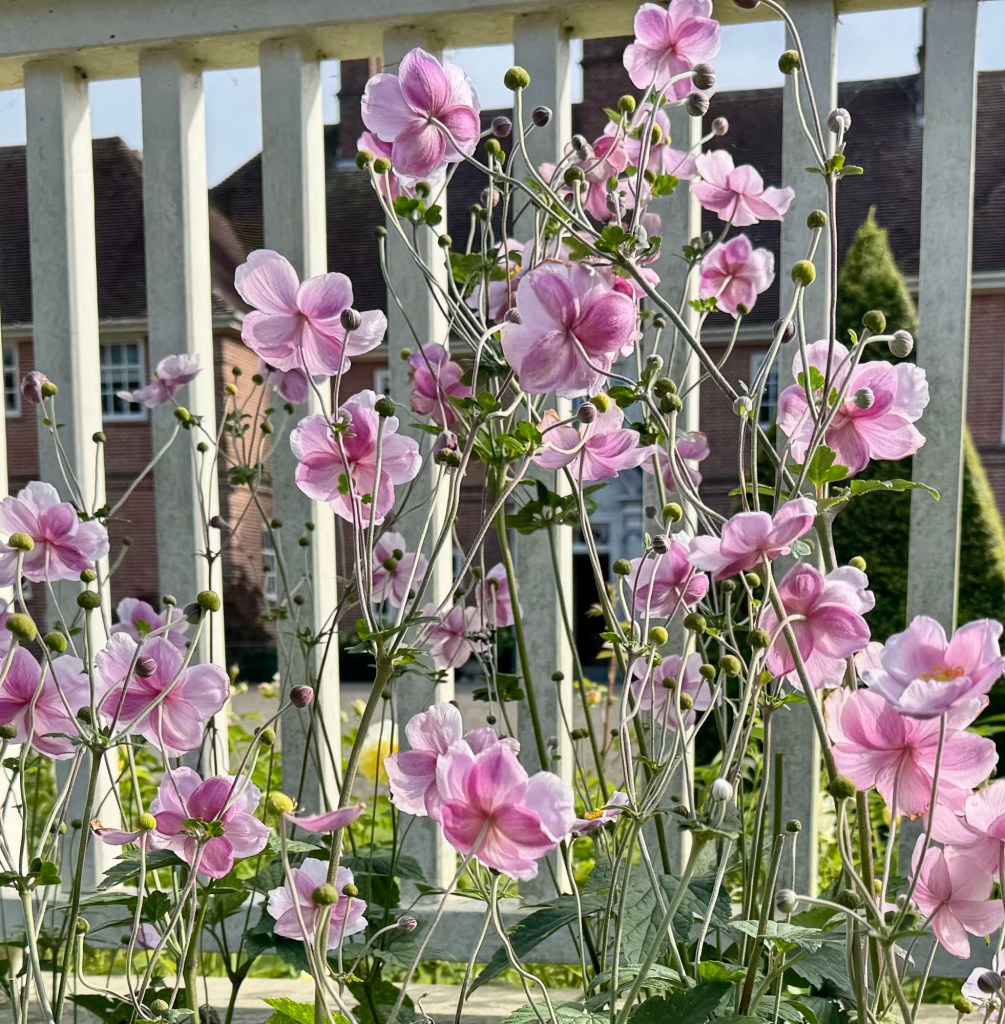
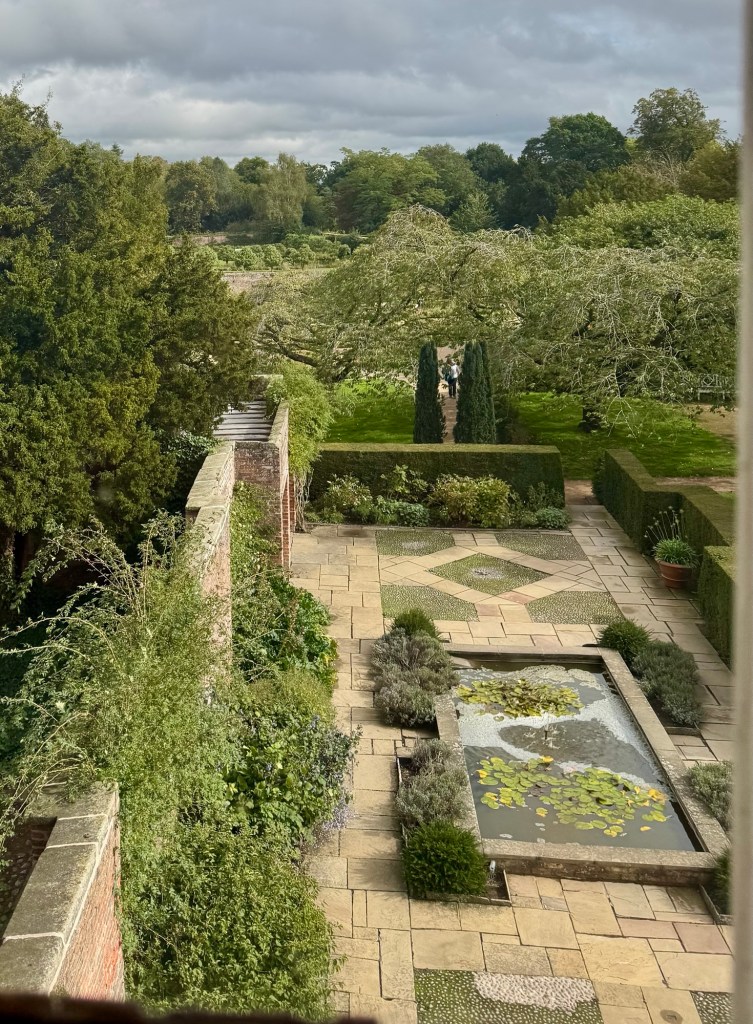
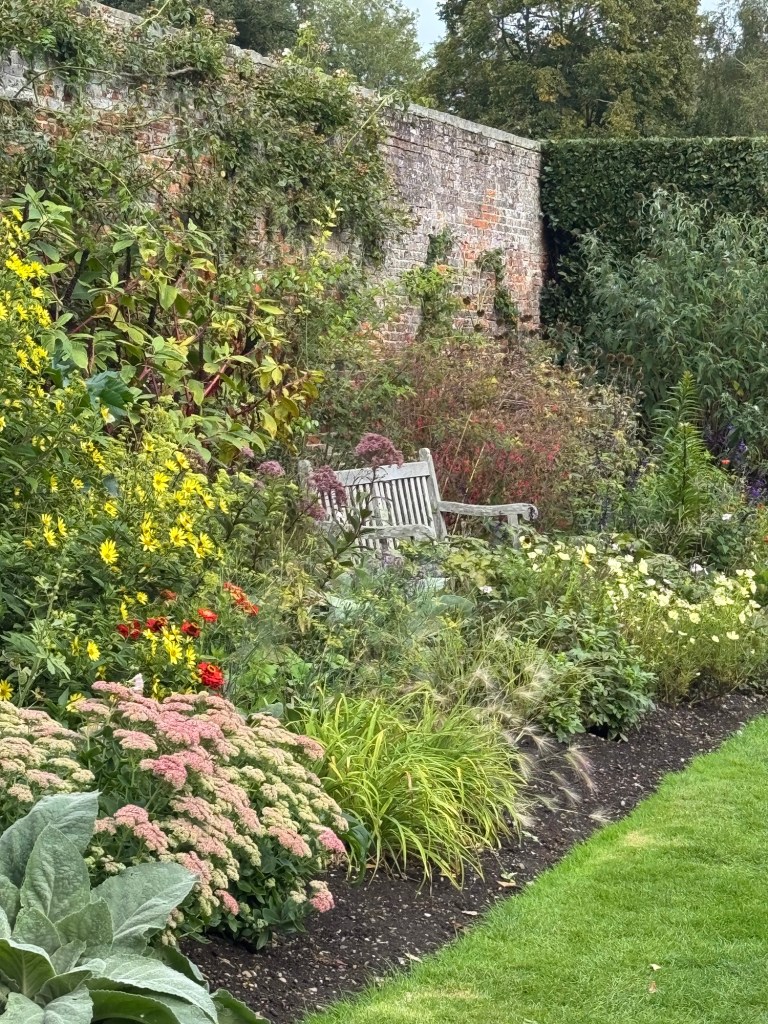
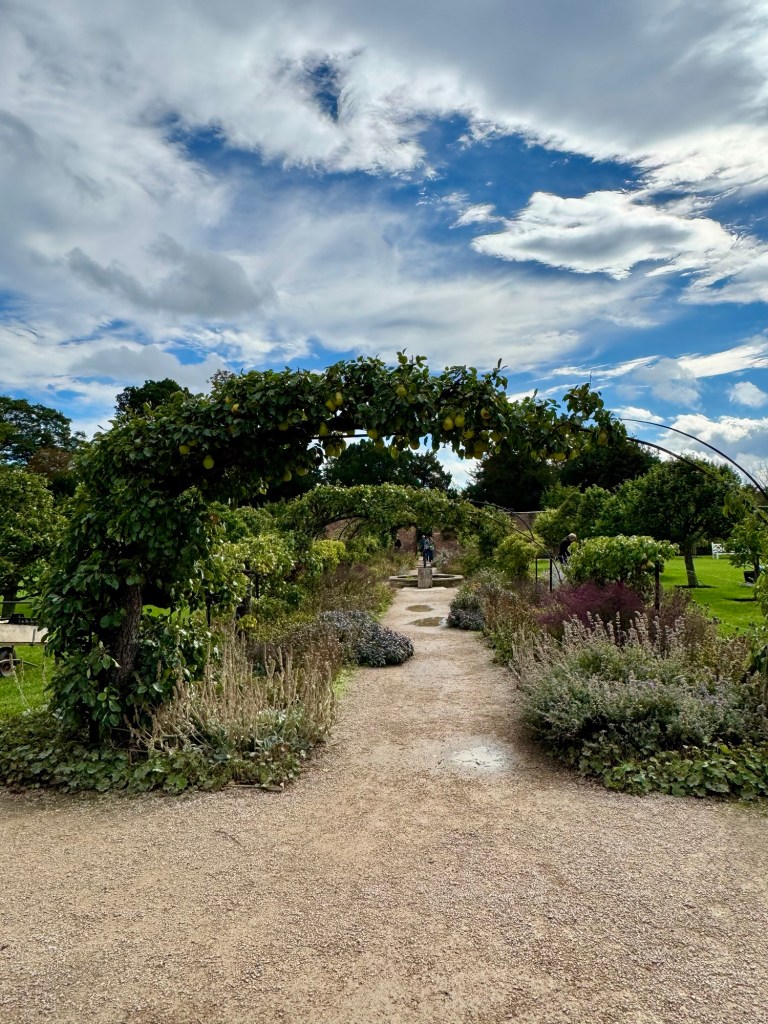
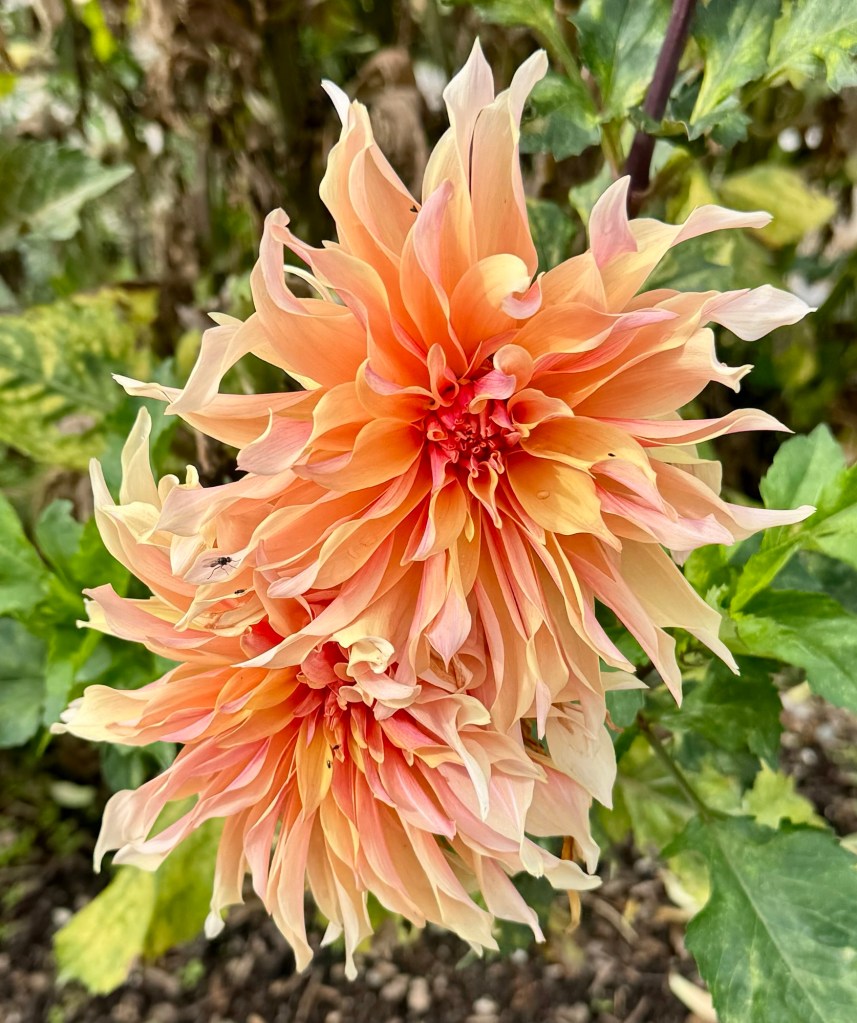
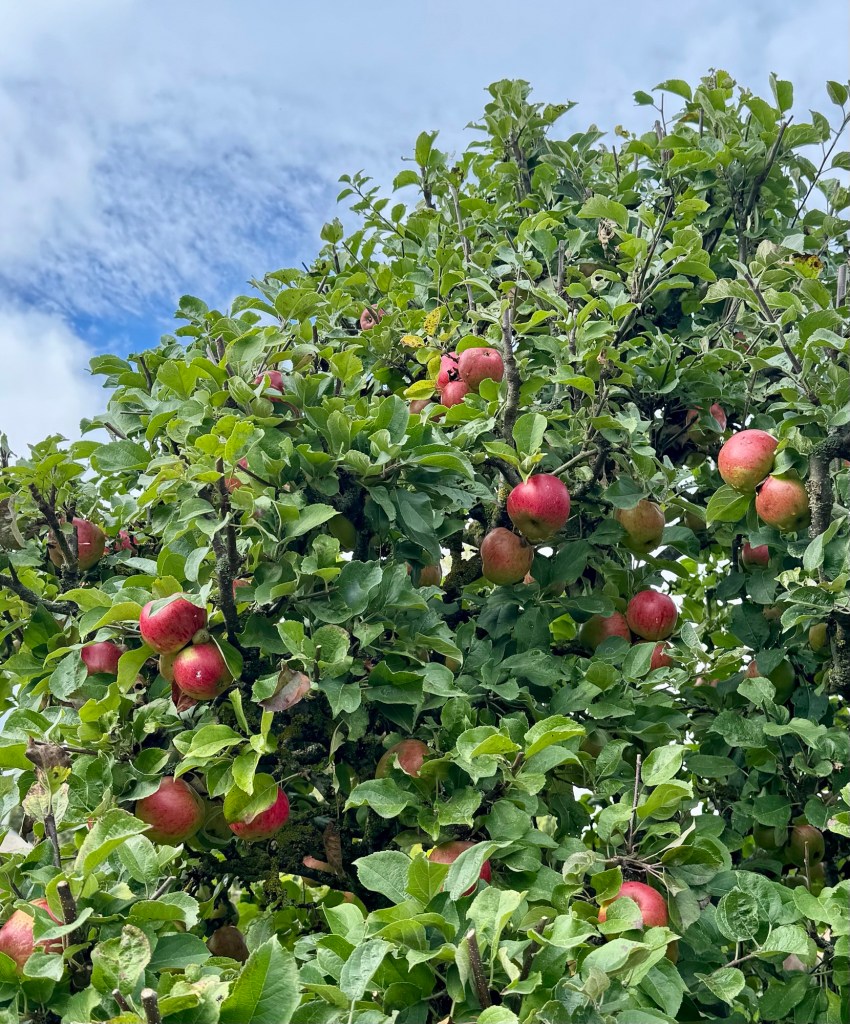
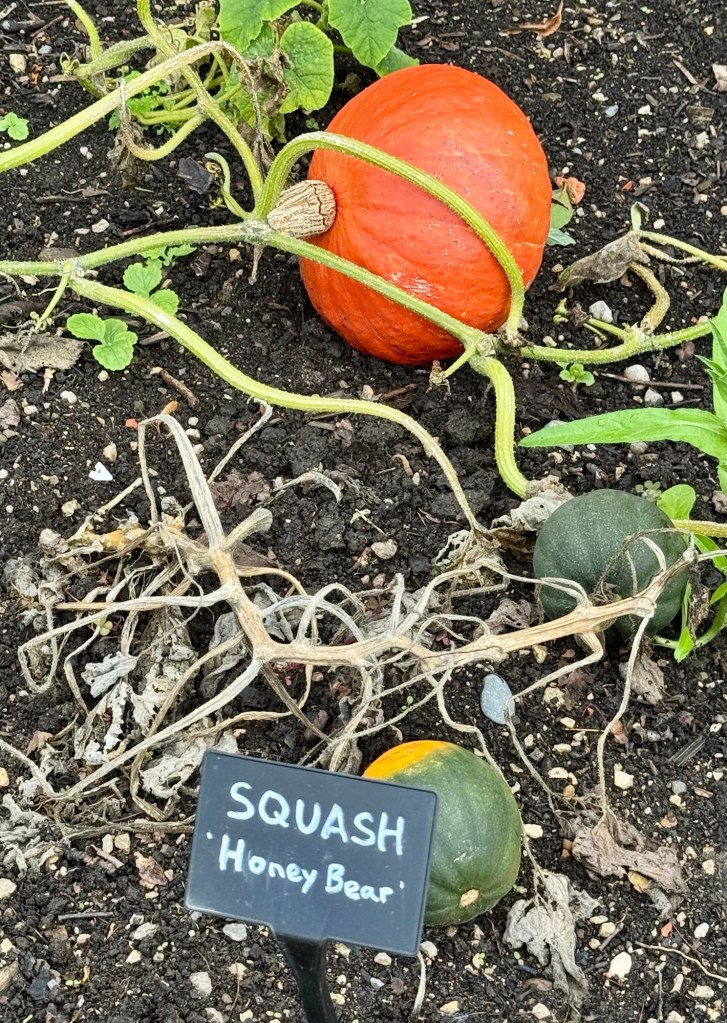
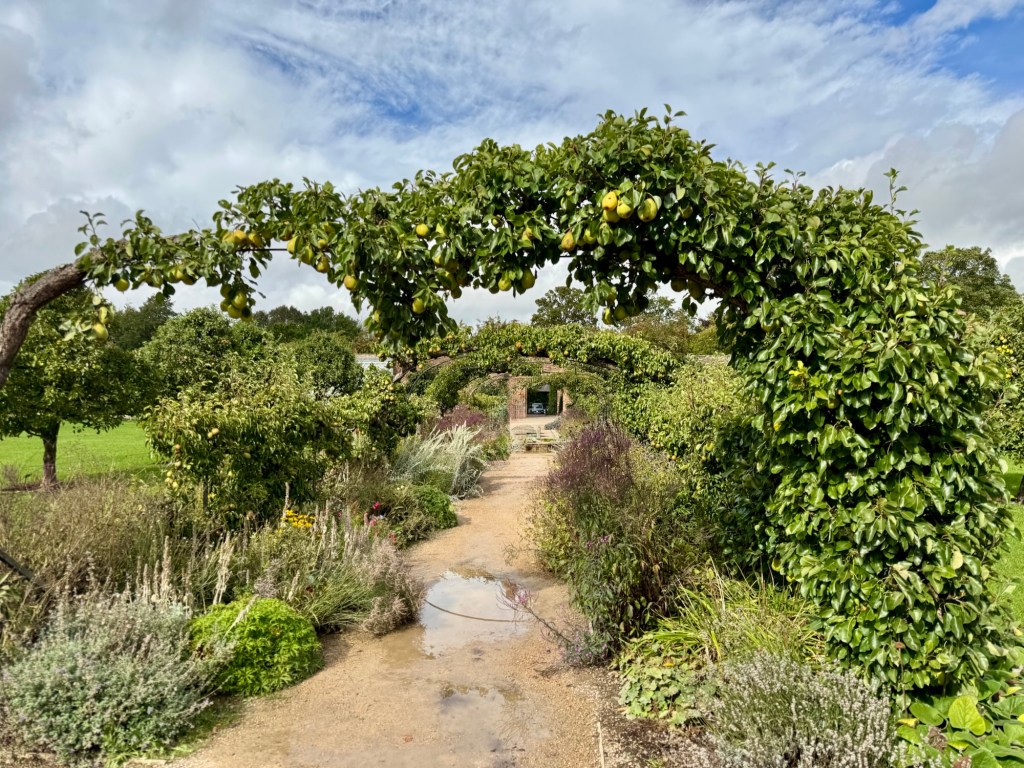
The house wasn’t much but the gardens were spectacular with flowers, fruit and vegetables. It was clear they used the fruit as they were out picking fruit from the trees while we were there. The sun came out but with the wind it was still a pleasant day so it was nice to ramble through the garden admiring the flowers.

Side garden from window of the house
Inviting place to spend an afternoon

Our first dinner was at the hotel. The beef Wellington was delicious. I had a bit too much wine and now I need to go to bed. Nicola was at our table so we discussed Margaret Beaufort still one of my favorites. Alison gave a talk on the medieval monistic orders and the delusion of them by Henry VIII. It was informative. I just wish I had not had so much to drink so I could remember it.

Tomorrow we are off for a new adventure.

From York to Leeds then Back Again

We thought we would head to Leeds today for some more shopping options. Leeds is a much bigger town and mostly from the Victorian and Georgian eras. I was thinking the shopping would be fantastic.

We slept in a little bit but with the train station right next door we were in no hurry. we headed out with plenty of time to catch the 9:23 train to Leeds but the 9:43 train was cheaper so we bought those tickets. Little did we realize our train ride went from 20 minutes to an hour and a half for that $15. We decided to eat the first tickets bought new ones and boarder the 9:55 straight to Leeds. I didn’t even have time to finish yesterday’s post on the train it was so quick. The train station was lovely much nicer than here in York and London’s are just dark and dirty. So it looked like we were off to a good start.

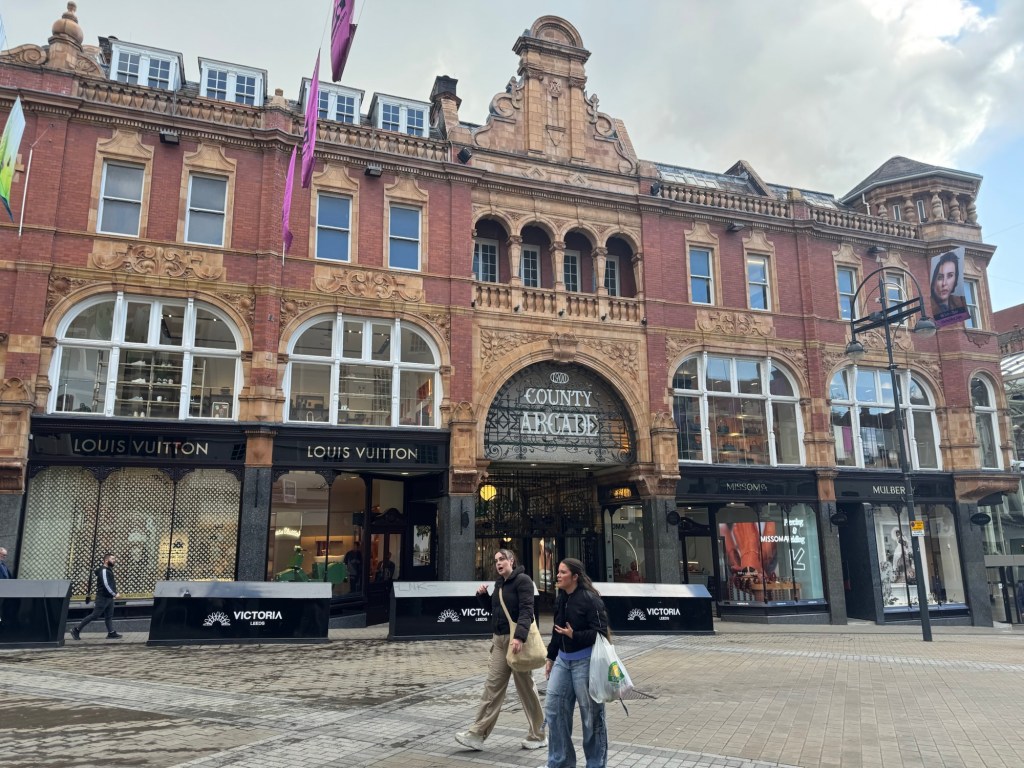
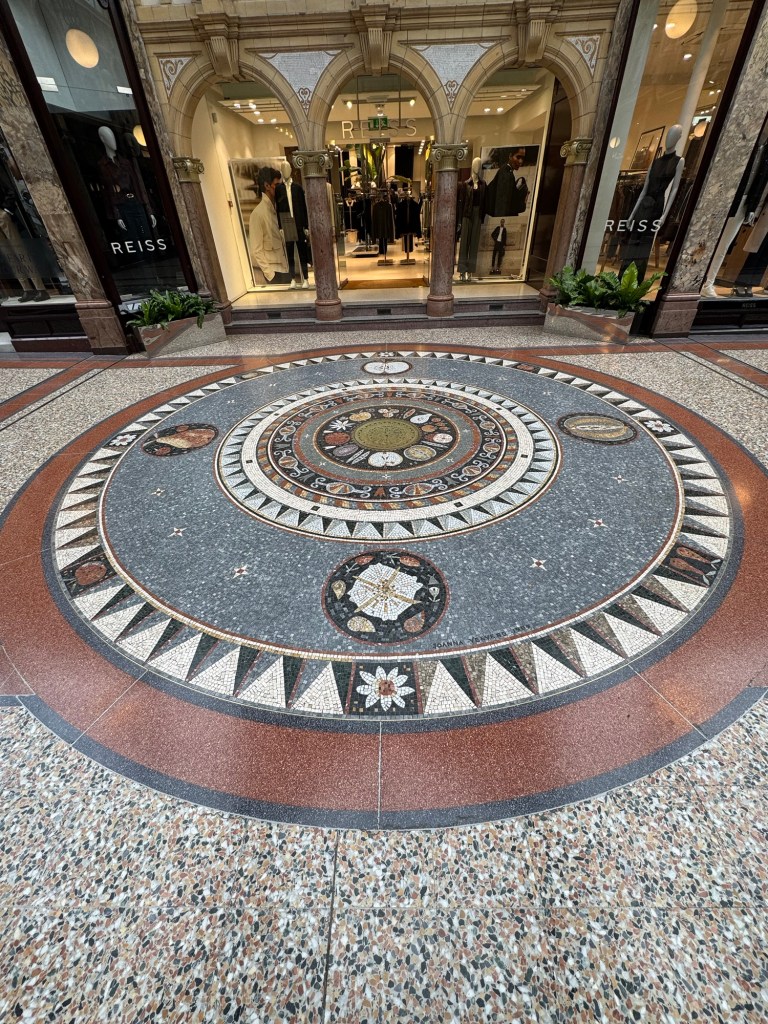
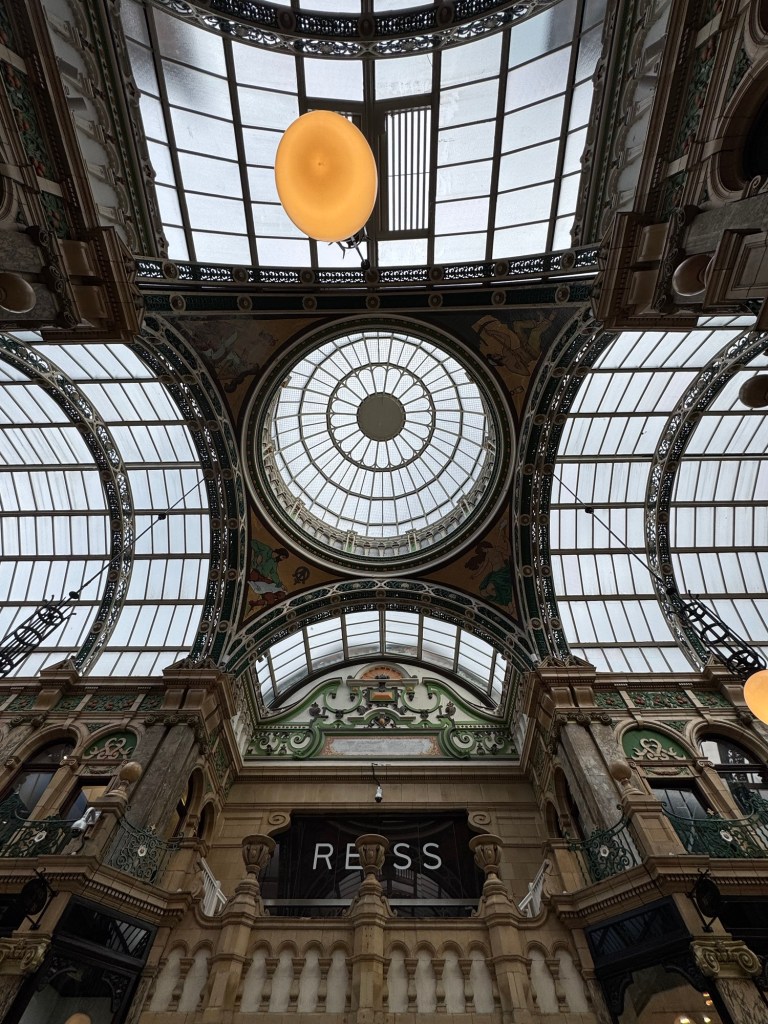
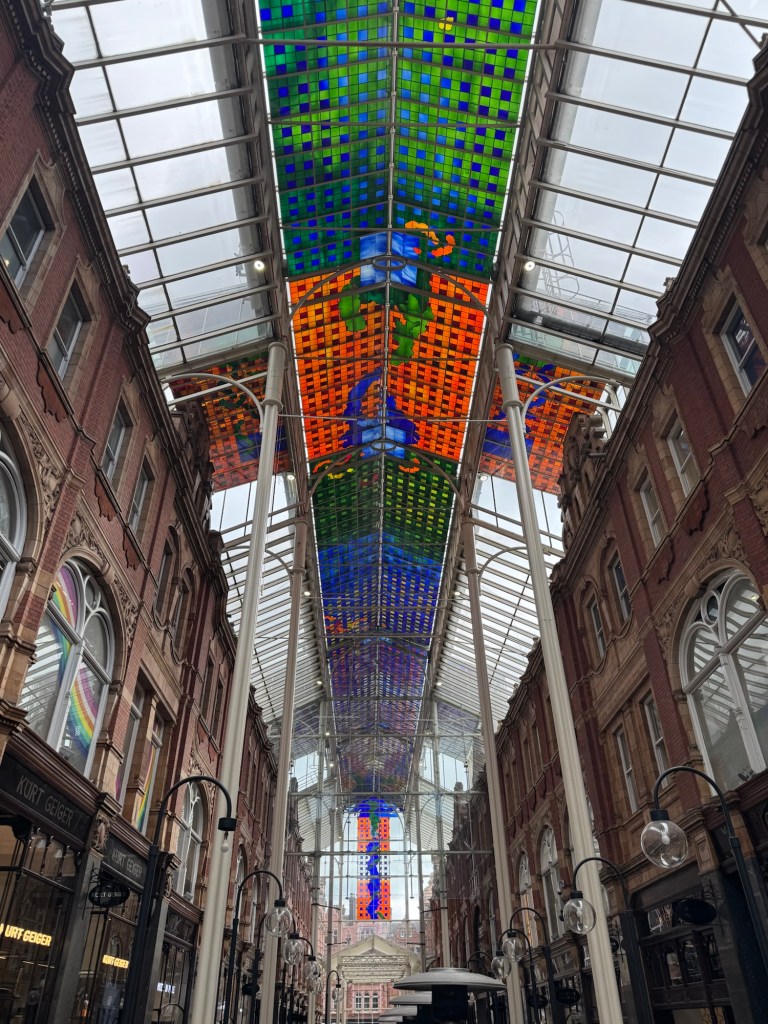
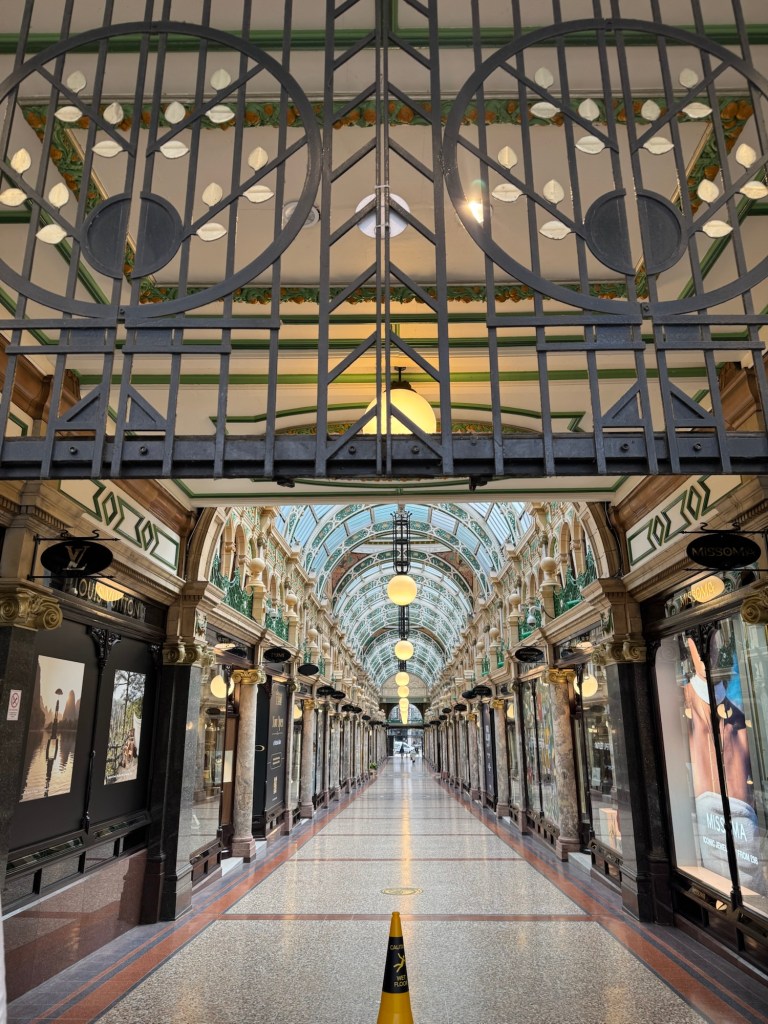
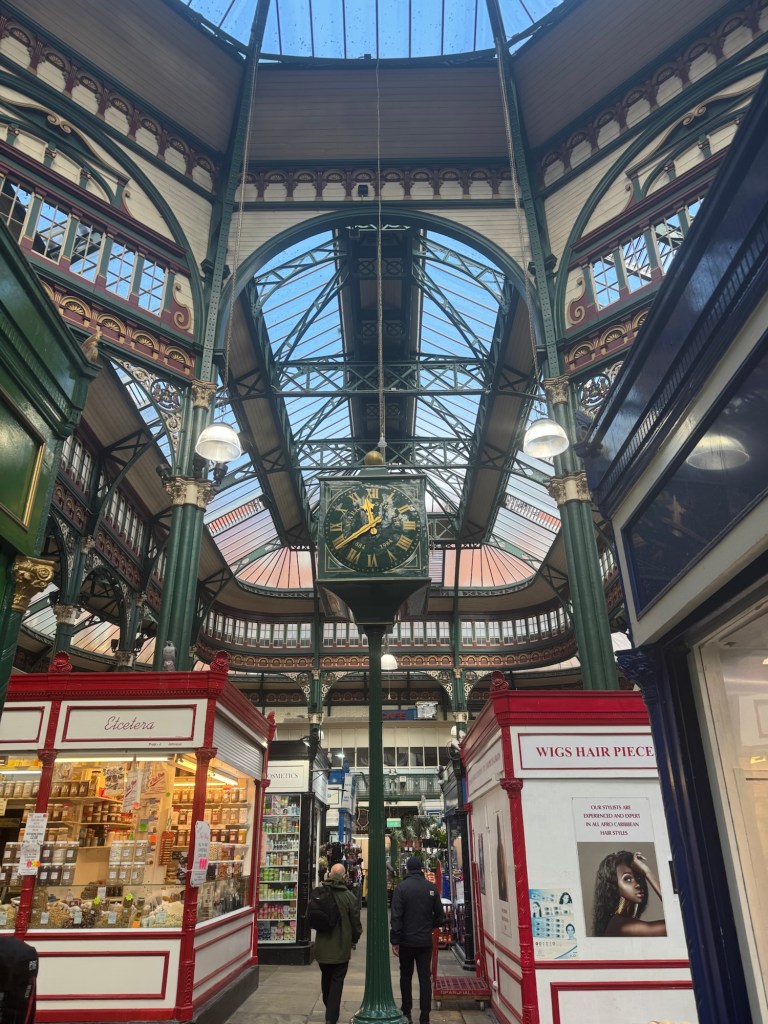
The Victorian arcade shopping areas was within walking distance so we headed off. The area was very nice and the “arcades” were cool but the shopping was a disappointment. I expected so much better. It was all either way high end or just junk. Nothing really in between. We had seen such great jewelry in York I expected to be blown away with what we saw in Leeds. But that was a mistake. There were a lot of high end diamond places and other fancy new jewelry but very little vintage. We walked around a bit and tried all the areas. One of which was an old school food market with Victorian stalls. Think Pikes market in Seattle meets the Mercado area of downtown San Antonio and have a Victorian baby and you might get the vibe of this one. It just didn’t work.
Victorian shopping Arcade
Another shopping arcade
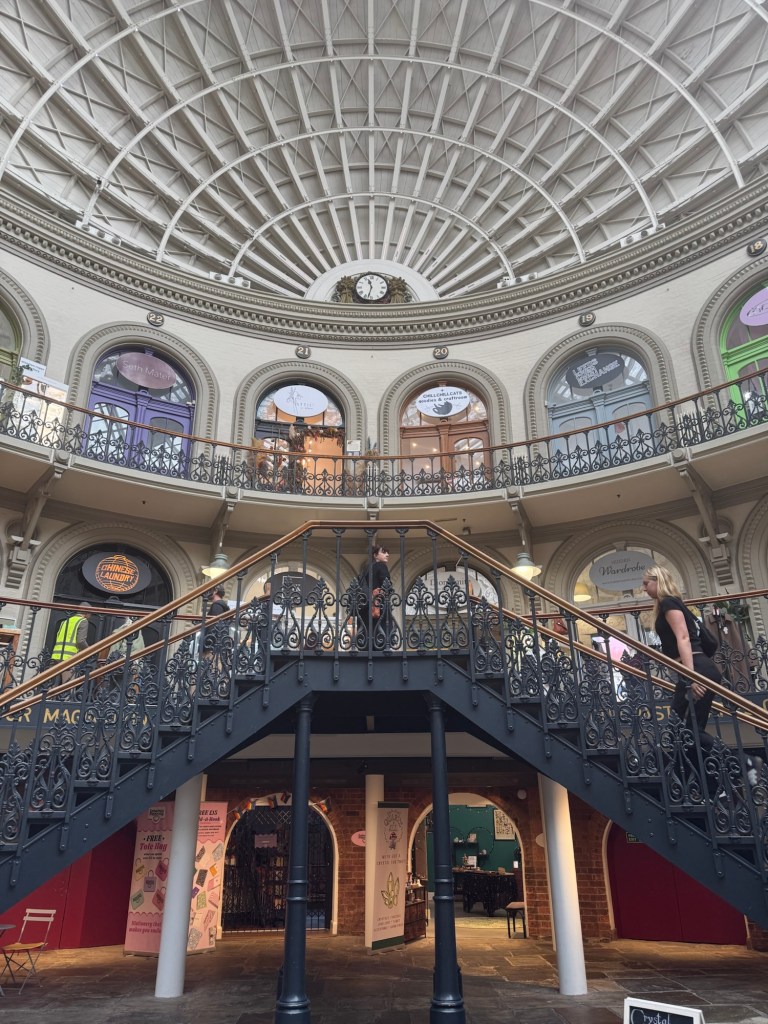
Leeds Corn Exchange shopping venue
The food market

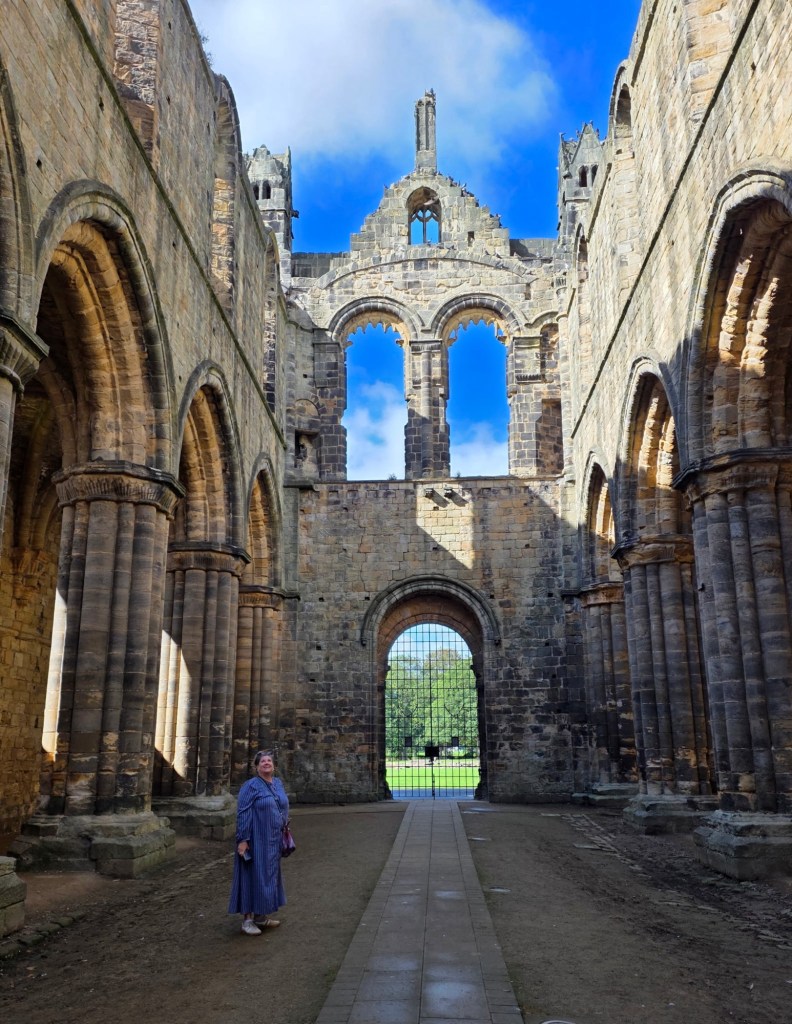
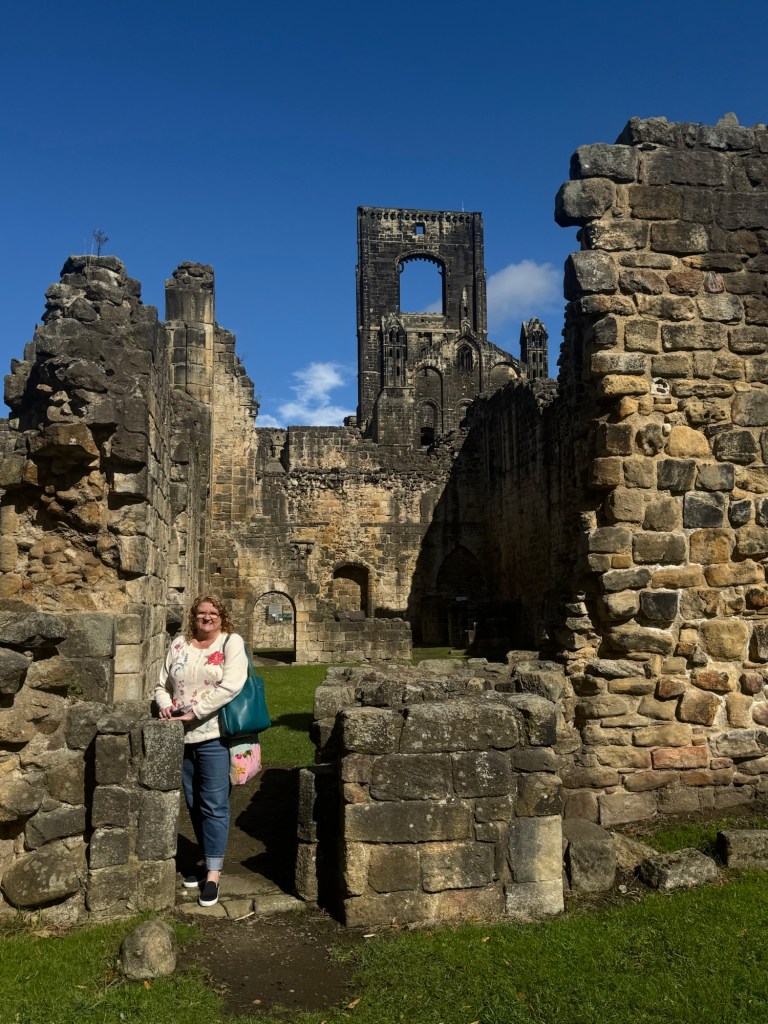
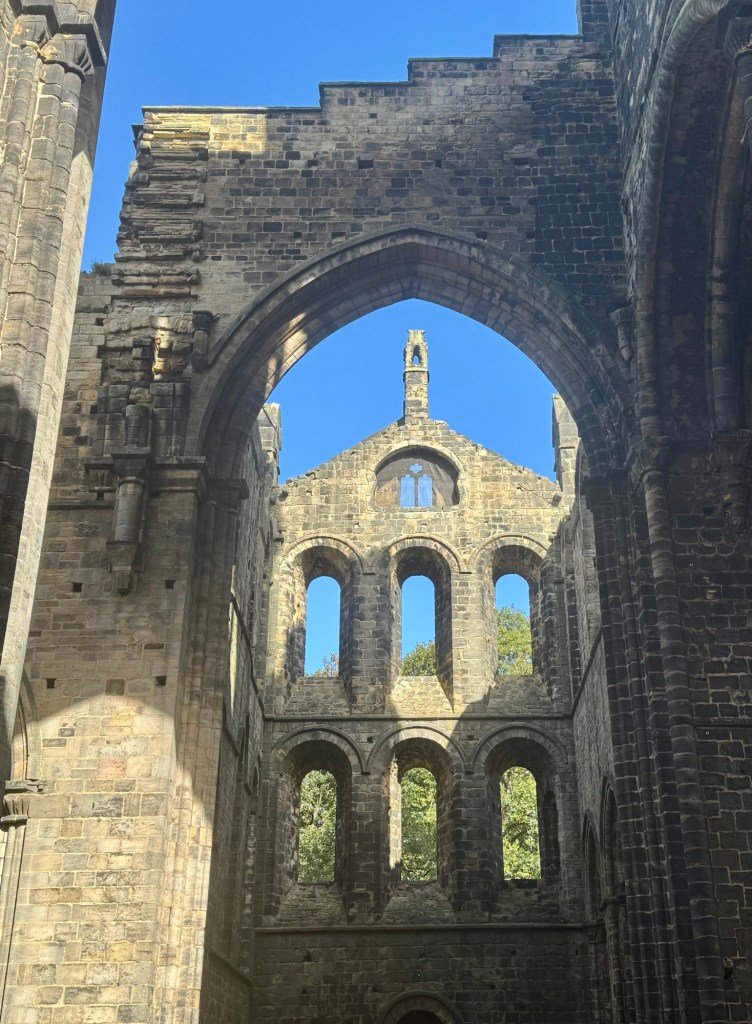
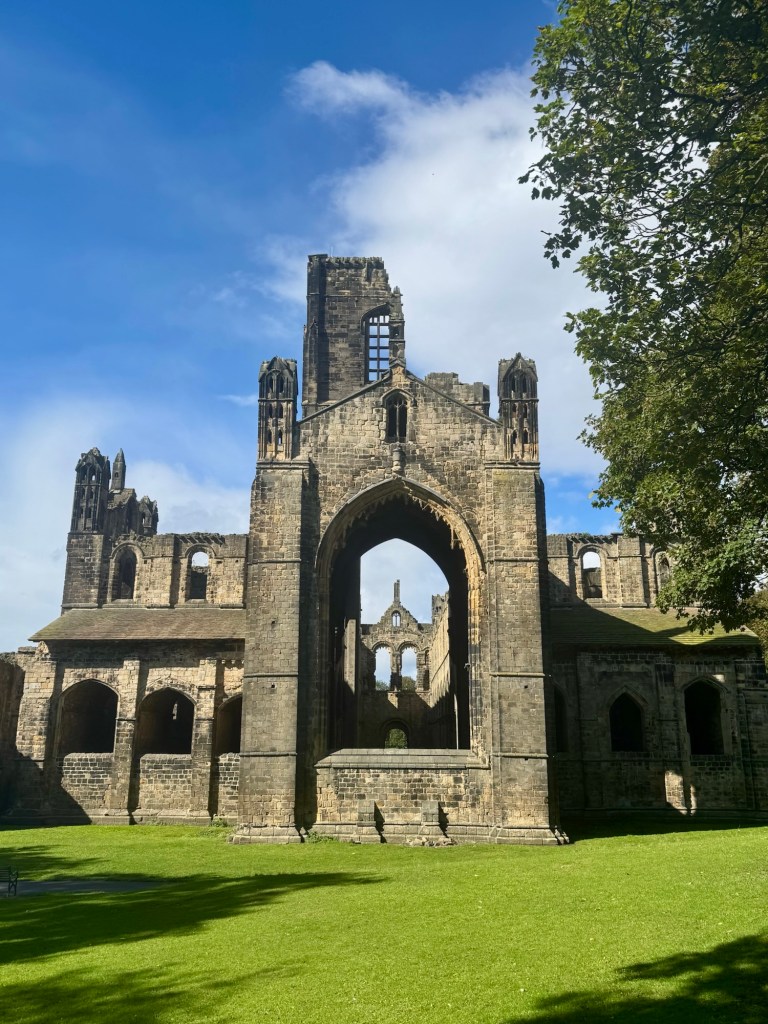
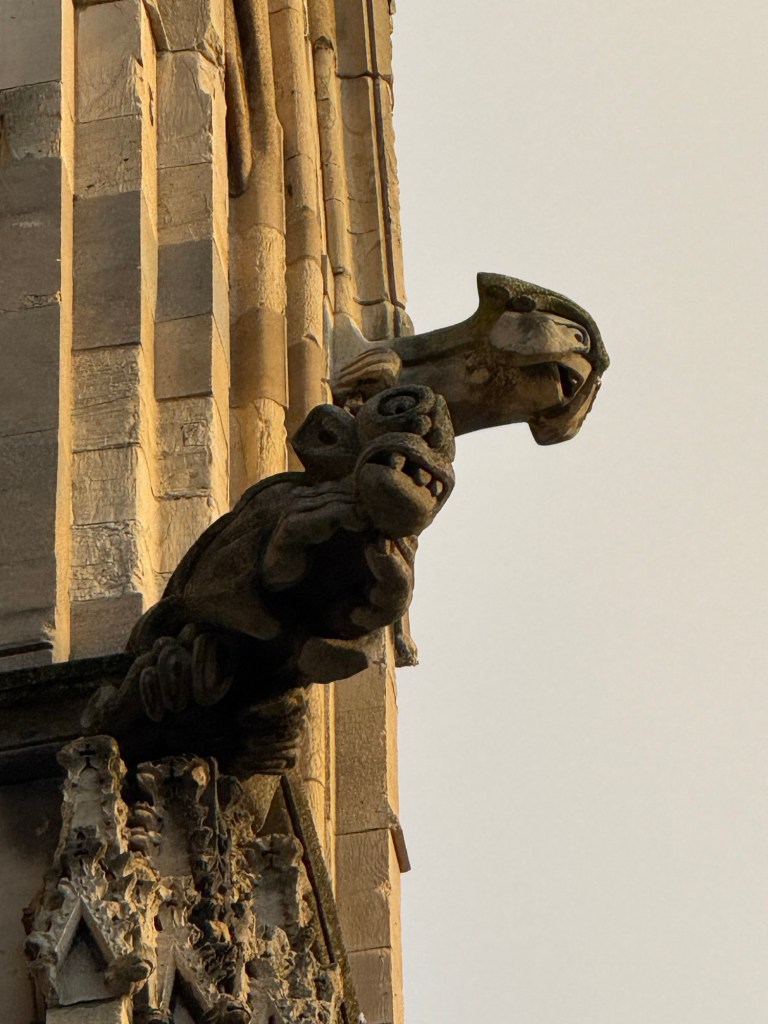
Since shopping was a bust and the sun was out we headed out to the Kirkstall Abbey. They are some of the largest ruins in England. Of course Henry VIII ran off the monks and then stole the roof so there was no hope of it surviving. It does make for a pretty park today. We spent about an hour wandering around trying to get the perfect picture before getting an uber back to the train station.

Kirkstall Abbey

In a moment of brilliance I realized we could just uber all the way back to York and save ourselves about $20 and a little bit of time. However the car was not as smooth as the train so I didn’t get to catch up on my writing.
We got back to York around 3:30 and headed off to wander around and shop a bit more. Val wanted to go back for a bracelet but we couldn’t find the store and we passed an antique store during the ghost tour and wanted to hit it but couldn’t find it either. Surprisingly they were one and the same and we found them at the same time. Val bought the bracelet and I got a new ring. I know you think I don’t need it but I do. So all is good. We shopped around a little more before going to have Italian at the old Assembly Room. They haven’t done much to the room since the 1860s so it was a fun place to have dinner. Definitely different than are dark twisty curvy pub from the night before.
We were done early so we stopped back at the church to take pictures of it in the setting sun. Much prettier than yesterday with the rain and clouds. Though it was pretty cold so we hurried back to the hotel for an early night. We have to get all repacked to meet up with tour tomorrow at a new hotel.