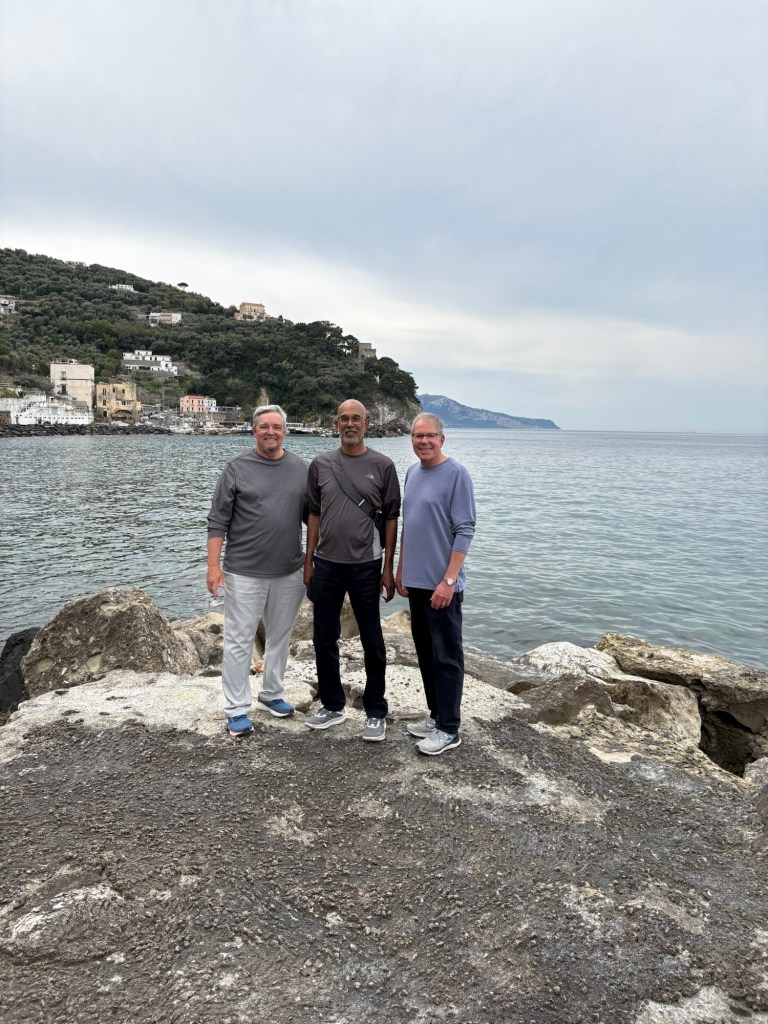
It is time for my next trip to England to join another Alison Weir Tour. This year the tour the Red Dragon is through Wales. I have only made one brief stop in Wales back when I took my mom to England in 2002. We only saw a few sites so I am looking forward to seeing more.
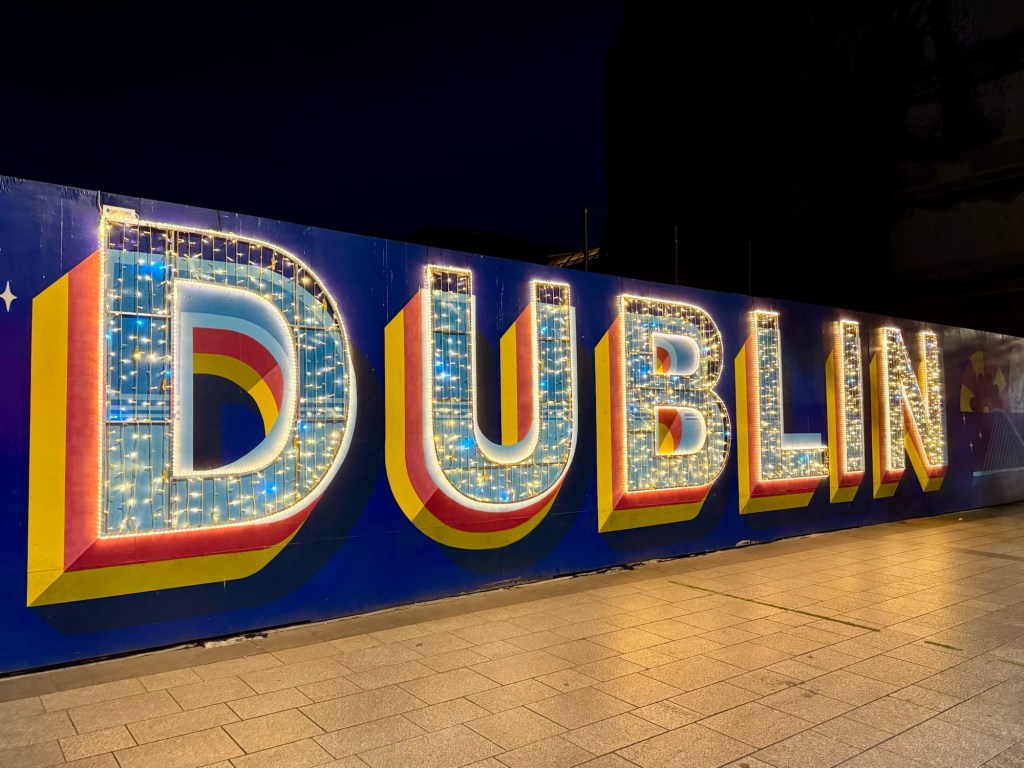
But first stop is Dublin to see TCU play North Carolina. No I am not a big football fan but my sister is a TCU super fan and since we were already going to be in England we decided to add it on to the trip.
Of course we didn’t decide that before we bought our plane tickets so we had to book the flight to Dublin separately. We were already taking a strange route to London in order to get business class seats. The flight through Charlotte was way less points so we were flying out much later and arriving in London later in the day.
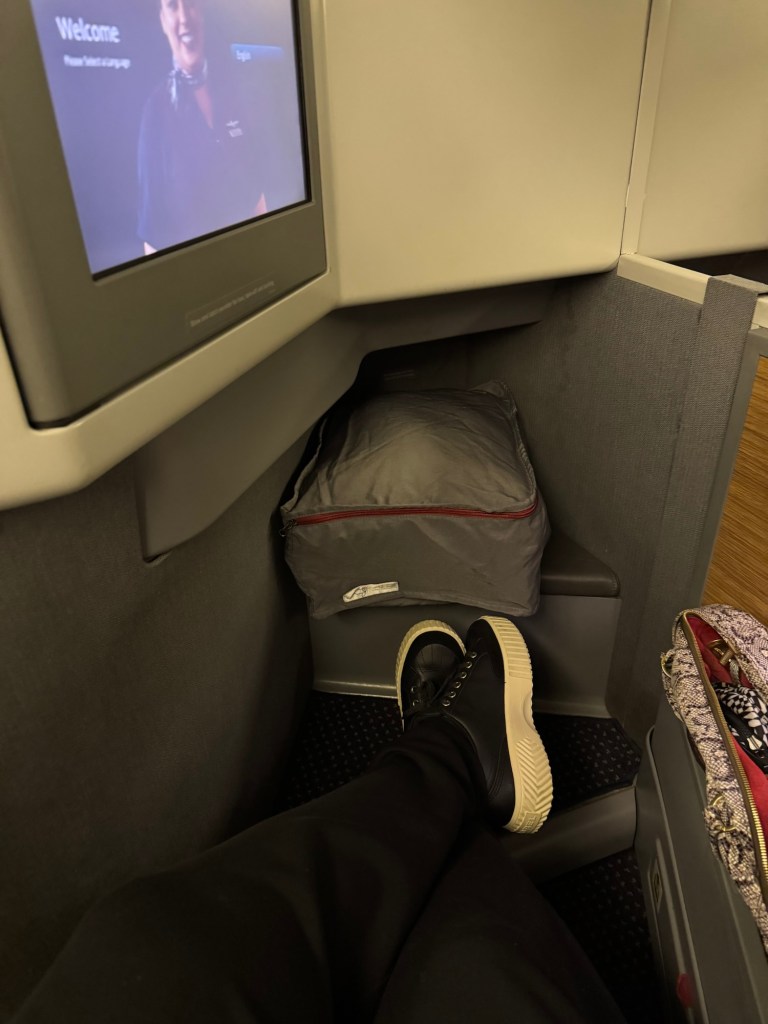
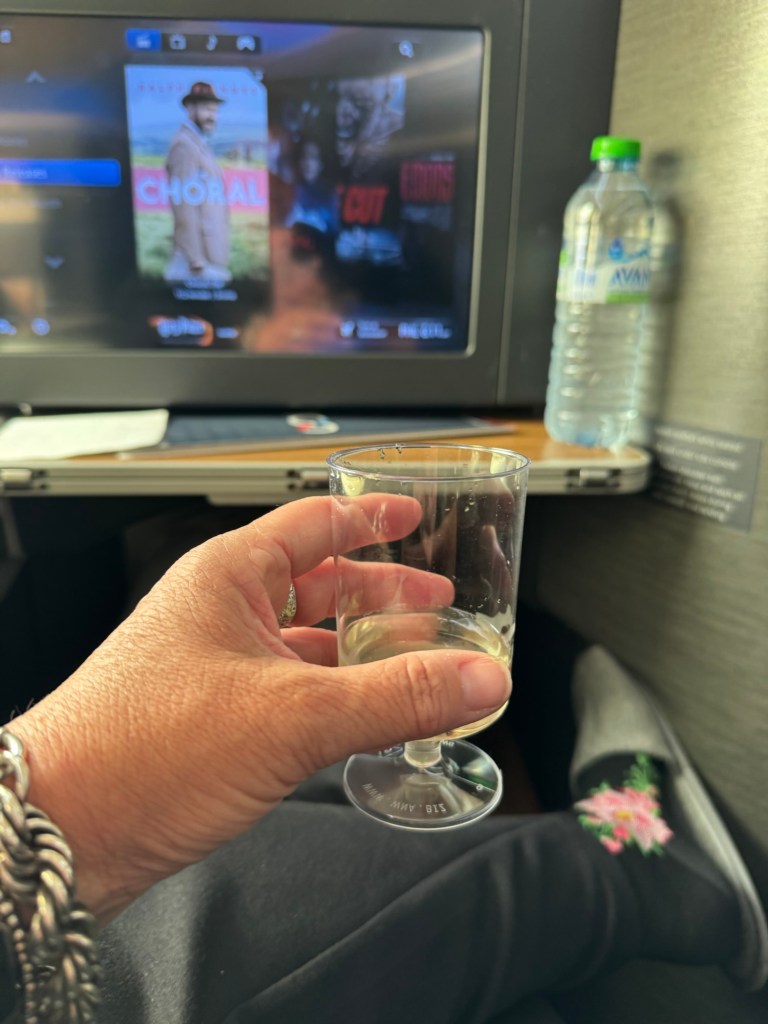
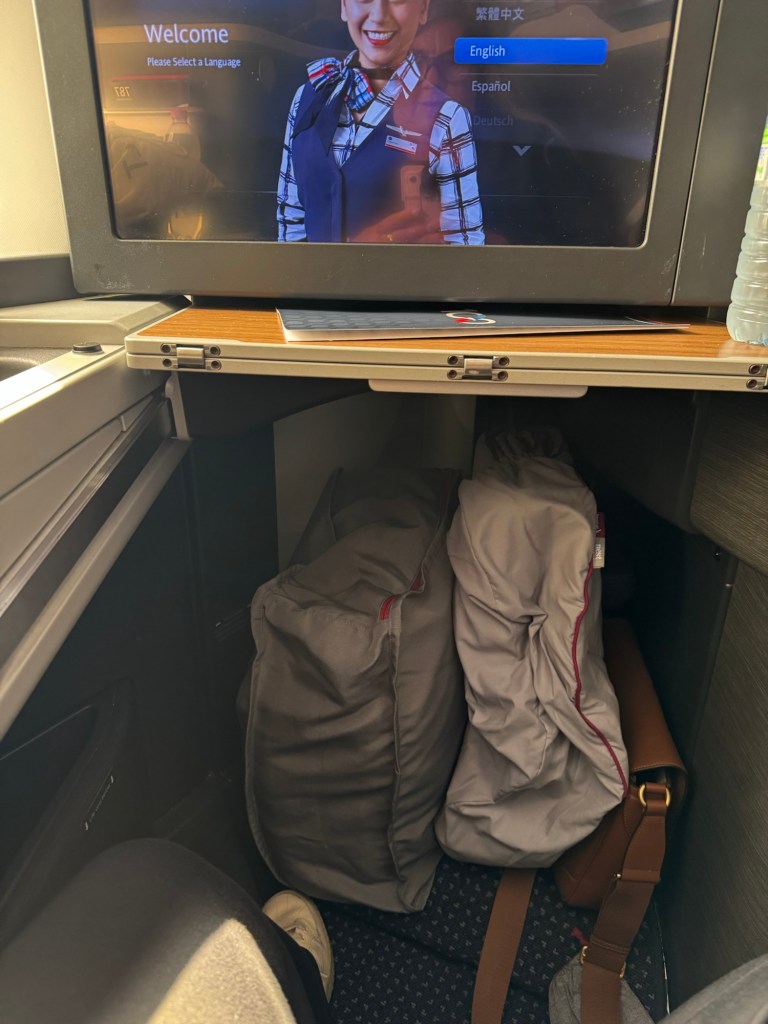
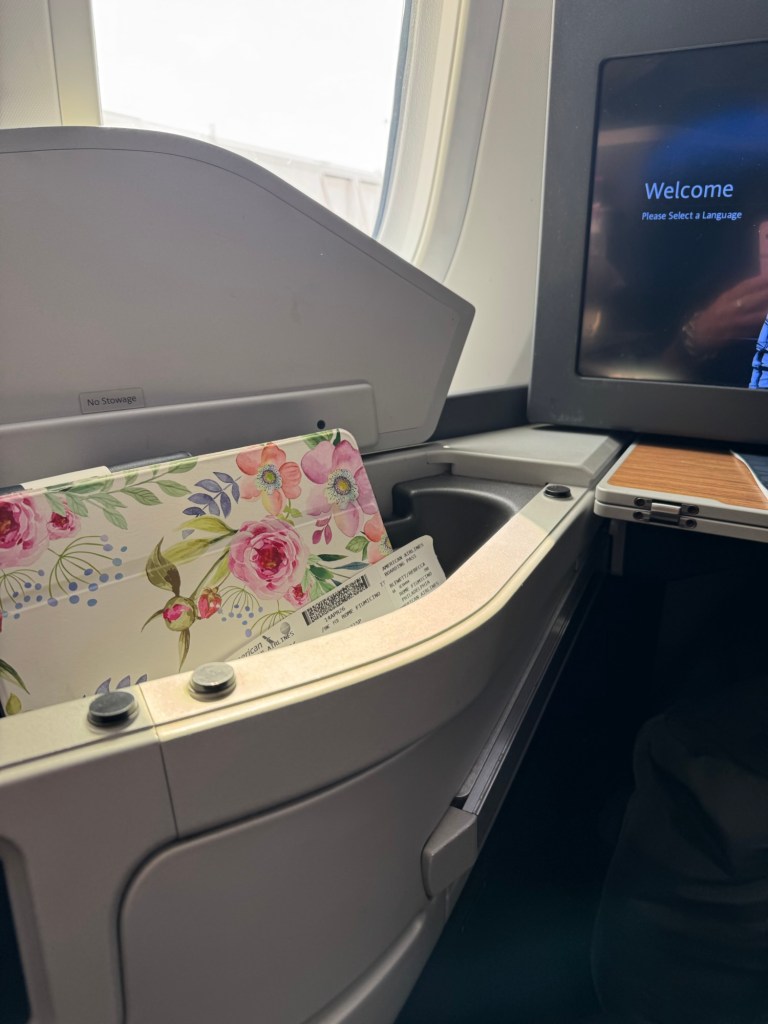
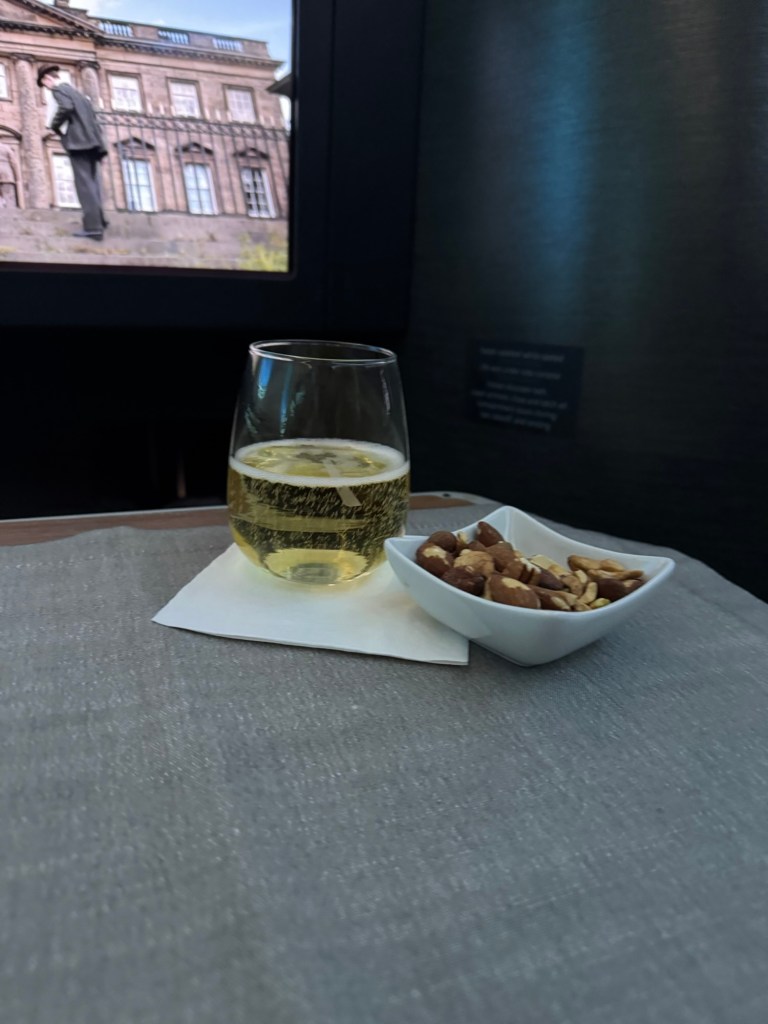
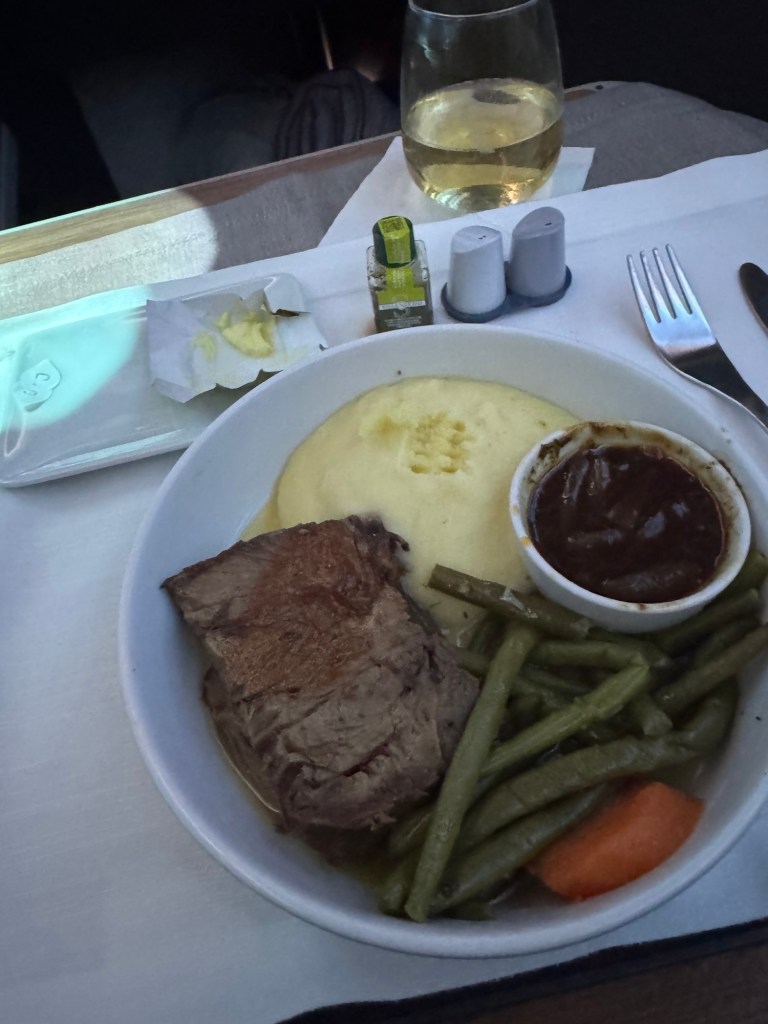
Our flights to London went well. The business class seat is really nice. Not sure I would pay for it but it is worth the extra points if you have them. I can’t say that I slept much more then normal but I was much more comfortable. I was the only one awake for a while and had my breakfast while everyone else was still had their seats in bed mode. The food is better in business class but again not sure that makes a big difference in the flight. All in all I will fly whatever I can to get across the ocean for a trip.
Now the second flight to Dublin was not so great. First it was more than a 3 hour layover so we couldn’t check our bags. Of course there were a lot of flights from London to Dublin to choose from but I had no idea how long it would take through customs or flight delays so I gave extra time. It was not needed. Immigration in London always goes quickly. I probably waited behind 2 people to get through. They open a lot of counters and have the automatic photo booths as well. After a long walk through the tunnels to get to another terminal we ended up waiting outside before we could check our bags. When we finally could check it was a madhouse. It was self serve but wasn’t going well for anyone. I got a tag printed and on my bag but it was whisked off before I “activated” the tag so no receipt and no guarantee of arrival. The staff was very fussy and just told me it was lost now. Then changed her story when I said I did exactly what she told me to do. She basically fussed for a bit then played on the computer for a second and told me to go. I spent the whole flight hoping my bag would make it.
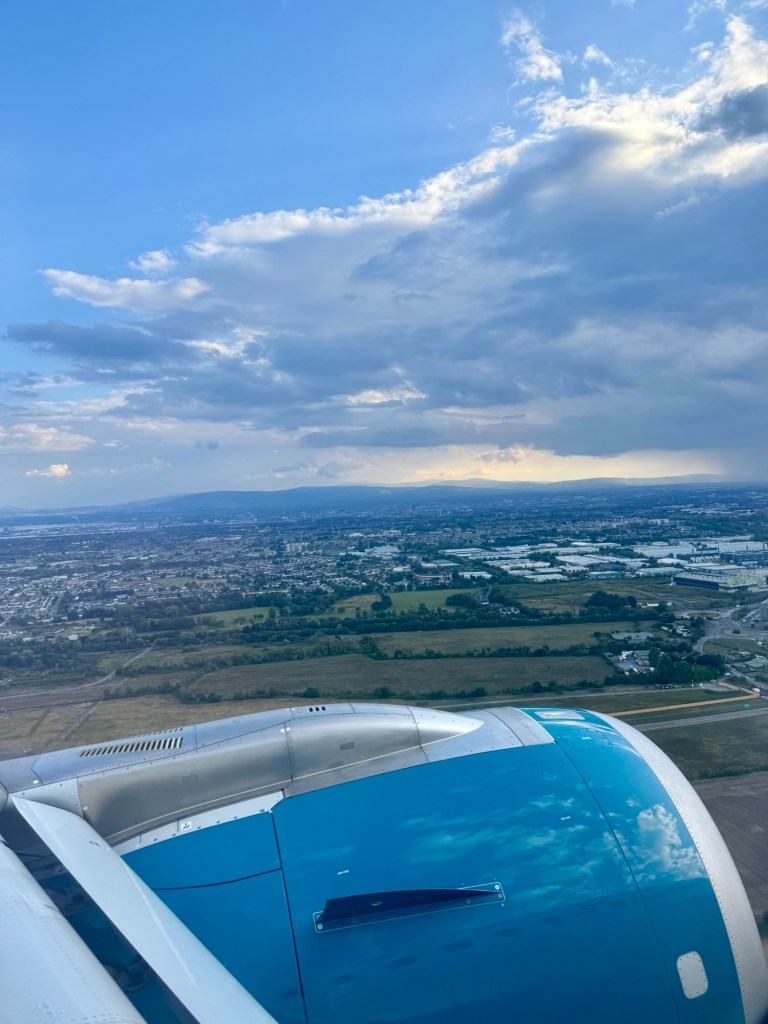
After an hour delay we finally boarded to only then sit on the plane another hour before take off. So I had a long time to think about the bag. Thankfully it did arrive it wasn’t even last so I didn’t have time to really panic once we arrived in Dublin.
Arriving in Dublin
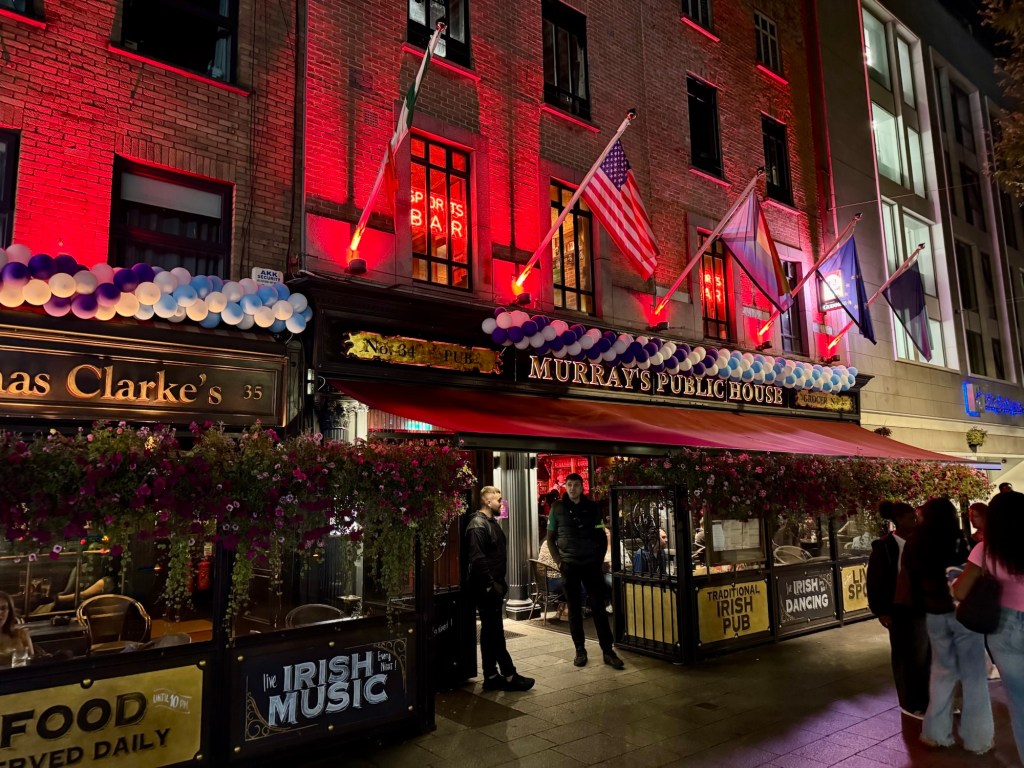
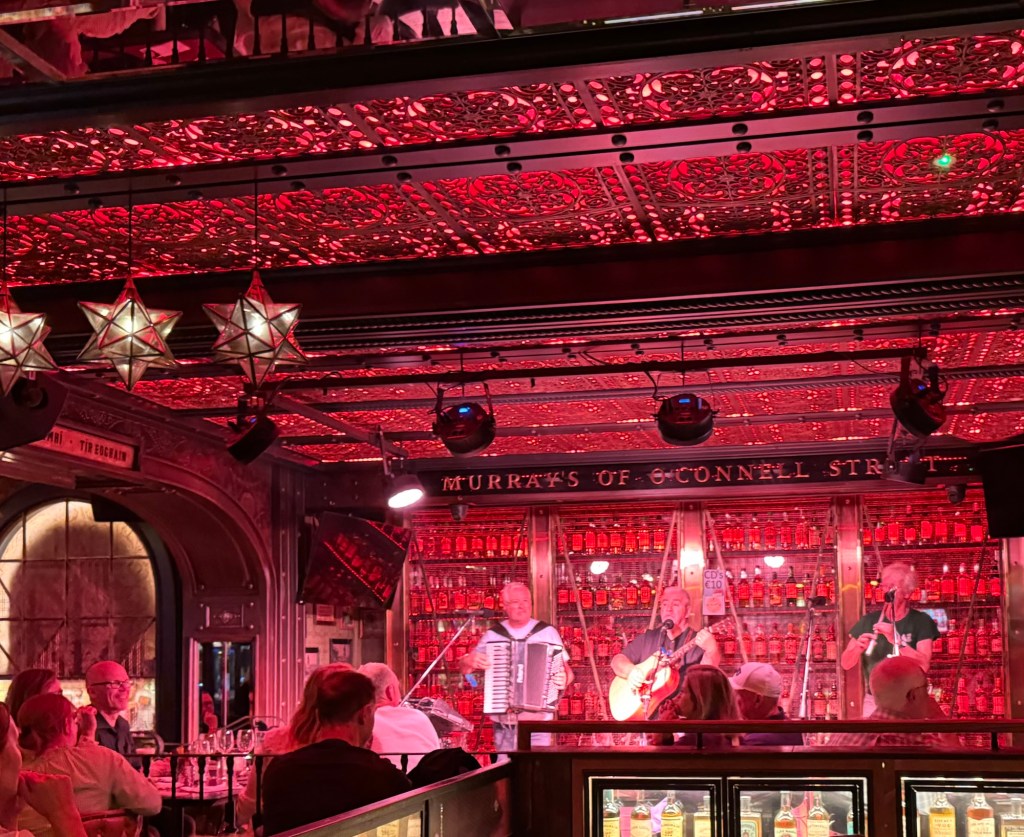
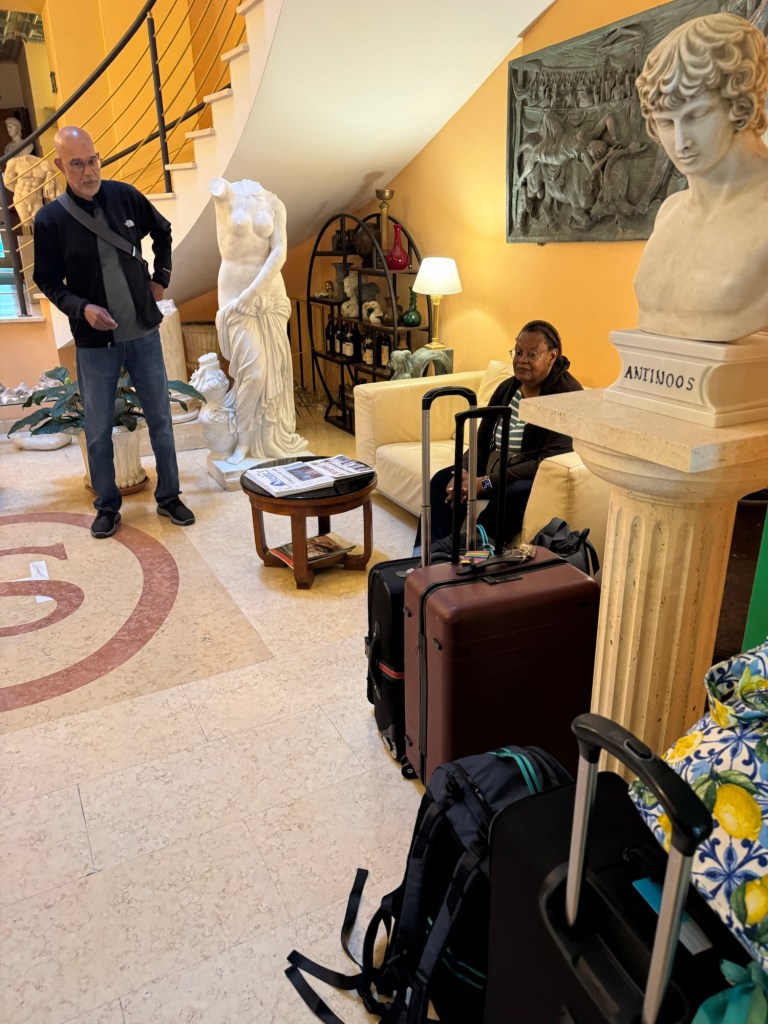
It was late so by the time we checked into our hotel it was time for dinner. They recommended the pub next door Murray’s for Irish food and music. I had a few beers some fish and chips and heard an Irish band. So not bad for our first few hours in Ireland.
I always hate the end of a trip. Once you start for home you are just ready to be there however this time I am flying business class so I am excited about the trip.
First we got to the import super early because of the new electronic system for customs. There really were not any lines so no need to be so early but oh well. The new system worked for everyone but me. I tried several scanners but none worked. They just kept telling me to try another one that the newer ones would work. Sadly that was not the case and I finally got to go to through the old fashioned way with someone looking at my passport. I can’t say they actually looked but did open it and give me a stamp so likely my last stamp for my passport since that will likely be a thing of the past.
We hung out in the vista lounge so being early wasn’t that bad. We had one last Aperol Spritz and yes it is 10 on the morning but flight days don’t count and you can drink whenever.
Our flight was a little late but not bad and soon we were boarding. I wish I could say the seat was not worth it but it was. I loved it. Plenty of room for all your stuff. A large screen to watch the movies on and great headphones. I didn’t use the cushion to make it into a bed but I did lay it down and sleep for a while. It was a little over 9 hours and I watched 3 movies and had two meals. The first was the best airplane food I have ever had served on a real plate with actual utensils. Desert was an ice cream sundae that I could have the toppings I wanted. There was no warm cookie snack and I was a little sad about that. In fact I was a little disappointed in the snacks. They didn’t offer anything between the meals and the second meal was more snack with a bunch of Mediterranean things on a plate which I didn’t enjoy. But the seat was still nice and I wish I could do it every flight.
We landed with plenty of time to make our connecting fight in Philly if our bags had come out in a reasonable amount of time. We waited 45 minutes for our bags which were some of the last ones to come out. Not sure why they bother with the priority tag in the bags they clearly don’t mean anything to the guys that load the luggage. We were early to the airport so our bags got in the plane early and therefore last to come off.
We did make it to our gate right as they started boarding. No time for any stops. The airport had been miserably warm and the flight from Philly was warm. I was miserable in my sweatshirt that I had worn to save room in the suitcase. I will never again make that mistake. I can always add a jacket but I was stuck with what I chose and miserable for it.
The flight wasn’t long comparatively but too long for how hot and no screen. American has moved to feee WiFi for movie purposes but I didn’t want to hold my iPad and my phone was out of charge so I couldn’t use it. I finally found the plug so I was at least able to edit photos while I sweated.
We finally landed in Austin about 30 minutes early. This time our bags were off in early. More to do with being late than the priority tag I am sure. The uber ride was good. The driver was a little creepy but he had the air on blowing full blast so at least I was no longer hot.
It was a great trip. We saw a lot, are a lot of really good food and basically drank our way through Italy. I think ever had a good time and feel enough in love with Italy to want to go again. I for one can’t wait to go back.
Sadly it is off to work tomorrow. My not retiring retirement trip was a huge success in that it showed me I really am ready to be retired so that I can travel more often and take longer trips.
Until my next adventure in Wales when I really will be retired…
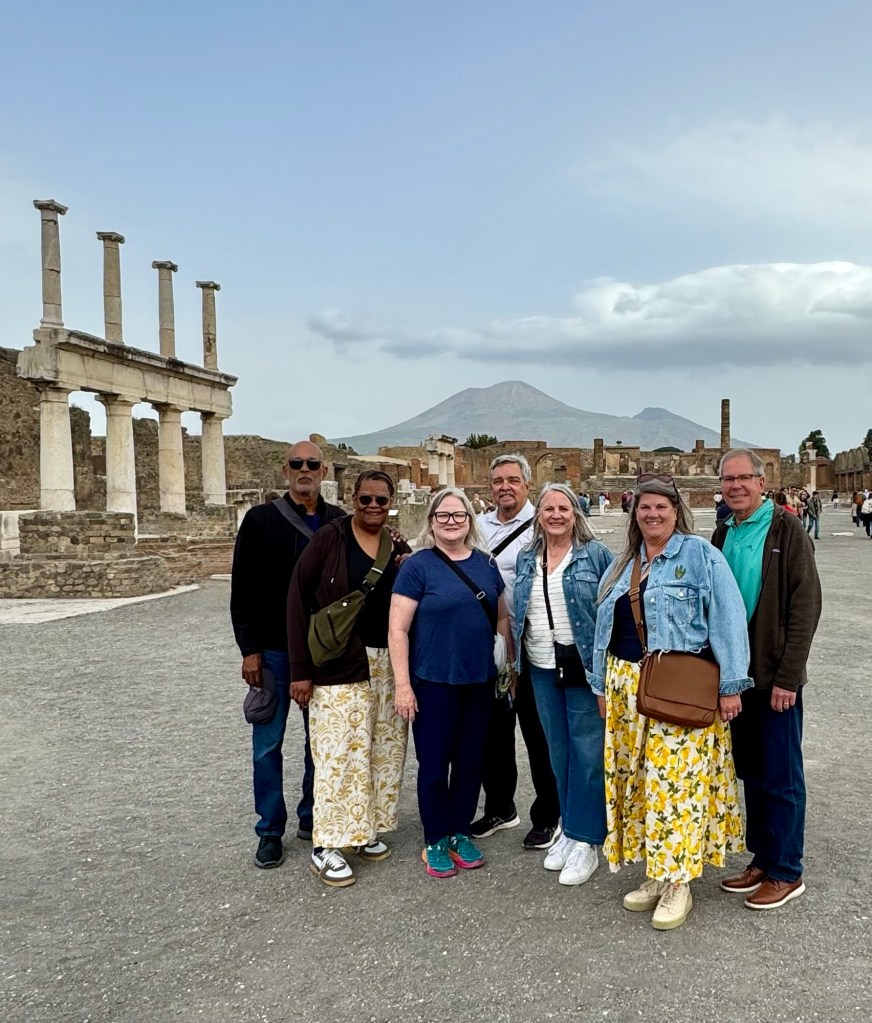
The last full day of the trip is here and even after 3 weeks I am not ready to come home. I wish we had one more real spot to go to instead of just back to a night around the airport. But at least we have Pompeii today to give us one more place to see.
First though we have to check out of the Airbnb, which means getting our luggage up all those stairs. It was a daunting task and everybody was worried about it. I rearranged my suitcase to move more to my backpack to get the weight below 40 pounds to make it easier to carry.
Our driver was to be the same that brought last week so we knew he could find us and that everything would fit so at least we didn’t have those concerns. He was coming at 7:15 so we had to get up early to give us enough time to make multiple trips with rests in between. Margaret and Clark started super early and soon we were all part of the procession and we had it all up and waiting before 7. Thanks to the guys for carrying all the big bags.
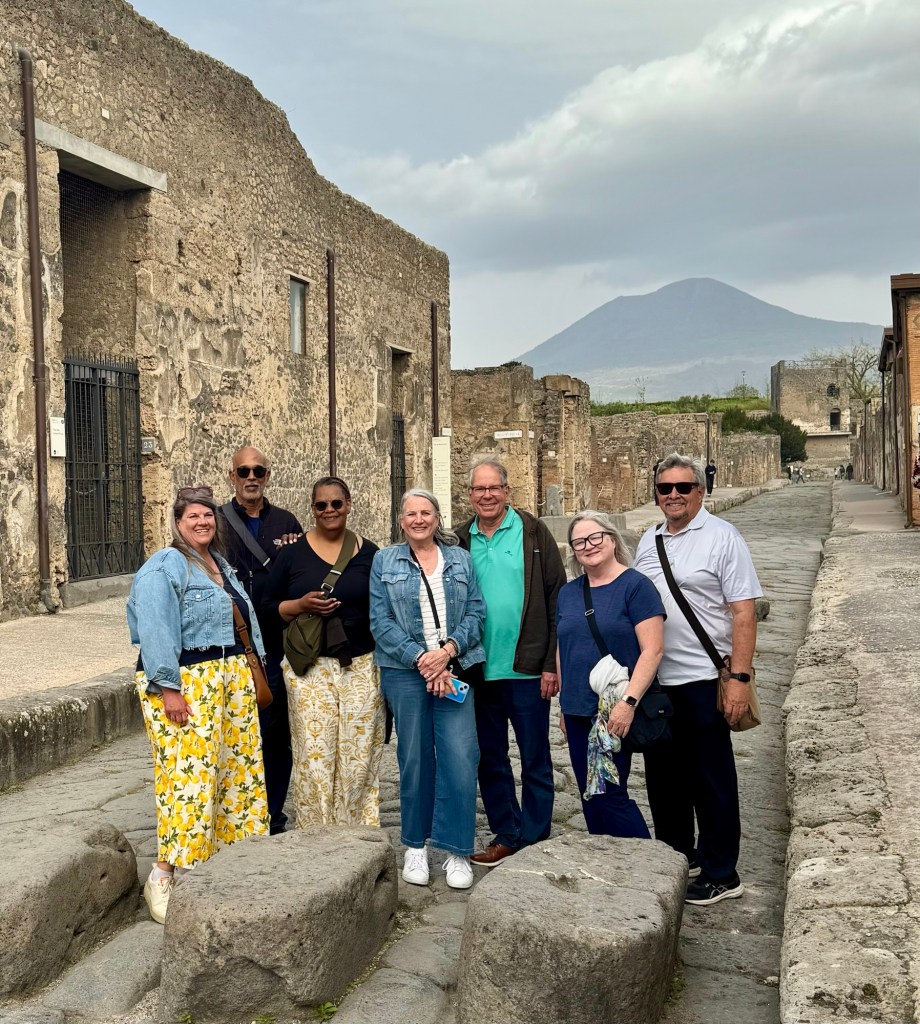
By 7:20 we were off on one last adventure. I had been to Pompeii on my very first trip to Italy but was excited to go back again. I had watched several documentaries on it and now had a better understanding of what had happened and the ongoing process of uncovering new areas of the town.
We got there a bit before 9 so had time to have coffee and croissants before lining up to get in. Our tour guide led us quickly through the entrance and we were off to hit some of the bigger sights before the crowds picked up.
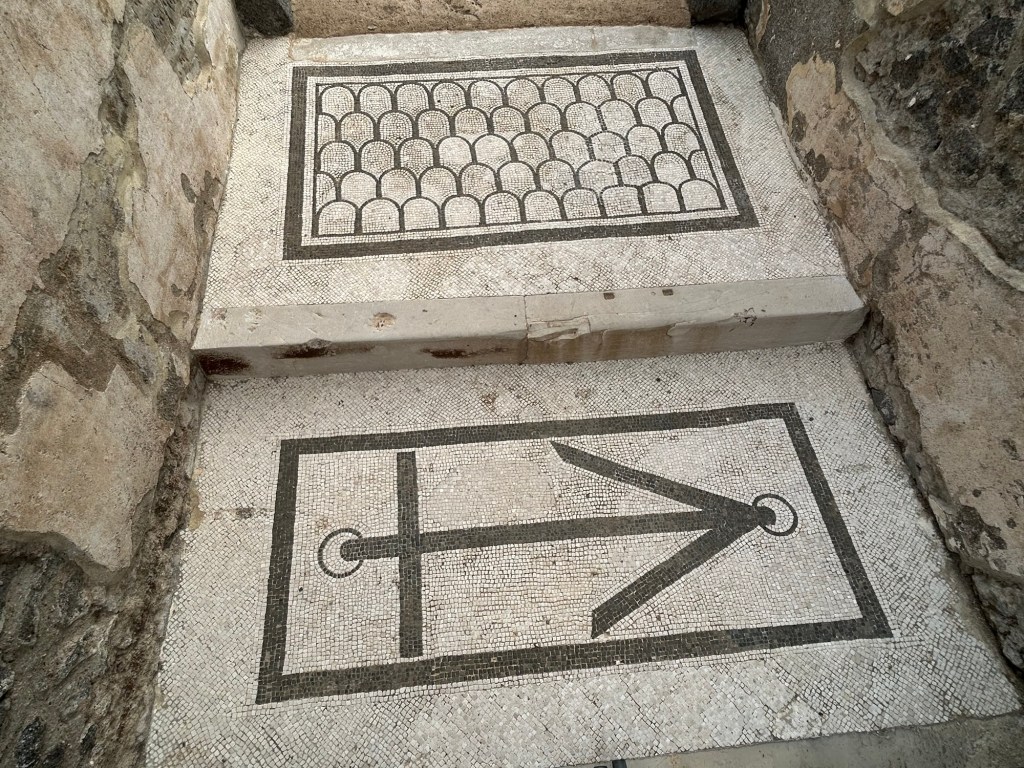
She was another excellent guide and we learned a lot about how life worked in Pompeii. It was way more advanced than I realized. The city was set up on the grid system and had roads running east and west and north and south. It also had established districts for shopping, restaurants, even fast ready made food that was purchased to take home and eat. You could identify the businesses by a rut in the doorway where a sliding door would have been to slow them to shut it down when closed.
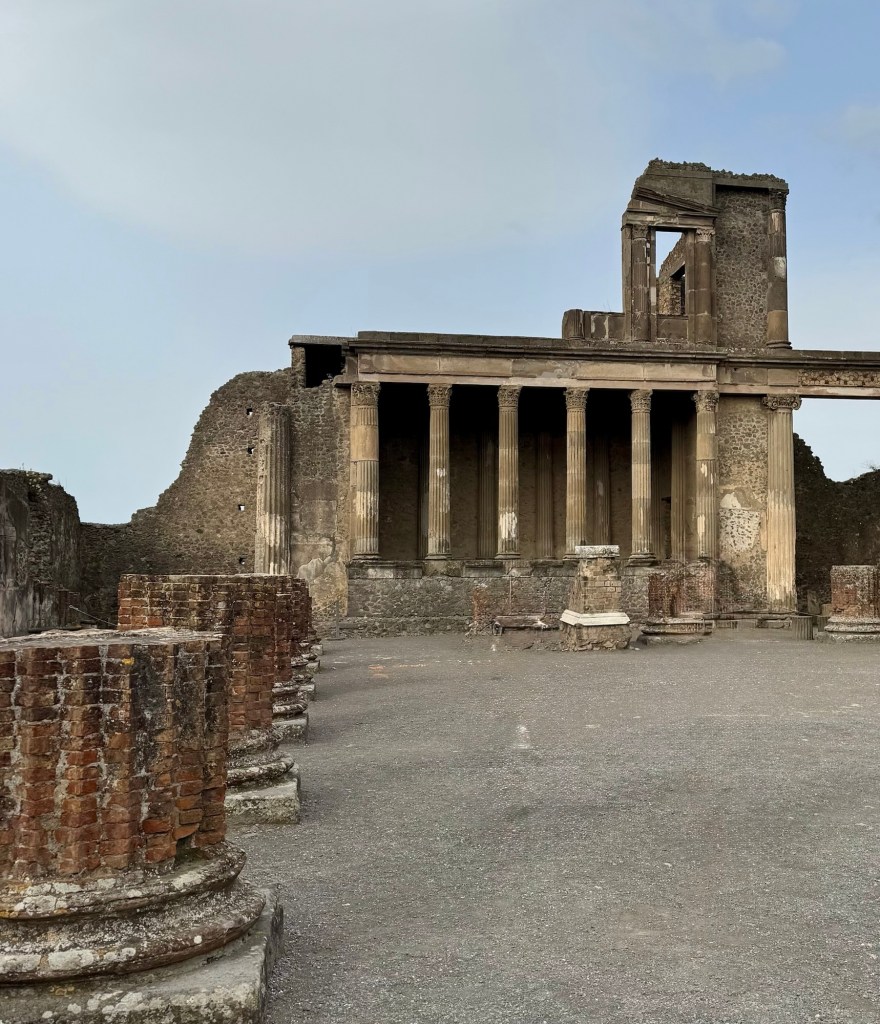
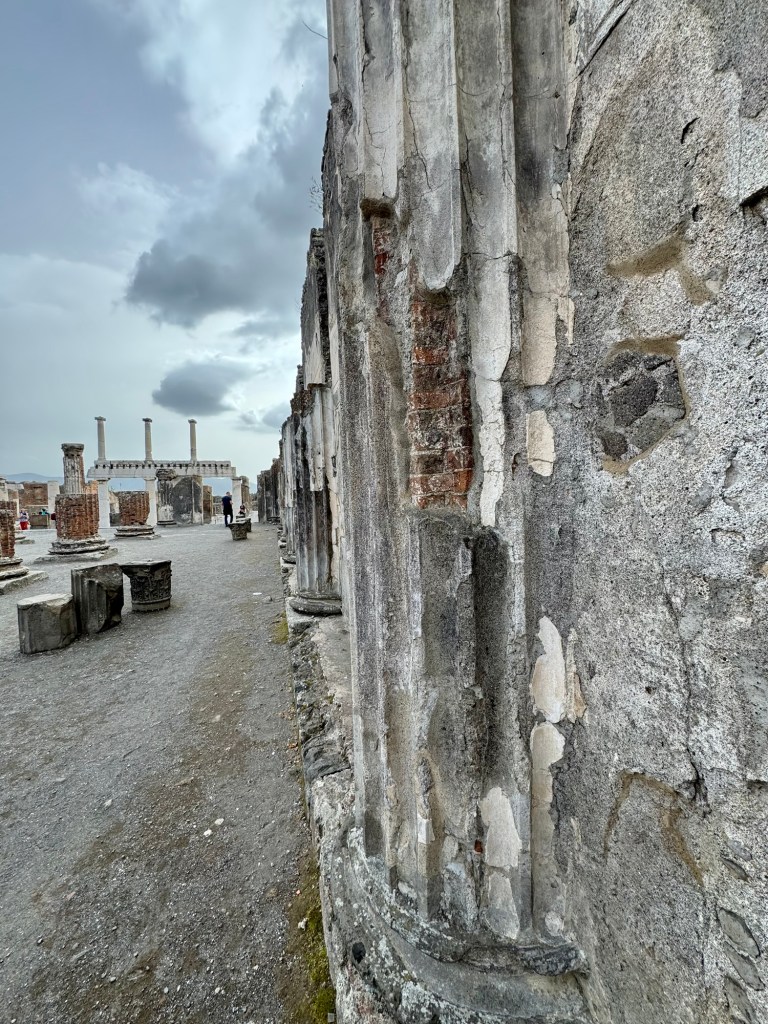
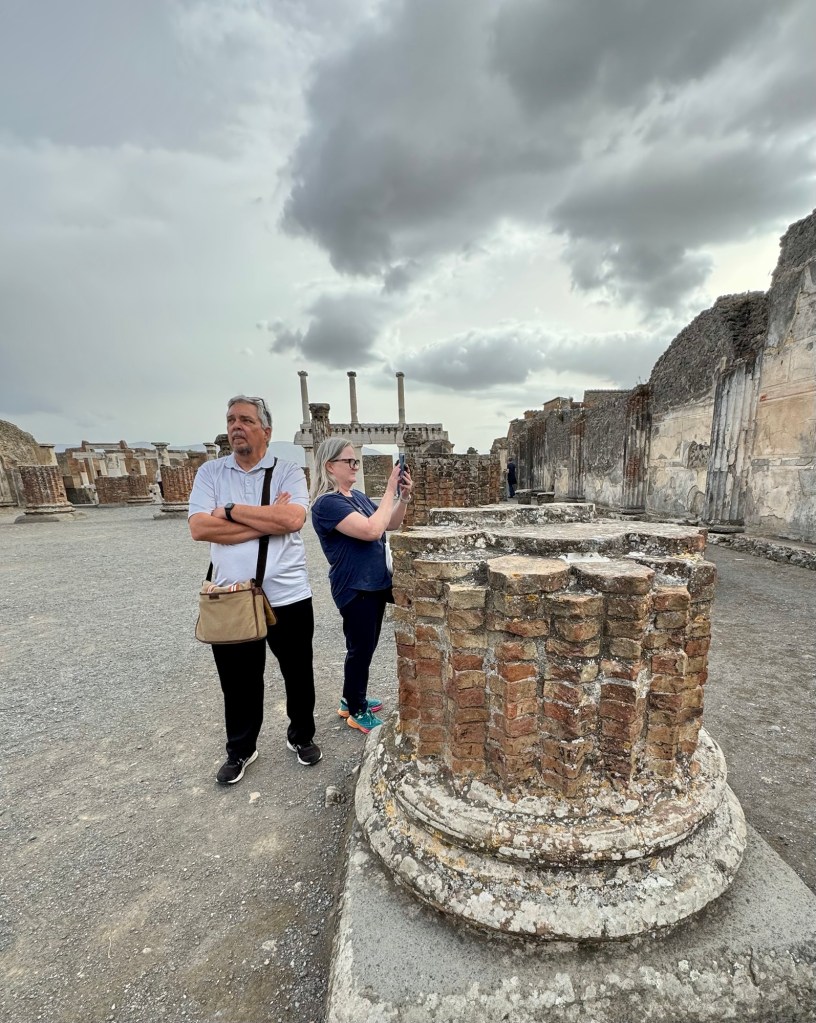
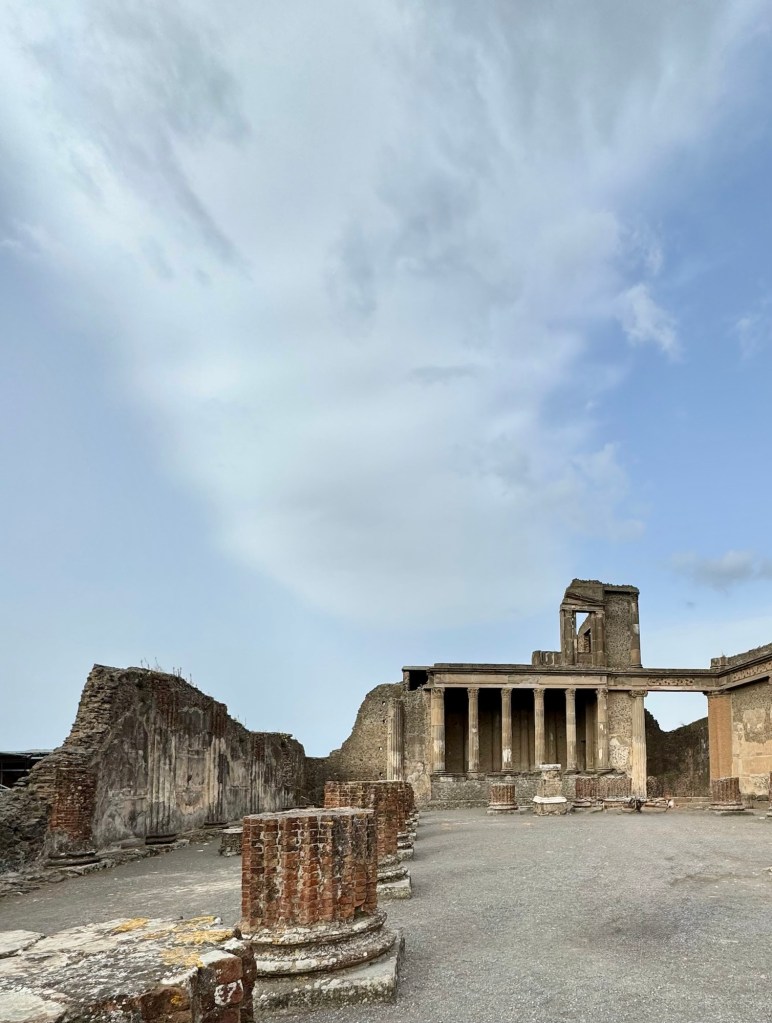
Pompeii predates religion as we know but had a Basilica. Which basically means meeting house for decisions or enlightenment. It later taking over by the Christians and evolved into the large main place of worship in the community. Not much was left standing of the Pompeii Basilica but you could see some of the walls and columns. It seems they liked the look of marble but did not have access to enough of it so they used plaster to recreate it.
Basilica
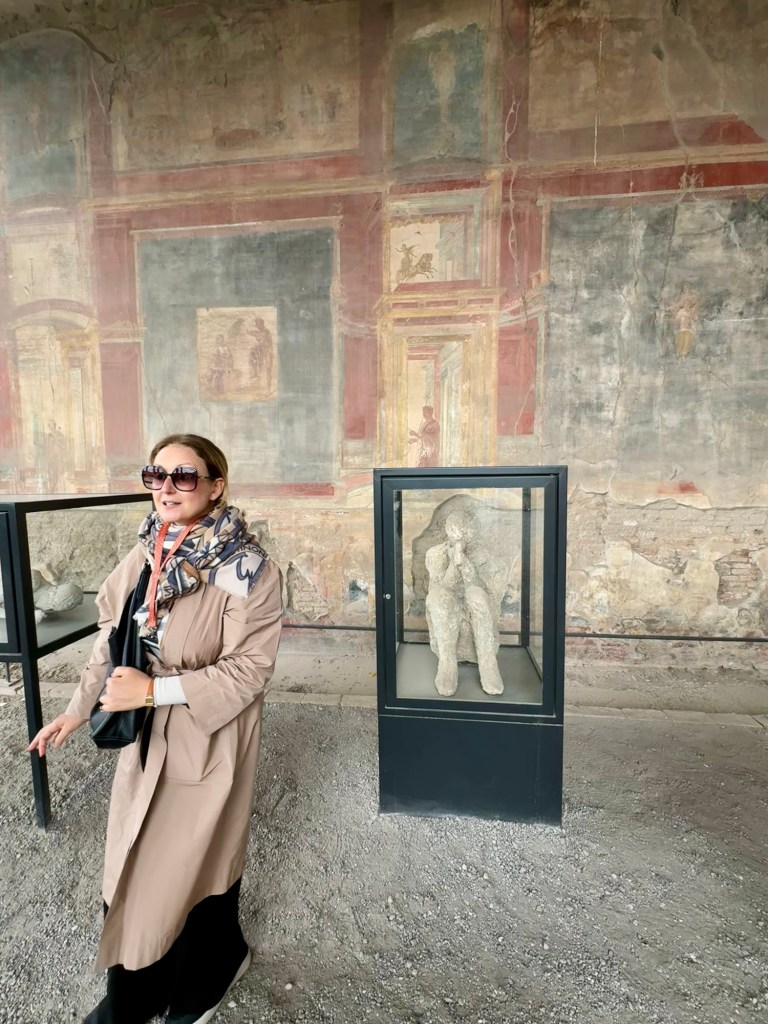
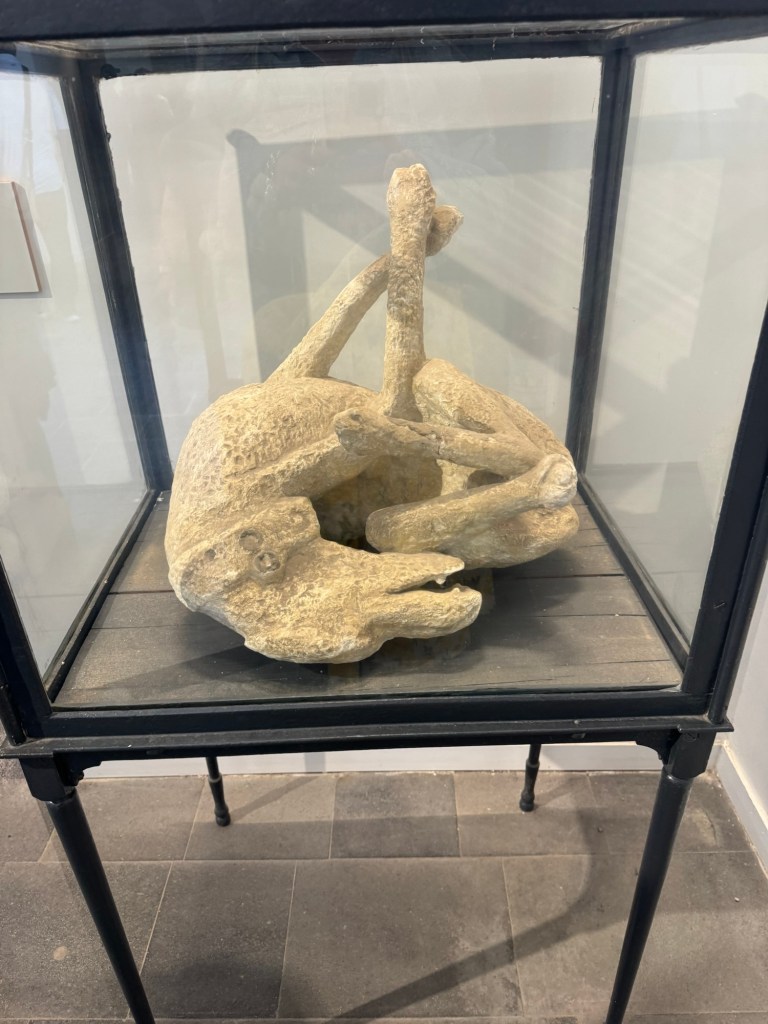
Out in the main square they had some of the plaster casts of the people that they found. She explained how these were made and it was totally different than what I thought. At some point during the excavation someone realized they were coming across hollow areas in the ash. Instead of just breaking through it he pumped plaster into the hollow area allowed it to dry and then dug it up. Seems the ash had harden long before the body decayed so as the body decayed the ash encompassed the shape of what had originally been there. the plaster holds the bones but otherwise is just a solid representation of space that was left in the ash. She said they also had plaster casts of plants because they couldn’t tell what the hollow space was until the plaster set and they got it out. The casts of the plats has helped them identify plants and bring them back to be in the gardens that have been reestablished.
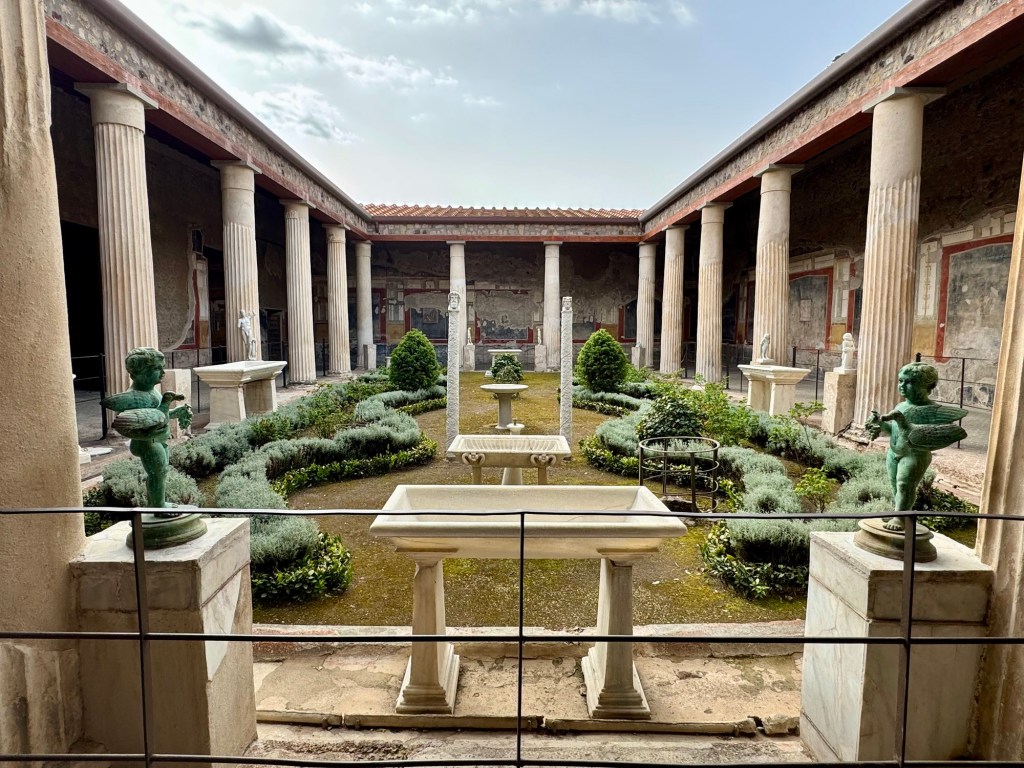
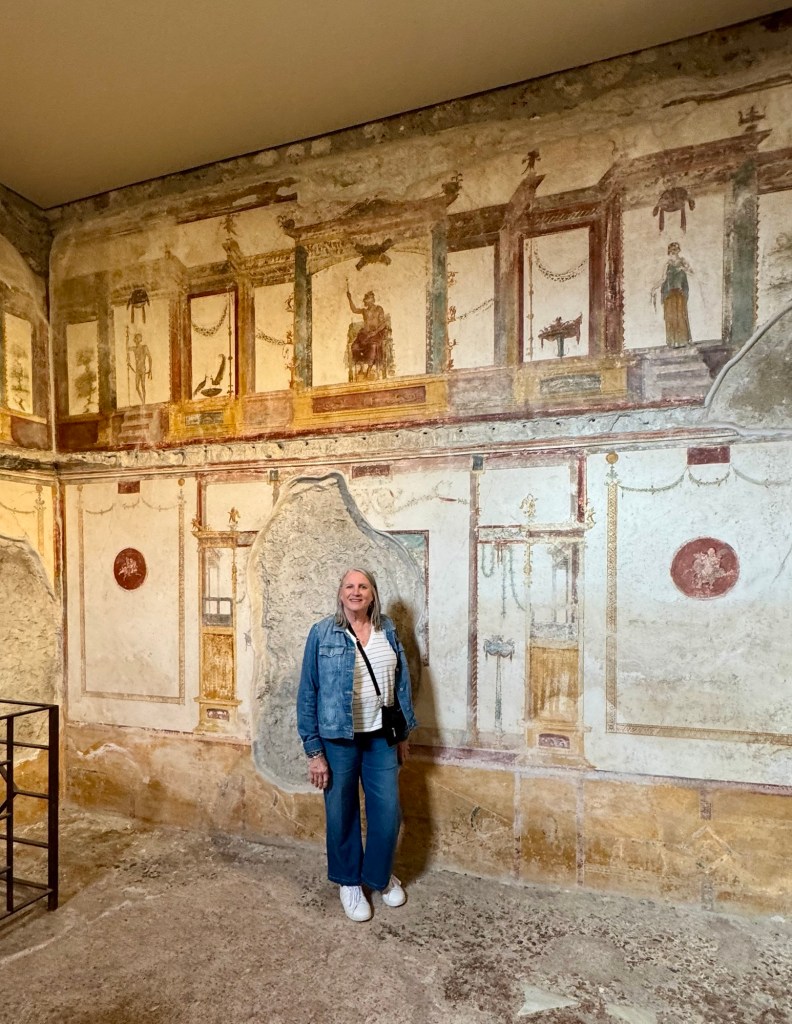
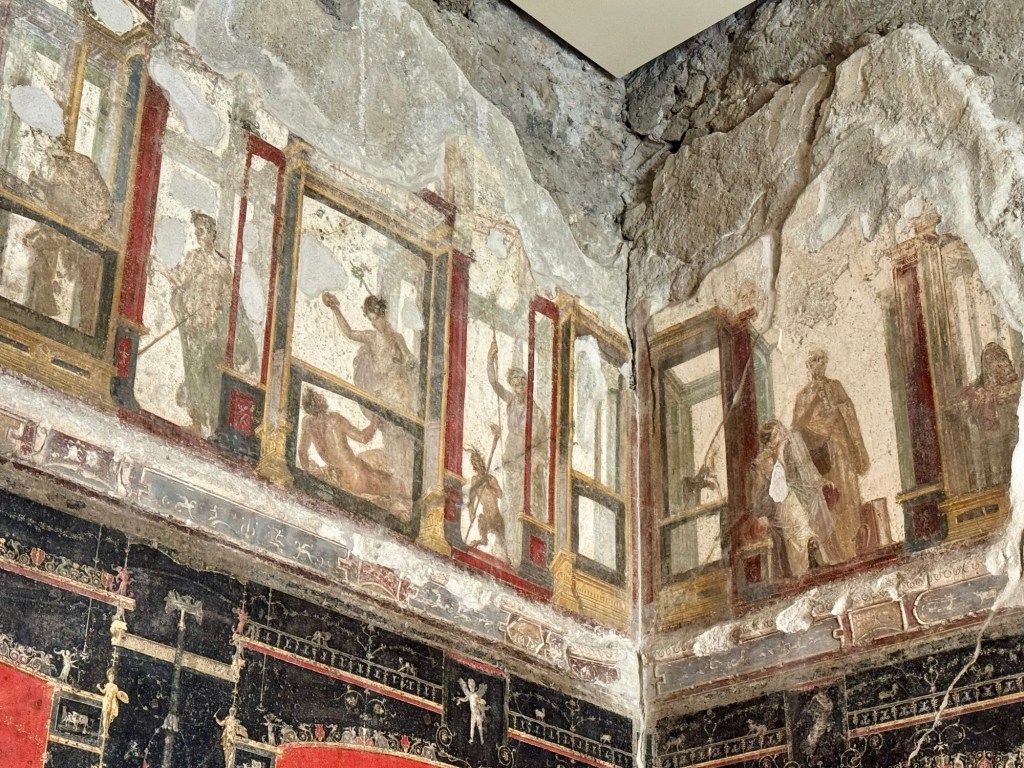
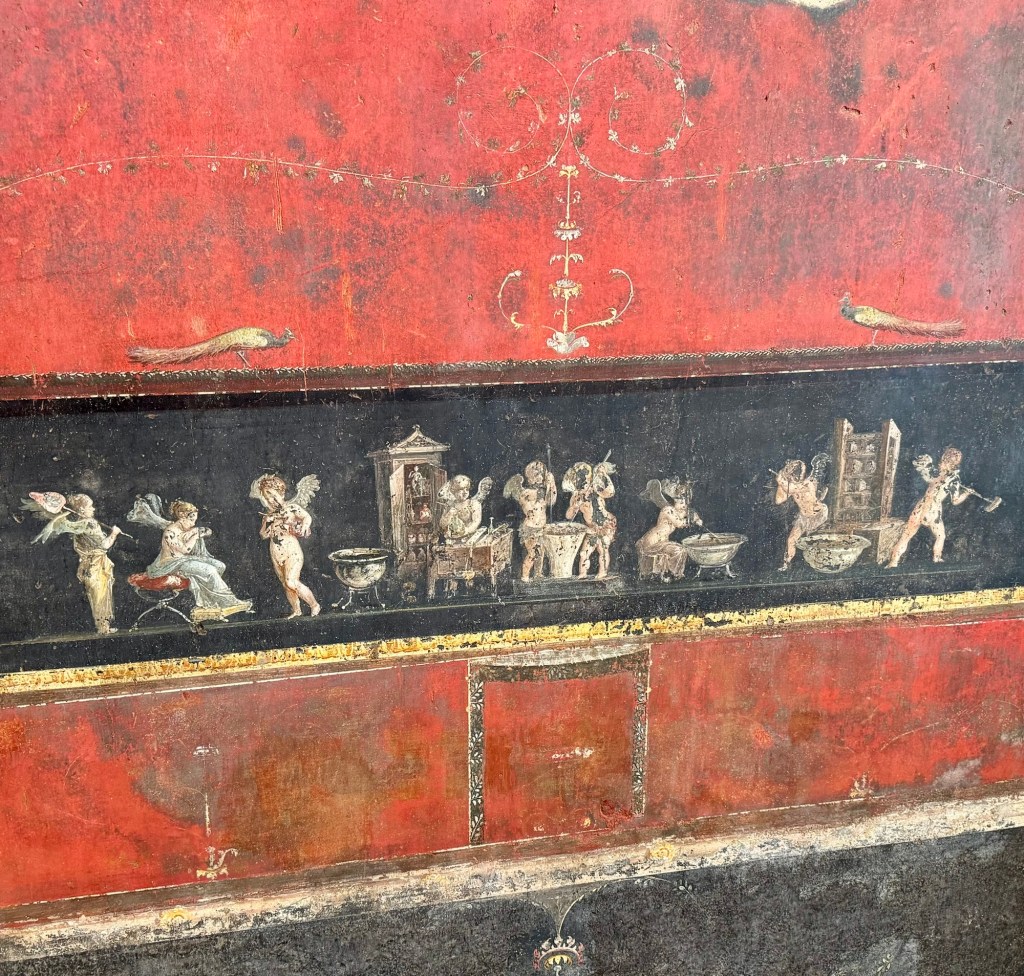
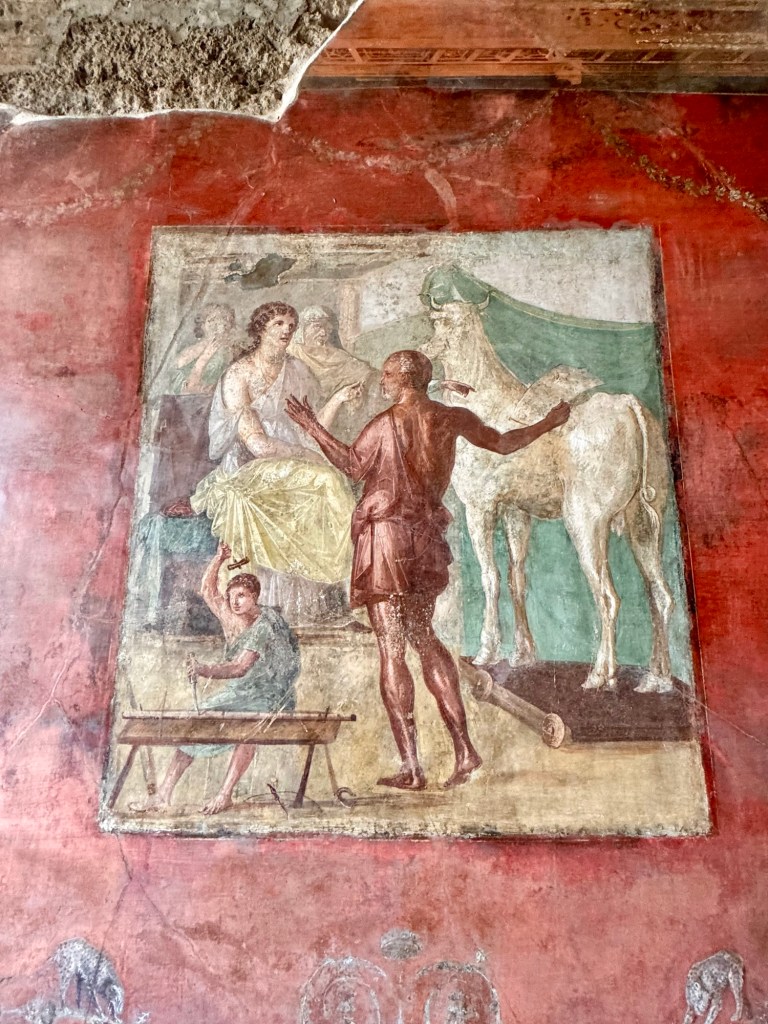
After this main area we went back to see the house of the two brothers, the House of Vetti that had made their way from poverty to riches and used their house to show off their new wealth. The house also contained a brothel so likely that is one way they made their wealth and kept it going.
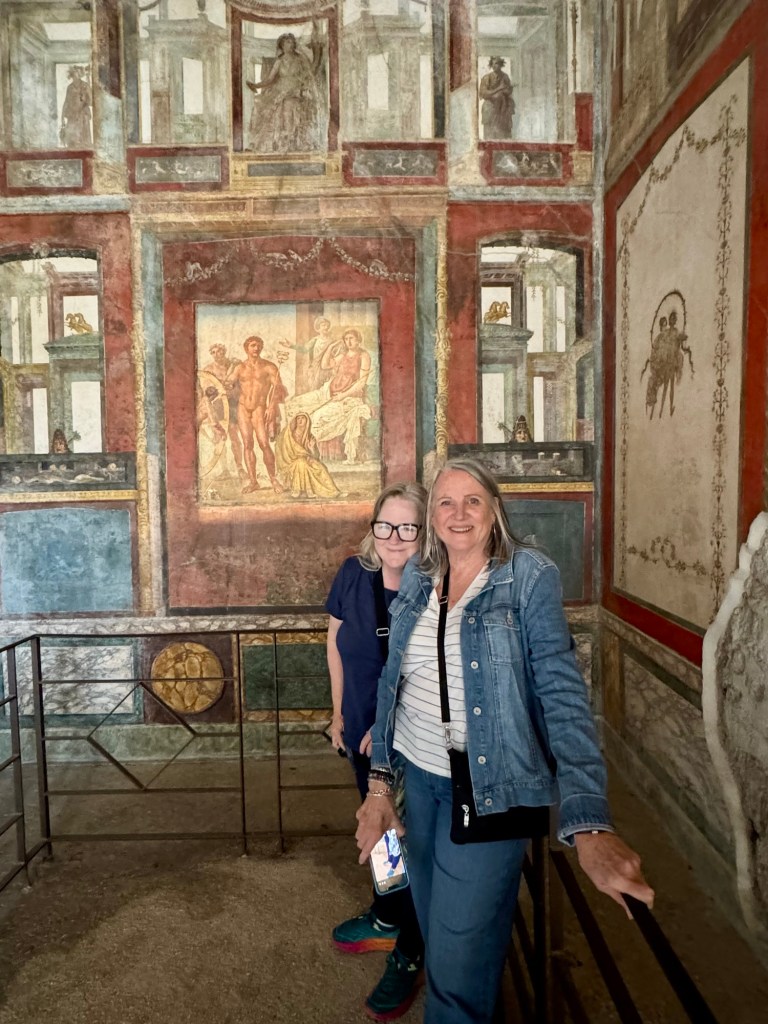
Courtyard of the House of Vetti
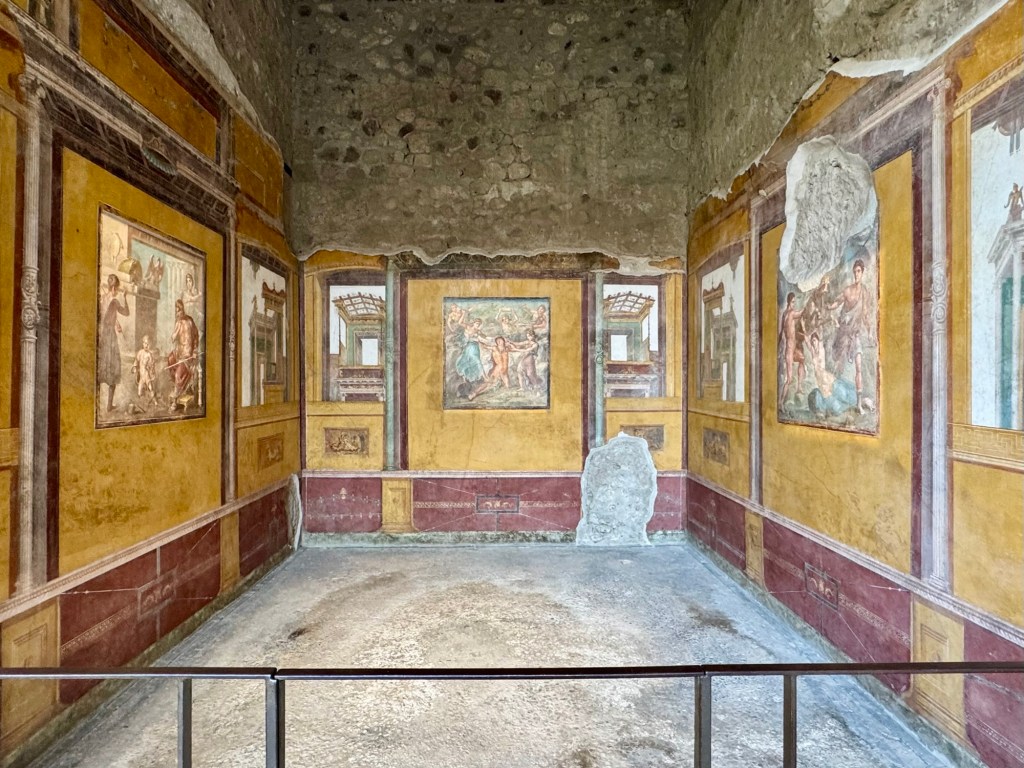
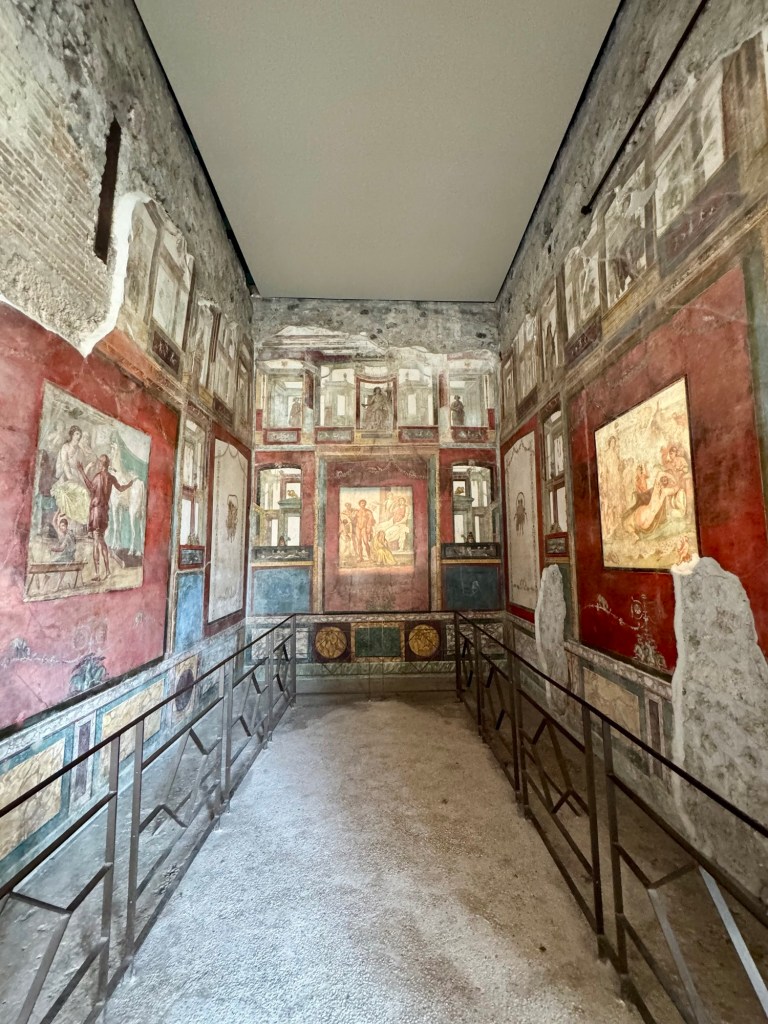
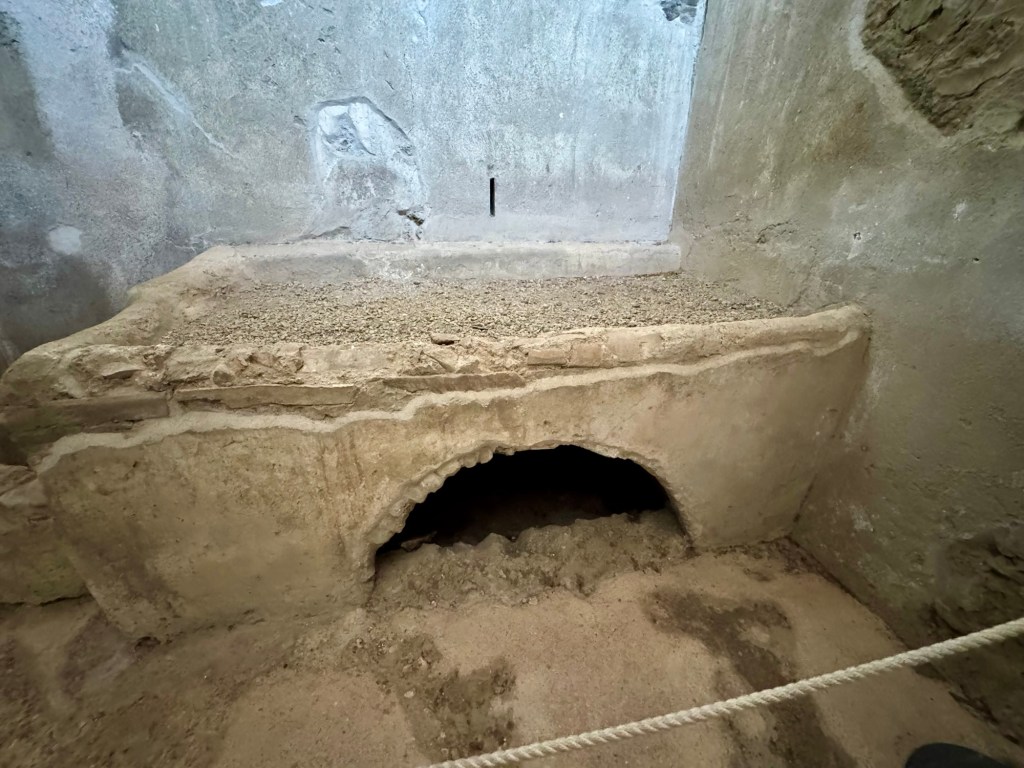
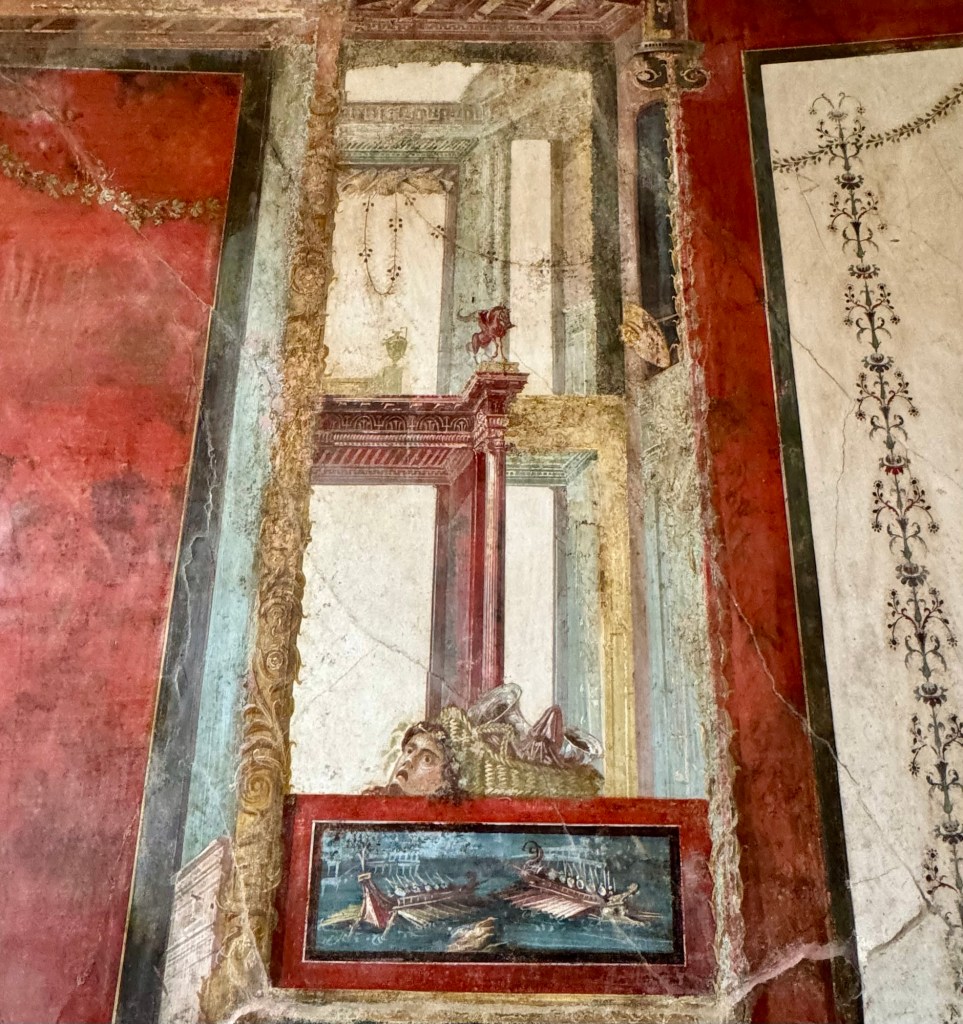
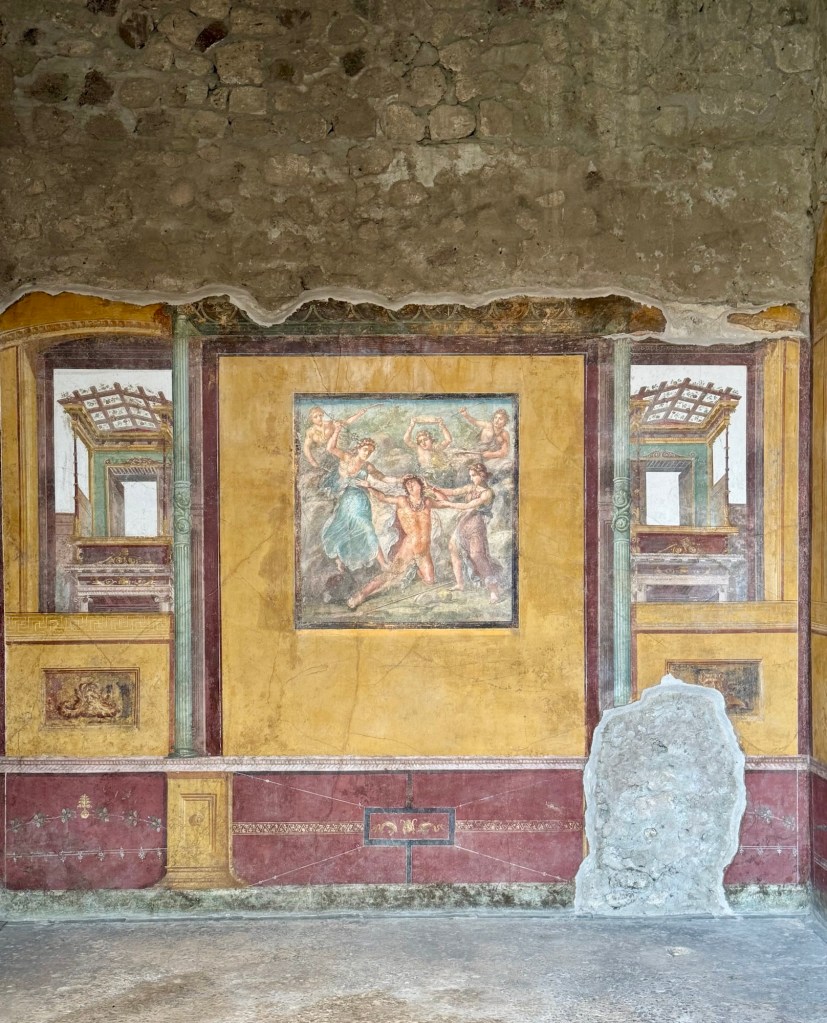
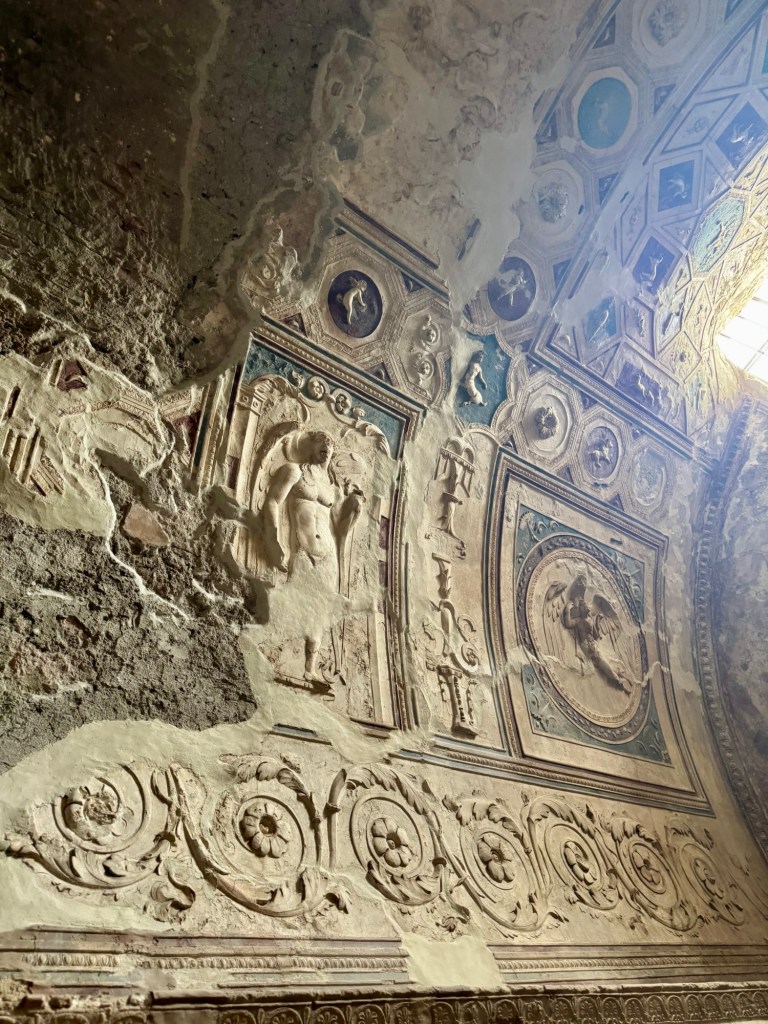
The house was quite elaborate with painted dining and meeting rooms, marble bath and a working cook stove.
The oven and cooktop
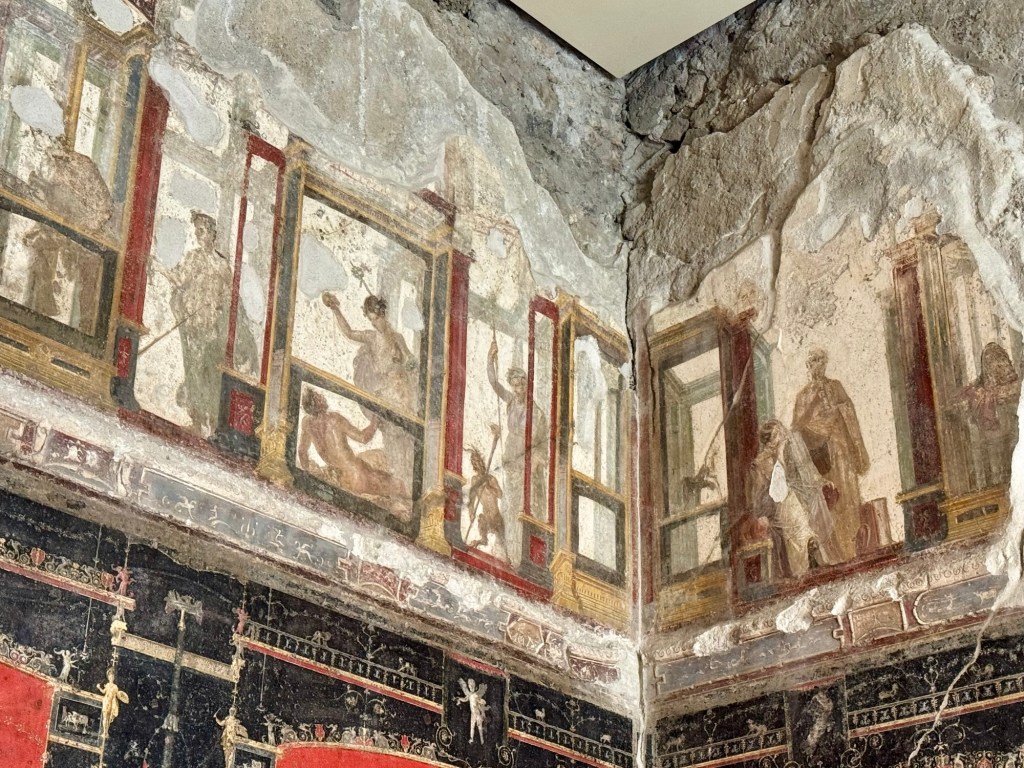
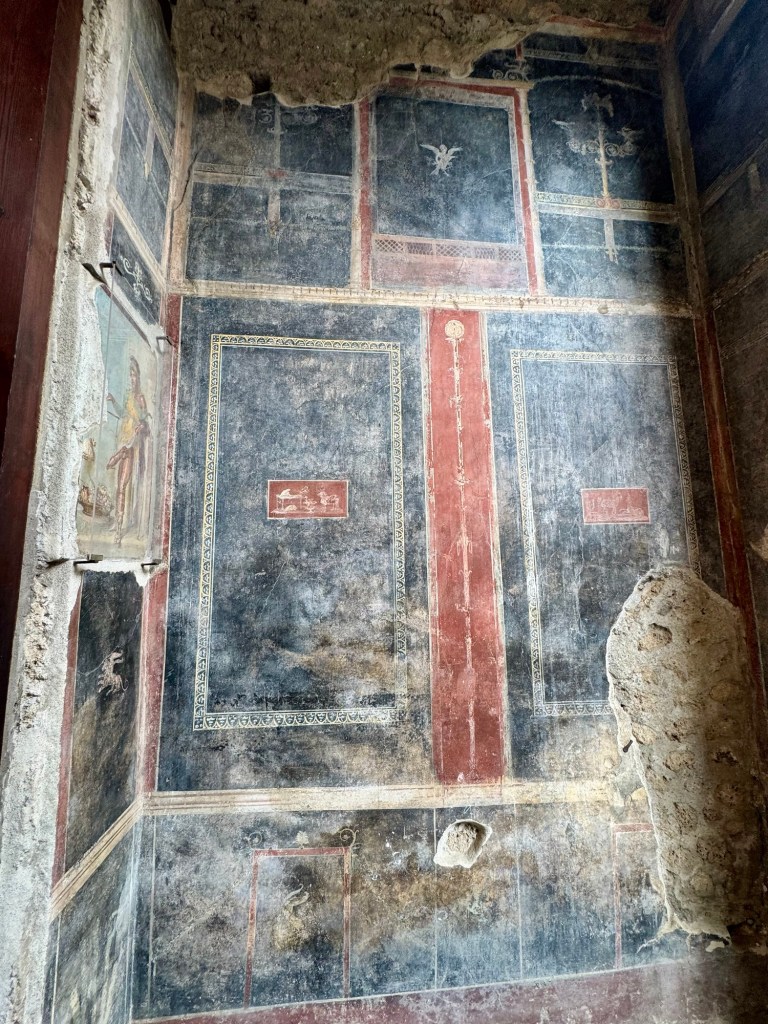
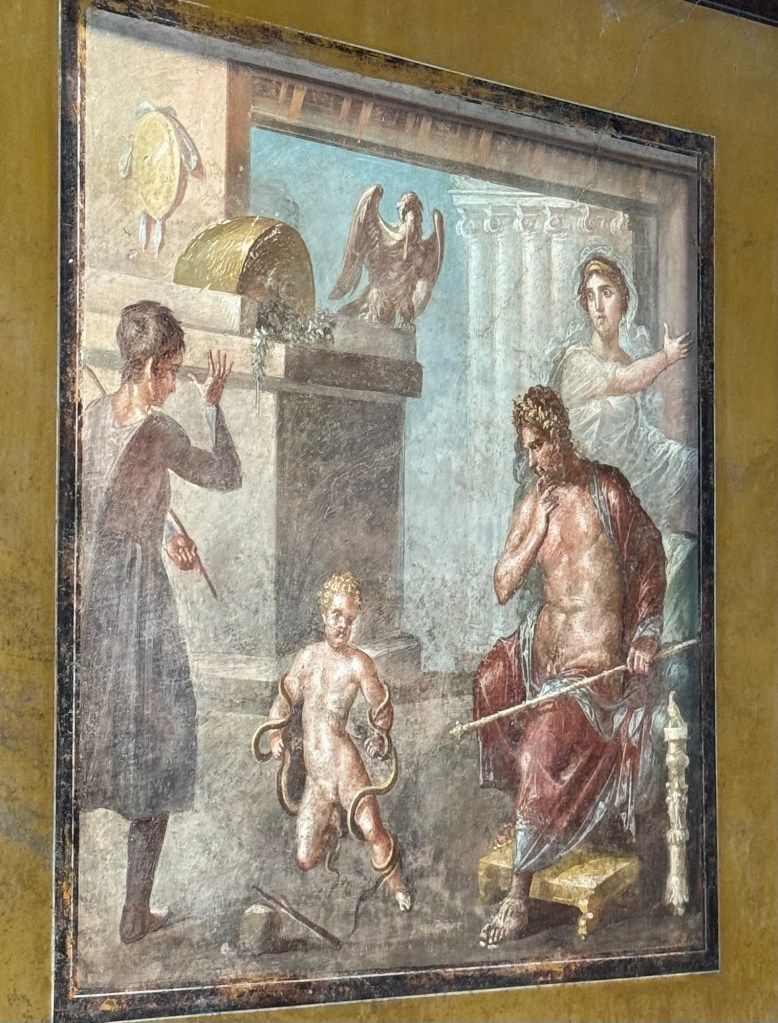
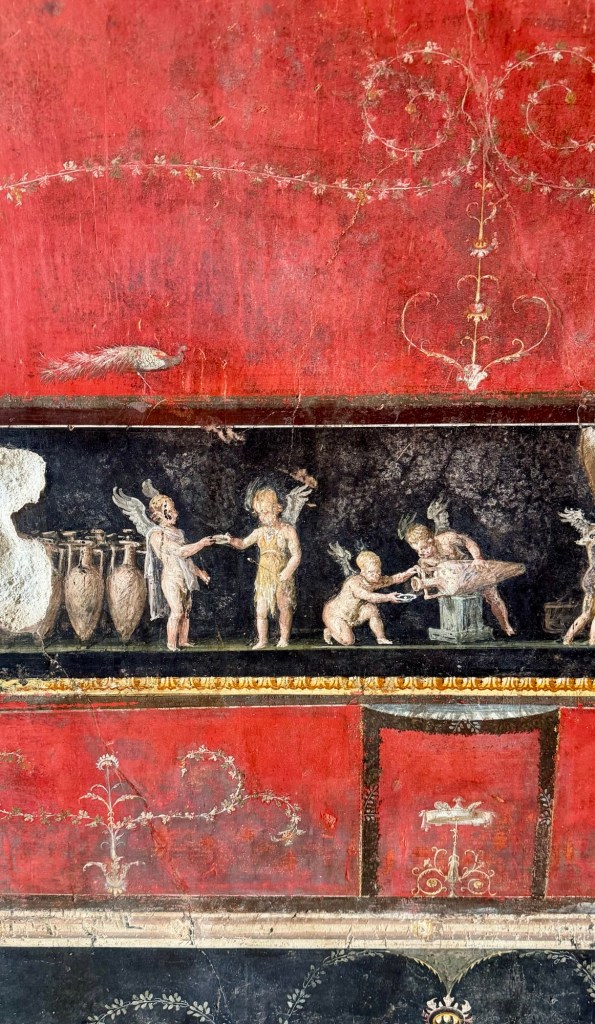
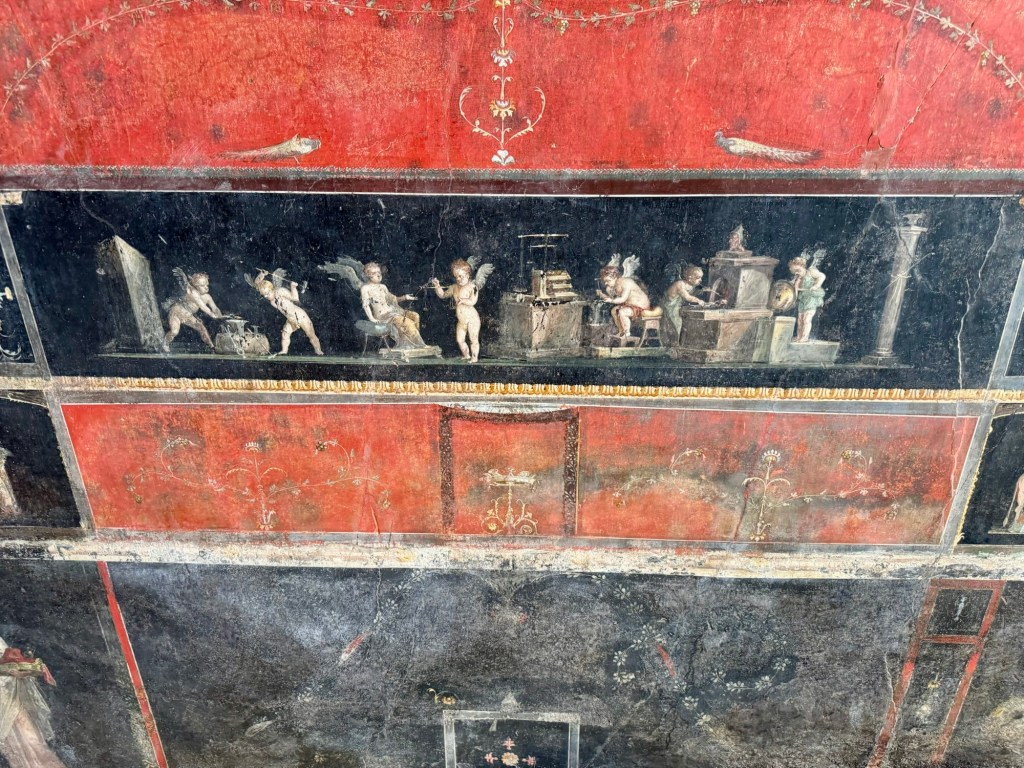
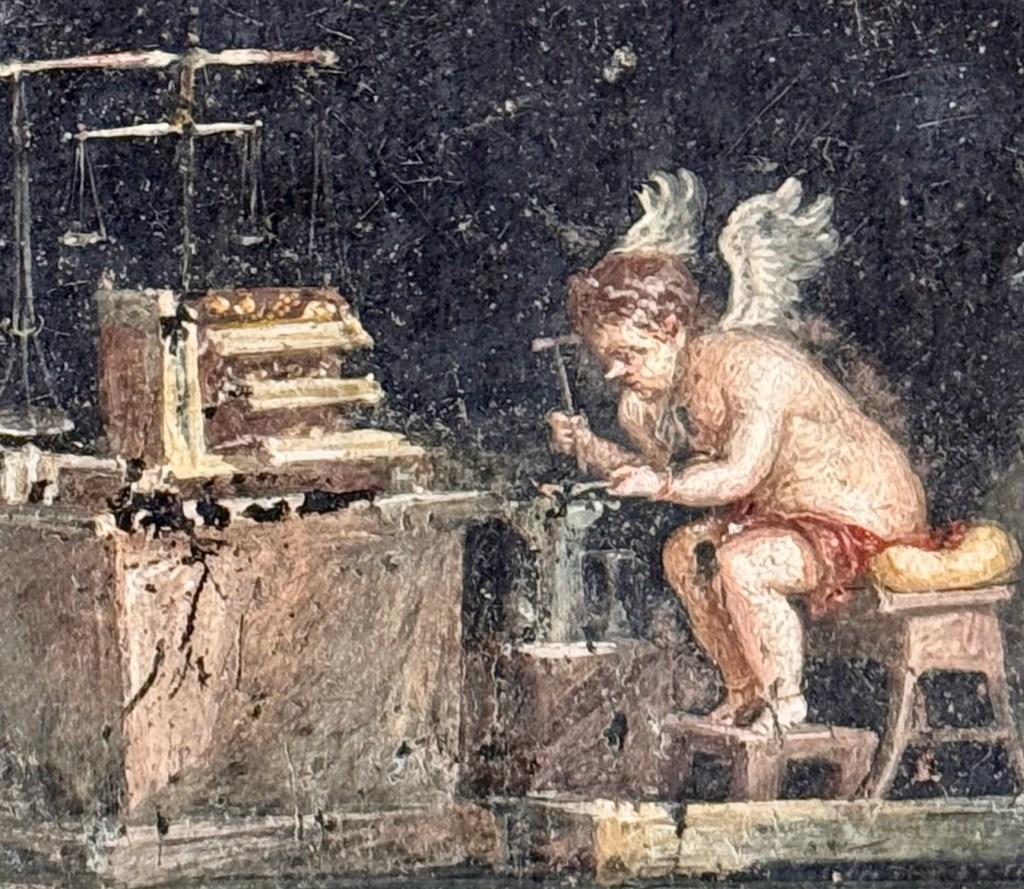
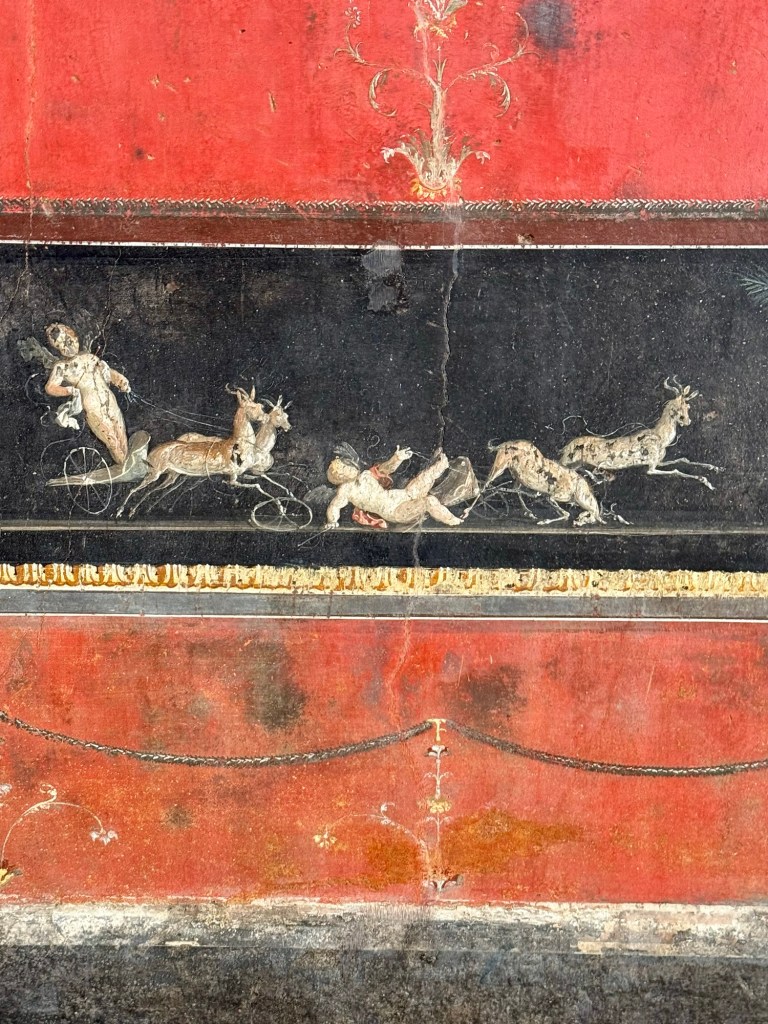
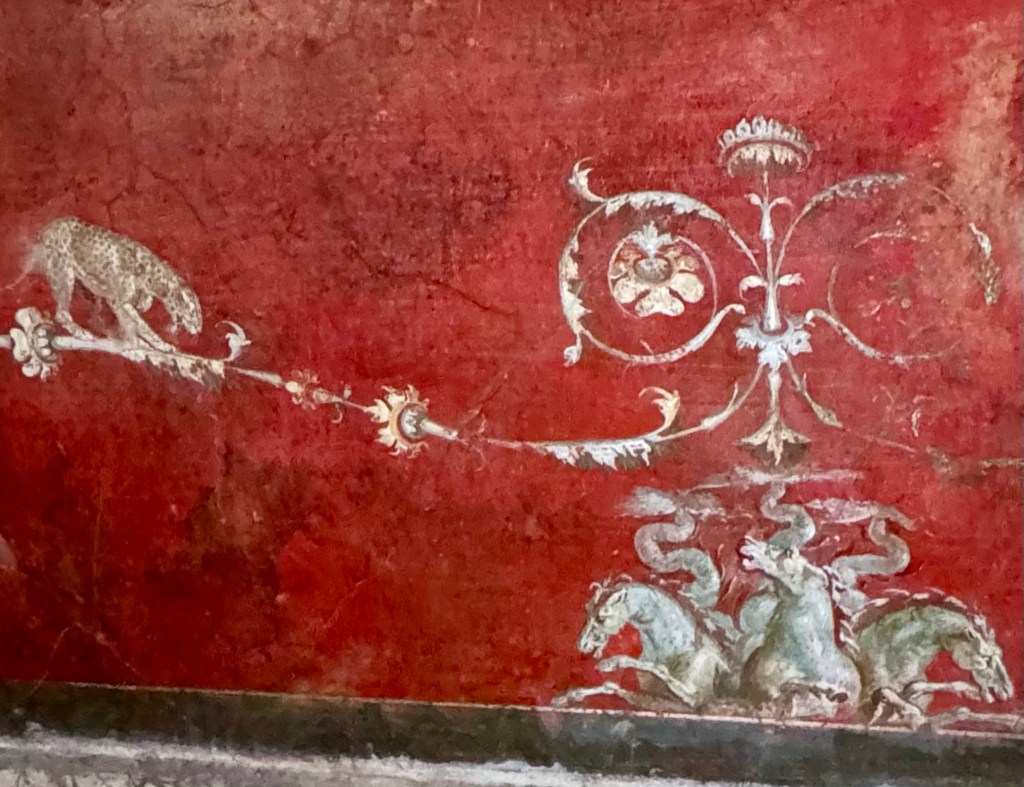
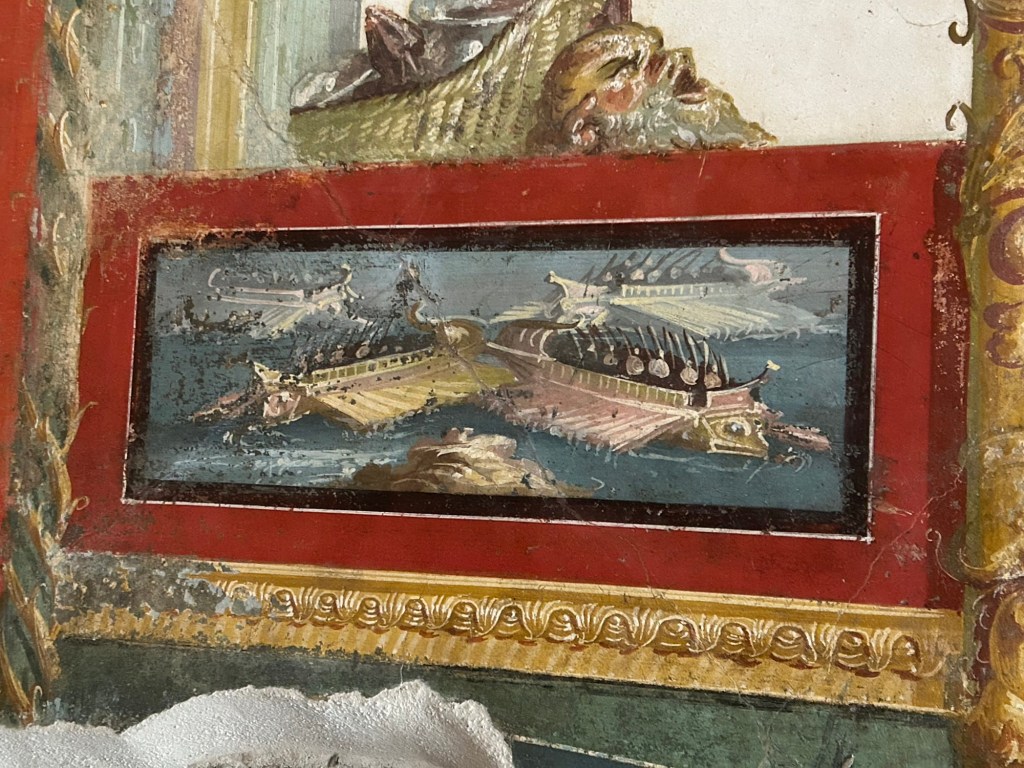
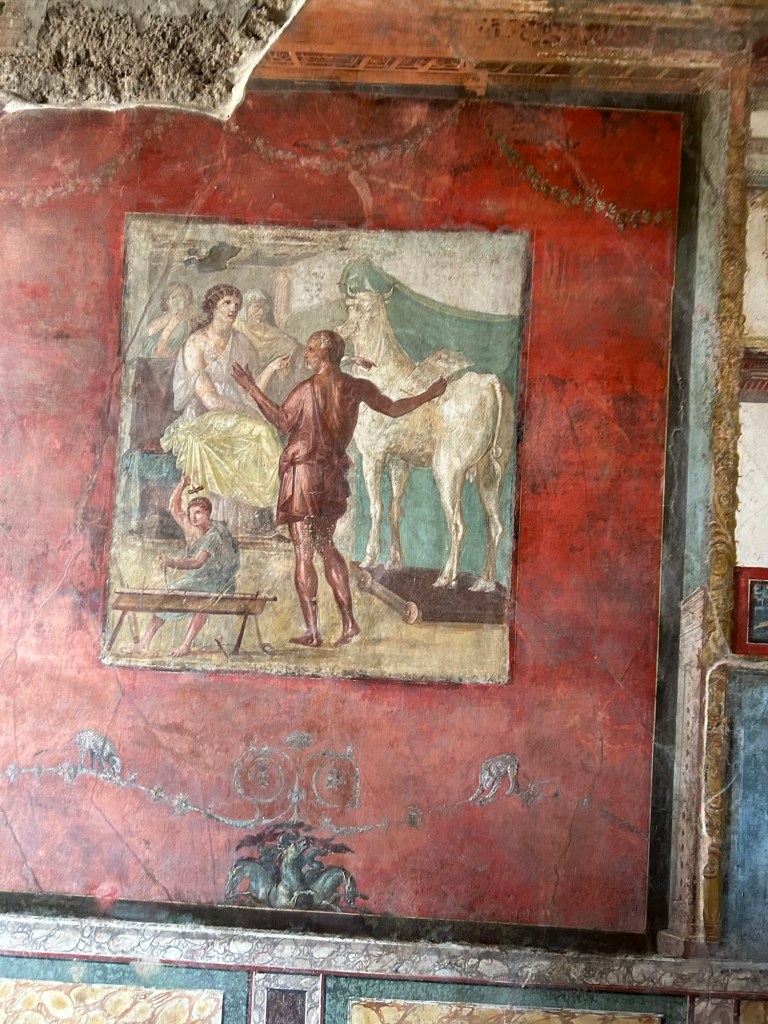
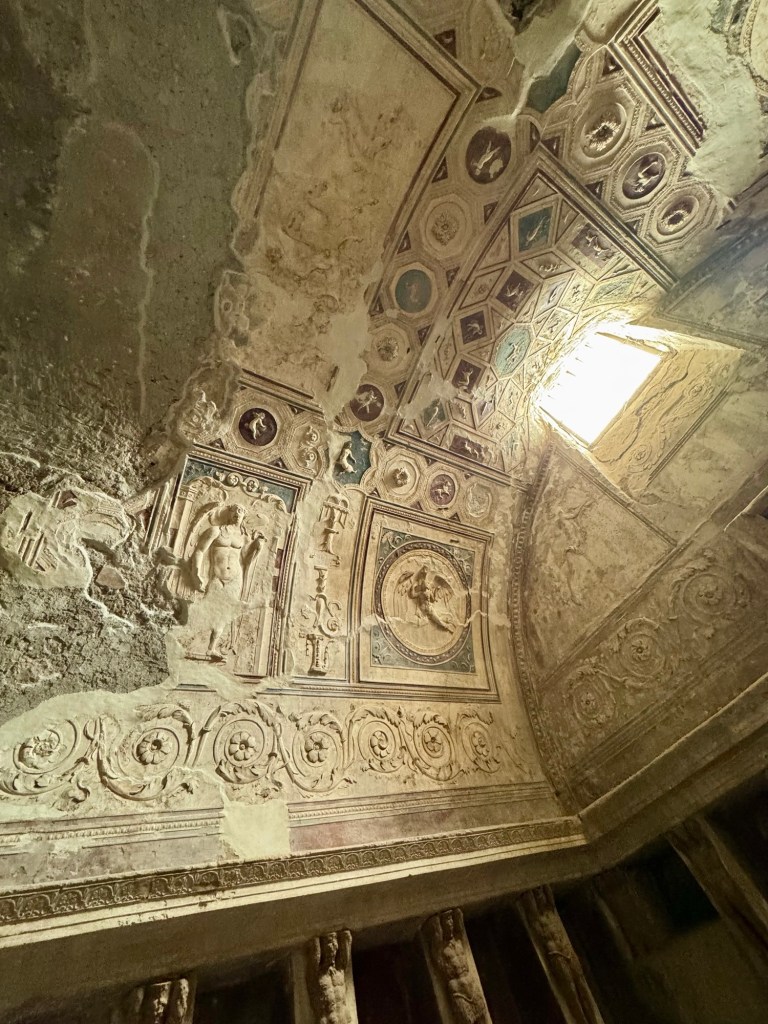
The frescoes were very detailed and painted to look like wallpaper or repeating designs instead of large murals.
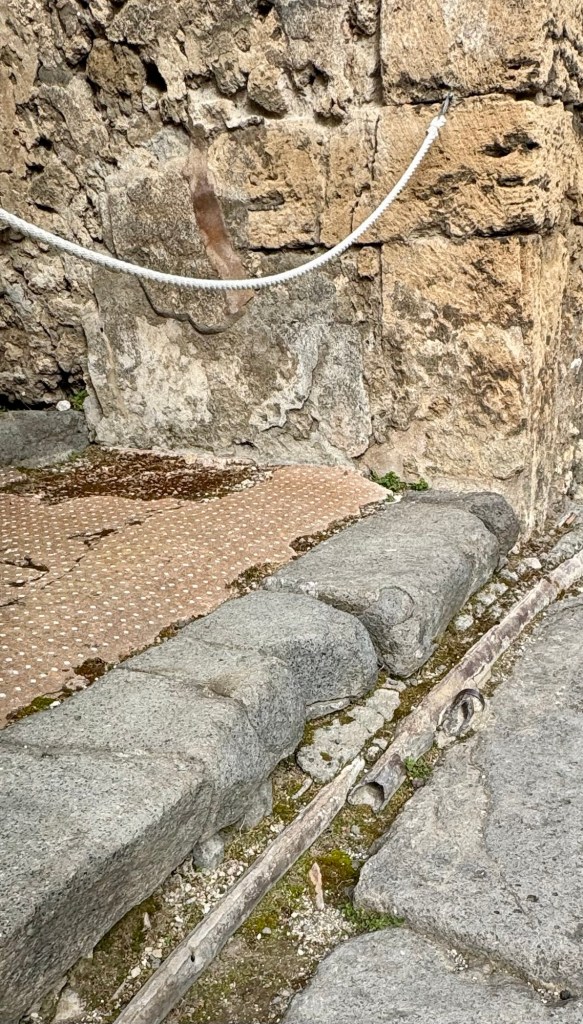
You might notice white marble dots in the floor in the picture above, those were there to reflect light. They also had larger ones on the streets and pedestrians areas. They looked a little more random on the roads but you can still see them.
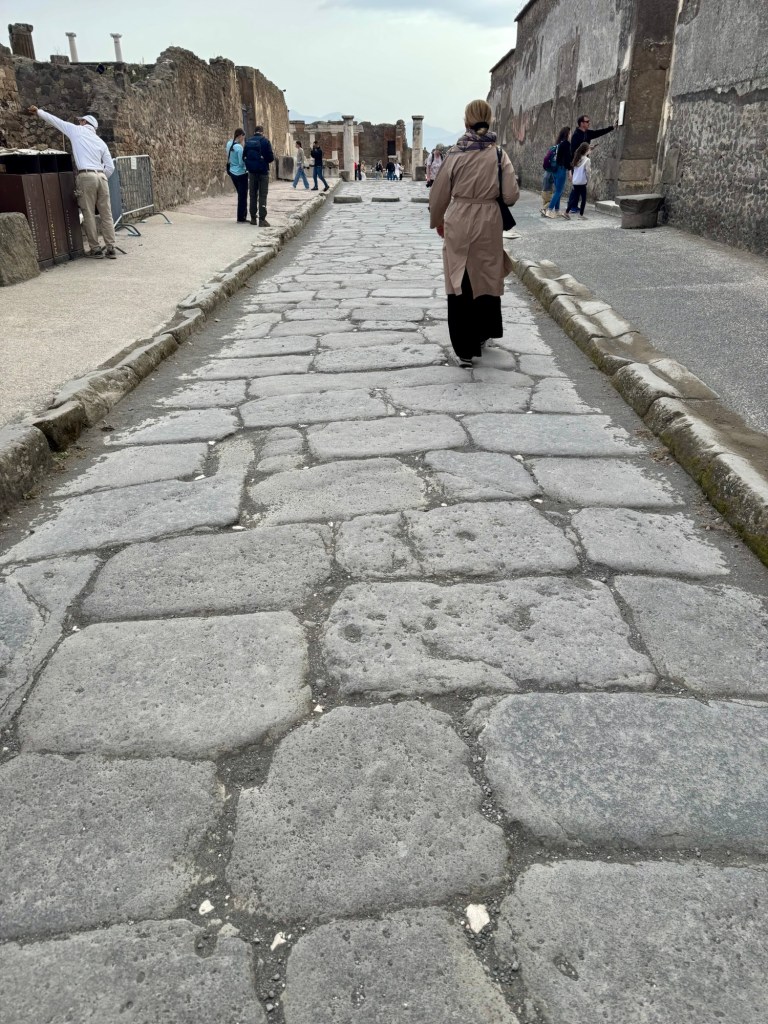
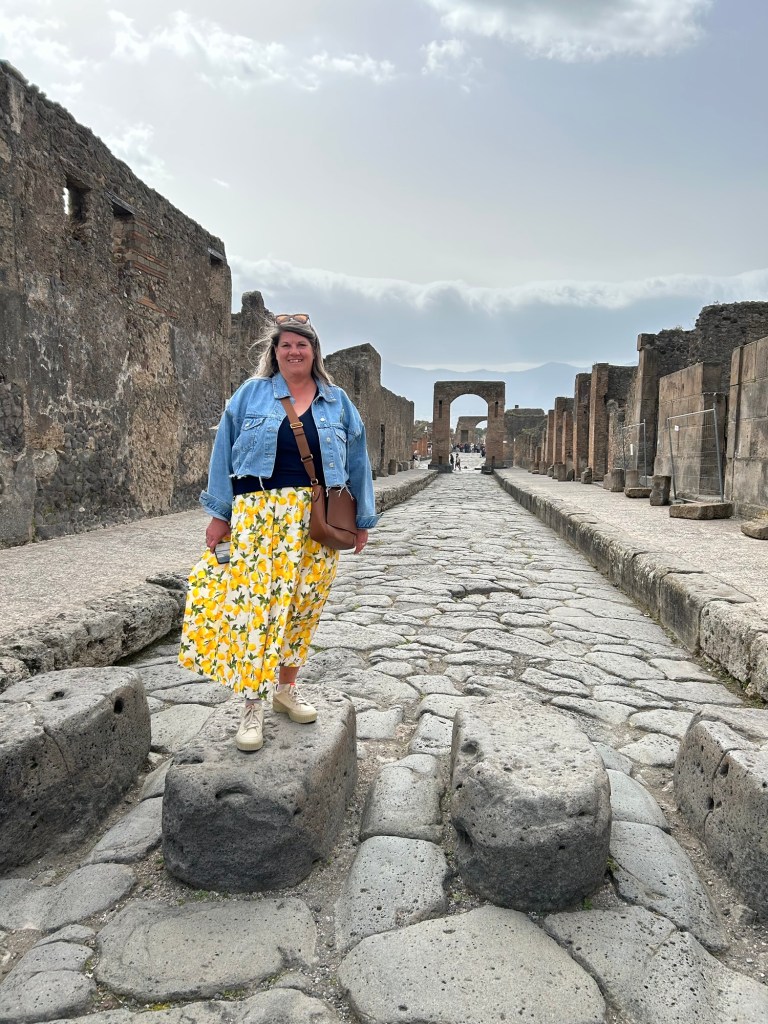
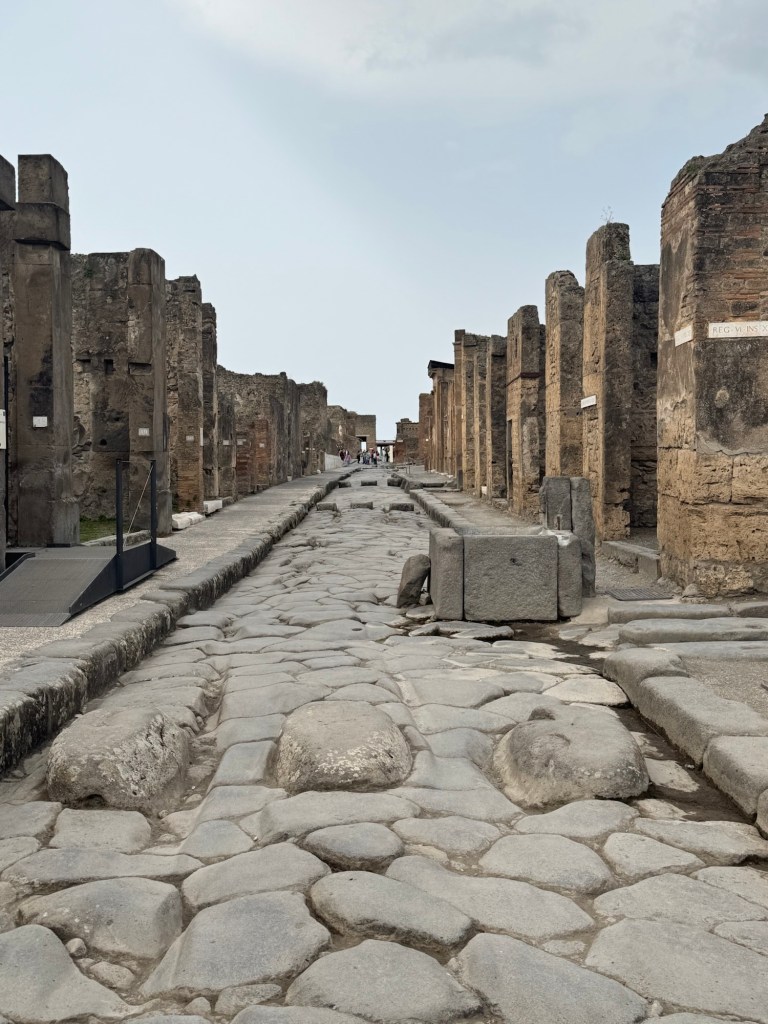
The fact that they had such nice roads is amazing. The raised crosswalks is something I wish we would have kept up with. It would be nice to cross a street without getting your feet wet or muddy.
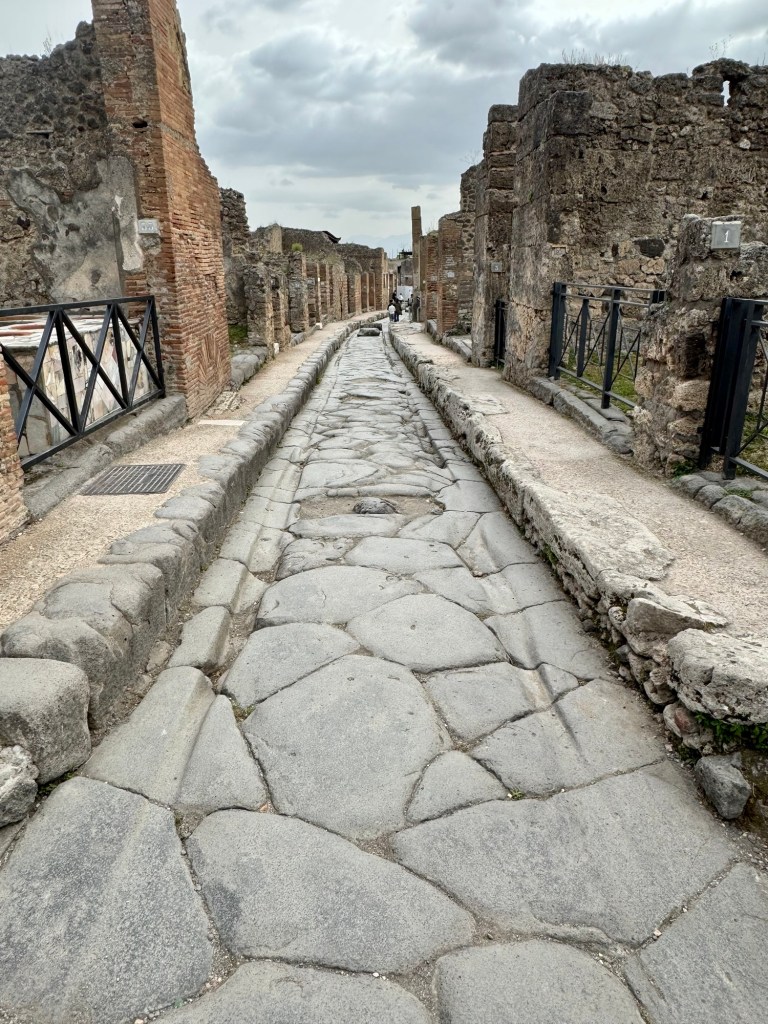
The guide also explained the roads and pavement of the cross blocks required the use of a very particular size of carriage or wagon. It allowed the locals to set tolls or collect money from visitors who needed to change from their traveling carriage or chariot back in the day to the size that fit the roads in Pompeii. You can see the groves in the roads from everything being the same size.
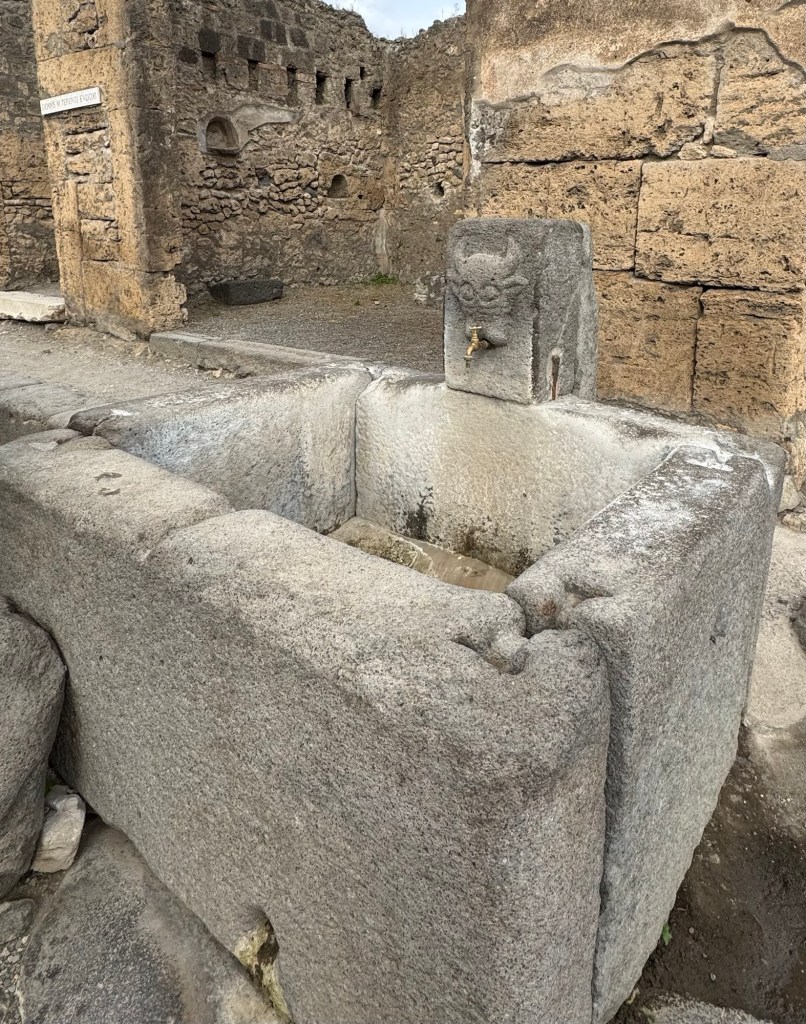
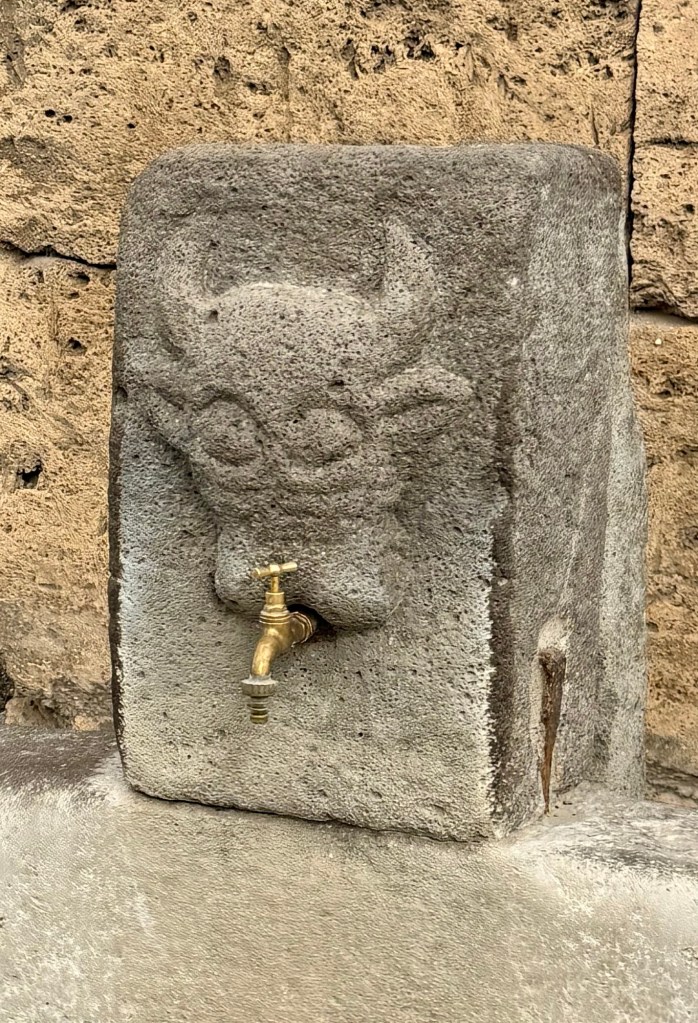
Pompeii also had running water. Many of the houses had water piped in but for the less well off there were fountains placed throughout the village where they could fill their buckets with water. The pipes were made by encasing branches in lead then burning the branch. the water fountains were identified by the different sculpture for the spigot.
You can see the pipe running along the sidewalkWater fountain
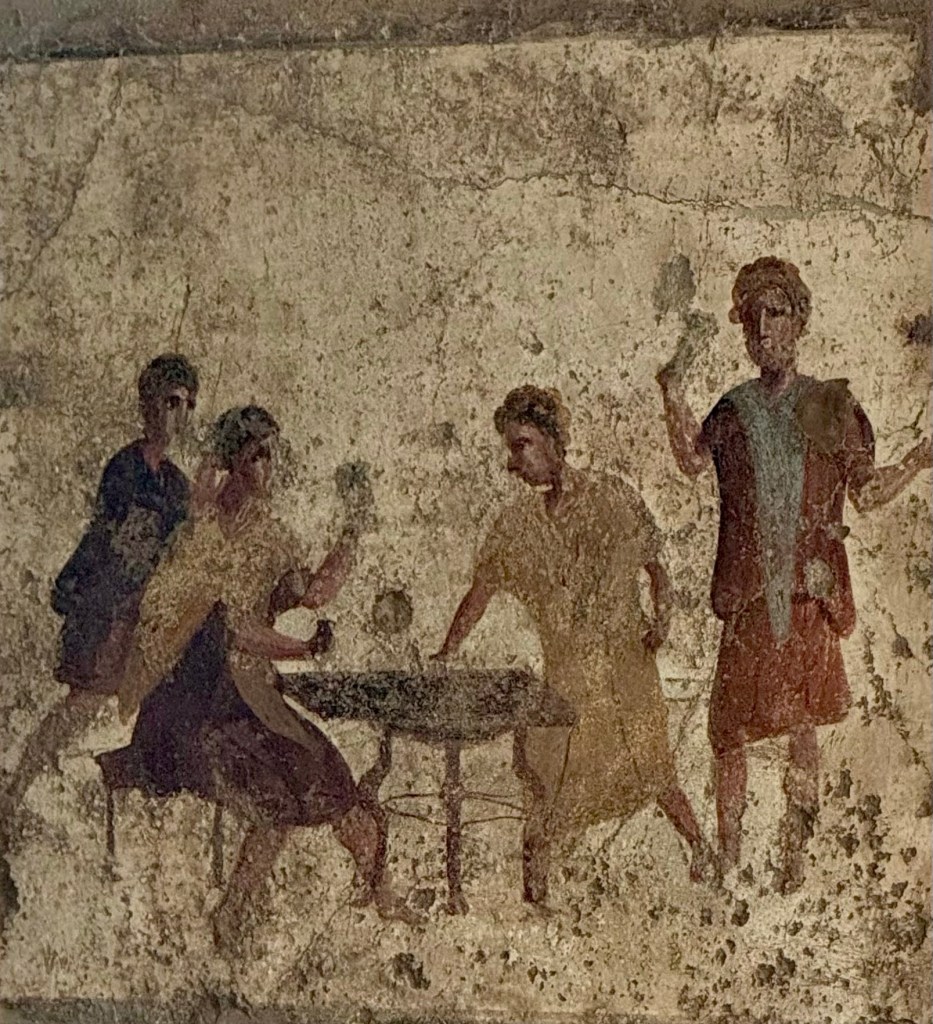
Prostitution was legal in Pompeii but gambling wasn’t. However, that didn’t stop it. They have found small rooms painted with different scenes which they assume were places that were used for gambling.
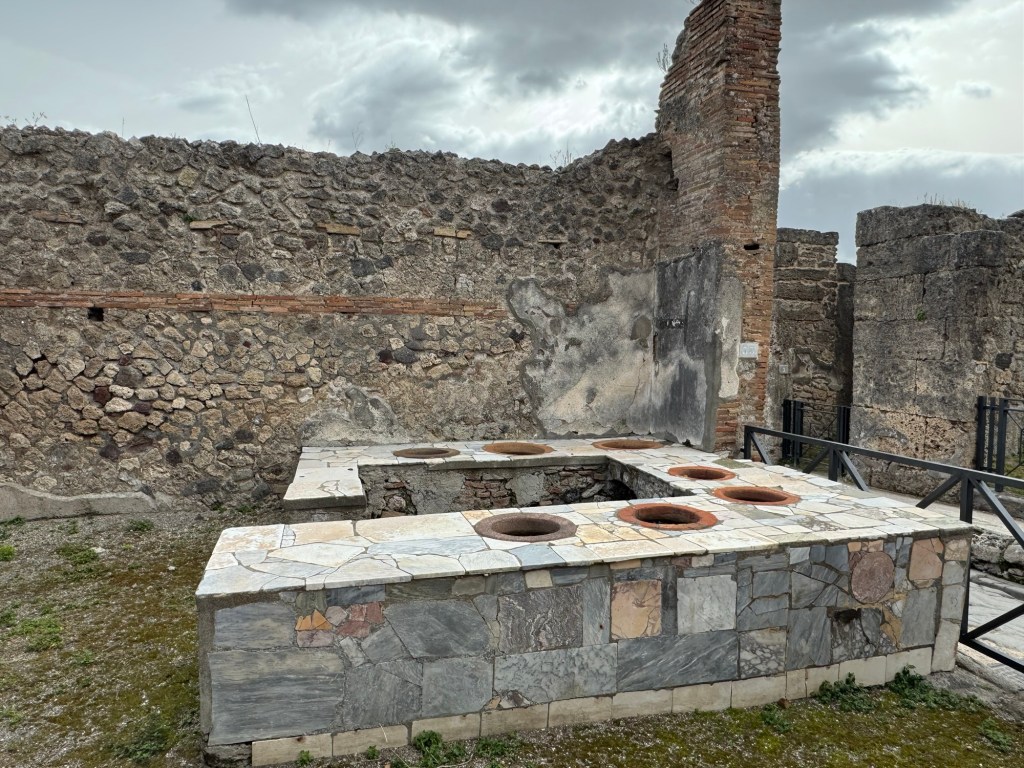
As to the bakeries and food services the setups were quite elaborate for 79 AD. the “fast food” locations had counters with several large post to keep the premade food warm and make it easy to grab and go.
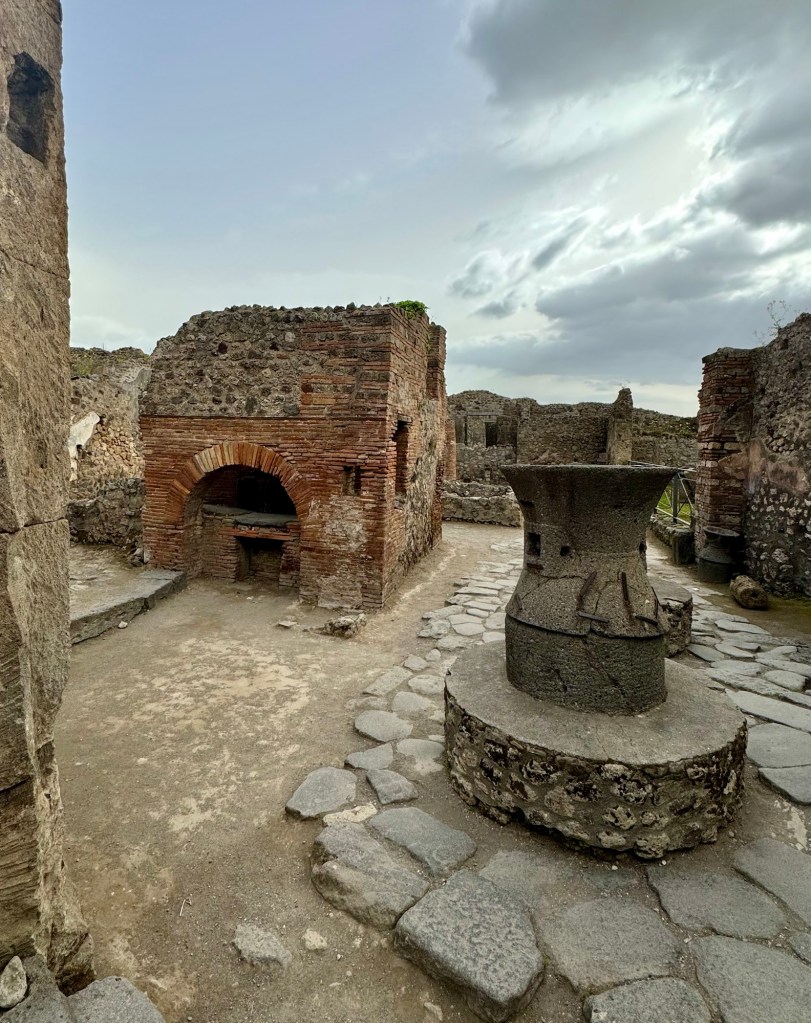
The bakeries had both implements to grind the wheat and ovens to cook the bread. you can’t really make it out in the photo but stone grinder in front had places for poles so the top part could be turned. There were also about four more lined up behind it but I didn’t angle the photo enough to get them.
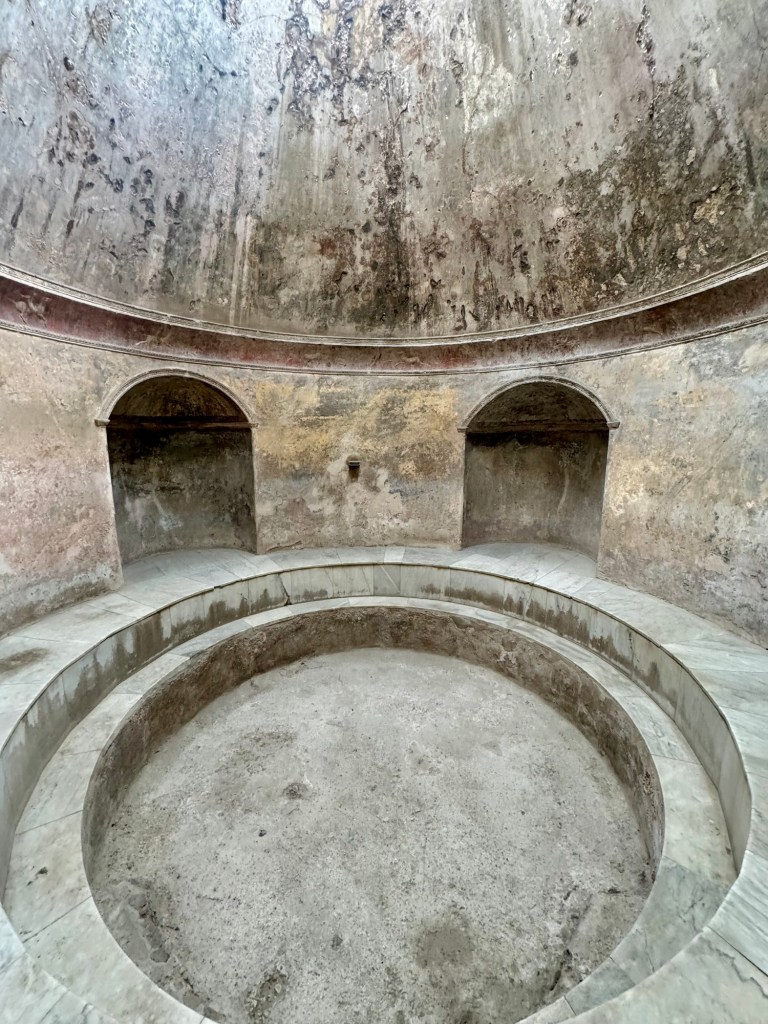
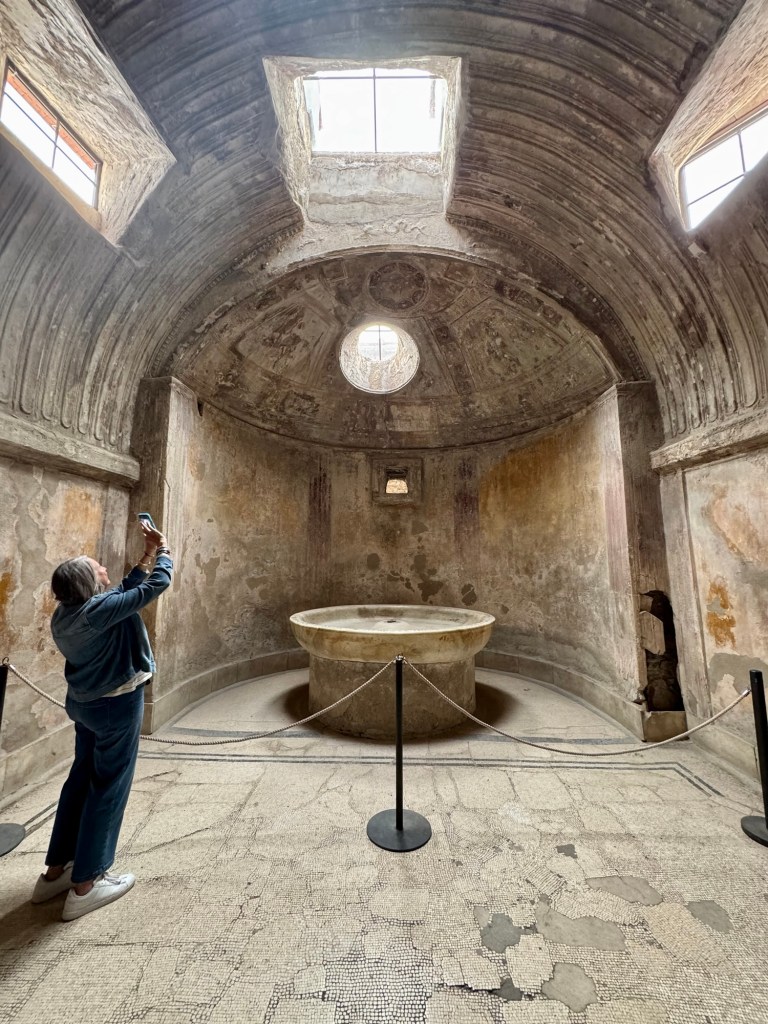
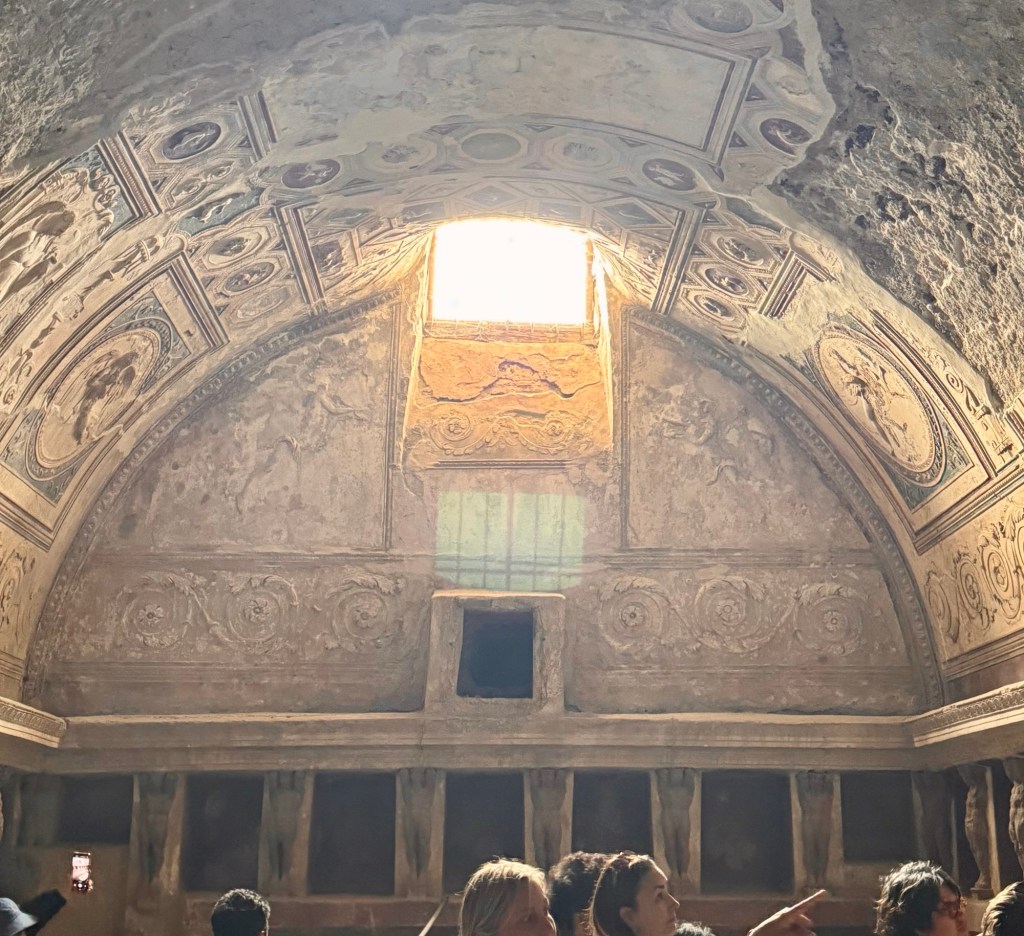
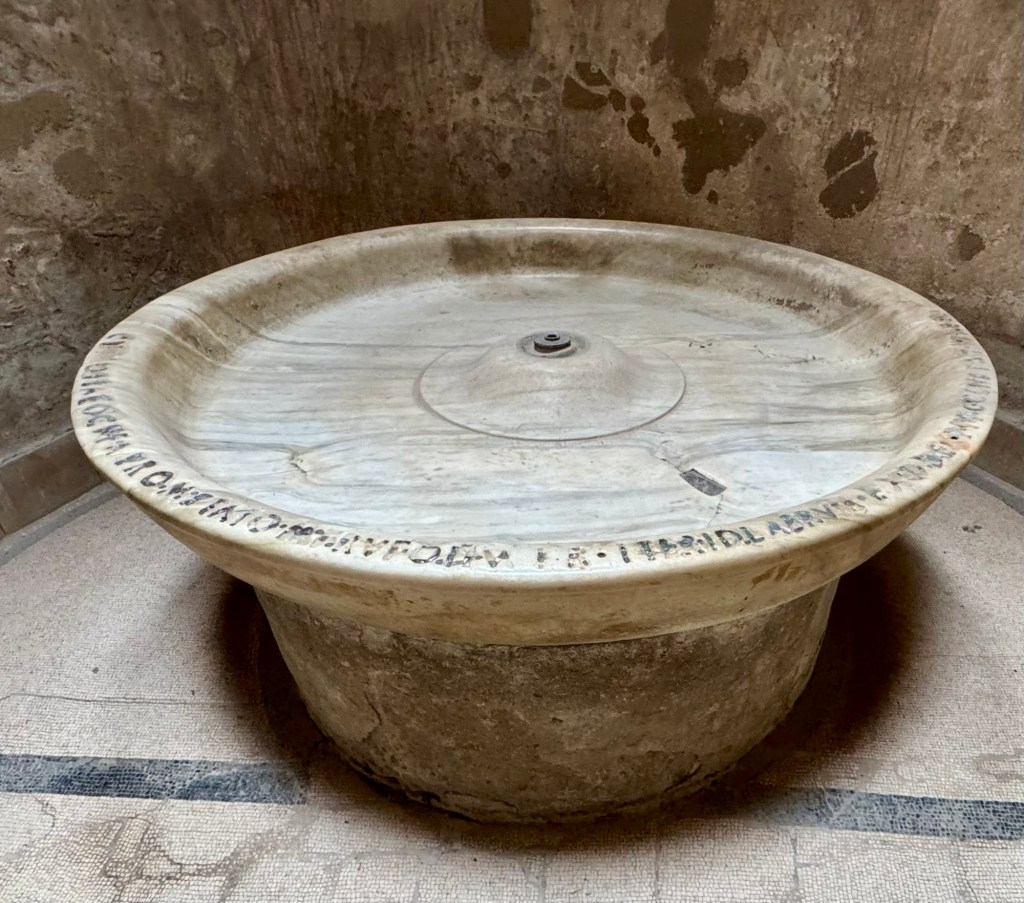
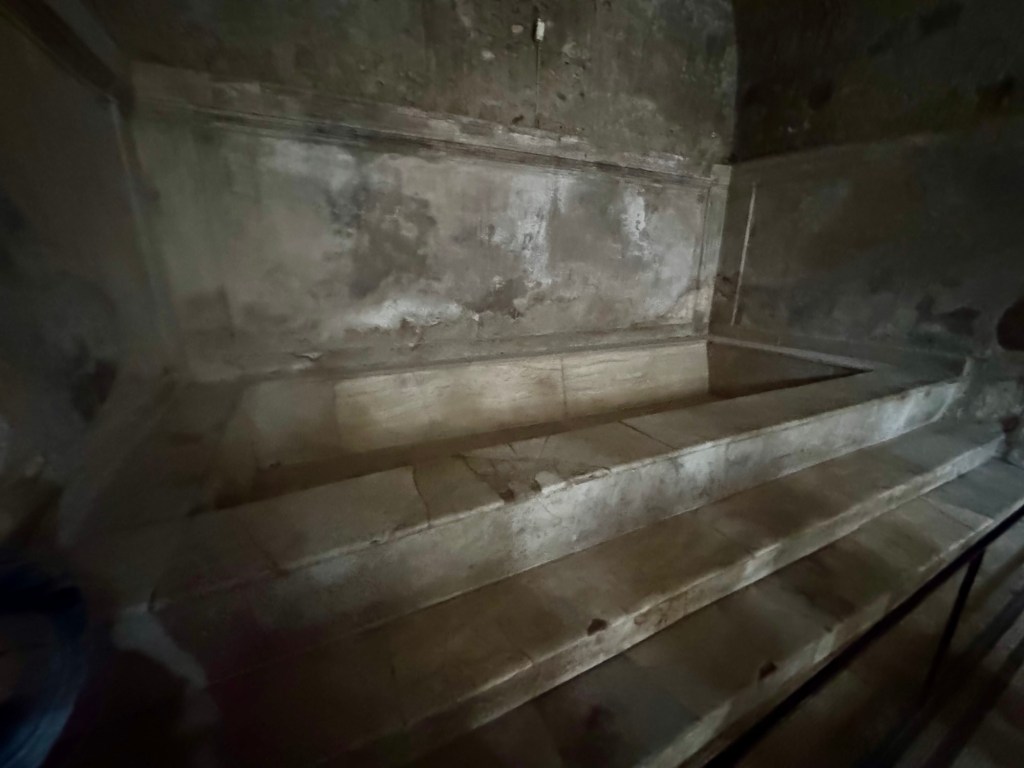
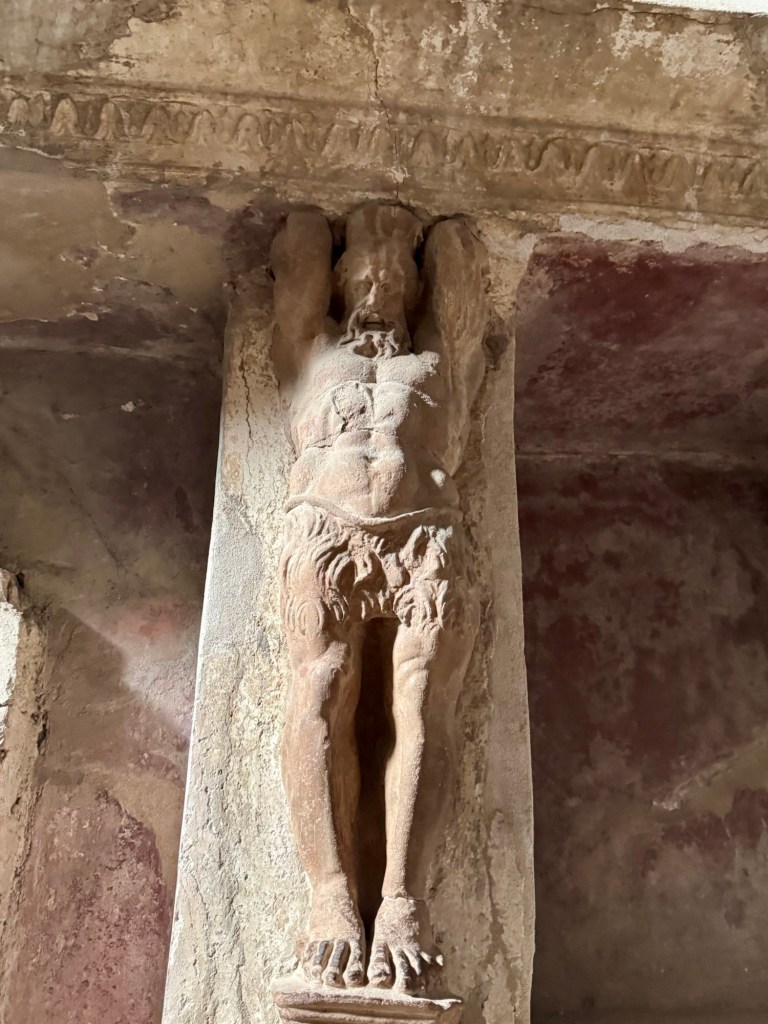
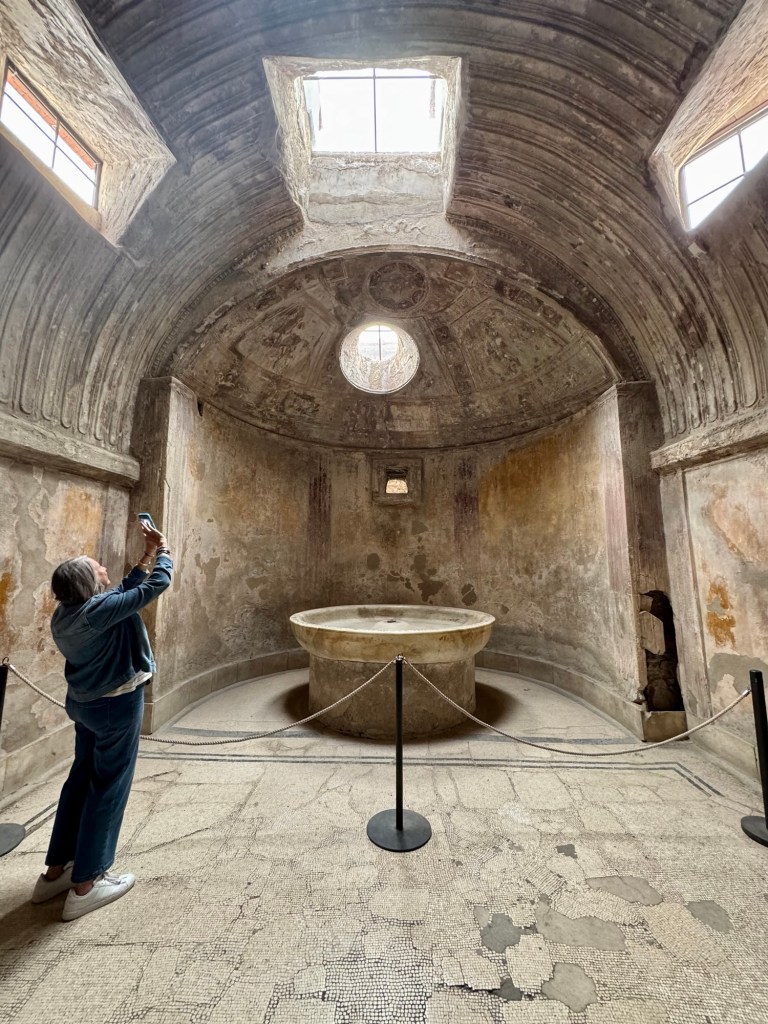
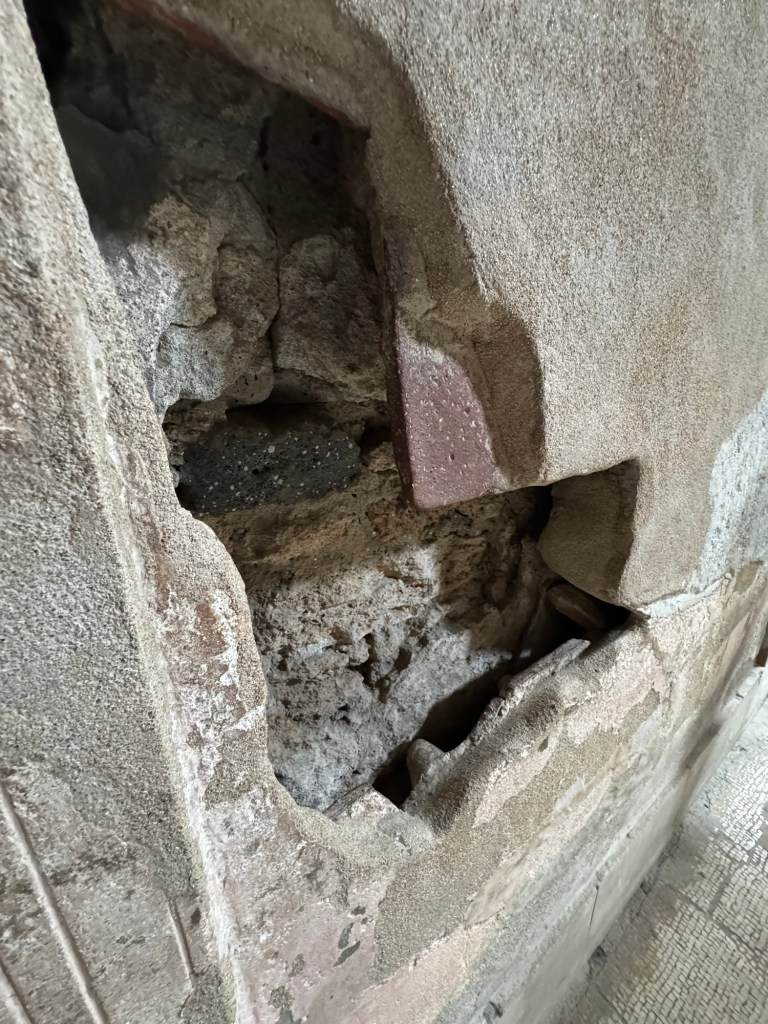
The last big location we went in was the bath house. It included dry rooms where they could just set around and talk, changing rooms with lookers to store their clothes, saunas and hot and cold plunge areas. the walls were hollow so that the heat from the fires beneath the floor could circulate around the room to warm not only the water but the room to make it a sauna.
The dry room Hollow wall to allow heat to circulate
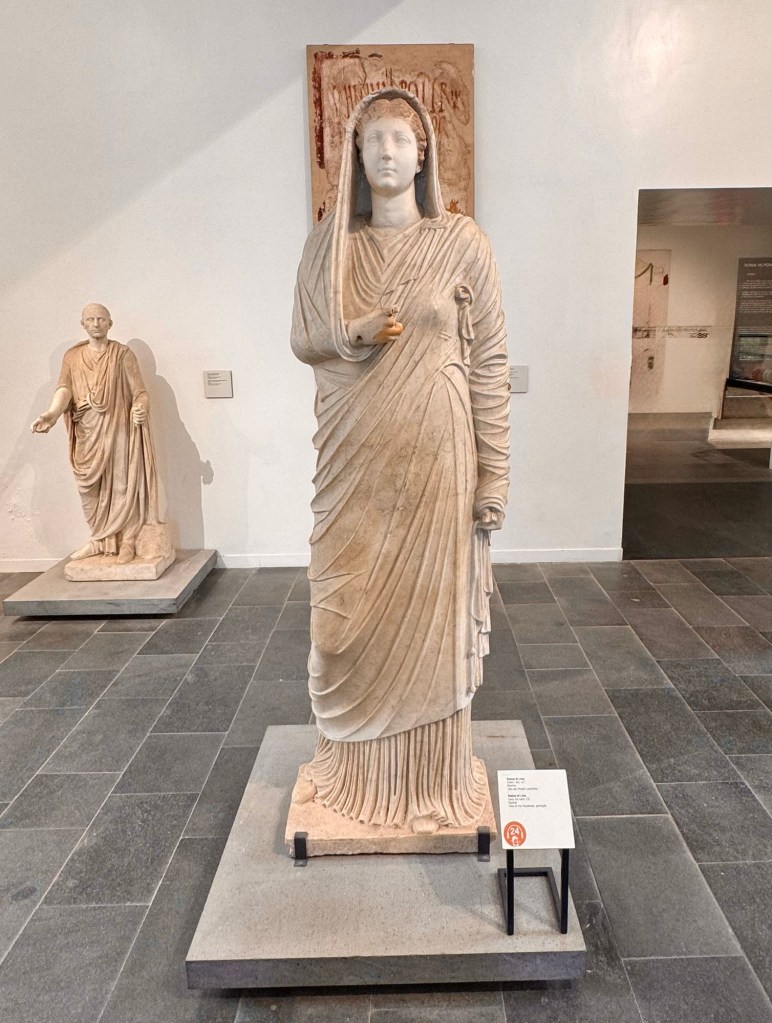
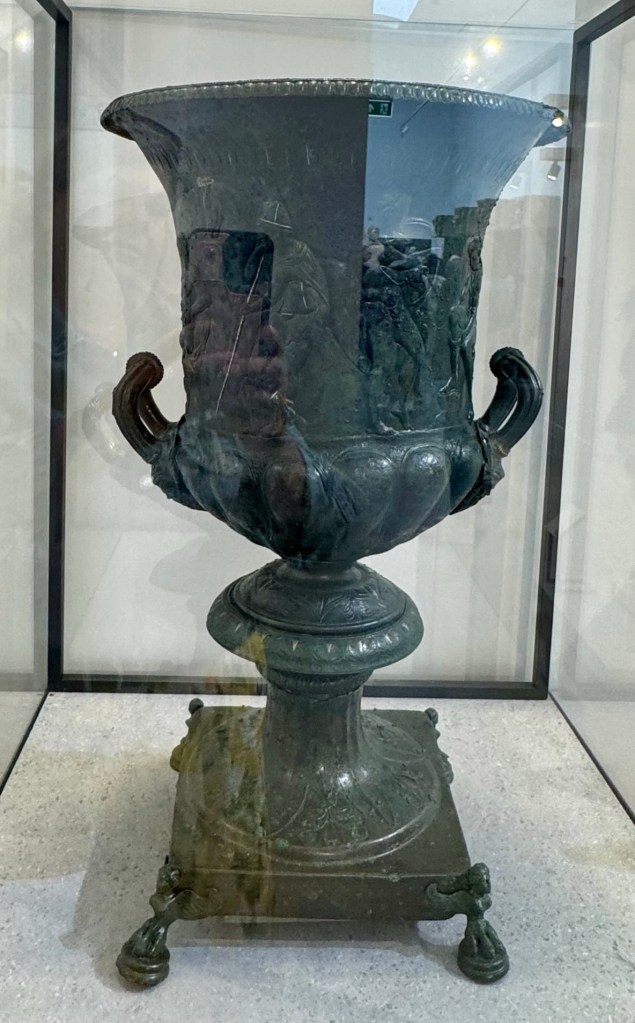
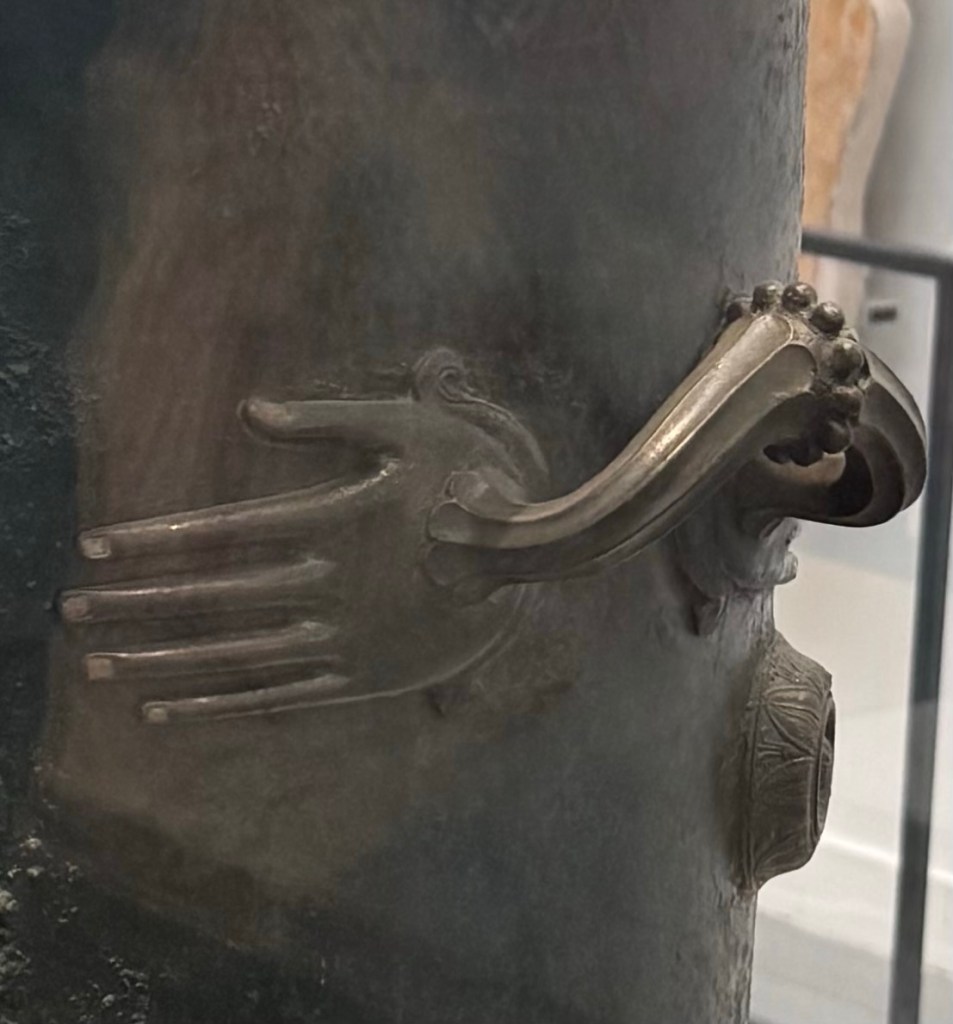
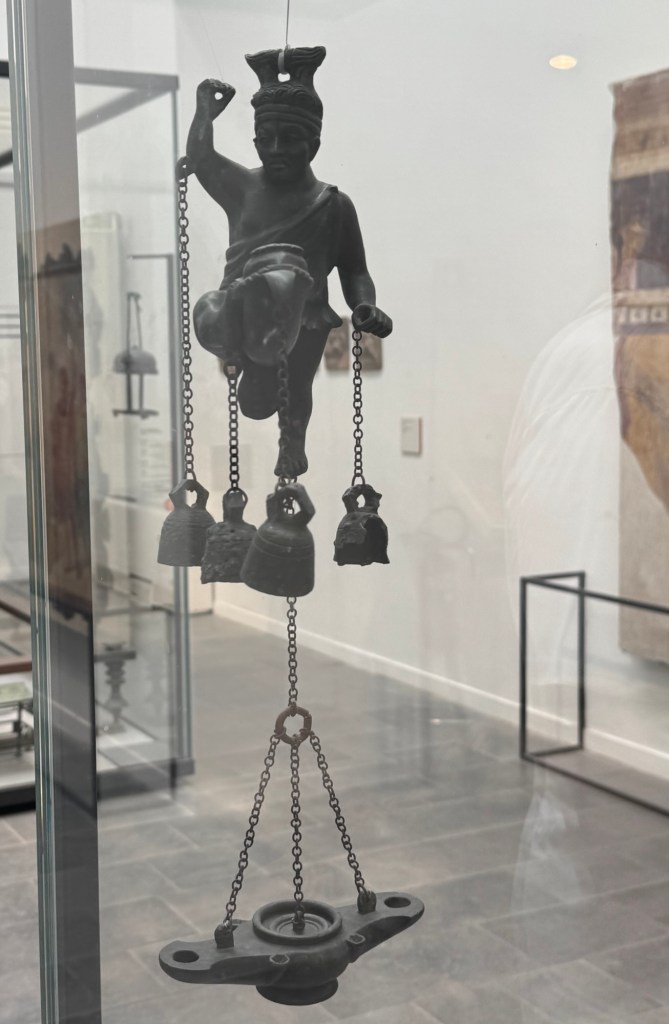
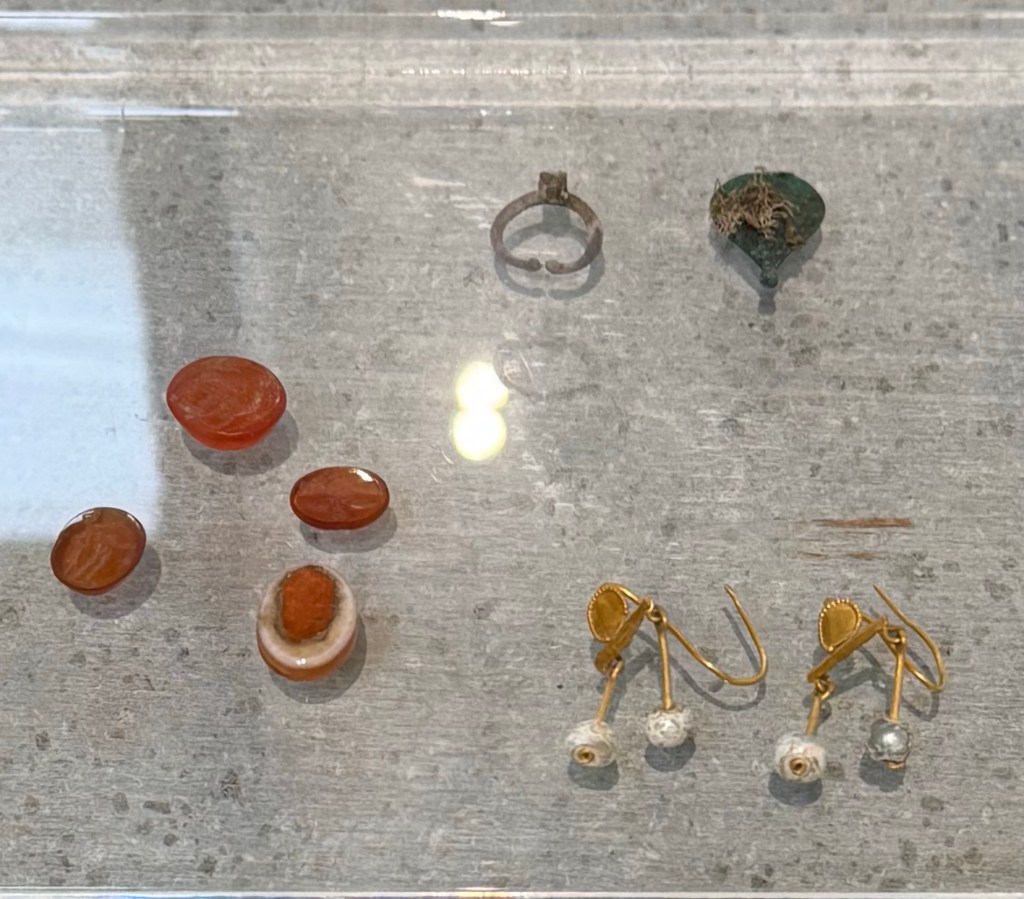
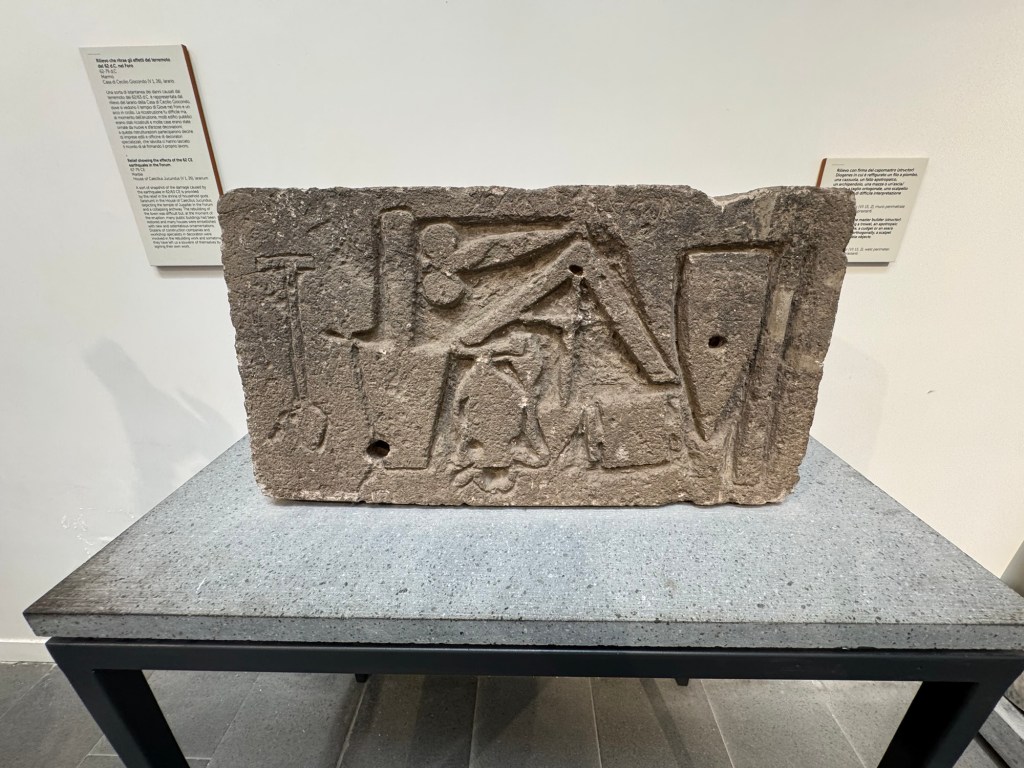
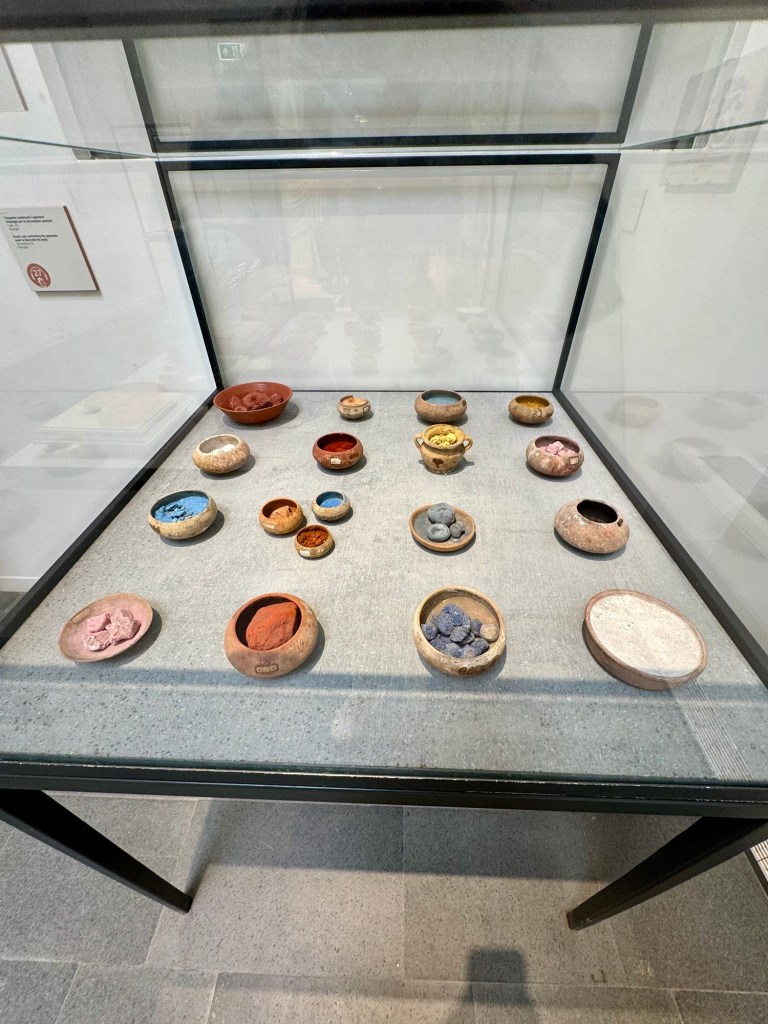
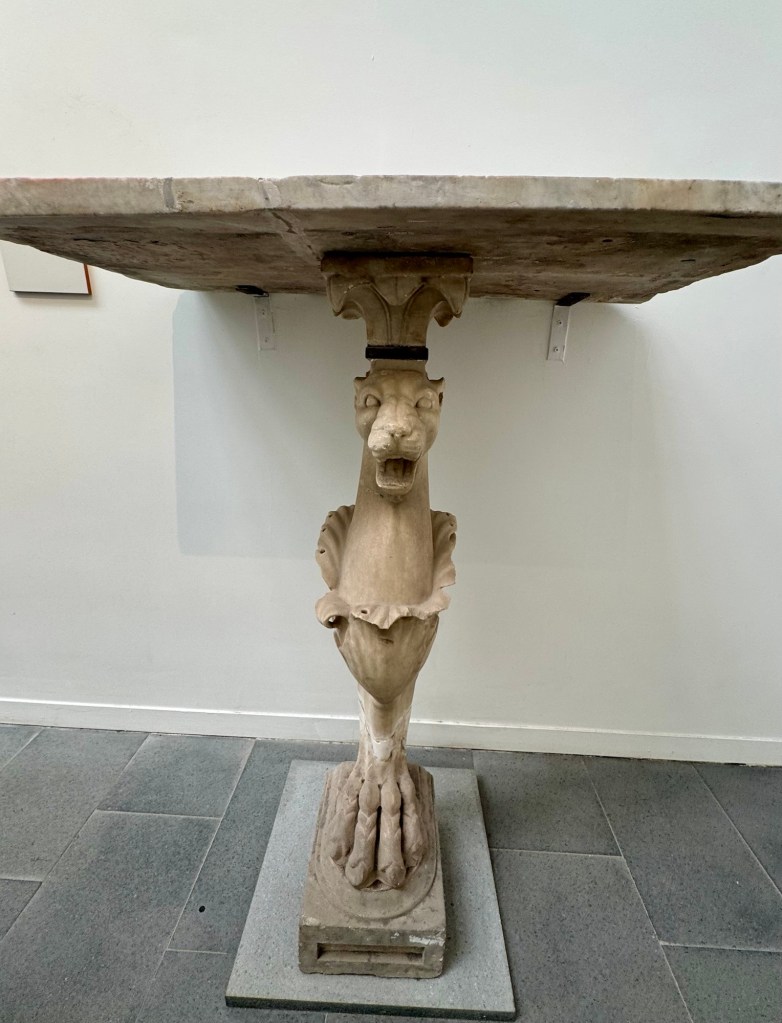
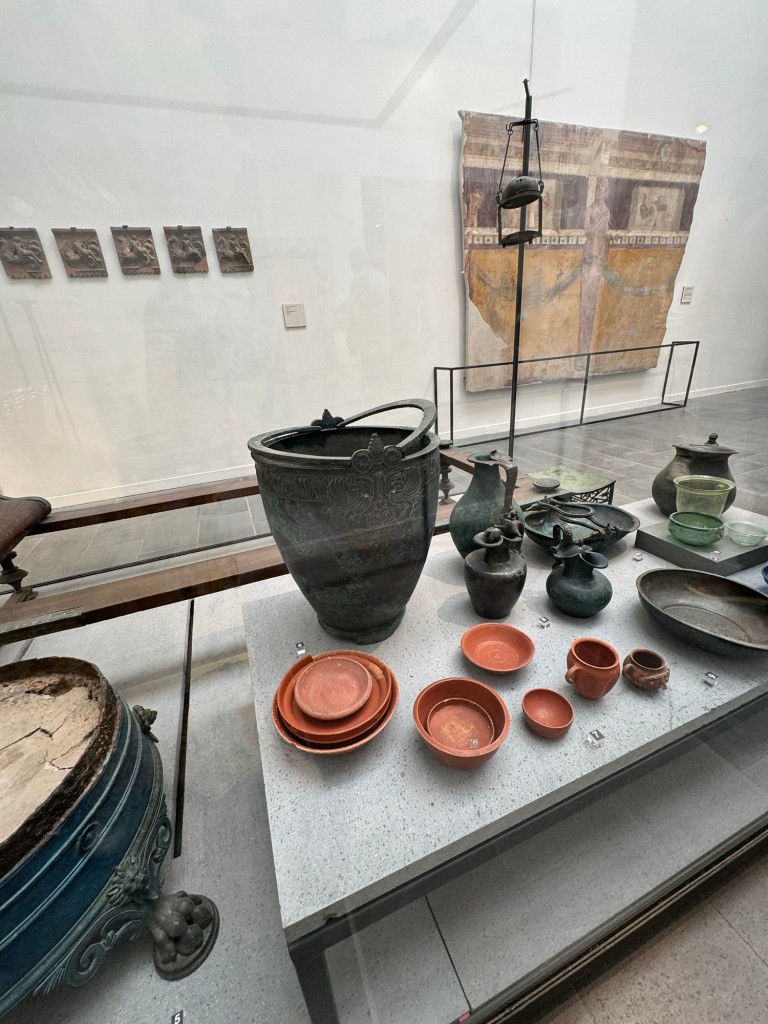
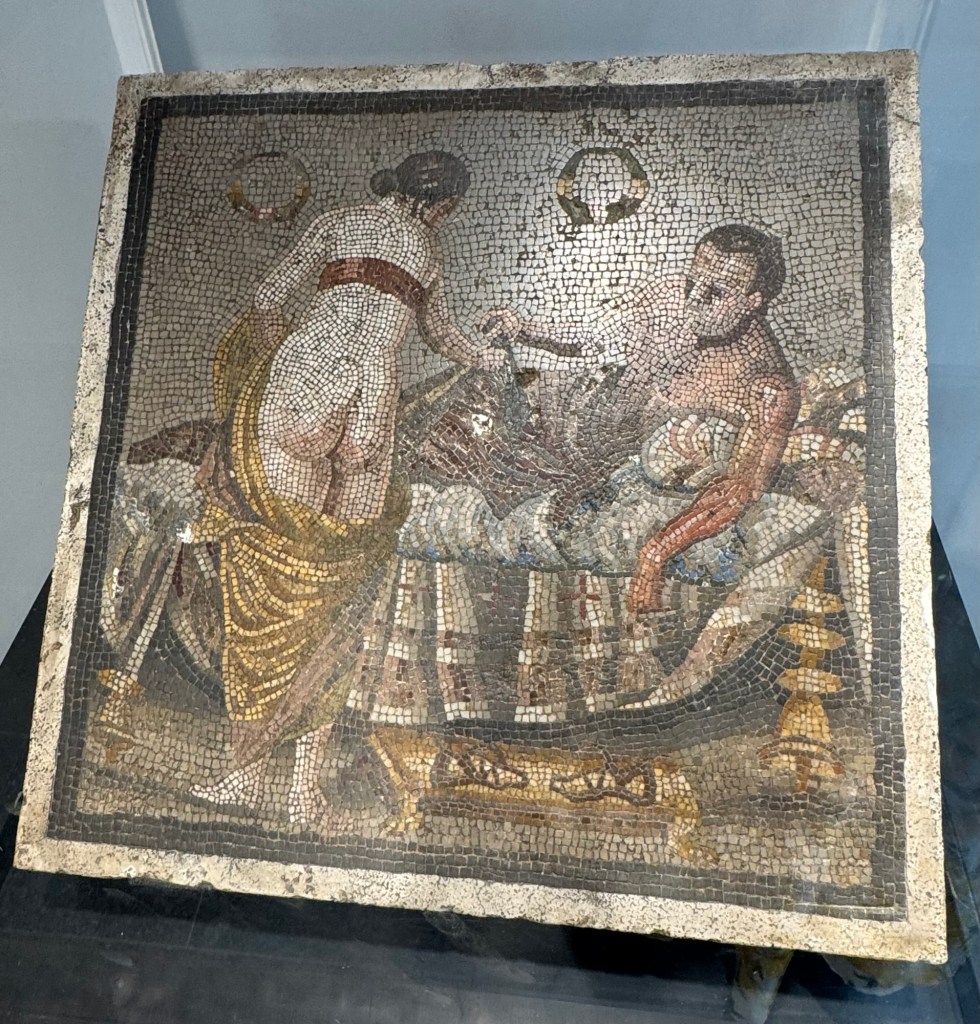
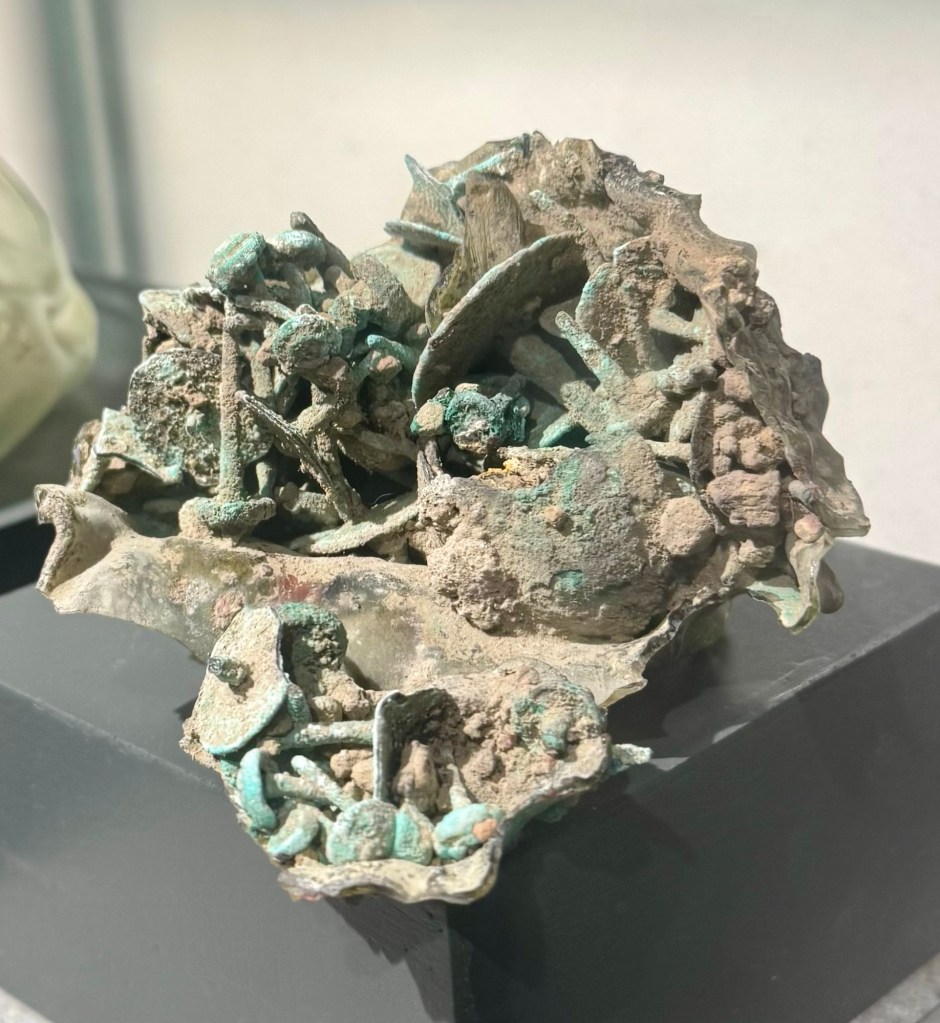
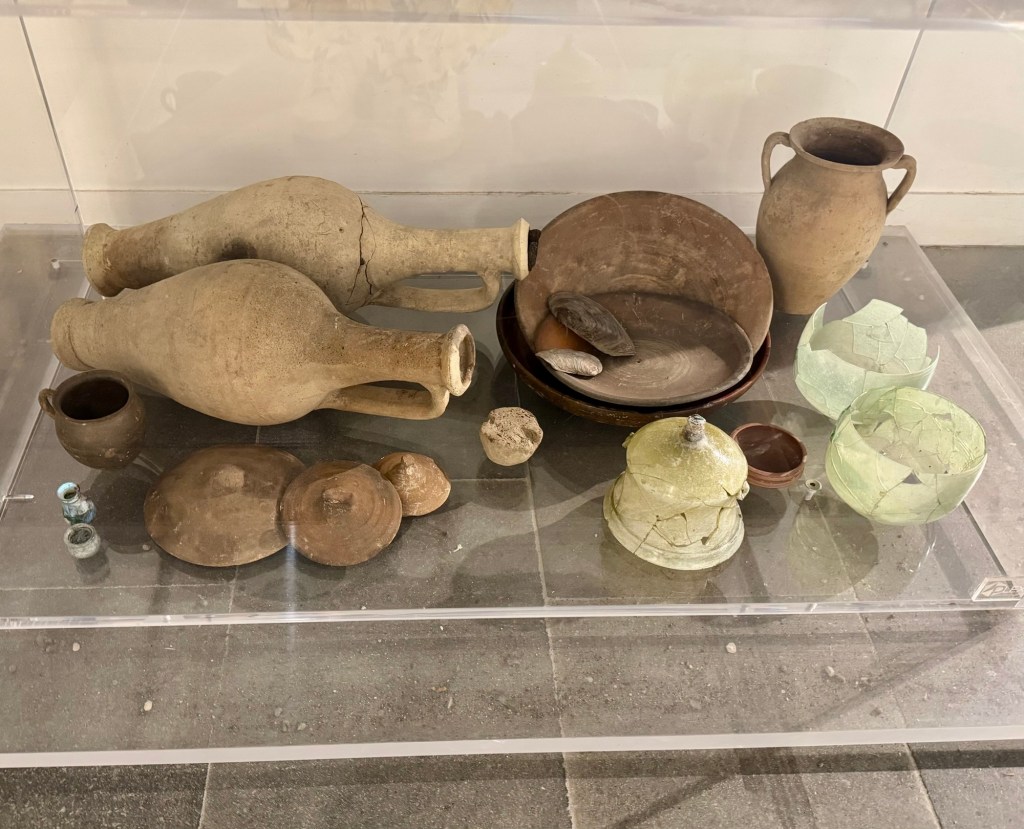
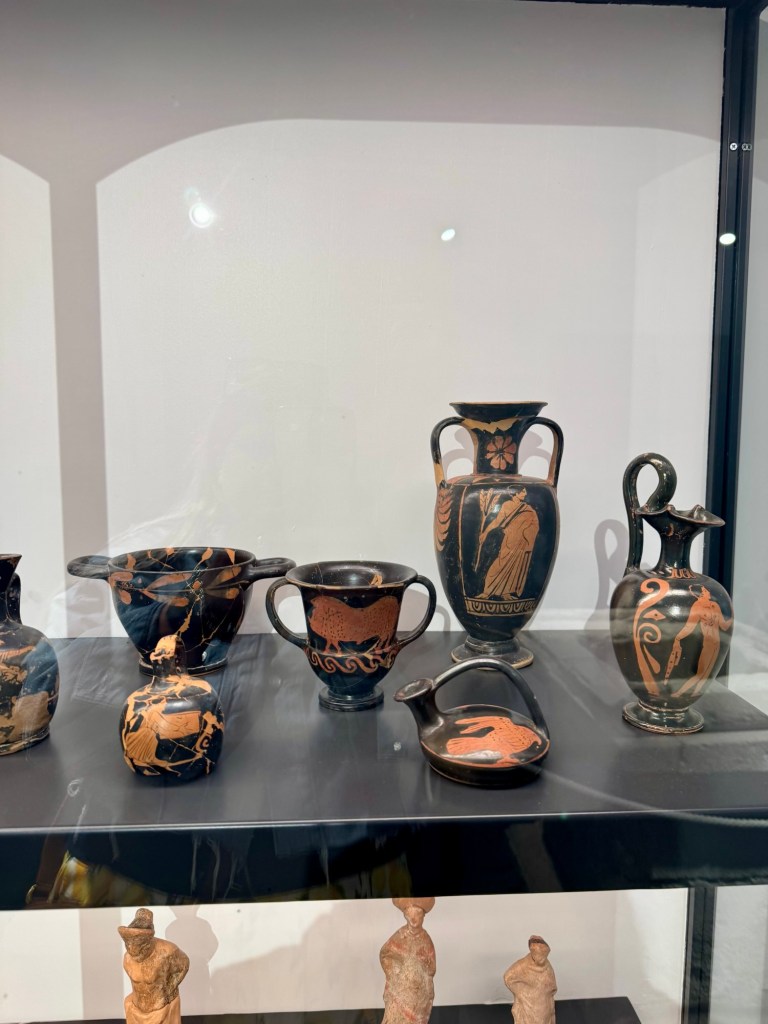
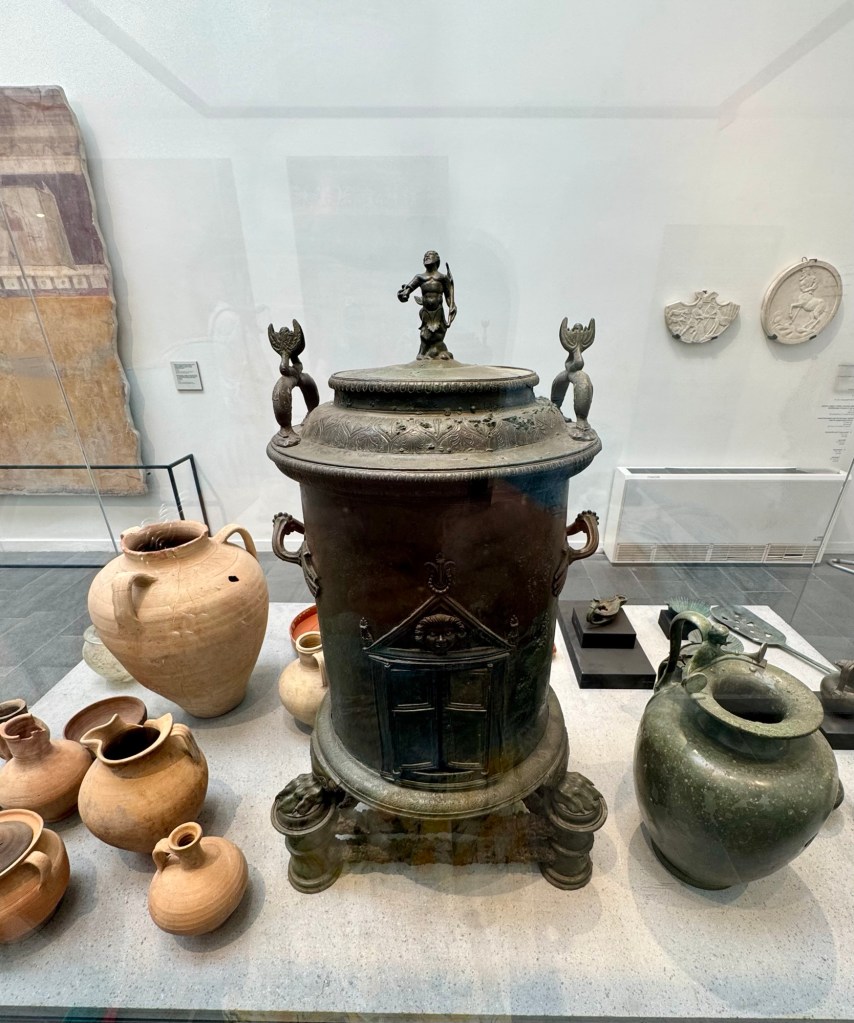
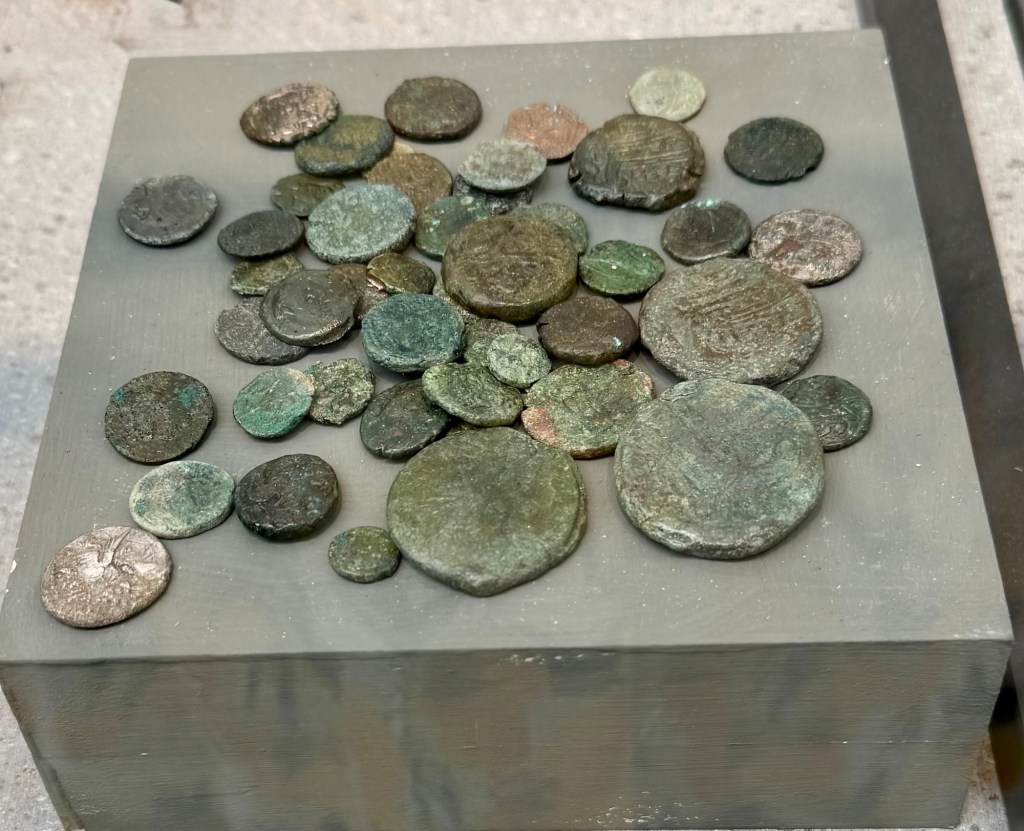
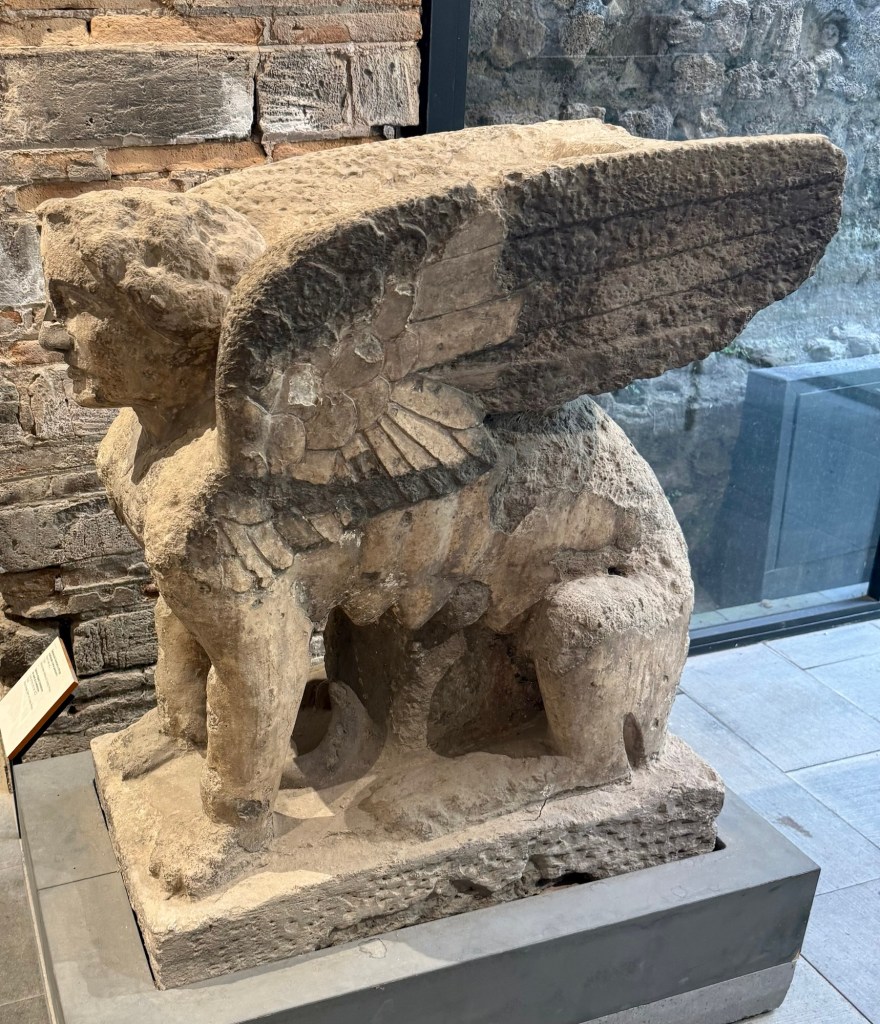
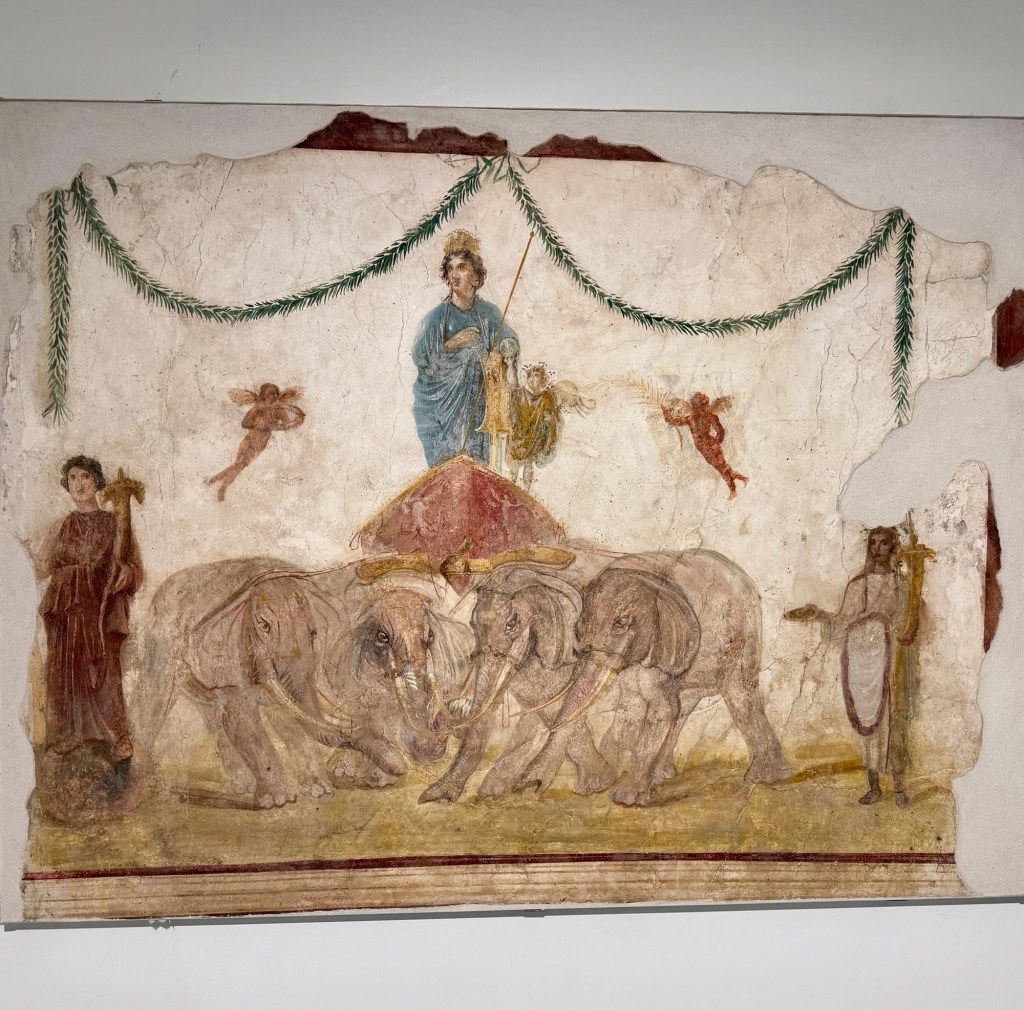
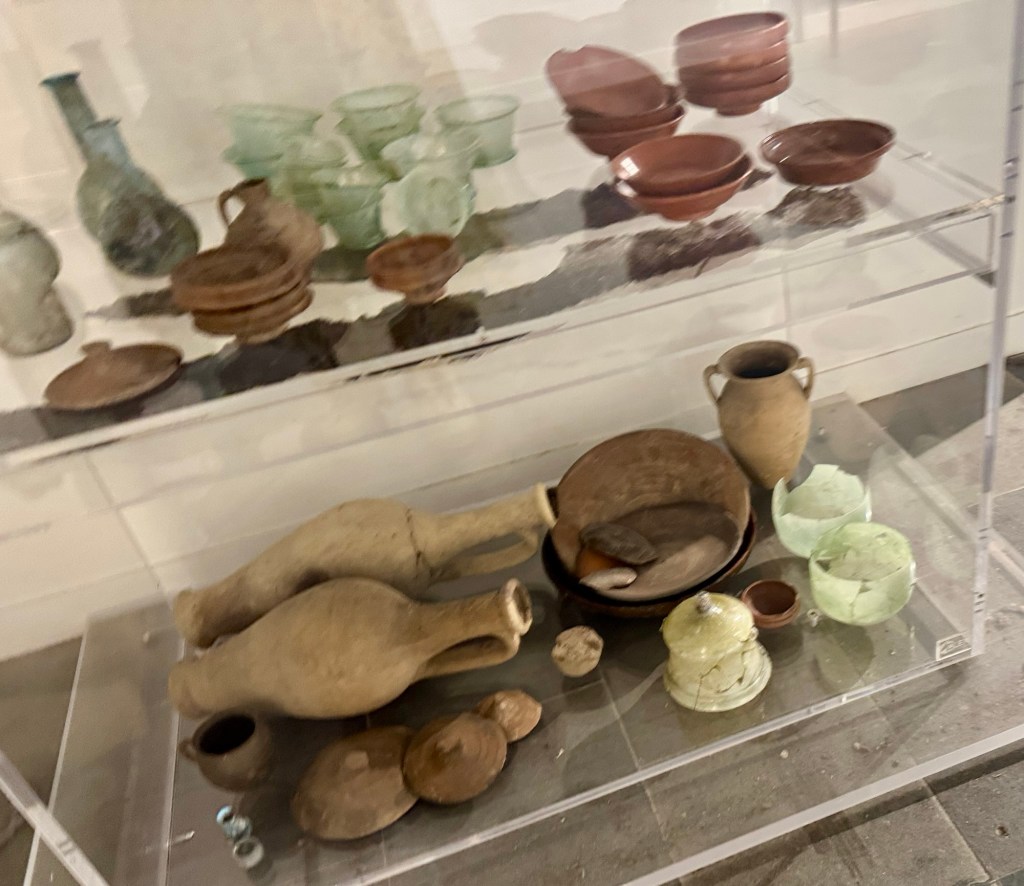
From here are tour guide led us to the museum, gift shop and exit. The museum was smaller than I remembered it but it had some of the tile floors that I thought I remembered seeing still out in the open on my last visit but it had some fascinating things. Their iron works were very detailed and decorative. They did not just have useful items they wanted to show off. The paintings also showed that they had traveled. One in the museum had elephants and one in the house of Vetti had a leopard neither of which were native to Italy.
Jewelry Paint Pot of nailsCoins
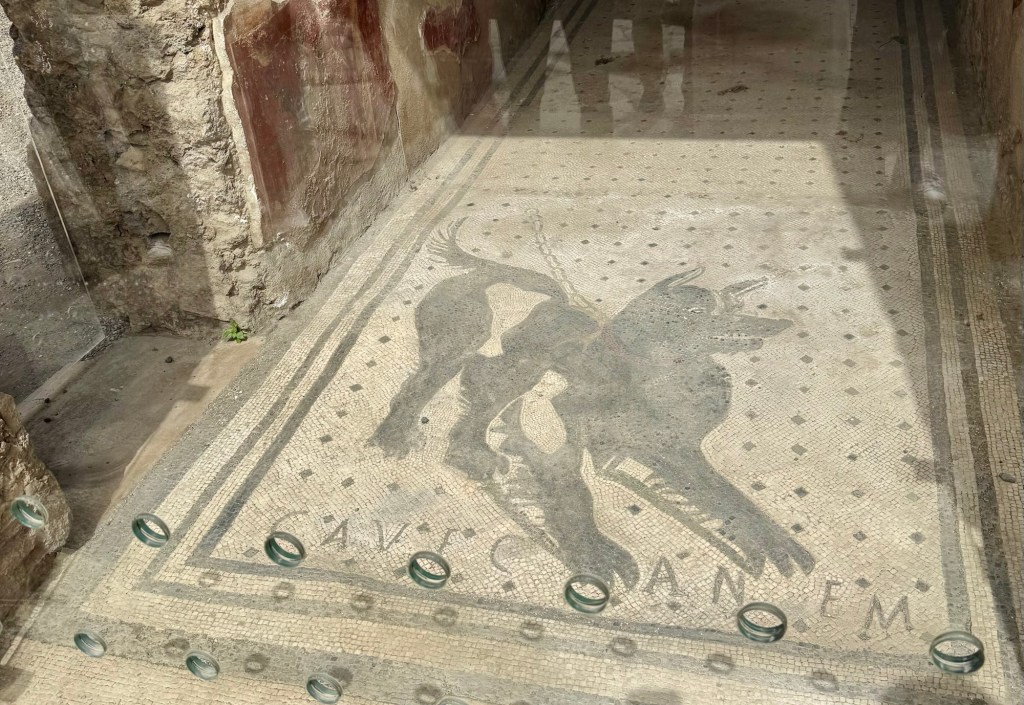
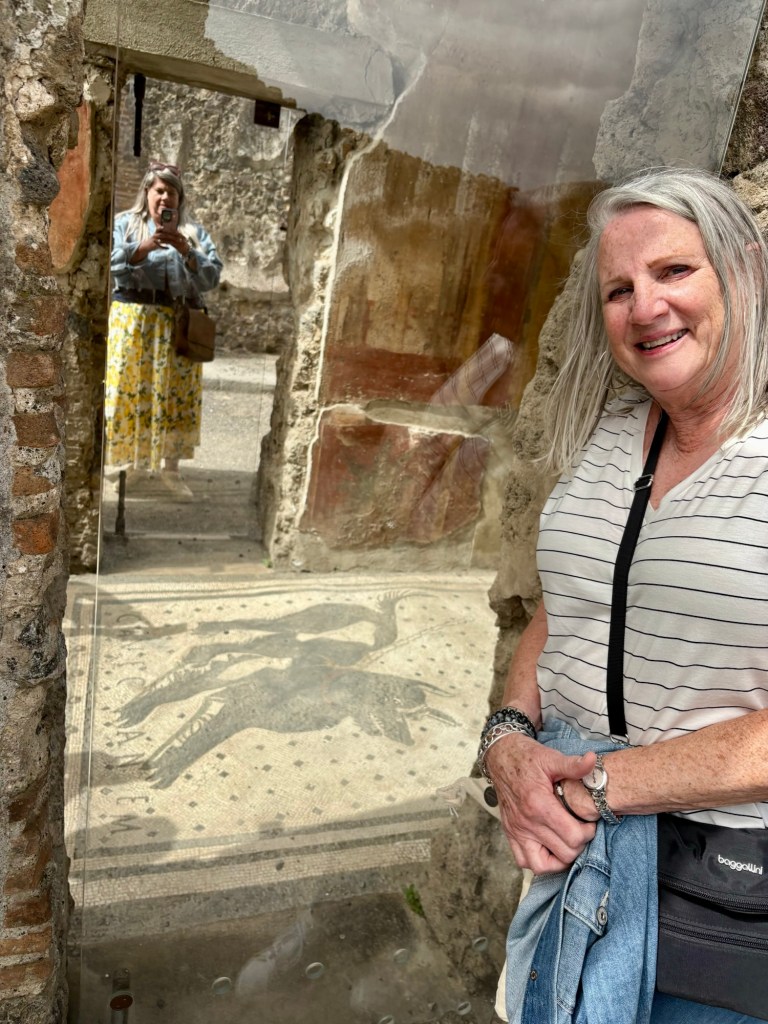
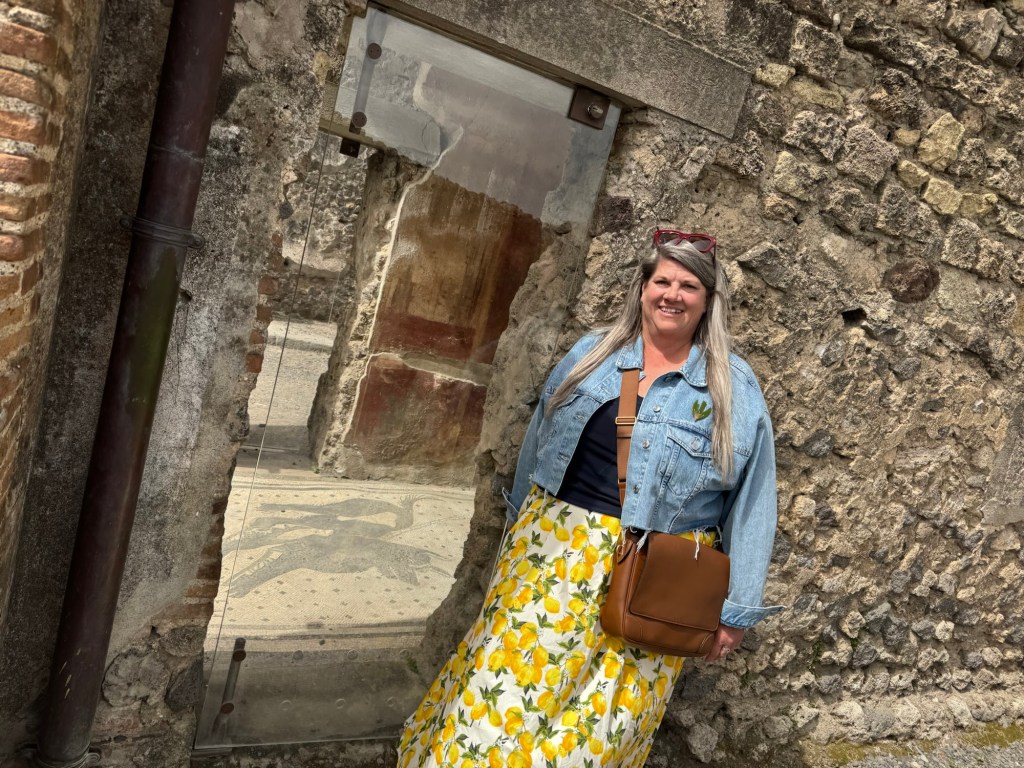
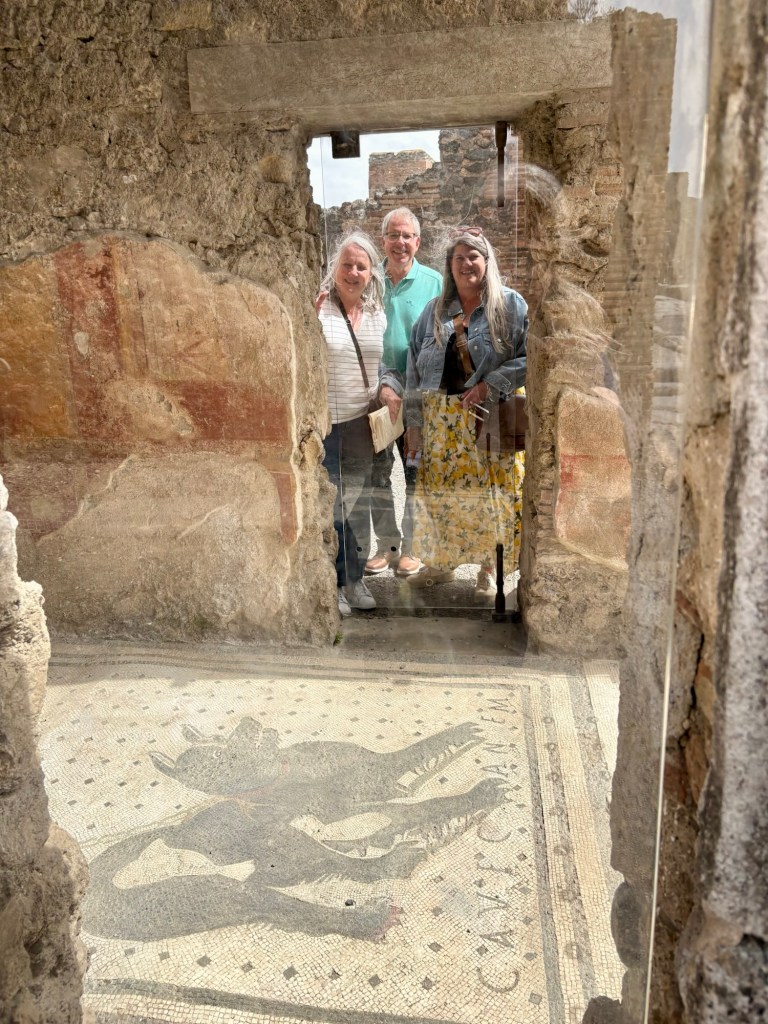
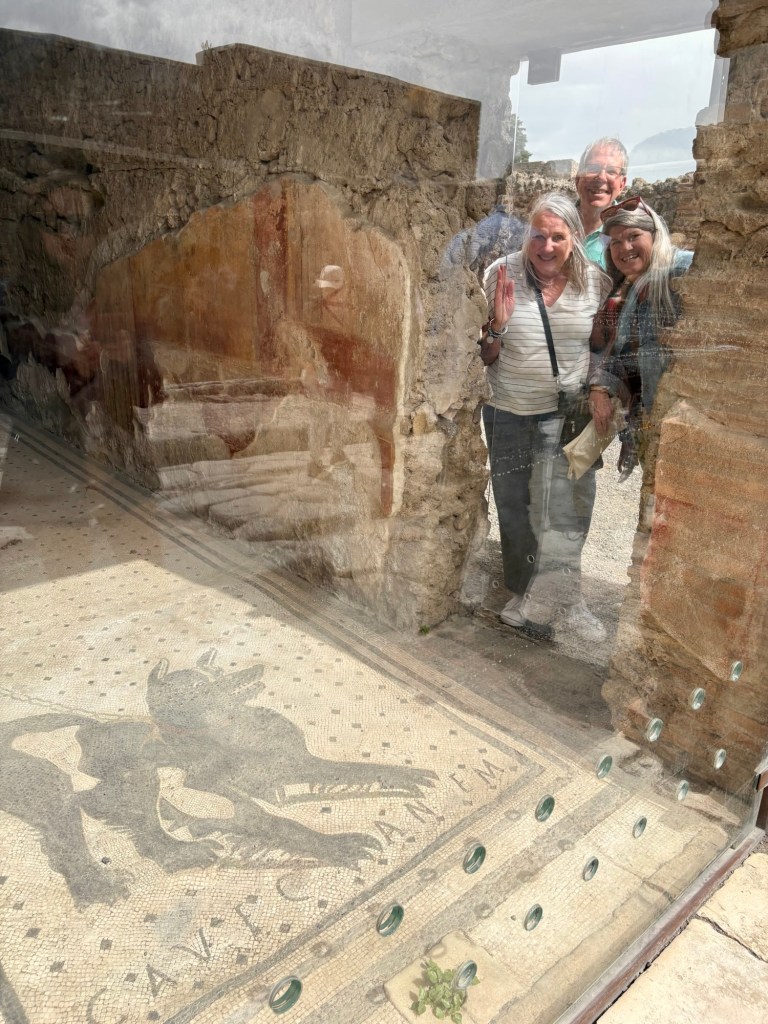
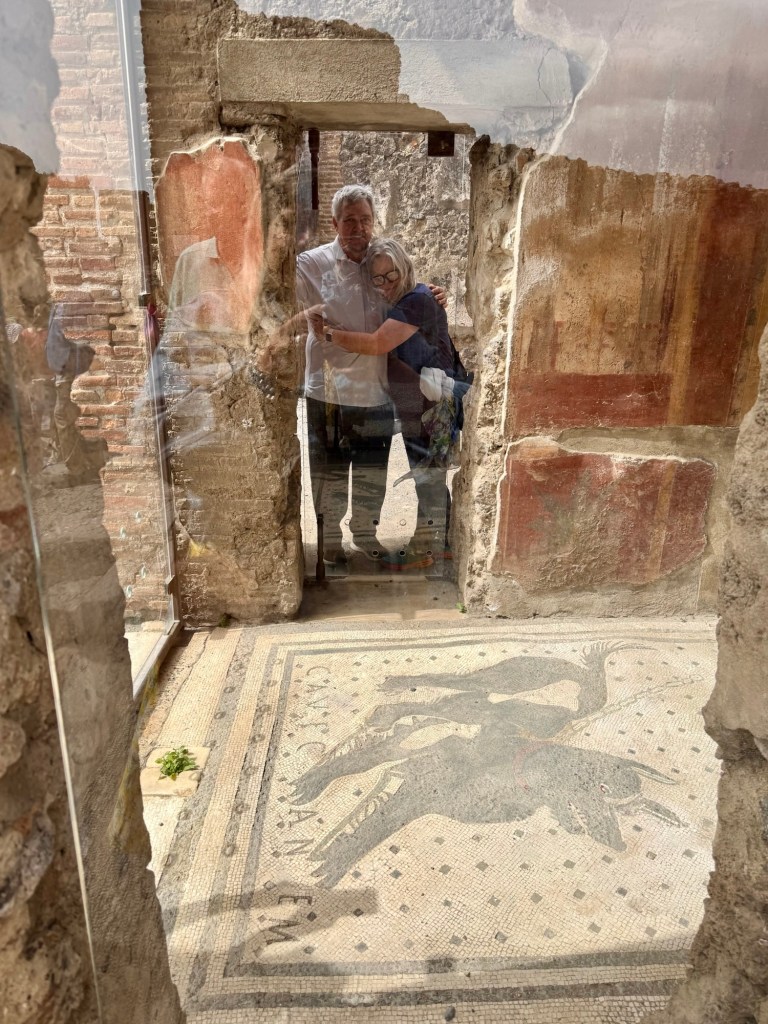
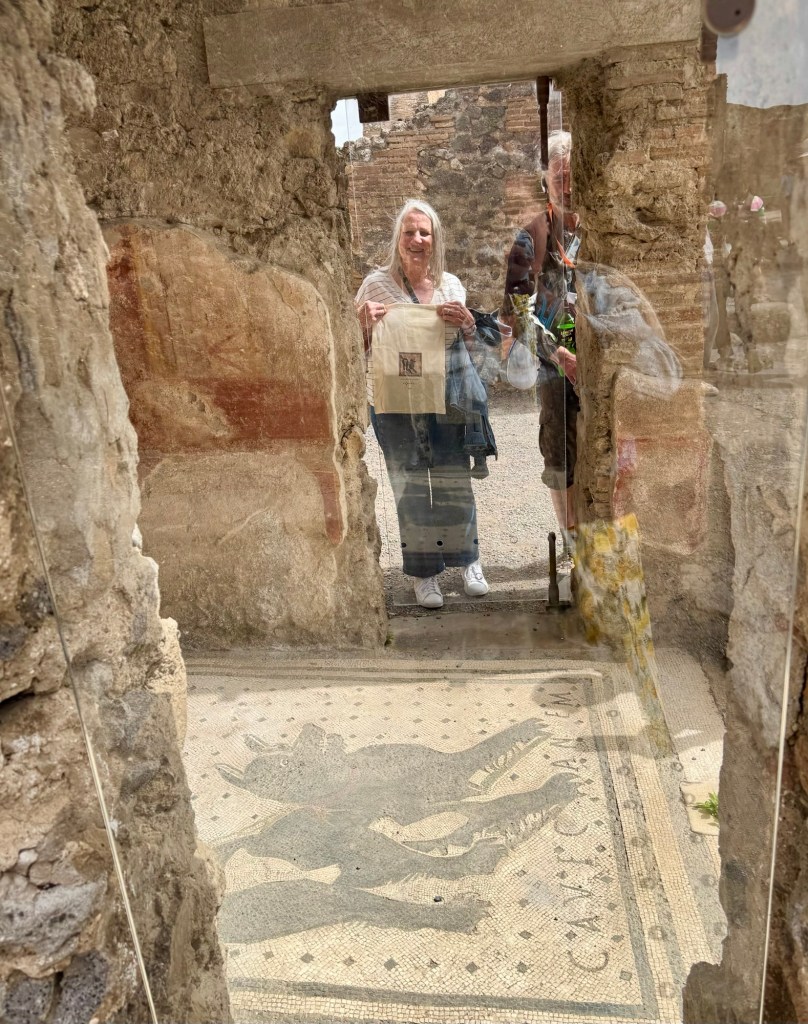
After the museum we realized we had not seen the tiled floor depicting the dog. We had a bit of time left so we asked directions and headed back in to find it. I am glad we did. It wasn’t far from the main square and right by the bath we toured. Not sure why the guide skipped it. The floor is only decorative so maybe she didn’t think it had relevance to the cultural aspect of the city. Regardless I am glad we went back in to see it. we all had our photo with it.
Because we used all our time in the museum and seeing the dog we had no time to grab anything for lunch and the drive to Rome took several hours. Margaret and I were the back earring mints and cough drops to hold us over. All the while a bag full of sandwiches, cookies and candies was up in the front. We thought it would be rude to eat the sandwiches in his van but we could have the candy. Oh well we survived.
We arrived at our hotel and immediately met up in my room to eat the sandwiches. I guess it was good I stayed up and made them. It was too early for dinner and if we ate anything more we wouldn’t be hungry for dinner so the sandwiches were just enough.
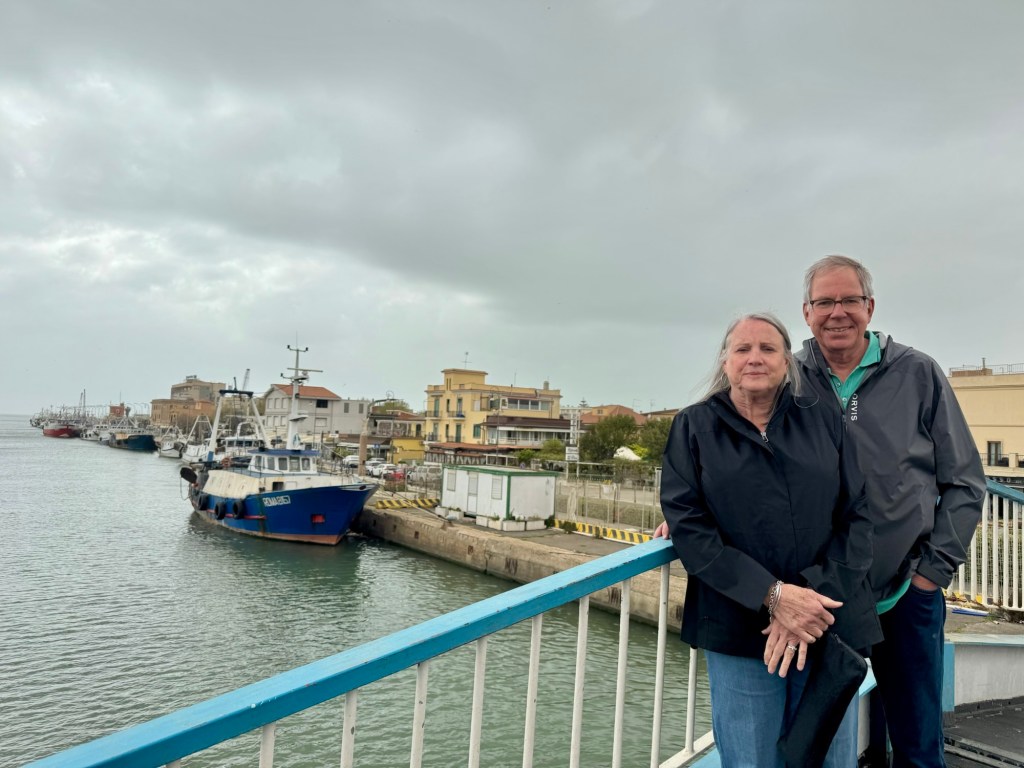
It was could and windy but we decided we needed one more gelato so some of us headed out to explore the area. The hotel recommended a place for the best gelato so we passed a few on our way but it was worth it. The Rome airport sets in a small town right on the sea and we had to cross a drawbridge to get the gelato.
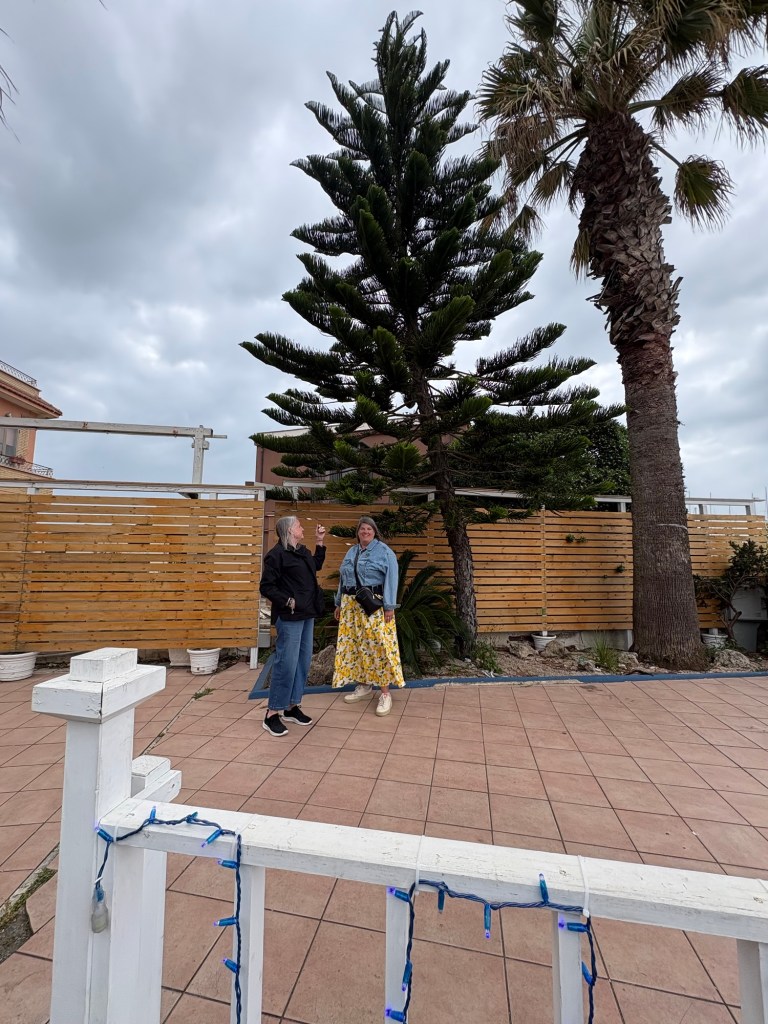
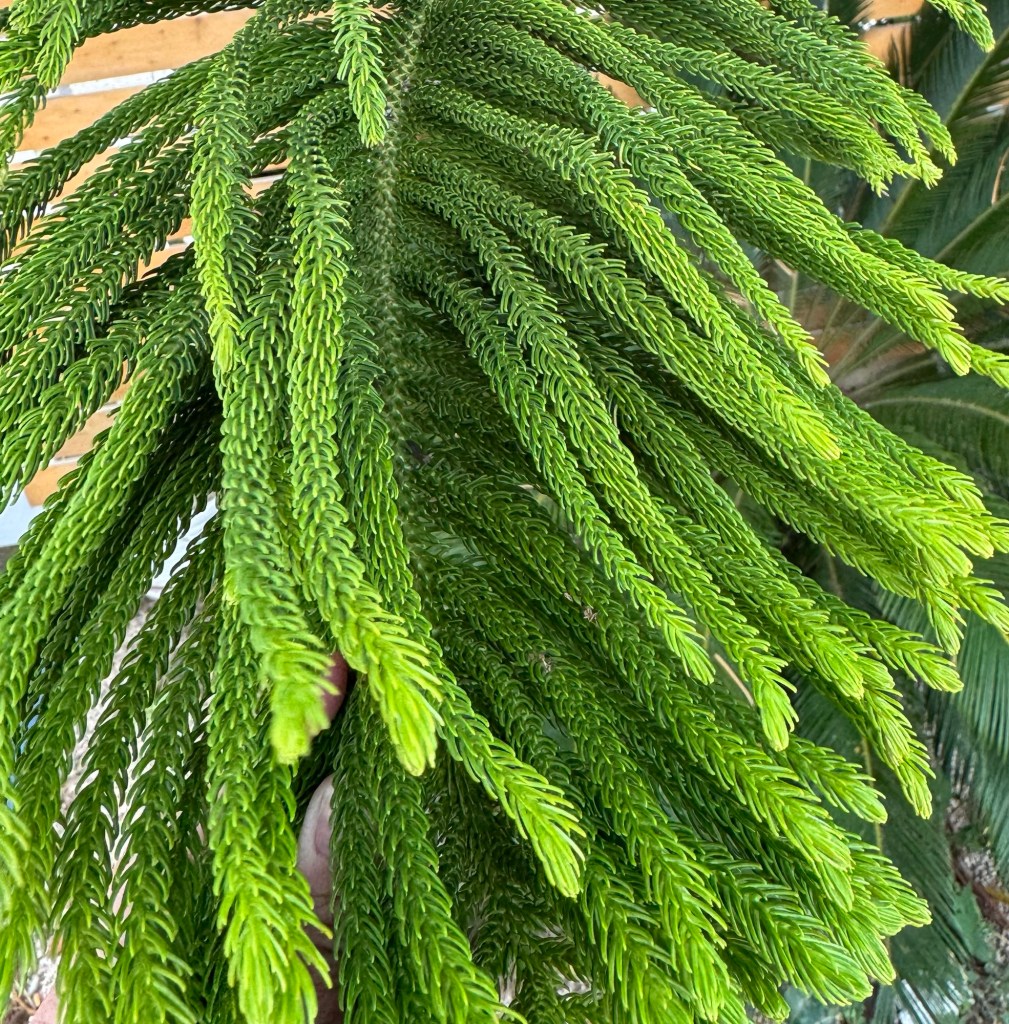
We also wandered around and checked out the restaurants so we could decide where to go for our last dinner. it was a little windy but there was one of the trees that I think would make a perfect Christmas tree and I wanted a closer look. The leaves were crazy. Almost like a succulent. Very soft and springy.
We headed back to the hotel to rest up for dinner. Kelle, Jeff and I decided to have another drink and Kelle and I shared one last bottle of Prosecco.
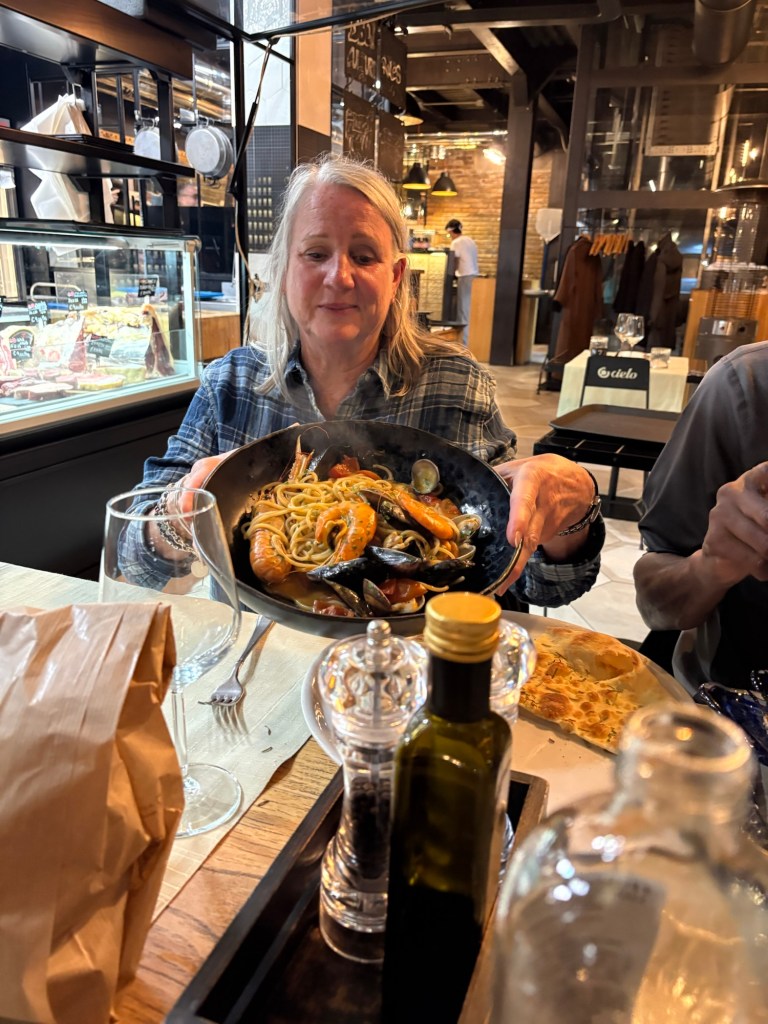
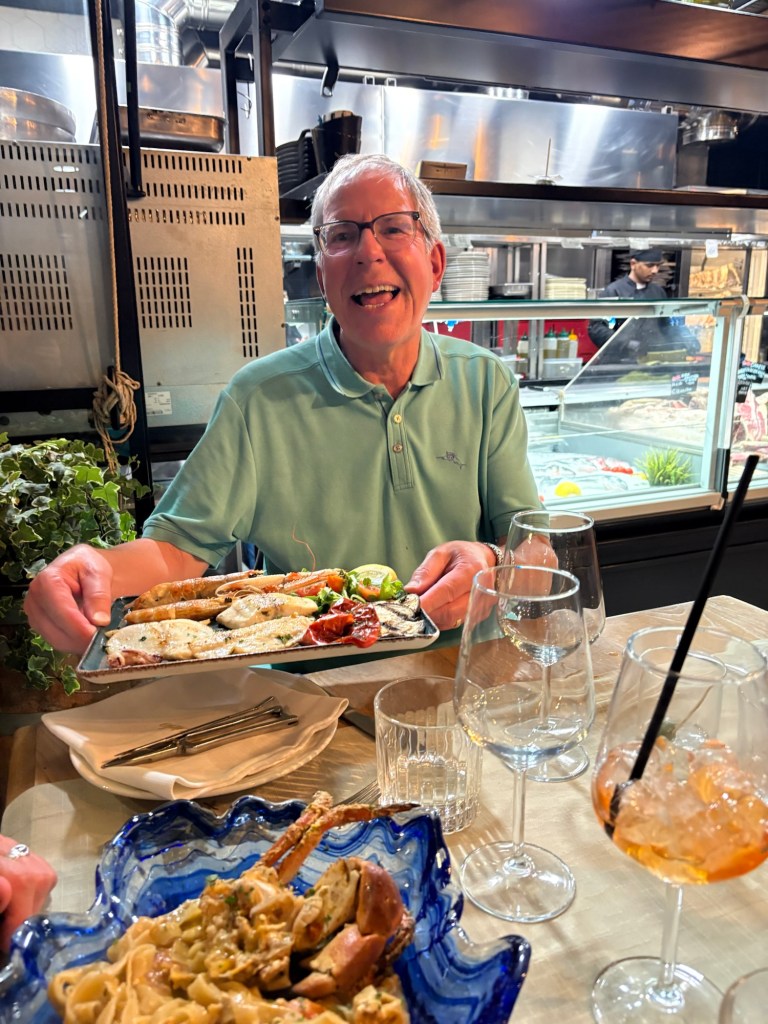
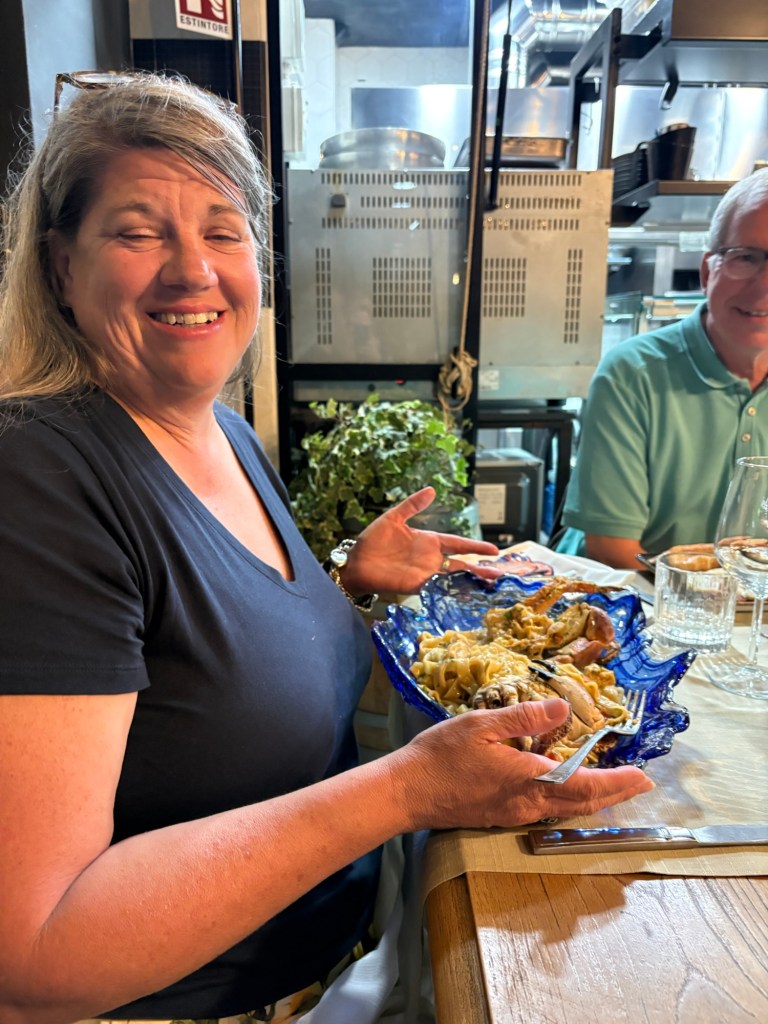
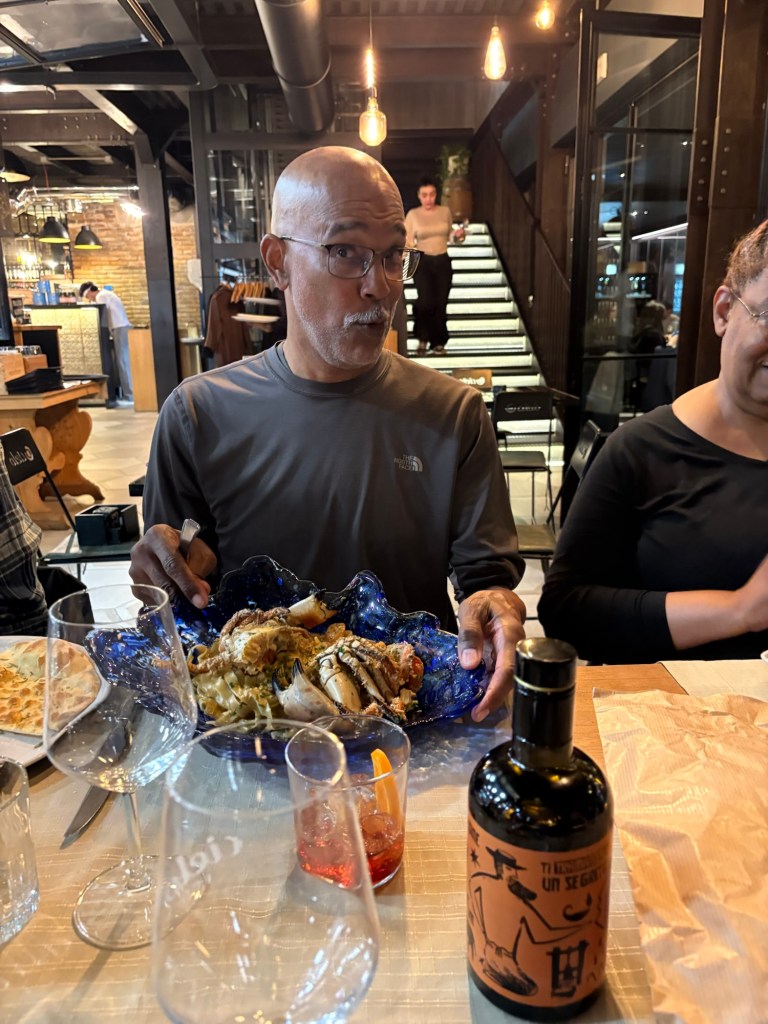
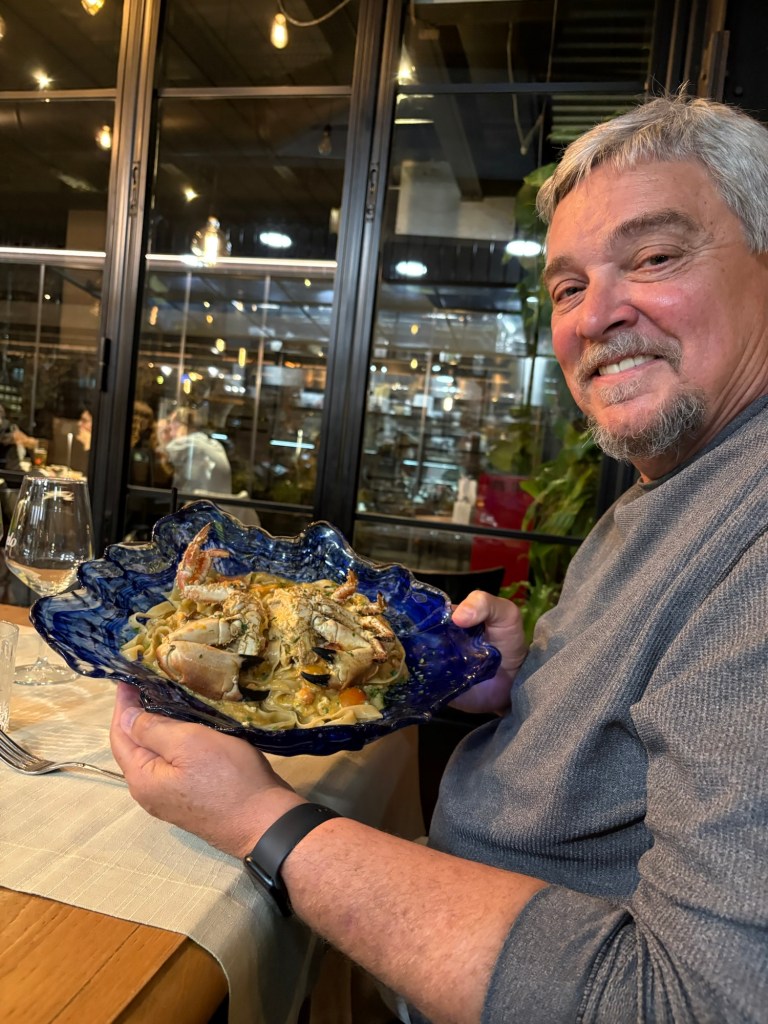
It was cold but we walked past a few options on our way to the restaurant recommended by the hotel. It might have been the same one Christina and I ate at a few years ago. Even if not I made the same mistake and ordered the crab pasta. I don’t like to get my hands dirty or work that hard for my food. The pasta was delicious without the crab so I let Kelle enjoy what she was able to get out of the super hard shell. I did have a delicious seafood salad as a first course so I wasn’t going to go hungry.
All in all a great last day for our trip. I am sad it is over and I can’t really say that I am ready to go home but I know I can come back again.
One last day before we head back to Rome to fly home. I can’t believe the trip is coming to an end.
We have nothing planned for the day except packing up and eating and drinking yesterday’s grocery haul. We had our usual breakfast of eggs, pancetta and toast. I got the toast a little too crunchy this morning but we managed to finish it all anyway.
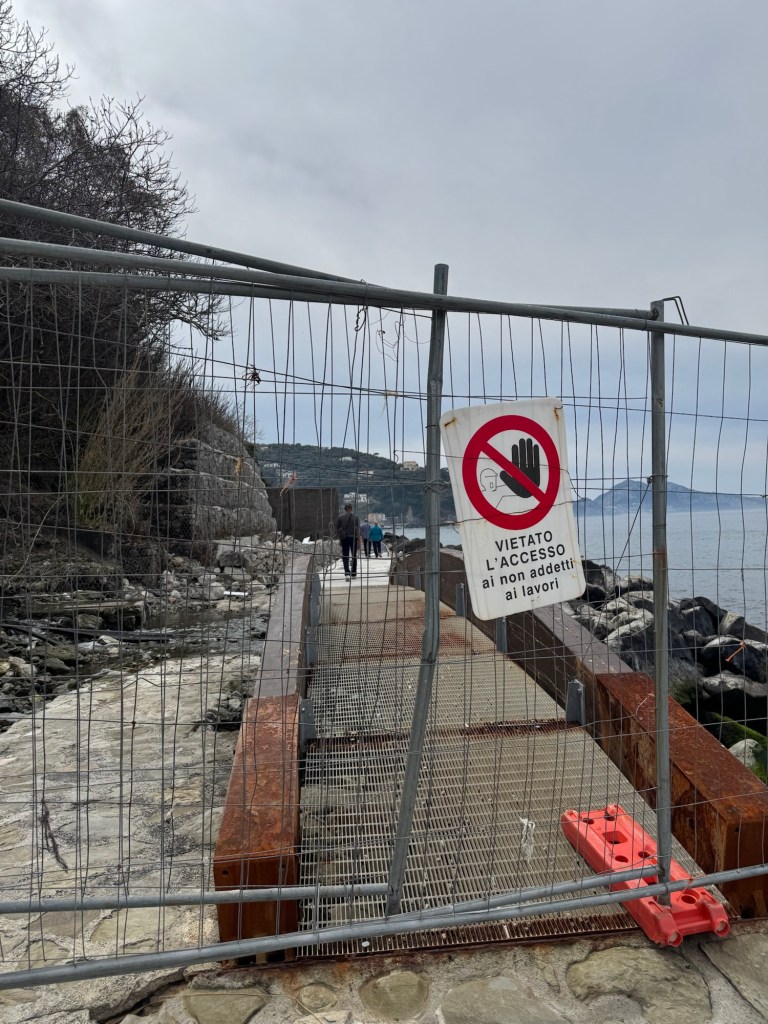
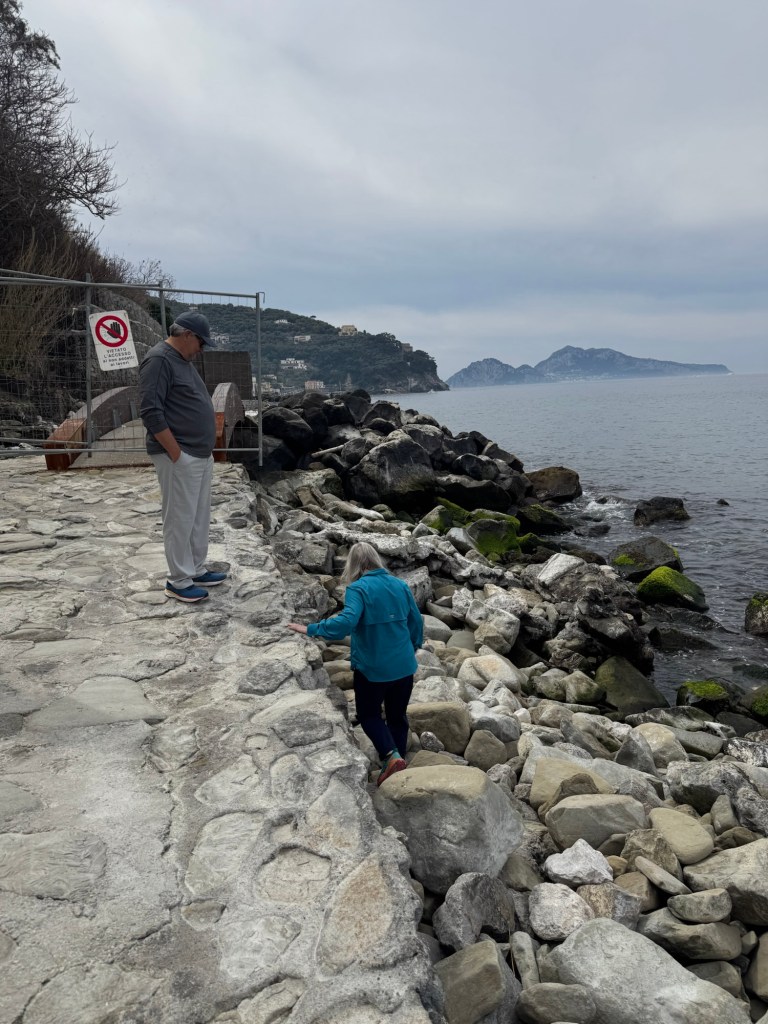
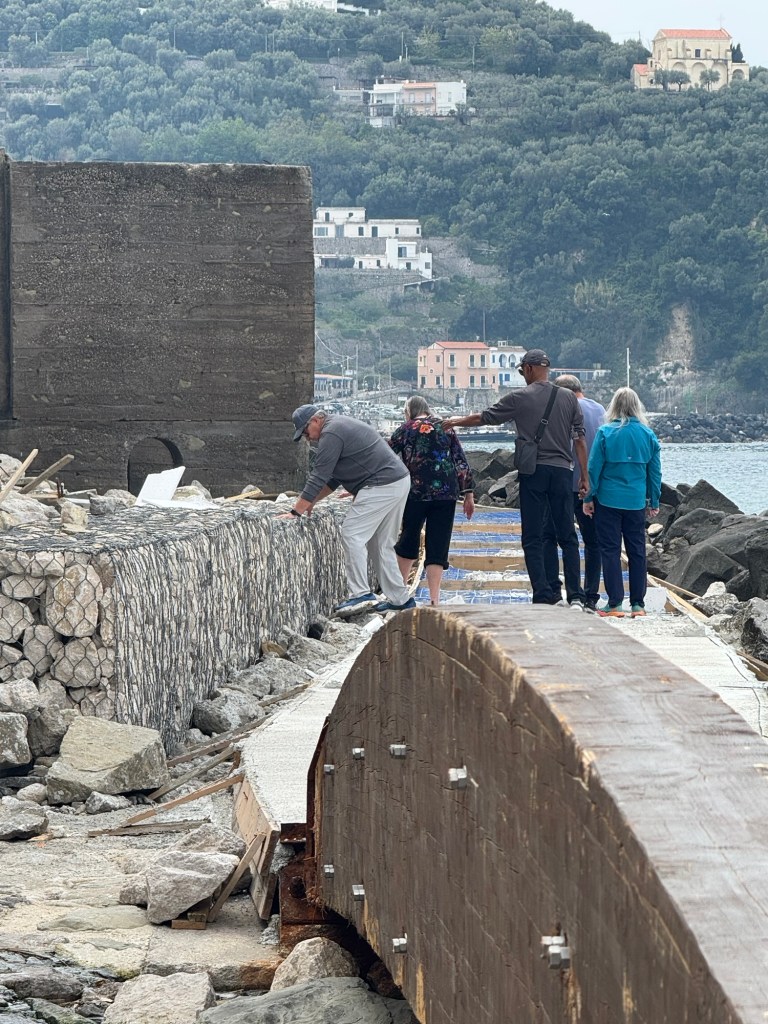
All but Faye and I decided to attempt the closed path into town. The concrete had set in the parts they had done so they thought it was passable. Jeff had gone down earlier and found a way over the rocks, under the bridge then up on the retaining wall over the unfinished parts. After breakfast they headed out. I considered it but couldn’t get motivated and decided to stay with faye and open a bottle of Prosecco.
The group wasn’t gone long. Other than some bars and restaurants there wasn’t much at the pier and the hike up to the town was long and no sidewalks. So turns out the adventure wasn’t much more than the walk. I do wish it had been open so that we could have gone in for dinner but it worked out.
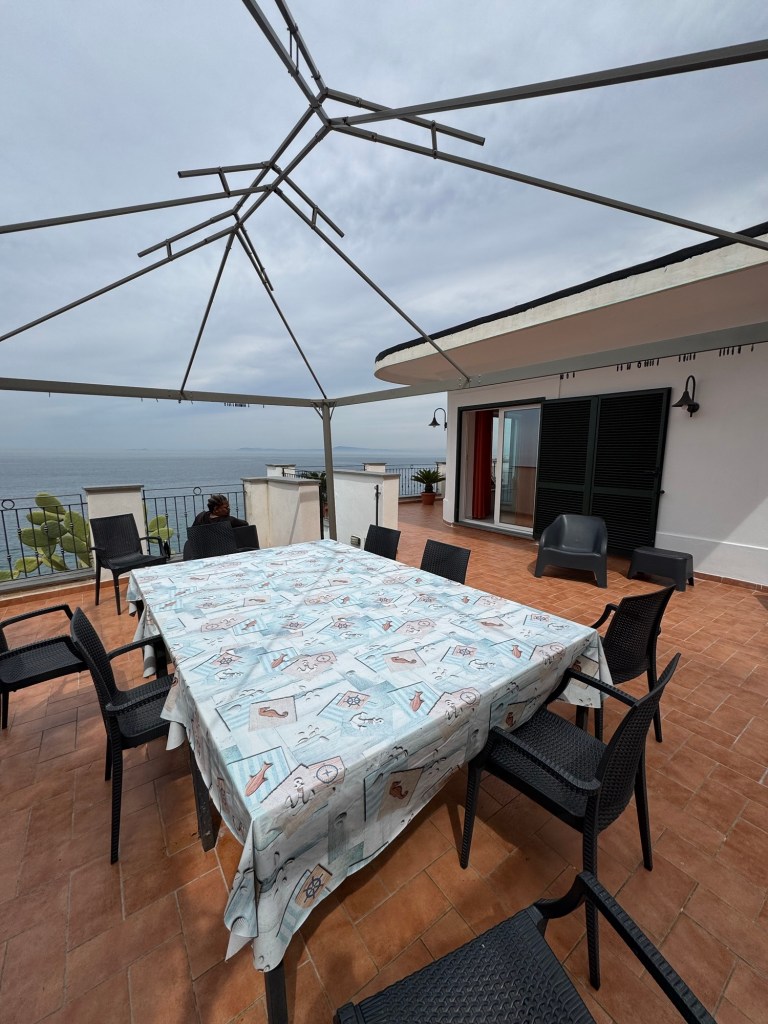
For lunch we made some sandwiches and had lunch outside on the terrace. We had a little bit more wine and discussed our favorite parts of the trip.
The hot tub was finally warm enough to use but no one wanted to get their bathing suit wet so we ended up not using it. we all needed to pack up and some of took a nap so it was a lazy afternoon.
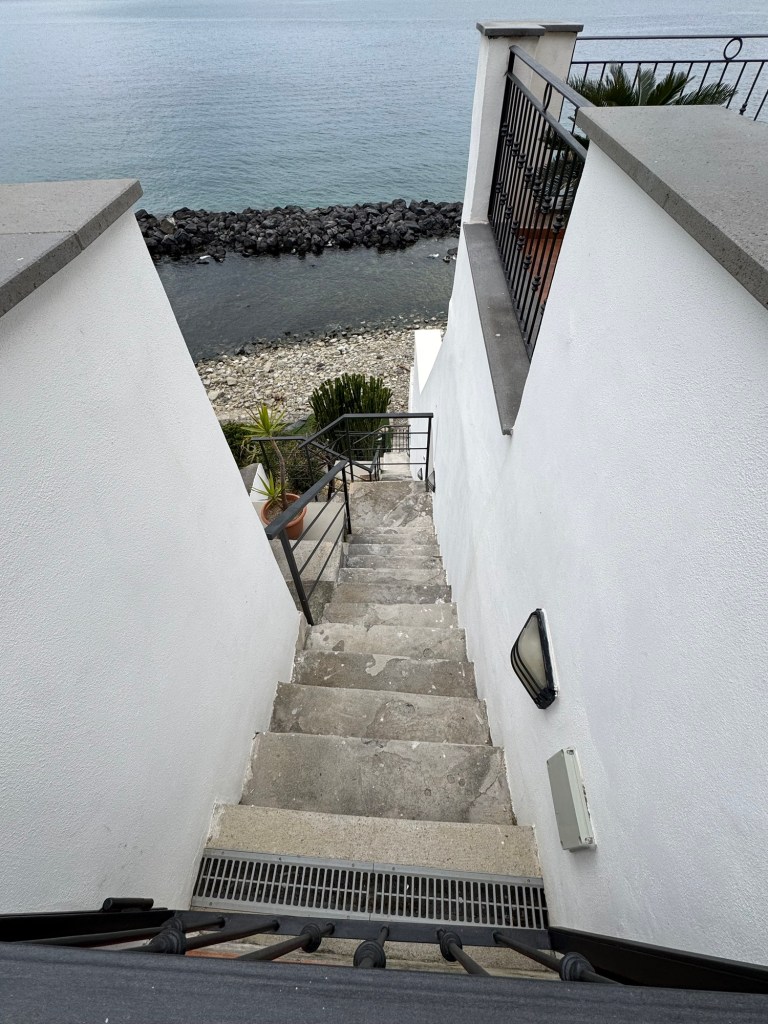
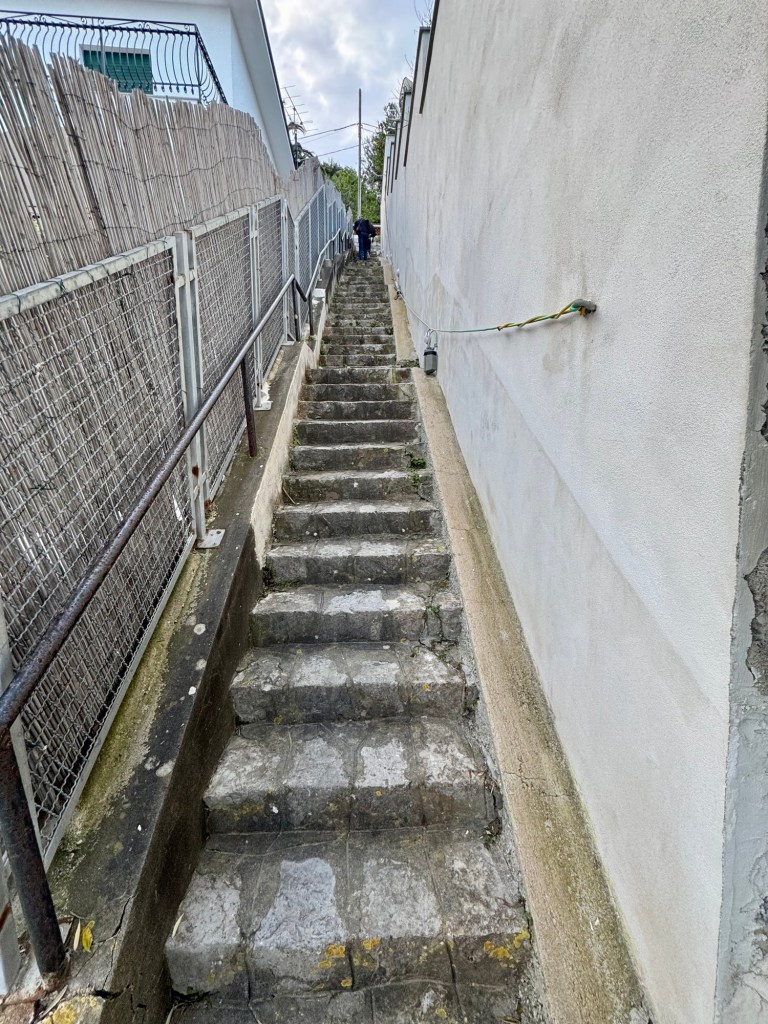
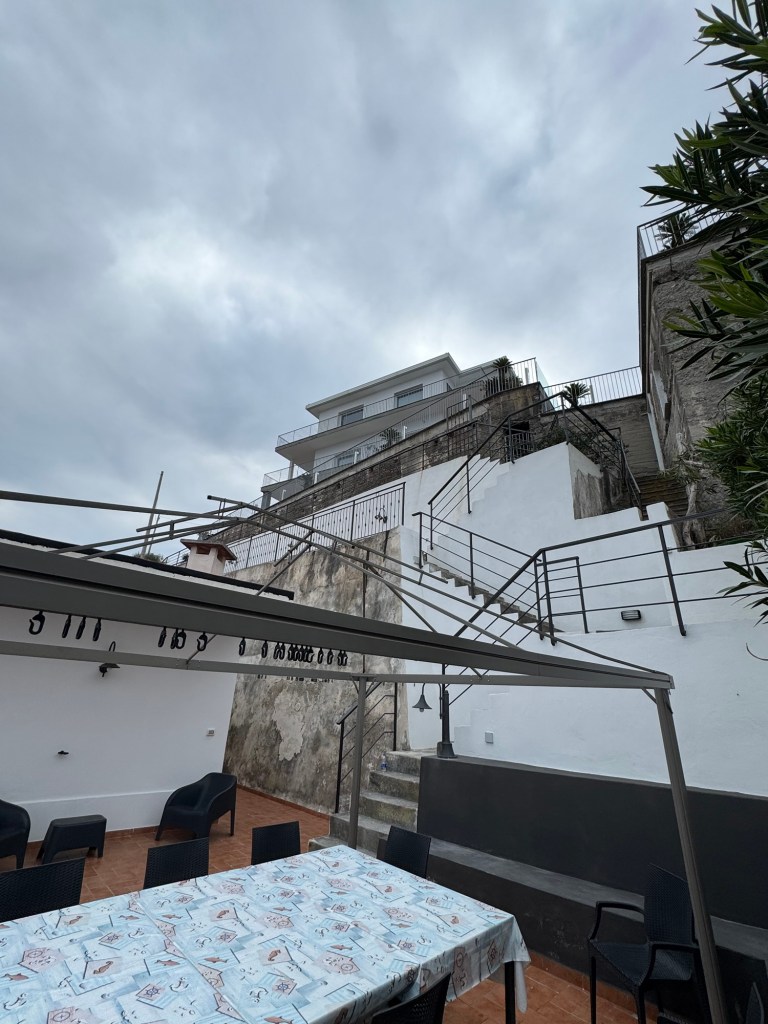
It took me a while to get my bag down to a manageable weight to make it up the 107 steps to the street. My back pack had to pull a bit more weight and the new bag I bought in Sorento was packed up with all my treasures to be carried on the plane.
I did finally take some photos of the villa and the stairs.
Stairs going downStairs going up. And up
Dinner was pretty simple with spaghetti. We had tomato sauce and a little Parmesan left. There was also pancetta so we fried that up to crumble on the top. We did have mozzarella’s and tomatoes so we had a nice caprese salad to accompany our meal. I was disappointed that we couldn’t easily get into town but I did enjoy cooking and eating in the villa.
We finished all the wine and prosecco but not all the alcohol we bought to make Negronis and the limoncello. We had enough bread and meat to make sandwiches so I did that before heading to bed. I thought we might need them after Pompeii and turns out I was right.
It was sad to wrap up our last real stop on the trip. Tomorrow will be busy with the drive and the stop at Pompeii but we will just be staying at a hotel out at the airport so I don’t think it will be the same.
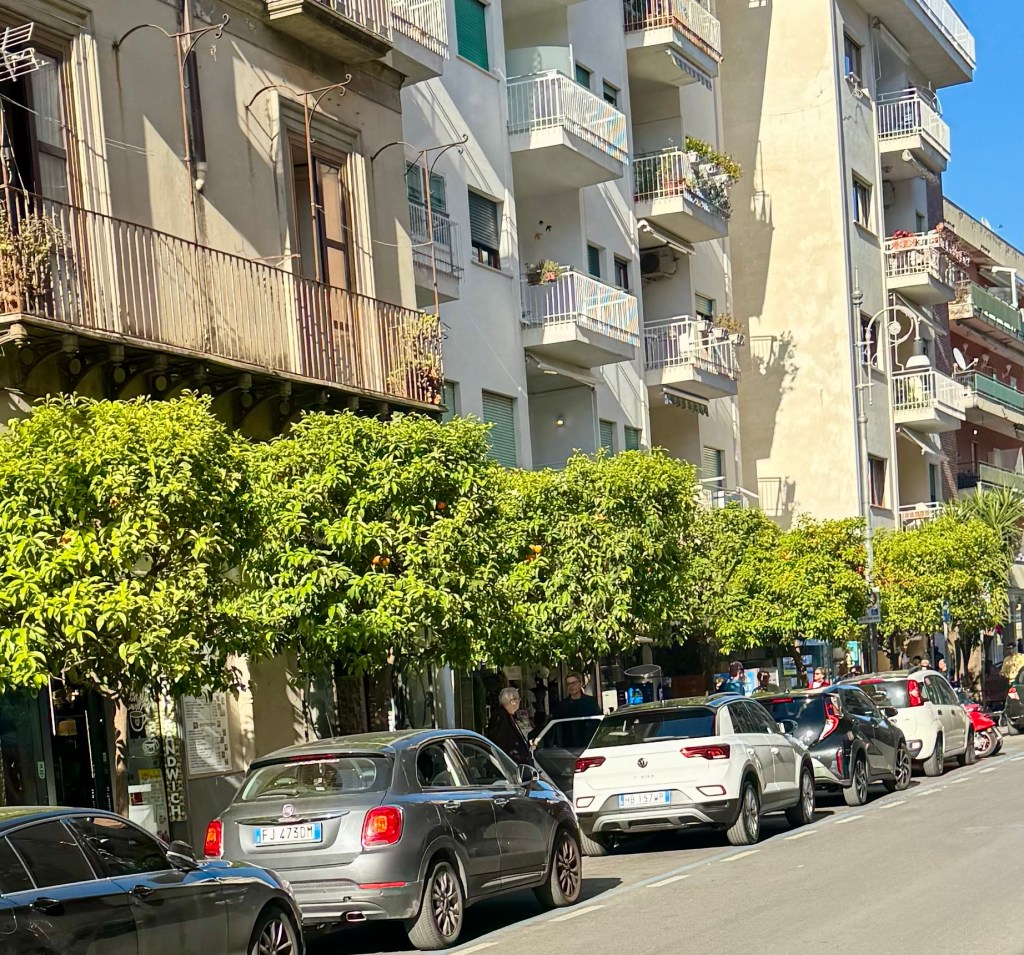
Kelle, Jeff and I decided to tackle the traffic and go into Sorento for the day. Coming through from Rome was a nightmare. The roads are super narrow and there was a lot of traffic and then just people walking along the shoulder. There are not a whole lot of sidewalks in this part of Italy. In fact only what we would consider city streets have sidewalks but not any of the main streets don’t have them even though they are barely 2 cars wide and one lane is often used for parking. But surprisingly the touristy area of Sorento was on our side of town so it wasn’t even a 15 minute drive.
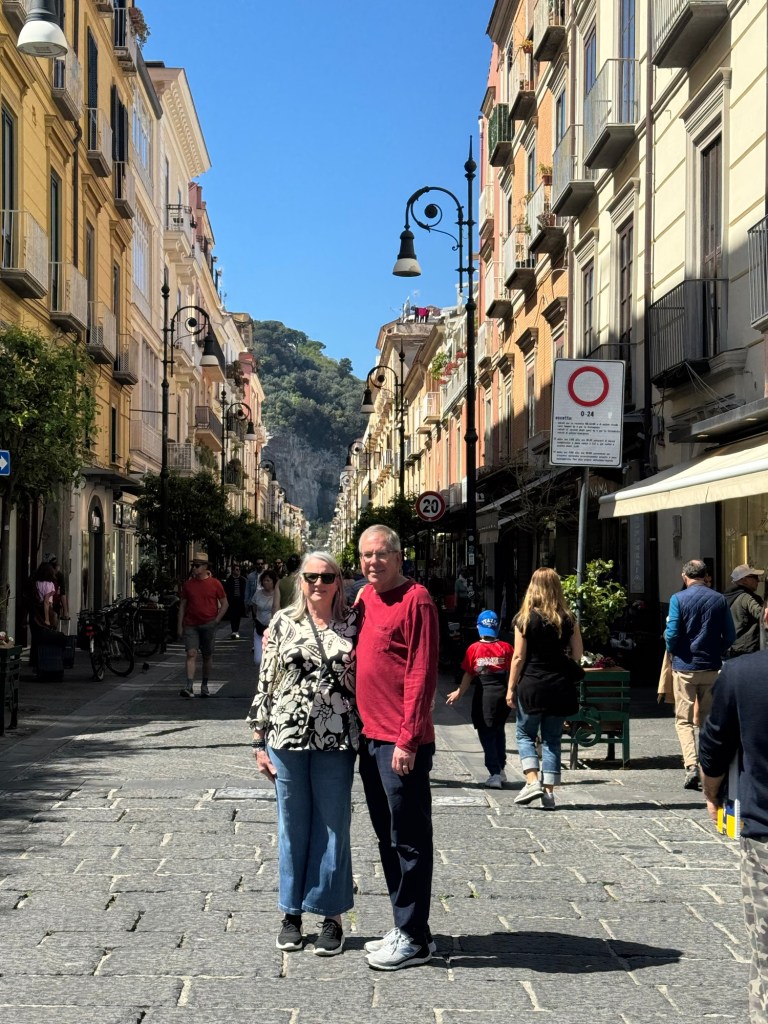
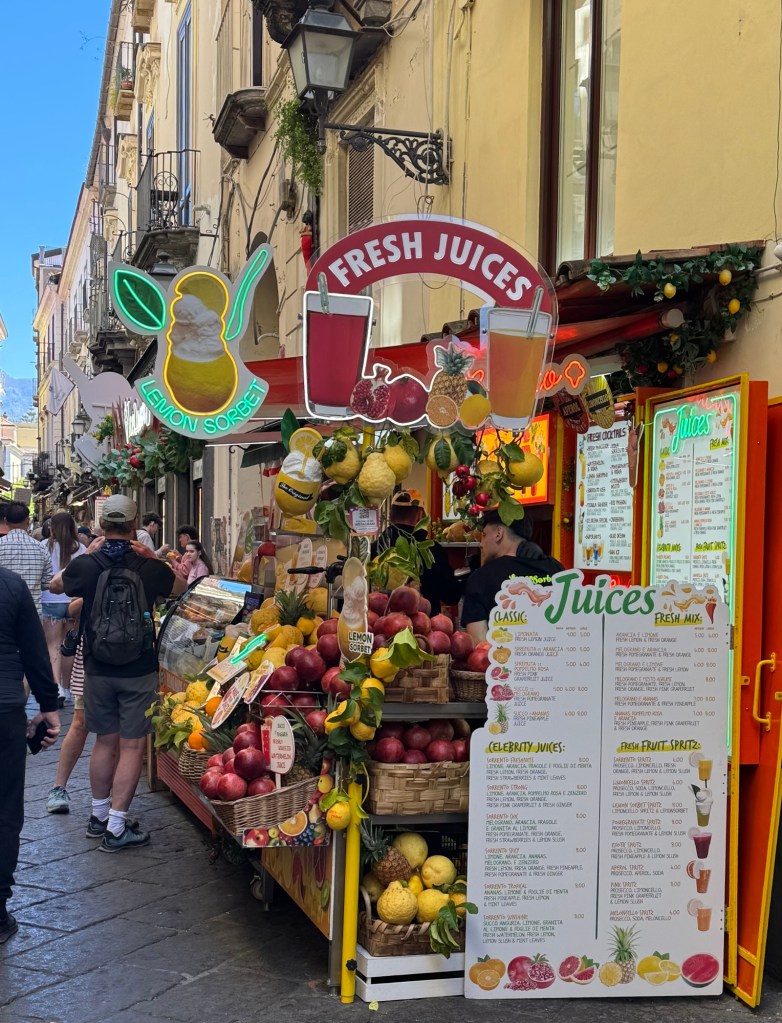
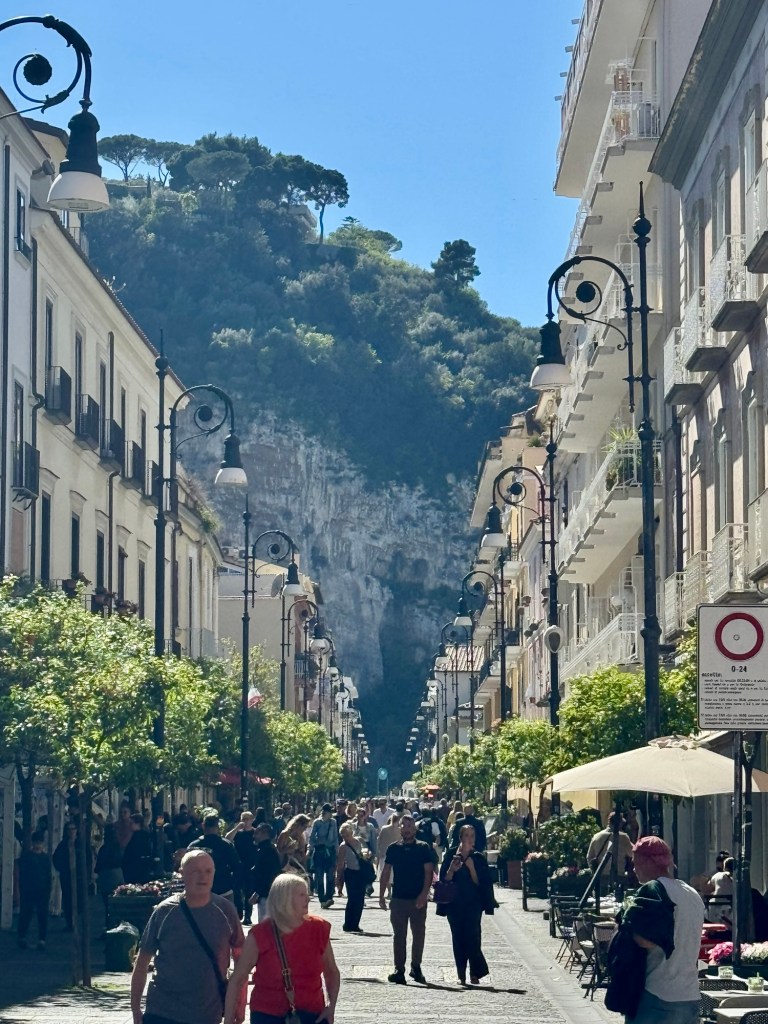
Sorento is really cute. There is a nice pedestrian area with restaurants, gelato, shops and sorbetto stands. One was a wide main boulevard the other two were more like alleys which gave it a more Italian feel.
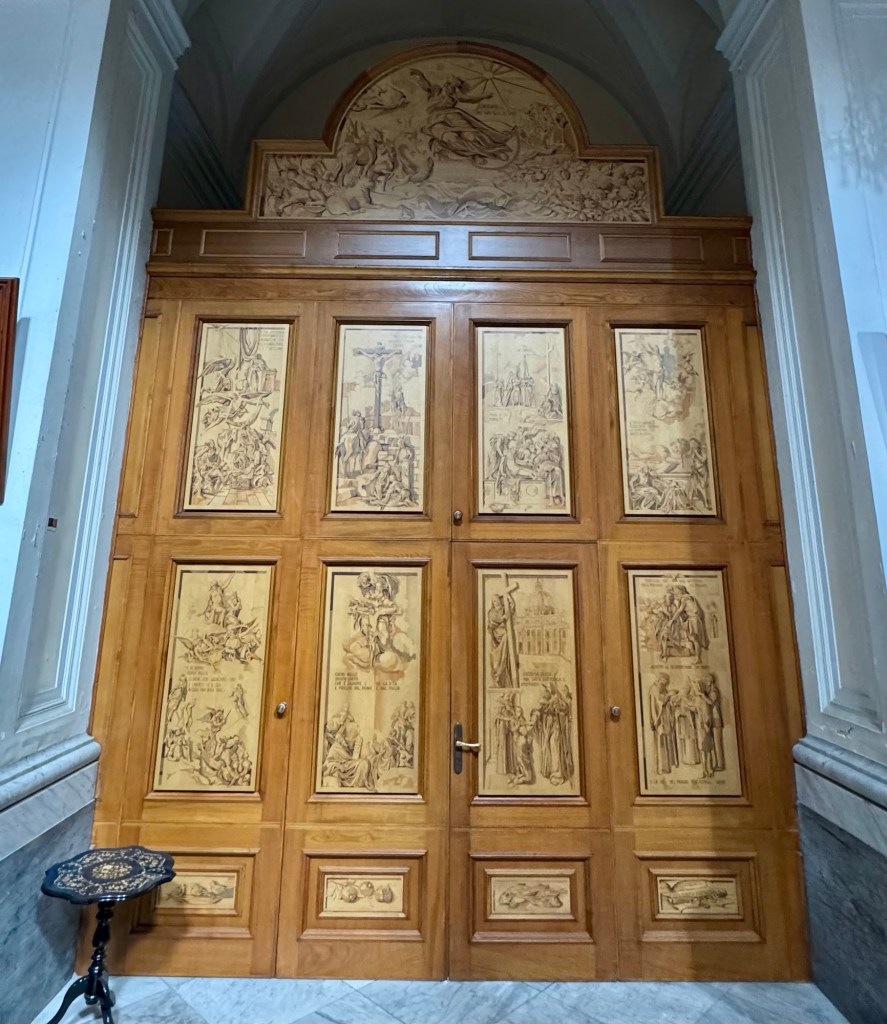
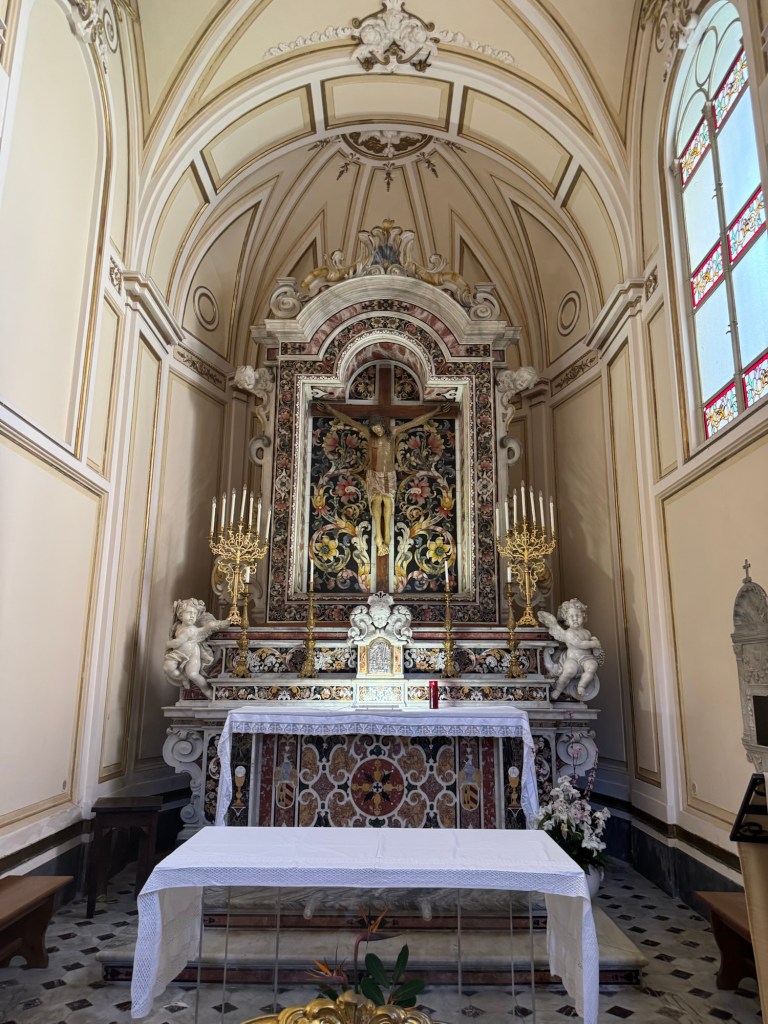
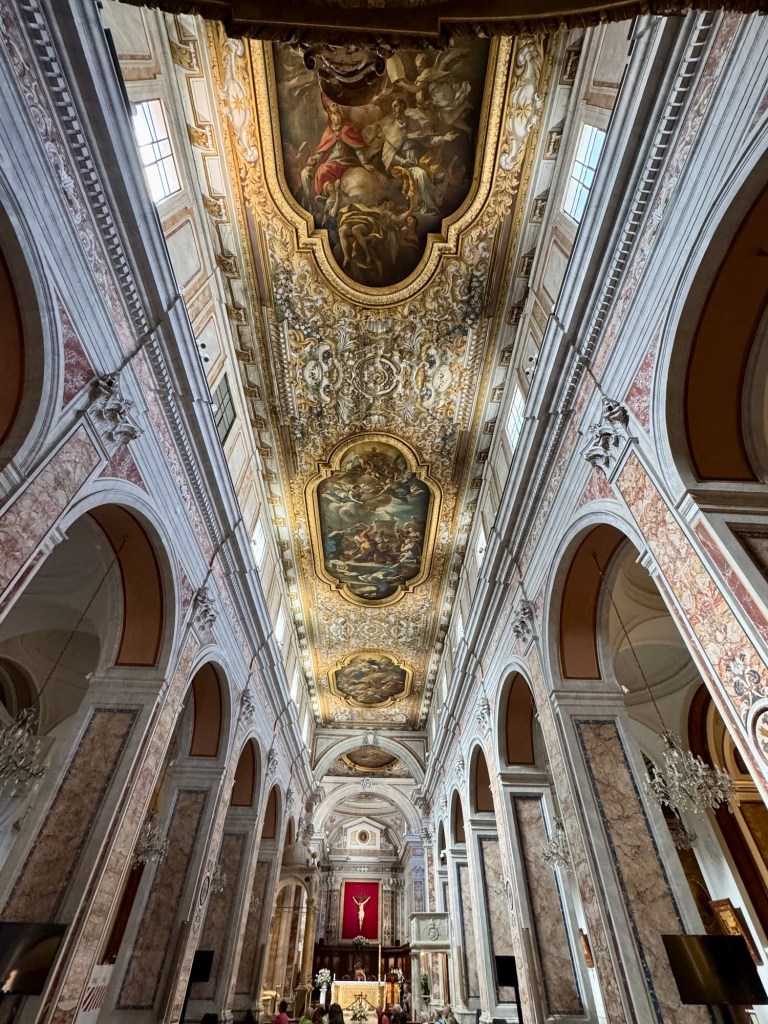
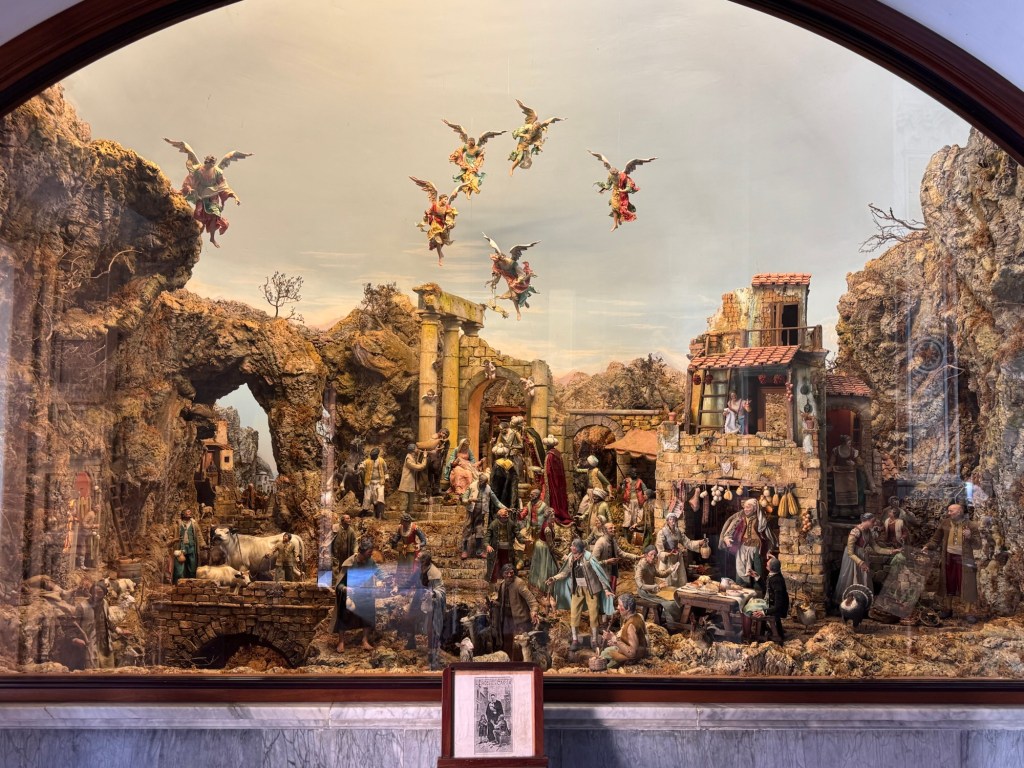
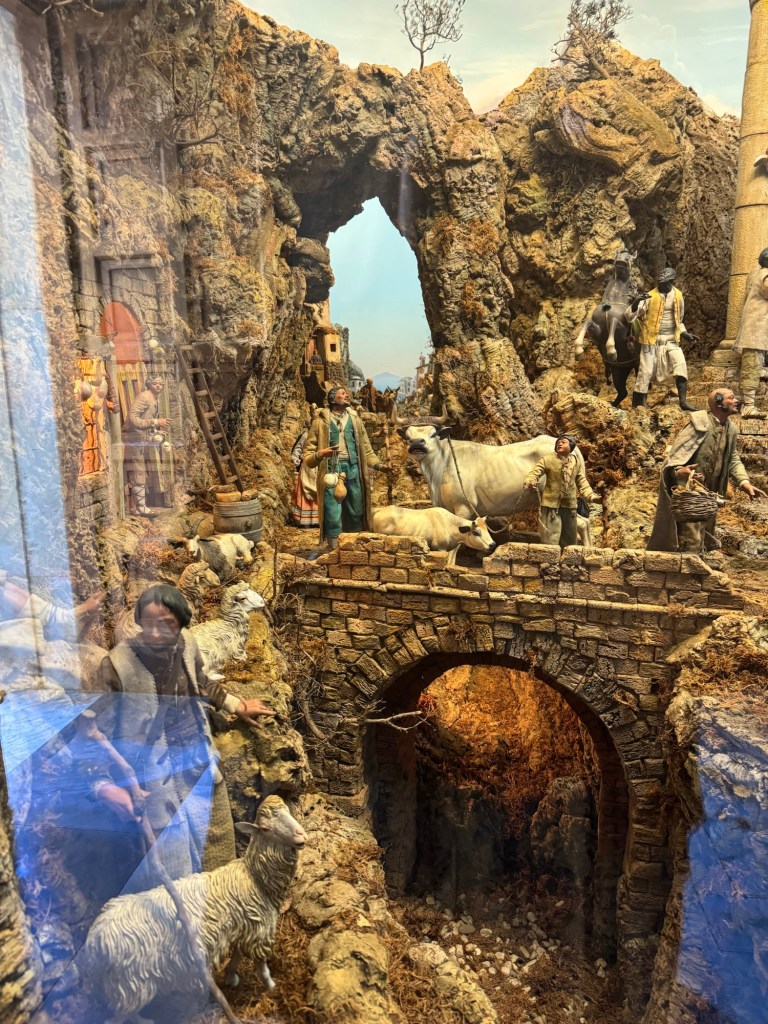
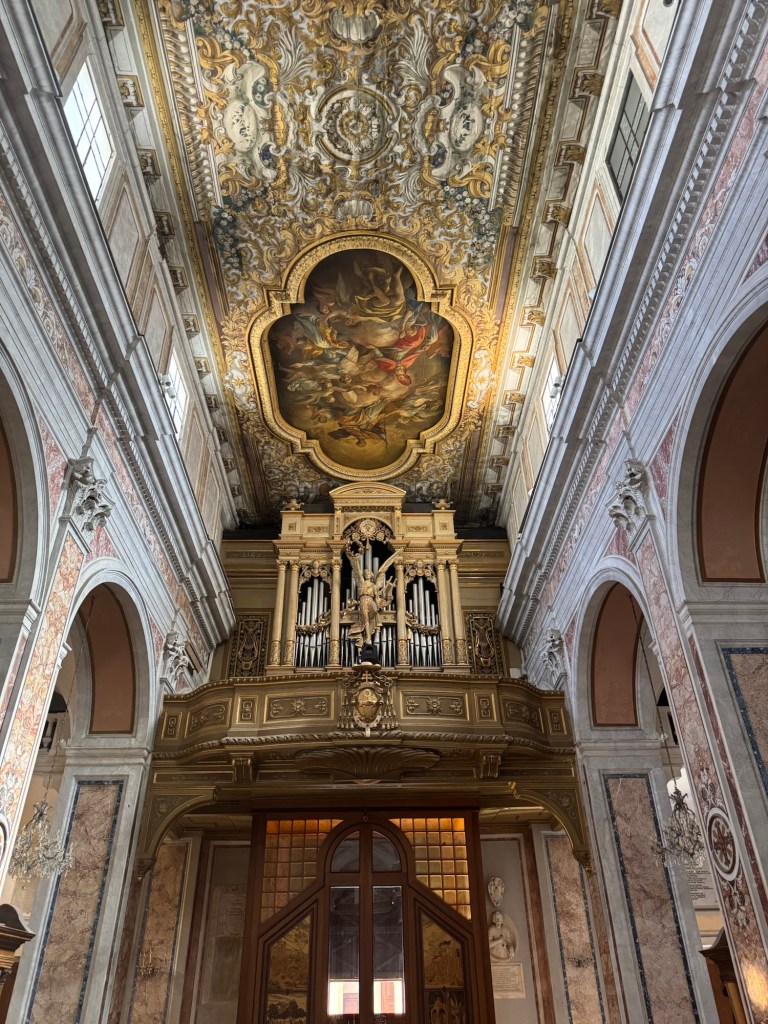
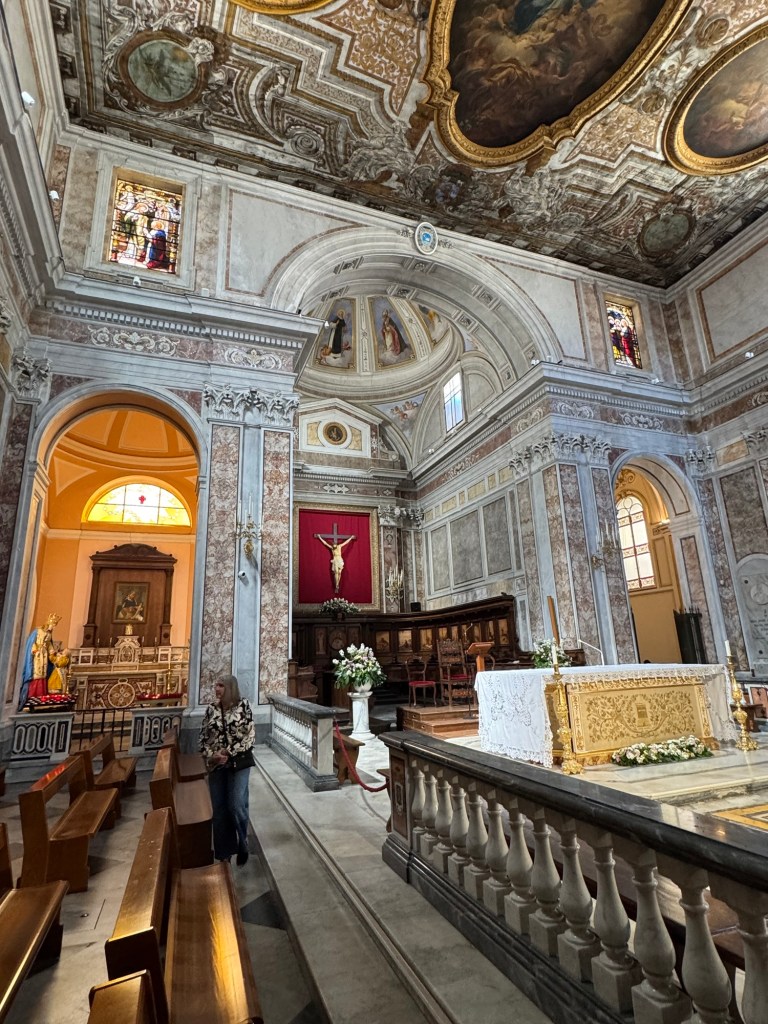
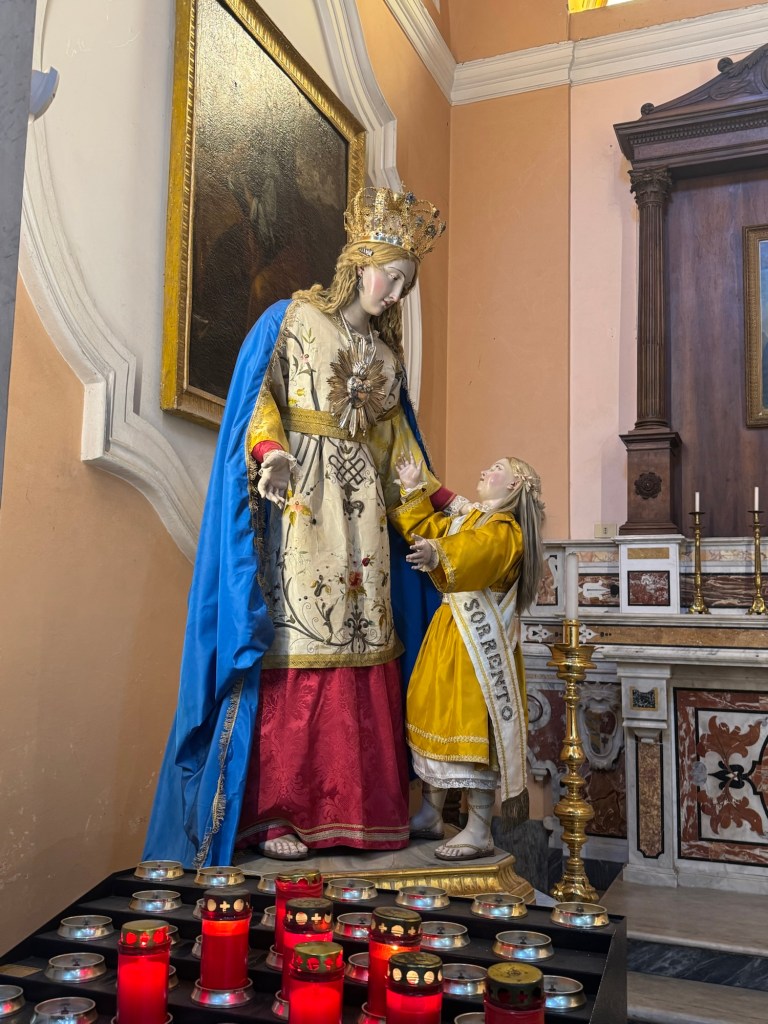
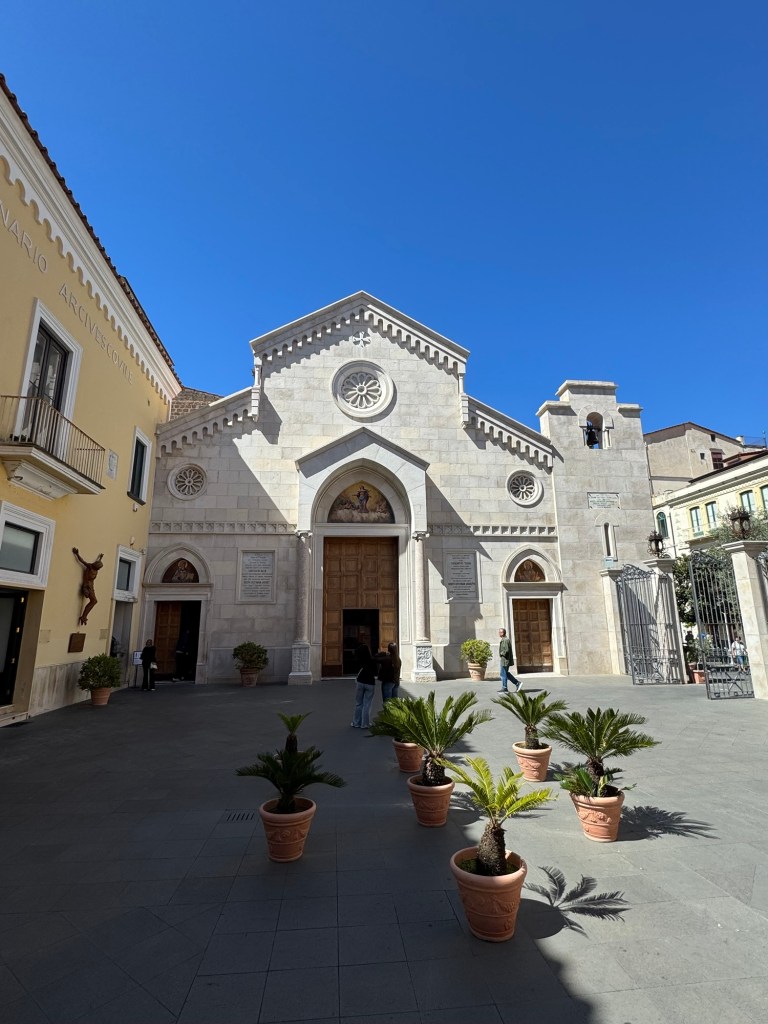
The first stop was the church. Unlike others that we have seen this one was done mostly with wood veneer marquetry. The front doors were all done and then several of the small side chapels had it as well. There was also a big diorama in the front of a Jerusalem scene. It was nice and different from any of the others we have seen.
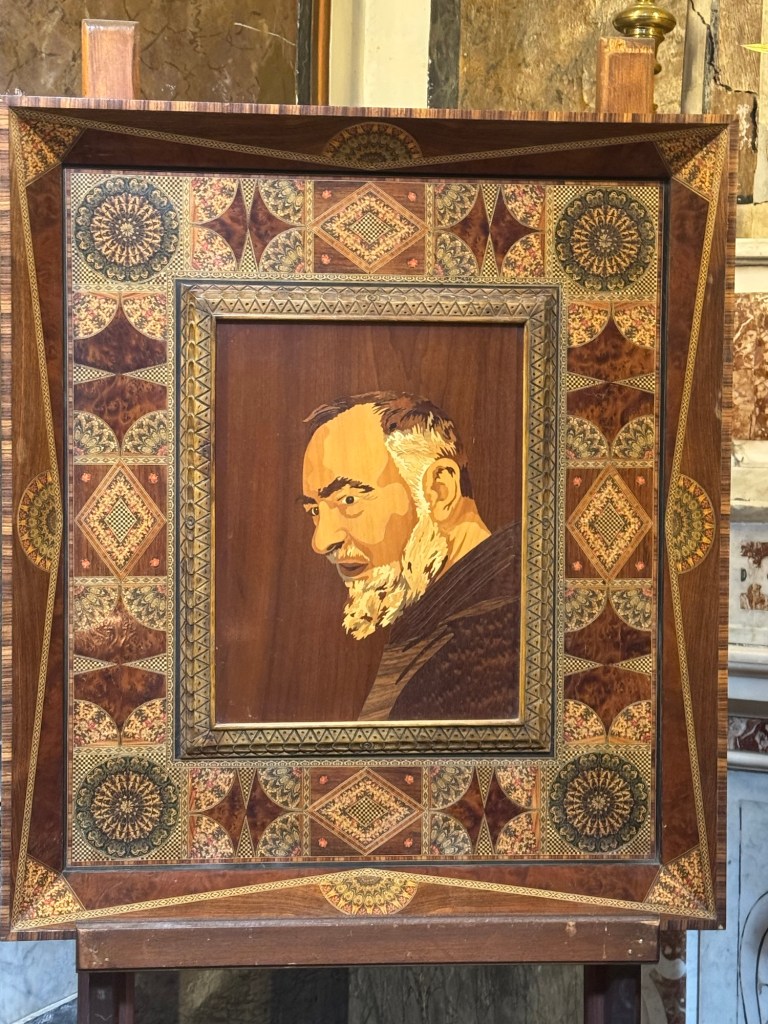
From the church we just started wandering and shopping. Surprisingly other than my day out at the designer outlet and the leather school I had not done much shopping. I made up for it in Sorento. It is a shopping Mecca. Especially if you want linen beach wear. They also had great pottery and some of the veneer marquetry. All of which I bought. Kelle stole my good idea for mom which was a bright scarf. It was sad to look at ornaments and not buy her one. But all I saw were breakable and that is not what her tree needs. I might have to give her the one I bought for myself and just hope it is not too heavy for her tree.
We saw a nice photography exhibit of black and white photos of just Italian street life. there were some really nice ones. I considered buying one to go in my travel wall but instead bought a nice Italian scene done in the veneer.
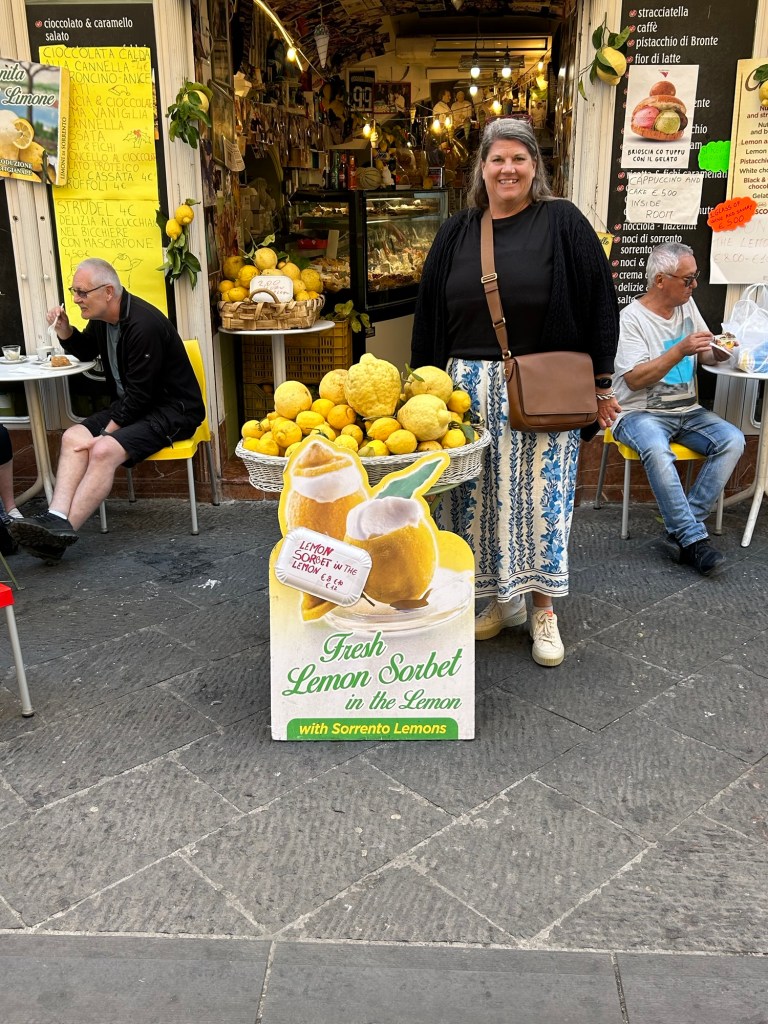
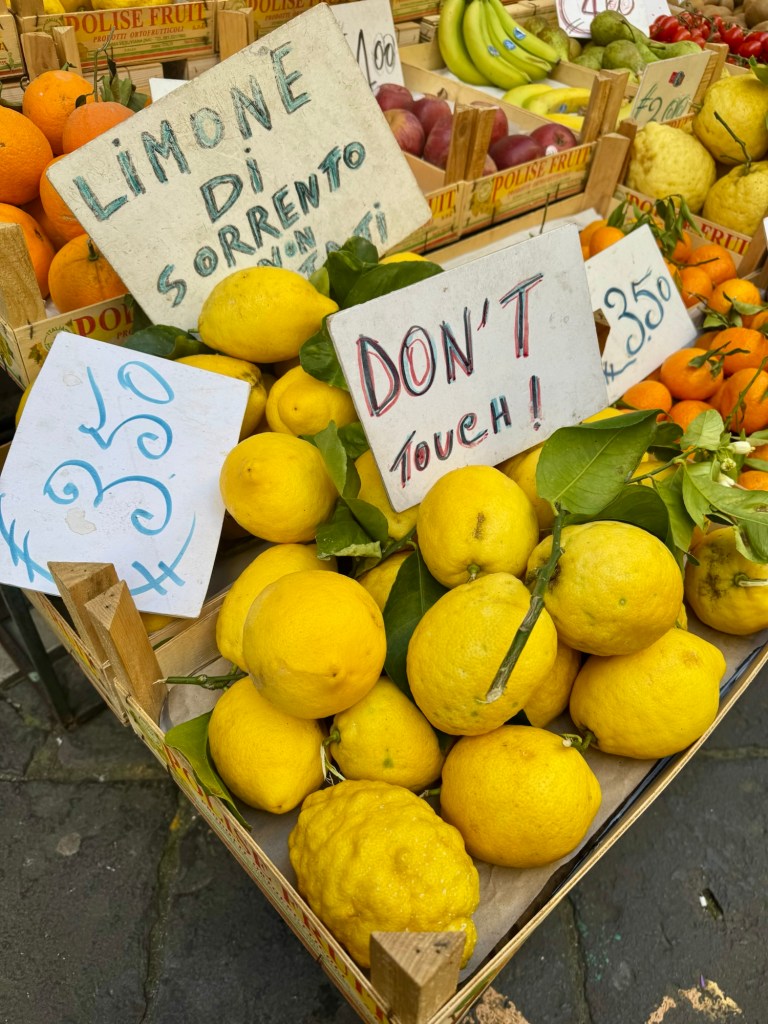
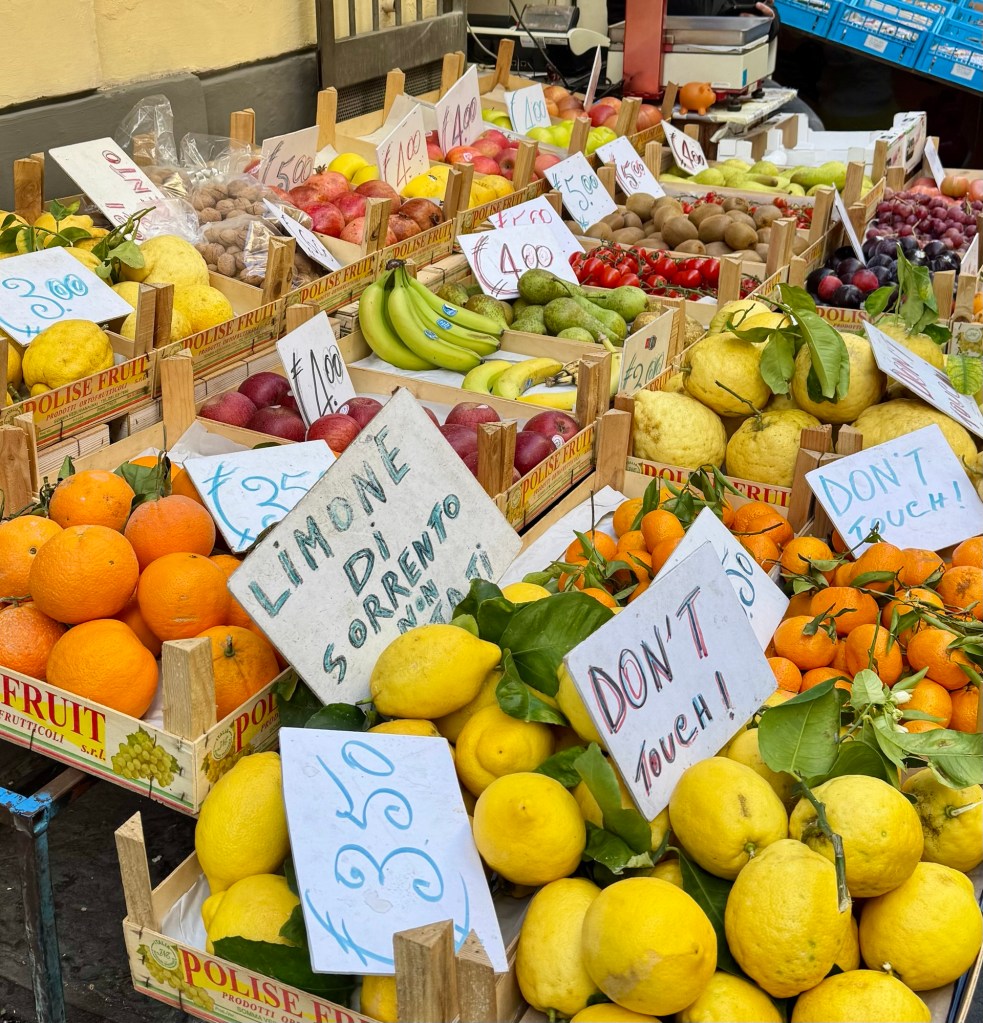
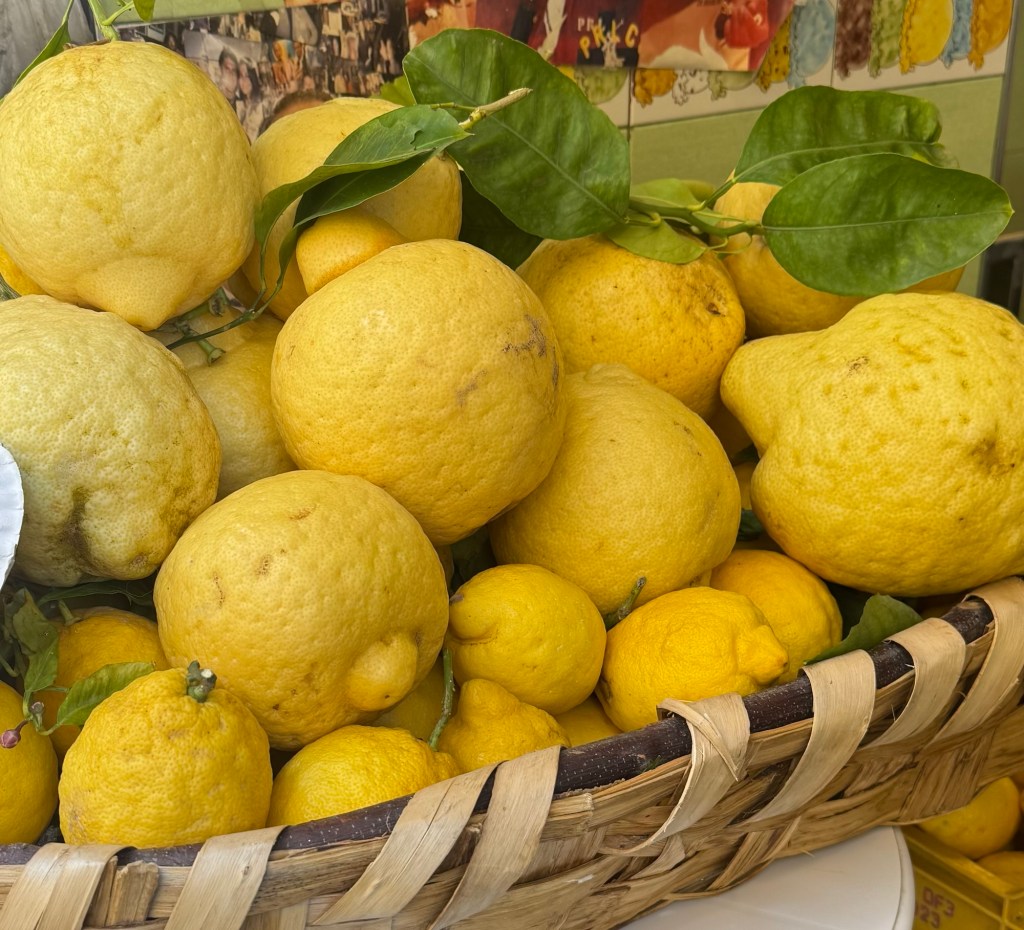
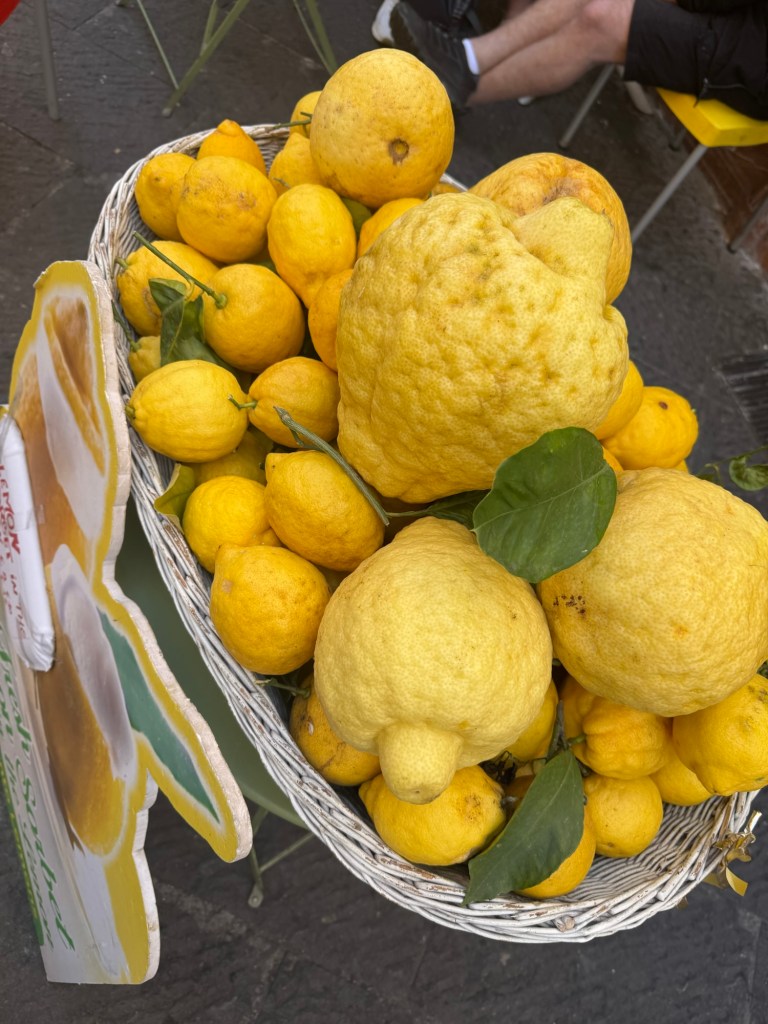
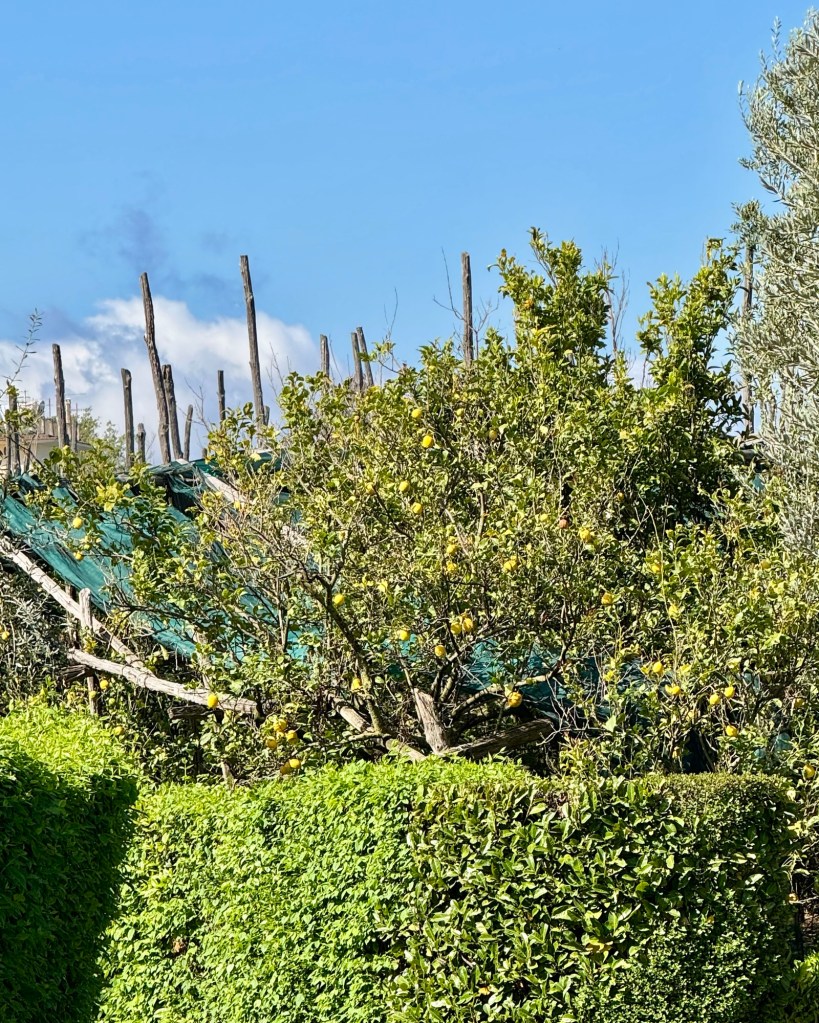
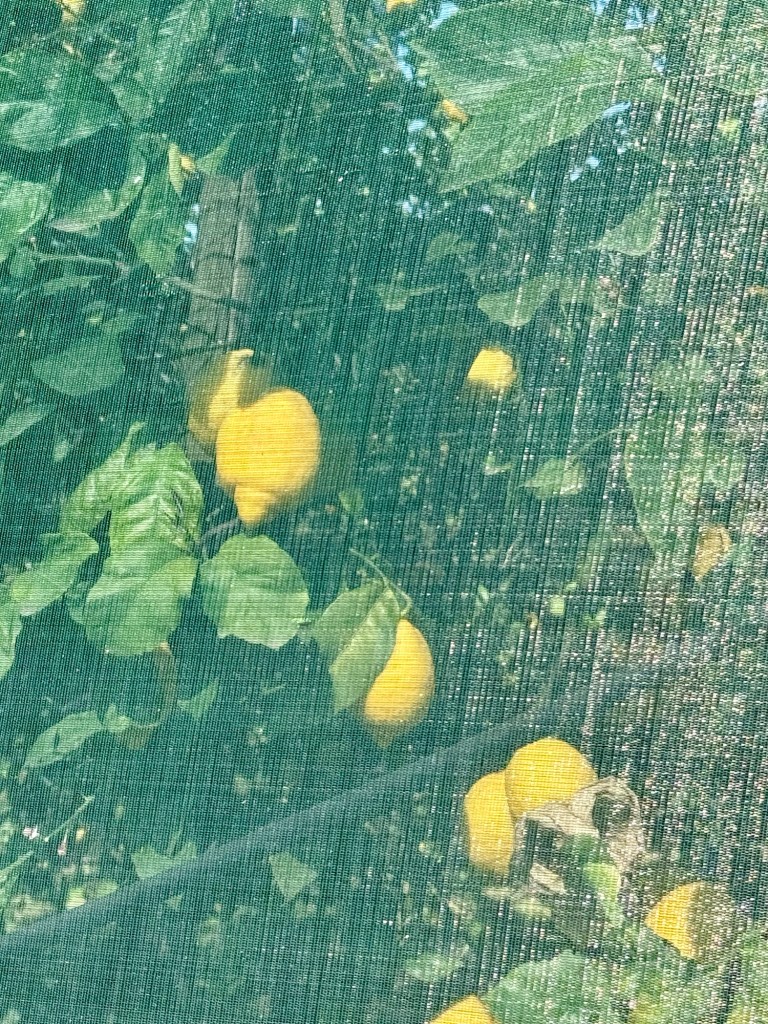
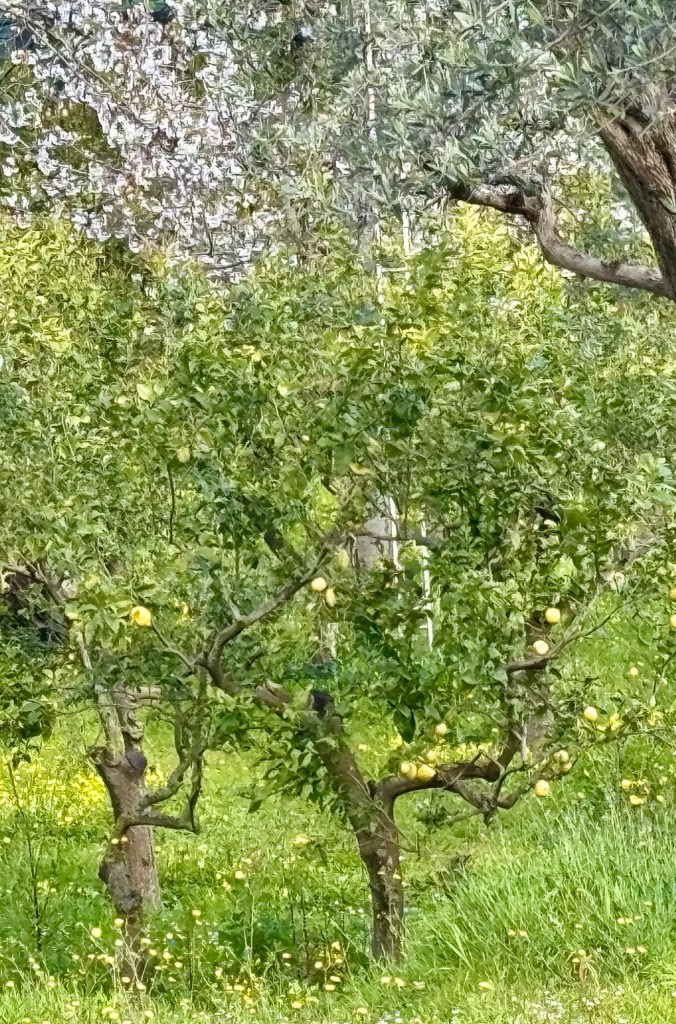
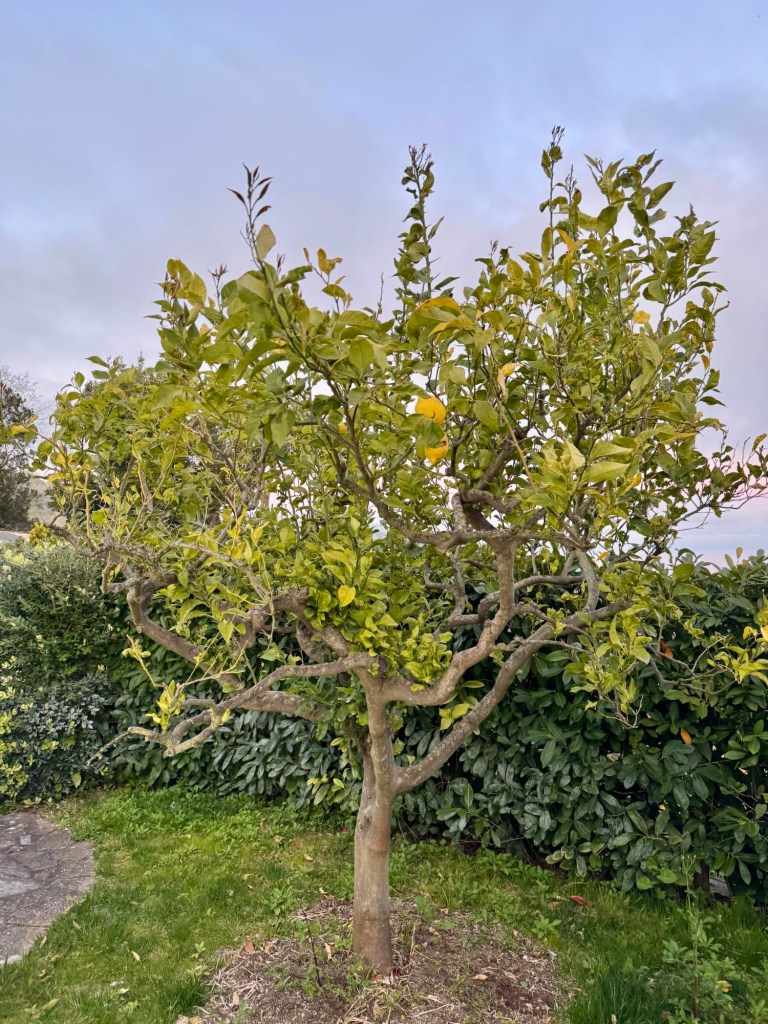
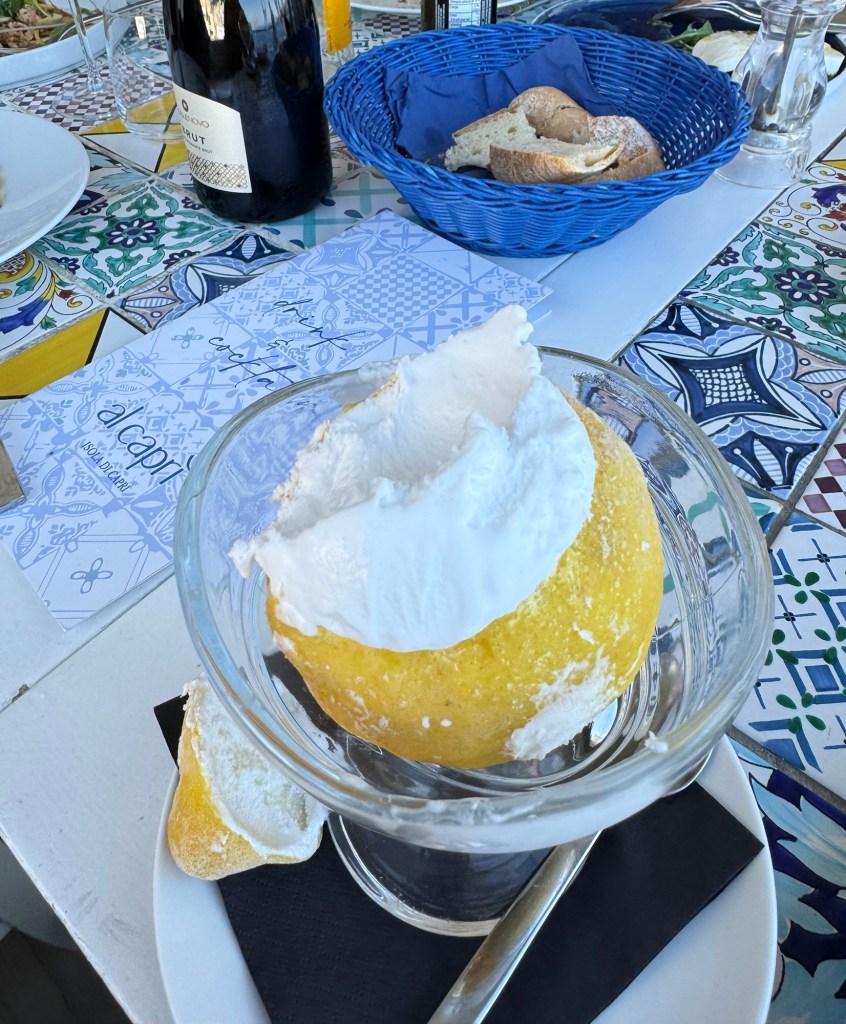
We saw a lot of the extremely large lemons. I don’t know how good they would be but I did try the one my sorbet was in and it was a little sour. The skin is not as bitter which is why it makes good limoncello but the lemon itself was very similar to ours.
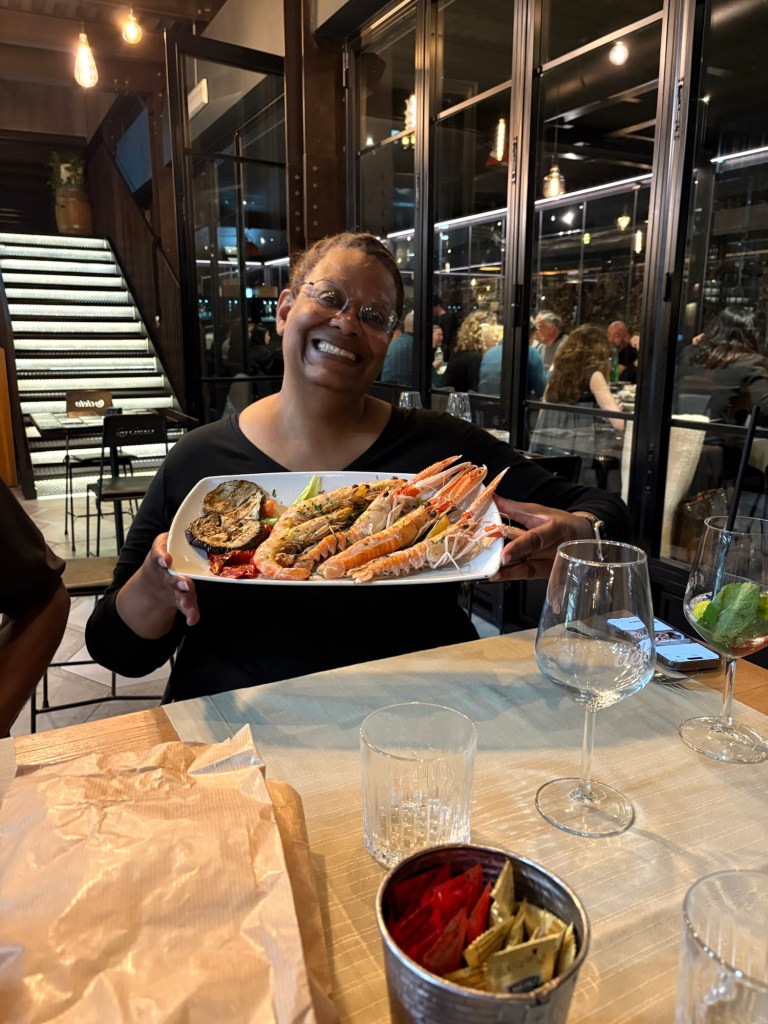
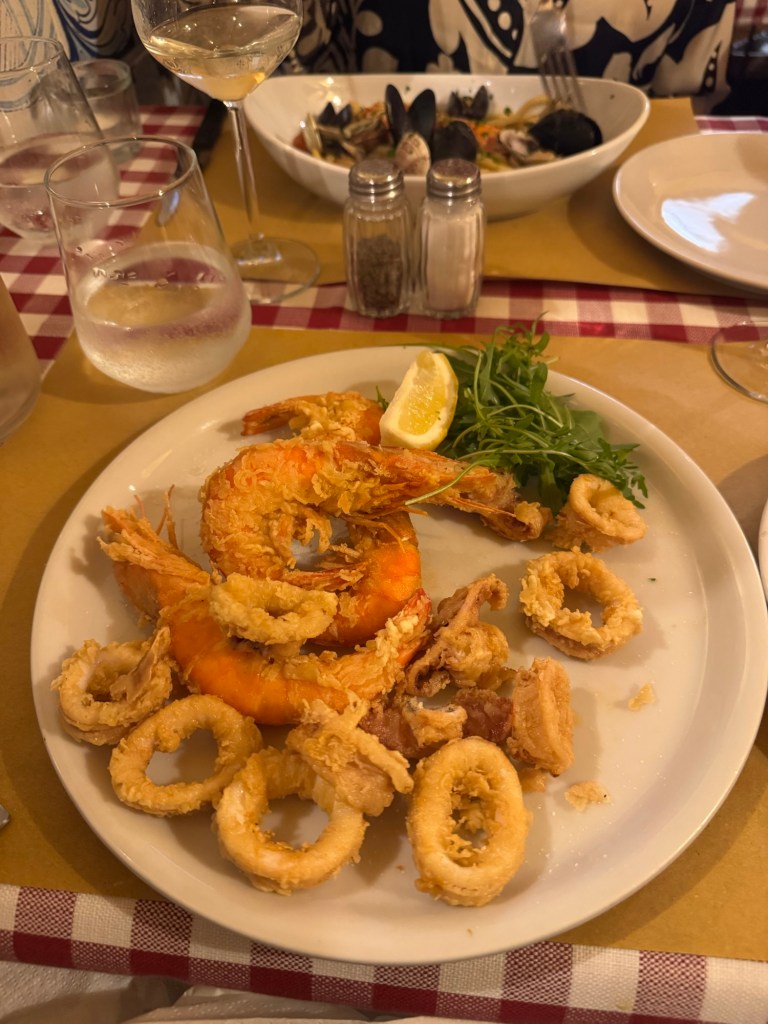
We found a nice little spot one street off the tourist square for lunch. I had the shrimp and calamari. Forgetting for a moment that they fry the shrimp shell and all. I don’t really like for my food to have eyes but I powered through. It makes no sense to me why they would fry it when you have to take off all the batter when removing the shell. It was still good but not as good as Kelle’s mussels. I should have done that. Kelle and I shared a litre of white wine and all was good.
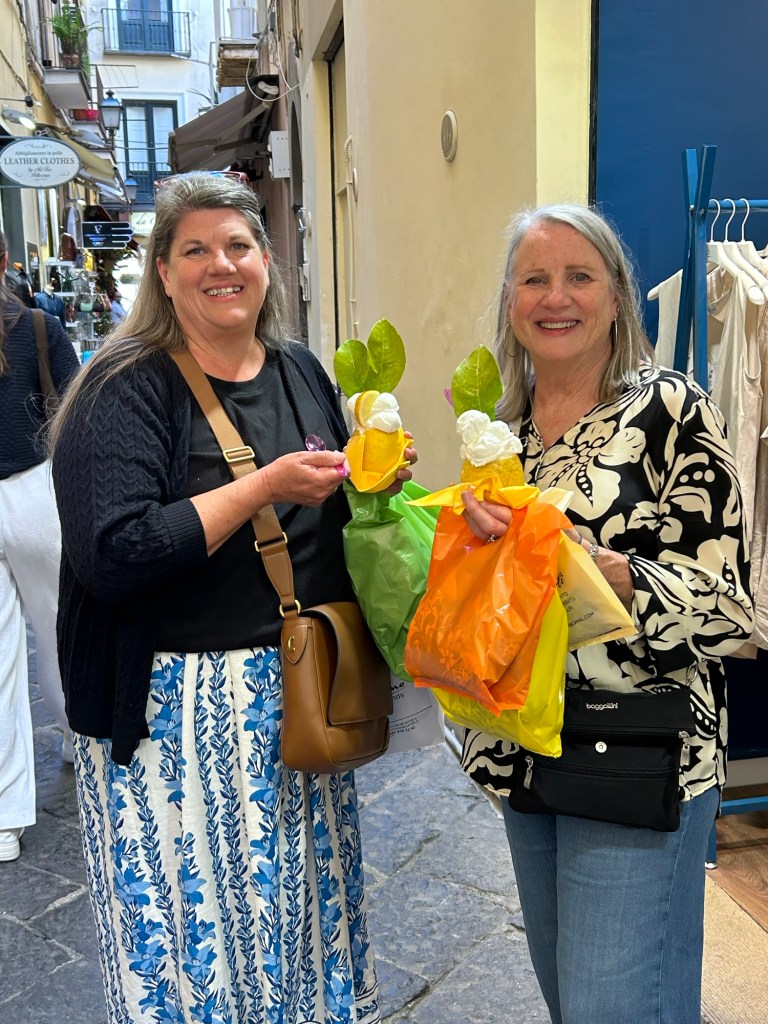
After lunch we had no the sorbetto. The one on Capri was better (more creamy) but this one was still good.
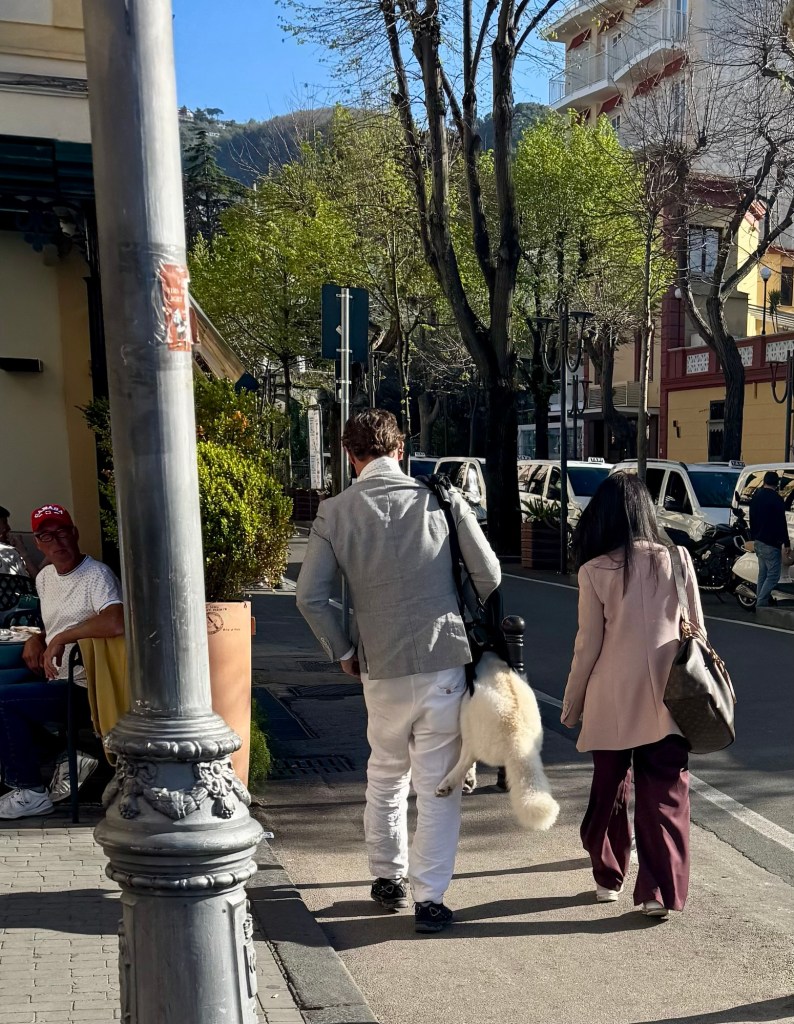
We decided to get a little more meat in case we needed it at the villa and of course more wine before heading back. While I was waiting g on them in the wine store I saw a man carrying a big dog in a satchel.
We called Angelo and he came and got us and dropped us off just down the road from the villa around 5:30. Just in time for us to get ready for dinner.
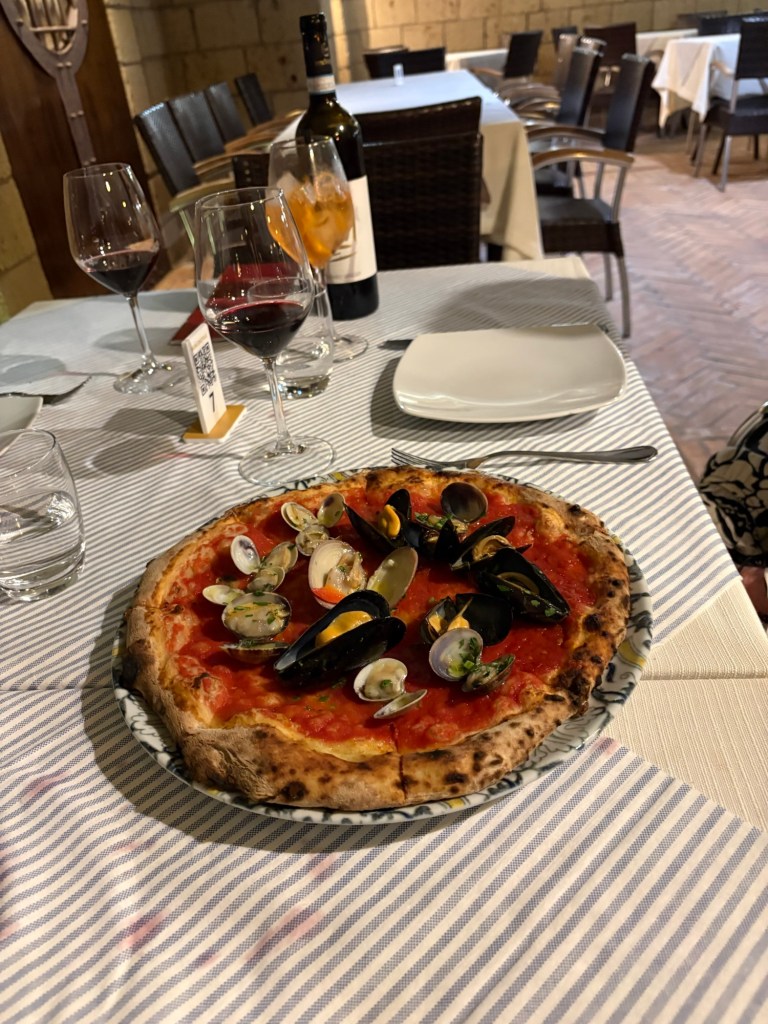
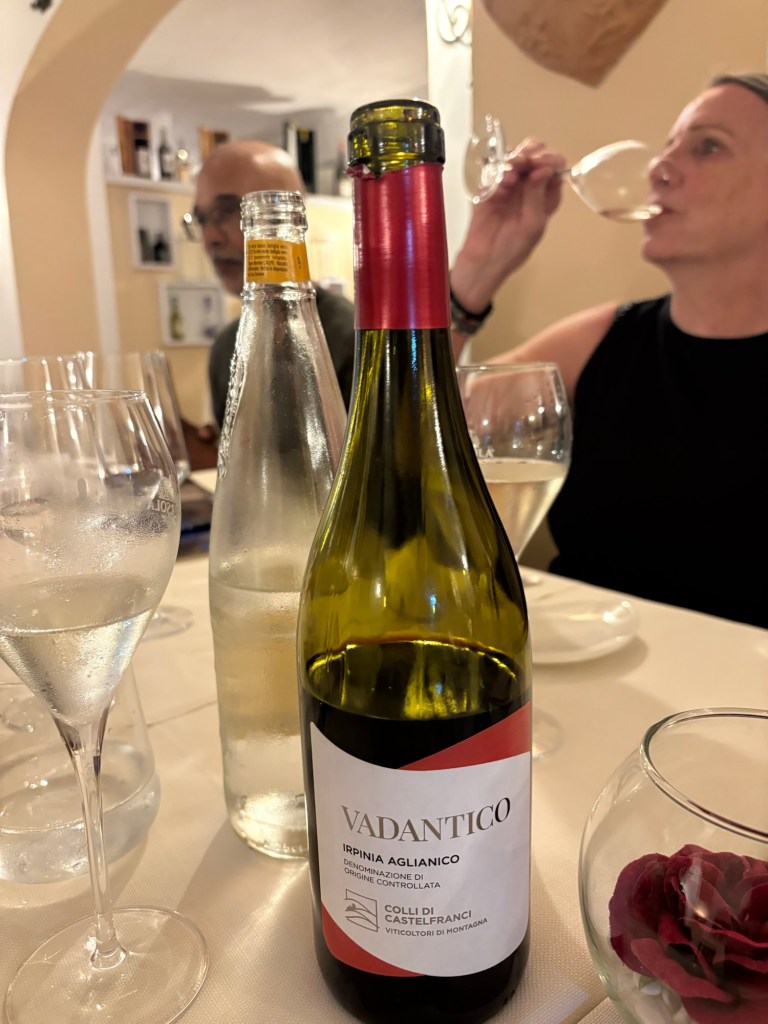
We had found the place that said they would come and get us and bring us home after dinner earlier in the week and they finally responded that they could do it today. So we had dinner plans at Funiculi Funicula at 8 with a pick up time of 7:45. The owner picked u up right on time and everything went smoothly. The dinner was delicious. We shared the seafood pizza for an appetizer. It was a little different. Mussels and clams in their shell on a pizza with just sauce no cheese. It was actually quite good and I would order it again. I followed it up with some raviolis and chocolate gelato.
There were no plans for the day so we were just going to take it easy and stay around the beach. We needed to get more wine and maybe more food if we didn’t come up with a way to get to the restaurants. Turns out it was market day in town and Lorenzo our host said he would take us.
We grab a few bags and Margaret, Kelle, Jeff and I headed out. Turns out the market was mainly clothes and household goods. We did find a cheese vendor and a fruit stand so we got some staples but still needed bread and meat. We were also able to get napkins so we could replace the roll of toilet paper we had been using.
Sites around town
When Lorenzo picked us up we asked to stop at the store. The grocery store in Massa Lubrense is tiny. Think 7/11 but with a maze of shelves. You go one way through from front door to checkout. There are a few dead ends you have to back track out of but for the most part you just follow the person in front of you to get to the end. We bought a bit more prosciutto and pancetta, more eggs and a bunch of bread and wine. We basically clean them out of both wine and bread. The wine is cheap at Conads and our bills are surprisingly low.
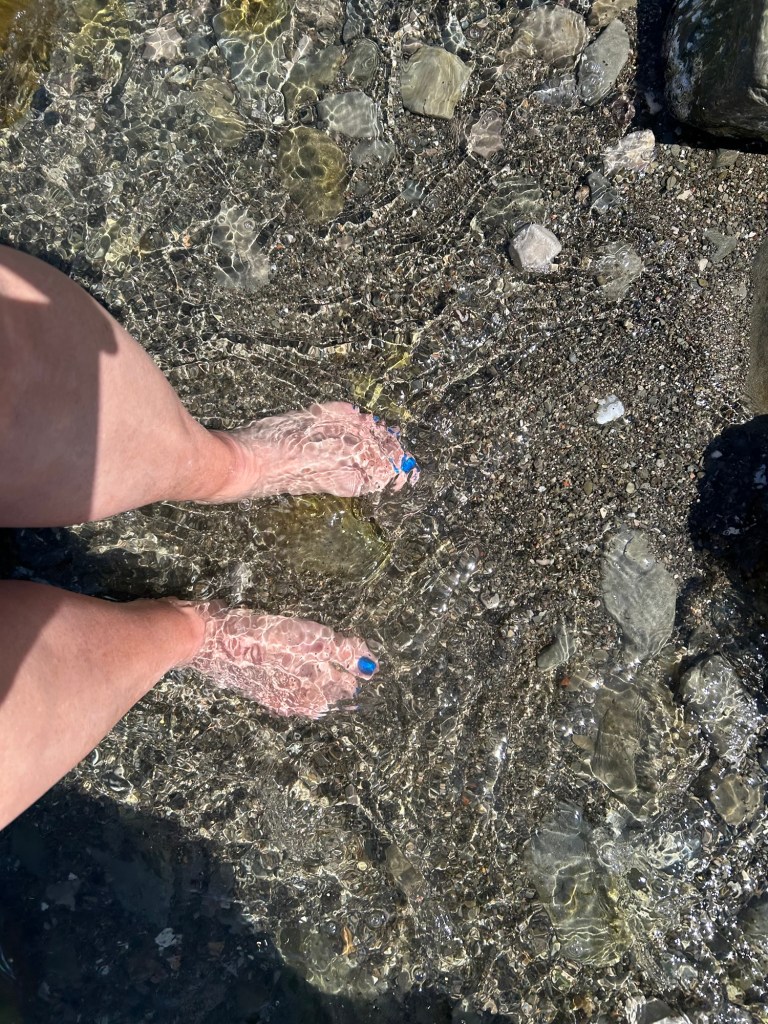
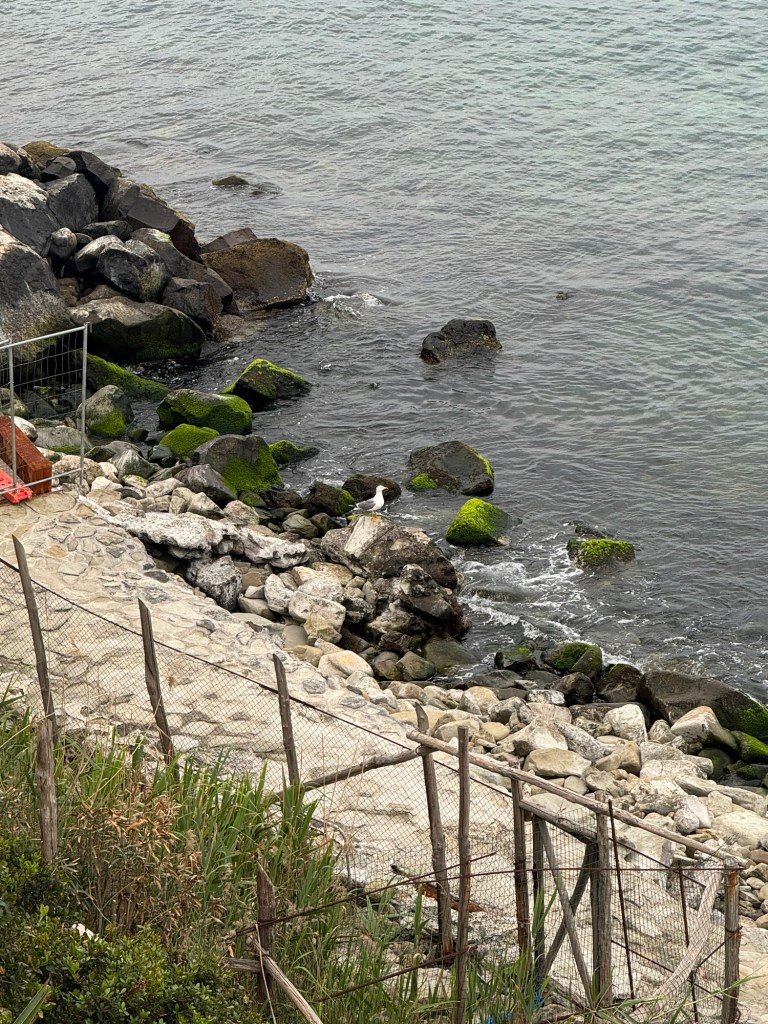
We get back to the apartment and changed into our swimming suits to check out the water. It is quite a few steps (79) to be exact to get down to the rocky beach. The water was cold and hard to walk into due to all the rocks. I got in far enough to sit down and cover my hips but that is as far as I went.
The villa had a hot tub but it was taking forever to warm up and was not going to be worth it today. We hung out at the beach for a little while. Clark was the only one who really got in and he still managed not to get his hair wet.
We eventually dried off enough to take the stairs back up and lay out on the terrace. Some of us napped others just lounged but it was an enjoyable day of being lazy.
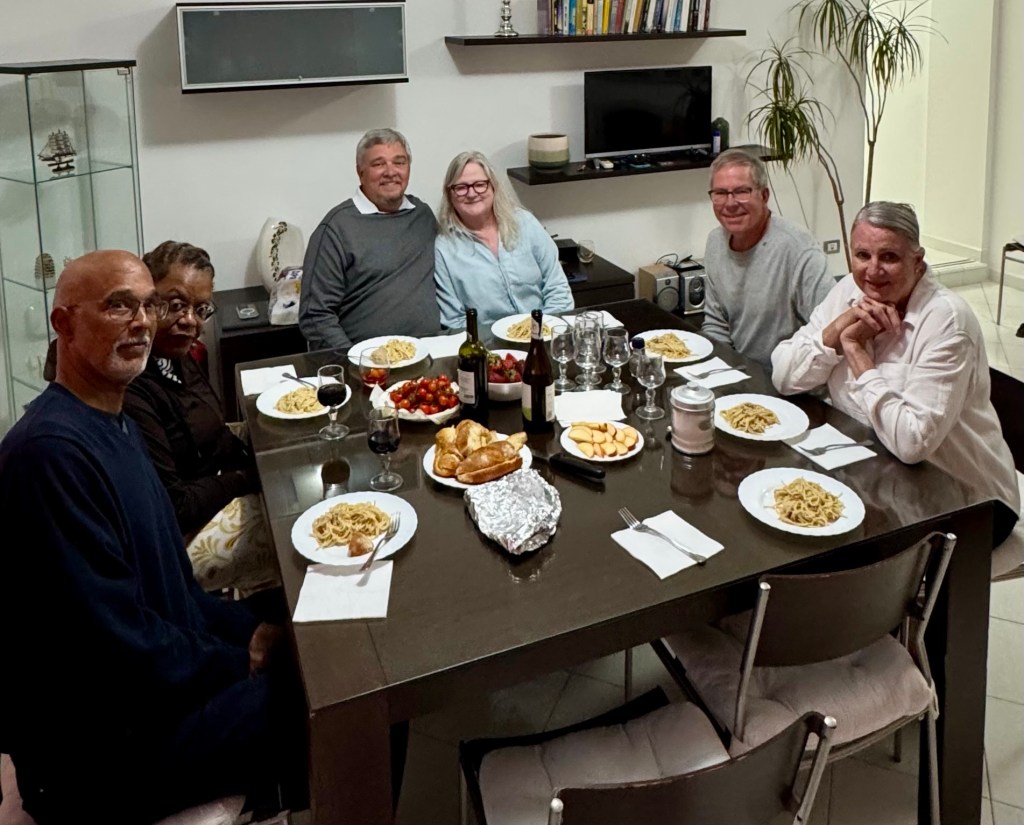
We cooked dinner from the food we got that morning. I made a very cheesey version of cacio de pepe. It was not the best but it was good and used the ingredients we had.
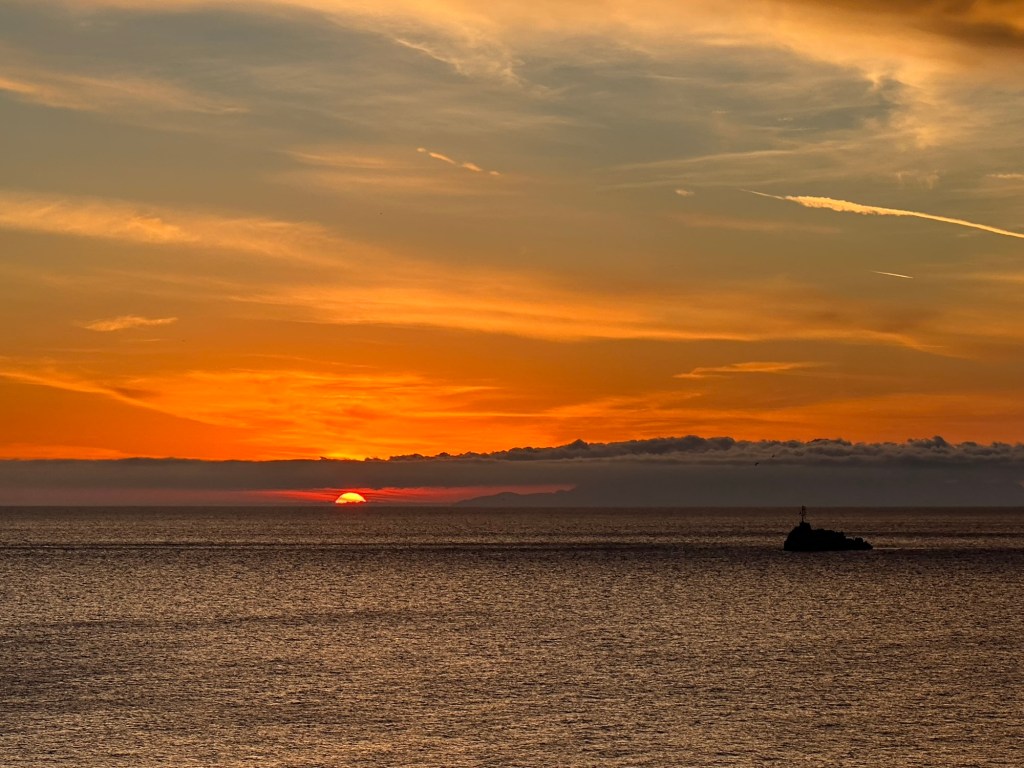
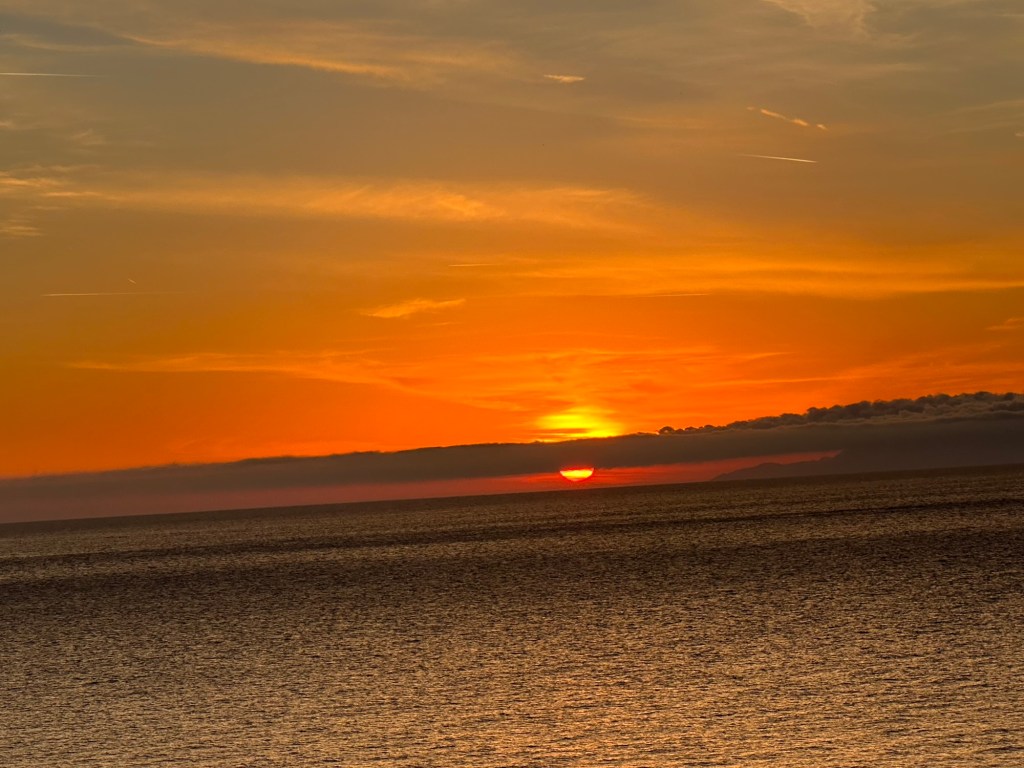
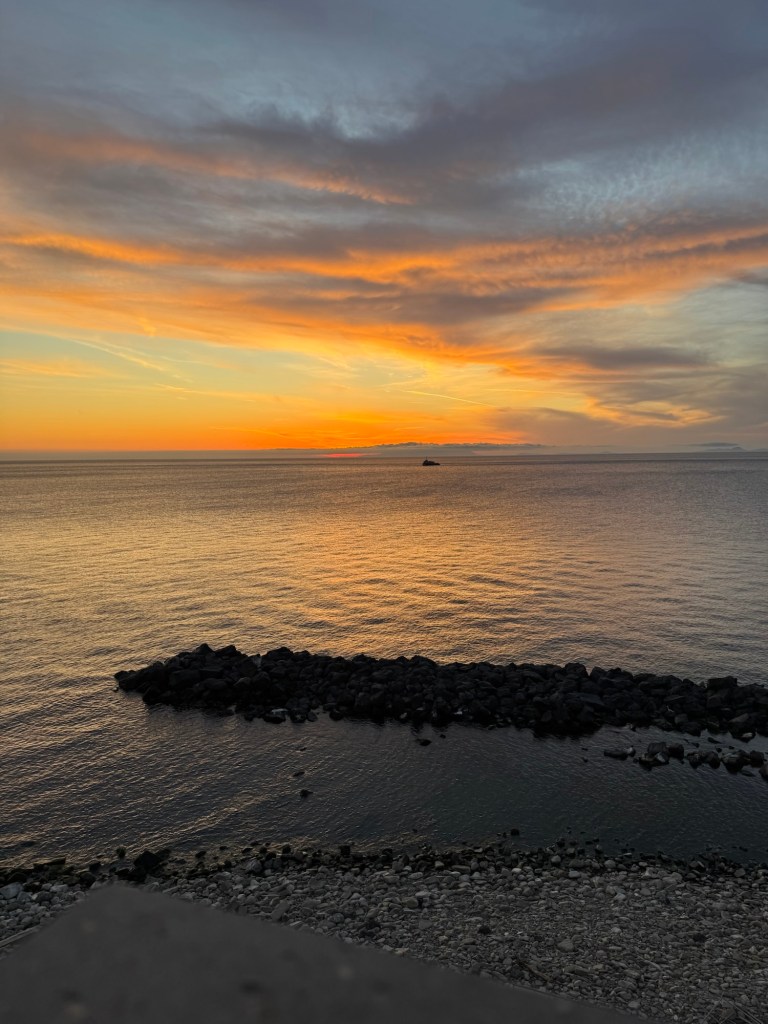
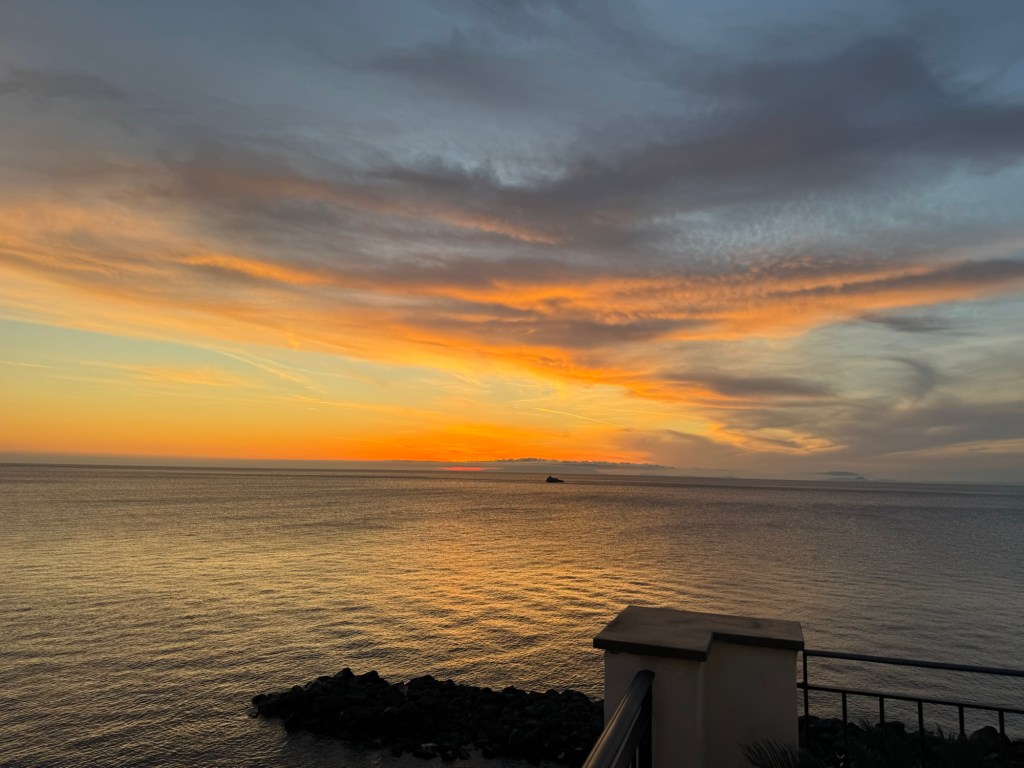
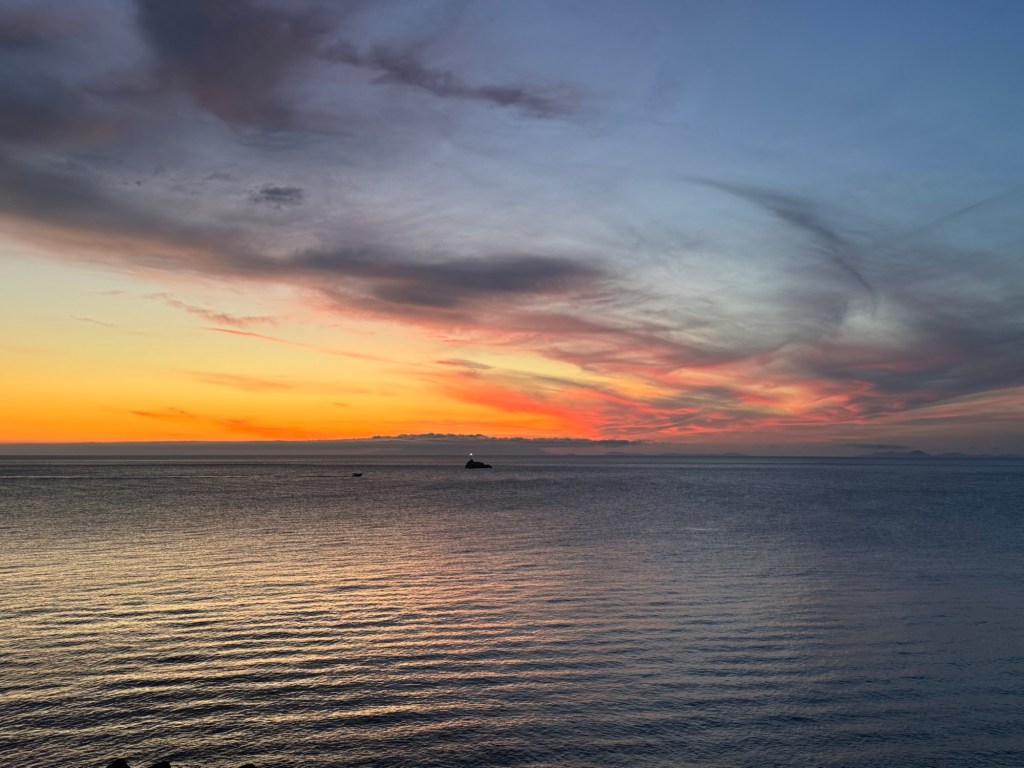
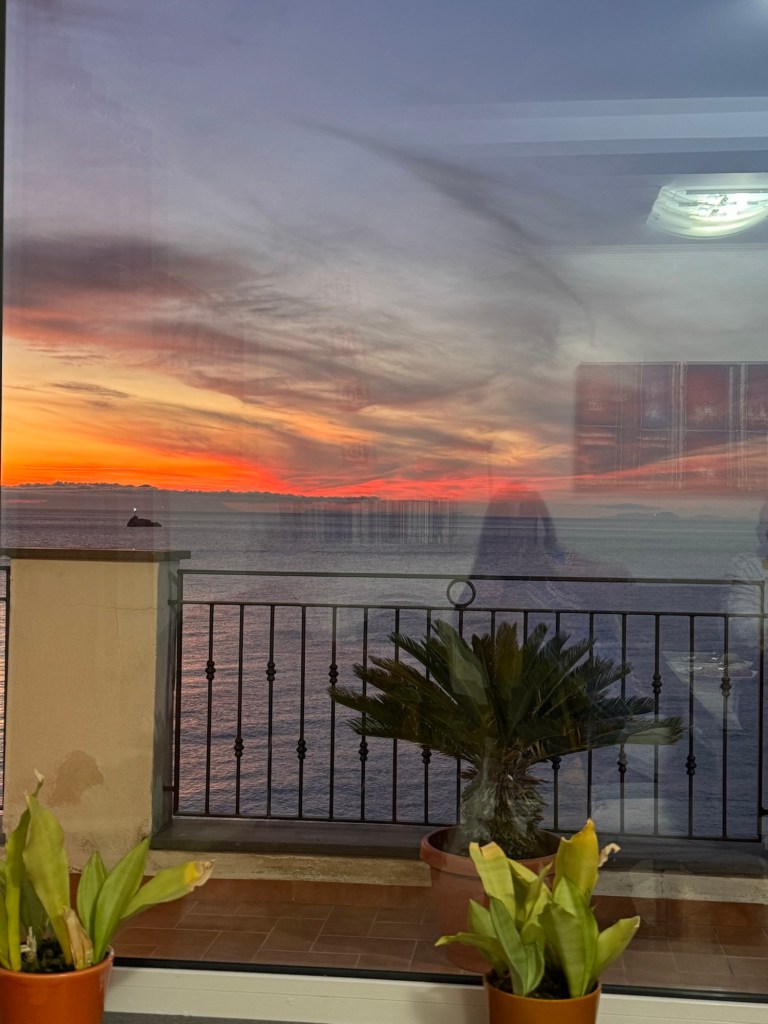
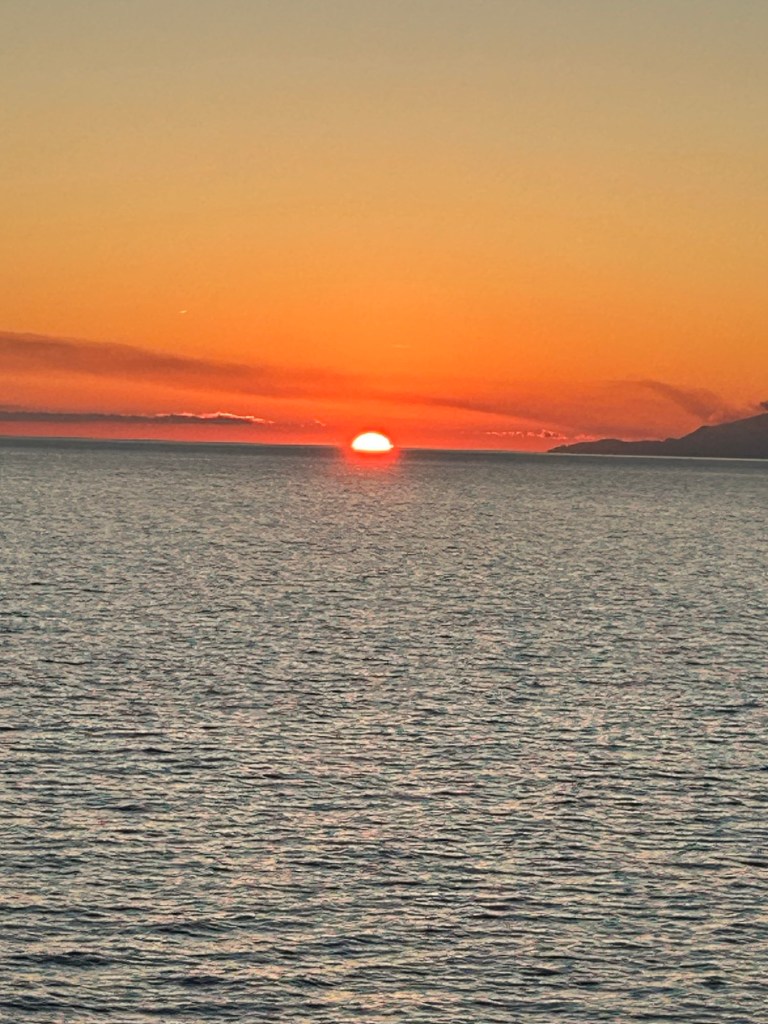
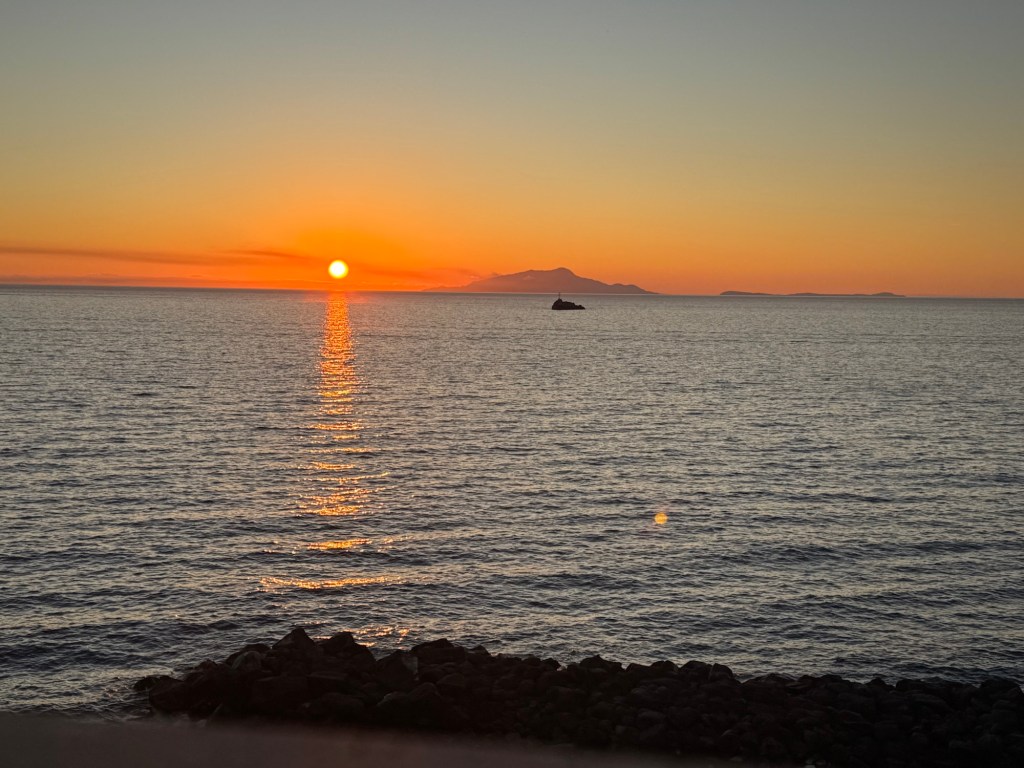
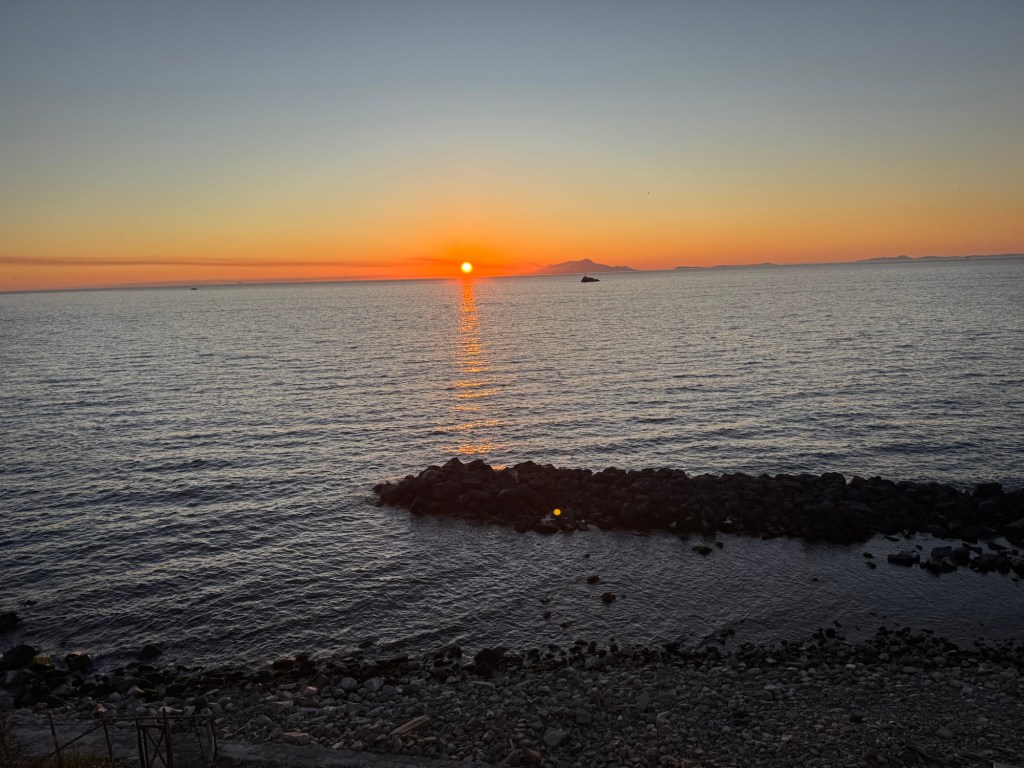
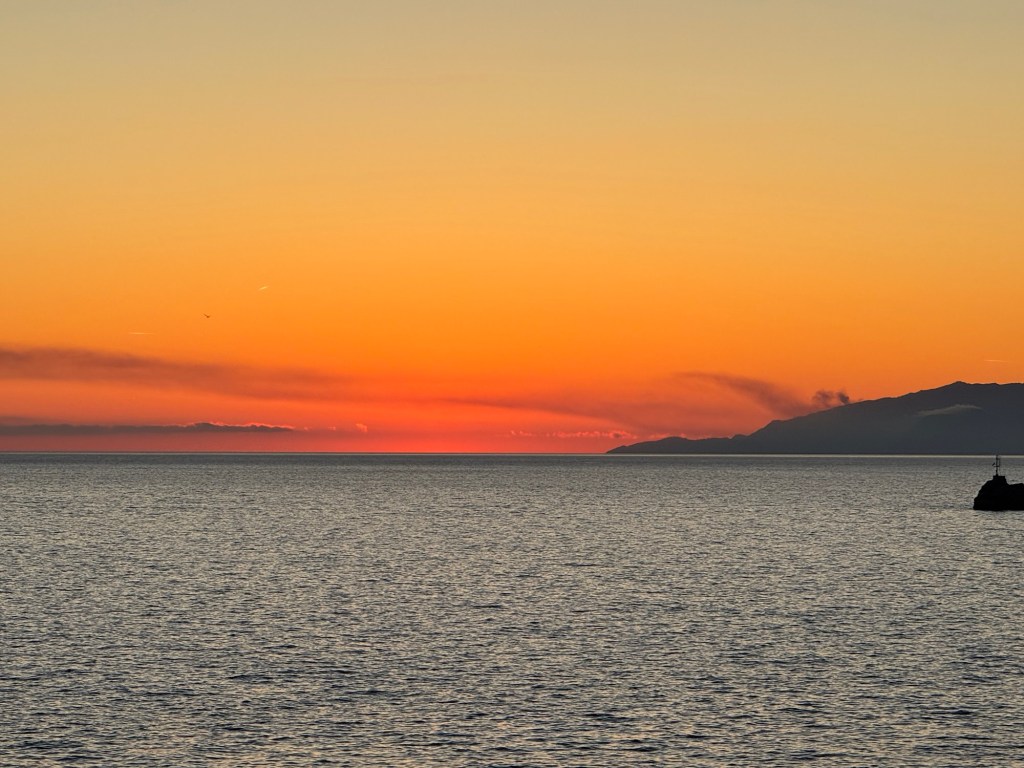
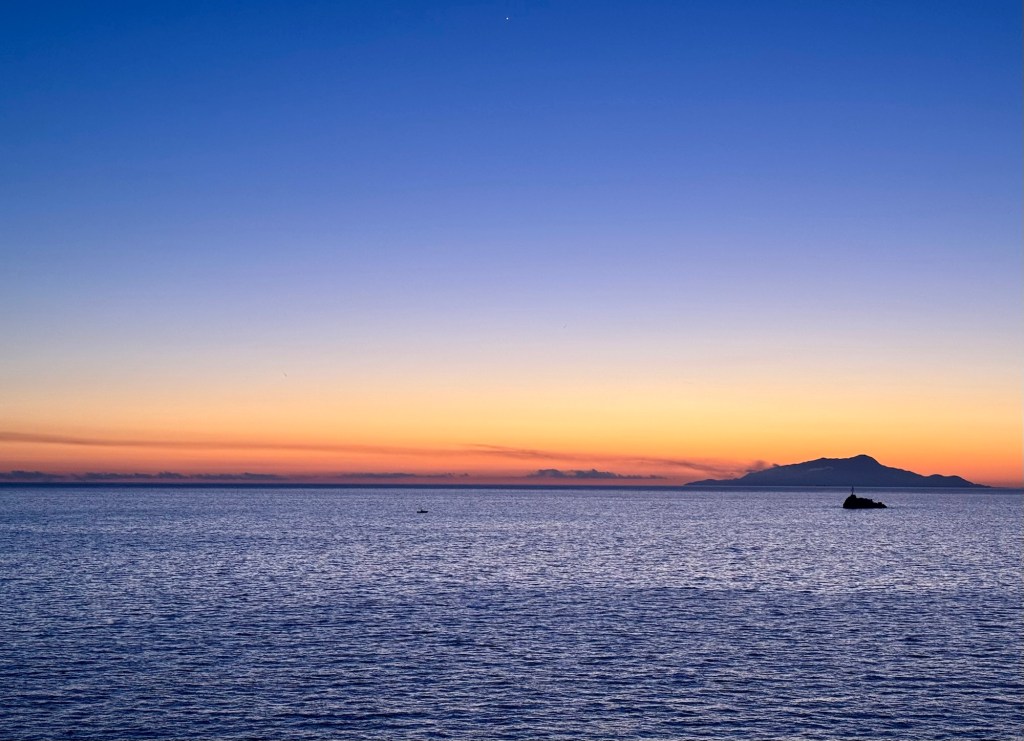
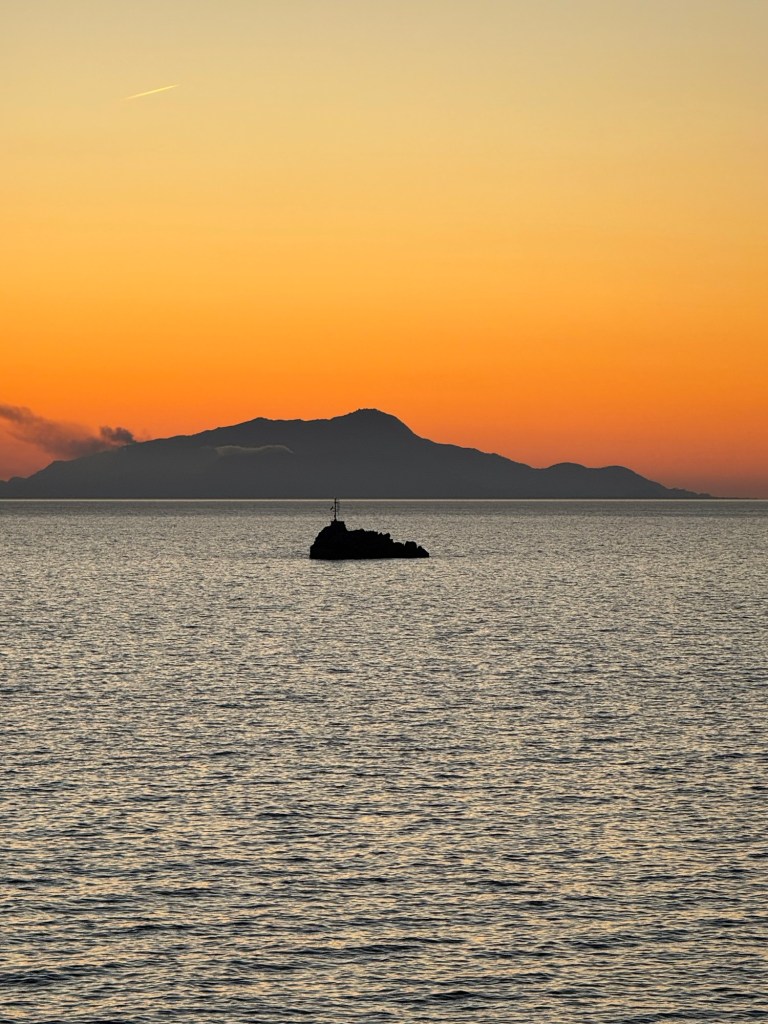
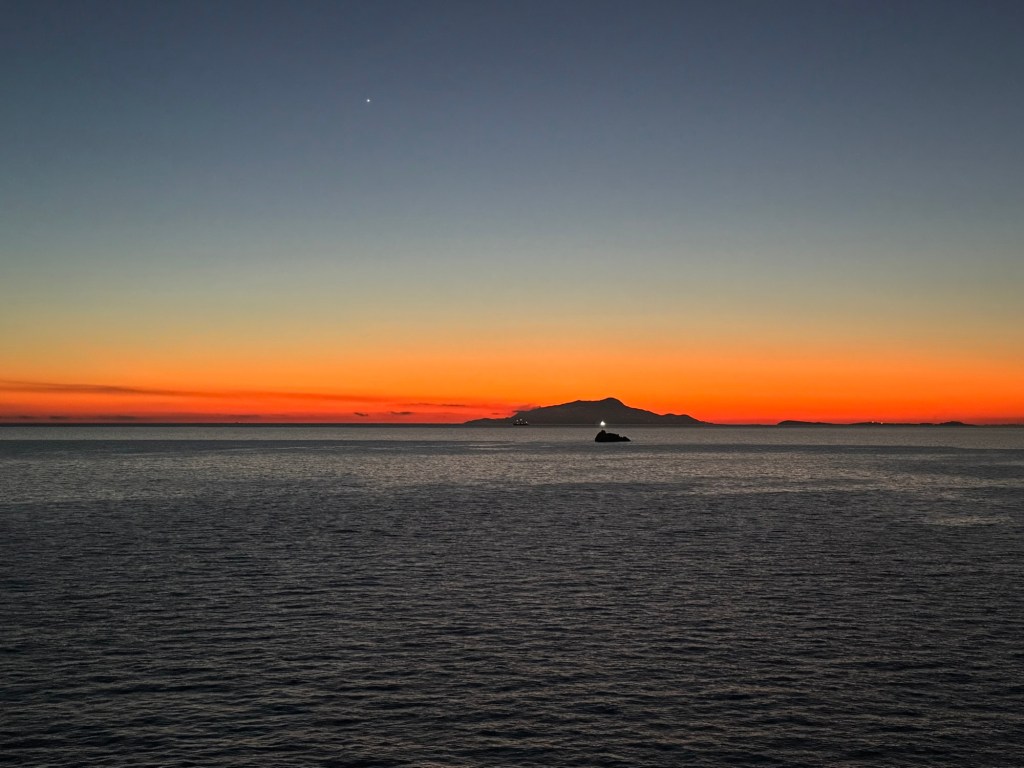
It was another lovely sunset.
It was a nice day just to lounge. I think you need a few of these worked into a vacation especially if the vacation is 3 weeks long.
The beach house was a wonderful pace to wake up to. The sunrise was beautiful, the air crisp but not cold and fresh and clean.
We had a little incident with the coffee pot but Jeff was able to make everyone coffee anyway so other than having to mop up 10 cups of water from the floor disaster was averted. Not that getting up the water was not difficult since we had one towel and one hand towel a piece and there were 2 small kitchen towels. Margaret found a squeegee and a dust bin and with that and a sponge Jeff got it all up.
Once everyone was up Margaret made eggs and toast which were really good. So our day got off to a good start.
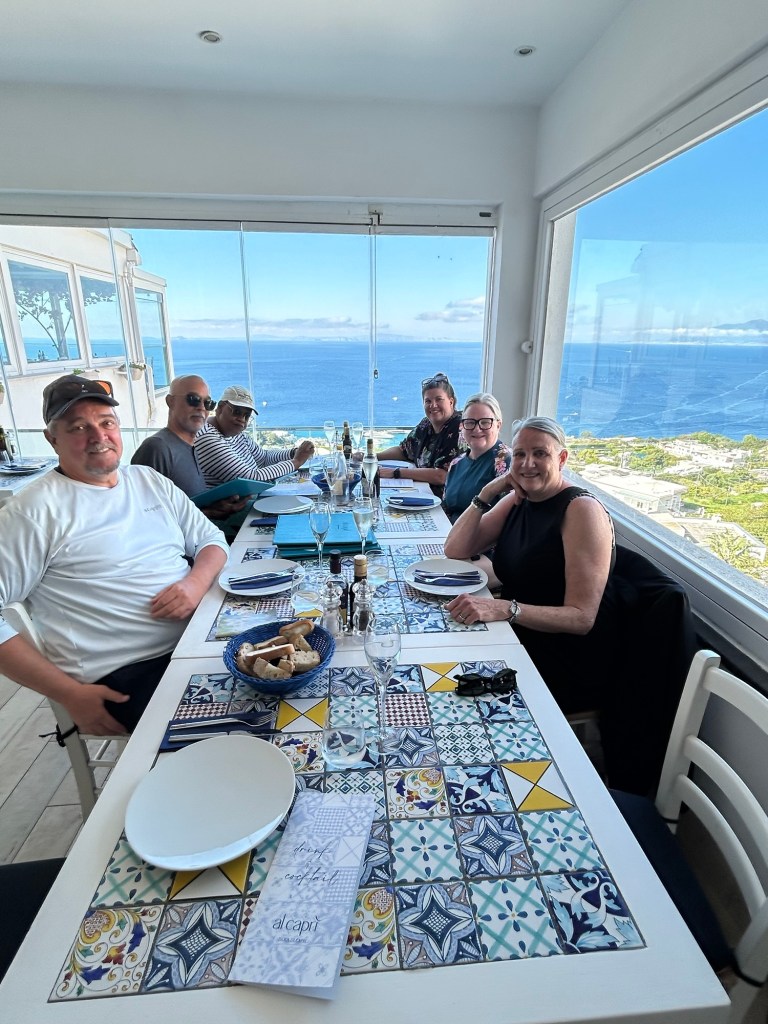
Margaret arranged a bout tour of Capri Island for today and it was amazing. The boat was docked at the marina we could have walked too if the path wasn’t closed but instead we needed a ride. The driver picked us up close to our villa. We had to climb the stairs and walk down the road a bit but it wasn’t bad. We thought we had to go a lot farther so we left really early and were happily surprised when it was just a short walk.
At the pickup spot there was a sign from one of the marina restaurants saying that they would pick you up and bring you back so at least we can get a meal one night. The name of the restaurant is Funiculi Funicula. Only Bob knew that was a reference to a song about the funicular on Mt Vesuvius. Once he stated humming it we all recognized it but none of the rest of us knew the name. It is kind of a circus tune that even the Grateful Dead covered.
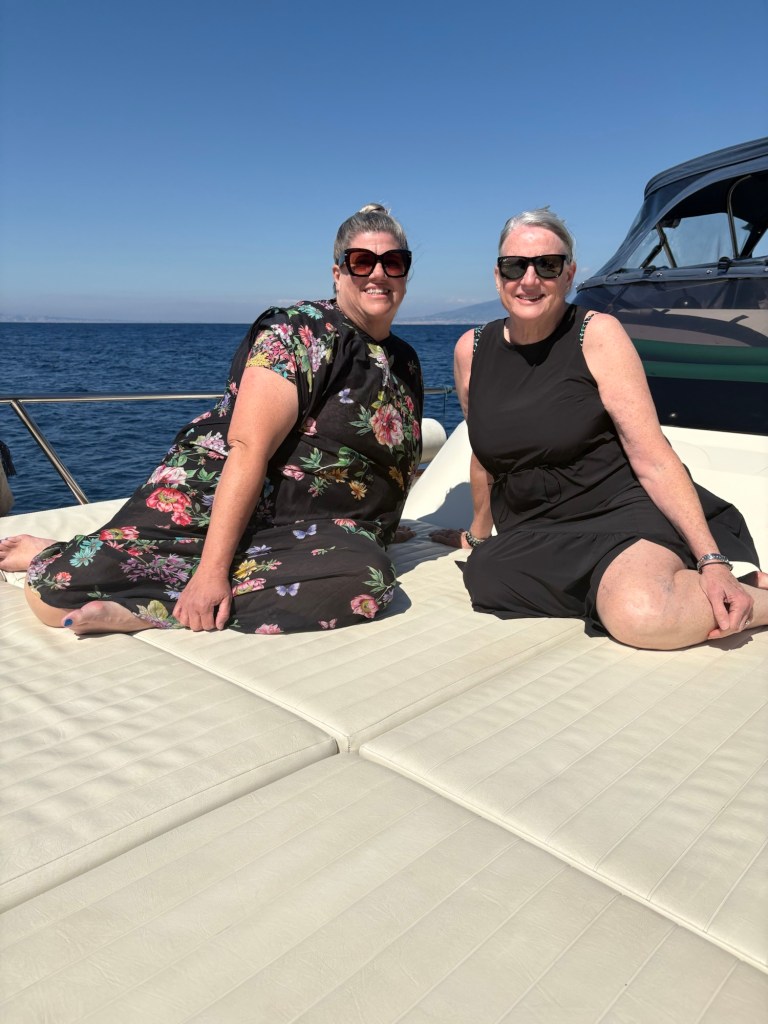
It was a little chilly for the boat ride but we wore our swimsuits anyway. Ever hopeful that we could get in the water somewhere. The boat was nice, clean and looked well maintained. The skipper was young and cute so it looked like we were going to have a great afternoon.
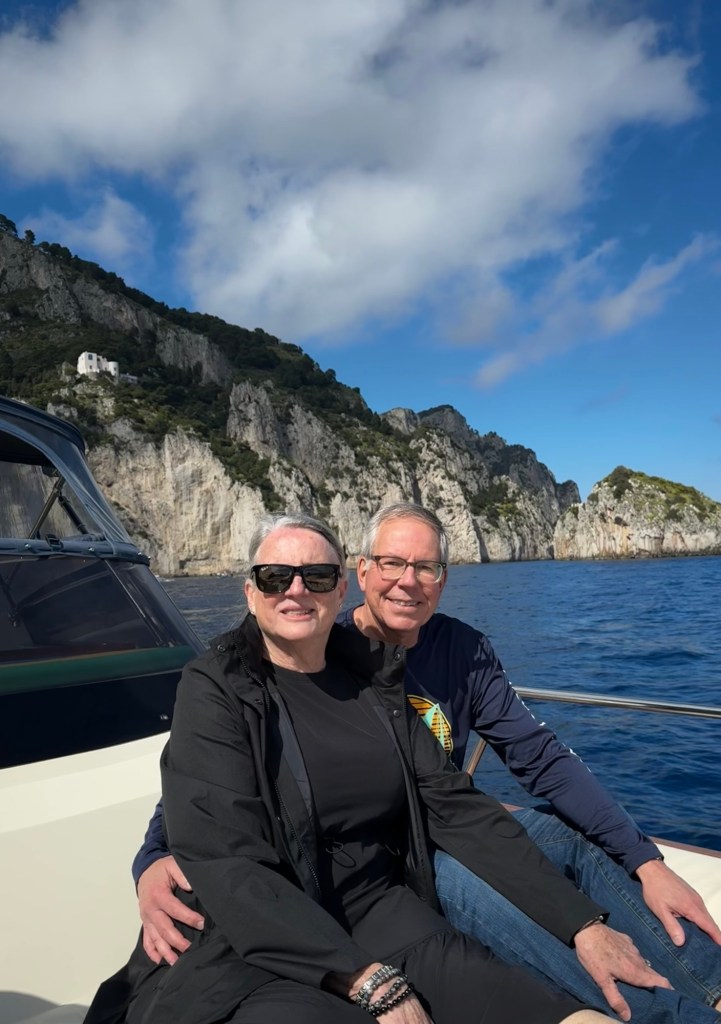
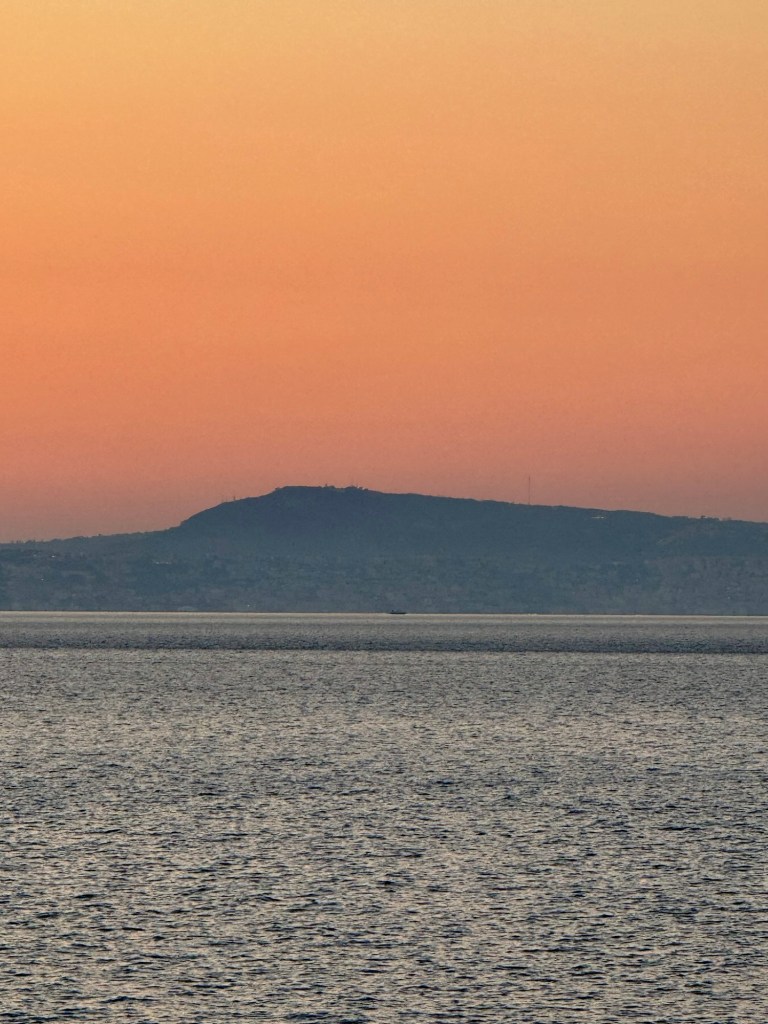
Capri sits right across from Massa Lubrense but sailing through the open water was cold in our suits and coverups but we managed to stay at the front of the boat anyway. Once we got close to the island and followed the sun around the side it was fine. We were going to tour the grottos then stop for a bit on the island and then watch the sunset from the boat on the return.
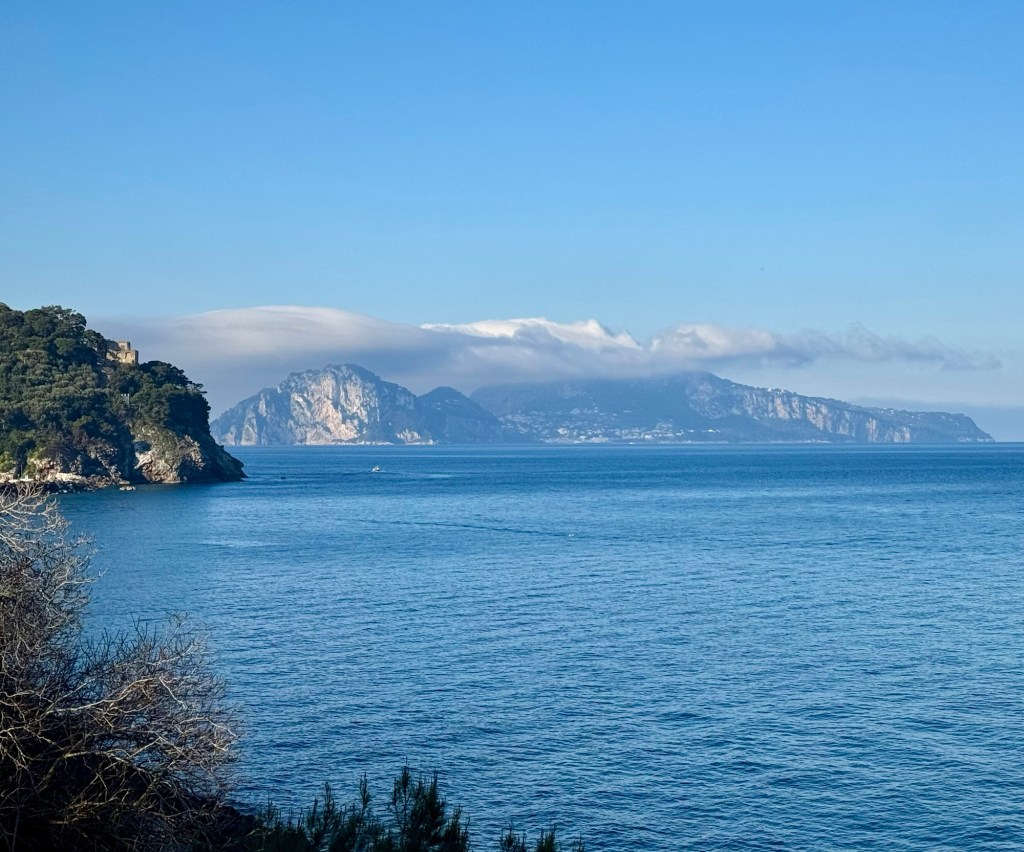
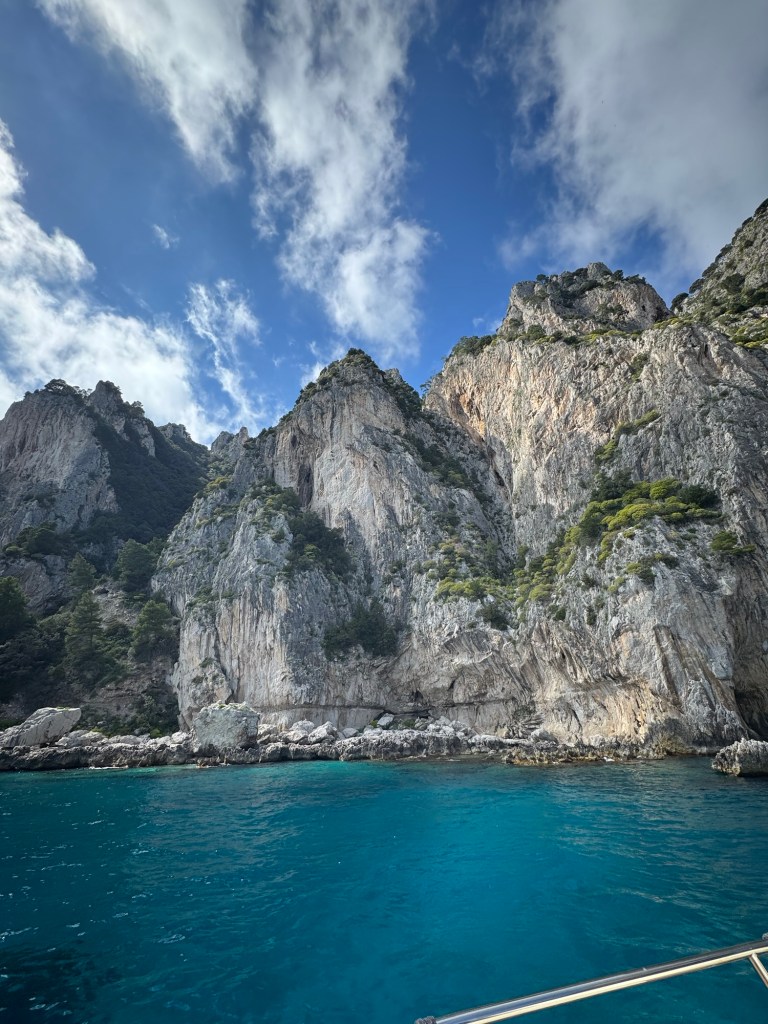
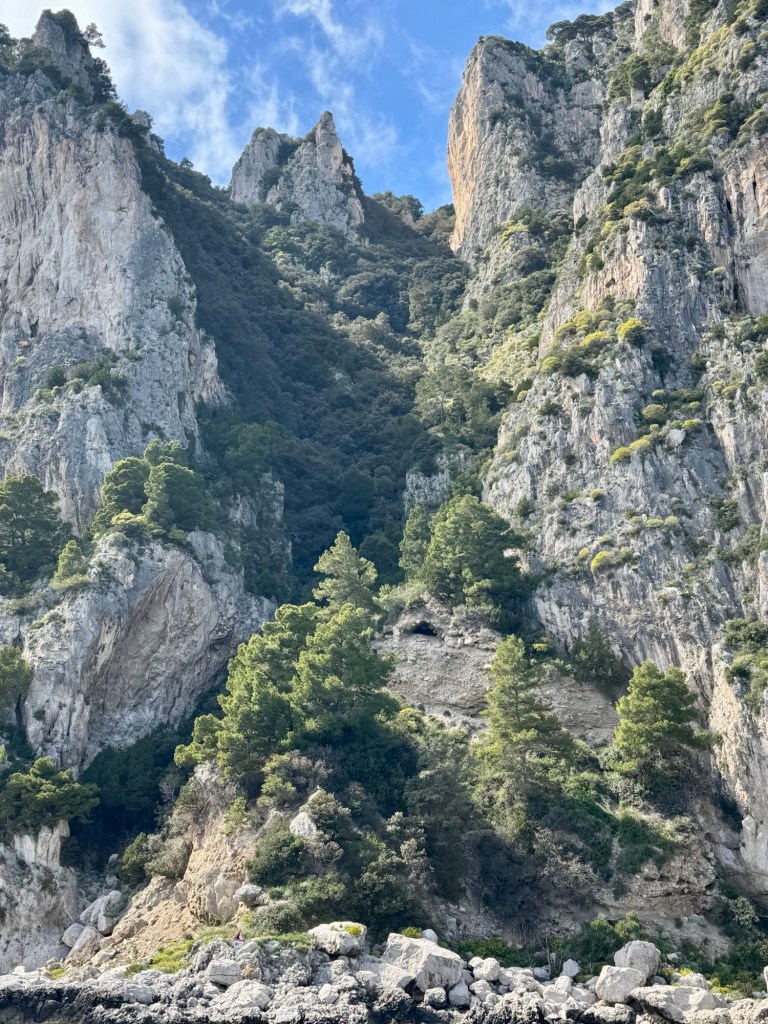
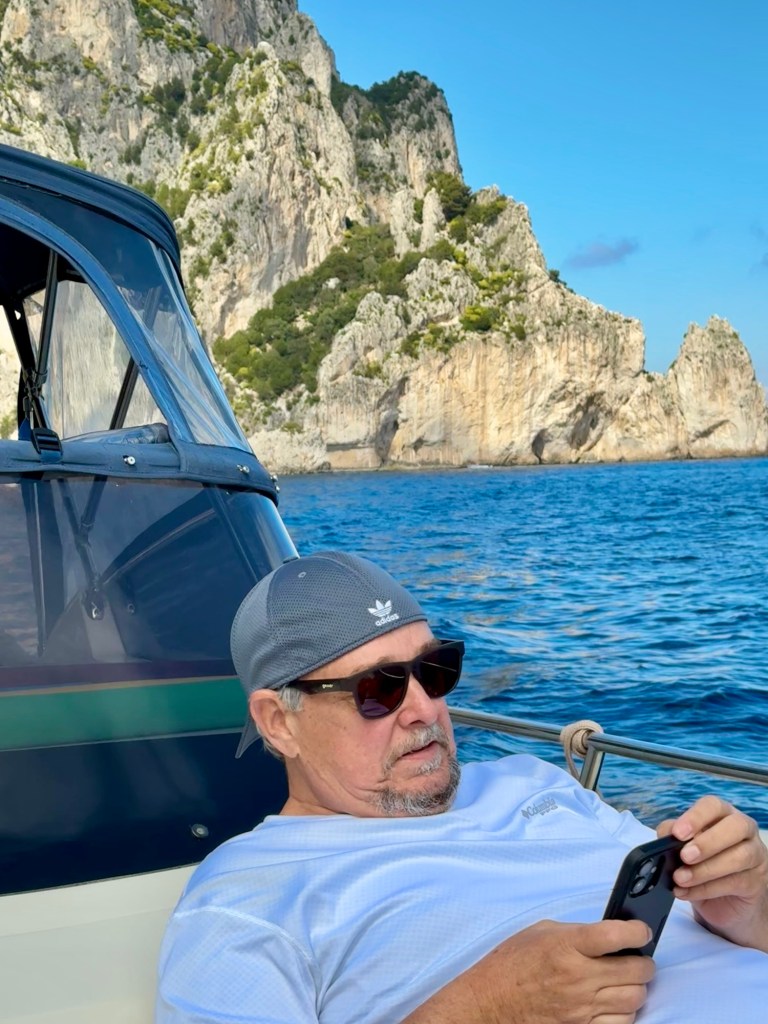
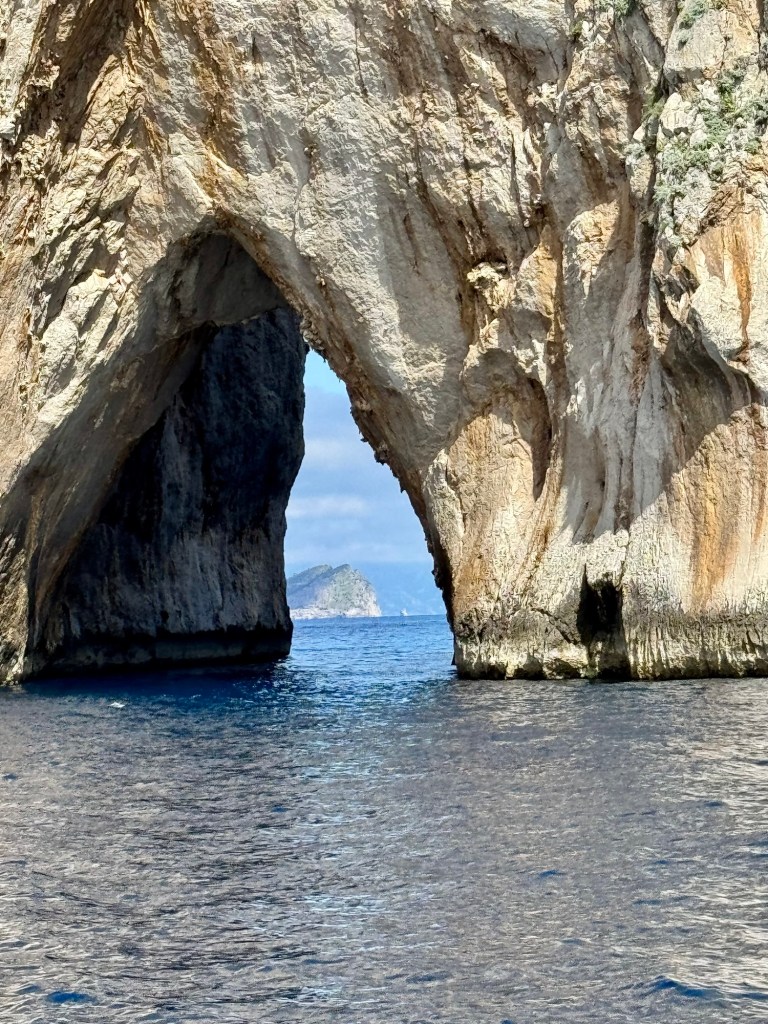
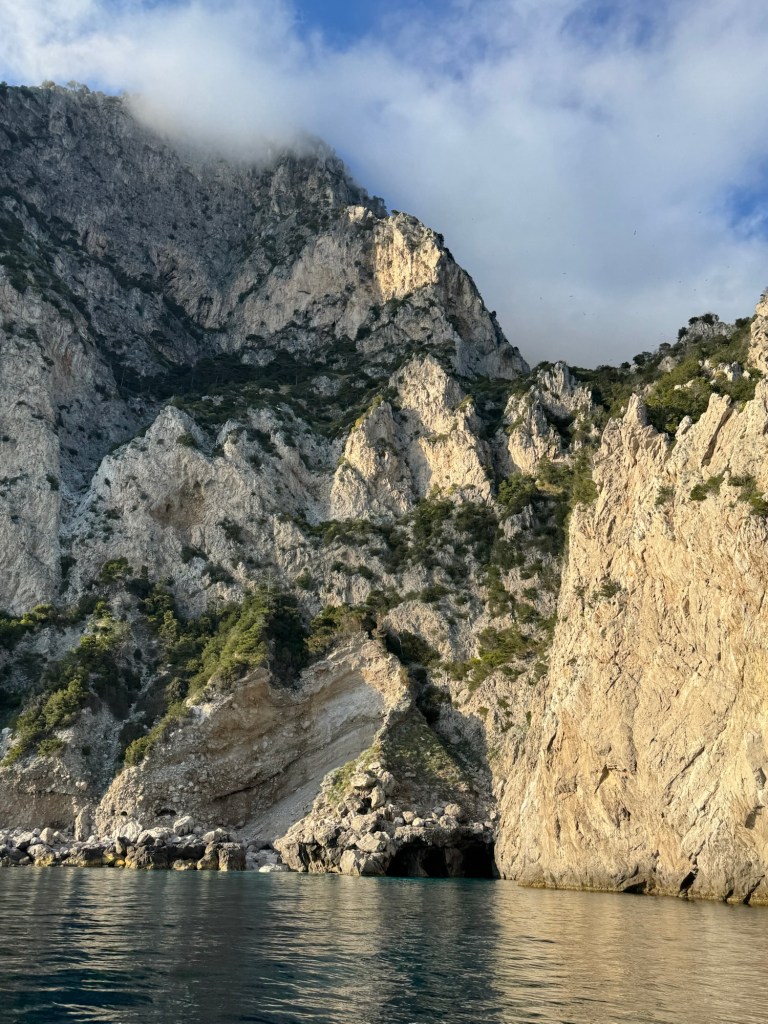
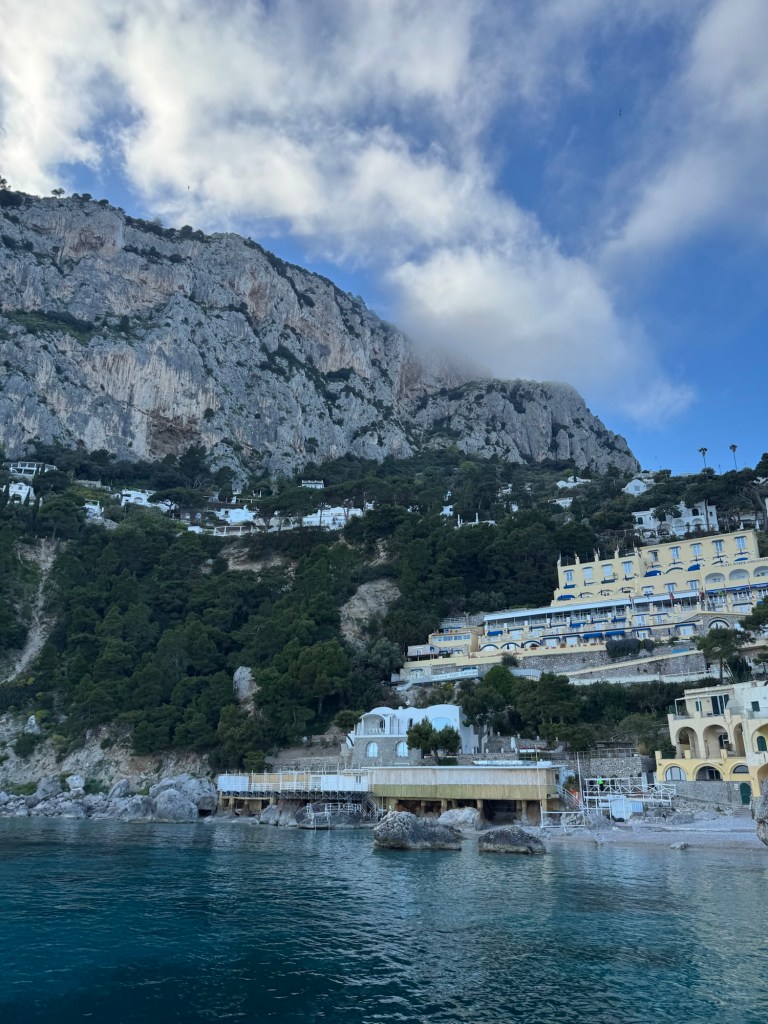
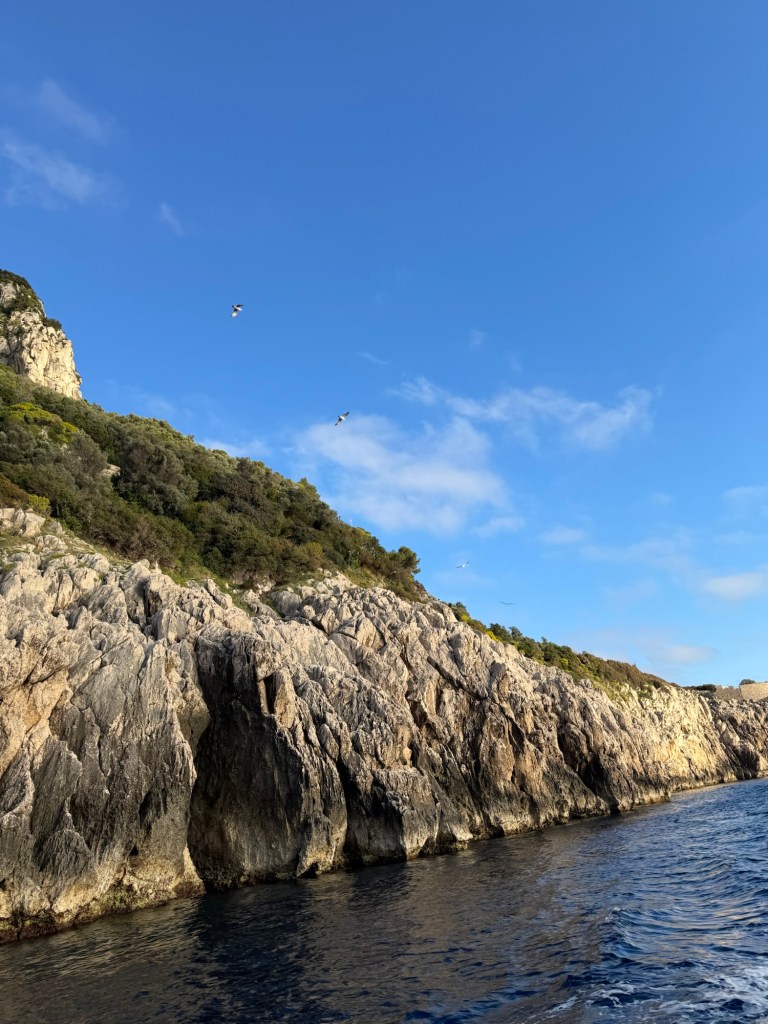
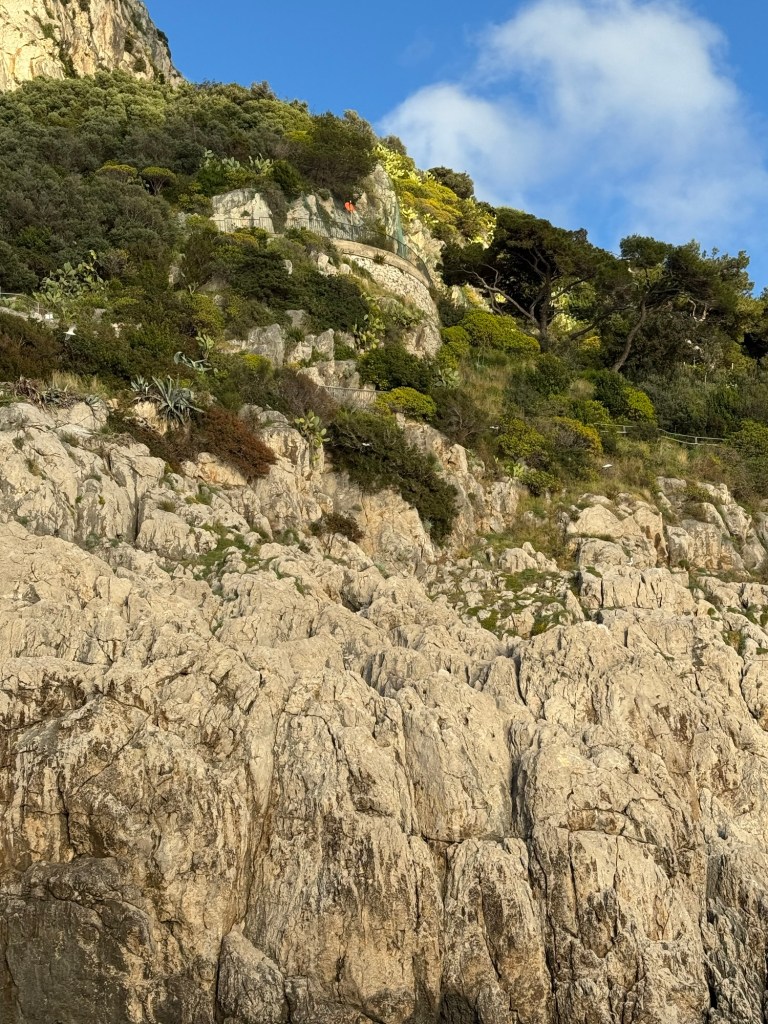
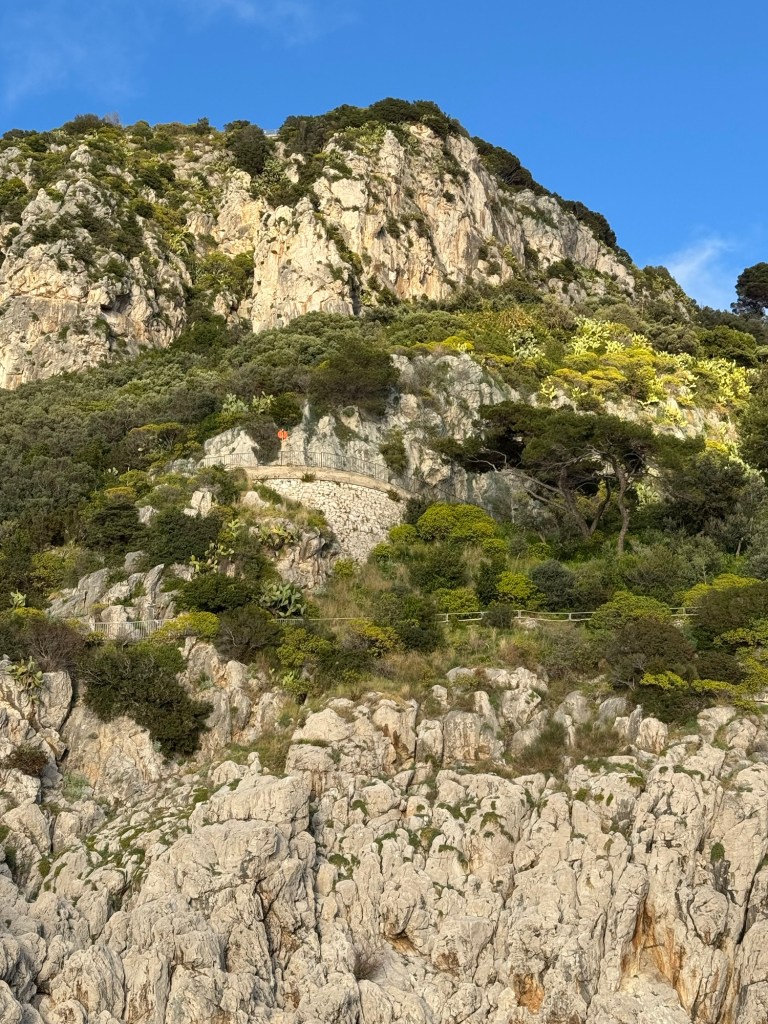
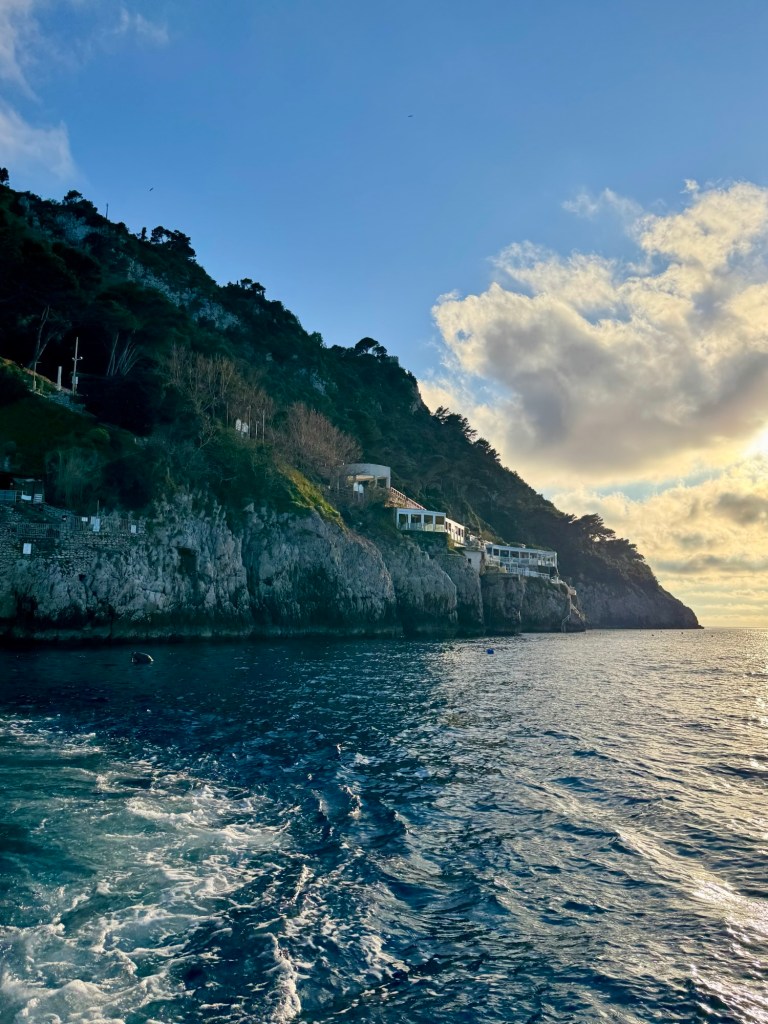
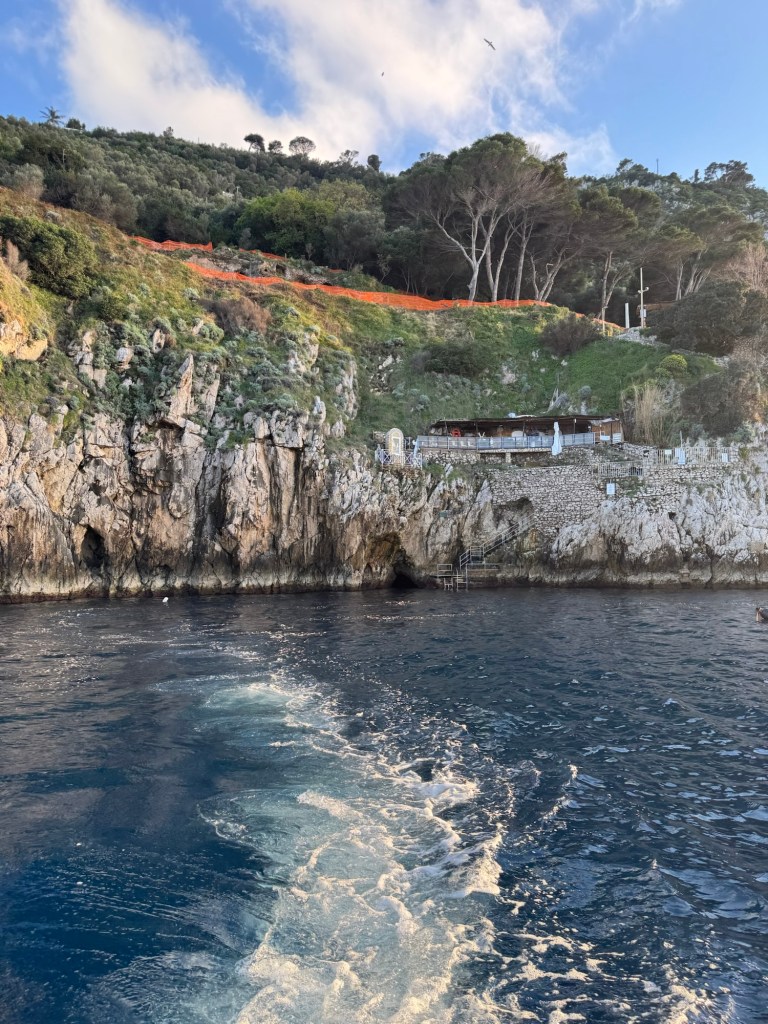
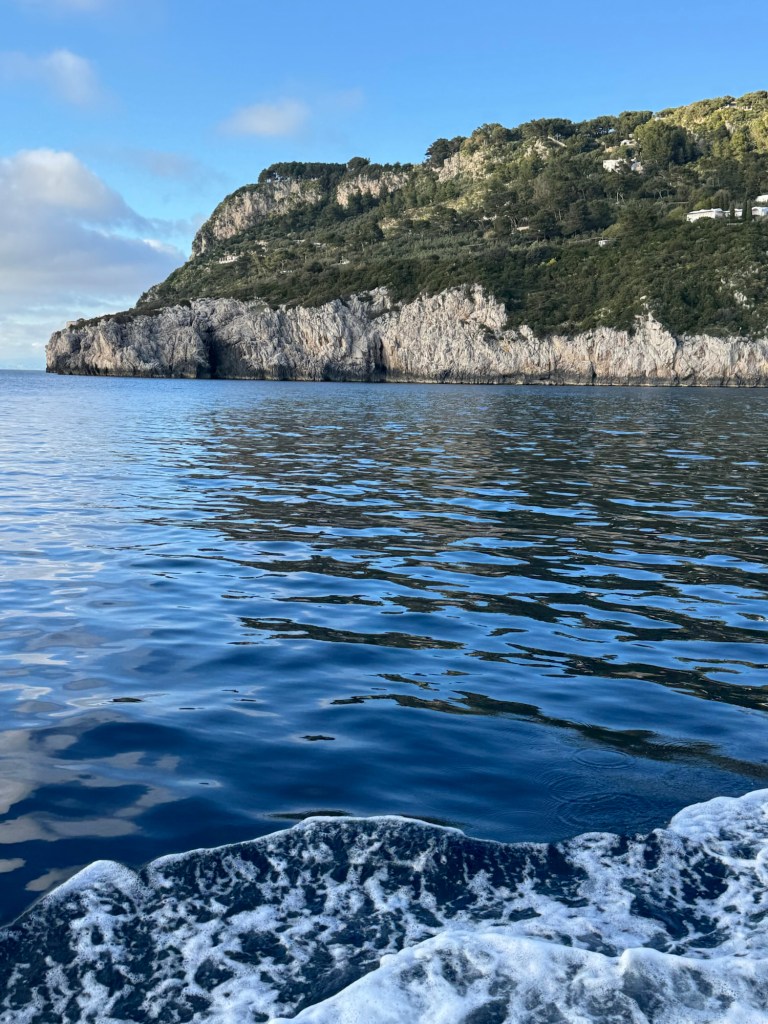
Capri is amazingly beautiful. I think it is the pretty place I have ever seen. The cliffs jutting up from the water covered in trees and cactus with the clouds muting the top was otherworldly.
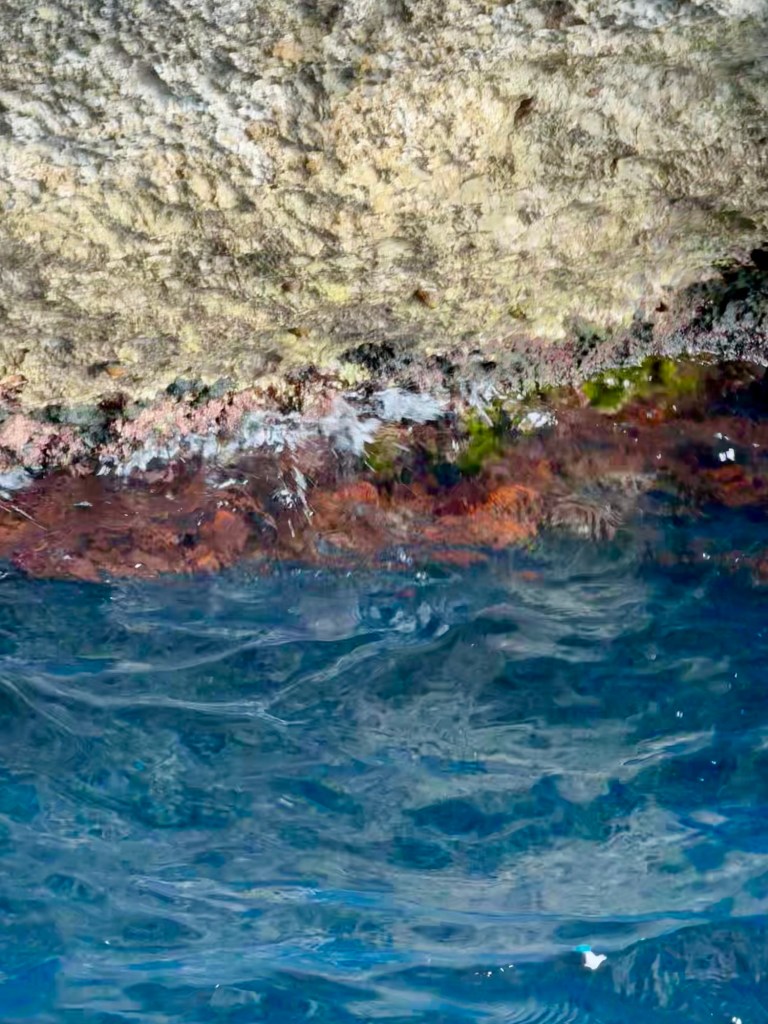
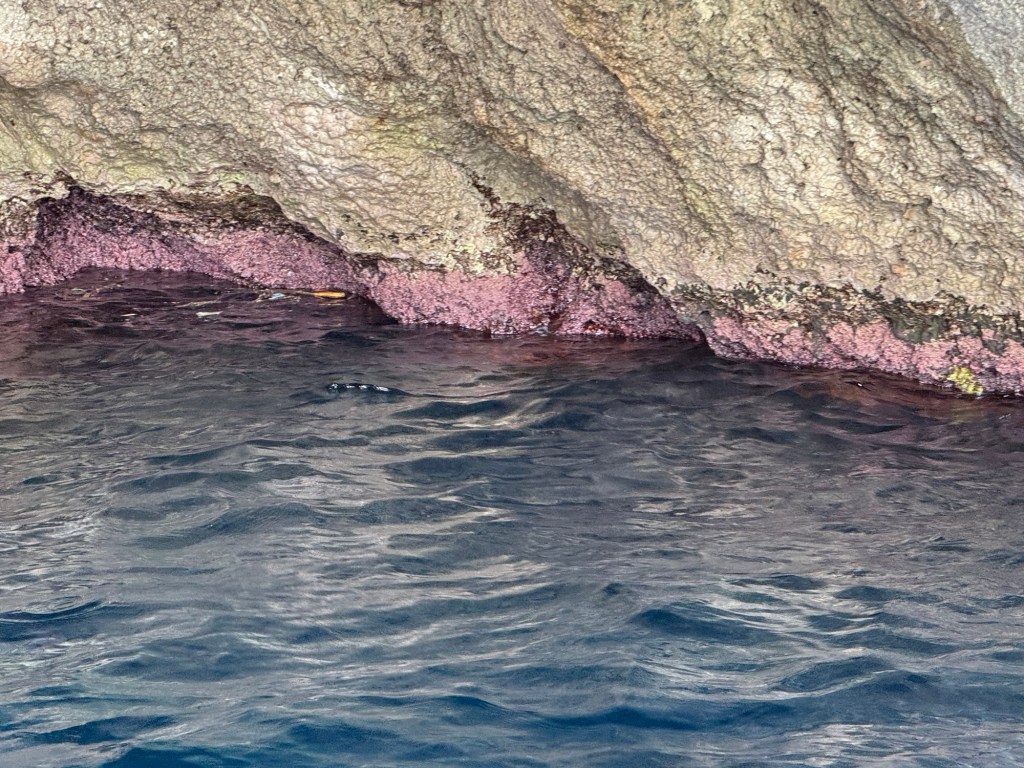
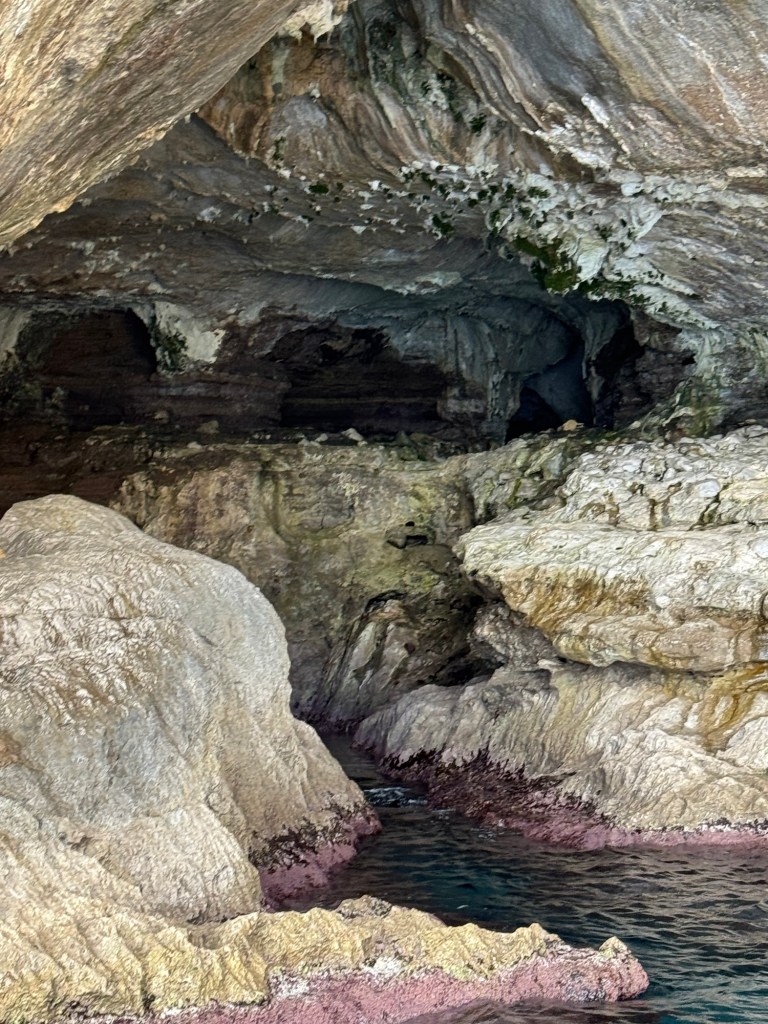
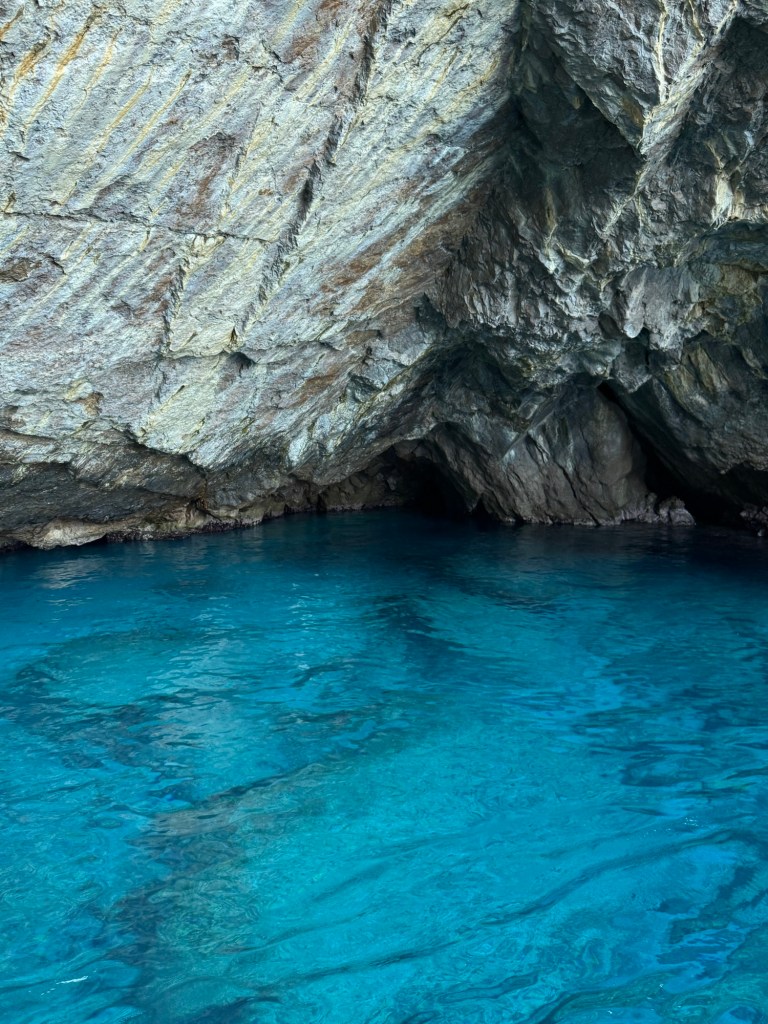
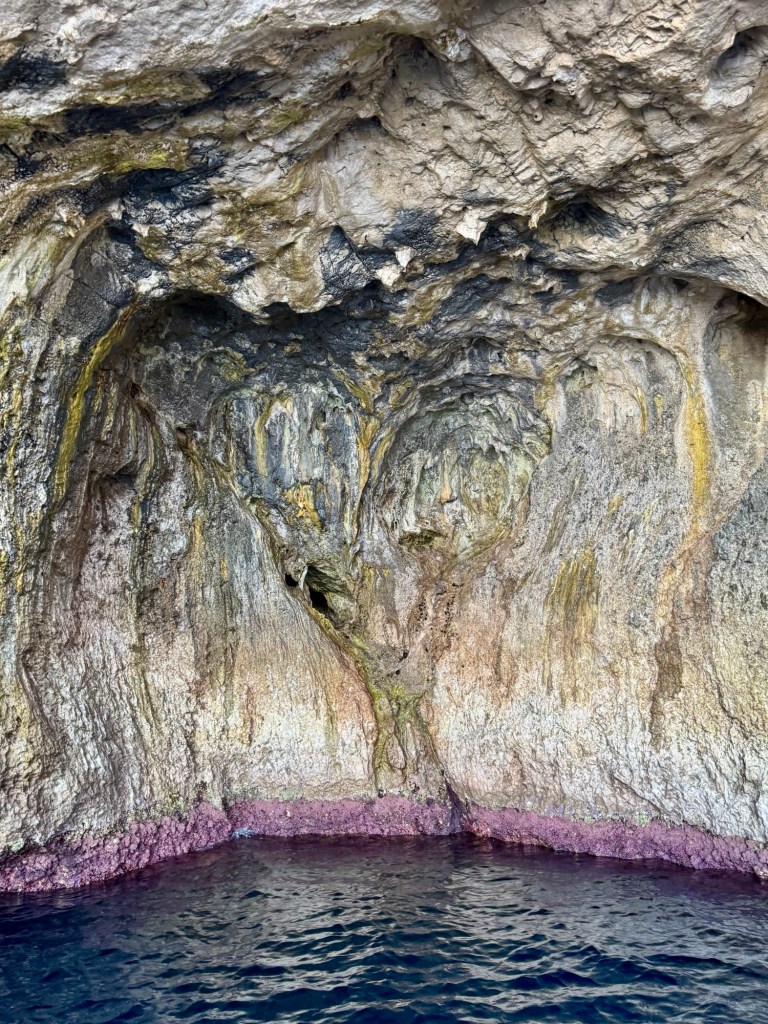
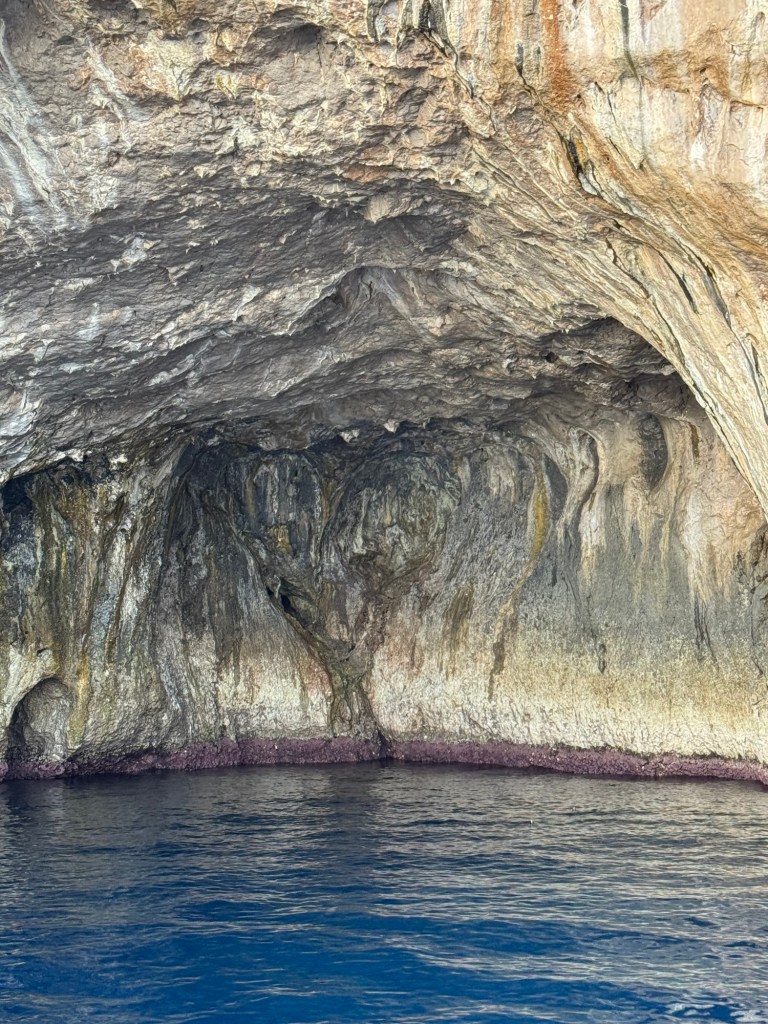
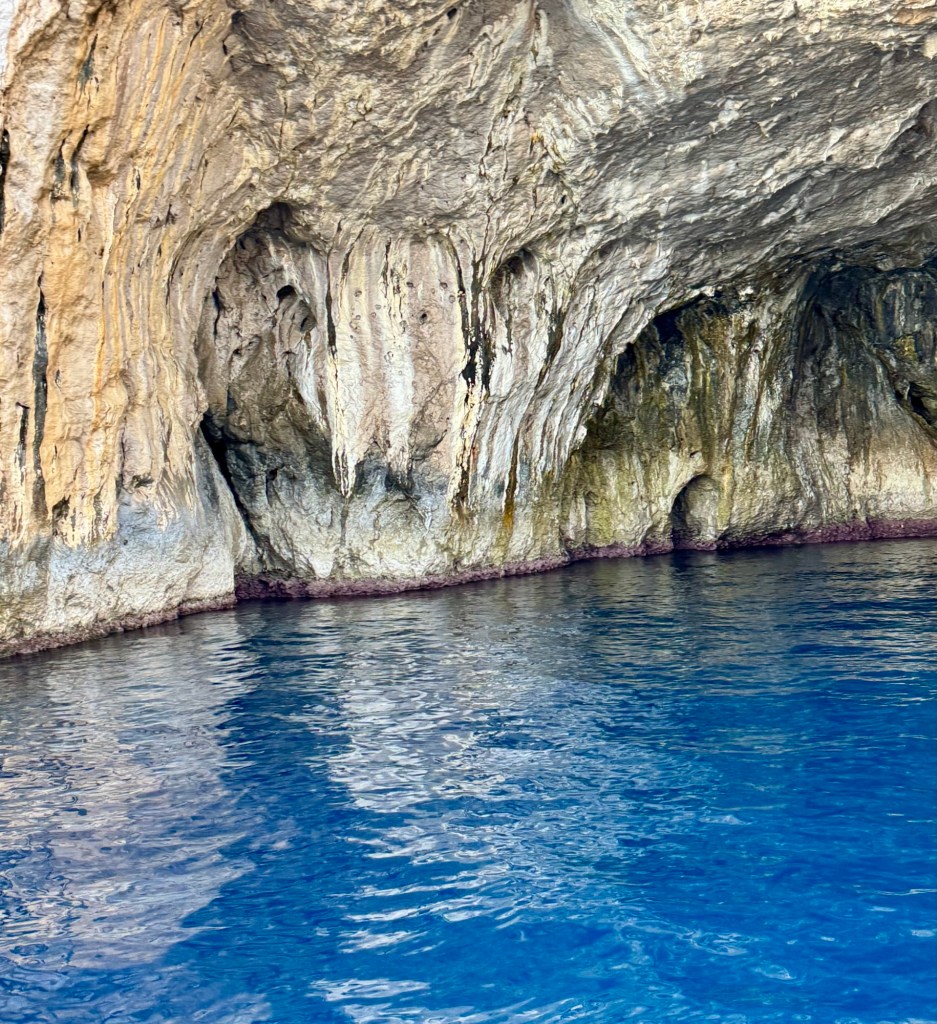
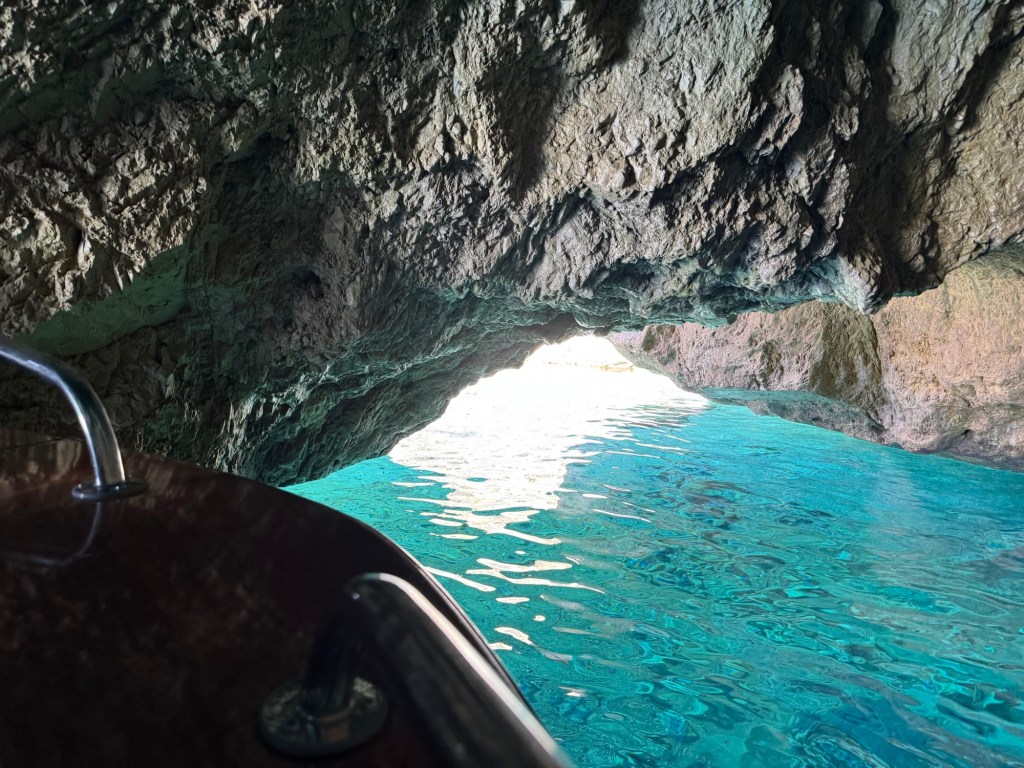
The first stop was the coral cove. You can almost glimpse the coral on the second photo. There was a purple line around the water line and right under it you can see the orange coral. It was a little easier to see in person but not by much. It was also a tight squeeze for the boat but our driver had no problems.
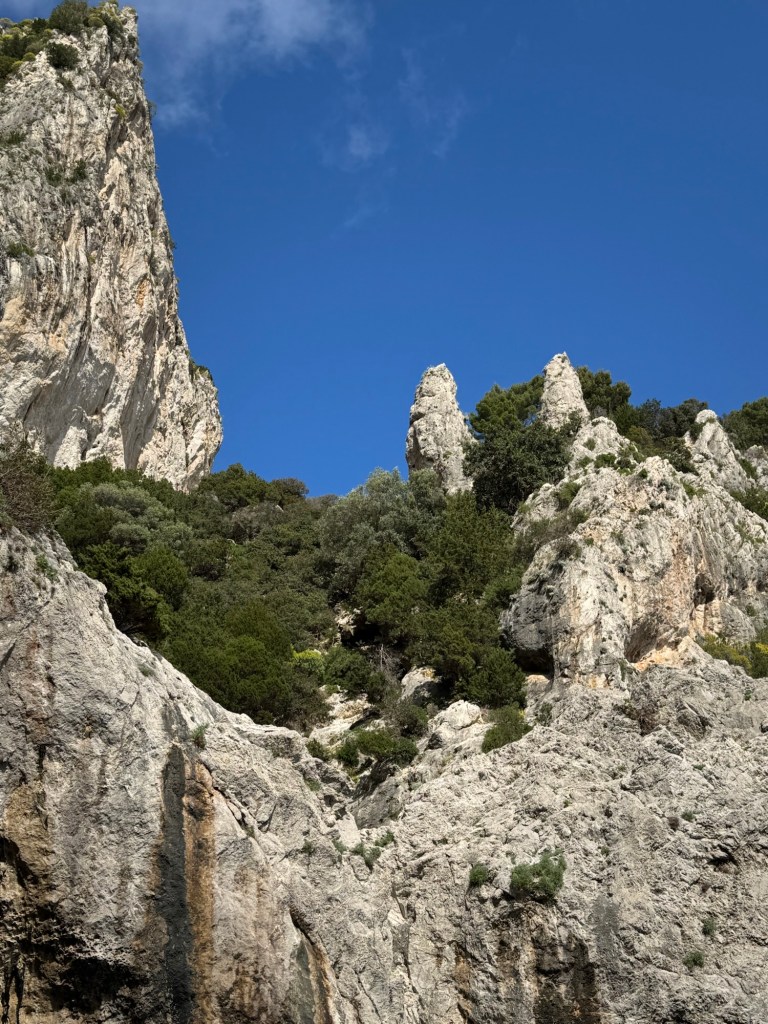
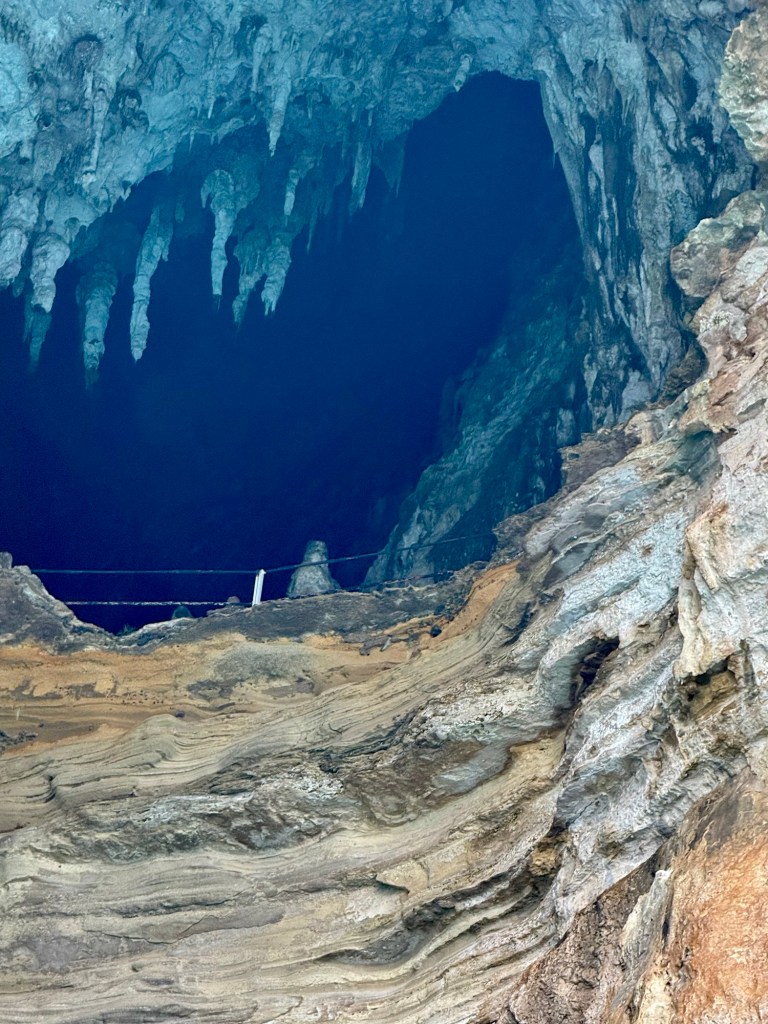
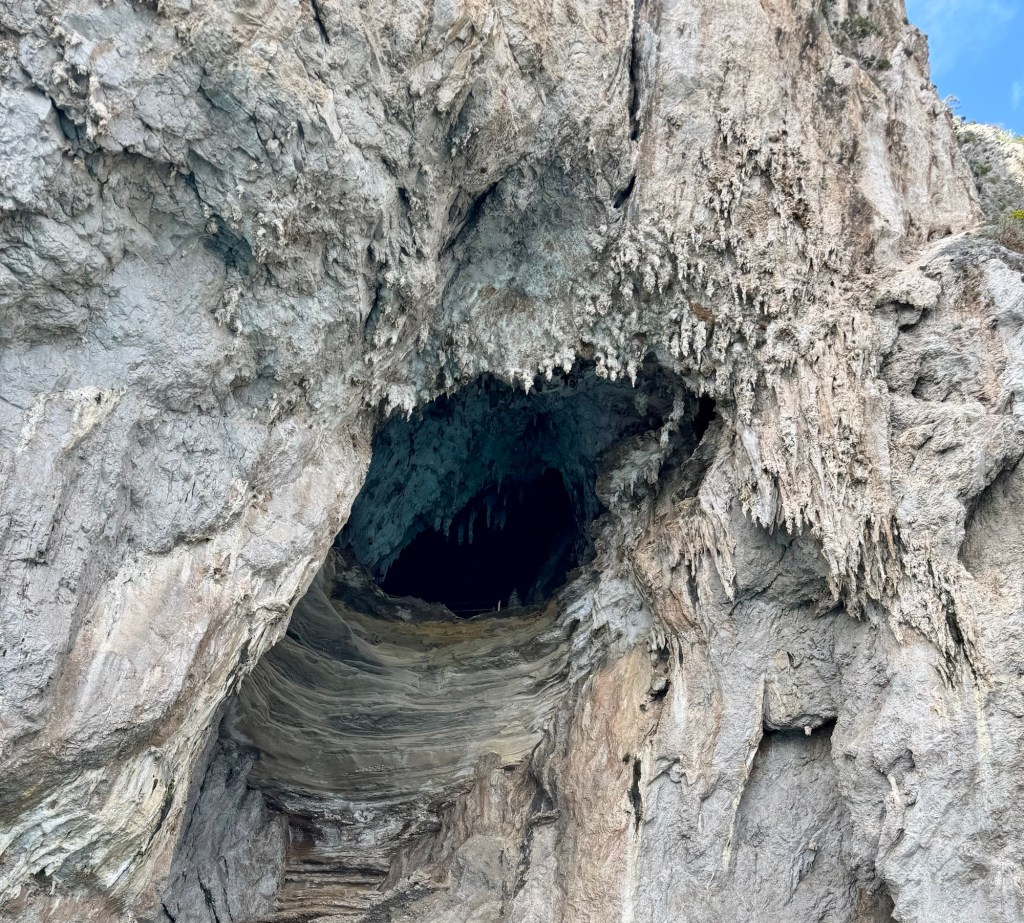
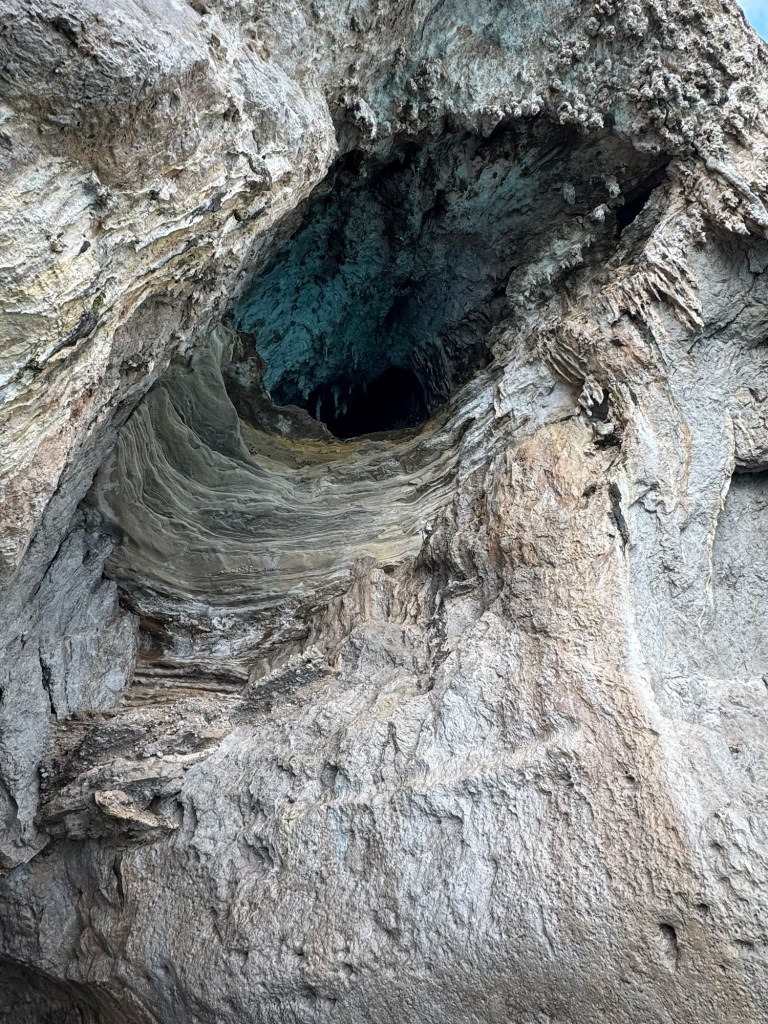
The next stop was the Mary Madelyn grotto. There is a small stalagmite at the top that looks like a figure. Not sure why they named it after Mary but they did. I thought it was a bit creepy. It really did look like someone was up there looking down on you.
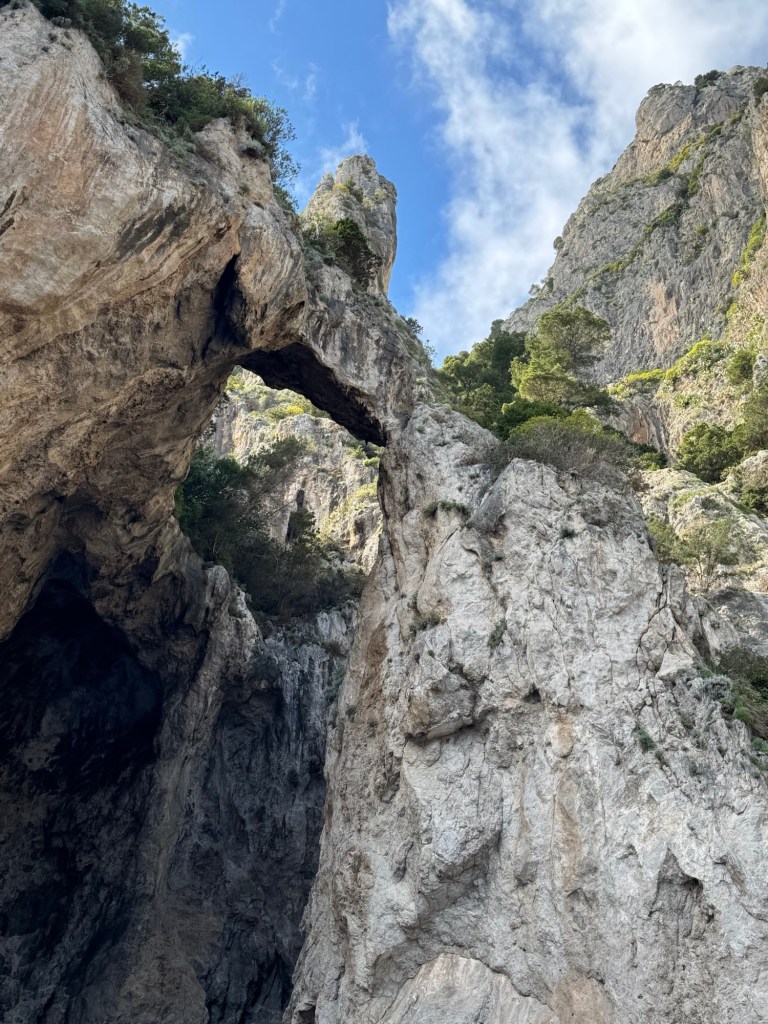
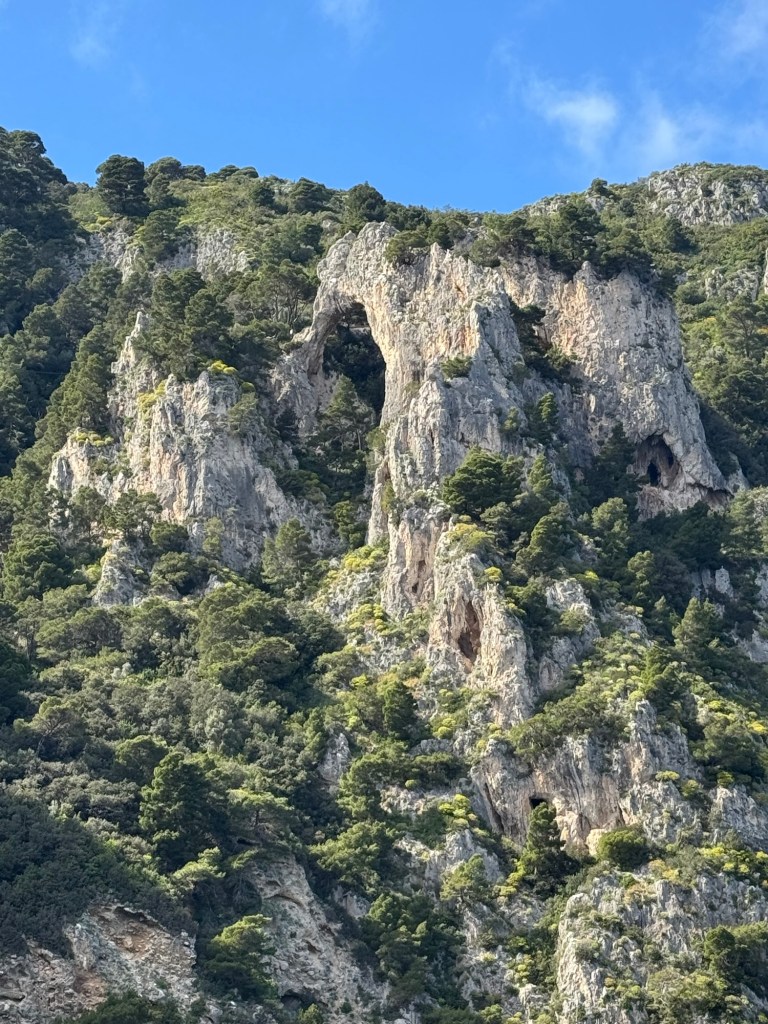
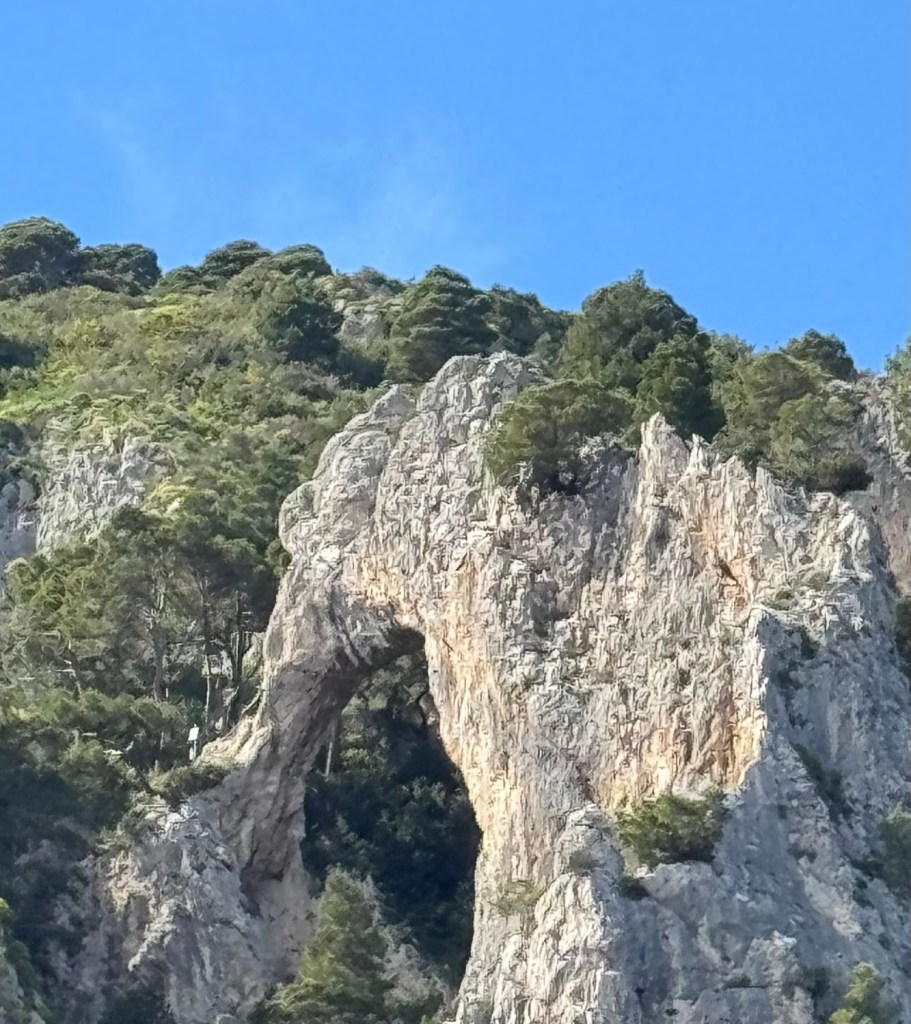
For the next bit we just circled the island. We saw the largest arch on the island which is said to resemble an elephant. I can kind of see it but it had to be pointed out before I actually saw the trunk and ears.
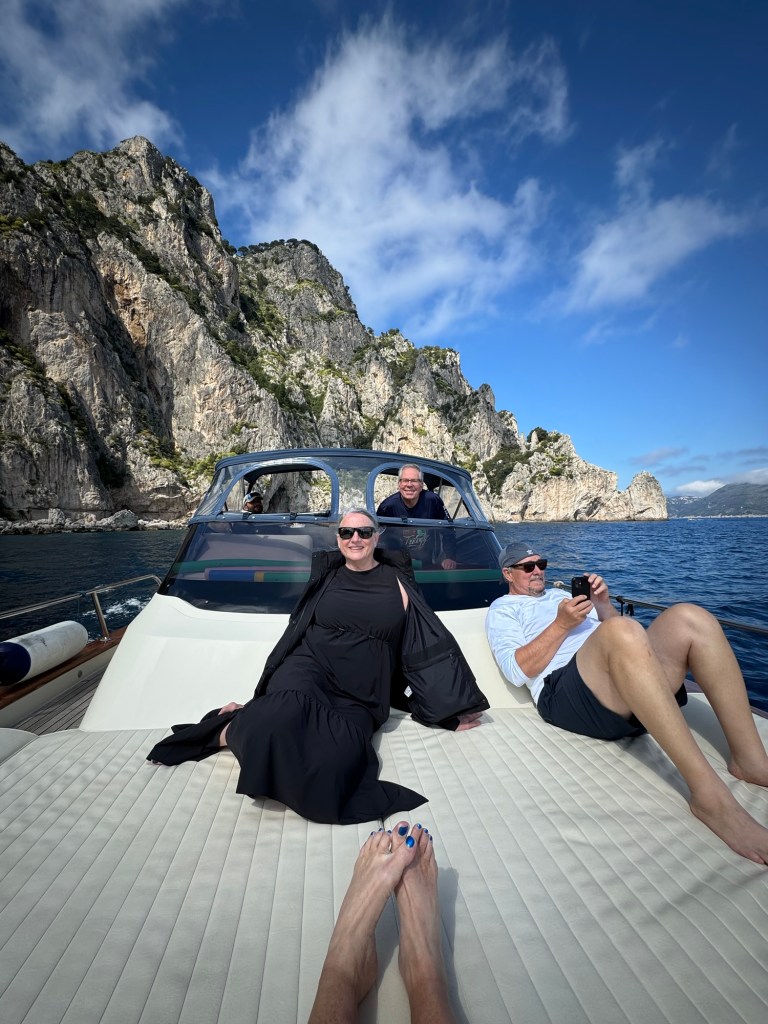
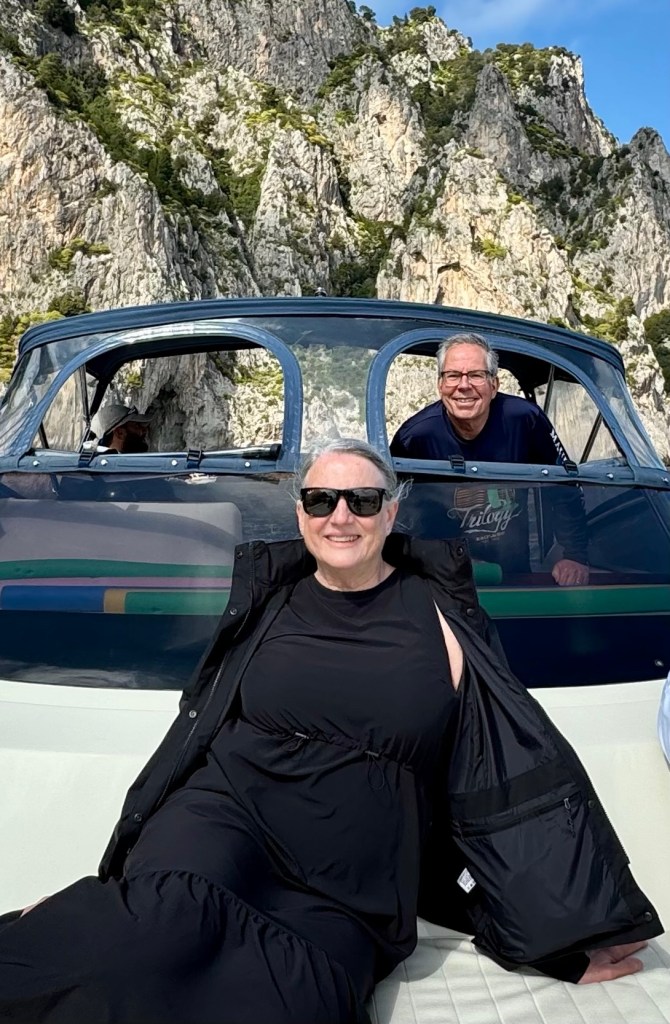
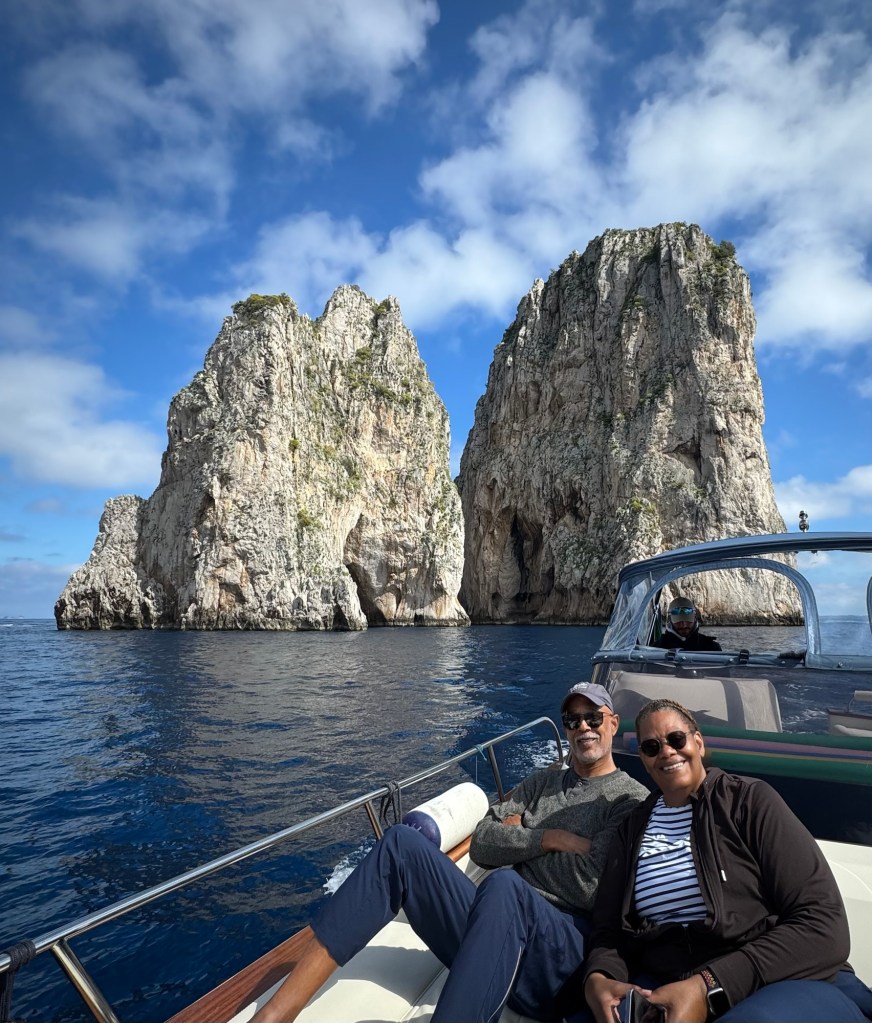
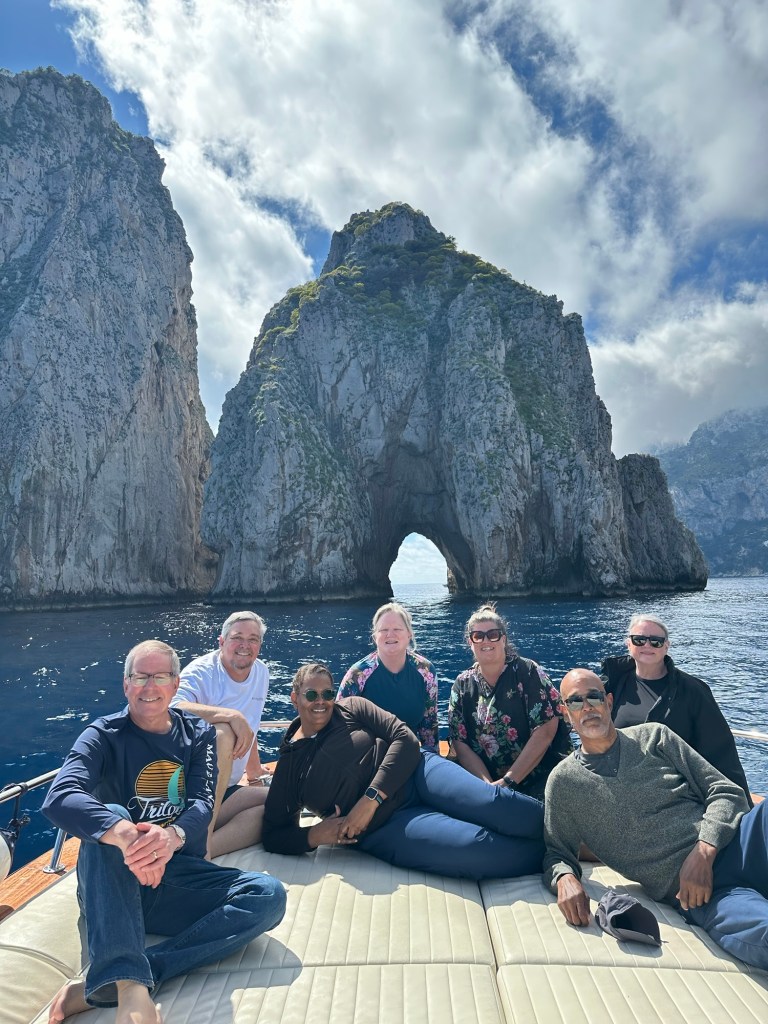
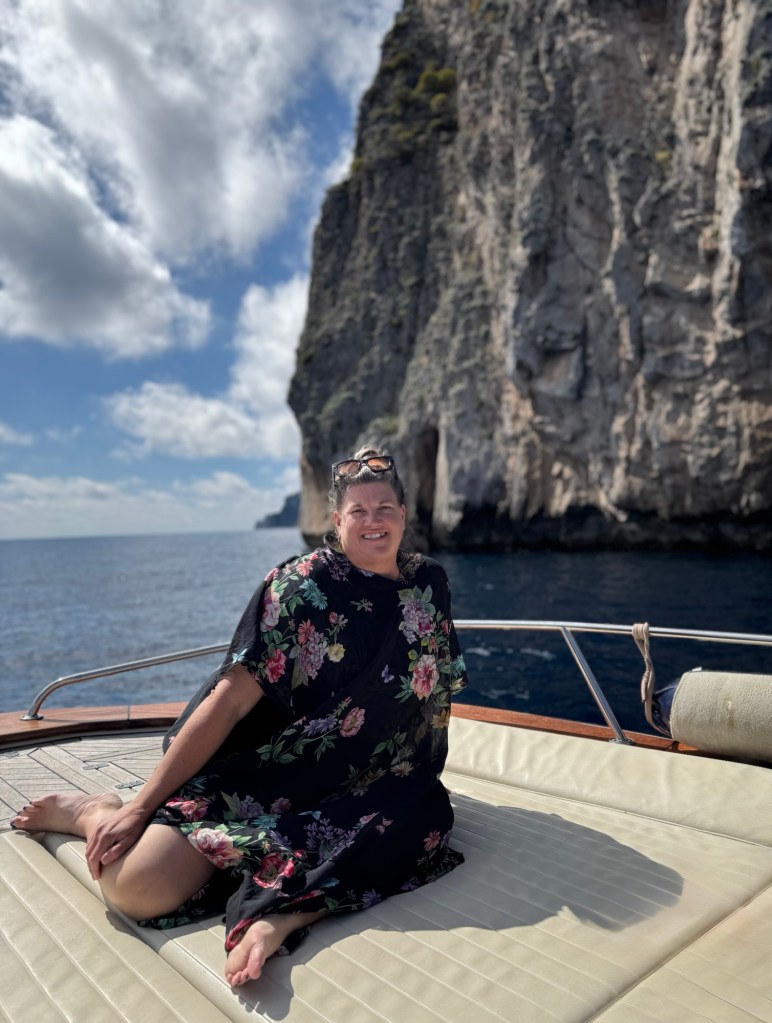
More of us enjoying the island views.
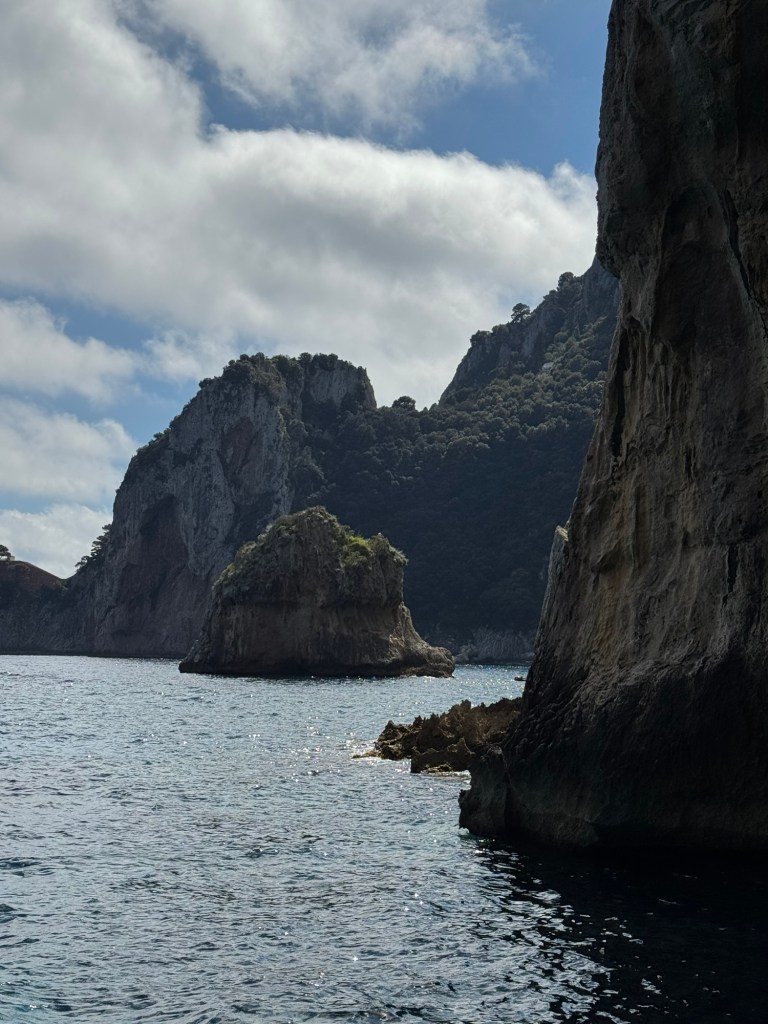
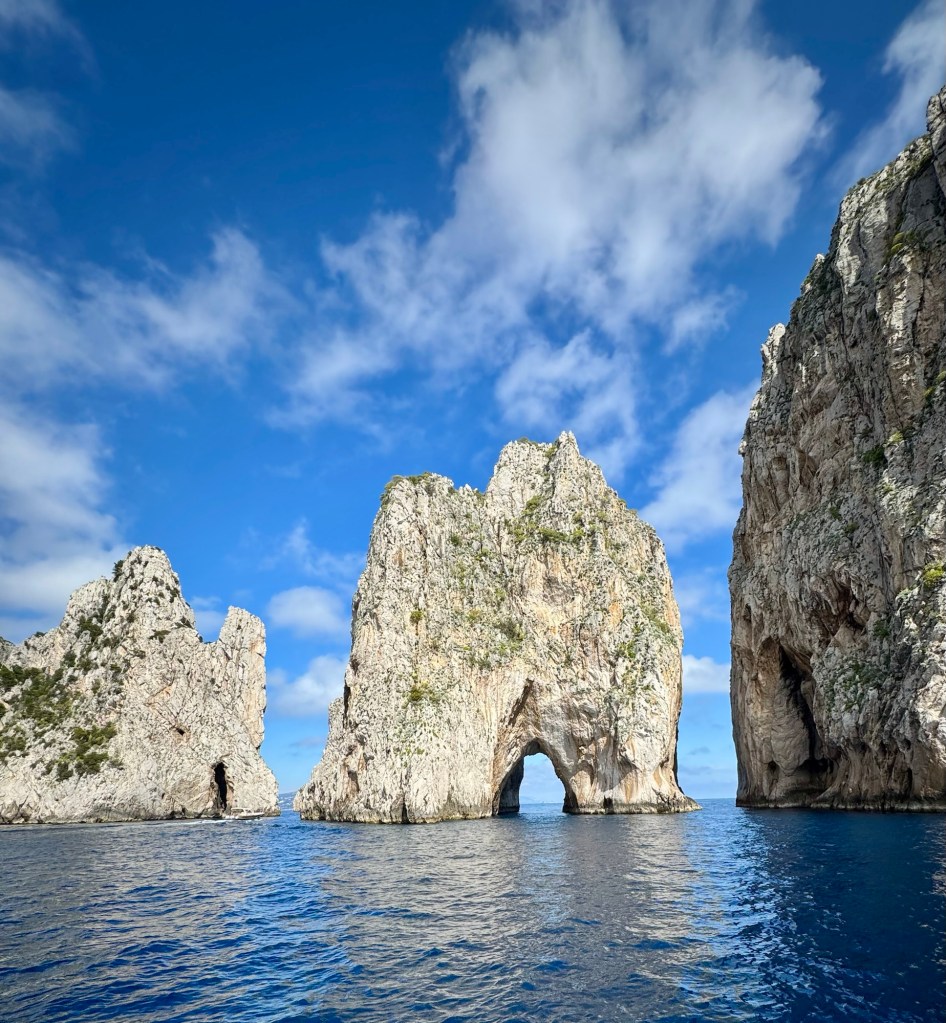
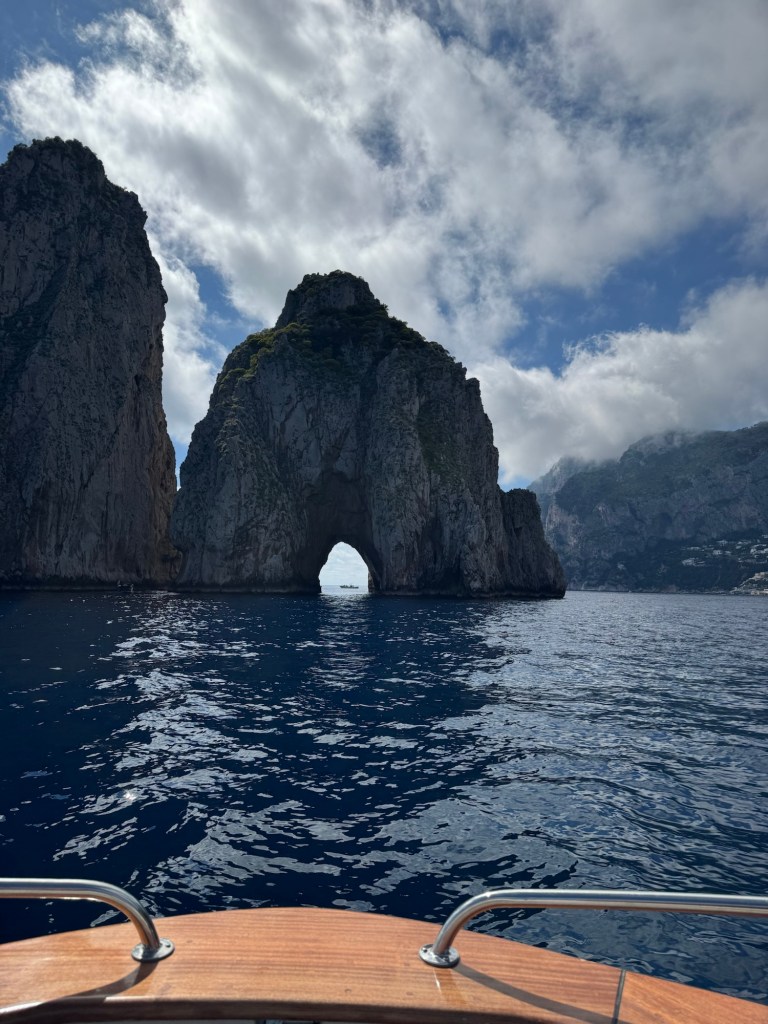
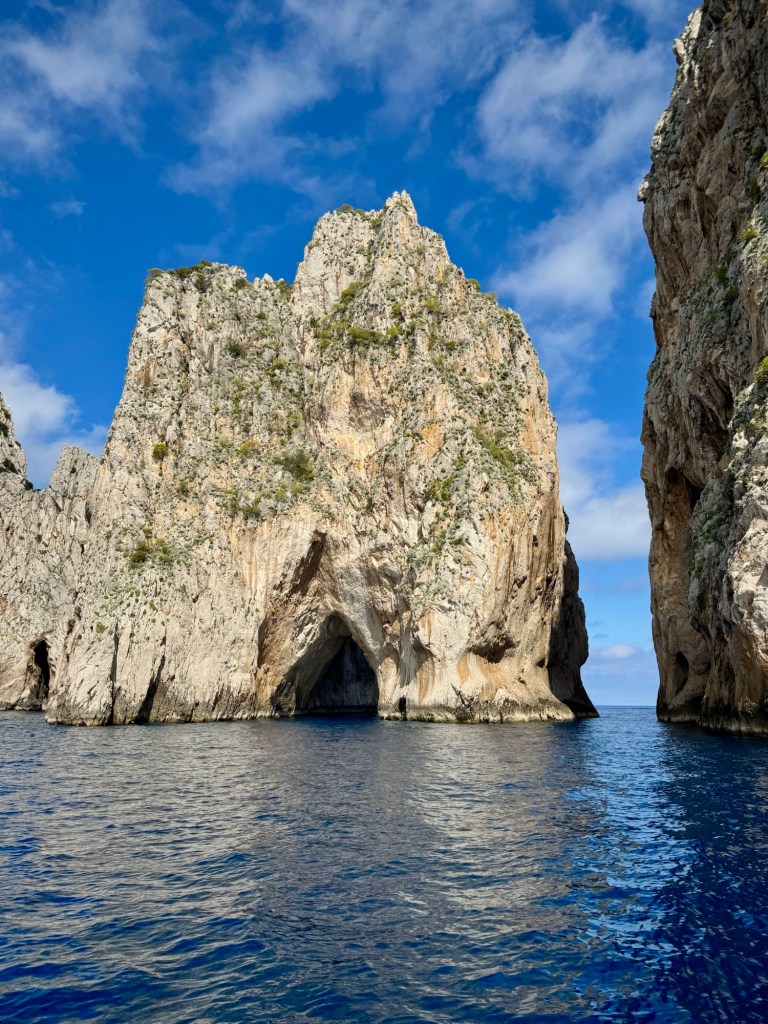
Not sure what these rock formations are called but they were huge. We sailed around them and saw them from both sides.
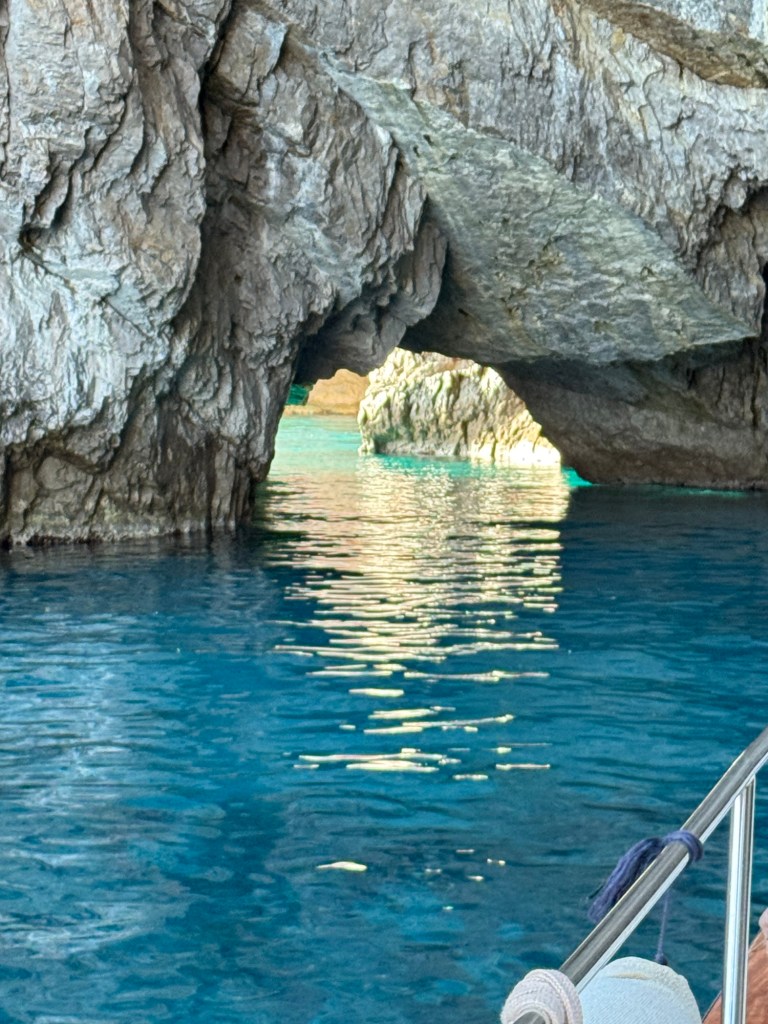
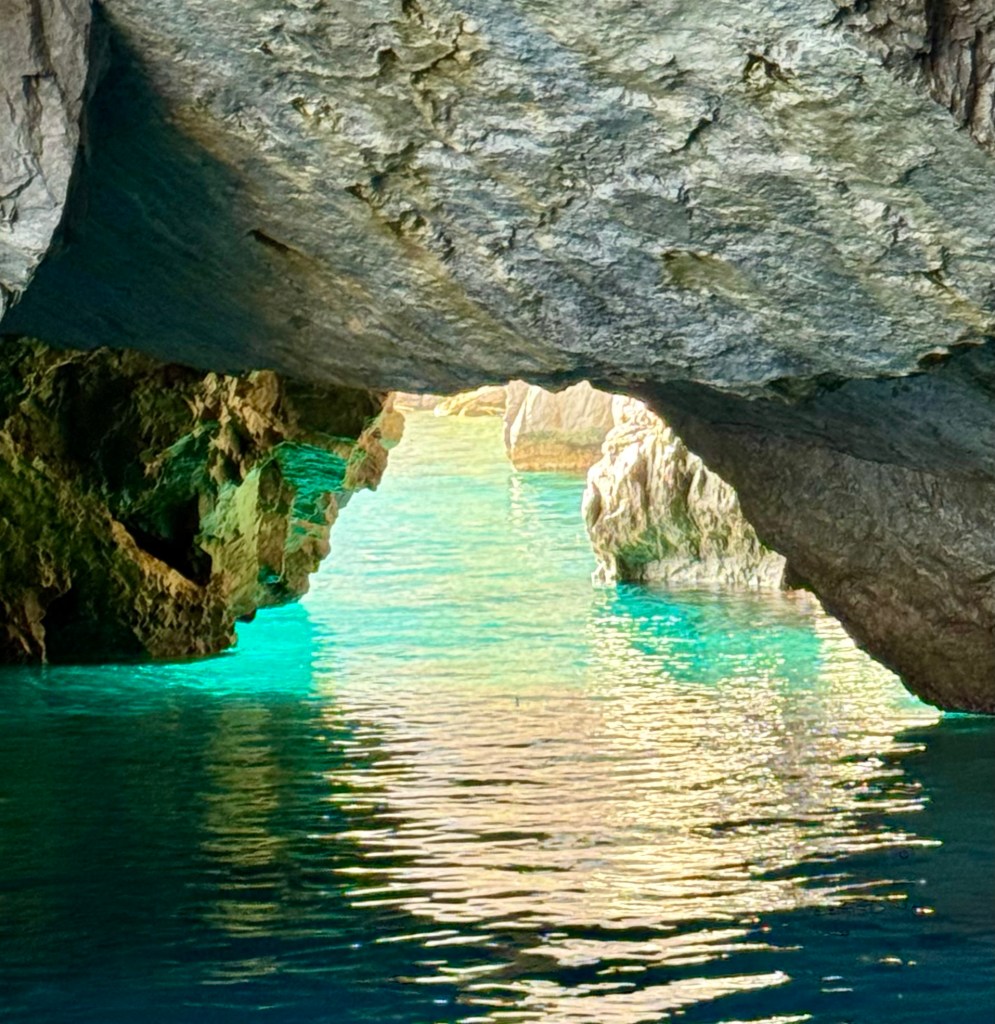
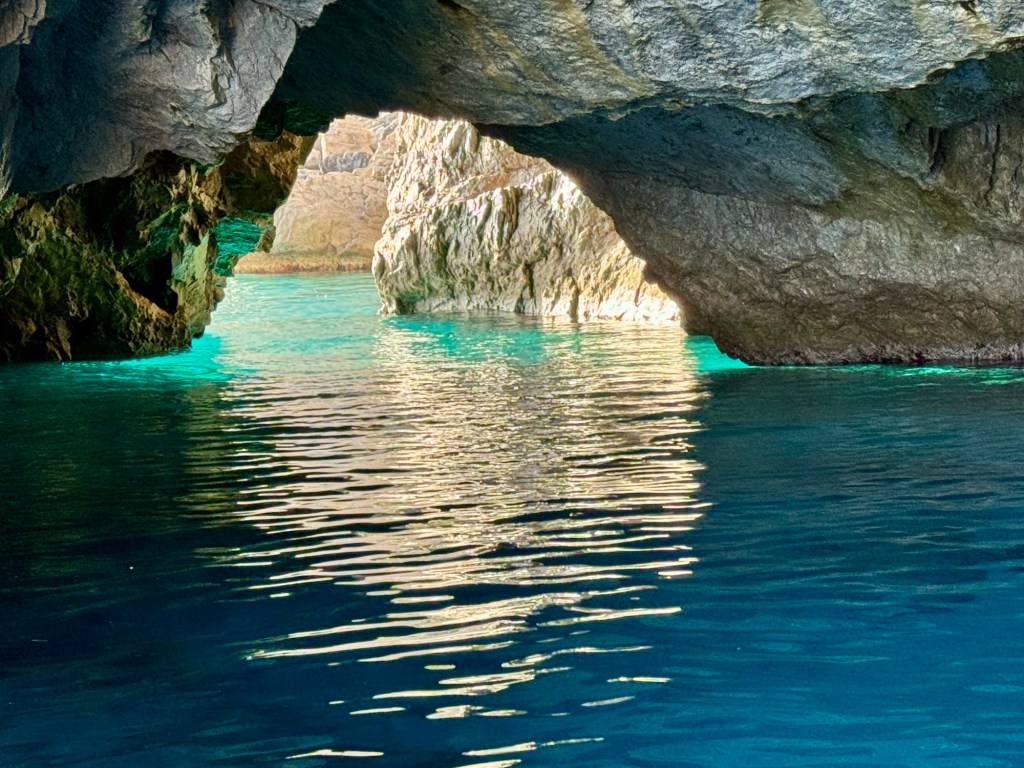
Next we saw the green grotto. It is very similar in water color to the blue grotto that is so popular. However this one you can see inside without having to go in further than a larger boat can do. So basically you see what makes the blue grotto popular (the color of the water) without having to wait in a 2 hour line and get in a little row boat. Now you don’t have the thrill of entering into a cave with a small dark opening but I don’t think it would be worth it. The water in the green grotto was glowing. It was the most turquoise water I have ever seen.
We went a little further around the island with more breathtaking views. Until we got to the heart grotto. I was confused at first and thought the formation slightly resembles a heart but they were stretching it a bit. Then we actually enter the cove and you see the formation the grotto gets its name from. There is no mistaking that it is a heart.
What I thought was the heart
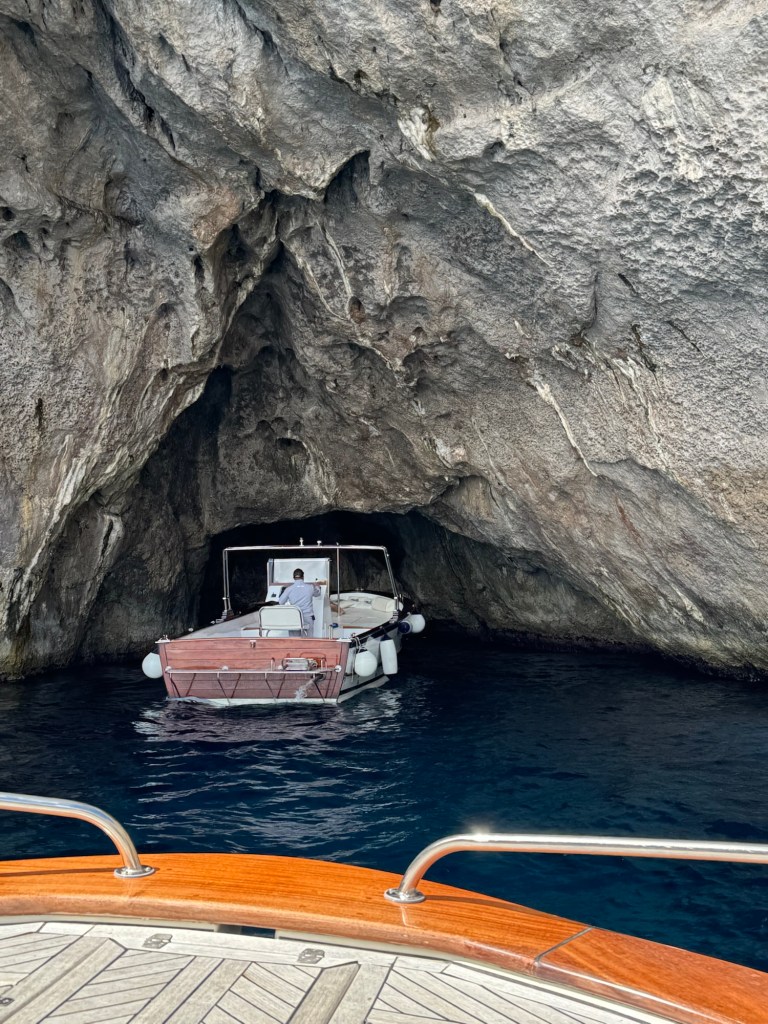
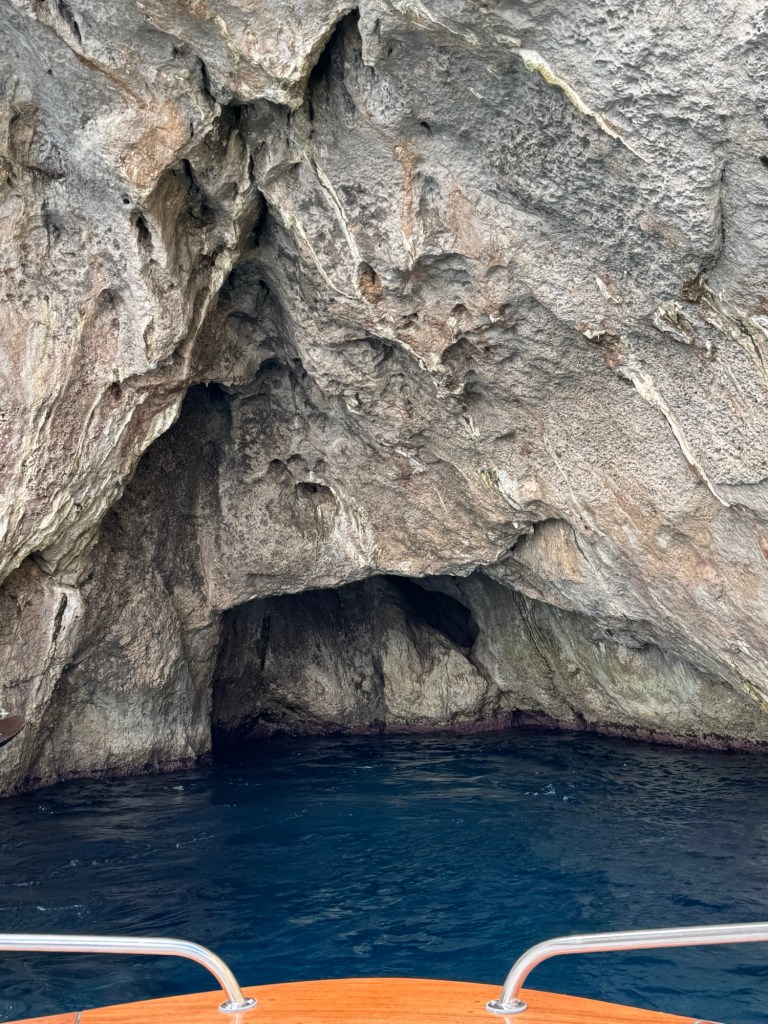
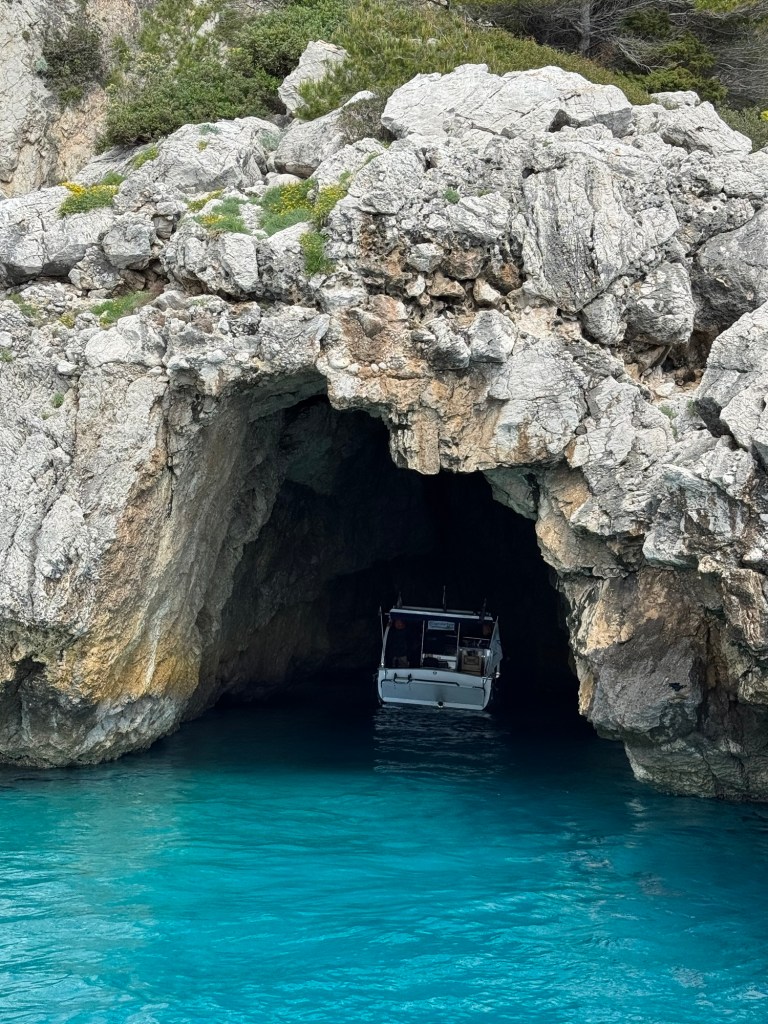
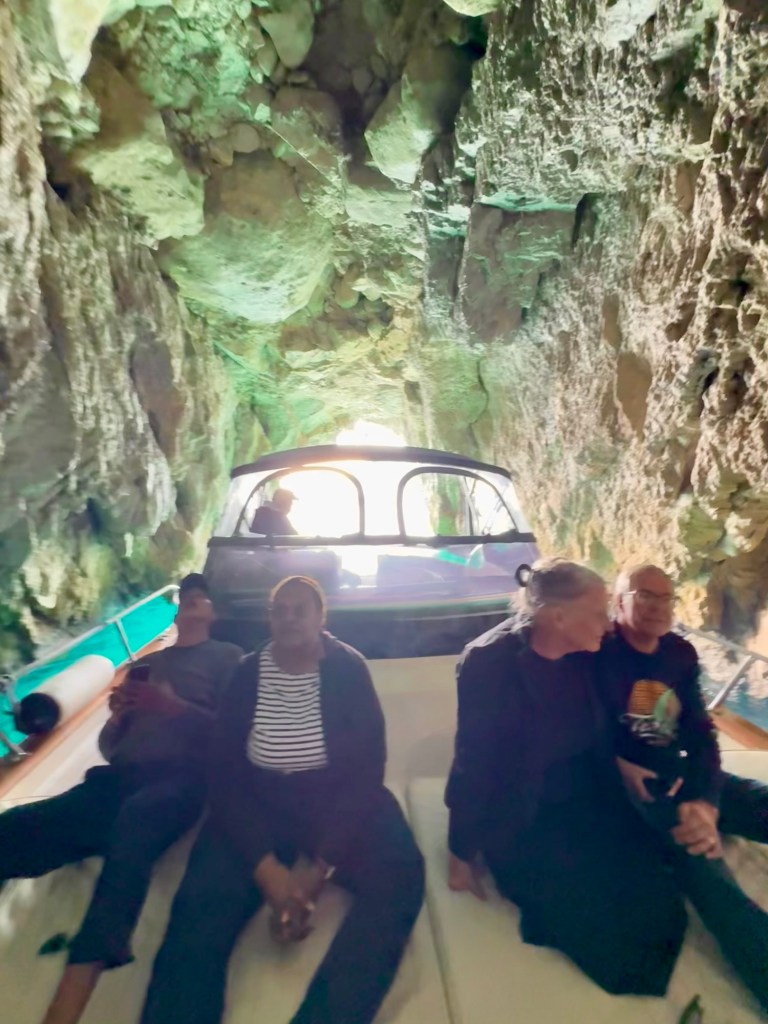
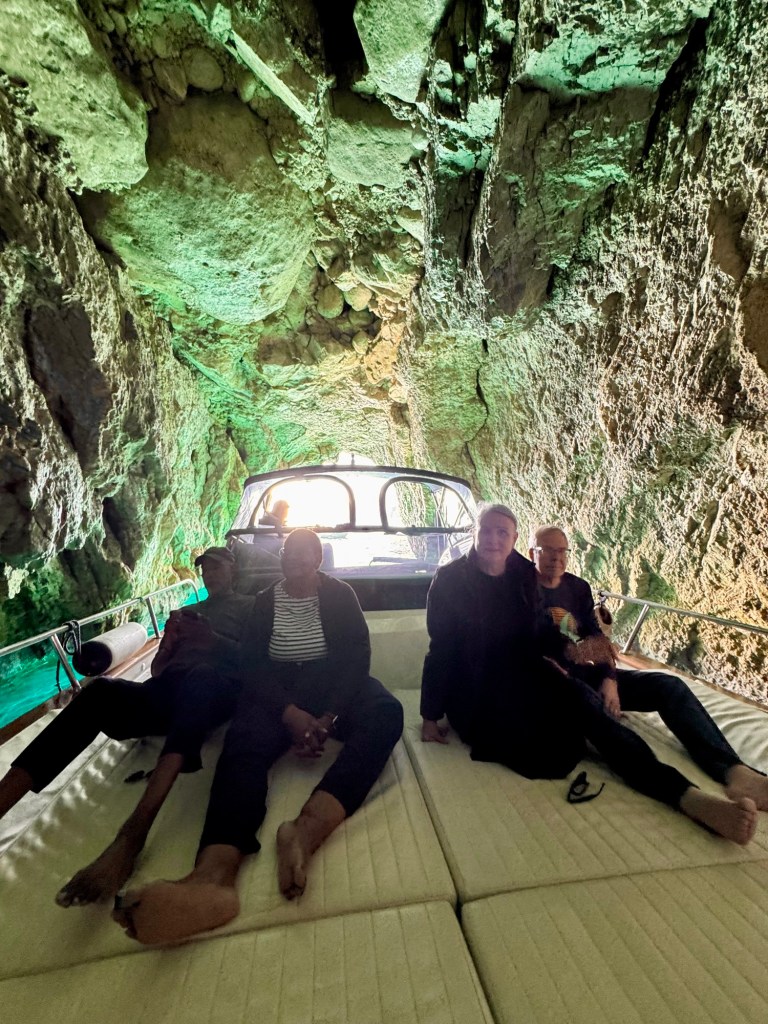
The cement grotto was cool in its size. It had these huge bubble looking rocks making up the ceiling and the boat seemed to almost perfectly fit. There wasn’t much room. We drove in and backed out.
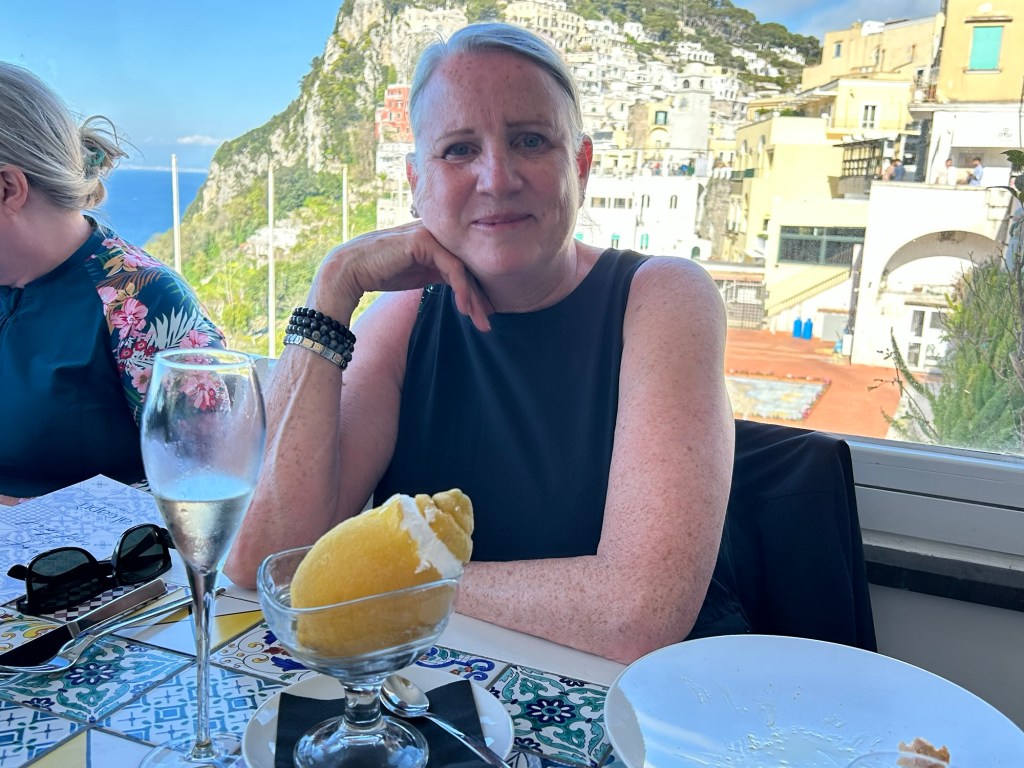
We got off for a brief stop in Capri. Kelle and I tried the lemon sorbetto. It was extremely nice.
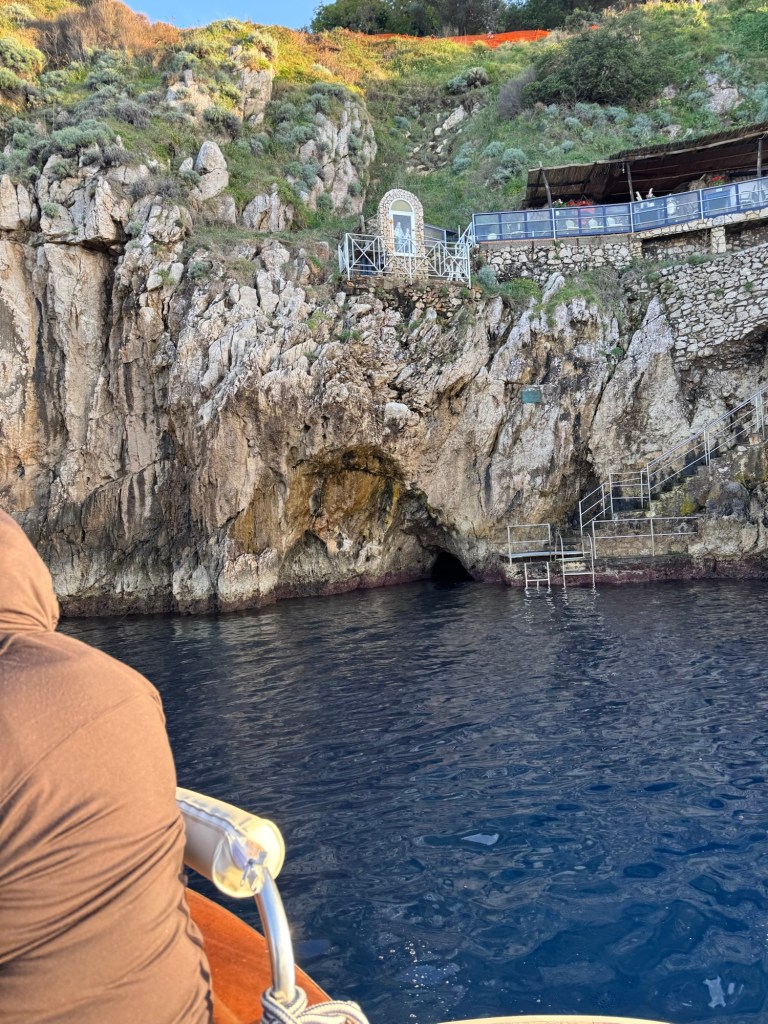
We got back on the boat and continued around the island. We saw the blue grotto from the outside but could only see the opening and the small entrance to the cave. We could also see the stairs where the people would wait in line for their 5 minute tour inside.
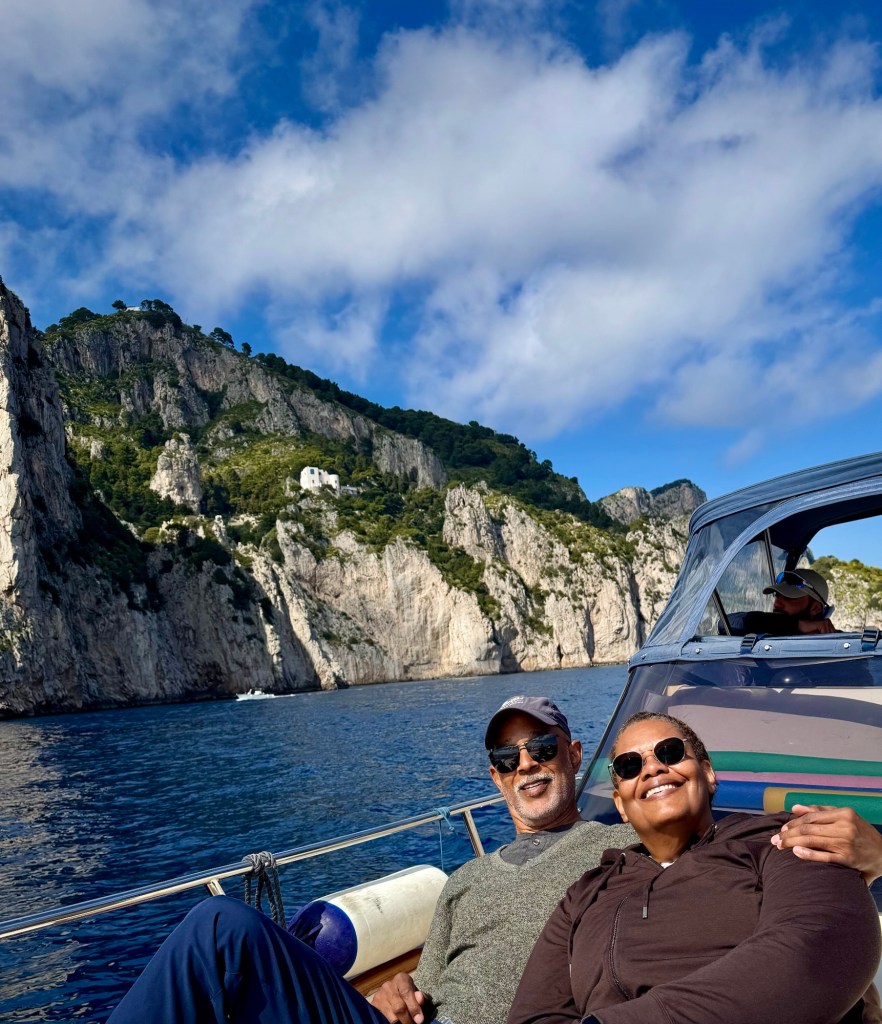
A few more pictures from the tour.
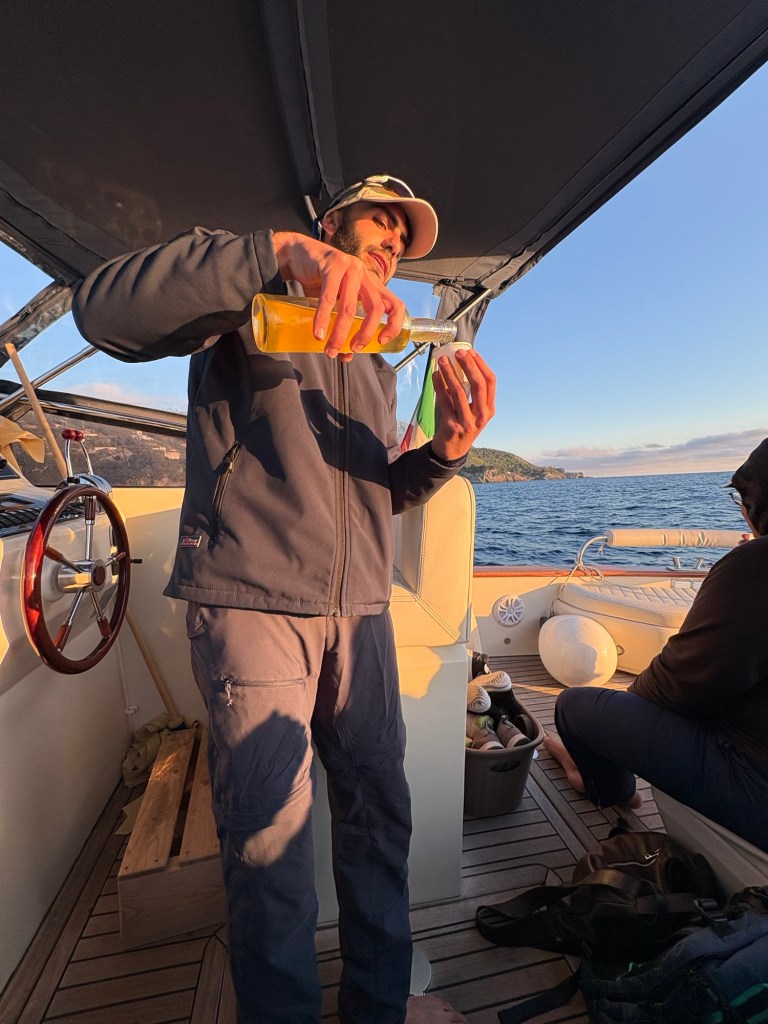
On the ride back we stopped to taste the sunset with some limoncello. It was getting quite cold on the boat so we didn’t make it all the way to the sunset but we got close. The boat tour was one of the best things we did in the trip. I highly recommend it.
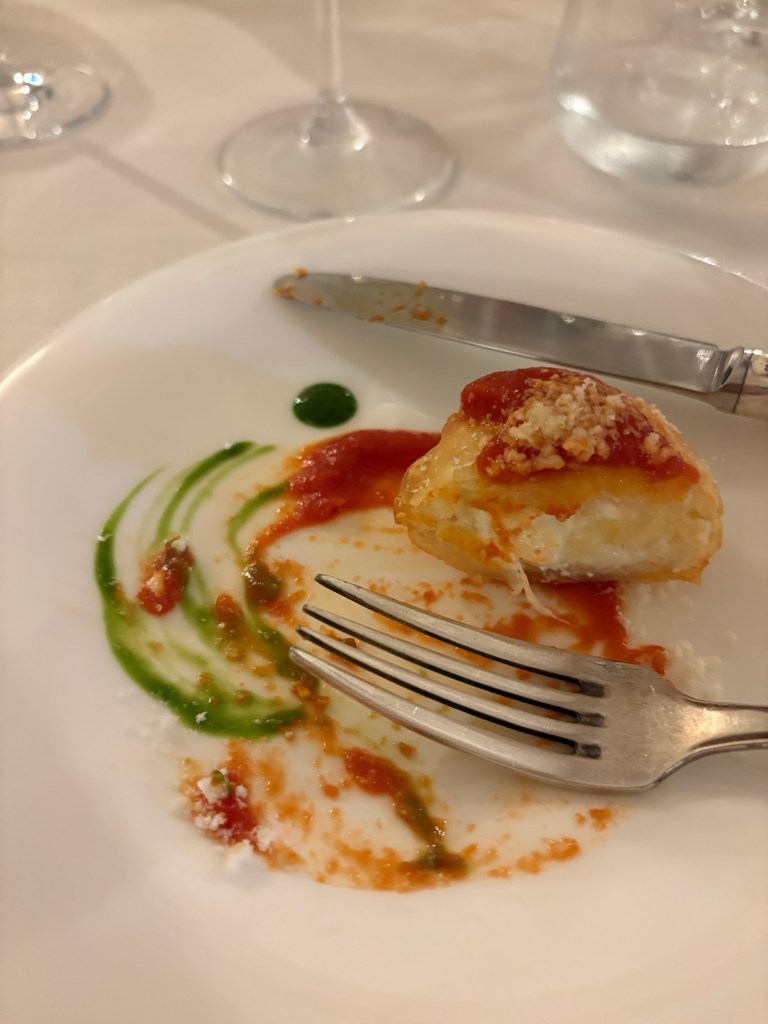
After we got back to the shore we took a recommendation from the boat guy to a restaurant a few towns away. They said 5 minutes but more like 20. However the food was some of the best we had in the trip and the best chocolate sachet I have ever had.
The drive back to our place was much shorter and we all called it an early night.
Today we head out to Sorento or actually Massa Lubrense. We have rented a villa with a lovely view close to the pier. It will be the relaxing slow portion of the trip. A little time to lounge around before heading home.
I hired us a car service to drive us down. The train had worked out okay from Perugia and we probably could have done it. However by the time we took a taxi to the train station changed trains in Naples and got from Sorento to the villa. So although more expensive not a by a lot.
The driver wanted to come earlier so we did move it up to 8:15. We were all ready to go by 7:30 so we could have gone earlier. But this did give time for the coffee drinkers to have that before we left.
I was a little nervous that everything would fit in the van but it all went in fine with some strategic packing. Two bench seats for 6 of us and one up front. Wasn’t the most comfortable ride but not bad.
We saw a part of Rome I had never seen before and the sports college that looked like part of the Rome Olympic facilities. Once out of the city and on the toll road it was a pretty drive. I did not know that the mountains continued past Rome.
We had a brief stop at a travel center then on to coast. Traffic through Sorento was crazy and the roads were super narrow. There was no room for people to walk but they were doing it anyway. Some of the views were incredible so I see why they would want to walk up to them but I definitely could not.
It took us about 3:30 hours but we finally arrived in our little town Massa Lubrense and to the address provided. However that was for the whole complex of houses and our driver couldn’t figure out how to get to ours. They had sent me a pin location but that didn’t help. It took a few tries but I finally got one of the hosts on the line and they gave the driver directions and we arrived.
I knew there were stairs down to the villa but I wasn’t prepared for how many with our luggage. The host showed up with his son and helped carry it down so it relatively quickly.
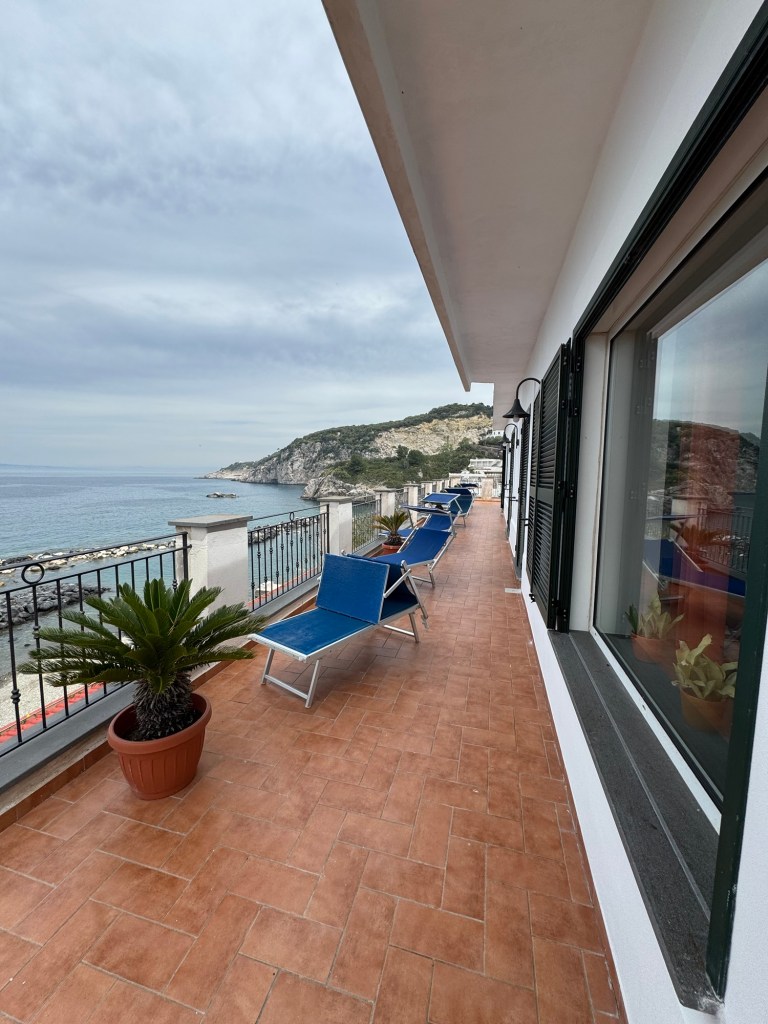
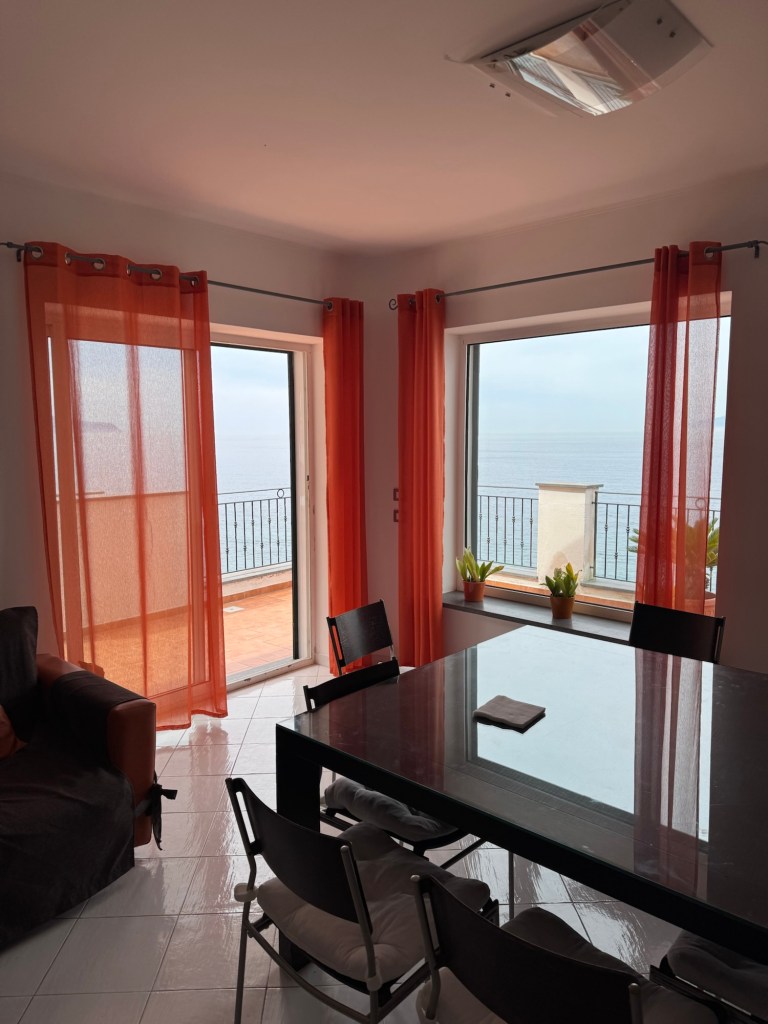
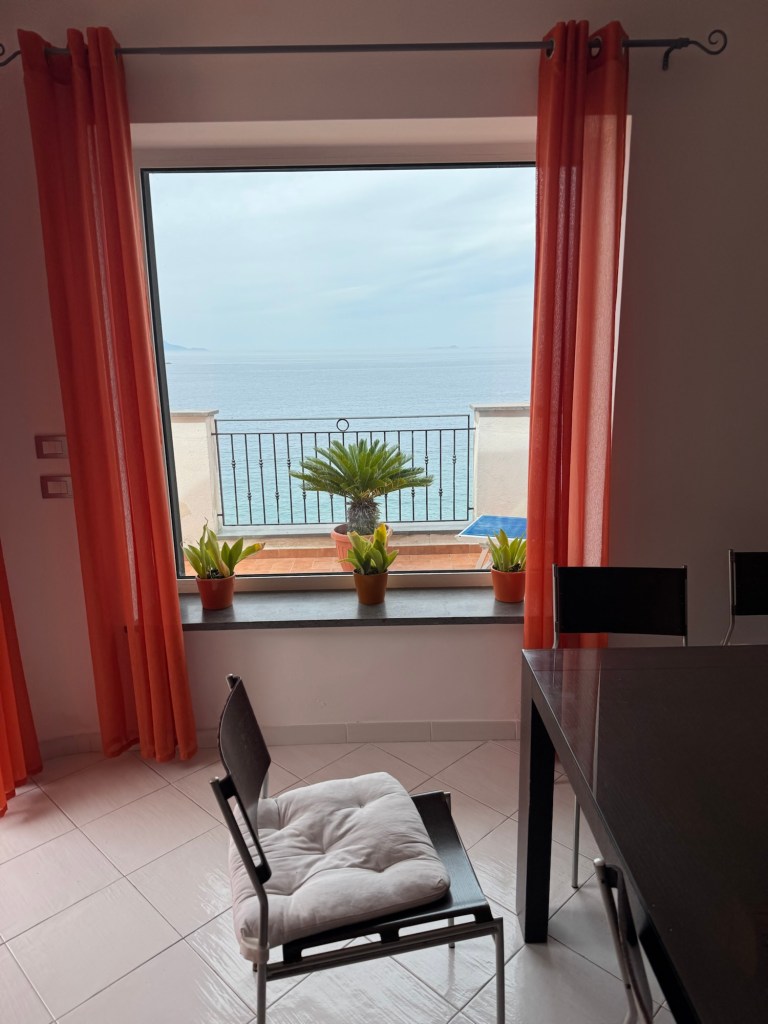
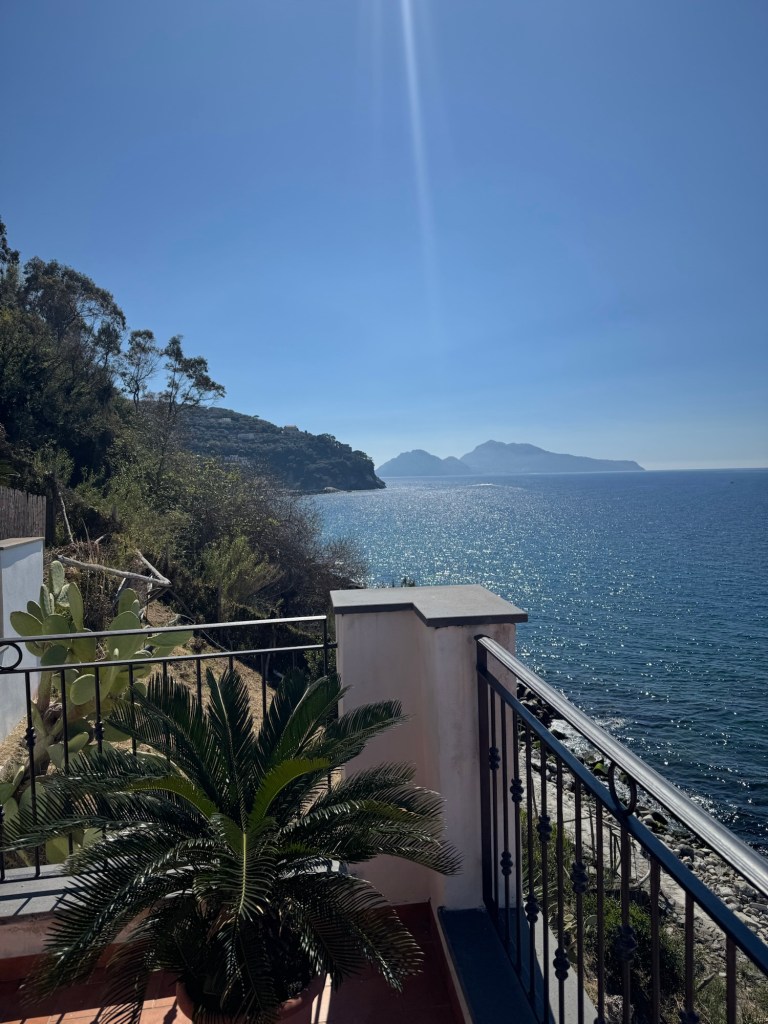
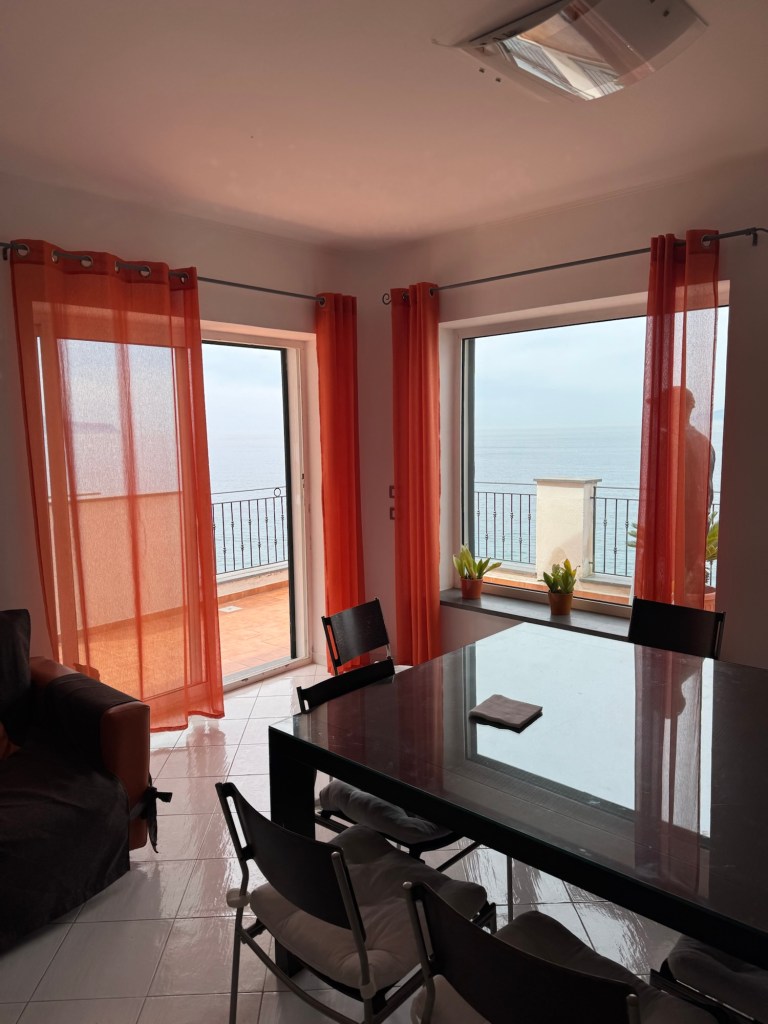
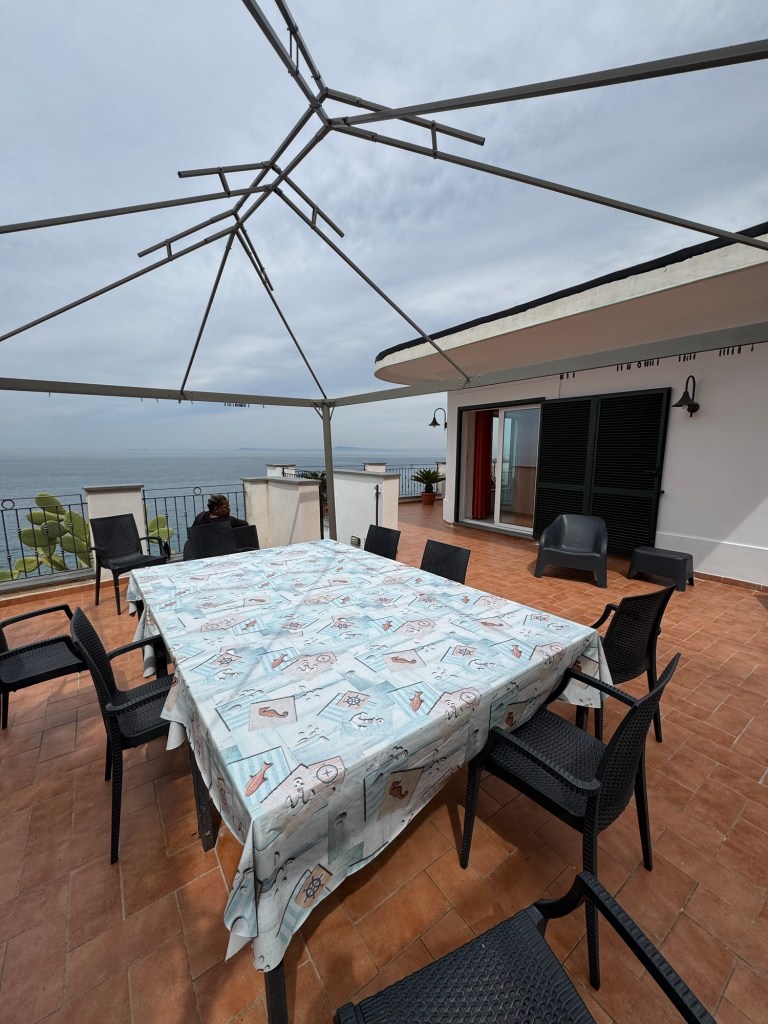
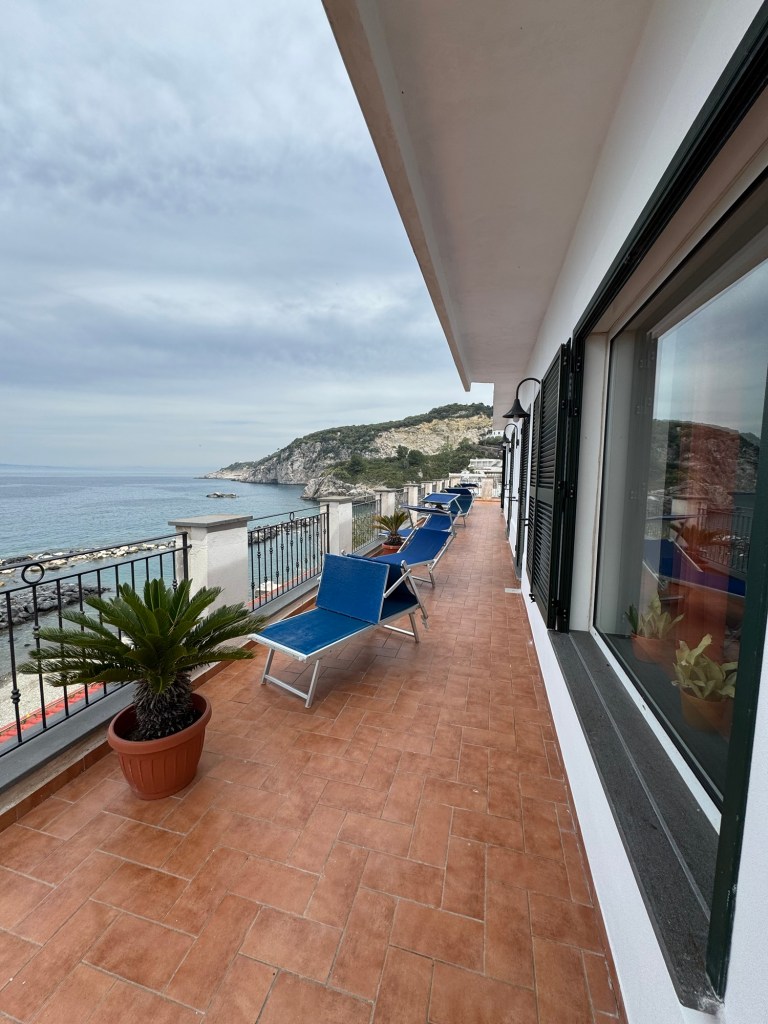
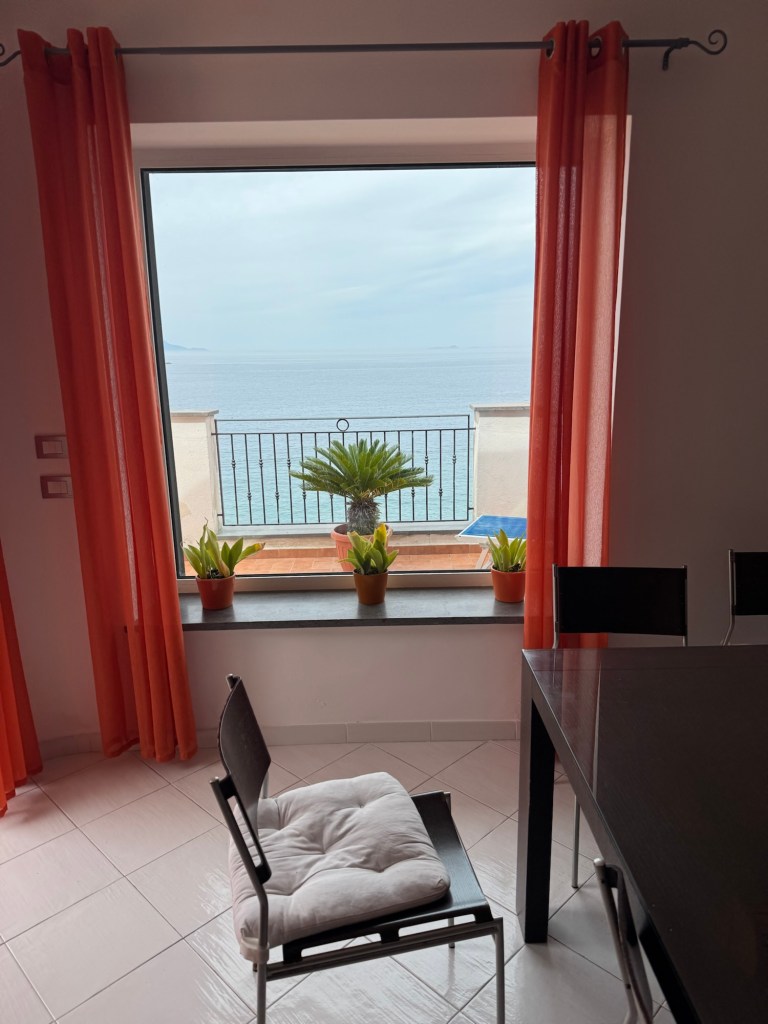
The views from the villa are amazing. It sets right over the ocean with great outdoor seating and every room has big sliding doors out to the terrace. So they all have ocean views.
The villa sets about halfway down to the water. So we have stairs both ways. Probably a few more to get up to the road but not many. The beach is rocky but people are down there. Most just sitting in the shore but a few kids are playing in the water.
One big problem the path into town is closed for maintenance. Seems they are pouring a new concrete path. Our host says just go around it but we can’t figure out how. Without the path we are basically stuck in the villa. Not a bad place to be stuck but not what we want.
Our host agreed to take some of us into the town for some food and wine about 5. We arrived at about 12:30. We left Rome early so if we had breakfast it was just a snack. We had a few chips and some stuff Margaret got at the travel center to tie us over but that wasn’t going to last long.
The grocery run happened and they returned with meat and cheese some pasta and wine. We were set for a few days if need be. We were able to do a nice spread for dinner so all was good.
We toasted the beautiful sunset with Prosecco and headed off to bed. A little bit of a rocky start to our stay but I think it is going to turn out to be a great few days.
After yesterdays Coliseum went so wrong we weee due for a better day and the museum went like clockwork.
We had a little hiccup with breakfast/ lunch but otherwise the day got off to a good start. It is hard to coordinate with 7 and we have done more as a full group than I expected us to. Some wanted coffee then lunch others wanted breakfast. But in the end it all worked out and we met back at the apartment to head to the Vatican.
Our hotel was right down the street but we headed out early in case we went to the wrong location. Memories from my last time visiting the Vatican, where we were at the wrong door for our tour and seeing people hunting for their tour start place yesterday made me a little worried. As we got closer the line to get in was crazy long and my heart sank. However, the Vatican had employees out along the line directing people and they told me to keep walking. The people without tickets stand in a crazy line in one side those with tickets stand on the other. We arrived about 45 minutes before our entrance time and got right in the front of a short line to get in. They let our line start 30 minutes before our time and we showed our tickets in one line then went through security then up to the group tour line. We were even too early for that and we had to wait 10 minutes and try that again. At 1:15 we got our guide and headed in. So relieved it had gone smoothly.
Our guide was really good. She had her doctorate in art history and was very knowledgeable about the art and its significance. She was also really focused on the use of color and the way art had evolved through the centuries. She was Polish spent some time in Canada and the US even taught at Lubbock but was currently looking for a teaching job. She snuck us through small places and around crowds to see the highlights.
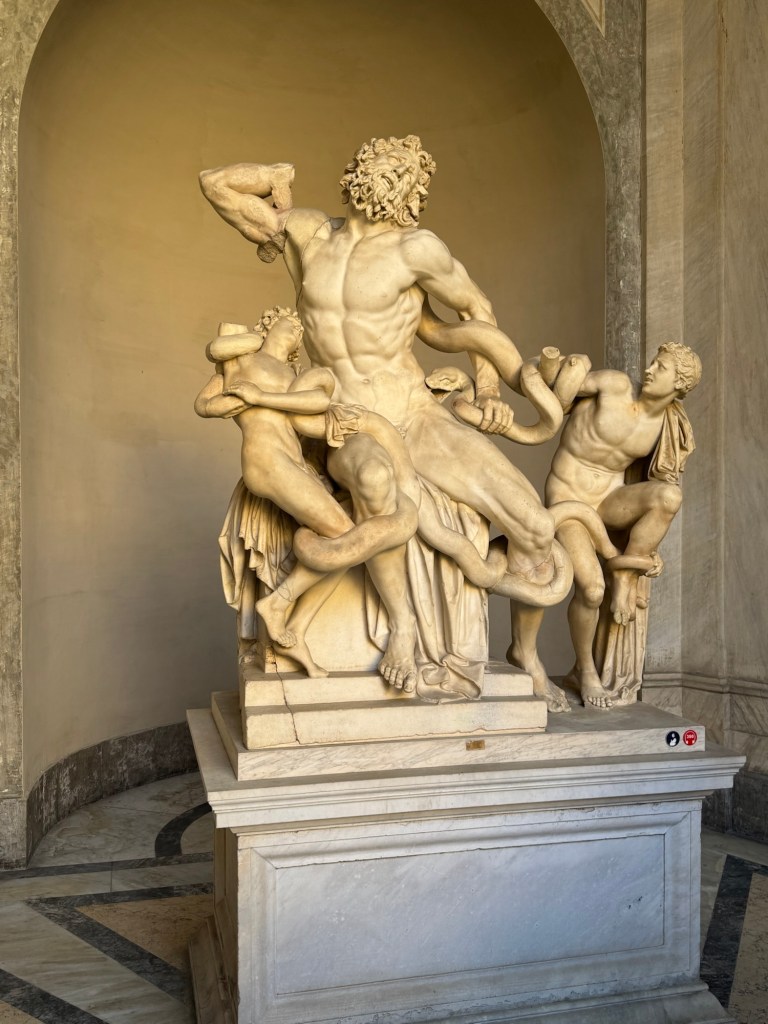
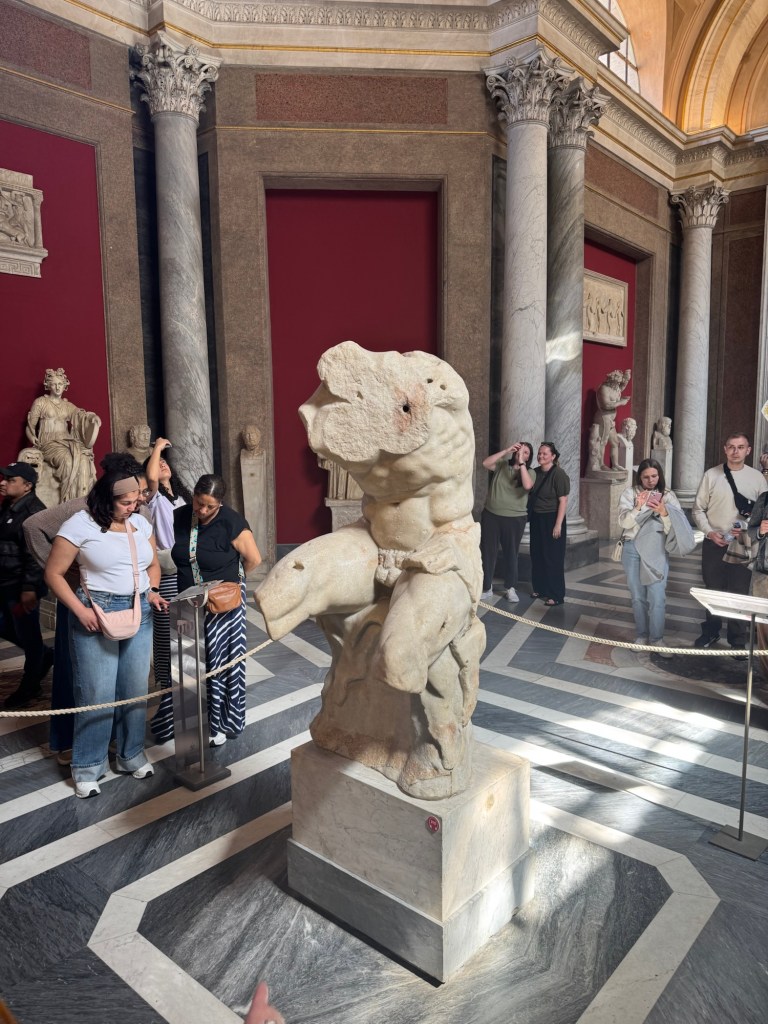
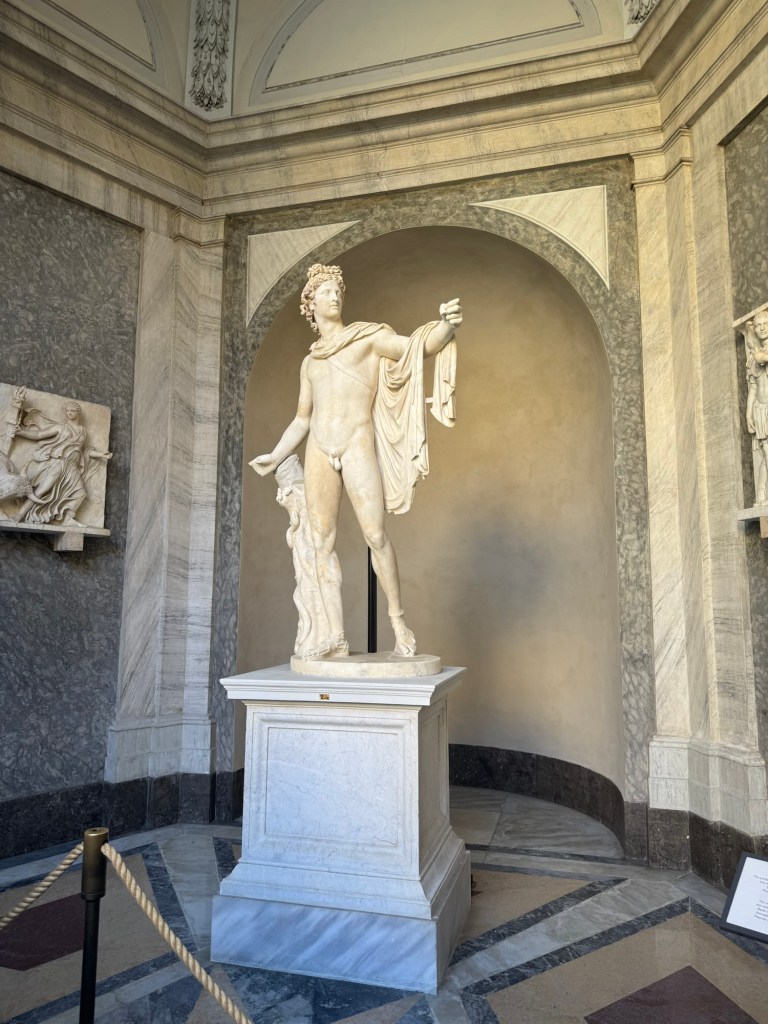
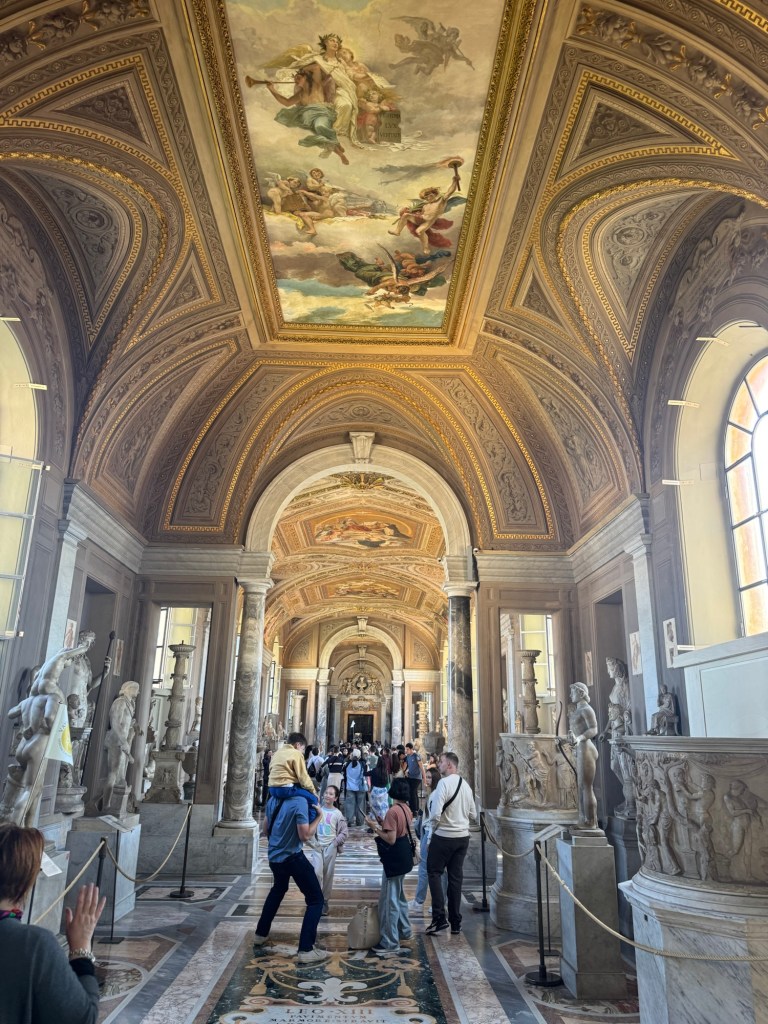
We saw the early Roman statutes the Belvedere Man and the Laocoon and His Sons. She explained that although they were copies of Greek statutes the originals had never been found and since they were bronze had most likely been melted down for weapons. She spoke quite a bit about how these early sculptures influence the renaissance artist like Michelangelo who was young when the Laocoon sculpture was found in a field and the story goes that he went and saw it being dug out.
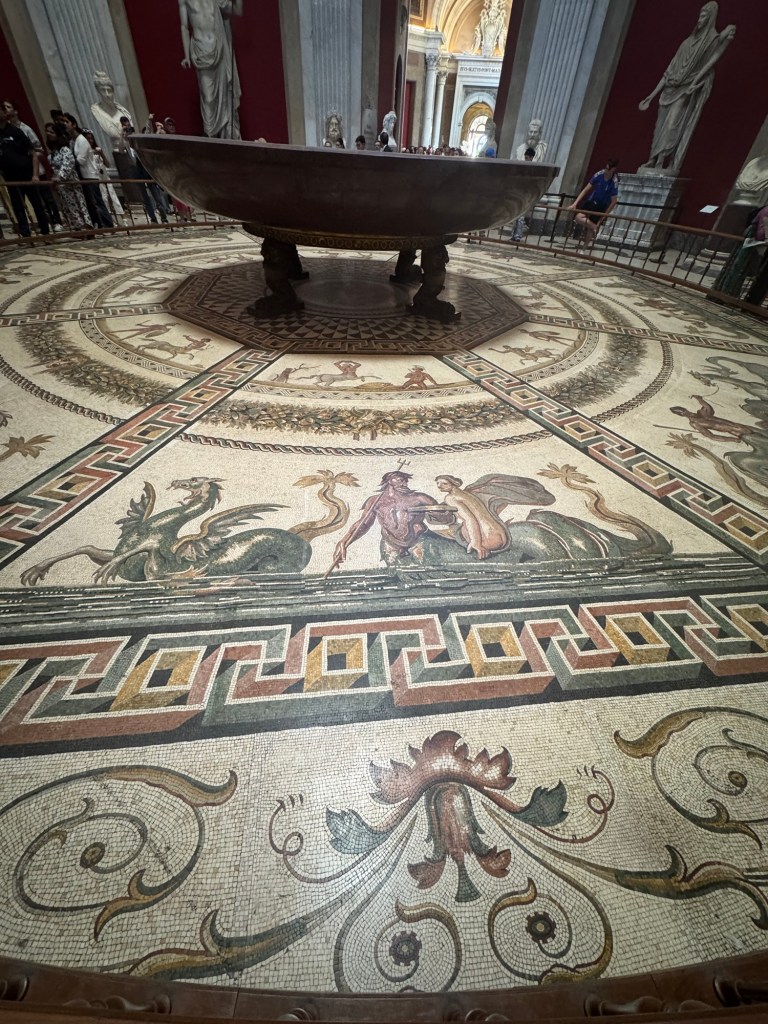
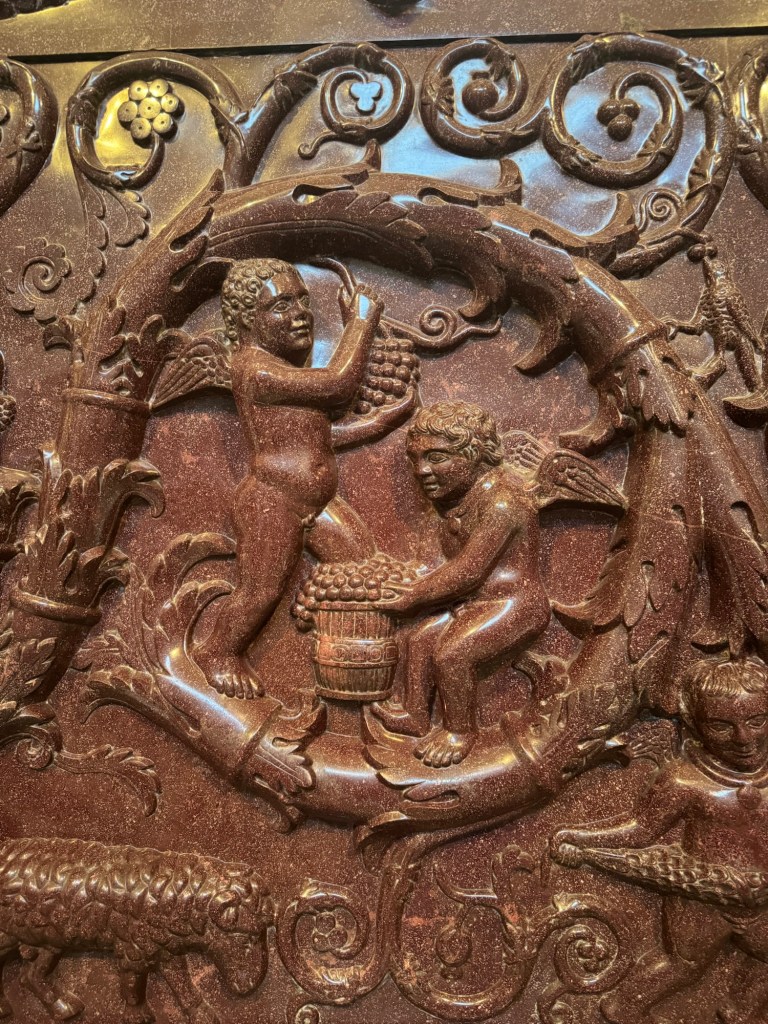
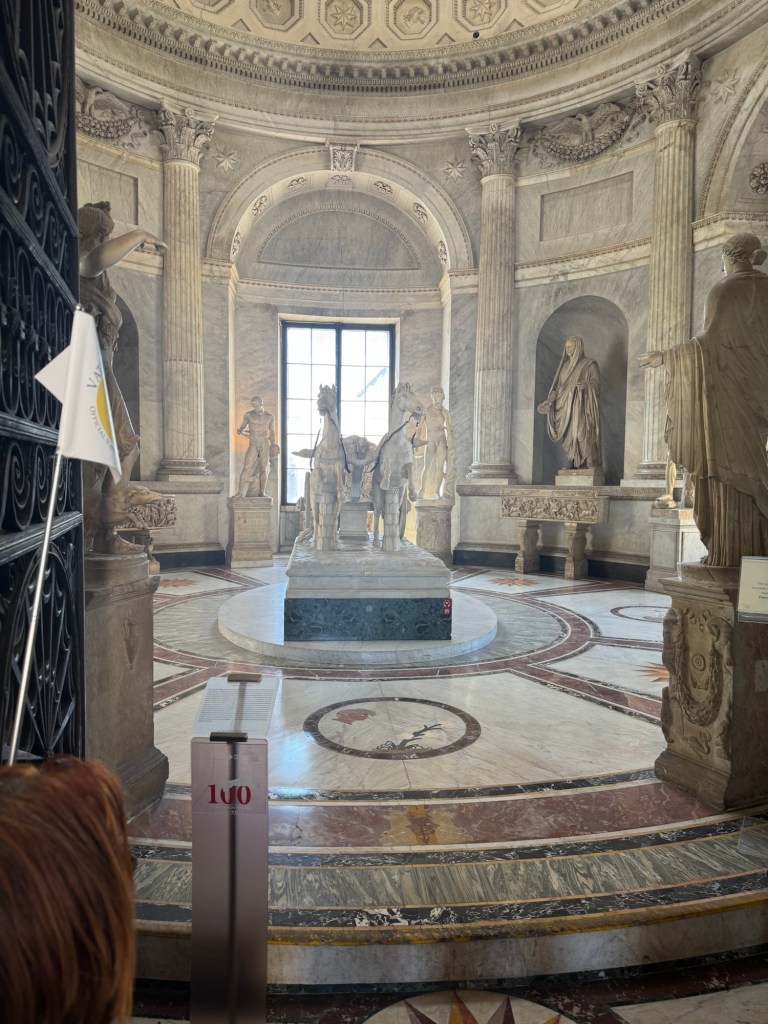
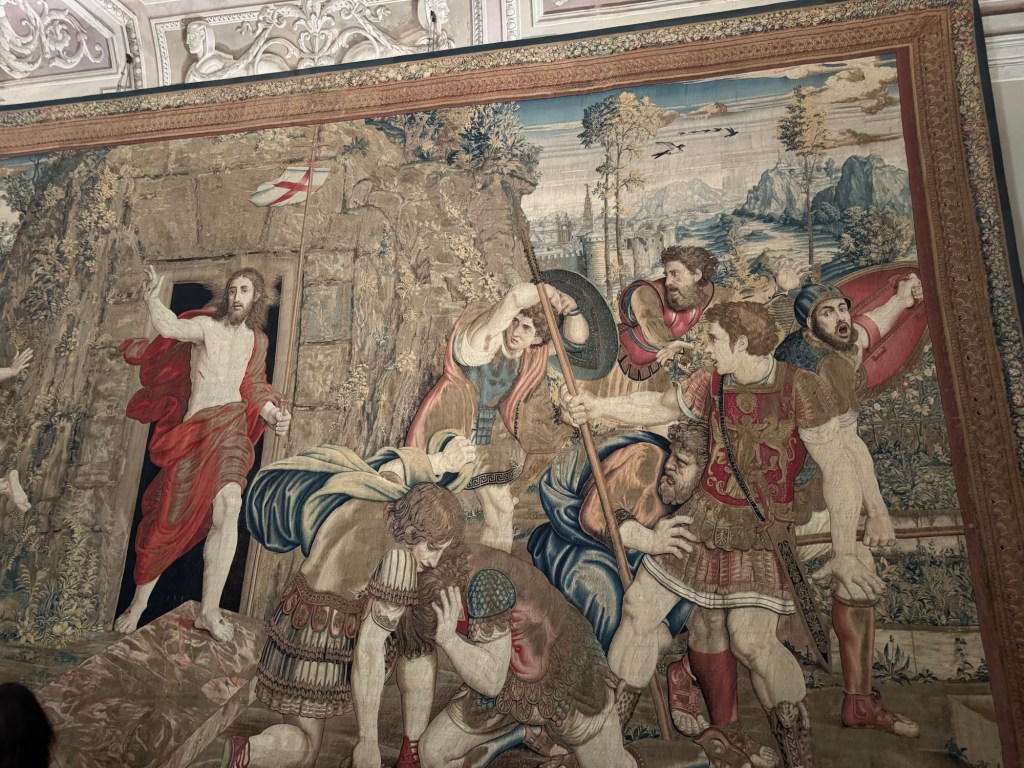
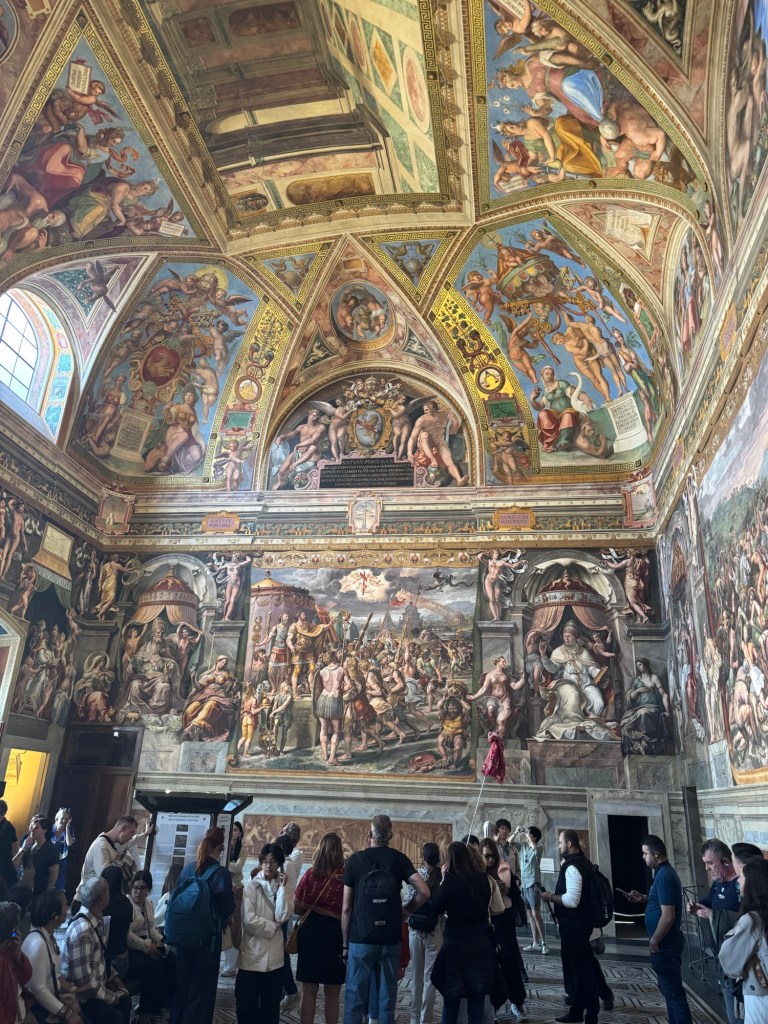
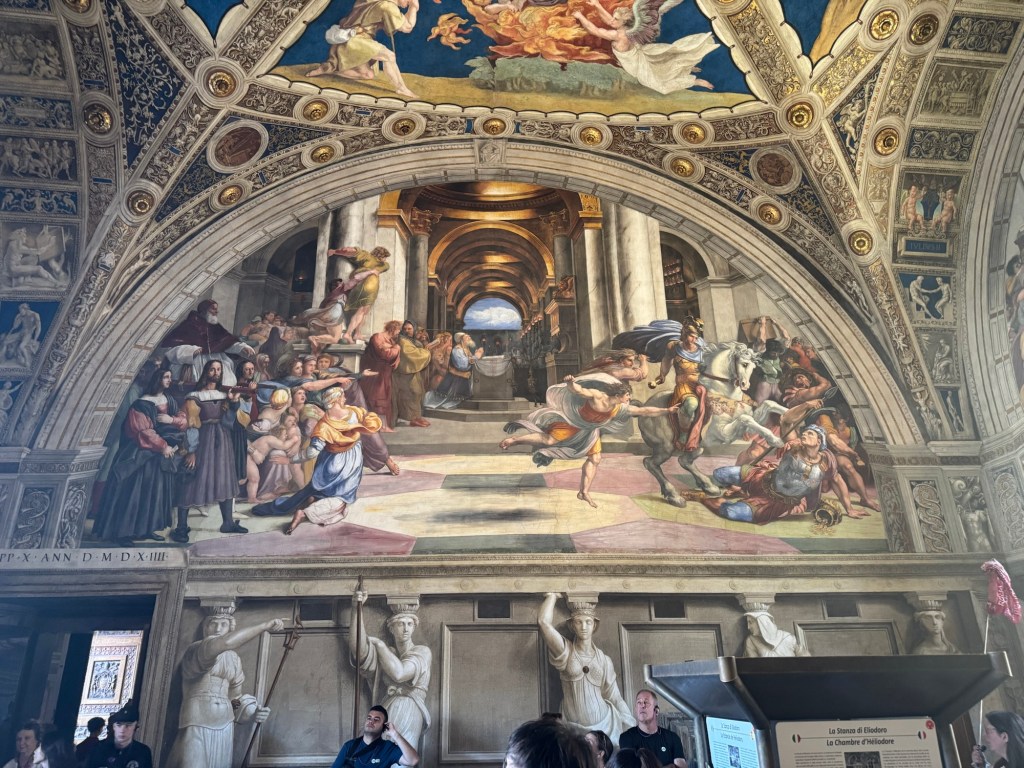
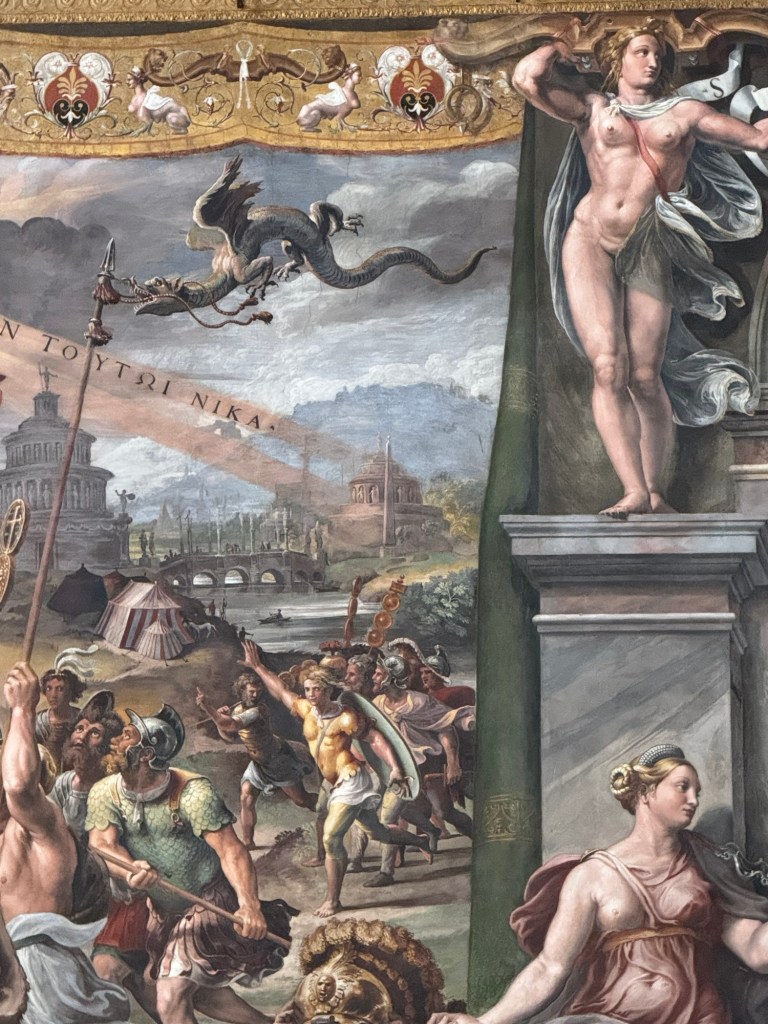
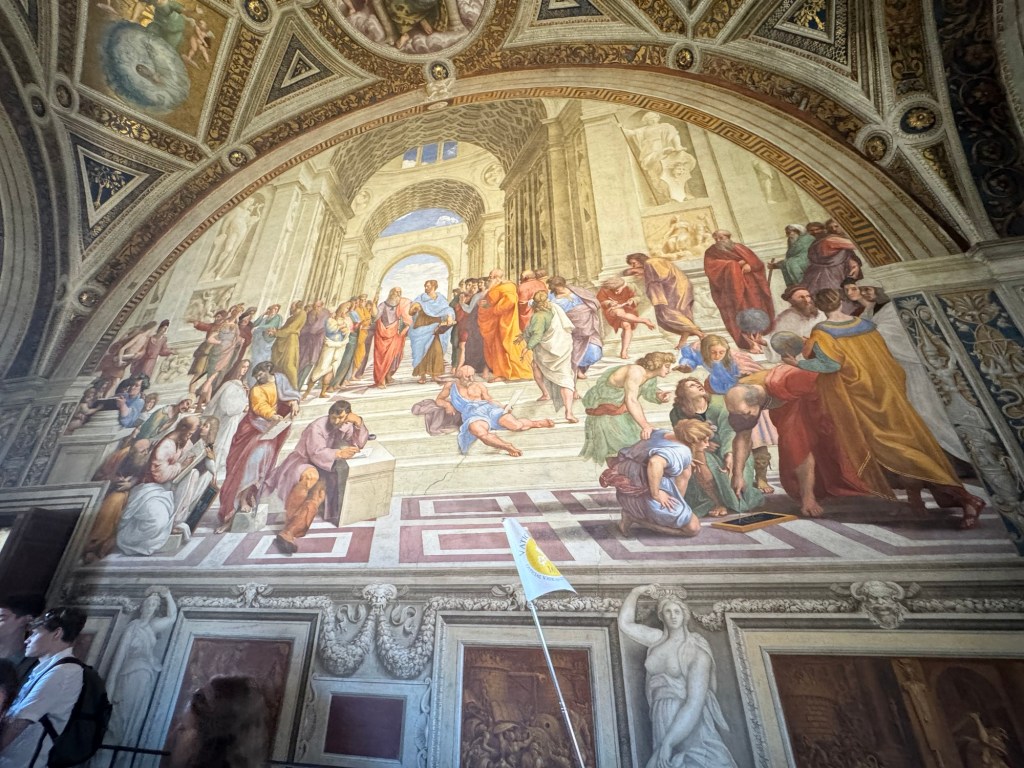
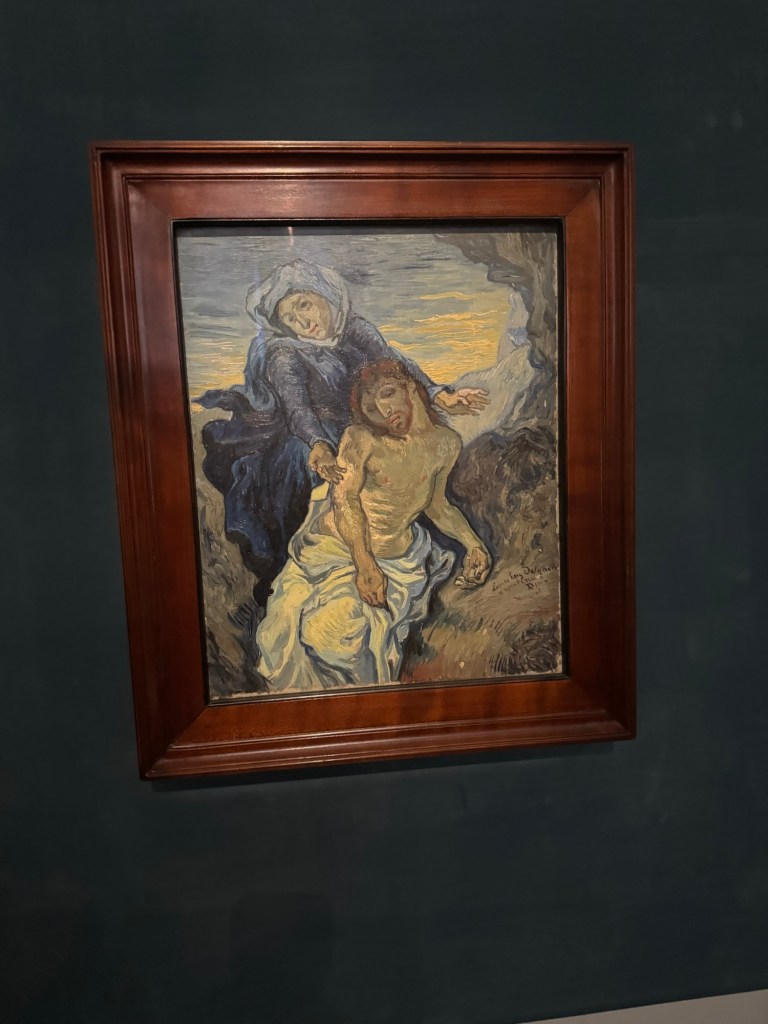
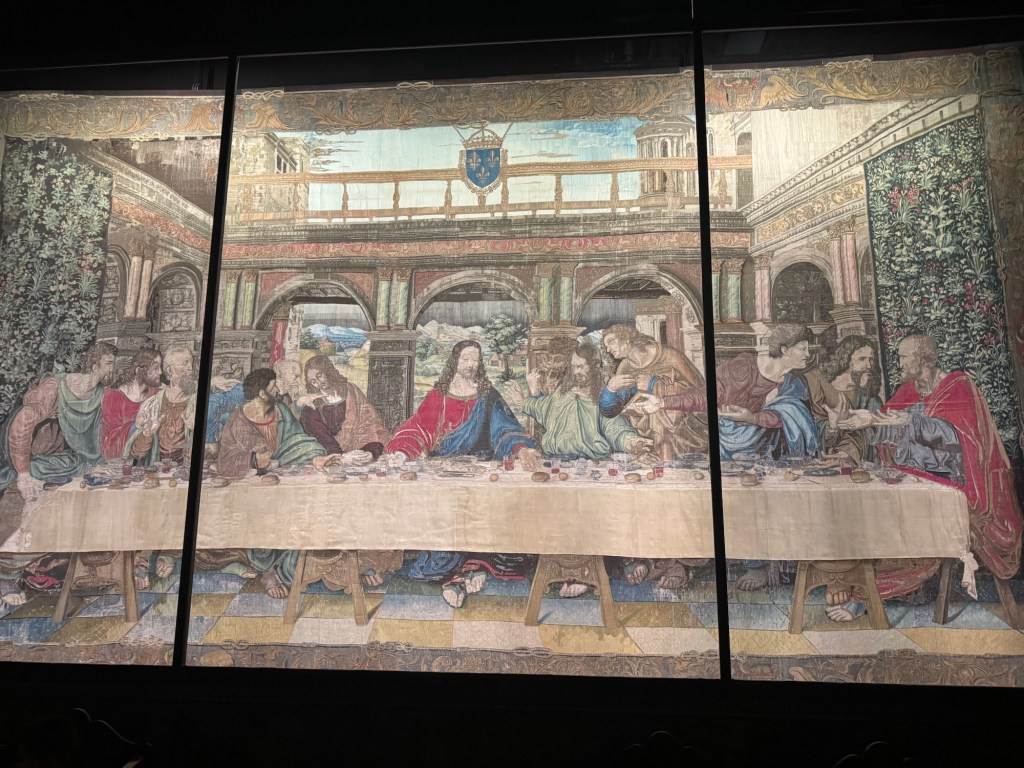
From there we continued with the Roman art and saw and walked on some feet tiled floors from the first century a chariot sculpture the Constantine Sarcophagus made of red porphyry a very hard red stone. We also saw the Brussels Tapestries which are amazing. It is shocking how much detail they can get with thread. We of course spent a lot of time in the Raphael rooms. The School of Athens never disappoints and the other works are equally as striking. I also was surprised to see a dragon in one of the frescoes painted by Raphael students. We quickly went through the “modern” rooms where she pointed out the Gauguin and the Van Gogh.
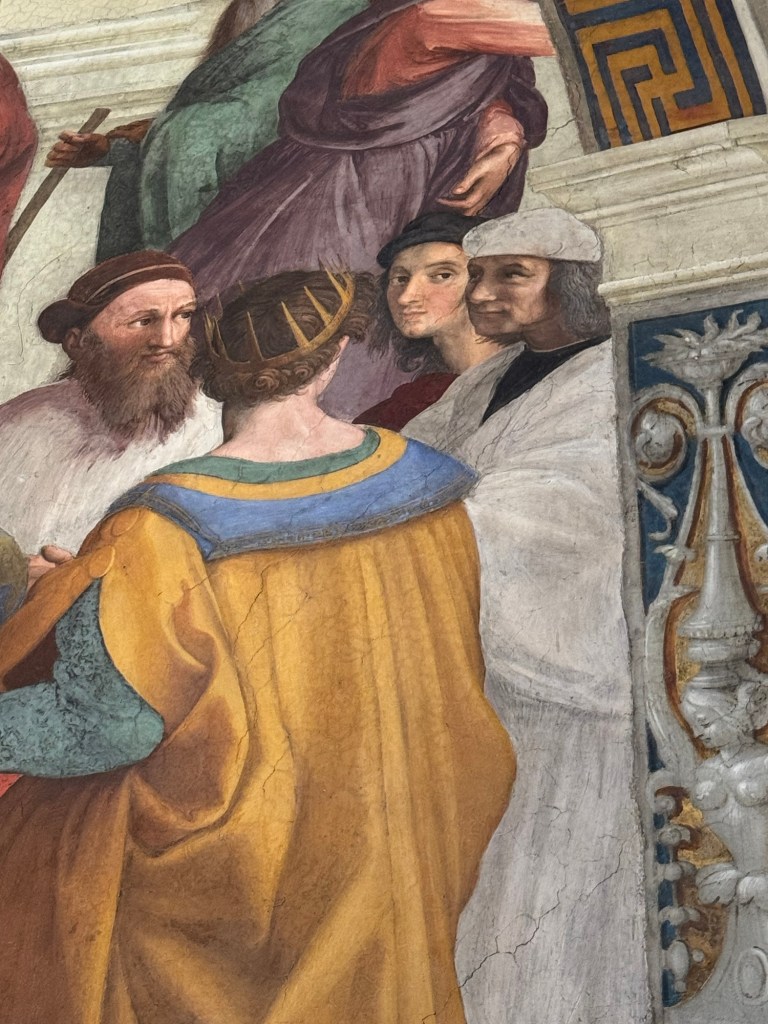
Raphael’s self portrait – the man in the black capSchool of Athens
She left us in the Raphael rooms for us to head down to the Sistine Chapel in our own. She did spend a lot of time explaining the painting but could not guide in the chapel. We walked quickly on to the chapel and enjoyed that for a little while. It is sad that you can no longer take pictures. I wish I had snuck one but I didn’t. The set up is quite different than I remember from my last visit but after the chapel you had to walk through rooms and rooms to get back to the exit and other main collections.
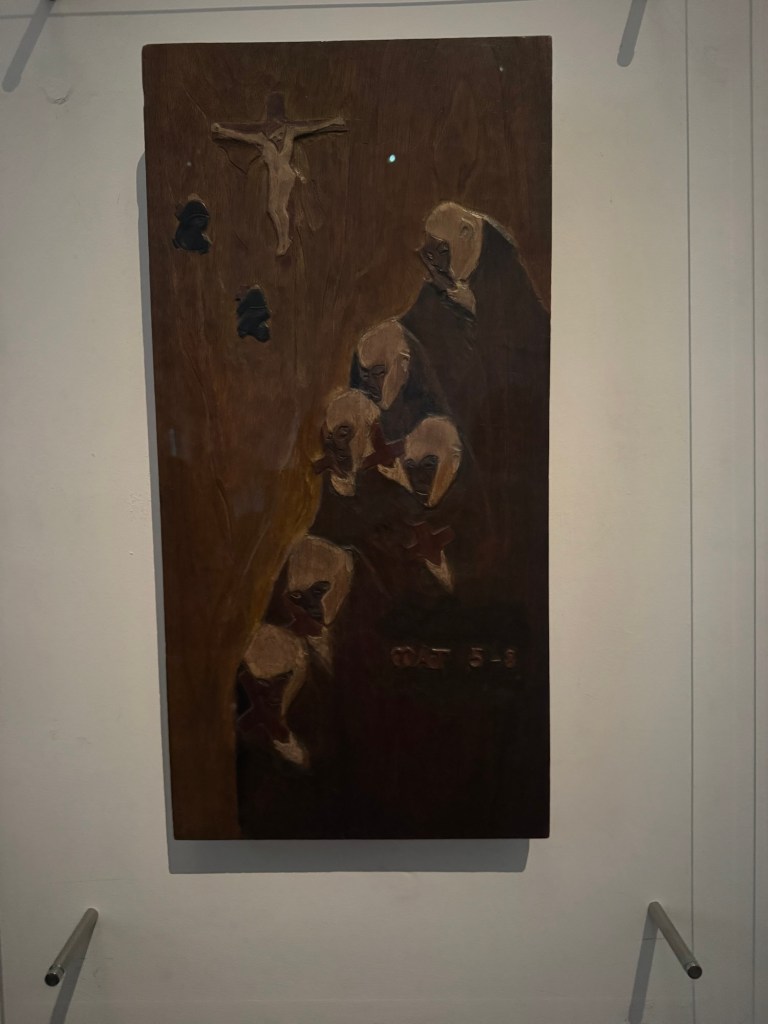
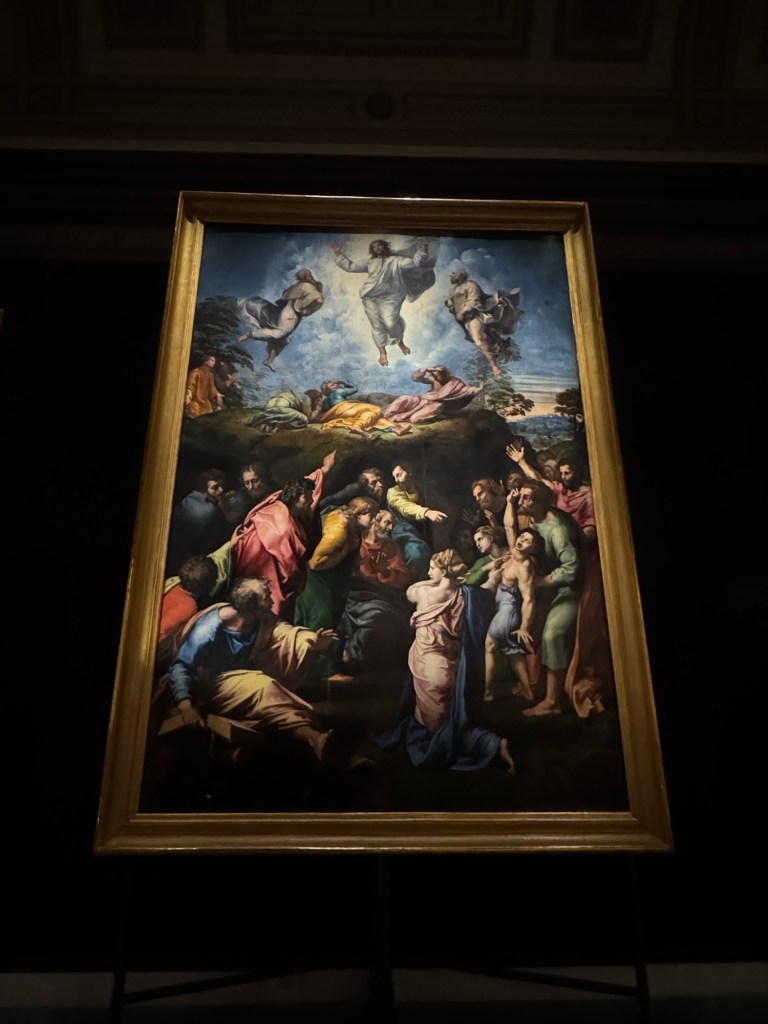
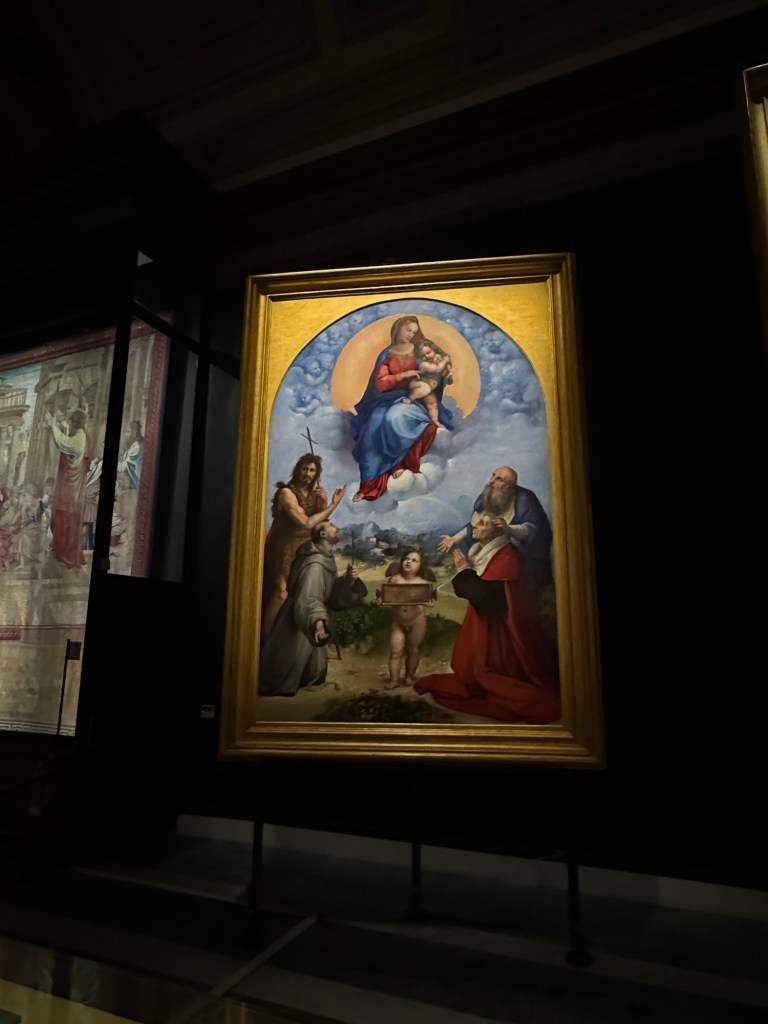
Most had been in the museum long enough and headed out to get some drinks and snacks. I wanted to we the Raphael oil paintings nd tapestries and Kelle wanted to see some of the Egyptian art so we stayed in the museum. After asking directions a few time we finally found our way back to those exhibits and wandered through quickly. The Raphael’s are amazing and I am glad we stayed to view them. They had a lot of great 13/14 century religious art but we had seen so much of that in Perugia we just walked right through. We did get to see copies of ok 3 of Michelangelo’s Pietas which was good not only to compare but because of our mistake of the day that I will discuss later.
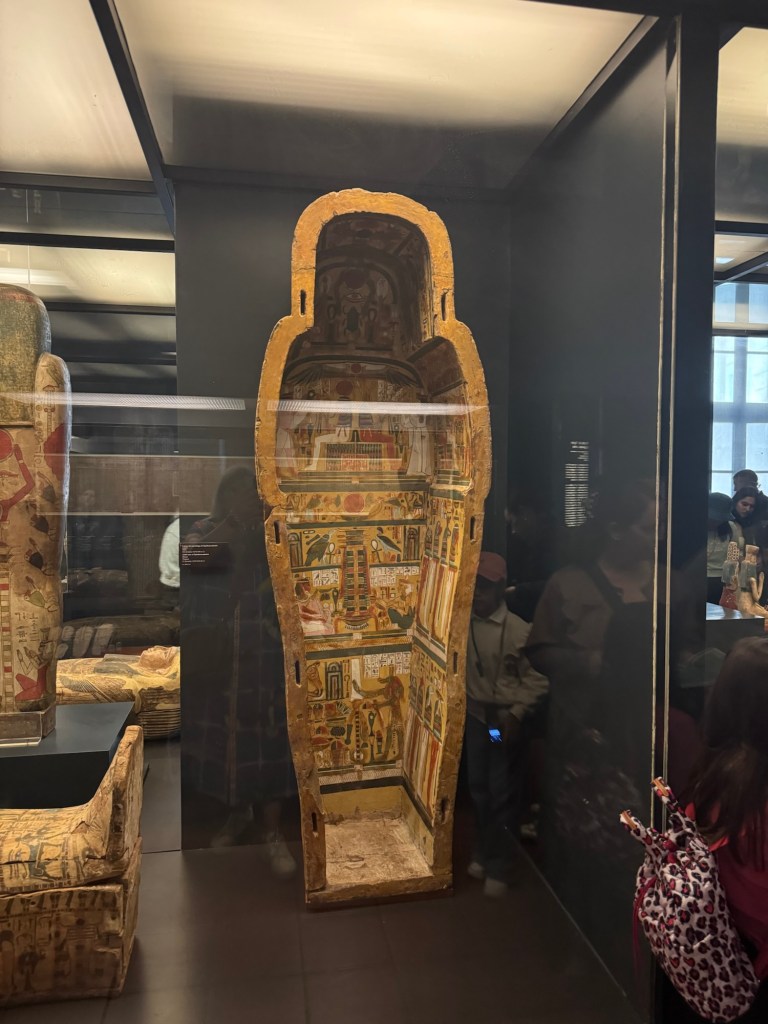
The Egyptian room is crazy. They have statues from 2000 BC. They also have a couple of actual mummies on display. We stopped in the courtyard to take some photos with the Egyptian lines but I was running out of power on my phone so not a lot of pictures but will get them from Kelle and add them later.
From the museum we headed to Saint Peter’s to go in the church. I expected to be able to walk right in the museum but that was not the case. There was a huge line. It was about 1:30 wait. Of course there were people saying they could sell us tickets and we could go right in. We knew better and decided against it. We had seen the copy of Michelangelo’s Pieta so at least we saw that. I wanted to show that to them the church but had no idea we needed to get tickets. Live and learn. Seems everything needs tickets these days.
We stopped for a drink and I tried a supli which was delicious. I wish I had tried some others along the way. We headed back to the apartment to meet up for dinner.
We had a few more drinks. Margaret tried a martini but it wasn’t for her. Kelle and Jeff finished it. Most of decided to go back to the same place we had been get drinks everyday Zigs but Kelle and Jeff went off to find something else.
We had a few more drinks after returning to the apartment and by a few I mean bottles. Faye, Bob and I cleaned out the last red bottle so we didn’t have to carry it on to the next stop. We were happy to take care of that for everyone.
Rome had been busy. Easter is in fact a high tourist season for the city and all of Italy but we made it work. I actually will be sorry to move on but looking forward to being on the ocean.
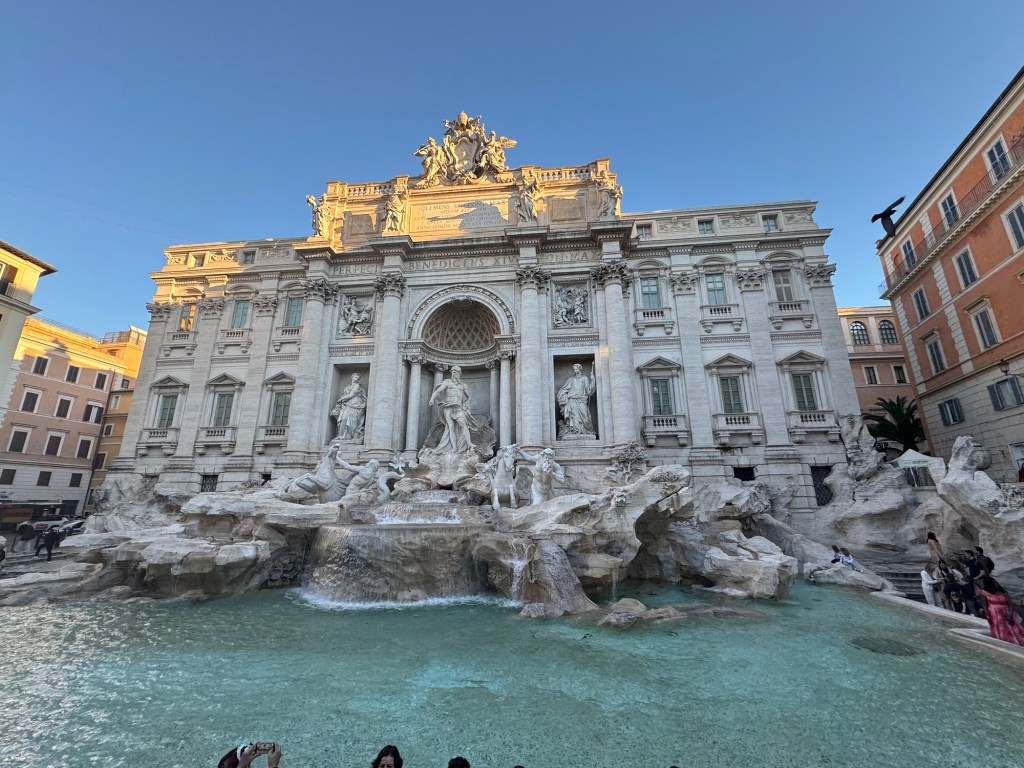
The day started early so that we could get out to Trevi before crowds. We were all up at and ready by 6:30 except for maybe Kelle who instigated the whole thing but she rallied and we headed out to learn the metro. The station wasn’t too far from the apartment and we bought 24 hour tickets (which was a life saver later on) and boarded the train to Trevi.
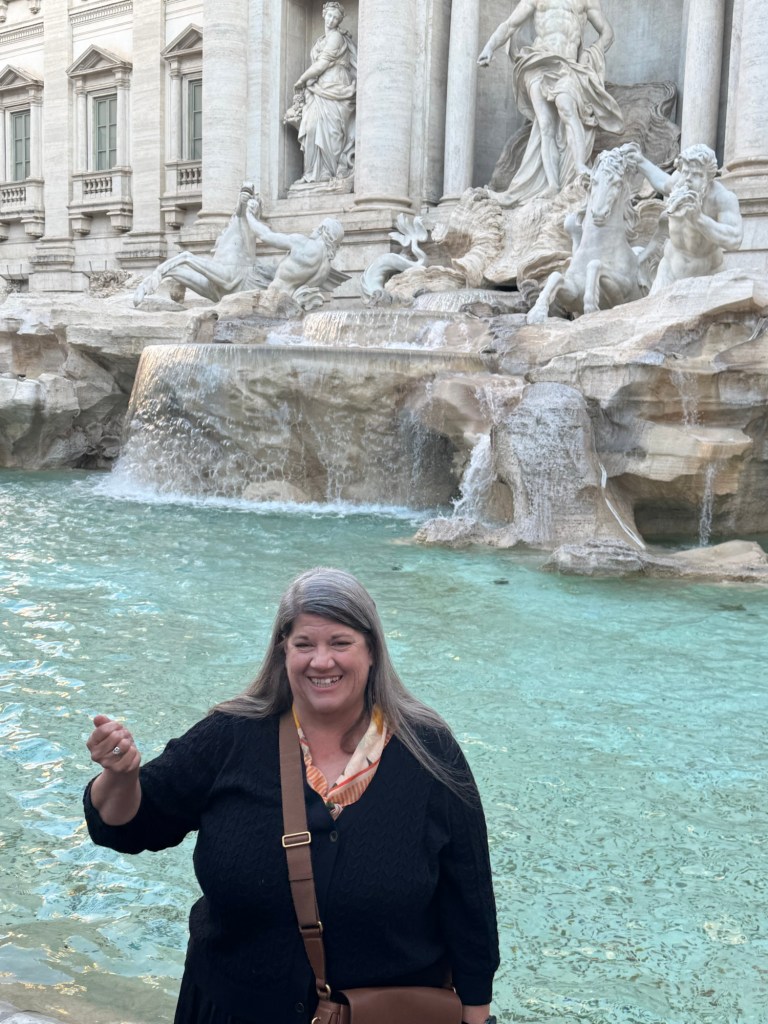
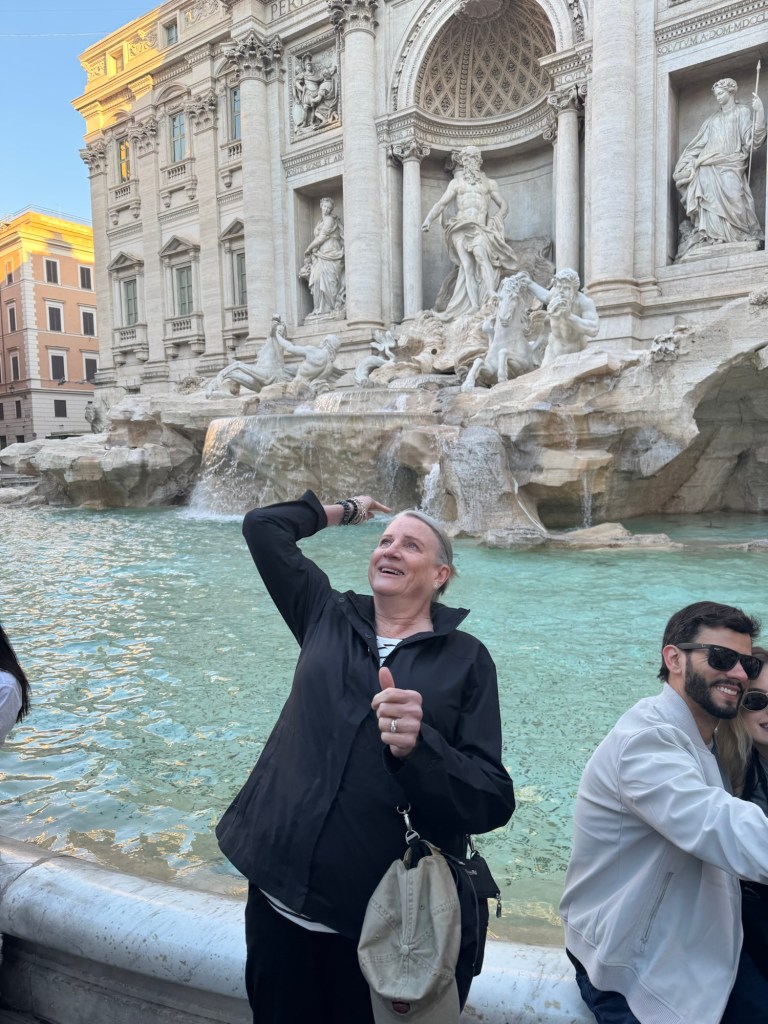
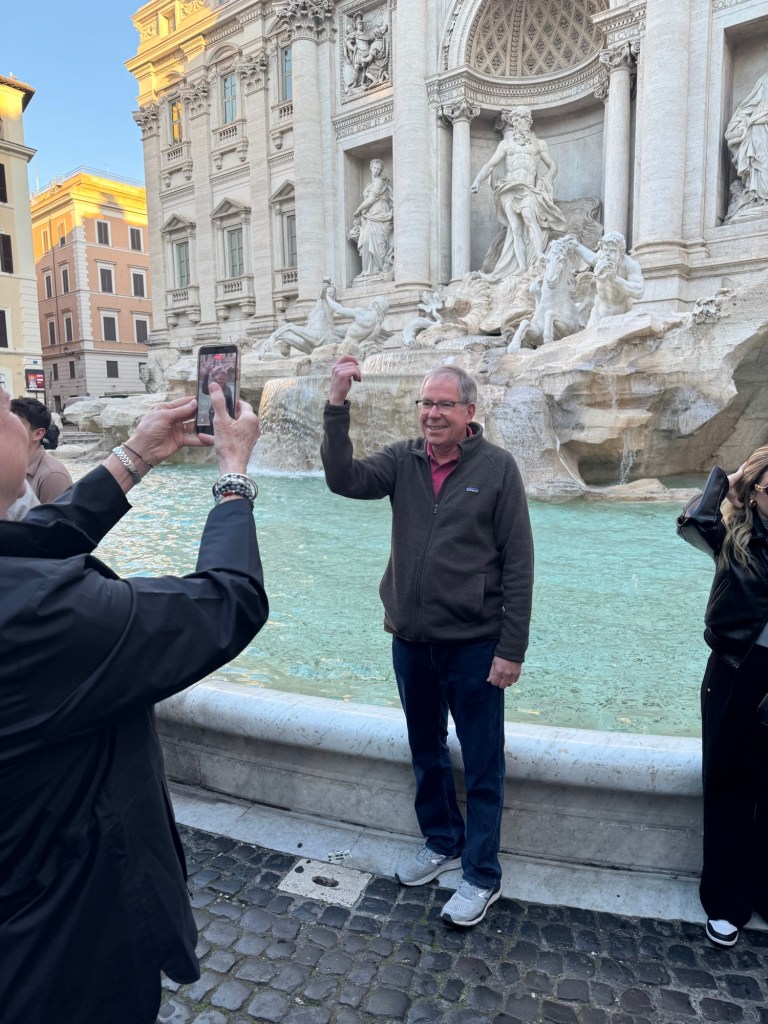
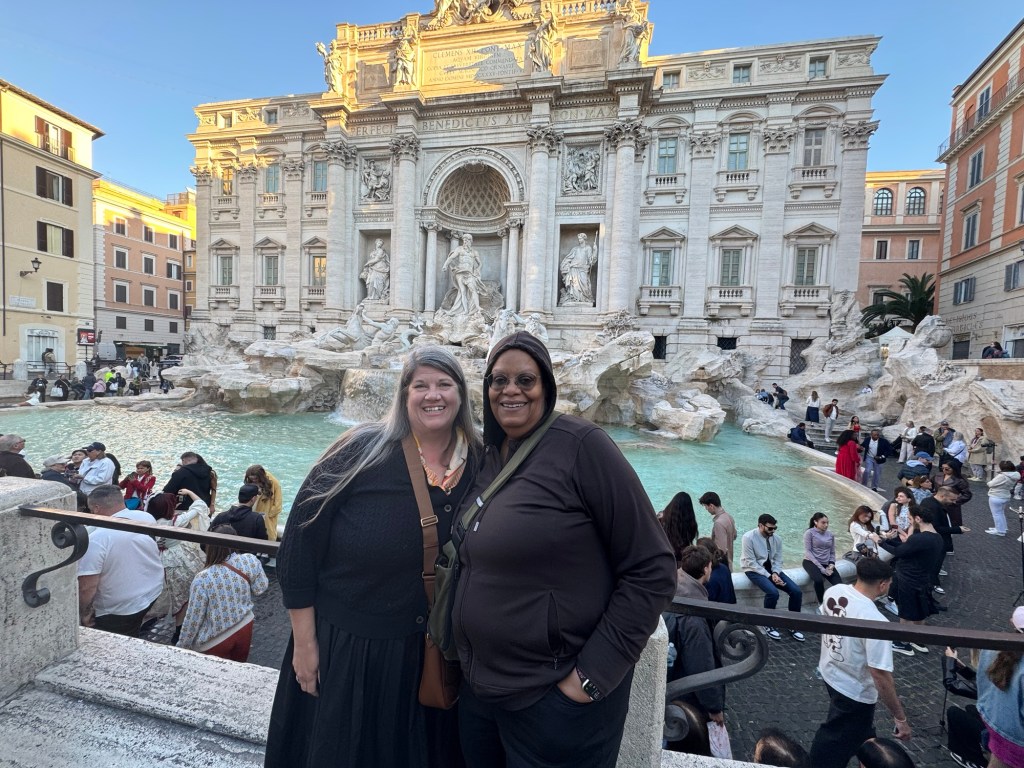
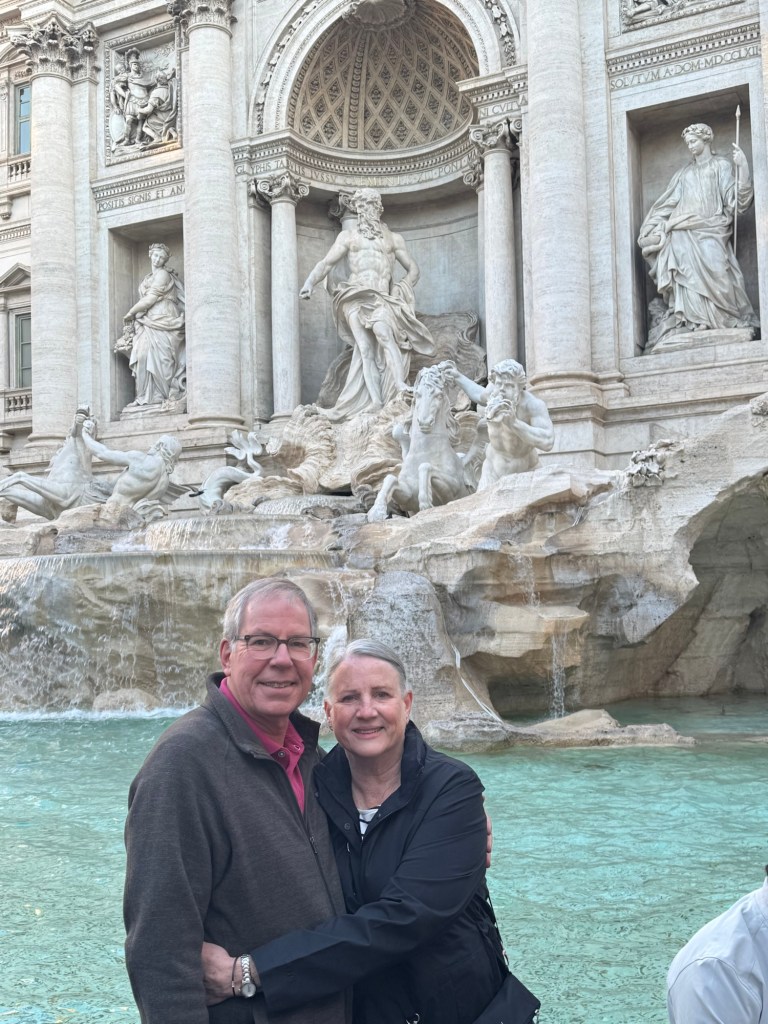
We weren’t the first people there but we were still before the major crowds. They don’t start the tickets until 9 so we could be on any level. Kelle, Jed and I threw in coins for luck and our return to Italy but most people were just taking photos. There were several girls there do Instagram stories and I bet they took 200 photos. we all snapped ours and headed on.
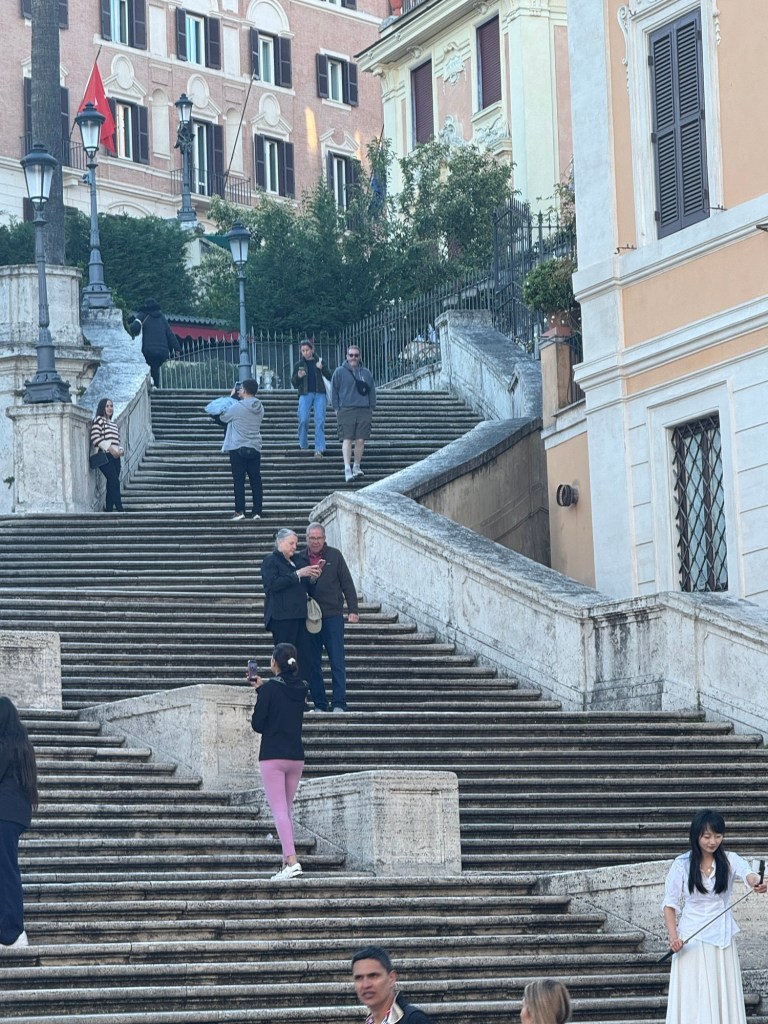
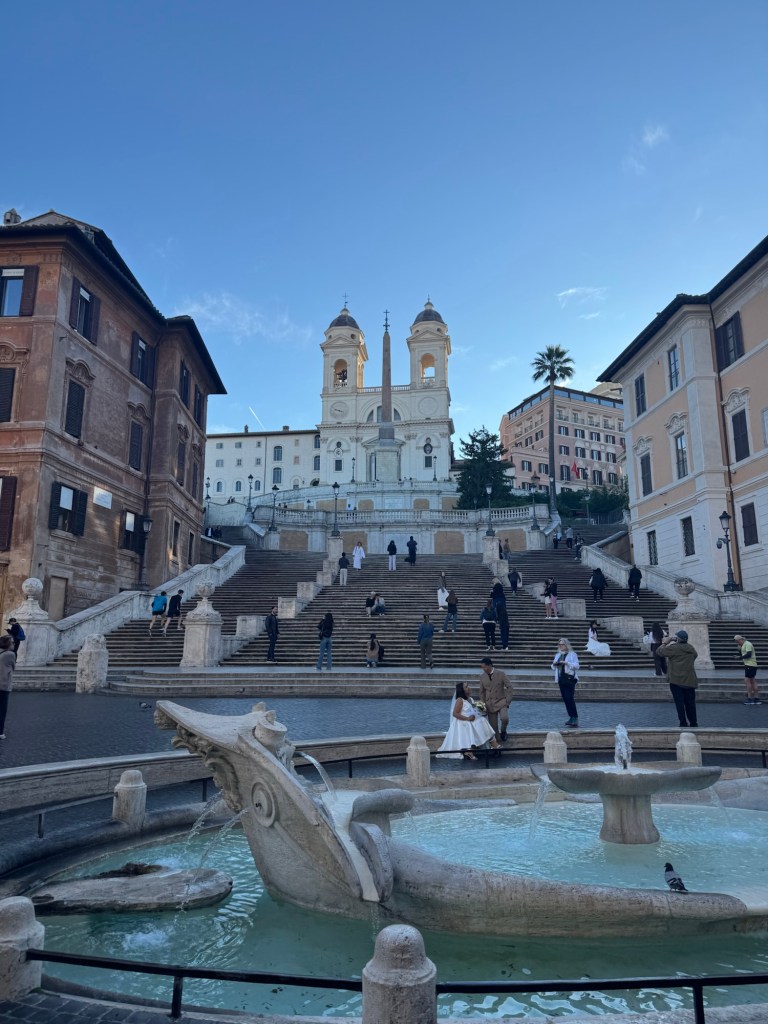
From Trevi we headed over to see the Spanish Steps. Sadly they did not have any flowers on them and they were just a staircase. My first trip the area was bustling with shops and bars but it was pretty quiet now. Even the tea shop didn’t open until 10.
We didn’t see anywhere for everyone to get coffee so we jumped back on the metro and went back to the Trevi stop where we had passed several. The first one we stopped at was having trouble with their espresso machine so we went back to one we had passed. It was a bit disorganized but we did eventually get almost everything we ordered. Jeff never got his coffee and Clark’s was wrong but it worked out okay and we headed out to see the coliseum.
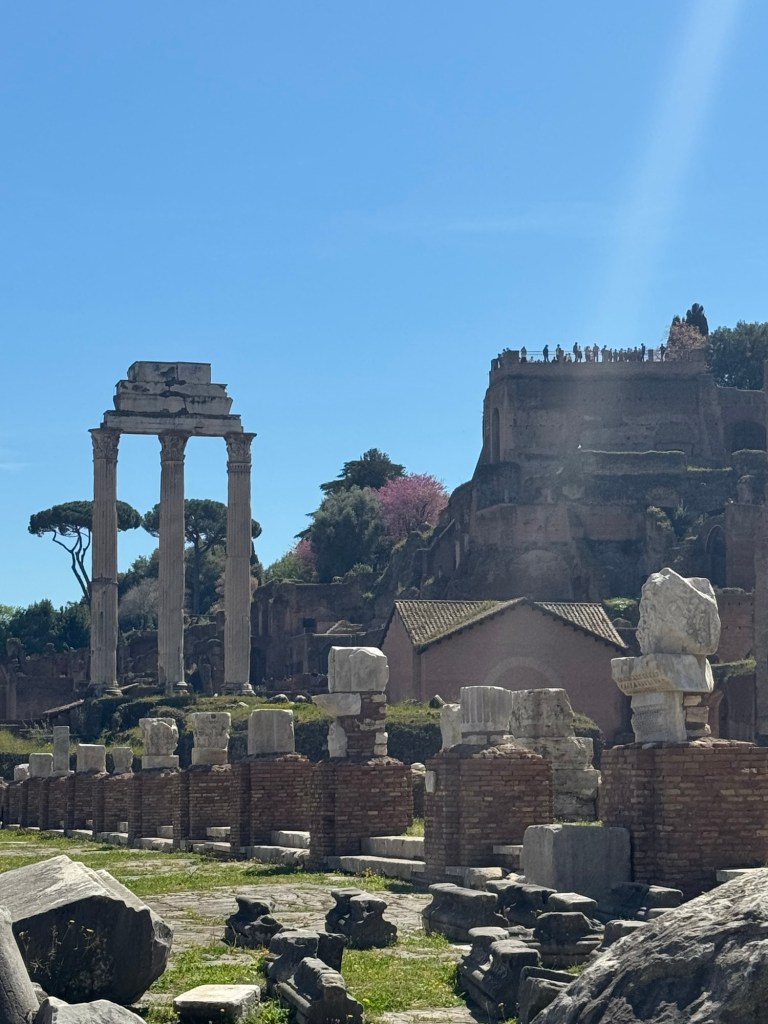
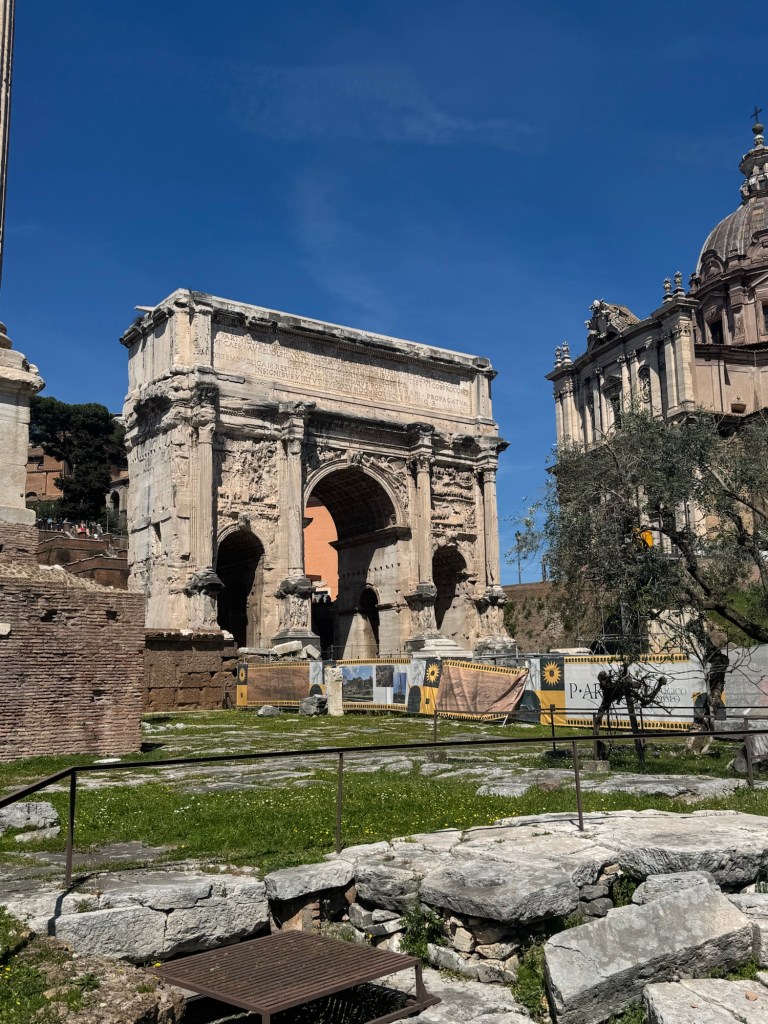
We had tried to buy tickets online but could never get it to work on the official site. Thankfully we didn’t buy from a tour group because we saw several people trying to find their tour group so that they could get in. However we did buy from a tour operator when we exited the metro. We paid 30€ for the tour and then they were going to take us to a private line so we didn’t have to wait in the extremely long line to buy the entrance tickets. We were going to get our entrance tickets have a tour of the forum and then go in the collision our own. Turns out the secret line was equally as long. Maybe not as long but we waited around an hour. Our timed entry to the Coliseum was 3 it was 11:30. They kept telling us not to pay attention to the time and the person who sold us the tickets said that they would get us in as a group when we were done with tour portion. All lies.
It was so hot our guide wasn’t good. We had to Sina ladies with us so he spent a lot of hi time just talking to them. He was born in Japan but was mainly Italian. He made several comments about how bad America is. Even though I am not hung ho America it was frustrating to hear someone else say it and even worse someone who took money from Americans to give an English tour. We should have just waited in the line and got the time entrance and then left and come back. Live and learn.
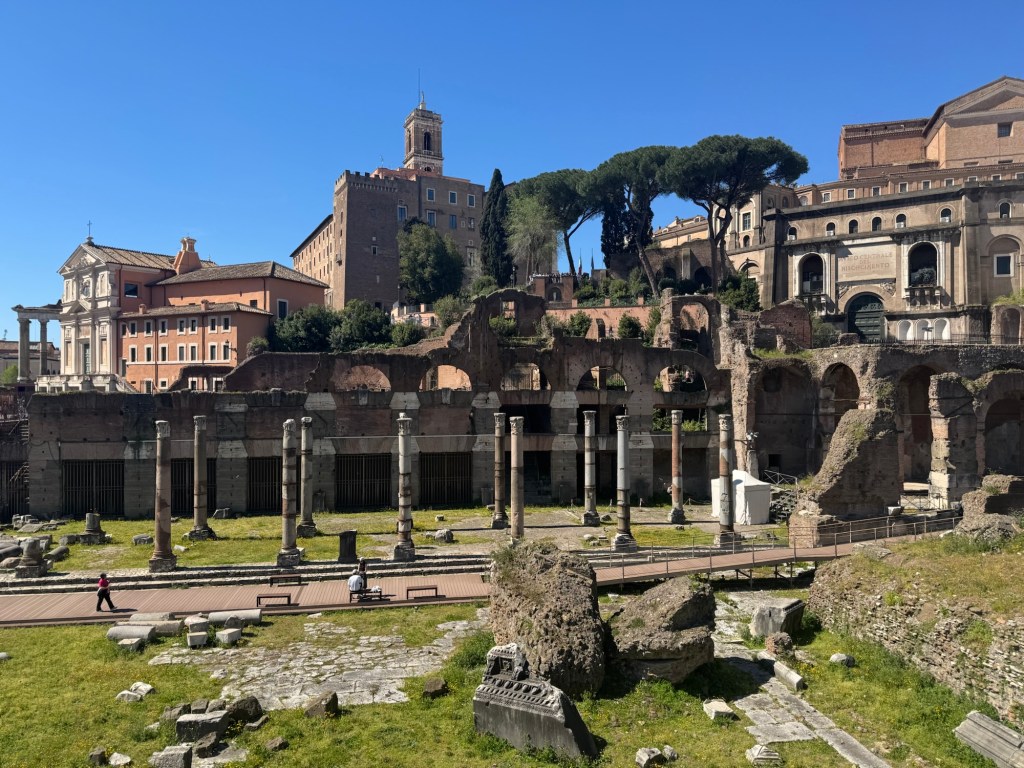
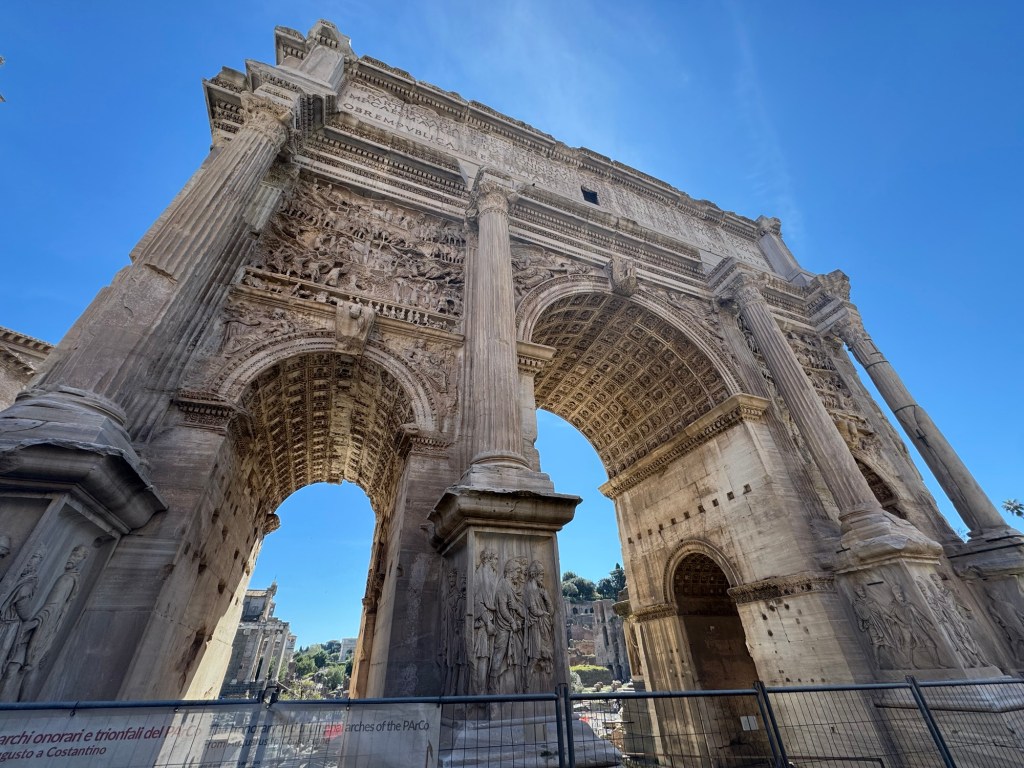
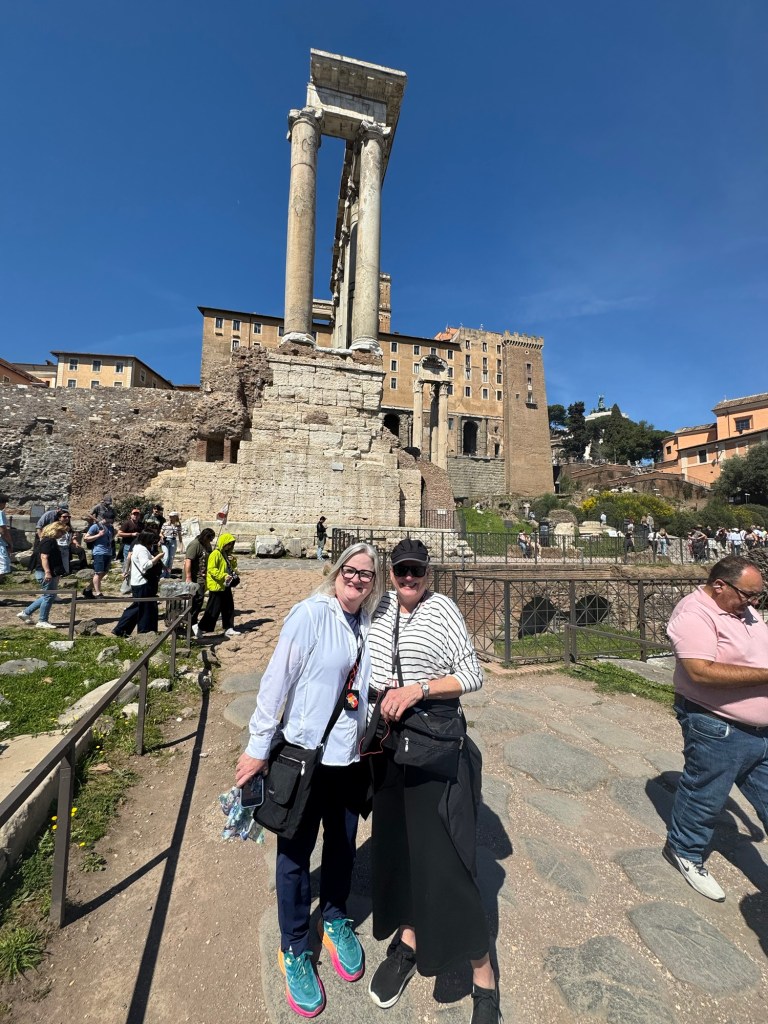
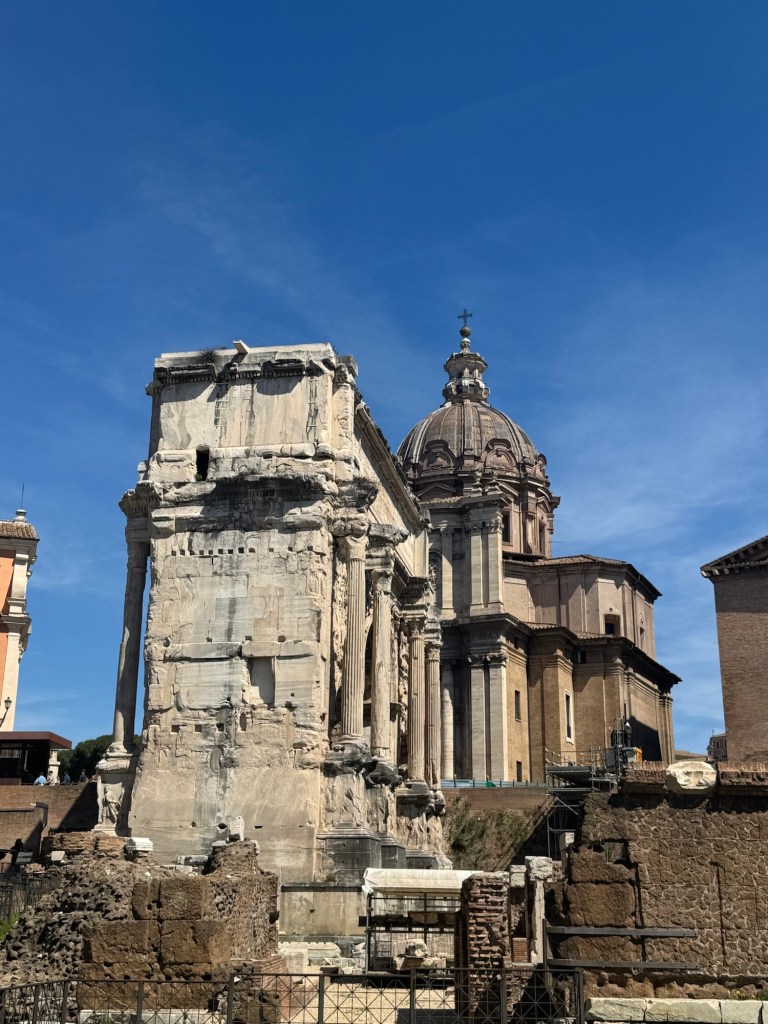
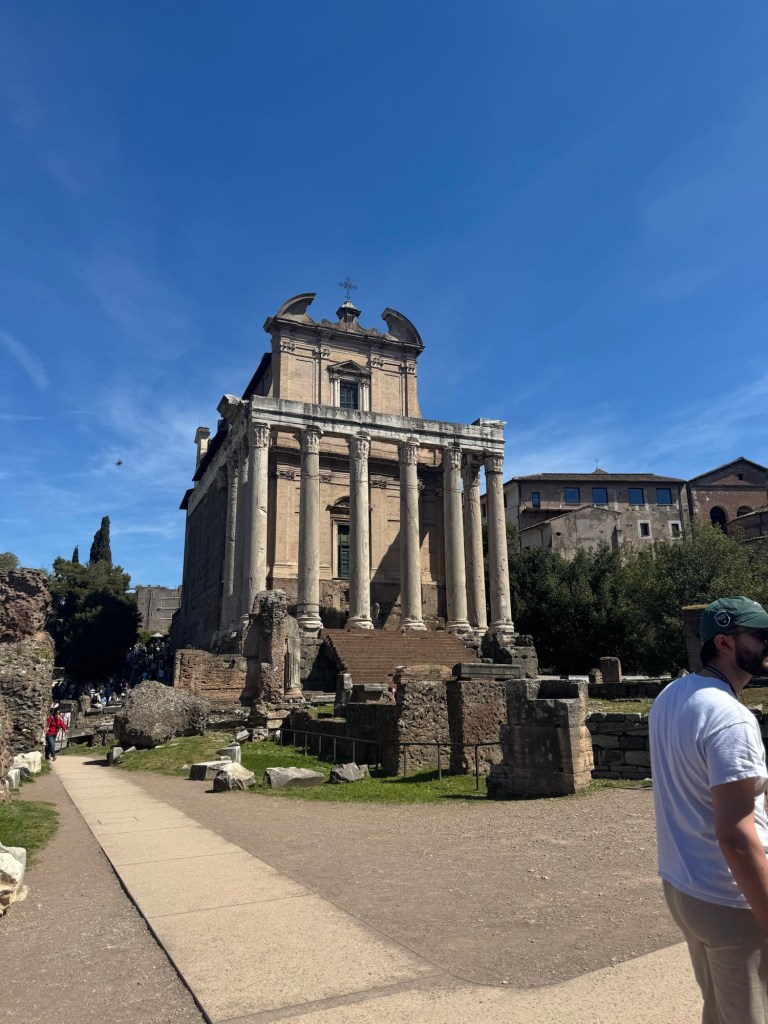
The tour guide was bad, he didn’t even give good information about the Forum and it was hard to hear even though we had headphones. He mumbled into his mic most of the time. We were all hot and tired and Margaret was mad and really fussed about the Coliseum entrance time. We hadn’t eaten enough there was no water or shade. Faye started feeling bad and needed to leave and get food so she and Bob were leaving and Margaret and Clark decided to leave to. They ended up ubering back to the apartment to get out of the crowd and were too frustrated to want to come back for the Coliseum. When we walked out of the Forum over the sea of people we could see the new metro stop so Kelle, Jeff and I decided to hop back on the metro ride it a few stops out to find lunch,shade and drinks. Turns out that was the best decision we made all day. We picked a stop by the name Pignetto, which we hoped was like where the apartment is and most offices and locals but turned out to be most residential. However we found a great spot. Ate outside in the shade with a great breeze. The food was delicious the wine was cold and our day turned around. We each tried different basic pastas. I had the Cacio e Pepe, Kelle had the carbonara and Jeff tried the Gricia. They were all delicious and some of the best food I have tasted so far.
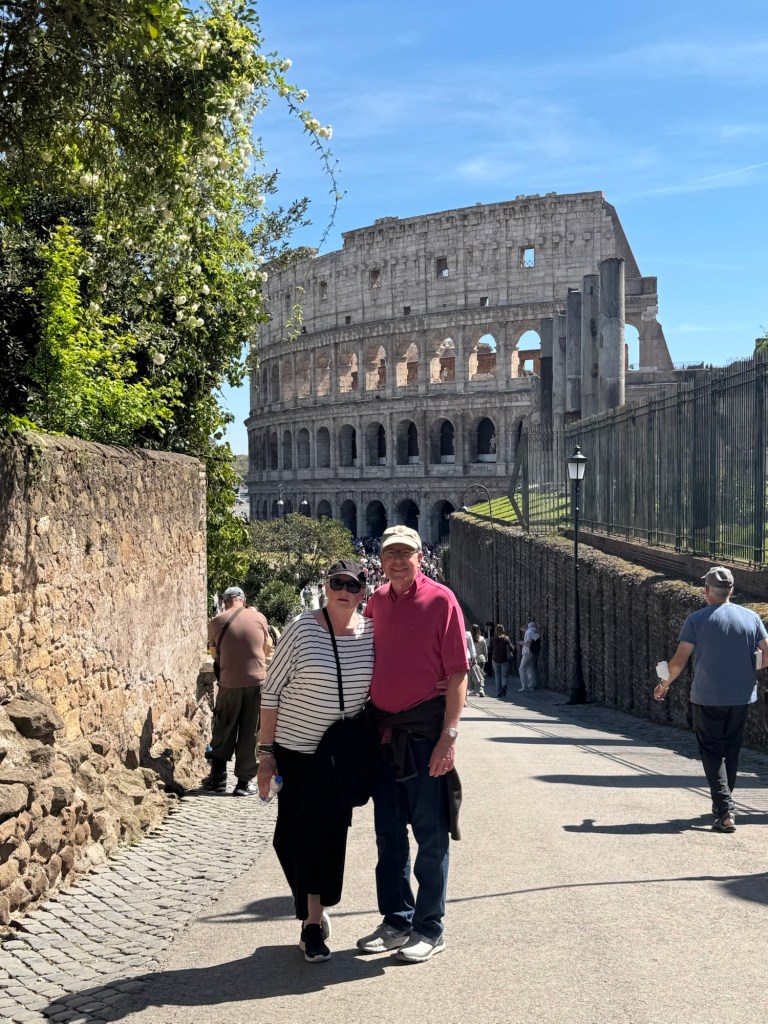
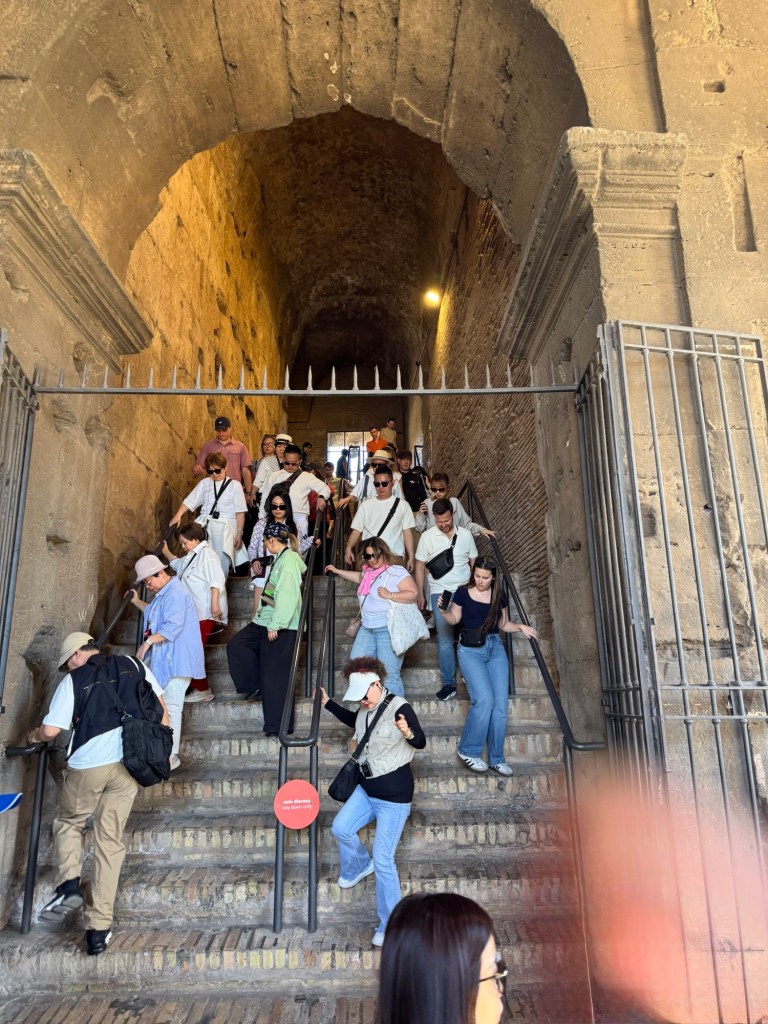
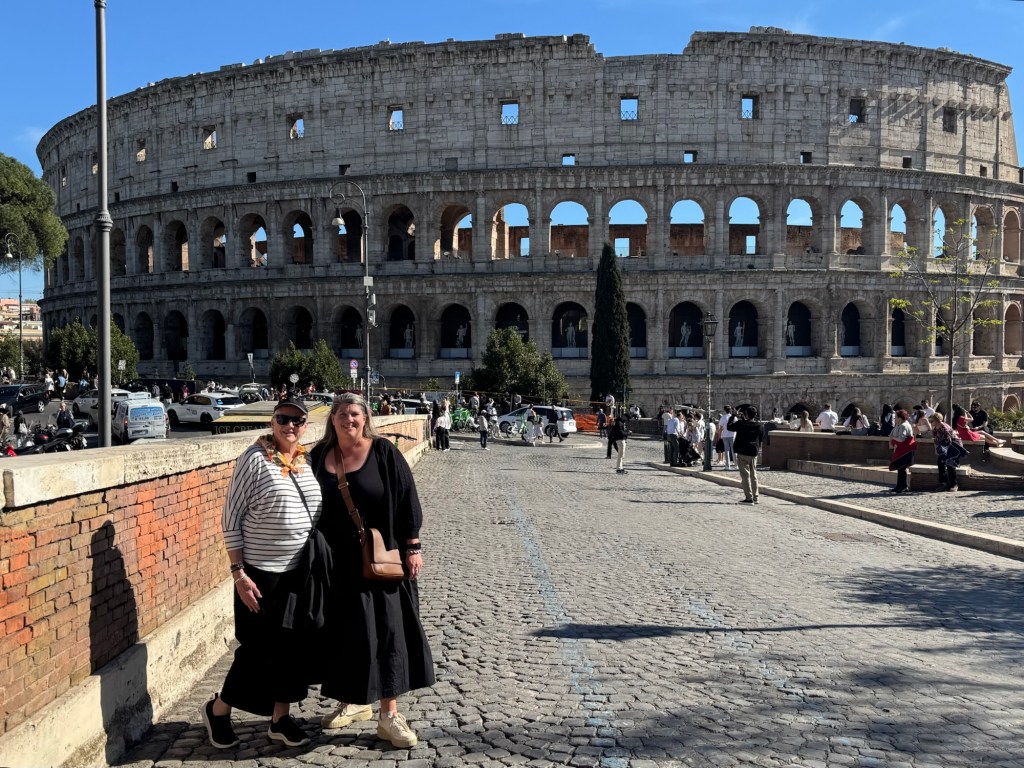
After our lovely lunch we got back on the metro rode back our few stops and walked right into the Coliseum. Once you have your timed entrance you just show up 15 minutes before your time and get in. We walked up at 3:05 no line and walked straight in.
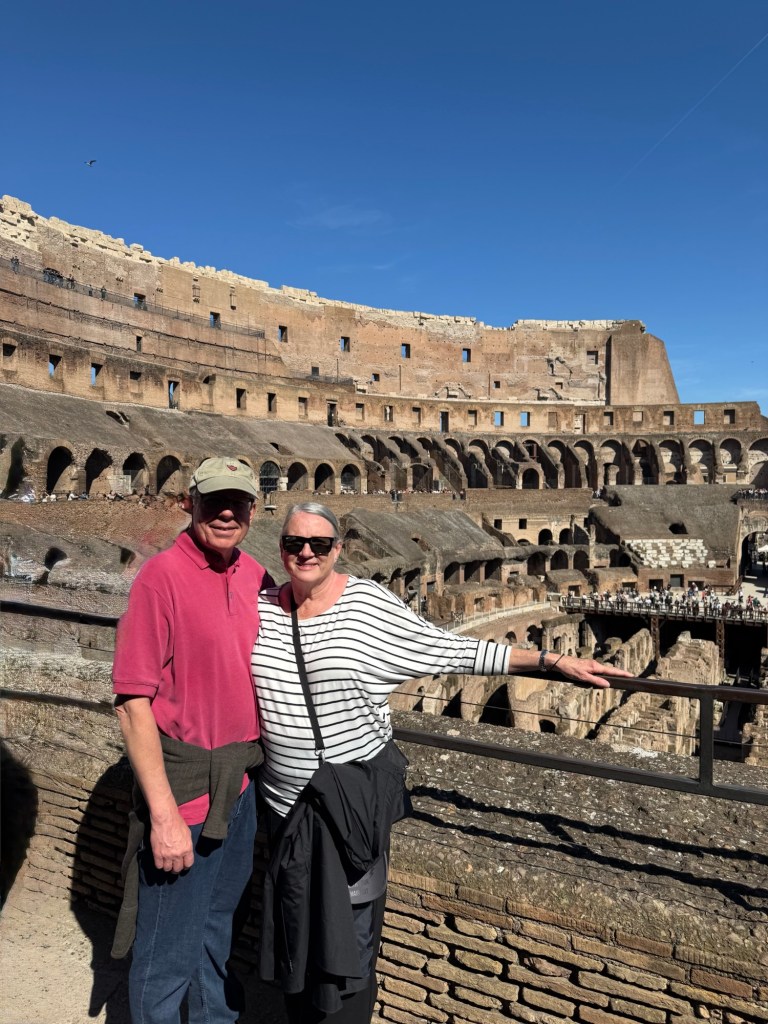
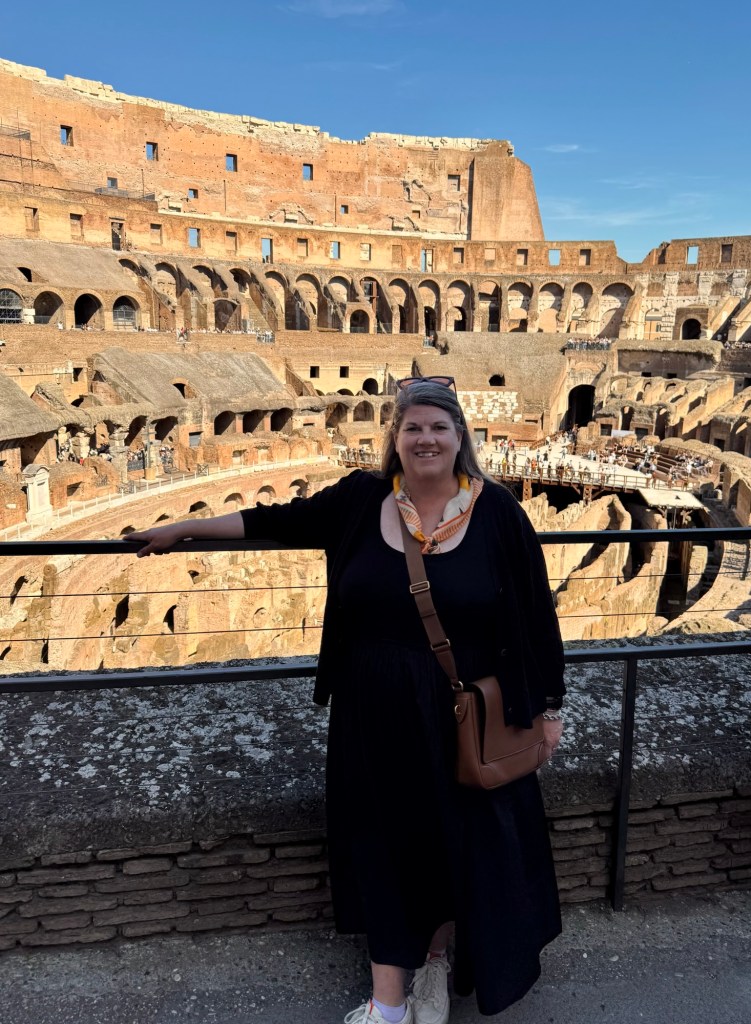
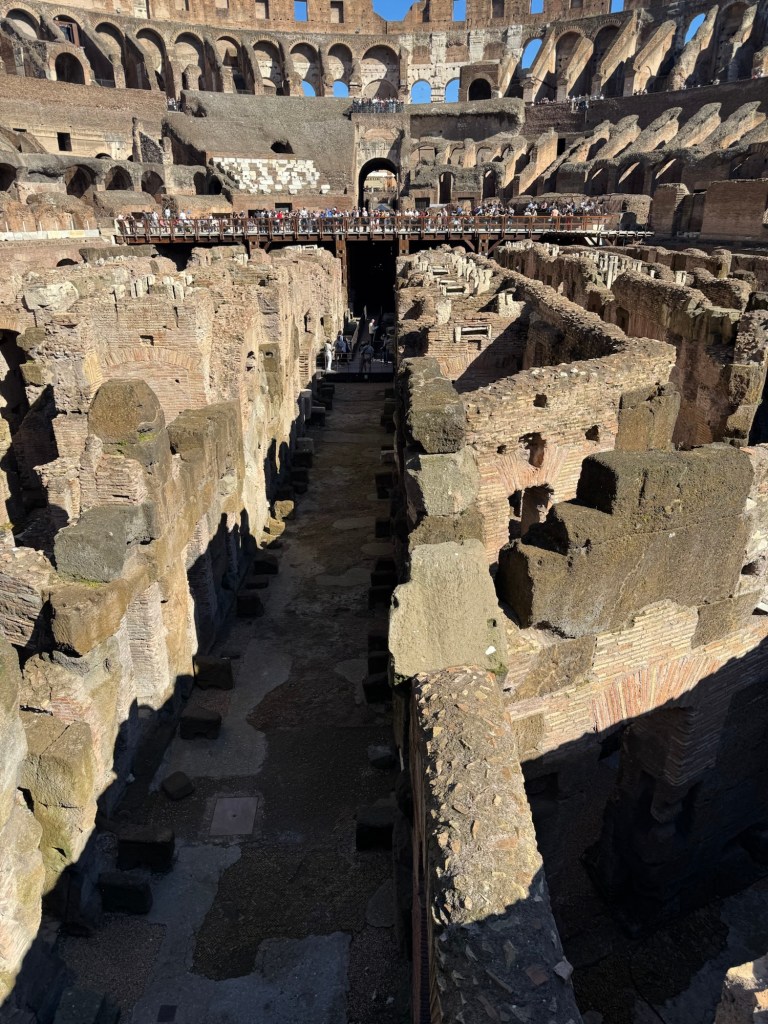
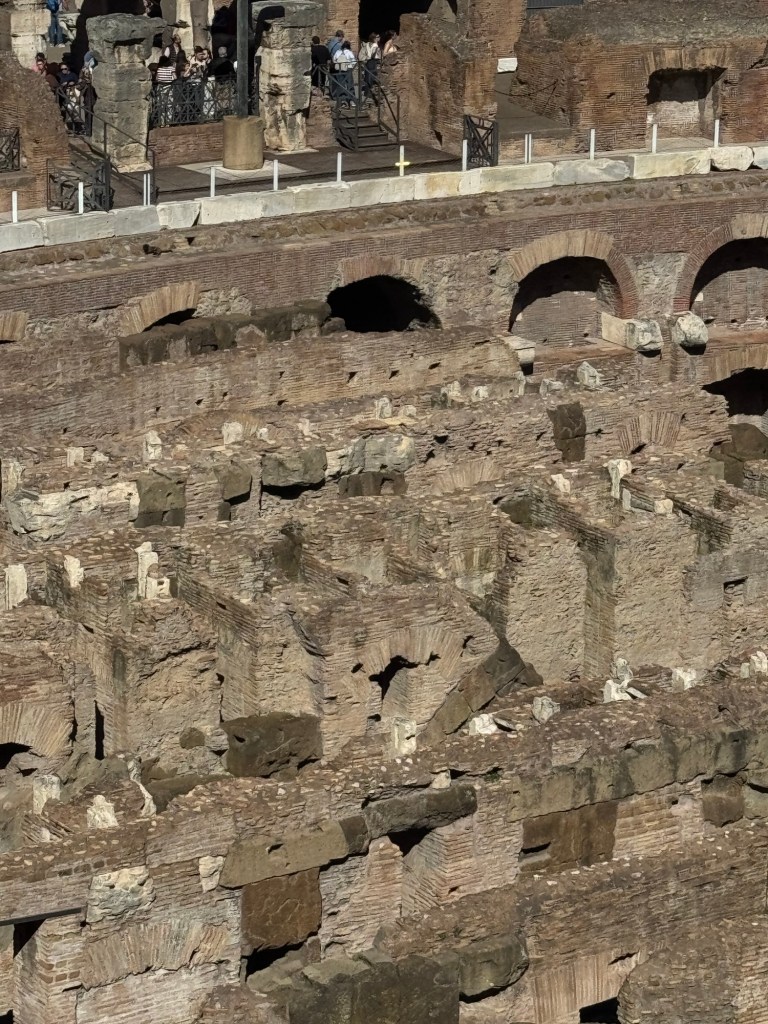
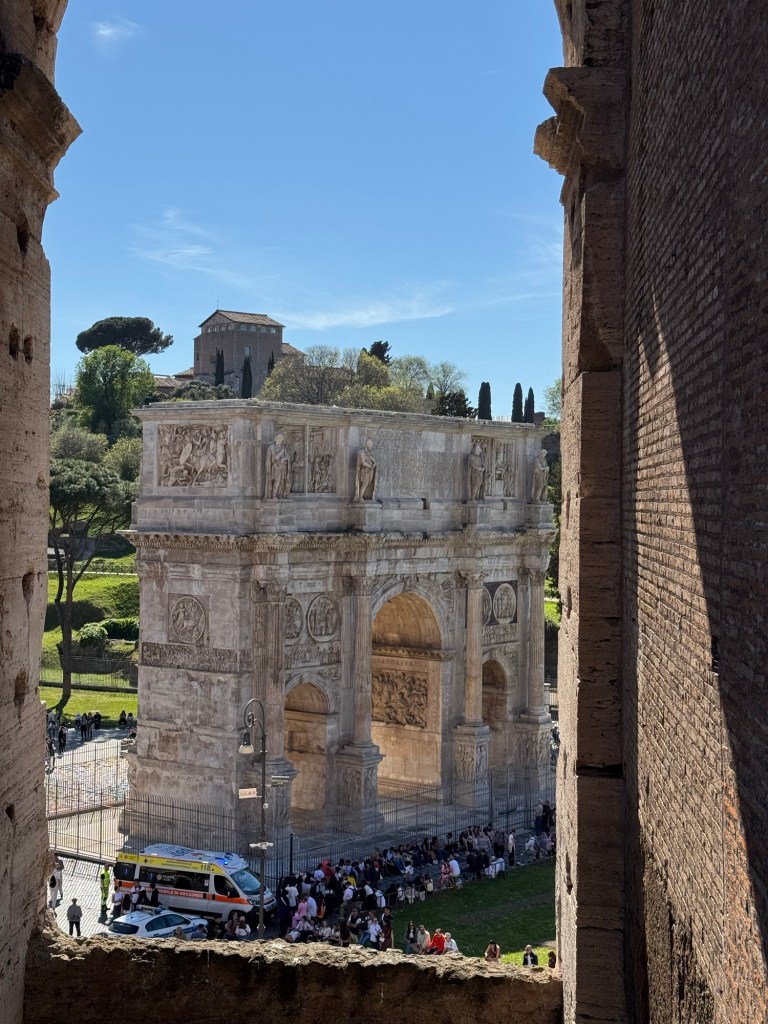
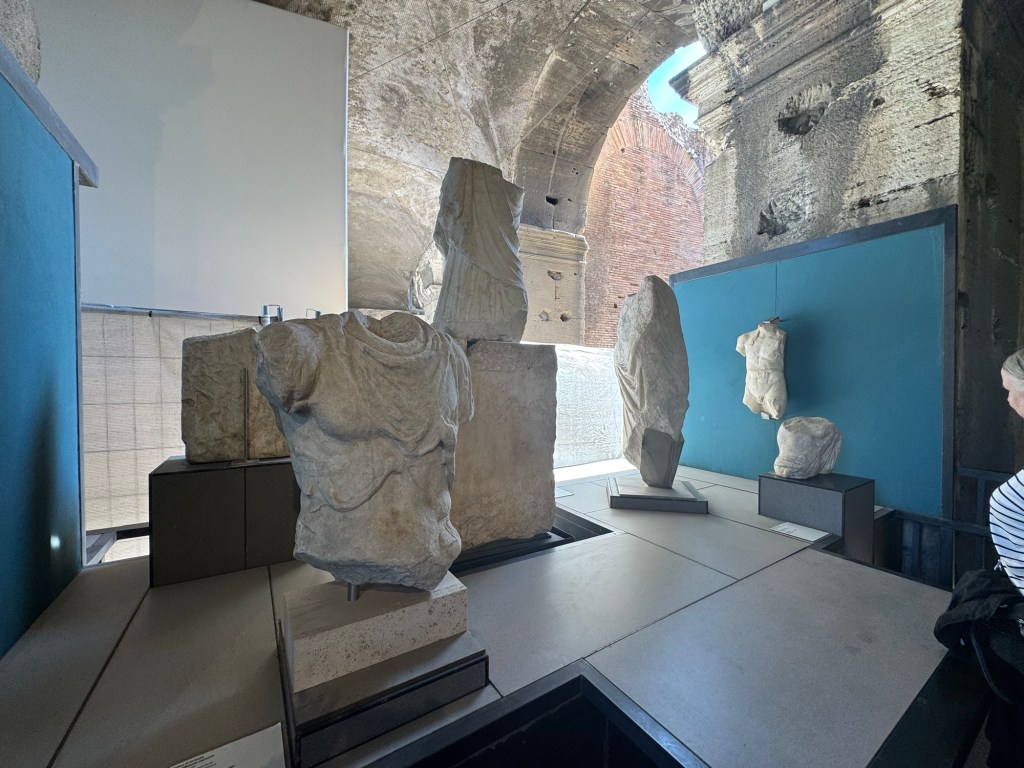
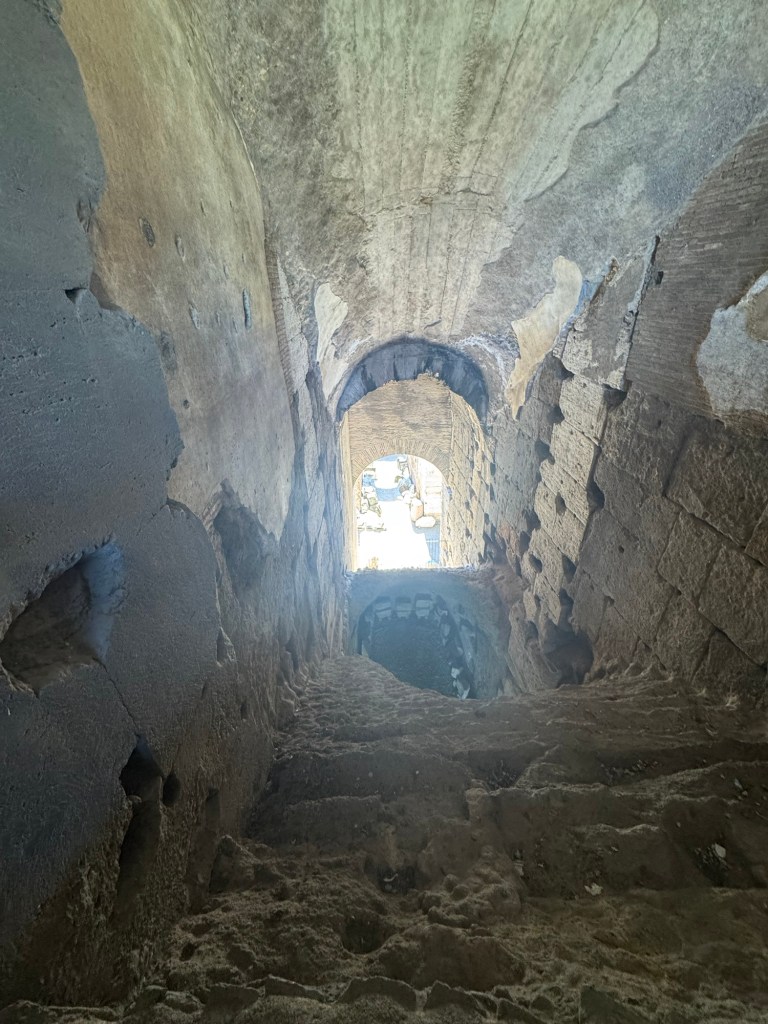
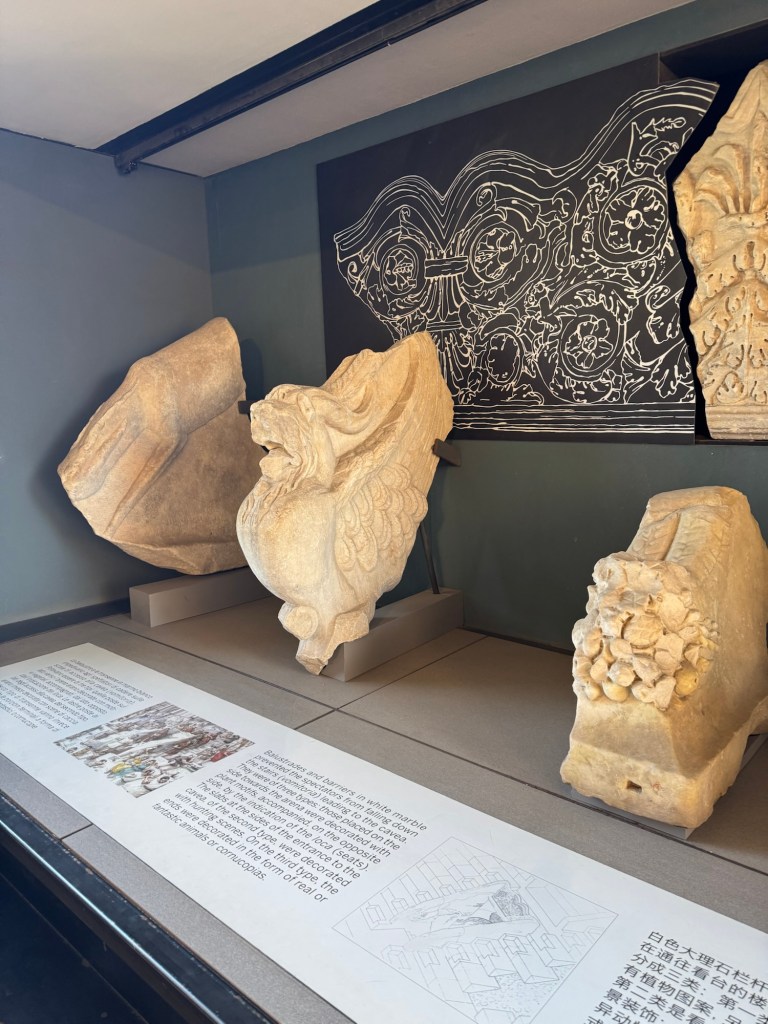
The Coliseum was amazing. It is more impressive now than the first time I saw it. I don’t know if I am older and have more respect for what went into building it or better understanding of the history that happened here but I really enjoyed this visit. They did have a small exhibit that had a lot of artifacts and gave background info that was nice to see. But the fact that we could touch, and sit on columns from 2000 years ago is crazy. Ended up being a great day.
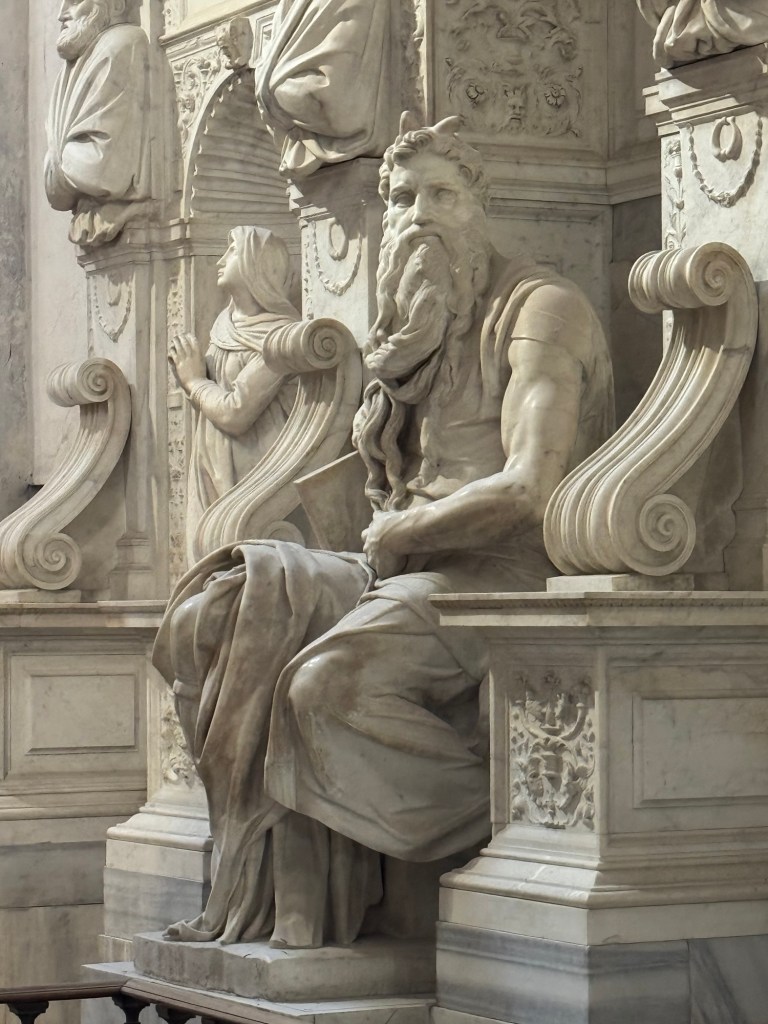
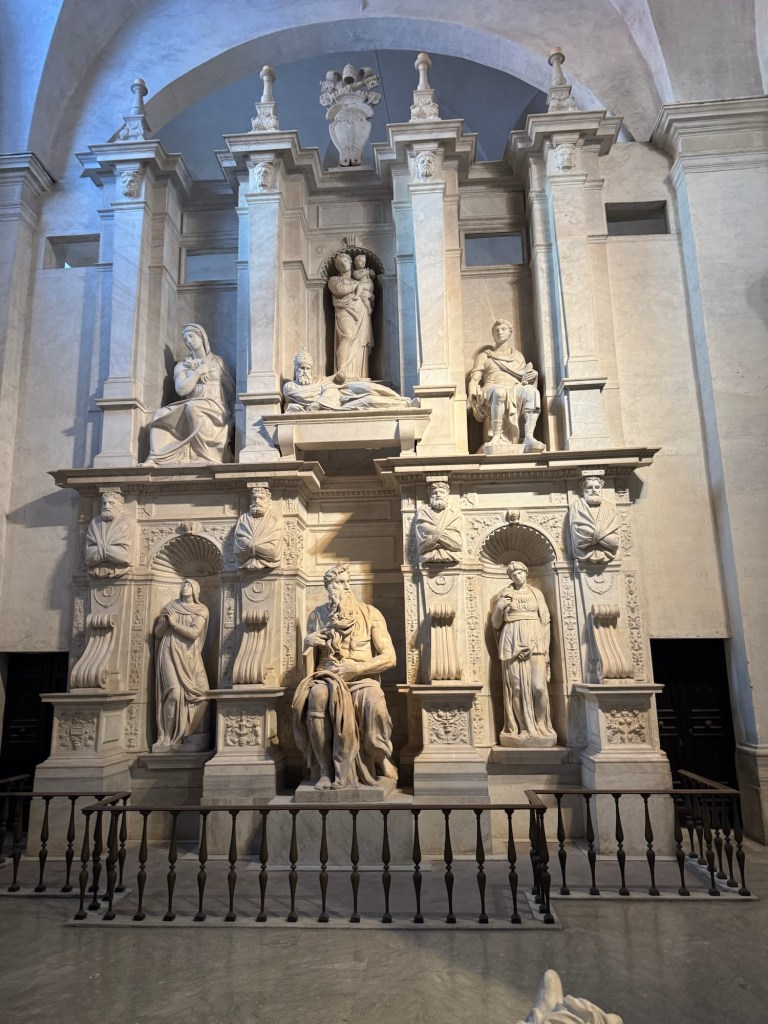
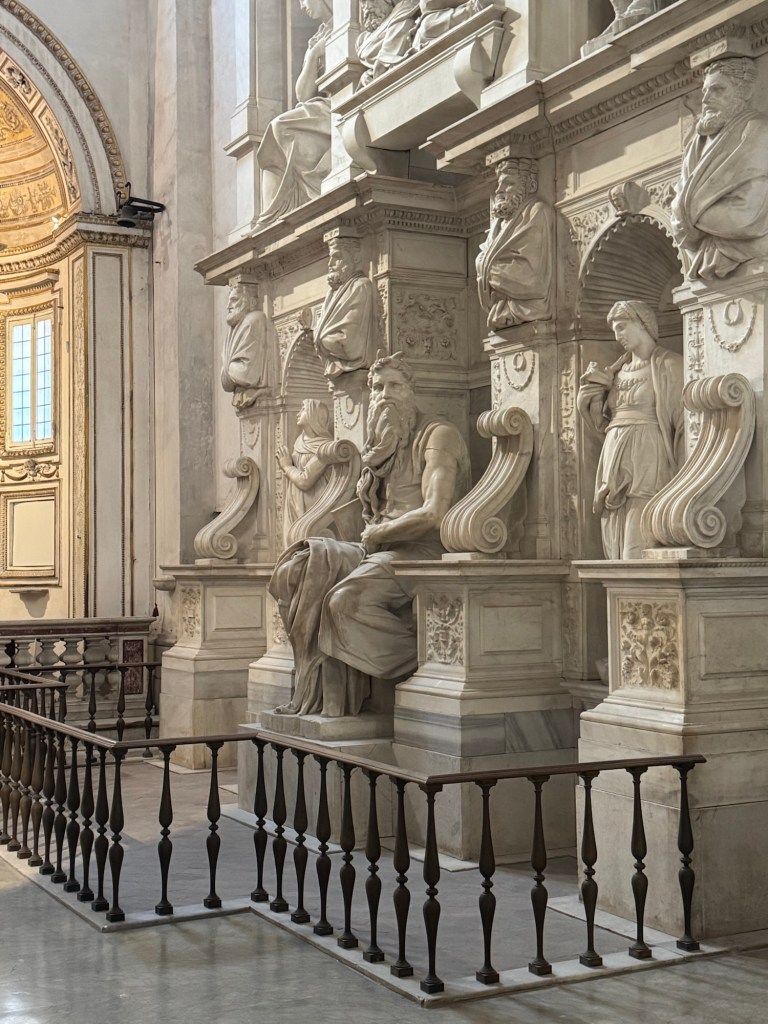
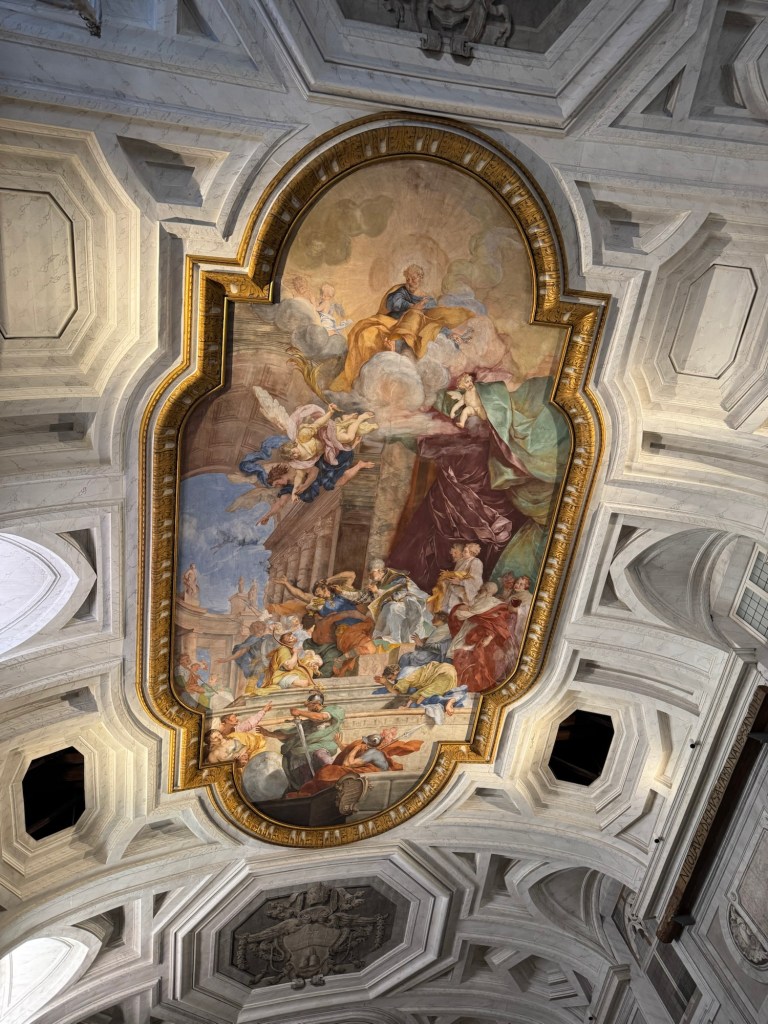
After the coliseum we headed up to the church to see the Moses statute. It wasn’t far and had great views back over the Coliseum.
The church was small but Michelangelo’s Moses was impressive and I am glad we made the effort.
If you noticed that Moses has horns – he does. Seems At some point before the 1500 Moses was mythologized and given horns. I am surprised the church did not have them removed. It seems somewhat sacrilegious to have Moses the bearer of the 10 Commandments have goat horns. Regardless the statue is really good. Not as dramatic as Davis but still worth seeing.
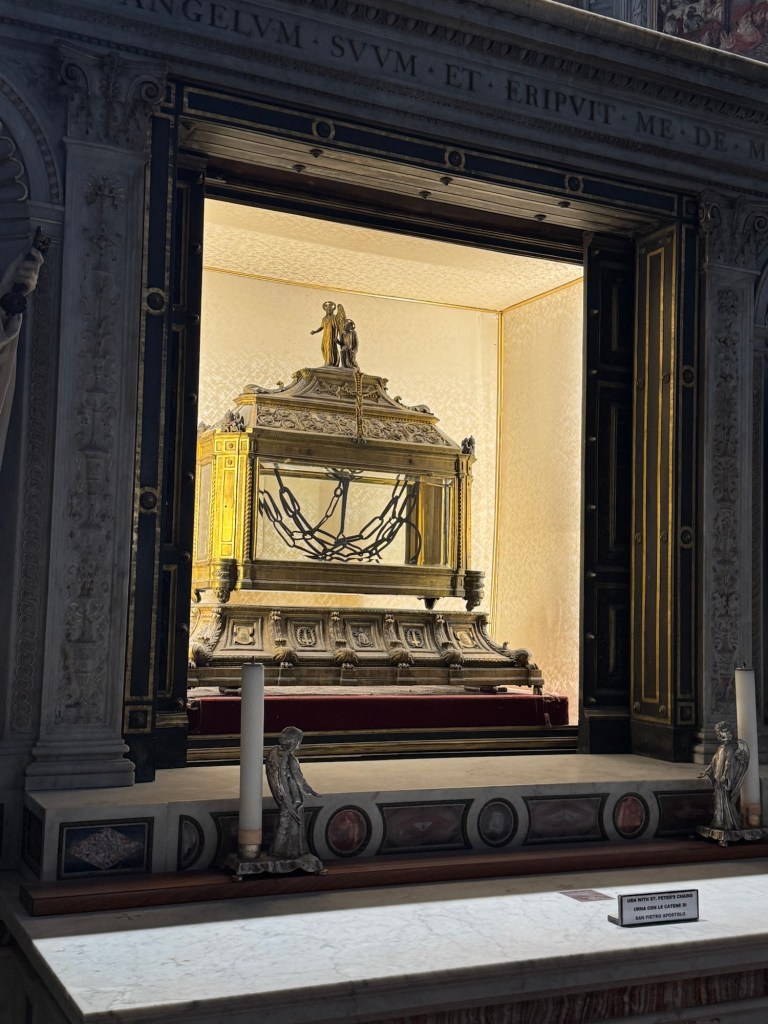
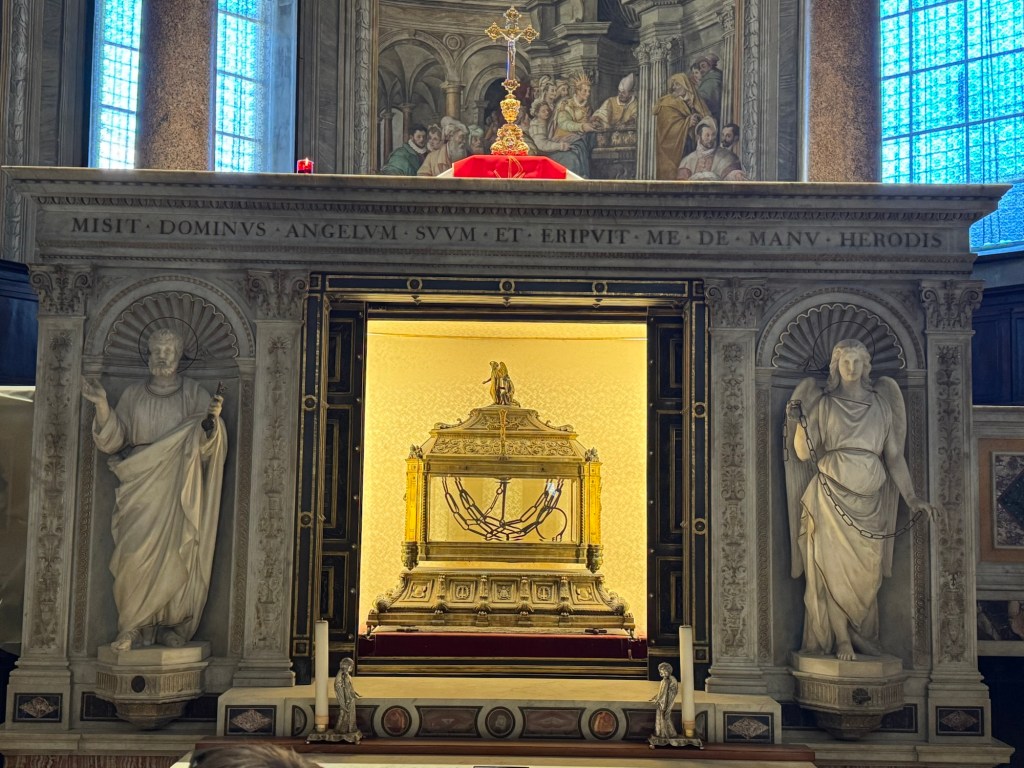
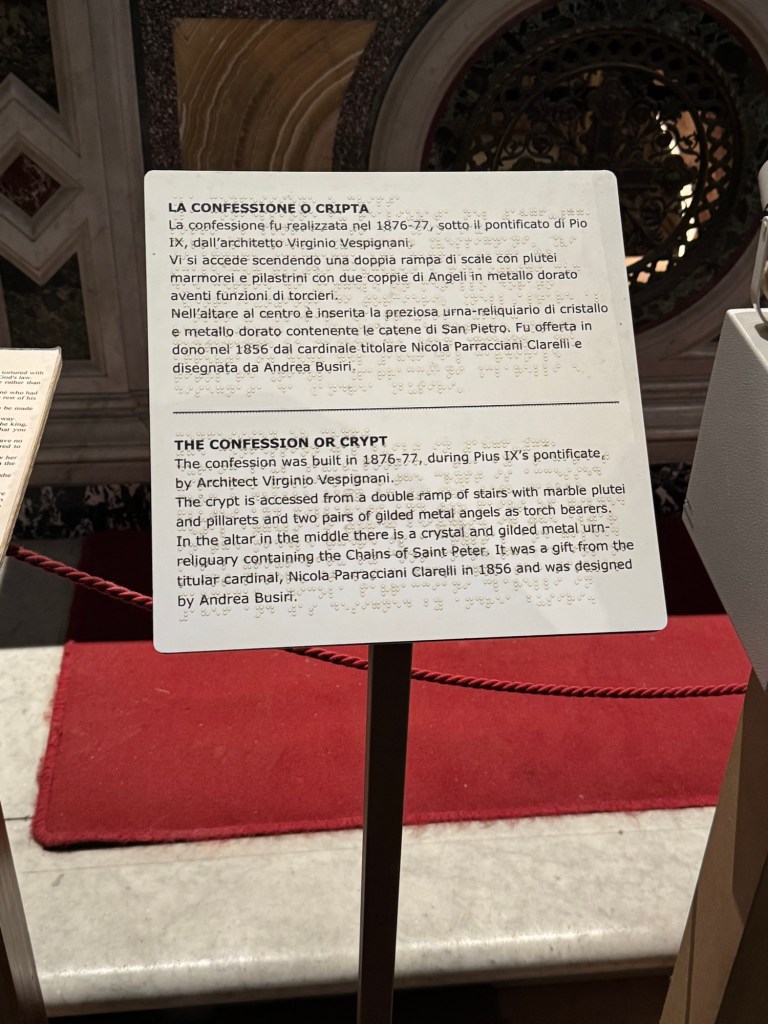
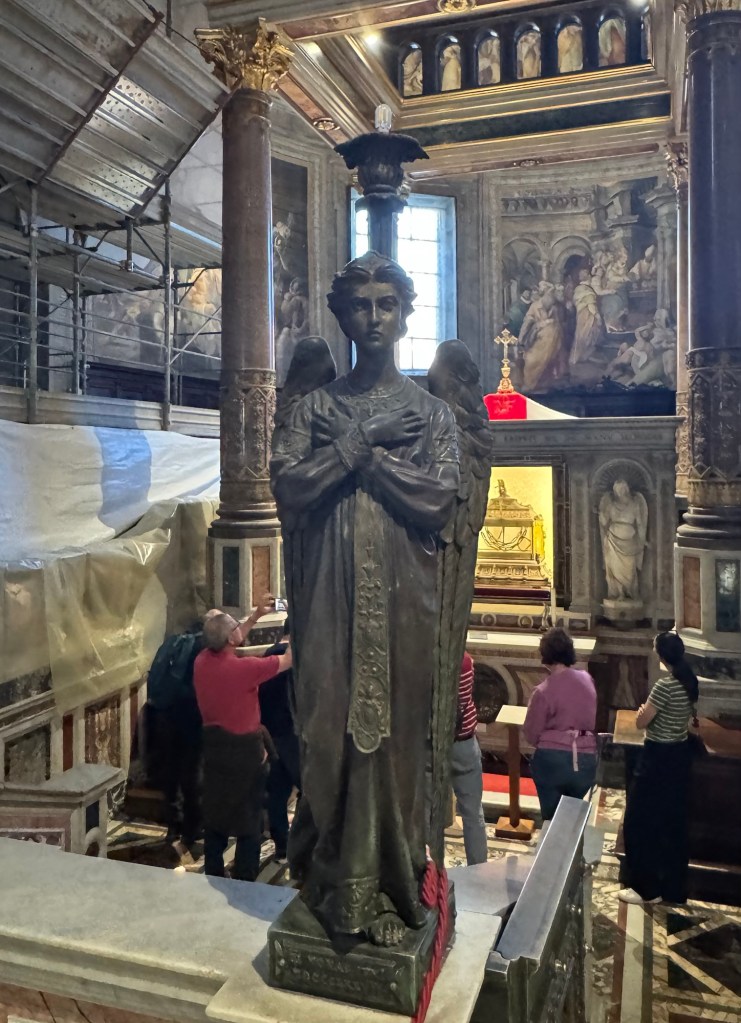
The little church also held chains they claim were used on Peter. You had to pay to get the screen to open to view them but someone did and it stayed open for quite a while and we were all able to see them.
we stopped for a drink in our way back to the apartment and I had my first Negroni of the trip. I am not a big fan but the bartender had misunderstood so I drank it anyway. It was not bad so I had another. The second was a lot stronger so I am going to stay with the spritz.
Dinner was back to the local place we had the day we got there and the pizza again was good.
A little bit of a hiccup but in the end it was a good day.